MYSTERY
Tunguska: The Cosmic Explosion That Flattened a Forest
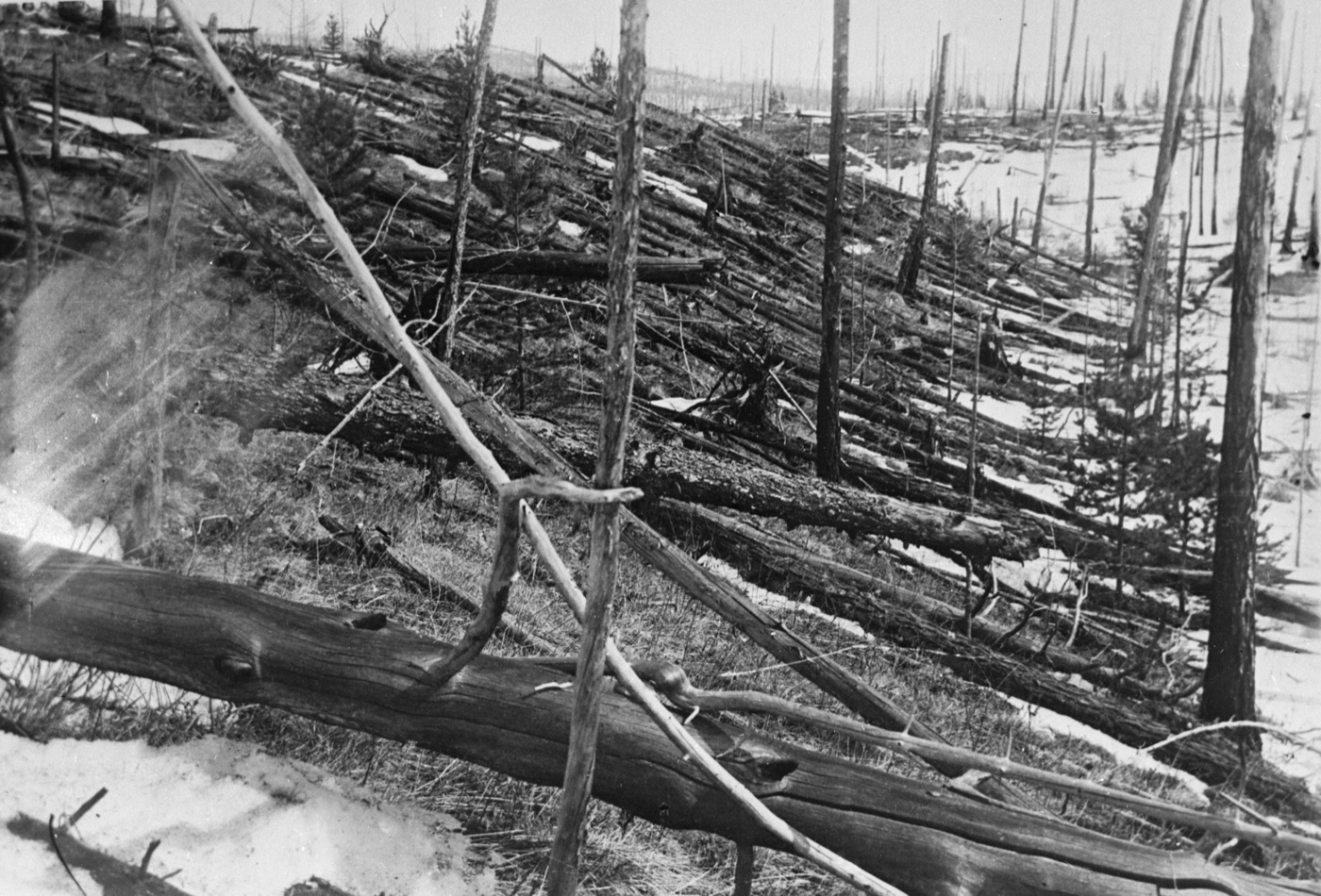
On the morning of 30 June 1908, the sky over a remote stretch of Siberia split open. Witnesses scattered across hundreds of kilometers saw a brilliant column of fire brighter than the sun streak across the heavens, followed by a flash, a series of deafening explosions like artillery, and a scorching wind. At a trading post some sixty-five kilometers from the center, a man was thrown from his chair and felt a heat so intense he thought his shirt was on fire; windows shattered and the ground shook. The blast, centered over the basin of the Podkamennaya Tunguska River, released energy estimated at the equivalent of ten to fifteen megatons of TNT — hundreds of times the power of the bomb that would later destroy Hiroshima — and it flattened some two thousand square kilometers of forest, knocking down an estimated eighty million trees in a vast radial pattern pointing away from the blast. For days afterward, the night skies of Europe and Asia glowed so brightly that people could read by them. And yet, when scientists finally reached the devastated zone — not until nearly twenty years later, after war and revolution had convulsed Russia — they found something that deepened rather than solved the puzzle: a colossal field of flattened trees, but no impact crater, and no great meteorite. The Tunguska event was the largest cosmic impact in recorded history, and the strange circumstances of its discovery left a gap that filled, over the decades, with theories ranging from the sober to the fantastical. This is the story of the explosion that leveled a Siberian forest, and of the answer that took the longest time to confirm.