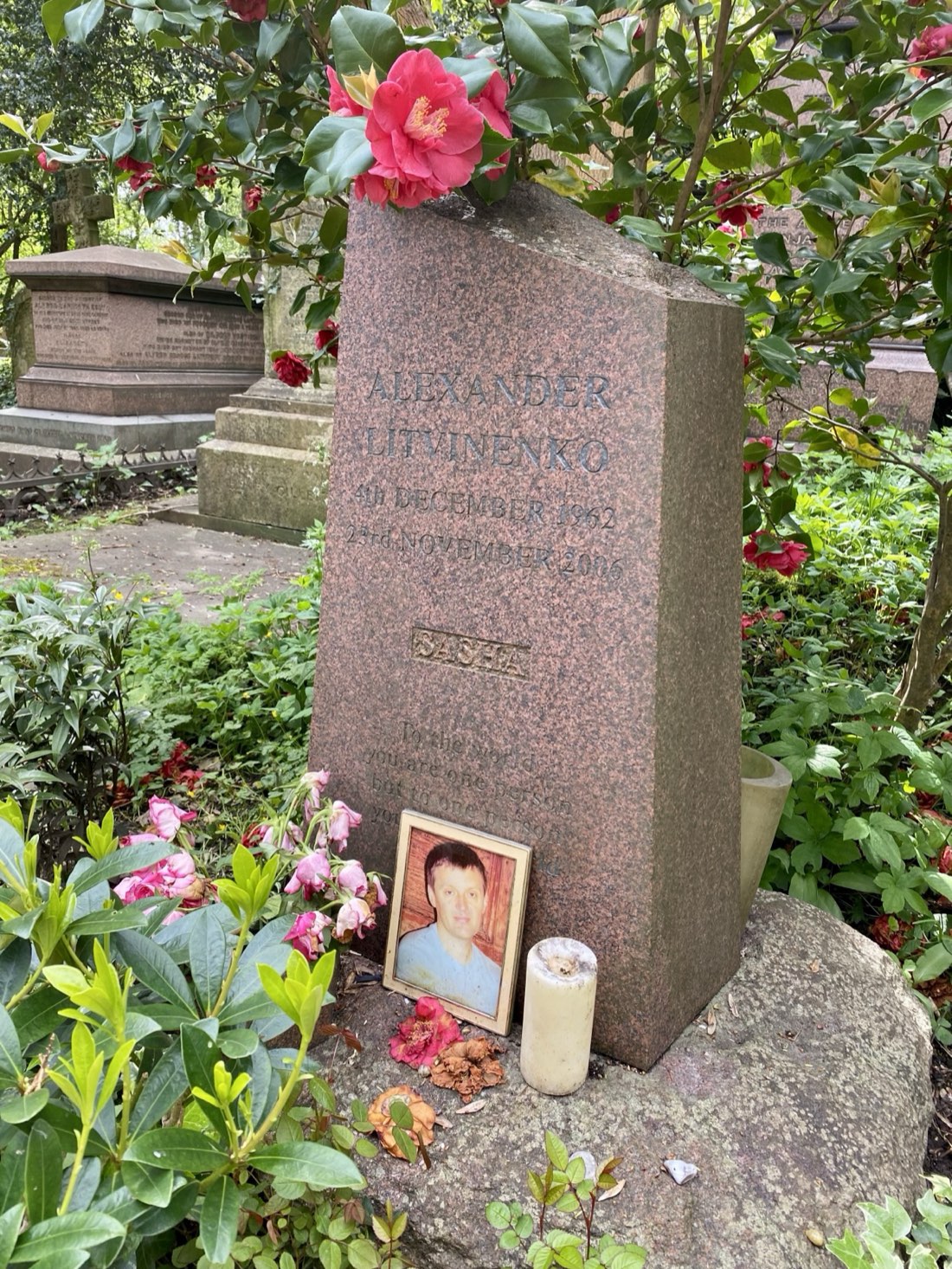
On 1 November 2006, Alexander Litvinenko, a former officer of Russia's FSB security service who had defected to Britain and become one of the Kremlin's most outspoken critics, met two Russian contacts for tea at the Pine Bar of the Millennium Hotel in London's Mayfair. Within hours he was violently ill; over the following three weeks he wasted away in a hospital bed, his hair falling out, his organs failing, as doctors struggled to identify what was killing him. Only as he lay dying did they discover the cause: polonium-210, a rare and extraordinarily radioactive isotope, which had been slipped into his teapot. He died on 23 November 2006, aged forty-four, but not before dictating a statement accusing President Vladimir Putin directly of ordering his murder. The polonium had left a faint radioactive trail across London — through the hotel, restaurants, offices, and aircraft — which investigators followed to two Russian men, and, they concluded, back to the Russian state itself. A decade later, a British public inquiry found that Litvinenko had been killed in an operation carried out by the FSB and 'probably approved' by Putin himself. It was an assassination by radiation on the streets of a Western capital, and one of the most brazen acts of state murder of the twenty-first century. This is the story of the polonium poisoning of Alexander Litvinenko.
State & Intelligence Operations
2006