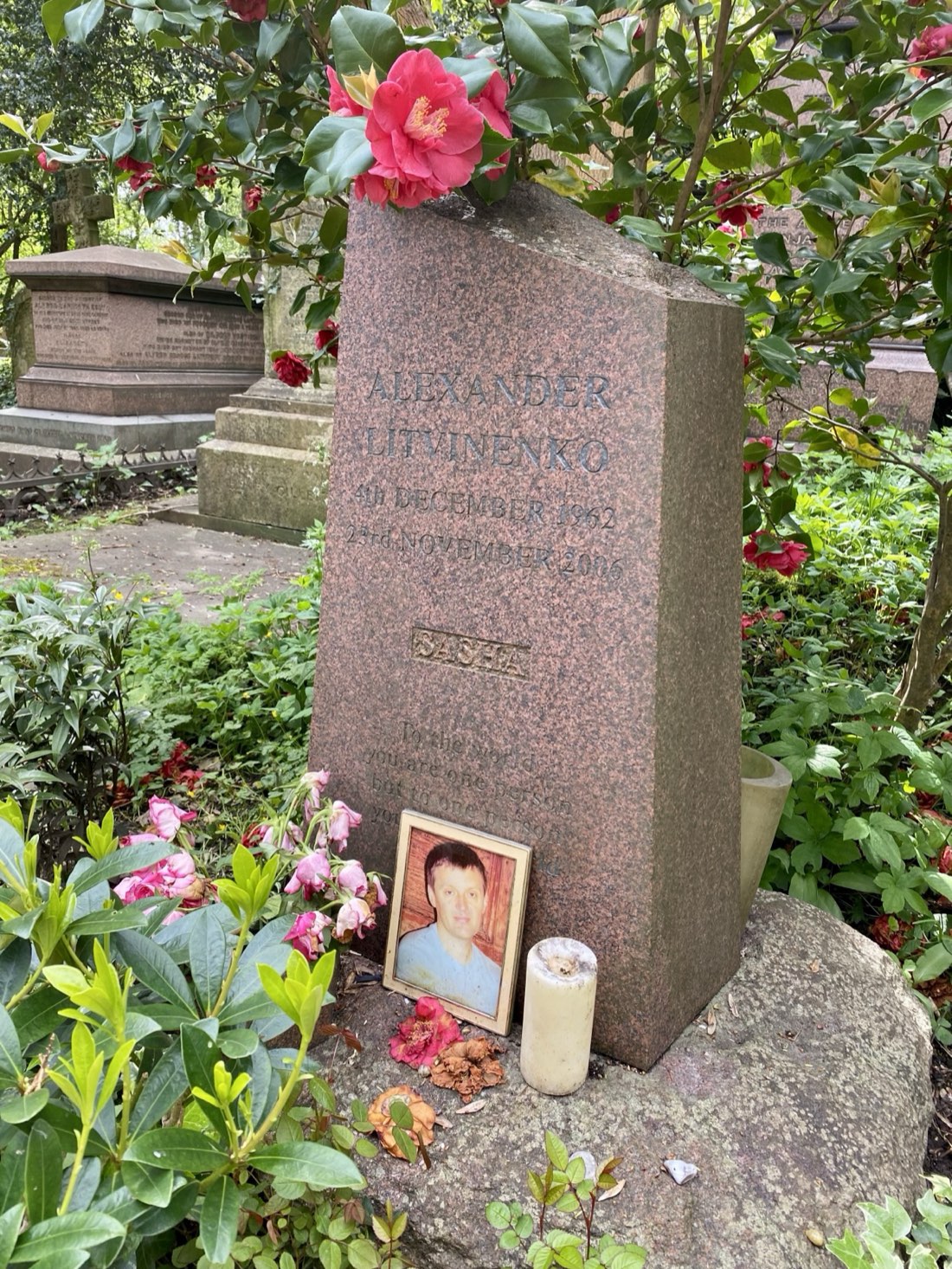
The grave of Alexander Litvinenko in Highgate Cemetery, London. He was buried in a lead-lined coffin because of the radioactivity of the polonium that killed him. Wikimedia Commons / CC BY-SA 4.0.
The Poisoning of Alexander Litvinenko: Polonium in a London Teapot
London, November 2006 — A former Russian intelligence officer turned Kremlin critic drank a cup of green tea laced with a rare radioactive isotope and died three weeks later. A British public inquiry concluded he was murdered by an FSB operation 'probably approved' by Vladimir Putin
- Category
- State & Intelligence Operations
- Published
- Length
- 3,550 words · 18 min read
- Author
- The editors
The murder of Alexander Litvinenko stands apart even among the state assassinations of the modern age, because of the weapon: not a bullet, a bomb, or a conventional poison, but a speck of one of the most exotic and dangerous substances on Earth, a radioactive isotope produced only in nuclear reactors. The choice of polonium-210 was, in its way, a signature. It was meant to be undetectable — to kill Litvinenko slowly and mysteriously, leaving doctors baffled and investigators empty-handed — and it very nearly worked, identified only in the last hours of his life. But it was also, once discovered, almost an admission: a poison so rare and so tightly controlled that only a state could obtain it, leaving a radioactive fingerprint that pointed unmistakably back toward its source. The Litvinenko case is therefore not a murky mystery to be puzzled over but an unusually well-documented state crime, established through painstaking scientific detective work and examined at length in a British public inquiry — a crime whose central facts are known, whose perpetrators were named, and whose trail led, in the inquiry's careful judgement, to the very top of the Russian state. This is the story of how it was done, and of how it was proven.
This is the story of the polonium poisoning.
The whistleblower
Alexander Litvinenko had spent his early career inside the very system that would later kill him. An officer of the KGB and then of its post-Soviet successor, the FSB, he specialised in organised crime and counter-terrorism. But in the late 1990s he made a fateful choice: rather than carry out what he said were illegal orders — including, he claimed, an instruction to assassinate the powerful oligarch Boris Berezovsky — he blew the whistle, going public in 1998 with accusations of corruption and criminality reaching high into the FSB. It was an act of extraordinary courage and, in the Russia then consolidating under Vladimir Putin, who had himself briefly headed the FSB, an unforgivable betrayal. Litvinenko was prosecuted, jailed, and hounded, and in 2000, fearing for his life, he fled Russia with his family and was granted asylum in Britain.
In London, Litvinenko did not fall silent — the opposite. He became a British citizen, worked alongside Berezovsky and other exiled Kremlin opponents, and turned himself into one of Putin's most relentless critics. He co-wrote a book, Blowing Up Russia, advancing the explosive claim that the FSB had itself staged the deadly 1999 apartment bombings that were blamed on Chechen terrorists and used to justify the Second Chechen War and to propel Putin to power. He accused the Russian state of a litany of crimes, linked the Kremlin to organised crime, and is understood to have provided information to British and Spanish intelligence on Russian mafia networks. To the Russian state he was not merely an irritant but a traitor who had defected and then devoted himself to exposing its darkest secrets from the safety of London. That safety, it turned out, was an illusion.
The poison
Polonium-210 is what made the crime both nearly perfect and, ultimately, traceable. It is an intensely radioactive isotope that emits alpha particles — which cannot penetrate skin or even paper, so a poisoner carrying it is at little risk, and which do not trigger the radiation detectors that guard against conventional nuclear threats. Swallowed, however, it is catastrophic: the alpha radiation destroys the body's cells from within, causing acute radiation sickness and multiple organ failure over days or weeks, with no effective treatment. Crucially, its symptoms mimic other illnesses, and standard tests do not look for it, so a victim can be dying of radiation poisoning while doctors search fruitlessly for a conventional cause — exactly what happened to Litvinenko, whose polonium poisoning was identified only as he lay dying, when a test finally detected the alpha emissions.
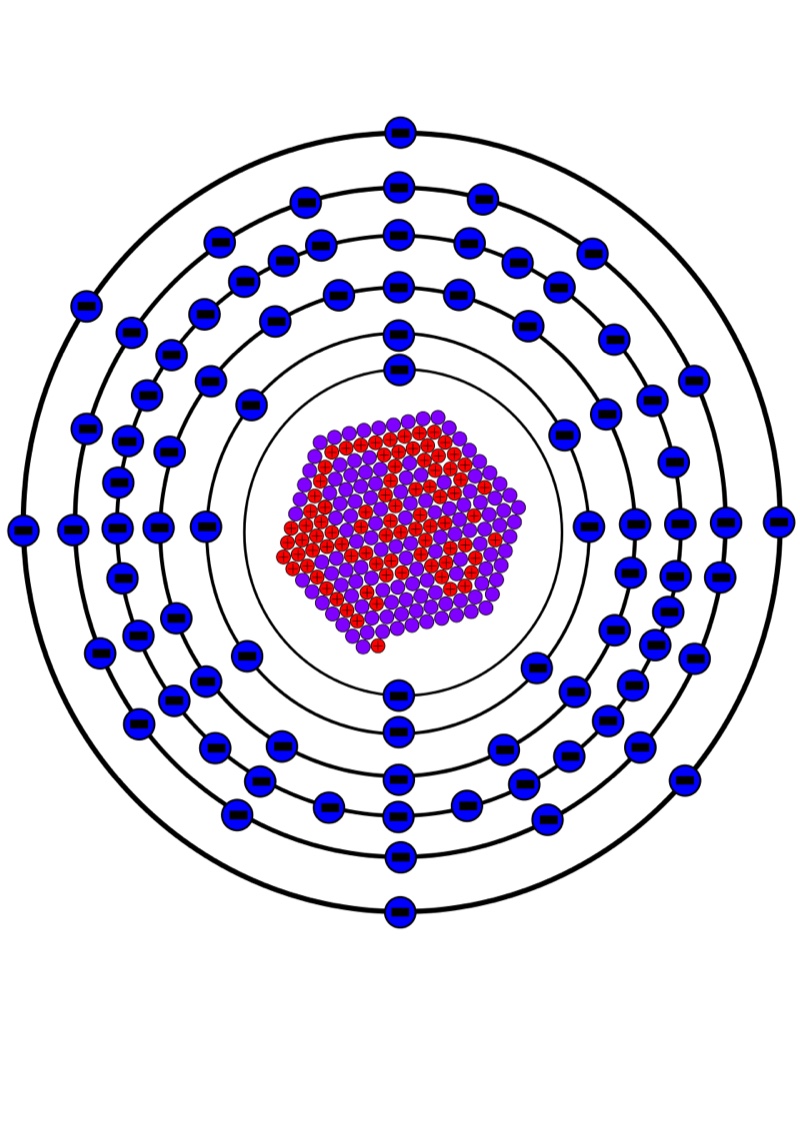
And it is that last quality — its origin — that turned the poison into evidence. Polonium-210 is not something a criminal can buy or brew; it is manufactured in nuclear reactors, in a process controlled by states, and the quantity used to kill Litvinenko implied access to a state nuclear programme. Russia was, in practice, the only plausible source. Moreover, radioactive material cannot be handled invisibly: as the poisoners carried and used the polonium, they left traces of it everywhere they went — a contamination trail that would become the key to the investigation. The very substance chosen to make the murder undetectable ended up writing the killers' route across London in radiation.
Three weeks of dying
The manner of Litvinenko's death was as harrowing as it was public. In the hours after the tea, he began vomiting violently, and over the following days his condition worsened relentlessly. Admitted to hospital, he deteriorated in ways that baffled his doctors: his hair fell out, his white blood cell count collapsed, his bone marrow and organs began to fail, and his body wasted away. The photographs taken of him in his hospital bed — gaunt, hairless, but lucid and unbowed — became some of the most arresting images of the decade, a living portrait of a man being killed slowly before the world's eyes. Through it all, Litvinenko remained clear-headed and defiant, insisting from the start that he had been poisoned by the Russian state, and cooperating with the police who came to his bedside. He was transferred to University College Hospital as his condition became critical, and it was there, in the final stage, that the cause was at last identified.

The diagnosis came almost too late to matter for Litvinenko, but it transformed the case. For weeks the doctors had searched for a conventional poison or infection and found nothing, because polonium's alpha radiation does not show up on the standard equipment used to detect radioactivity. Only when a sample was tested with different instruments, late in his illness, did the truth emerge: he was dying of acute radiation poisoning from an ingested alpha-emitter. The identification, made essentially on the day he died, turned a baffling medical mystery into a criminal investigation of unprecedented kind — and set in motion the hunt for the radioactive trail the poison had left behind.
The radioactive trail
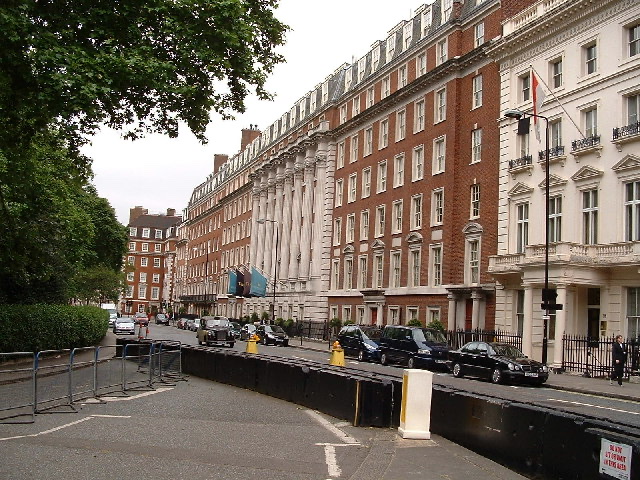
Once polonium was identified as the cause, the investigation became a work of scientific detection without real precedent. Health authorities and police tested locations across London for radioactive contamination, and found it in a startling number of places: the Pine Bar of the Millennium Hotel, other restaurants and hotels, offices, and cars — a map of contamination that retraced the movements of the people who had carried the poison. The trail led to Andrei Lugovoi, a former KGB officer turned businessman, and his associate Dmitry Kovtun, the two men who had met Litvinenko for tea on 1 November. Traces followed their journeys, even onto the aircraft on which they had flown between Moscow and London, contaminating seats and cabins. Investigators concluded that Litvinenko had been poisoned at that meeting, the polonium having been added to his green teapot, and that Lugovoi and Kovtun had carried the isotope from Russia.
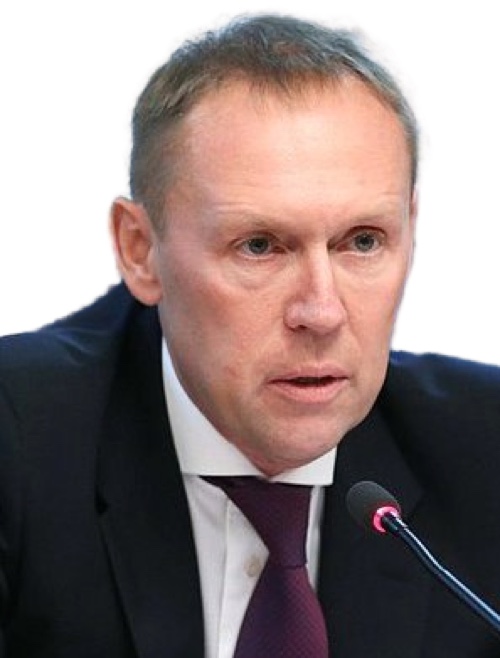
The strength of the case against the two men was considerable — the contamination trail placing them at the scene, the pattern of their contacts with Litvinenko in the preceding weeks, and the sheer implausibility of any innocent explanation for carrying reactor-grade polonium around London. British prosecutors charged Lugovoi with murder and sought his extradition from Russia. But there the pursuit hit an immovable wall: the Russian constitution forbids the extradition of Russian citizens, and Moscow flatly refused to hand him over. Far from being treated as a suspect at home, Lugovoi flourished — he was elected to the State Duma, the Russian parliament, gaining legal immunity, and was in time awarded a state honour. The message could hardly have been clearer.
The deathbed accusation, and the inquiry
Before he died, Alexander Litvinenko did something remarkable: fully aware he was being killed, he dictated a statement naming the man he held responsible. "You may succeed in silencing one man," it read, addressing Putin directly, "but the howl of protest from around the world will reverberate, Mr. Putin, in your ears for the rest of your life. May God forgive you for what you have done." It was an extraordinary accusation, made from a deathbed, against the president of a nuclear power. For years afterward, the British government — wary of the diplomatic consequences — resisted holding a full public inquiry, and the case festered as a source of tension between London and Moscow. Only after a long campaign by Litvinenko's widow, Marina, was a judge-led public inquiry finally established.
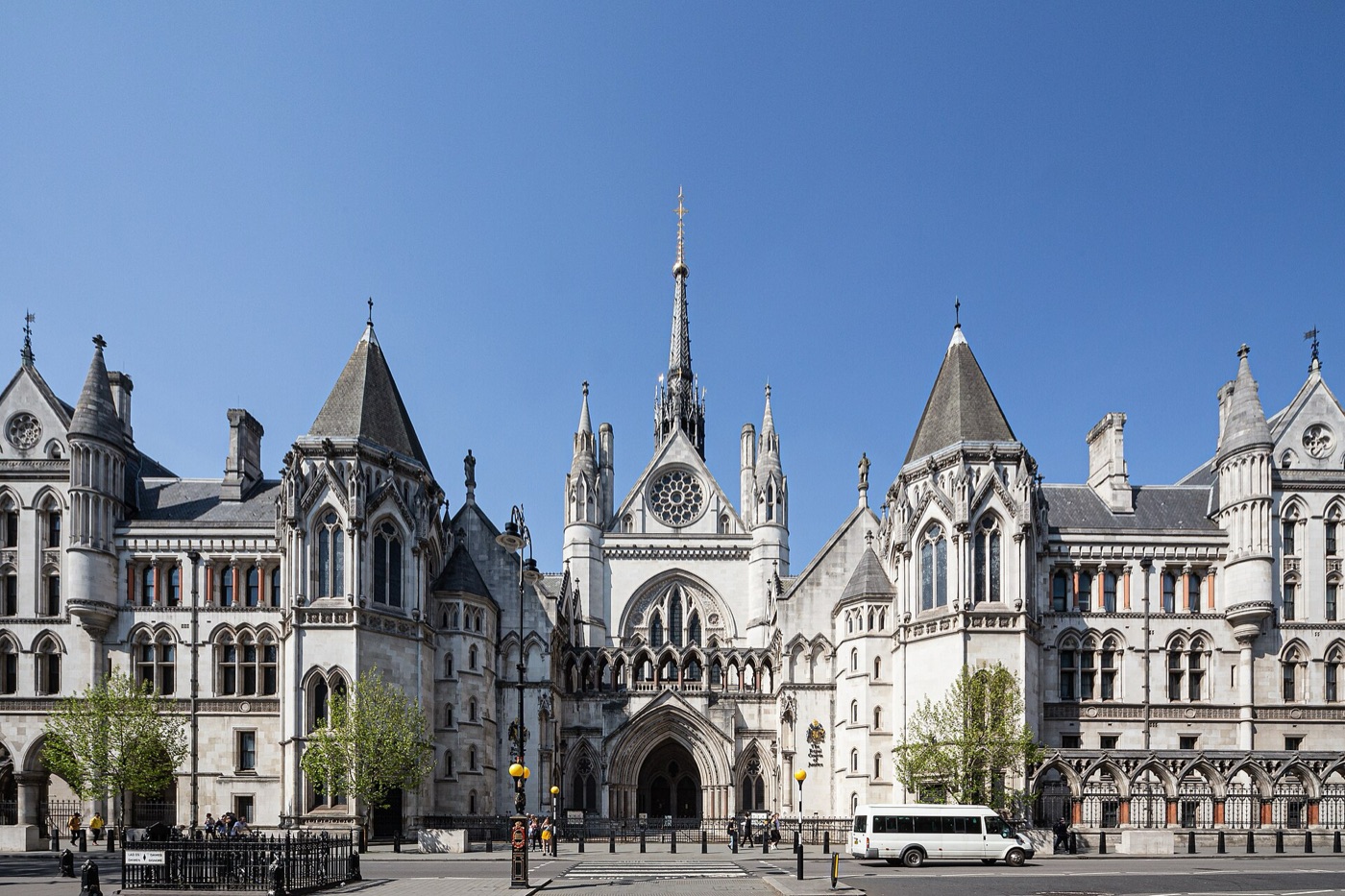
The inquiry, chaired by Sir Robert Owen, reported in January 2016, and its conclusions were damning. It found that Litvinenko had been deliberately poisoned with polonium-210 by Andrei Lugovoi and Dmitry Kovtun; that they had been acting on behalf of the Russian FSB; and — in the finding that made headlines around the world — that the operation had "probably" been approved by the head of the FSB, Nikolai Patrushev, and by President Vladimir Putin himself. The inquiry weighed both the open evidence and secret intelligence, and while it was careful to frame the involvement of Patrushev and Putin as a probability rather than a certainty — reflecting the limits of what could be proven when the Russian state refused all cooperation — it left little doubt about where responsibility lay. In 2021, the European Court of Human Rights went further, ruling that Russia was responsible for Litvinenko's assassination.
Russia's denial, and the pattern
Russia has consistently and categorically denied any involvement in Litvinenko's death, dismissing the British inquiry as politically motivated and its conclusions as unproven. Lugovoi and Kovtun have maintained their innocence. This denial, and Russia's refusal to extradite the suspects or cooperate with the investigation, is precisely what prevents the case from being closed with a courtroom conviction — and it is why the inquiry's findings, however firmly grounded, are couched as "probable" rather than proven at the highest level. But the pattern into which the Litvinenko killing fits is hard to ignore. It echoes the Cold War assassination of Georgi Markov, another critic of a communist regime murdered in London with an exotic poison; and it was followed, in 2018, by the poisoning of the former Russian double agent Sergei Skripal and his daughter in Salisbury with the nerve agent Novichok, an attack Britain attributed to Russian military intelligence. The murder of a Kremlin critic on foreign soil with a state-controlled poison is not an isolated event but a recurring signature.
What it means
The poisoning of Alexander Litvinenko was a watershed, and its meaning has only grown clearer with time. It announced, in the most dramatic possible fashion, that the Russian state under Putin was prepared to assassinate its enemies on the soil of Western democracies, using weapons of a kind — a radioactive isotope, a nerve agent — that carried an implicit message of state power and impunity. It exposed the limits of Western law and diplomacy in the face of such acts: Britain could investigate, name the killers, hold an inquiry, and expel diplomats, but it could not bring the perpetrators to trial or compel the truth from a defiant nuclear power. And it foreshadowed much that followed — the Salisbury attack, the broader pattern of Russian operations against critics and defectors abroad, and the sharp deterioration of relations between Russia and the West that would culminate in open confrontation. Litvinenko's murder was, in retrospect, an early and unmistakable warning.
In the end, the polonium poisoning endures as a case that inverts the usual shape of the political assassination mystery. Where such killings are typically shrouded in doubt, their perpetrators unknown and their sponsors deniable, the Litvinenko case is almost the reverse: the method is understood down to the isotope, the poisoners were identified by name, the trail was mapped in radiation, and a judicial inquiry traced responsibility to the summit of a state. What is missing is not knowledge but justice — the ability to hold the guilty to account against the protection of the power that sent them. Alexander Litvinenko died accusing Vladimir Putin of his murder, and a British inquiry, weighing the evidence a decade later, found that he was probably right. He lies now in a lead-lined grave in a London cemetery, killed by a poison from a reactor for the crime of telling the truth about a regime — and his death remains a stark monument to how far a state will reach to silence a critic, and how little, in the end, the law could do to stop it.
In the end, the murder of Alexander Litvinenko remains one of the most consequential and most thoroughly documented state assassinations of the modern era — a killing that carried, in the very rarity of its weapon, the fingerprint of the power that ordered it. A brave man who had turned against a corrupt and murderous system, and devoted his exile to exposing it, was struck down in London by a poison only a state could wield, and though the trail of radiation led investigators to his killers and a judge to their masters, no one has ever been, or is ever likely to be, brought to justice for it. That is the bitter lesson of the polonium poisoning: that the truth can be known, established, and proclaimed by courts and inquiries, and still the guilty can be shielded by the state that armed them. Litvinenko's dying words accused a president of his murder; the evidence, in the end, bore him out. His voice, like Markov's before him, was silenced by a foreign poison on a Western street — and, like Markov's, it has outlived the silence, a testament to the cost of telling the truth about power, and to the limits of the law when power refuses to answer for its crimes.
Inspired this / based on it
Alex Goldfarb & Marina Litvinenko
An account of Litvinenko's life and murder co-written by his widow.
ITVX
A dramatization of the investigation, starring David Tennant as Litvinenko.
Filed under
Click any tag for every article carrying it.
Continue reading

The Umbrella Murder: The Poisoning of Georgi Markov
On the afternoon of 7 September 1978, Georgi Markov, a Bulgarian émigré writer, was waiting at a bus stop on Waterloo Bridge in London, on his way to his job at the BBC World Service, when he felt a sudden sharp sting in the back of his right thigh. Turning, he saw a man behind him bending to pick up a dropped umbrella; the man apologised in a foreign accent, hurried across the road, and got into a taxi. Markov thought little of it at first, but by that evening he had developed a high fever, and over the next three days his condition collapsed catastrophically. He died on 11 September, aged forty-nine. A post-mortem examination found, embedded in his thigh, a tiny metal pellet no larger than a pinhead, drilled with minuscule cavities that had held a dose of ricin — one of the deadliest toxins known, and one for which there is no antidote. Markov had been assassinated in broad daylight on a London street, murdered for the crime of broadcasting the truth about the communist regime in his homeland. The method — a poison pellet delivered, it is believed, by a specially engineered umbrella — became one of the most infamous images of Cold War espionage, and the killing itself one of its clearest examples of a state reaching across borders to silence a dissident. This is the story of the umbrella murder.
The Assassination of Trotsky: Stalin's Ice Axe in Mexico
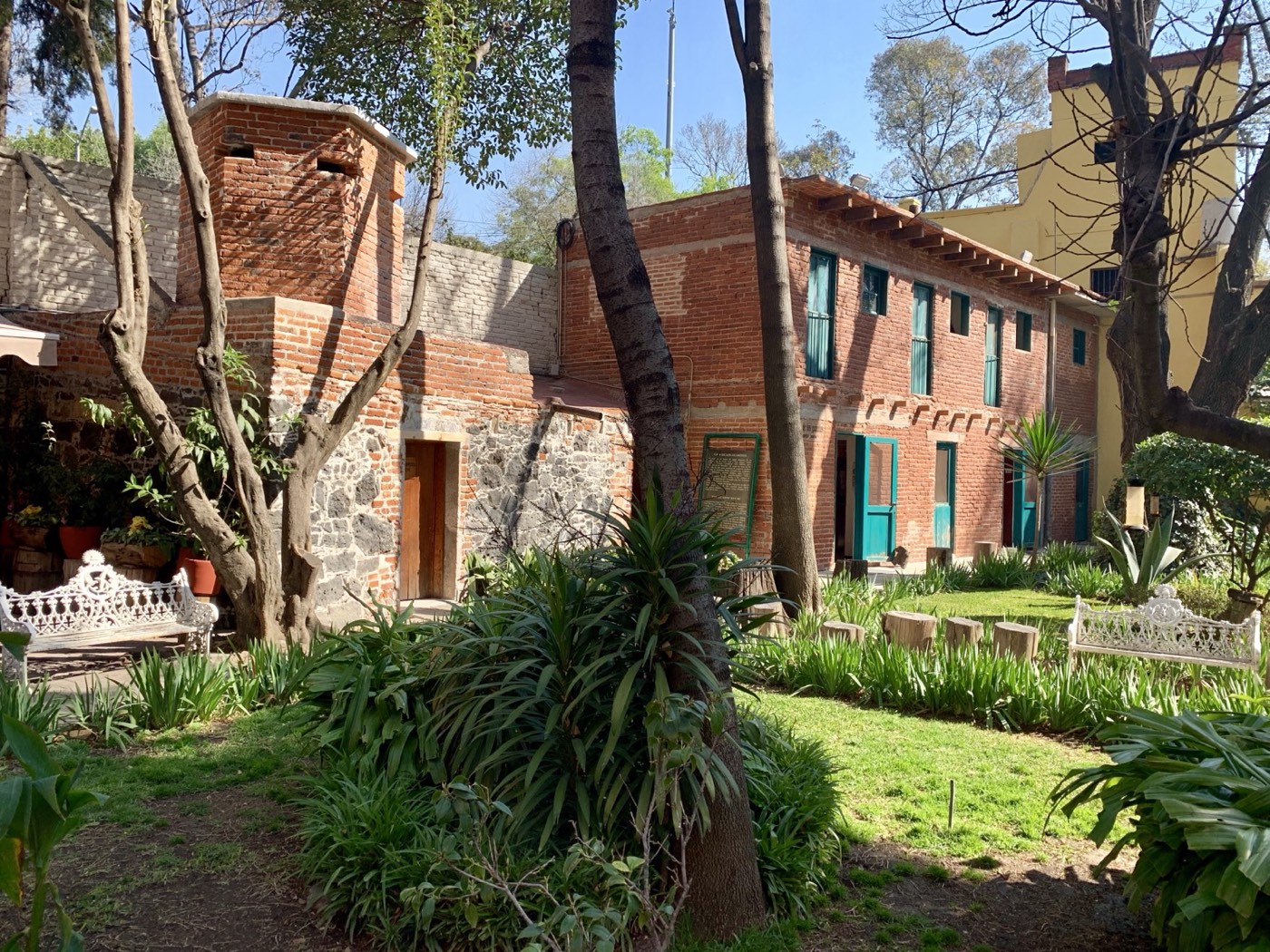
Leon Trotsky had once stood at the very summit of the Russian Revolution — the organiser of the Bolshevik seizure of power in 1917, the founder and commander of the Red Army, the man many expected to succeed Lenin. Instead he lost the struggle for power to Joseph Stalin, and became the most hunted political exile on Earth. Expelled from the Soviet Union in 1929, he wandered from Turkey to France to Norway before Mexico granted him asylum, and everywhere he went the long arm of Stalin's secret police followed. One by one, his collaborators, his secretaries, and his own children were killed or died in suspicious circumstances, until Trotsky, living behind the high walls and watchtowers of a fortress-like house in the Coyoacán district of Mexico City, was almost the last of his circle left alive. On 20 August 1940, a young man he believed to be a devoted follower came to show him an article. As Trotsky bent over his desk to read it, the visitor drew a mountaineer's ice axe from beneath his coat and drove it into the old revolutionary's skull. Trotsky died the next day. The killer was an agent of Stalin's NKVD, and the operation had been approved at the very top of the Soviet state. Unlike so many political murders shrouded in doubt, this one is documented down to its code name. This is the story of how Stalin finally killed Leon Trotsky.
The Mitrokhin Archive: The KGB Clerk Who Stole the KGB's Secrets
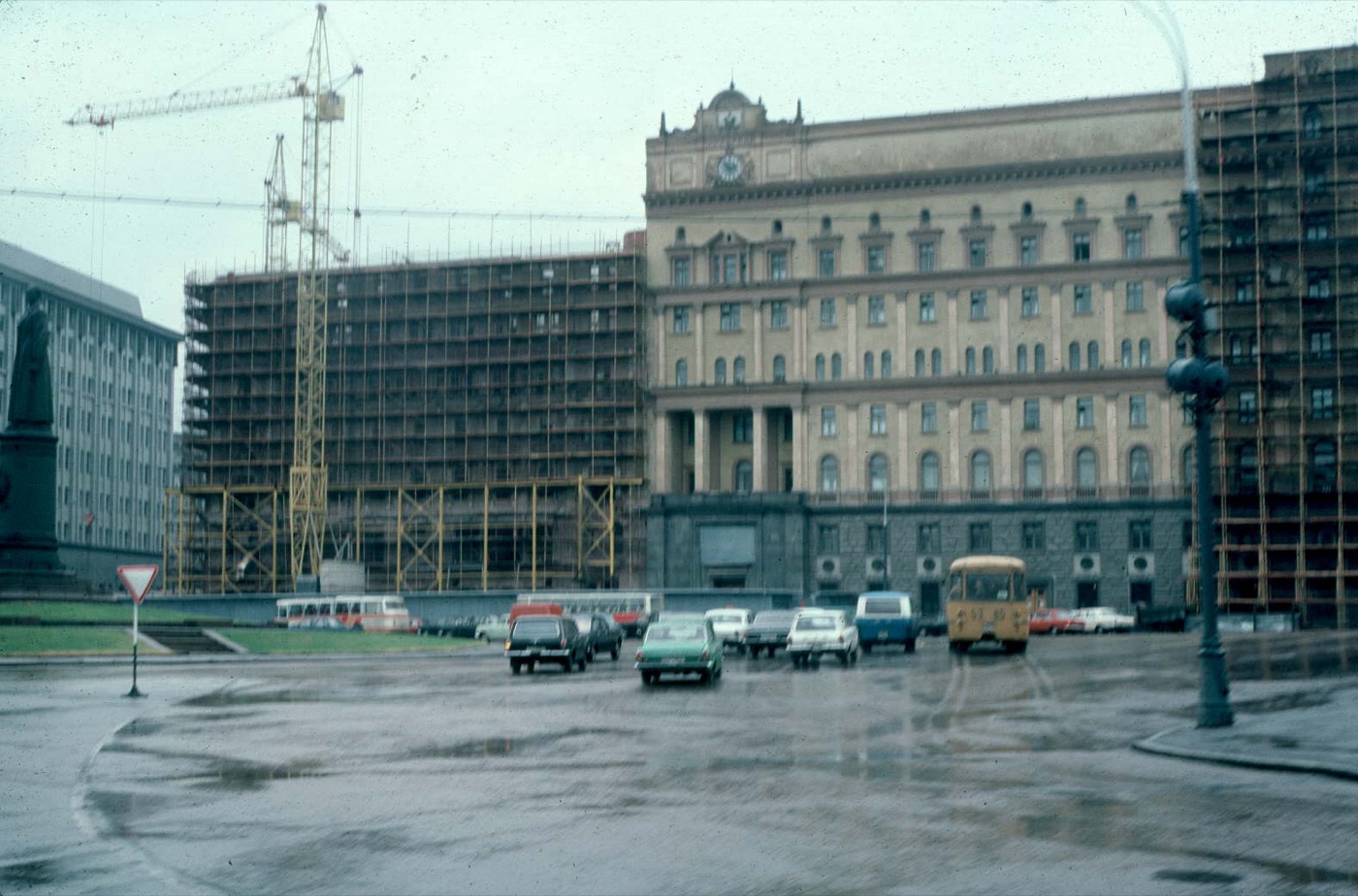
Vasili Mitrokhin was not a spy in the usual sense, and that is exactly what made him so dangerous to the organisation he served. He was a KGB officer who, after years of disillusionment, had been moved sideways into the archives of the First Chief Directorate — the service's foreign-intelligence arm — and given responsibility for supervising the transfer of its entire secret file collection to a new headquarters. It was the most sensitive paper in the Soviet Union: decades of records on agents, operations, and informants spread across the West and the wider world. For roughly twelve years, from 1972 until his retirement in 1984, Mitrokhin used his extraordinary access to commit one of the most audacious acts of intelligence defiance in history. Alone, by hand, he copied and summarised thousands of the KGB's most secret documents, scribbling notes on scraps of paper that he hid in his shoes and clothing and carried out of headquarters past the guards, day after day, year after year. At home he transcribed them, and then he hid the growing archive — sealed in milk churns and tin containers and buried beneath the floor and in the garden of his dacha outside Moscow. He could not get it to the West while the Soviet Union stood. But when the USSR collapsed, in 1992, Mitrokhin travelled to the newly independent Baltic states, walked into a Western embassy, and offered his life's secret work. British intelligence grasped what he was holding, spirited him, his family, and six cases of material out of Russia, and acquired in a single stroke the most comprehensive record of Soviet foreign intelligence operations ever to reach the West. This is the story of the quiet archivist who stole the KGB's own history.