CONFIRMED
My Lai Massacre
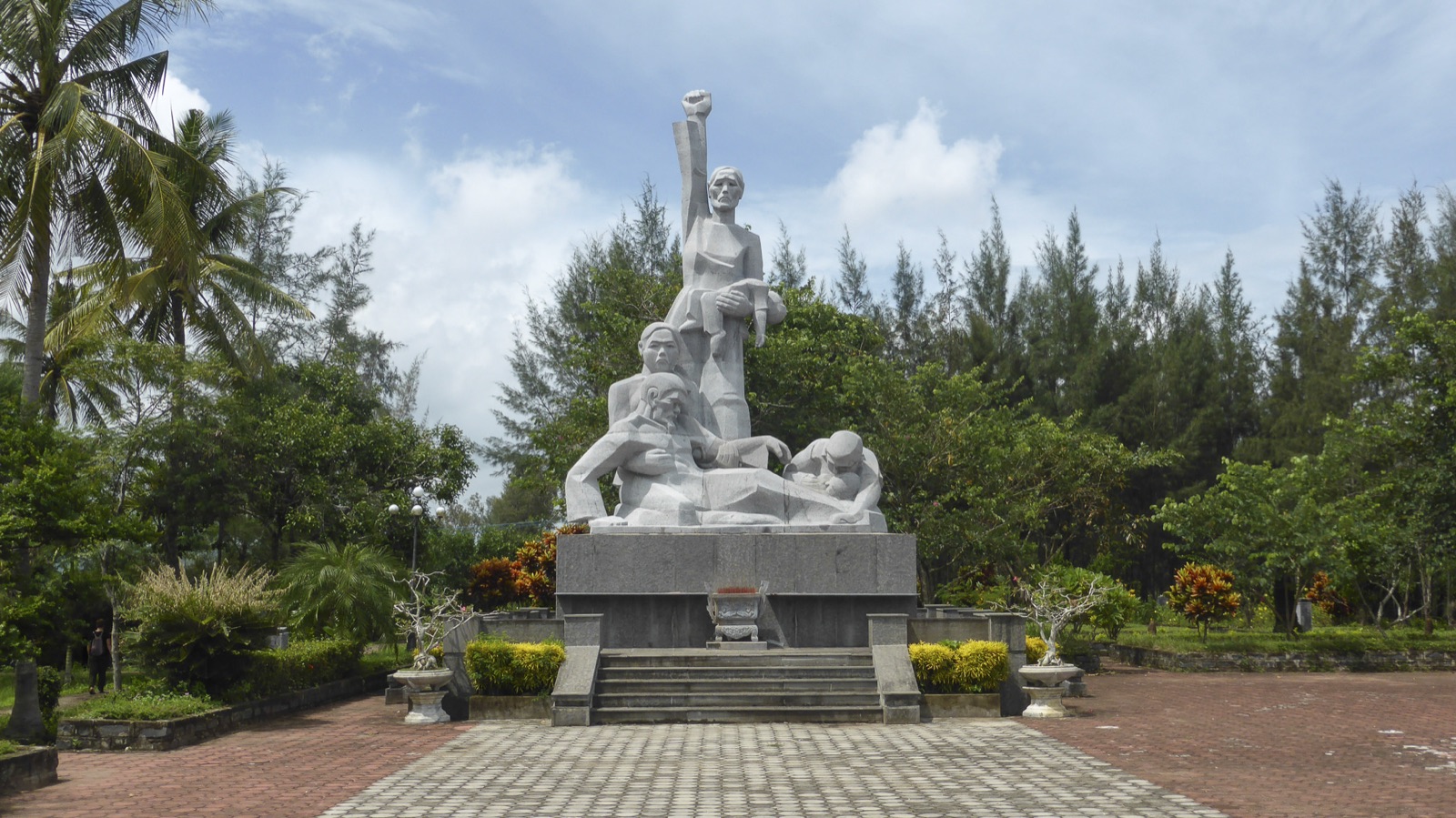
On Saturday morning, March 16, 1968 — five months after the Tet Offensive had upended the U.S. military's narrative of the Vietnam War, six weeks after Walter Cronkite's CBS Evening News commentary that the war was "mired in stalemate," and forty-eight days after President Lyndon Johnson would announce on March 31 that he would not seek re-election — Charlie Company of the 1st Battalion, 20th Infantry, 11th Light Infantry Brigade, Americal Division, was inserted by helicopter into the rice-paddy farmland surrounding the hamlets of Sơn Mỹ village, Quảng Ngãi Province, central Vietnam. The company's commanding officer was Captain Ernest Medina; the 1st Platoon was led by 2nd Lieutenant William Laws Calley Jr. The operation's mission, as briefed the previous evening, was to engage and destroy the 48th Local Force Battalion of the Việt Cộng, which Army intelligence had assessed was using Sơn Mỹ as a base. The 48th Battalion was not in the hamlets that morning. The hamlets were occupied by approximately 700 civilians — predominantly women, children under 16, and adults over 60. Between approximately 7:30 a.m. and 11:30 a.m. local time, Charlie Company killed an estimated 504 of them. The company sustained one casualty: one U.S. soldier shot himself in the foot — an act subsequently classified as self-inflicted. No enemy combatants were killed. No weapons were recovered. The killings were halted by the intervention of three Army aviation crew members — Warrant Officer Hugh Thompson Jr., his door gunner Specialist Lawrence Colburn, and his crew chief Specialist Glenn Andreotta — flying overhead in an OH-23 Raven observation helicopter, who landed and threatened to direct their guns on Charlie Company personnel to enforce protection of approximately 11 surviving Vietnamese civilians whom they evacuated. The Army's after-action report, filed March 18, 1968, characterized the operation as a successful engagement of the 48th Battalion with 128 enemy killed. The actual events did not enter public knowledge for twenty months: until November 12, 1969, when freelance journalist Seymour Hersh, working from a tip provided by 23-year-old former Army specialist Ron Ridenhour — who had not been at Sơn Mỹ but had heard the accounts from members of Charlie Company at later postings — published the first comprehensive account through Dispatch News Service. Of 26 personnel ultimately charged with criminal offenses in connection with the events of March 16, 1968, exactly one was convicted: Lieutenant Calley, found guilty in March 1971 of the murder of 22 civilians. President Nixon transferred Calley to house arrest within 24 hours of the conviction. Calley served approximately 3.5 years of house arrest before being released on parole in November 1974. He was the only person ever to serve any term of confinement for what the U.S. military's own subsequent inquiry — the Peers Commission of 1969-1970 — characterized as the killing of "a large number of noncombatants."
State & Intelligence Operations
1968