CONFIRMED
The Building of the Berlin Wall, 1961
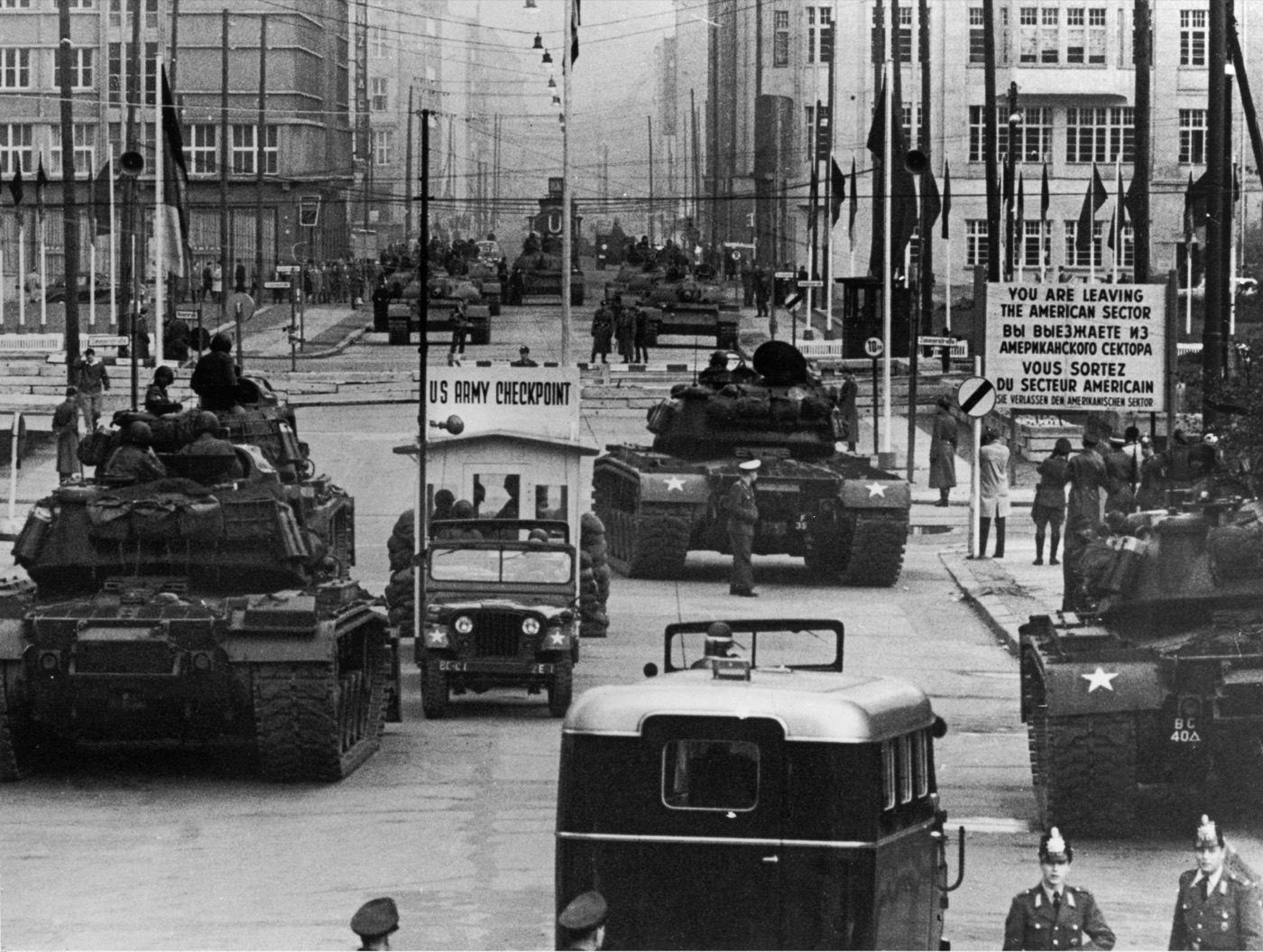
For more than a decade after the Second World War, Berlin was the great open wound of the Cold War and its most dangerous flashpoint. The city lay deep inside communist East Germany, yet it was itself divided into a Soviet-controlled east and a Western-controlled west, and the border that ran through it remained, almost uniquely, open. Through that gap, across the 1950s, millions of East Germans simply walked to freedom — boarding a train or a tram in the east and stepping off in the west, and from there flying out to a new life. They were disproportionately the young, the skilled, the educated: doctors, engineers, teachers, the very people a struggling socialist state could least afford to lose. By 1961 this haemorrhage threatened the survival of East Germany itself, and its leaders, with the backing of the Soviet Union, resolved to stop it the only way they could — by closing the door. In the early hours of Sunday 13 August 1961, East German troops and police moved into position along the sector boundary and began to seal it with barbed wire, tearing the city in two while most of its people slept. Within days the wire was giving way to concrete, and a permanent wall was rising through streets and squares, separating families, neighbours, and workplaces with a suddenness that stunned the world. The Western powers protested furiously but did not intervene, for they understood that the wall, monstrous as it was, did not threaten their own position in West Berlin — and that to challenge it by force risked a war that might go nuclear. The Berlin Wall would stand for twenty-eight years as the physical embodiment of a divided world. This is the story of the weekend it went up.