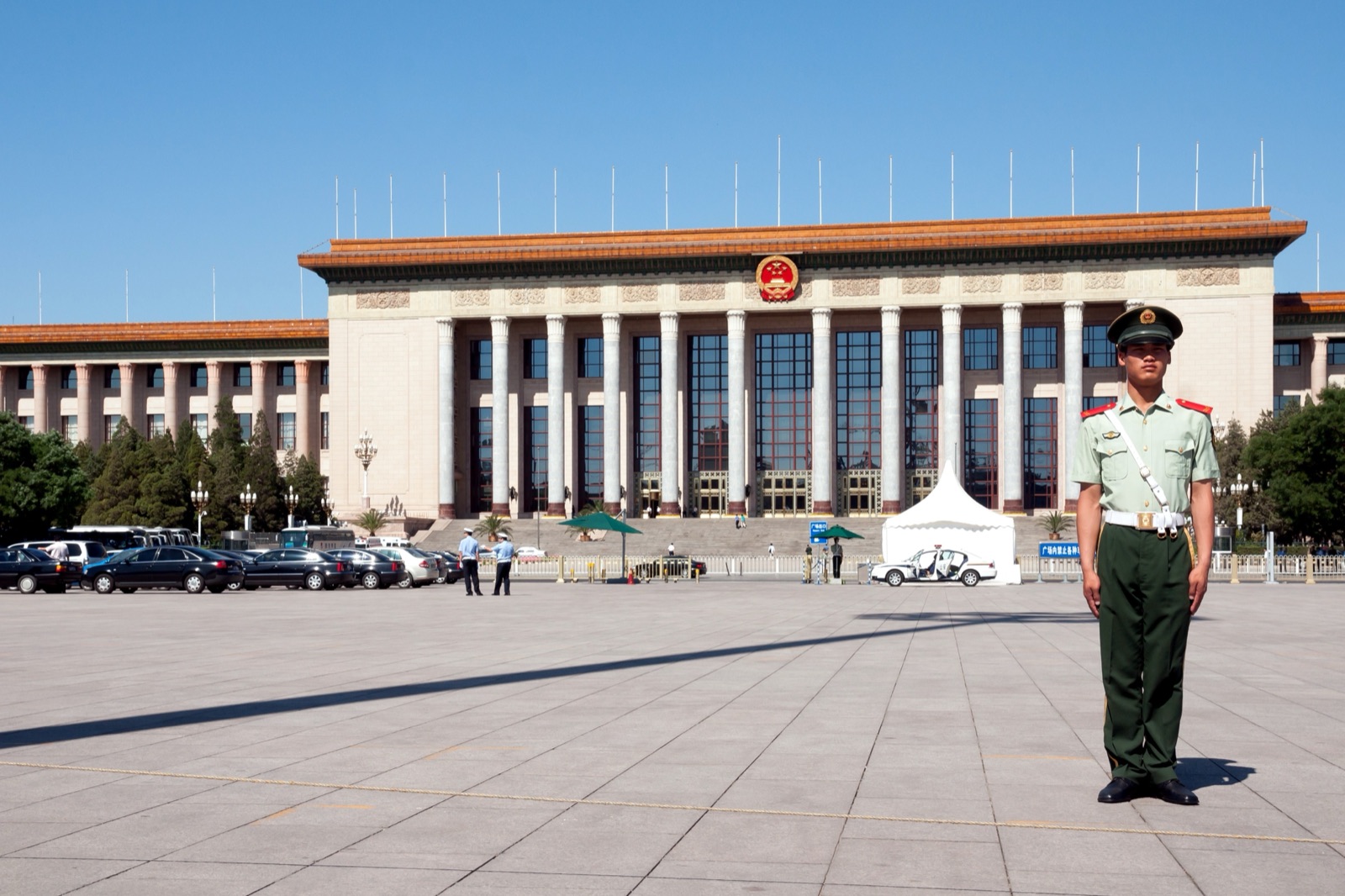
Between April 15 and June 4, 1989, the Chinese Communist Party faced its most serious internal political challenge since the founding of the People's Republic in 1949. What began as a student memorial for the deceased reformist Party Secretary Hu Yaobang on April 15 evolved within weeks into a nation-wide pro-democracy movement: hundreds of thousands of student demonstrators occupied Tiananmen Square in Beijing, factory workers organized autonomous unions outside the Party structure, hunger strikes drew international press attention, and the Party leadership itself split publicly between reformist General Secretary Zhao Ziyang and the hardline majority centered on paramount leader Deng Xiaoping. Martial law was declared on May 20. On the night of June 3-4, 1989, units of the People's Liberation Army's 27th and 38th Armies cleared the square. The official Chinese death toll was 200-300, all civilians. Western estimates ranged from 1,000 to 2,600. The British ambassador Sir Alan Donald's June 5 cable to London — declassified in October 2017 — placed the toll at 10,454 dead. On June 5, an unidentified man stepped in front of a column of armored vehicles on Chang'an Avenue. The photograph and video — captured by four foreign journalists from different angles — became the most-circulated image of late-20th-century resistance. The man's identity has never been publicly established. The Chinese state has, since 1989, conducted one of the most sustained information-control operations in modern history to remove the events from Chinese public consciousness.
State & Intelligence Operations
1989