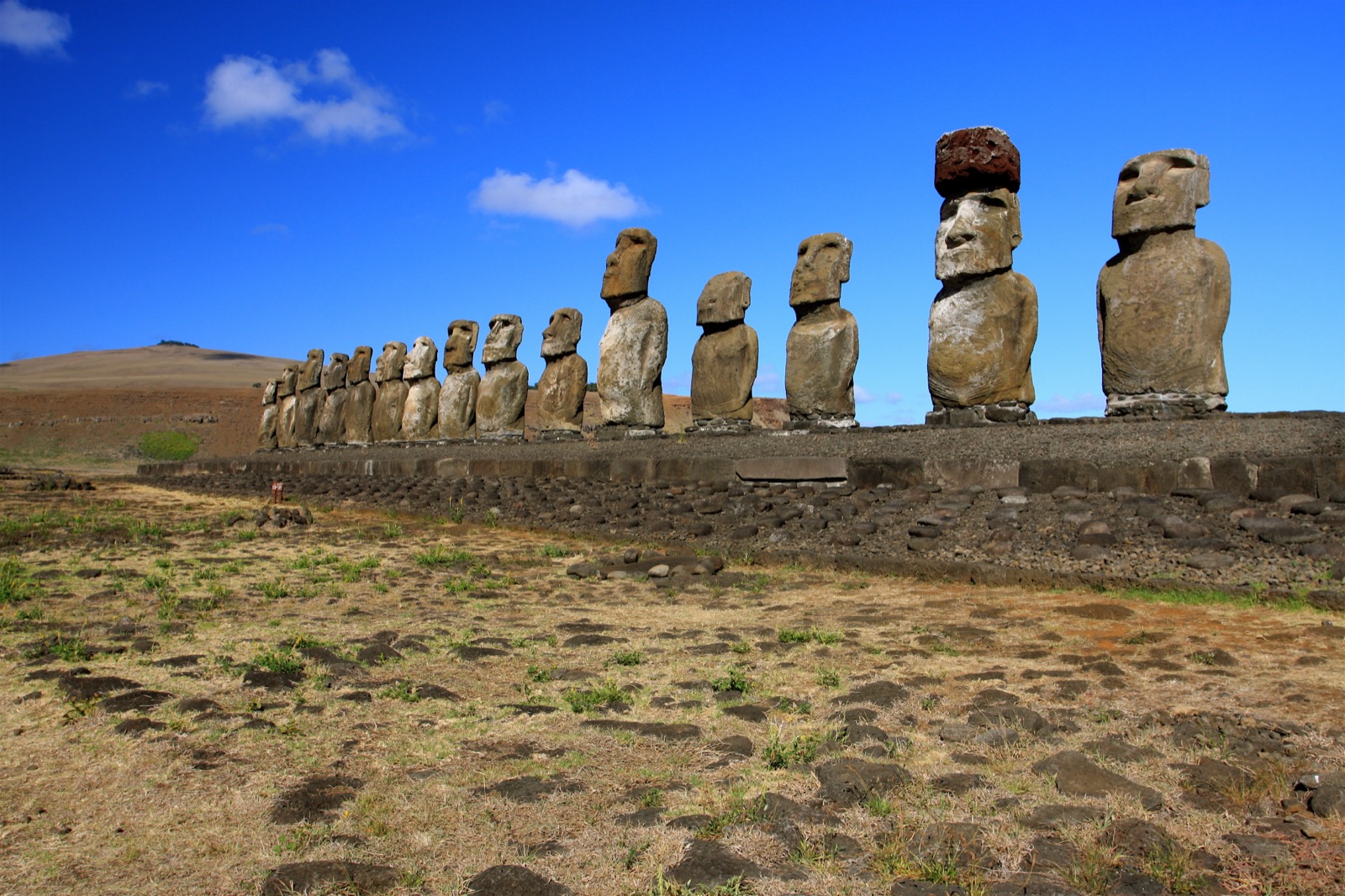
Rapa Nui — Easter Island — is one of the loneliest places inhabited by human beings, a small volcanic triangle in the southeastern Pacific more than three thousand kilometres from the coast of Chile and some two thousand from the nearest inhabited island. On this remote speck of land, a Polynesian society created one of the most recognisable bodies of monumental art in the world: the moai, nearly a thousand colossal stone figures, carved from volcanic rock and raised on stone platforms to gaze inland over the people they were made to protect. For centuries, outsiders looked at these statues on their treeless island and asked how so 'primitive' a people could have made and moved them — a question that led, at its worst, to fantasies of lost continents and ancient astronauts, and, more insidiously, to a powerful modern morality tale in which the islanders supposedly destroyed their own environment, felled their last tree to haul their idols, and collapsed into famine and war: a cautionary fable of self-inflicted ecological ruin. Both the wonder and the warning turn out to be built on misunderstanding. The moai are unmistakably the work of the Rapanui themselves; recent experiments suggest they were 'walked' upright to their platforms, exactly as island tradition always said; and the story of ecological suicide has been steadily dismantled, revealing instead a resilient people whose real catastrophe came not from within but from the arrival of outsiders. This is the story of the statues that walked.
Ancient & Historical Mysteries
1250