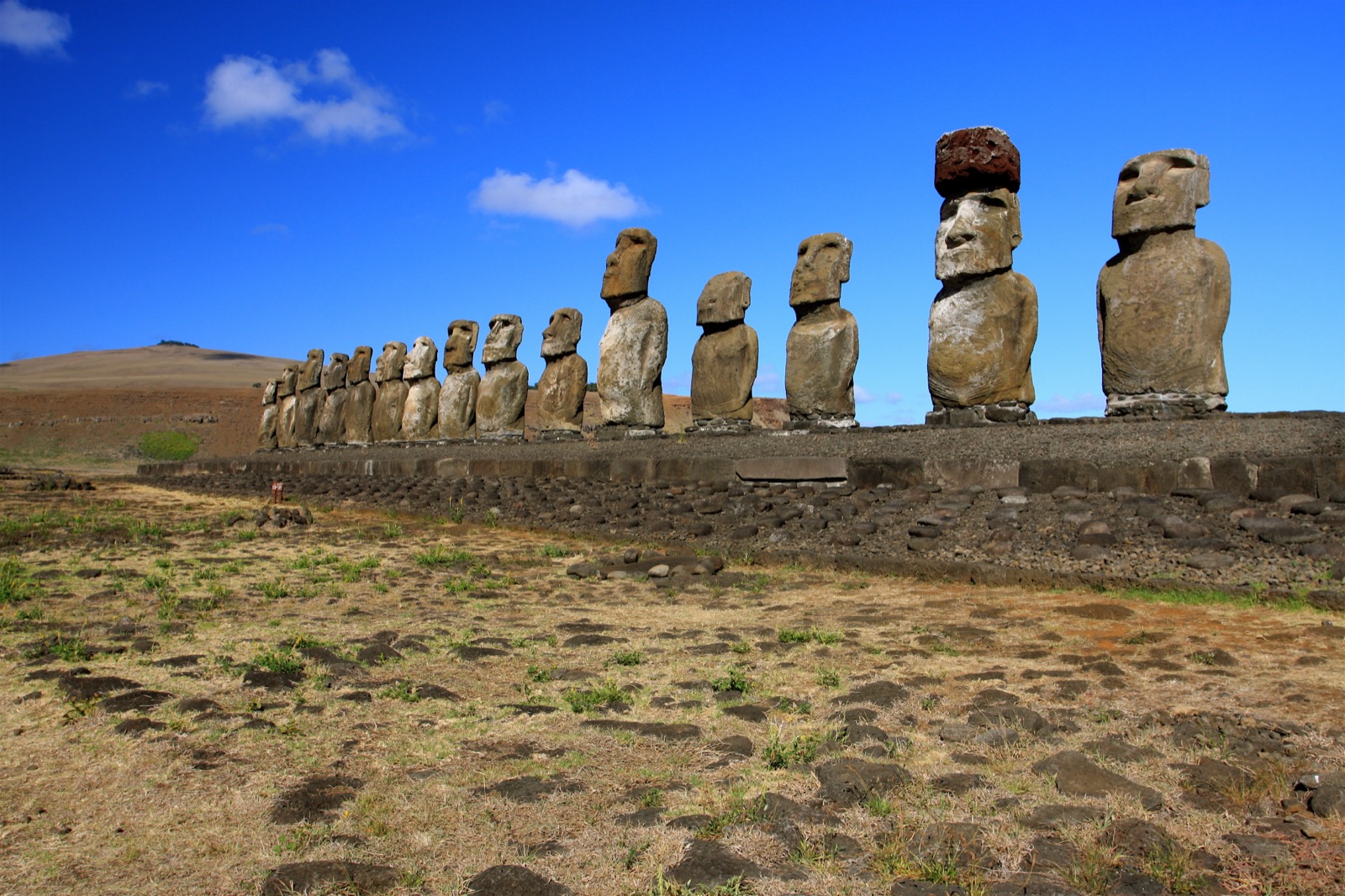
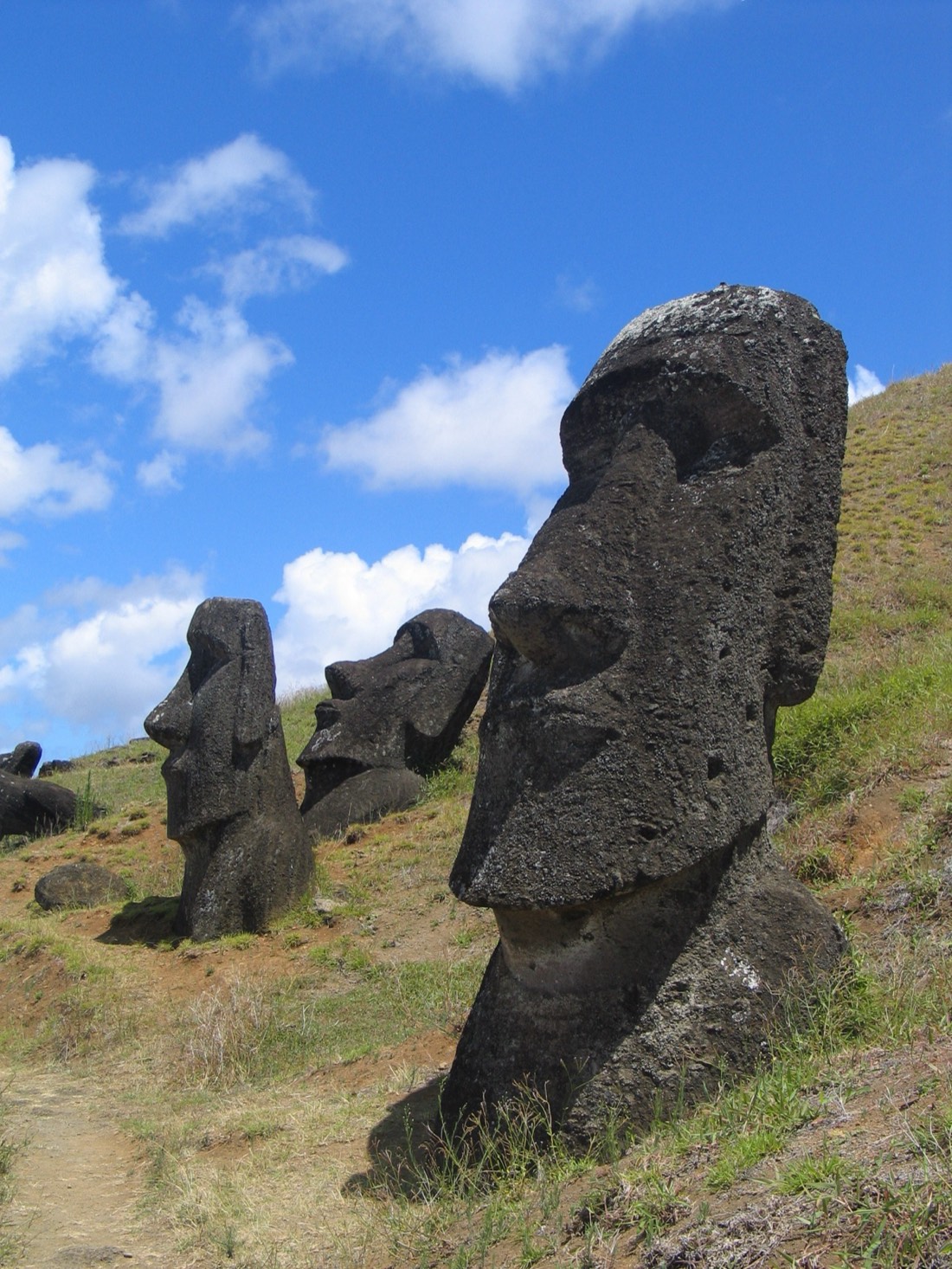
The fifteen moai of Ahu Tongariki, the largest platform on Rapa Nui, re-erected in the twentieth century. The statues stand with their backs to the sea, facing inland to watch over the community they were made to protect. Wikimedia Commons / CC BY 2.0.
The Moai of Easter Island: The Statues That Walked
Rapa Nui, c. 1250–1500 CE — On the most remote inhabited island on Earth, a Polynesian people carved nearly a thousand giant stone ancestors and raised them to watch over their villages. How they moved the statues, and whether they destroyed their own world doing it, are questions whose answers have been turned upside down
- Category
- Ancient & Historical Mysteries
- Published
- Length
- 3,550 words · 18 min read
- Author
- The editors
Few places on Earth have carried a heavier burden of interpretation than Easter Island. A tiny, isolated island covered in nearly a thousand giant stone figures is an irresistible screen onto which observers have projected their assumptions, and for two and a half centuries they have done so freely. Early European visitors, unable to imagine that the people they met could have raised such monuments, reached for outside explanations — lost civilisations, sunken continents, and, in the twentieth century, the inevitable ancient astronauts. More recently, and more respectably, the island became the world's favourite parable of environmental self- destruction: the society that used up its resources, cut down its last tree, and collapsed into ruin, a miniature rehearsal of the fate we fear for our own planet. Both stories share a hidden premise — that something went catastrophically wrong on Rapa Nui, that the island is a scene of mystery or of tragedy demanding explanation. And both, under the weight of recent archaeology, have begun to give way to something more accurate and more humane: a picture of an ingenious, resilient Polynesian people who made extraordinary art, solved hard problems with skill, and endured — until the catastrophe that truly broke them arrived, as it so often did, from over the horizon.
This is the story of the moai, and of the people who made them.
The most remote island
To understand the moai, you must first grasp the isolation of the place that made them. Rapa Nui sits in the vast emptiness of the southeastern Pacific, so far from anywhere that its people, once arrived, were effectively alone in the world for centuries. It was settled by Polynesians — master navigators who had already colonised the scattered islands of the Pacific in one of the great feats of human exploration — who reached it by voyaging canoe, most likely around 1200 CE, though some evidence points a little earlier. They brought with them the plants, animals, and traditions of the Polynesian world, and on this small, windy, volcanic island they built a society that would, in a few centuries, produce something without close parallel anywhere.
The island the Polynesians found was not the barren grassland of later centuries. Pollen cores show that Rapa Nui was once covered in forest, including a giant palm, and it was this landscape that the settlers slowly transformed as they cleared land for gardens, built their villages, and — above all — turned to the extraordinary project that would define them: the carving and raising of the moai. Over roughly two and a half centuries, an island whose total population probably numbered only a few thousand produced close to a thousand monumental statues, an output that, measured against its size, is one of the most intense bursts of monument-building in human history.
Ancestors in stone
The moai were not idols of gods in the abstract but images of ancestors — of chiefs and important forebears, elevated after death into a kind of guardian status. Raised on their ahu platforms along the coast, they stood with their backs to the ocean and their faces turned inland, watching over the villages and lands of their descendants. In Rapanui belief they were charged with mana, a sacred, protective power, and through them the ancestors continued to guard and bless the living. This is why they face the people rather than the sea, and why their placement follows the island's communities: each ahu with its moai was the ritual heart of a lineage, the ancestors made present in stone, presiding over their kin.
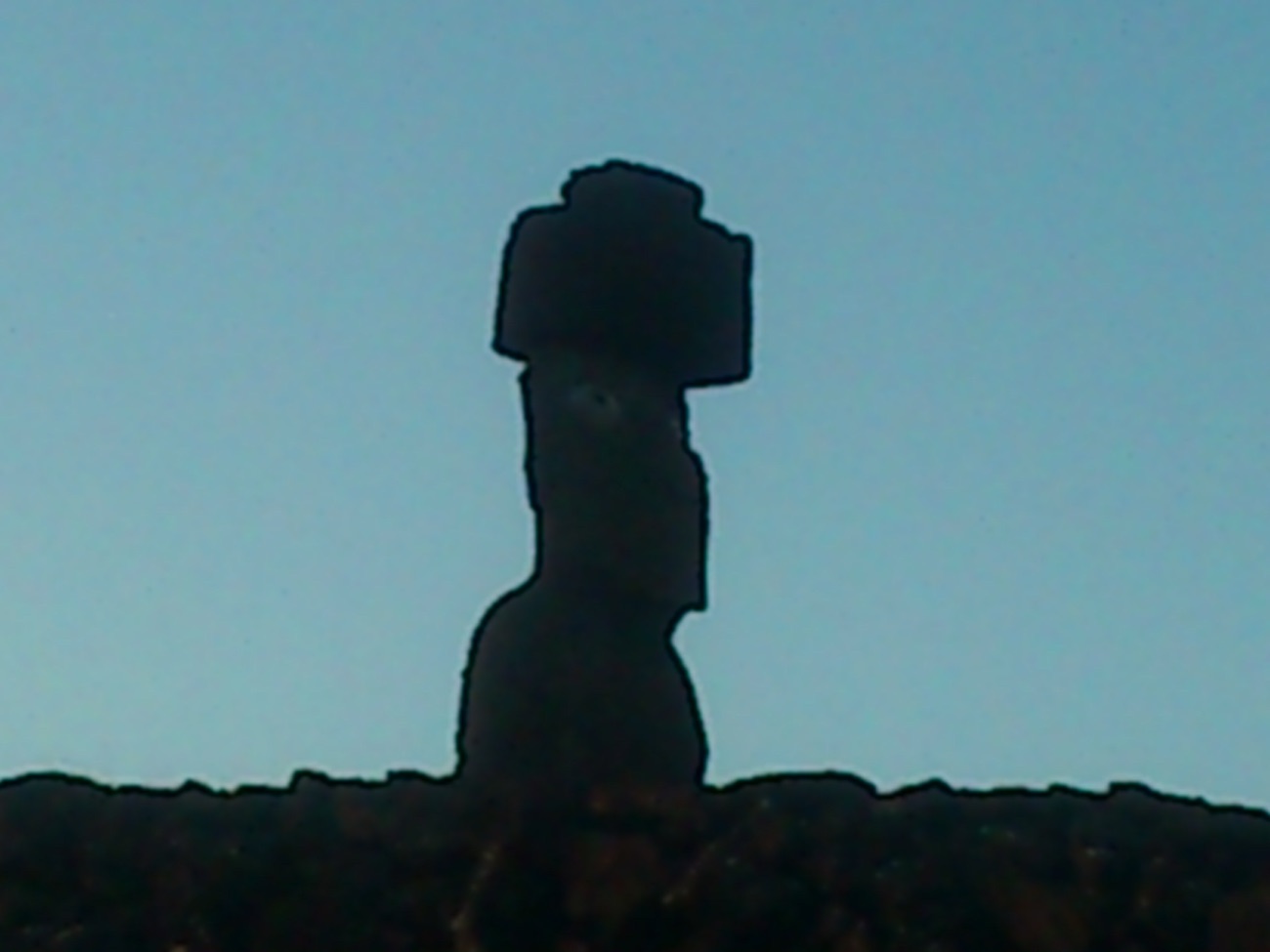
The details of their finishing mattered enormously. Many moai were crowned with a pukao, a great cylinder of red volcanic scoria quarried from a separate site, Puna Pau, and set atop the head as a topknot or headdress — itself a substantial feat of engineering, requiring the lifting of tonnes of stone onto an already-raised statue. And the eyes were crucial: the familiar image of blank-socketed moai is misleading, for when a statue was erected on its ahu, eyes of white coral with pupils of dark stone were fitted into the sockets, and it was this, in Rapanui understanding, that opened the moai's gaze and activated its sacred power. A moai with eyes was alive, in the sense that mattered; the statues we see today, mostly eyeless, are in a sense sleeping.
The quarry and the buried "heads"
Almost all the moai were carved at a single place: Rano Raraku, an extinct volcano whose slopes of soft volcanic tuff served as the island's great statue workshop. Here the Rapanui carved the figures directly out of the rock, shaping the face and body while the moai still lay attached to the bedrock, before detaching it and moving it down the slope. The quarry is the key to understanding the whole enterprise, because it preserves the process frozen at every stage: some four hundred moai remain at Rano Raraku, in every condition from barely begun to nearly finished, including the vast unfinished giant, over twenty metres long, still lying in the rock where its carvers left it.
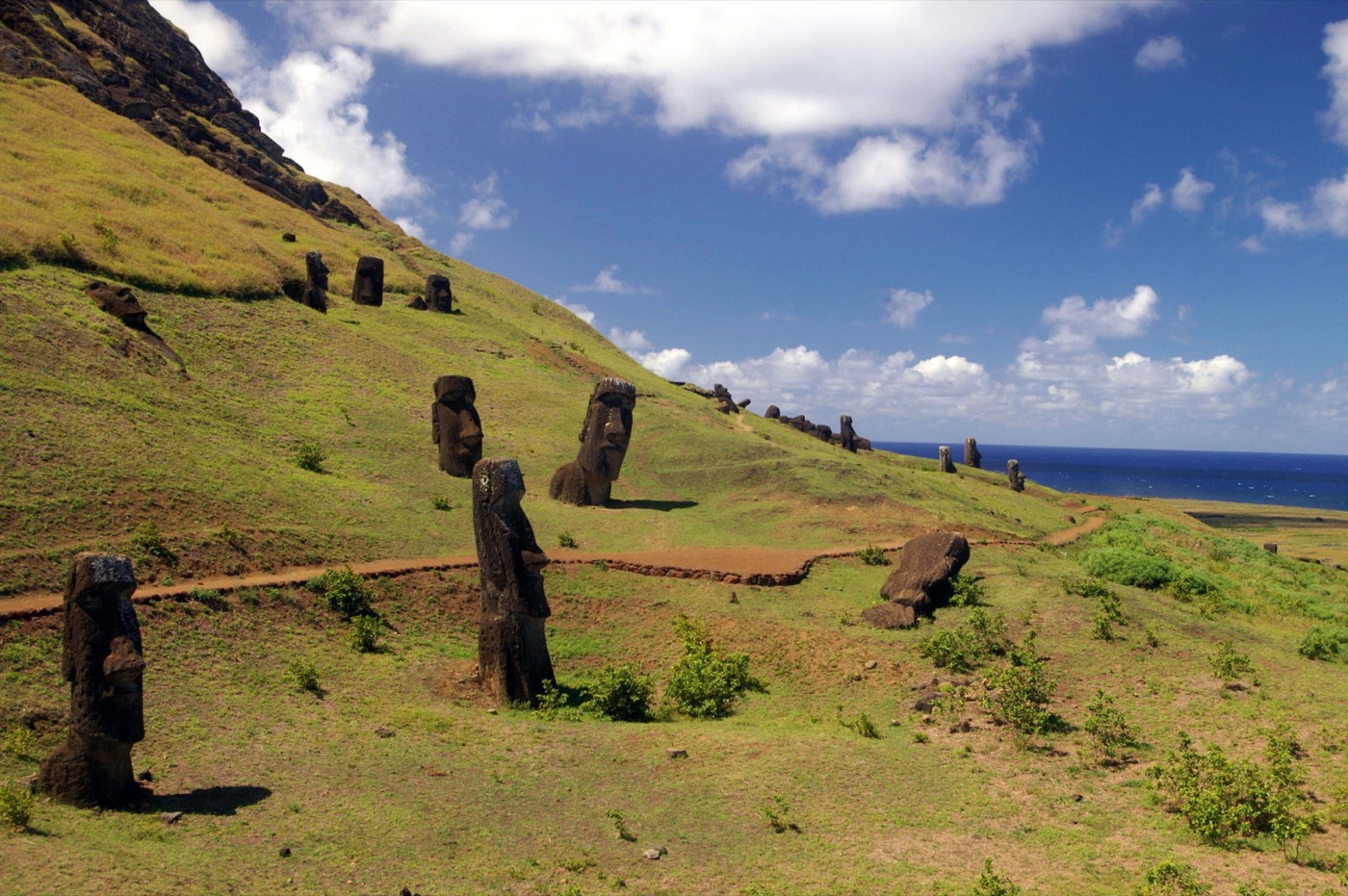
It is Rano Raraku that gives rise to the popular image of Easter Island's statues as giant disembodied heads. The moai that stand on the quarry slopes have, over the centuries, been buried up to their shoulders or necks by soil washing down the hill, leaving only their heads and faces exposed. But these are not heads; excavation has shown that they have full bodies beneath the ground, torsos and arms and hands, some carved with intricate designs on the back. The "heads" of Easter Island are complete figures, buried to the neck by time. It is a small but telling example of how easily the island is misread, and how often the truth lies literally beneath the surface of the obvious impression.
The walking moai
The question of how the moai were moved dominated speculation about the island for generations, and the answers proposed track the shifting ways outsiders imagined the Rapanui. The Norwegian explorer Thor Heyerdahl, who excavated on the island in the 1950s, demonstrated that a moai could be dragged horizontally on a wooden sledge or frame, a method that would have consumed enormous quantities of timber — and this image, of statues hauled prone over rollers of felled trees, became central to the later story of ecological ruin. But it never fit the island's own memory. The Rapanui had always said the moai walked, upright, to their ahu, and in the twenty-first century that claim was put to the test.
Working from the distinctive form of the statues — their forward lean, their fat bellies, their curved bases — Terry Hunt and Carl Lipo proposed that the moai were engineered to be moved vertically, rocked from side to side and "stepped" forward by teams pulling on ropes. In a widely publicised experiment, a team walked a five-tonne replica moai down a road in exactly this way, moving it hundreds of metres with only a few dozen people and no timber at all. The moai that lie broken along the old roads from the quarry support the picture: those heading away from Rano Raraku tend to lie face down, those returning face up, consistent with statues that toppled while being walked, and their bases are shaped for transport, not for standing. The method is efficient, requires no deforestation, and matches the tradition. The debate is not entirely closed, but the walking moai has moved from folklore to the leading explanation — a striking case of indigenous knowledge vindicated against a century of outside doubt.
The collapse that wasn't
If the walking moai restores credit to the Rapanui, the unravelling of the "ecocide" story restores something more important: their dignity. The popular account, given its most influential form in Jared Diamond's 2005 book Collapse, runs as follows: the Rapanui, in their zeal to carve and move ever more moai, cut down the island's forests until the last tree was gone; deforestation brought soil erosion, crop failure, and the loss of the timber and rope needed for canoes and statue-moving; society descended into famine, warfare, and even cannibalism; the population crashed; and the survivors, in despair or rage, toppled the moai of their rivals. It is a compelling and terrible parable, and it has been told and retold as a warning to our own civilisation. Its central problem is that the evidence increasingly does not support it.
The toppling of the moai fits this revised picture too. The statues we see standing today were all re-erected in modern times; when Europeans first came in the eighteenth century, the moai were still largely upright, and their deliberate toppling (the huri moai) happened mostly later, as the old ancestor-worship gave way — perhaps amid the disruptions of the contact era — to a new religious system, the Birdman cult centred at the ceremonial village of Orongo. The felling of the moai was not, on the current evidence, the death spasm of a society that had destroyed its environment, but part of a longer religious and social transformation, much of it overlapping with the arrival of outsiders. The morality tale of the islanders who doomed themselves, endlessly invoked as a lesson for humanity, is largely a story we told about them, not one the evidence tells.
The religious system that succeeded the age of the moai is itself revealing. As statue-building wound down, ritual life on Rapa Nui came to centre on the Birdman cult, or Tangata manu, focused on the dramatic clifftop village of Orongo overlooking the sea. Each year, contenders — or servants acting for them — would scale down the cliffs, swim through shark-filled water to the offshore islet of Motu Nui, and wait, sometimes for weeks, for the arrival of the migratory sooty terns; the man whose representative returned with the season's first egg became the Birdman for the year, a position of great prestige and sacred power. Far from the picture of a society dissolving into anarchy, this was an ordered, elaborate ritual world, with its own carved petroglyphs, ceremonies, and competition for status — evidence of a culture that was transforming, not simply collapsing. The Europeans who arrived in the eighteenth and nineteenth centuries — beginning with the Dutchman Jacob Roggeveen, who sighted the island on Easter Sunday 1722 and gave it the name by which the outside world knows it — encountered a living society, not the ruins of one.
Lost words: rongorongo
Amid all that has been recovered and revised, one genuine mystery of Rapa Nui remains stubbornly unsolved. The Rapanui possessed a script — rongorongo — a system of tiny, precise glyphs incised in rows on wooden tablets, depicting humans, animals, plants, and abstract forms. It appears to be one of the very few writing systems, or proto-writing systems, invented independently anywhere in human history, and it has never been deciphered. Whether it was true writing that recorded language, or a mnemonic and ritual device, is itself uncertain, and the question may never be answered — because the knowledge of how to read it was destroyed. The slave raids and epidemics of the 1860s killed the ariki and the ritual specialists who understood the tablets, severing the chain of transmission almost overnight, and most of the tablets themselves were lost or destroyed. Only a few dozen survive, scattered in museums, their meaning locked away.
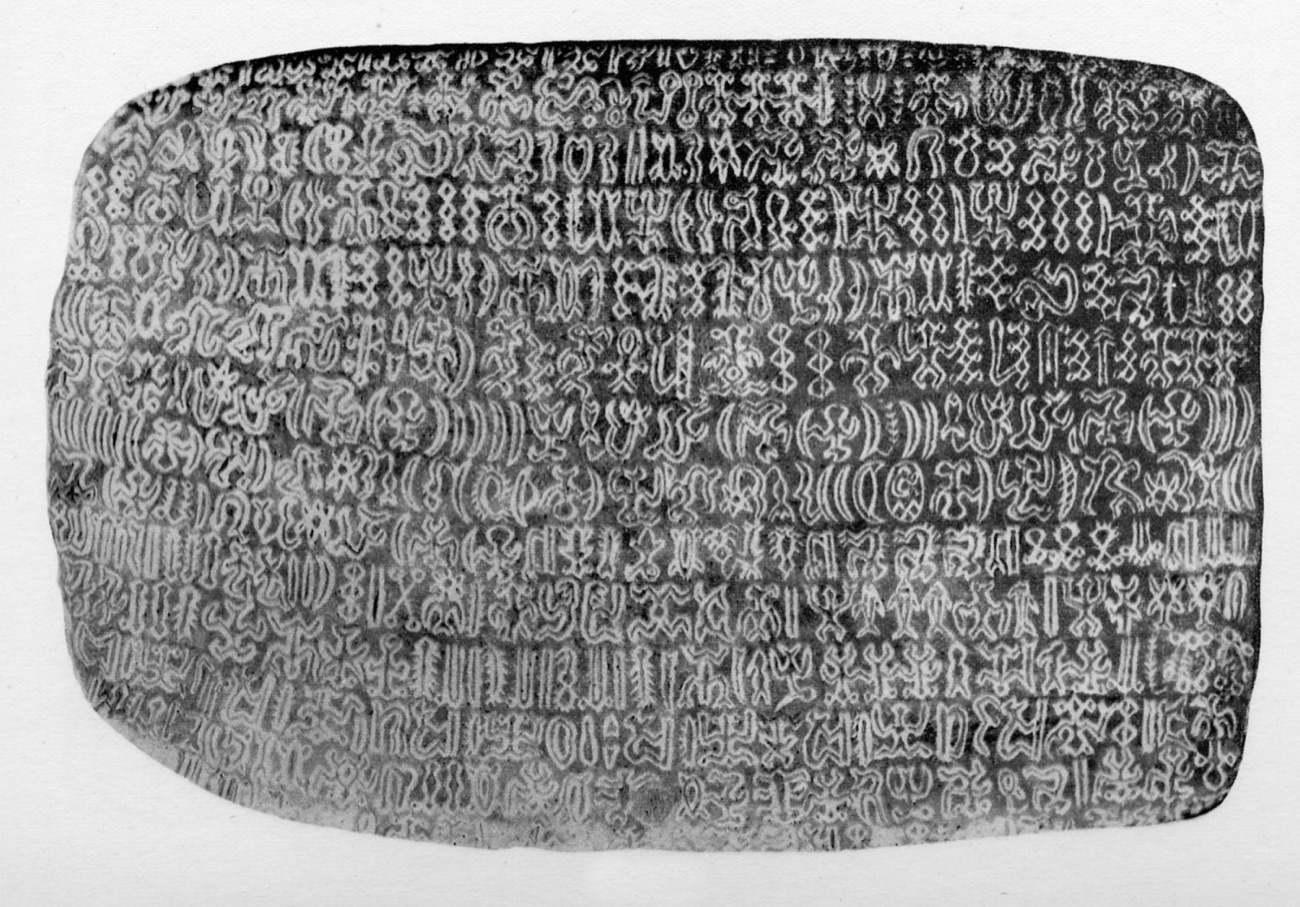
Rongorongo is the truest surviving enigma of Easter Island, and it is a poignant one, because its mystery is a direct wound of the island's real history. This is not knowledge that was never possessed, or that requires exotic explanation; it is knowledge that existed, that the Rapanui held, and that was violently taken from the world when the people who carried it were abducted or killed. The undeciphered tablets are a monument not to the limits of the ancient Rapanui but to the human cost of what was done to them.
What it means
The moai endure today as one of the most powerful images humanity has ever made — rows of stone ancestors gazing inland across a windswept island at the edge of the world. But their meaning, for us, has changed. They are no longer a riddle that defeats their makers, nor a tombstone for a society that supposedly destroyed itself. They are a monument to Polynesian genius: to the navigators who found this remotest of islands, to the carvers who drew a thousand ancestors out of the rock, to the engineers who walked them across the land, and to the farmers who wrung a living from thin soil for centuries. And they are, too, a memorial — to the knowledge lost when the island's world was shattered by slavers and disease, knowledge sealed forever in the undeciphered tablets.
In the end, Rapa Nui teaches a lesson quite different from the one it was long made to carry. It was told for decades as a warning about what people do to themselves, and it has turned out, on closer reading, to be a warning about what people do to one another — about how a resilient society, having solved the hard problems of survival on an isolated island and raised its ancestors in stone, could be brought to the edge of extinction not by its own folly but by the arrival of outsiders with chains and sicknesses. The moai still stand on their restored platforms, eyeless now, facing the land. They were made to watch over their people, and though the eyes that carried their mana are mostly gone, they keep their vigil still — over an island whose true history is finally being told, and whose people, against everything, survived to tell it. That is the real wonder of the statues that walked: not that they are inexplicable, but that they are, entirely and magnificently, the work of human beings who deserve at last to be seen clearly.
In the end, the statues of Easter Island stand as a rebuke to every impulse to explain human achievement away — whether by crediting it to aliens or by reducing it to a fable of self-destruction. On the most remote inhabited island on Earth, a Polynesian people carved nearly a thousand ancestors from volcanic rock, walked them upright across the land on their own two feet of stone, and set them to watch over the living; and when catastrophe came, it came in ships. The moai remain where their makers and their modern descendants raised them, gazing inland across the grass, keepers of a history that we are only now learning to read correctly. They are not a mystery imported from elsewhere or a warning about a people who failed. They are a testament to a people who, on the loneliest of islands, made something eternal — and who are still here.
Inspired this / based on it
Terry Hunt & Carl Lipo
The book presenting the walking-moai theory and the case against the ecocide narrative.
Jared Diamond
The influential book that popularised the "ecocide" account later archaeology has substantially revised.
Filed under
Click any tag for every article carrying it.
Continue reading
The Nazca Lines: Giant Drawings in the Peruvian Desert
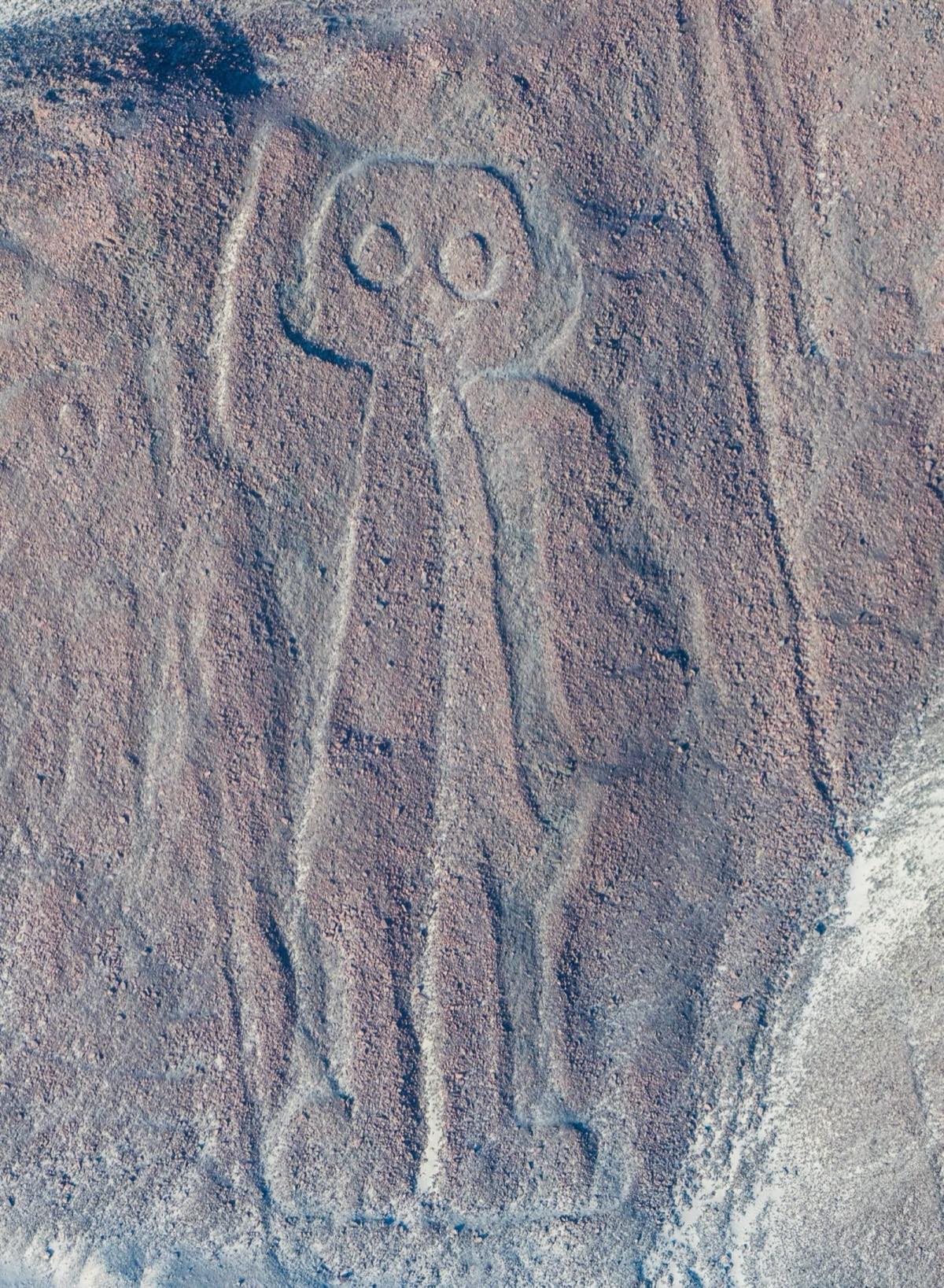
On the arid, wind-still plateau between the towns of Nazca and Palpa in southern Peru lies one of the most extraordinary bodies of ancient art on Earth: hundreds of vast figures and lines etched into the desert floor, so large that many are only fully legible from the air. There are straight lines running ruler-true for kilometres across the pampa; there are trapezoids, triangles, and spirals; and there are some seventy or more great biomorphic figures — a hummingbird, a monkey with a curling tail, a spider, a condor, a heron, a dog, a pair of hands, a flowering tree, and a humanoid figure on a hillside so often nicknamed 'the Astronaut.' They were made by the Nazca people, and by their Paracas predecessors, across roughly a thousand years around the start of the common era, by the simple and ingenious method of clearing away the dark, iron-stained stones of the desert surface to expose the paler ground beneath. Because it almost never rains here, and the wind barely stirs, the drawings have survived for two millennia. How they were made is, in fact, no mystery at all; the techniques are well within the reach of the people who made them, and required no view from the sky and certainly no help from beyond it. The genuine and unsolved question is why — what these enormous figures and lines were for. This is the story of the giant drawings in the desert.
Göbekli Tepe: The Temple That Rewrote Prehistory
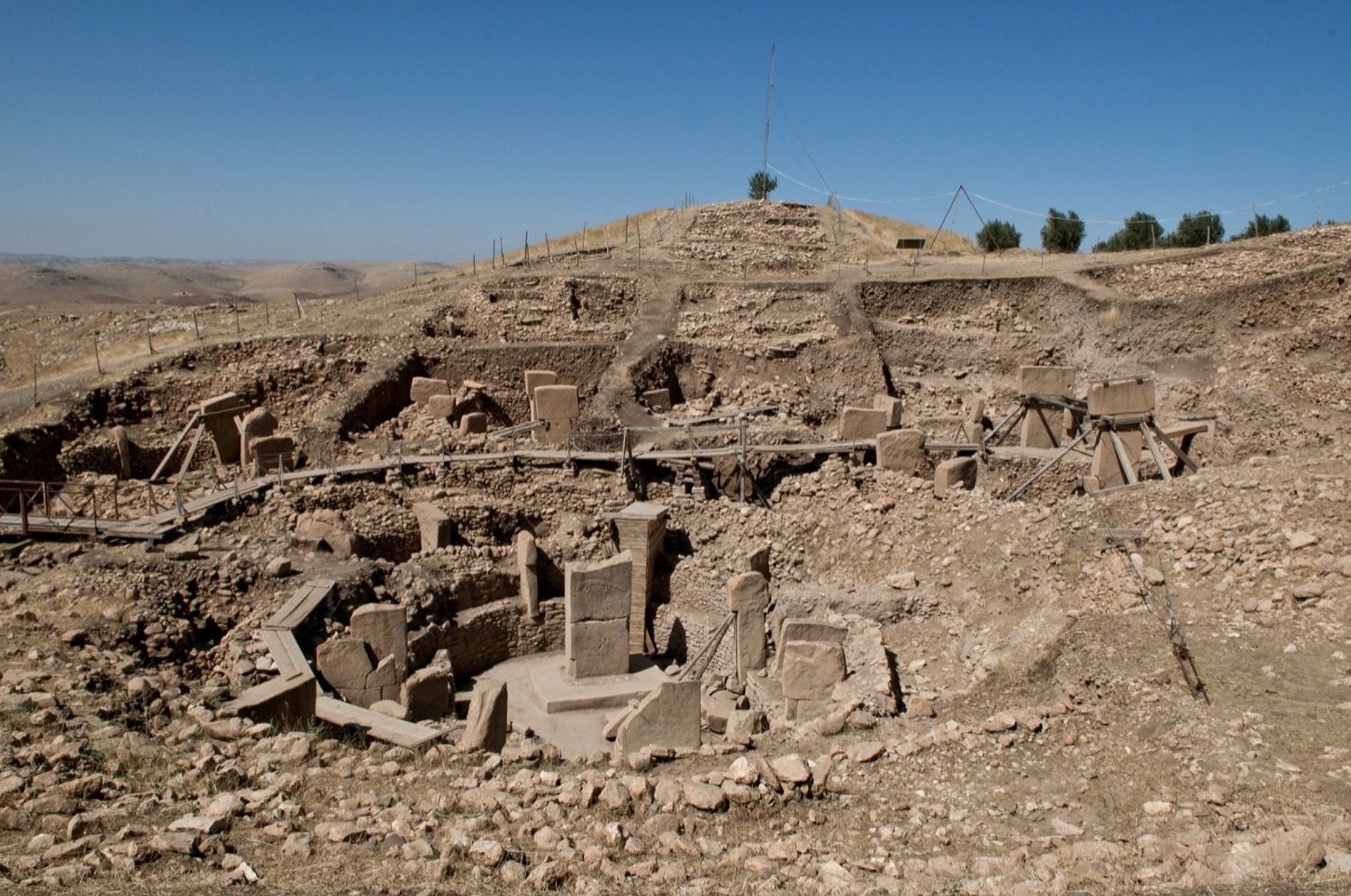
On a limestone ridge overlooking the plains of southeastern Turkey, near the ancient city of Urfa, stands a place that forced archaeologists to rewrite the earliest chapter of the human story. Göbekli Tepe — the name means 'Potbelly Hill' in Turkish — is a complex of great circular enclosures built from massive T-shaped stone pillars, some more than five metres tall and weighing many tons, many of them carved in relief with foxes, boars, snakes, scorpions, vultures, and other animals. It is staggeringly old. Radiocarbon dating places its construction to around 9500 BCE and earlier, making it roughly eleven and a half thousand years old — some six thousand years older than Stonehenge and seven thousand older than the Great Pyramid. What made the discovery revolutionary was not merely its age but who built it: not a settled society of farmers with cities and kings, but hunter-gatherers, people without pottery, without metal, without the wheel, and without — at least at first — agriculture itself. The prevailing wisdom had long held that monumental architecture was a product of civilisation, something only settled, food-producing societies could afford. Göbekli Tepe stood that assumption on its head, and suggested that the impulse to gather and build something great may have come first. It is a genuine mystery — but a mystery of human achievement, not of lost super-civilisations or visitors from the stars. This is the story of the temple that rewrote prehistory.
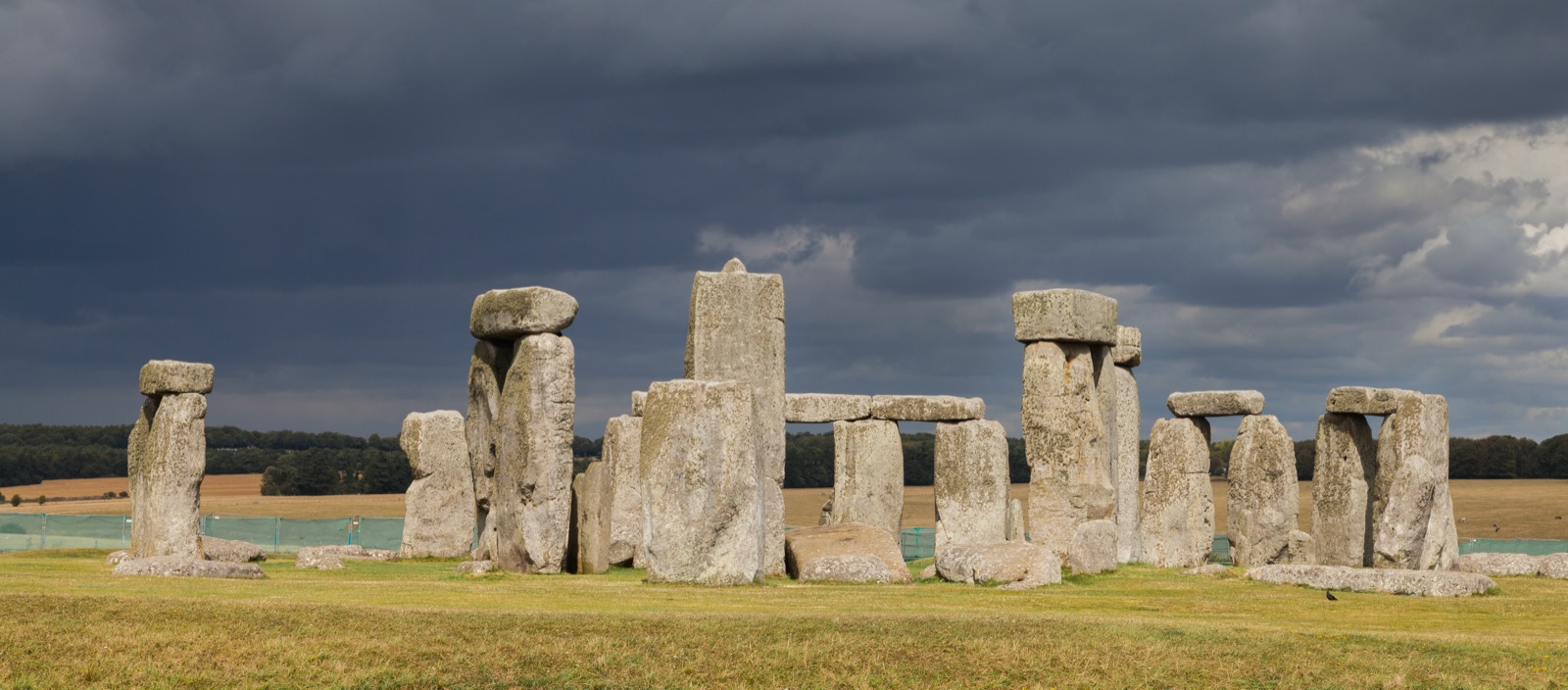
Stonehenge: The Great Stone Circle of Salisbury Plain
On the open chalk downland of Salisbury Plain in southern England stands the most famous prehistoric monument in the world: a ring of enormous standing stones, some capped by level lintels, arranged with a precision that has drawn wonder and speculation for more than a thousand years. Stonehenge was not built in a day, or in a single lifetime, or by a single people. It grew over roughly fifteen hundred years, from about 3000 BCE, beginning as a simple circular earthwork and cremation cemetery and culminating, centuries later, in the great stone architecture we know — the towering sarsens quarried from the hills to the north, and the smaller 'bluestones' brought, astonishingly, some 150 miles overland from the mountains of west Wales. Its builders, working with antler picks, timber, rope, and muscle, dressed the stones with woodworking joints translated into rock, raised lintels weighing tonnes onto uprights, and aligned the whole monument to the rising and setting of the sun at the solstices. For centuries, outsiders credited the achievement to anyone but the people who actually managed it — to Merlin and giants, to Druids, and in our own age to visitors from the stars. The truth is that Stonehenge is the work of prehistoric Britons of extraordinary skill and organisation. How they built it, we largely understand. Why they built it is a question we are still, carefully, trying to answer. This is the story of the great stone circle.