Tag
#1947
2 articles
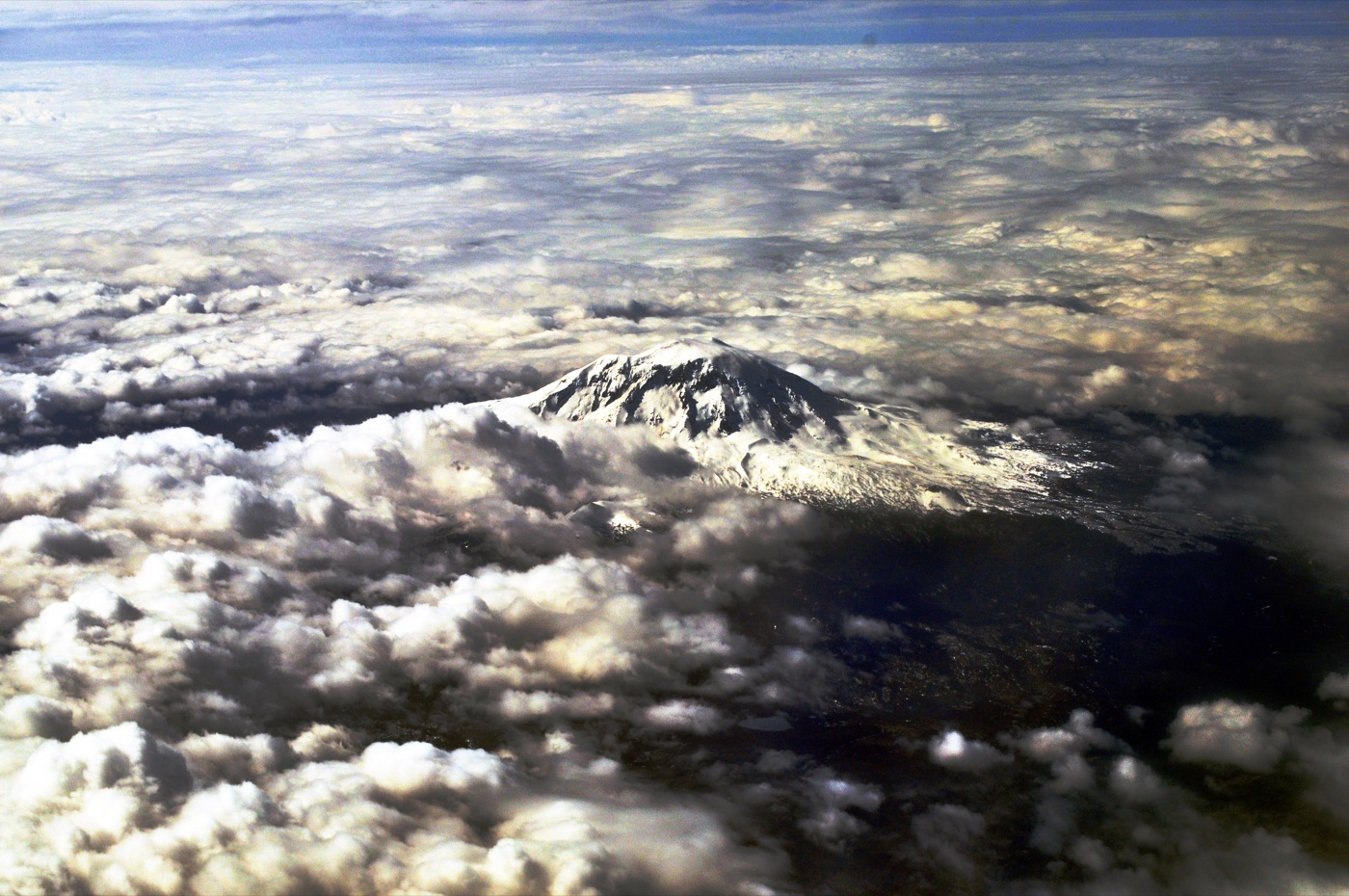
Kenneth Arnold: The Sighting That Invented the Flying Saucer
On the afternoon of 24 June 1947, a businessman and private pilot named Kenneth Arnold was flying his small aircraft near Mount Rainier, in the Cascade Range of Washington state, when he saw something that would change the world's imagination. Nine bright objects were streaking through the sky, flying in a chain formation at tremendous speed, weaving between the mountain peaks — moving, by his estimate, far faster than any aircraft of the era could manage. When he landed and described what he had seen to reporters, he reached for an analogy for the way the objects moved: they flew, he said, erratically, dipping and skimming, 'like a saucer would if you skipped it across water.' A reporter distilled this into a memorable phrase, and within days the newspapers of America were full of the term 'flying saucers.' It was, in a sense, a misunderstanding: Arnold had been describing the motion of the objects, not their shape, and the objects themselves he described as more crescent- or heel-shaped than round. But the phrase 'flying saucer' had entered the language, and with it came the idea of the round, disc-shaped craft that would become the iconic image of the UFO for generations. Within weeks, reports of 'flying saucers' were pouring in from across the country, and the crash near Roswell followed in early July. The modern age of UFOs had begun. This is the story of Kenneth Arnold's sighting — of what he saw, of how a phrase was born from a description of motion, and of how a single ambiguous encounter launched a global phenomenon.
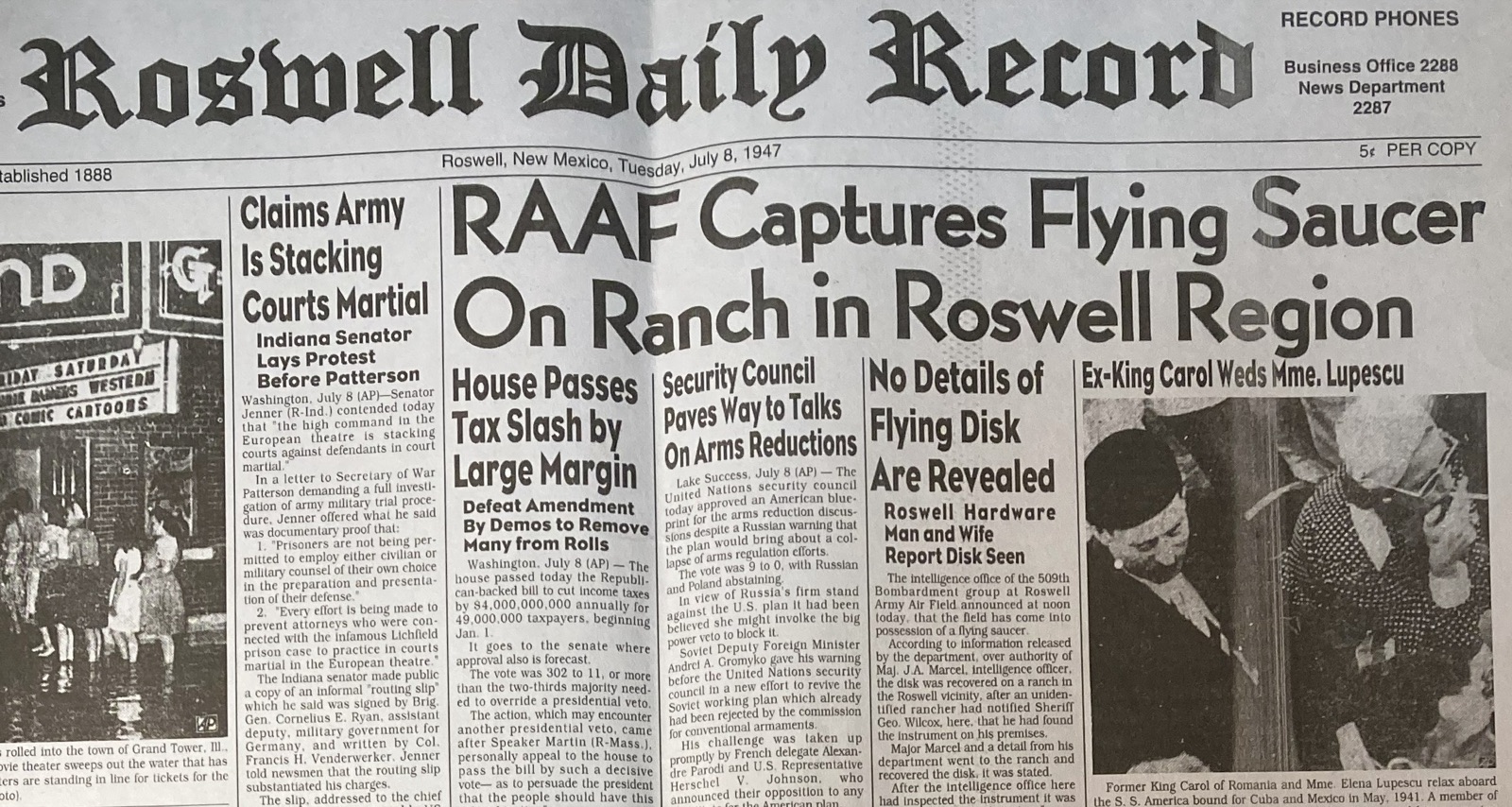
Roswell 1947 & Area 51
On July 8, 1947, the public information office of the Roswell Army Air Field issued a press release stating that the 509th Bomb Group had recovered the remains of a 'flying disc' from a ranch in Lincoln County, New Mexico. The release was carried on the front page of the *Roswell Daily Record* that afternoon under the headline 'RAAF Captures Flying Saucer On Ranch in Roswell Region.' Four hours later, General Roger Ramey at Fort Worth held a counter-press conference identifying the debris as a weather balloon. The story disappeared from the national press within a day. It stayed disappeared for thirty-one years. In 1978, the UFO researcher Stanton Friedman tracked down a retired Army officer named Jesse Marcel — the intelligence officer who had originally examined the ranch debris in 1947 — and recorded an interview in which Marcel said the material had not been a weather balloon. From that single interview emerged what is now the most-told American conspiracy story of the postwar period. In 1994 and 1997, after a Congressional inquiry, the U.S. Air Force published two reports identifying the 1947 debris as part of the classified Project Mogul — high-altitude acoustic balloons designed to detect Soviet atomic tests — and the supposed alien bodies of later witness accounts as anthropomorphic test dummies used in high-altitude parachute experiments between 1953 and 1959. Separately, in August 2013, the CIA's declassification of the U-2 spy plane history formally acknowledged the existence of Area 51 — the remote Nevada testing facility at Groom Lake — by name, for the first time.
2 files · end of the line