
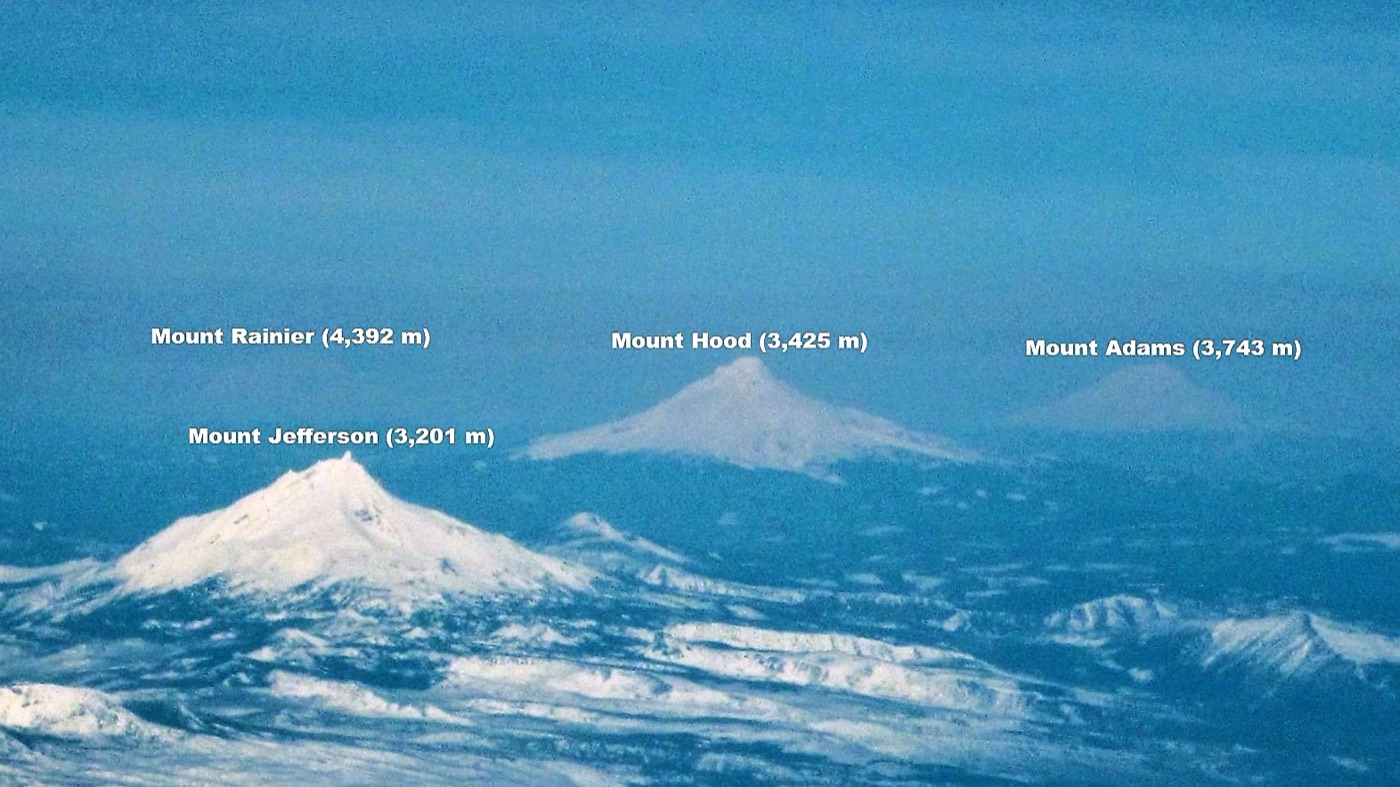
Mount Rainier in Washington state, near which Kenneth Arnold reported seeing nine strange objects on 24 June 1947 — the sighting that launched the modern UFO era and coined the term 'flying saucer.' Wikimedia Commons / CC BY 3.0.
Kenneth Arnold: The Sighting That Invented the Flying Saucer
United States, 1947 — A pilot saw nine strange objects streak past Mount Rainier and described how they moved: like saucers skipped across water. A reporter turned that into 'flying saucers,' and the modern age of UFOs — and its most iconic shape — was born from a misunderstanding
- Category
- Space & UFOlogy
- Published
- Length
- 3,450 words · 18 min read
- Author
- The editors
The Kenneth Arnold sighting matters less for what it may have been than for what it started. Whatever the nine objects over Mount Rainier actually were — and there are several ordinary candidates — the event is the origin point of the entire modern UFO phenomenon: the moment the term "flying saucer" was coined, the iconic disc shape entered the popular imagination, and a national and then global fascination with strange craft in the sky was born. It is also a near-perfect case study in how language shapes belief, because the very word that would define the phenomenon arose from a misunderstanding — a description of how objects moved, transformed by the press into a description of what they looked like. To understand Arnold's sighting is to watch a cultural phenomenon come into being, and to see how much of what we "know" about UFOs was set, accidentally, in the summer of 1947.
This is the story of the sighting that invented the flying saucer.
The flight
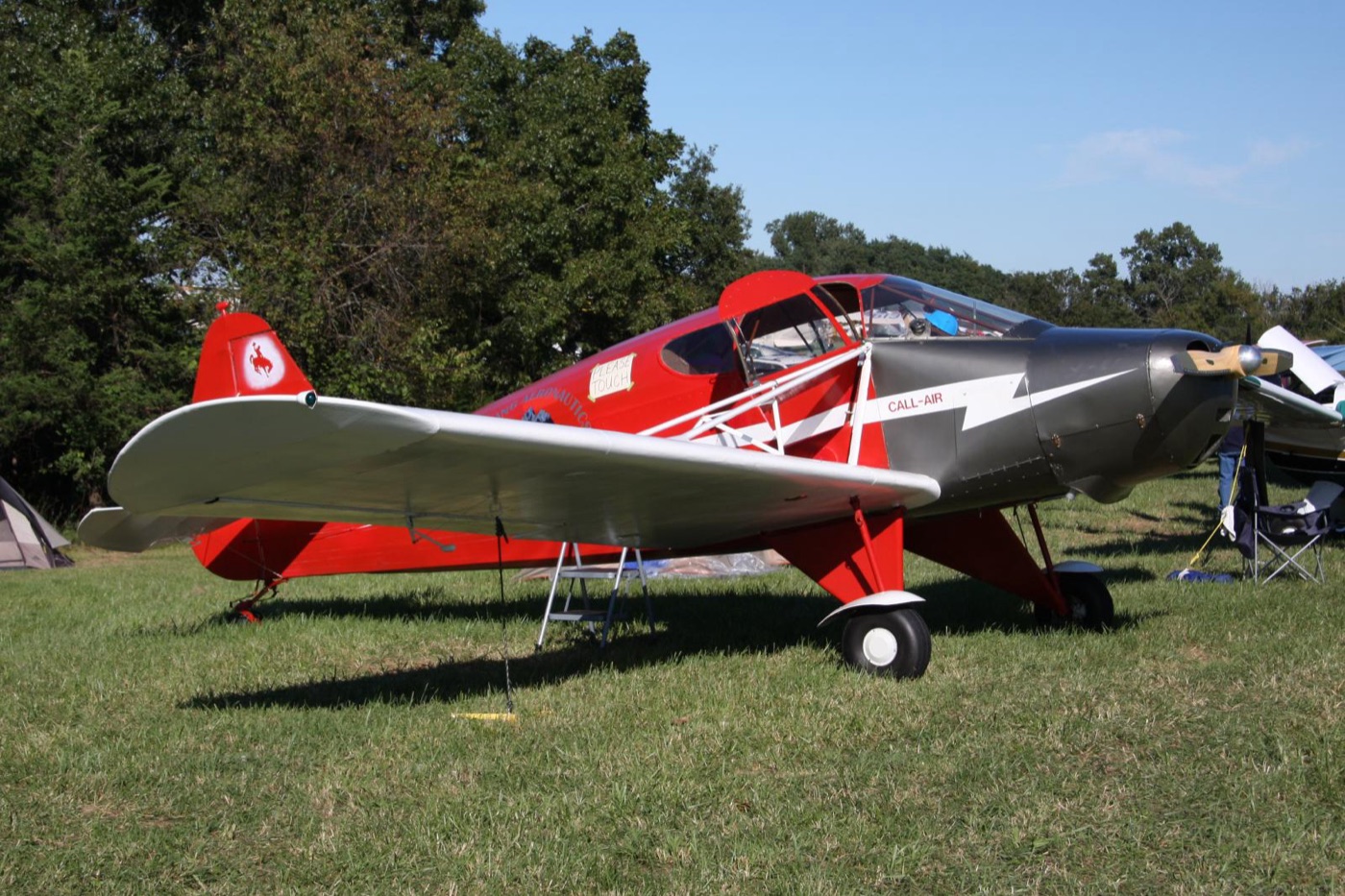
Kenneth Arnold was, by the standards of UFO witnesses, an unusually credible figure. A thirty-two-year-old businessman who sold fire-control equipment, he was also a skilled and experienced private pilot who flew his own aircraft for work across the mountainous Pacific Northwest, and he served as a deputy federal marshal. On 24 June 1947, he was flying his small CallAir plane in the vicinity of Mount Rainier, in part keeping an eye out for a Marine Corps transport aircraft that had gone down in the mountains, for which a reward had been offered.
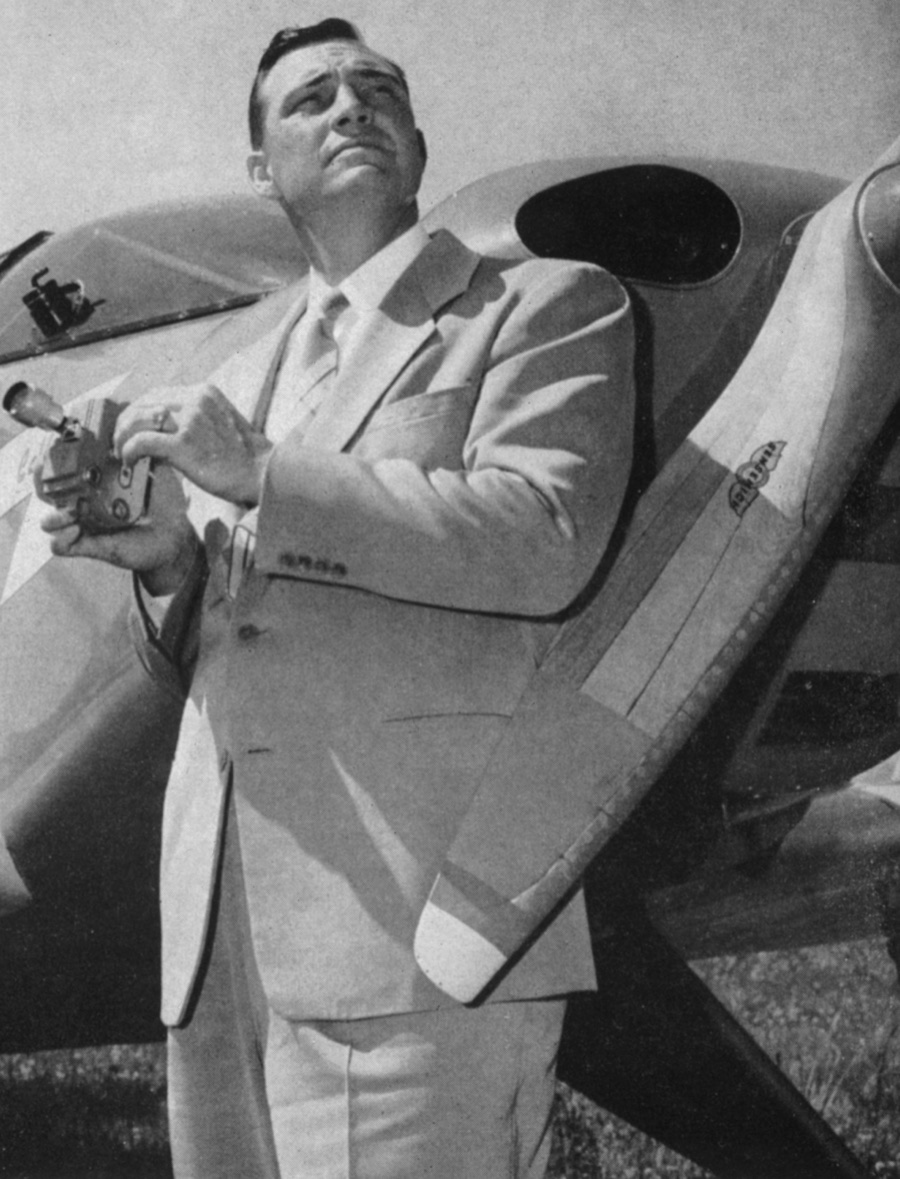
It was in the clear afternoon sky, at around three o'clock, that Arnold saw what he would spend the rest of his life describing. A bright flash of light caught his attention, and then he saw them: a formation of nine shining objects, flying in a long chain or echelon, moving at great speed through the sky near the mountain peaks. He watched them for several minutes as they traveled southward, weaving among the summits from the area of Mount Rainier toward Mount Adams, and he tried, as a pilot accustomed to judging speed and distance, to work out how fast they were going.
The speed and the shape
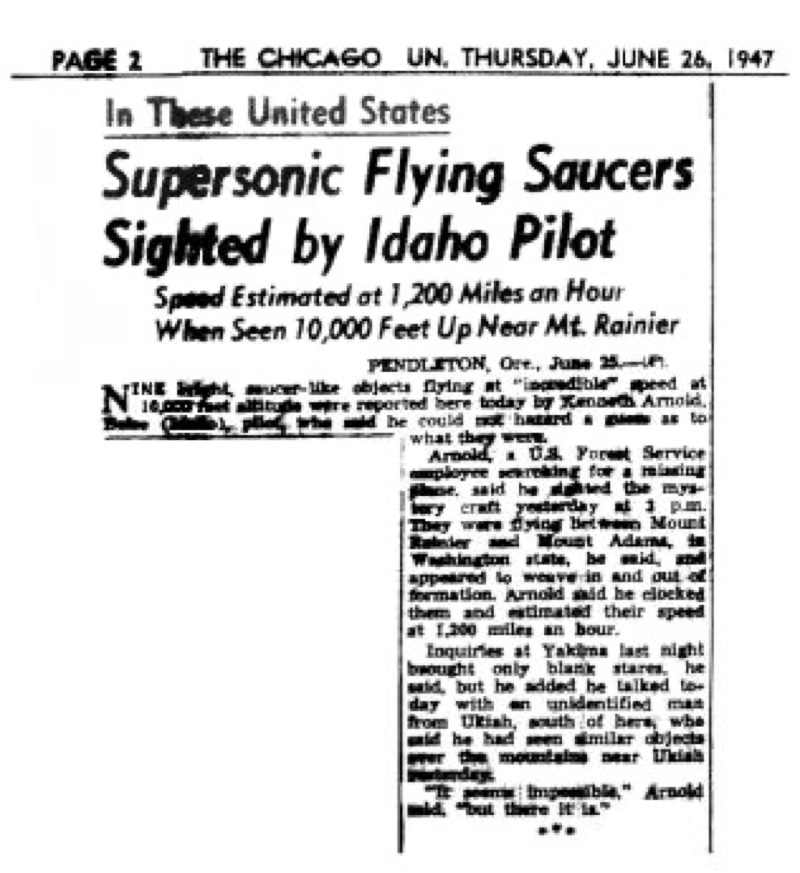
The figure Arnold arrived at was astonishing. Timing the objects as they passed between landmarks whose distance he knew, he calculated that they were traveling at something on the order of 1,200 miles per hour or more — a speed far beyond the capability of any aircraft in 1947, well into what would later be called supersonic, at a time when no aircraft had officially broken the sound barrier. This extraordinary speed was central to why the sighting could not be readily dismissed as ordinary planes: if Arnold's estimate was right, the objects were performing far beyond known technology.

As for the objects' appearance, Arnold described them as flat and thin, shaped — by various accounts he gave — like crescents, or heels, or convex discs, shining brightly in the sun. It is important to note that his descriptions of the shape were not entirely consistent and did not straightforwardly amount to "round saucers." What he described most vividly and consistently was the way they moved: erratically, fluttering and dipping, tipping from side to side. And it was this — the motion, not the shape — that gave rise to the phrase that would define the whole phenomenon.
The birth of a phrase
The phrase caught fire with remarkable speed. Arnold's account, carried by the Associated Press and other wire services in the last week of June 1947, became a national sensation almost overnight, and it triggered a wave of imitation and recognition: within days, people across the United States were reporting their own sightings of "flying saucers," and the newspapers filled with them. The summer of 1947 became the first great UFO wave, and it was into this charged atmosphere that the events near Roswell, New Mexico, unfolded in early July, when an Army airfield announced it had recovered a "flying disc" before quickly retracting the claim. The modern UFO era, with its vocabulary and its iconic imagery, had been born in a matter of weeks, and Kenneth Arnold's sighting was its starting gun.
The timing of all this was not accidental, and the cultural context helps explain why Arnold's sighting resonated so powerfully. The summer of 1947 fell in the anxious dawn of the Cold War and the atomic age. The Second World War had ended only two years earlier, having demonstrated the terrifying pace of technological advance — radar, jet aircraft, the V-2 rocket, and above all the atomic bomb — and the new confrontation with the Soviet Union was taking shape amid fears of secret weapons and surprise attack. Into this atmosphere of technological dread and suspicion, the idea of unknown craft of impossible performance in the sky landed on fertile ground. Some feared the objects were secret Soviet weapons; some, secret American ones; and the leap to visitors from elsewhere was, for a public newly aware of how strange and swift technology could be, not so large. The flying saucer was, in this sense, a creature of its moment — an anxiety of the atomic age given a shape and a name.
The explanations
What did Arnold actually see? Several ordinary explanations have been proposed over the years, none of them proven, but several plausible. One is a mirage or atmospheric distortion: under certain conditions, a temperature inversion can bend light and make distant objects — snowfields, mountain features, or aircraft — appear to shimmer, stretch, and move strangely, which could account for bright, wavering shapes near the peaks. Another is a meteor or fireball breaking into fragments, though the several-minute duration Arnold described is long for a meteor. A third is a formation of aircraft, although none known at the time matched the appearance or the speed.
The explanation most favored by skeptics turns on the crucial weakness in Arnold's account: his speed estimate depended entirely on his assumption of how far away the objects were. Arnold judged the objects to be large and distant, near the mountains, and from that assumed distance he derived their tremendous speed. But if the objects were in fact much smaller and much closer to his aircraft than he supposed, then the same apparent motion would correspond to a far lower actual speed — an ordinary one. This is the basis of the leading skeptical explanation: that Arnold saw a flock of birds — pelicans, perhaps, whose broad white wings could flash in the sun — flying much nearer to him than he realized, so that their real speed was mundane and only his misjudgment of distance made it seem impossible. The bird explanation accounts for the flashing, the formation, and the erratic motion, and it dissolves the speed problem entirely by removing the false assumption of distance on which it rested.
What Arnold believed
Arnold himself never accepted these explanations. An experienced pilot, he was confident in his judgment of distance and speed and insisted that what he saw were structured objects, not birds or mirages, moving at genuinely impossible velocities. He became, briefly, a national figure and was drawn into the burgeoning world of UFO investigation, but he grew weary of the sensationalism and the ridicule that attached to the subject, and he largely withdrew from public life, while maintaining to the end that his sighting had been real and unexplained.
Arnold's brush with the emerging UFO world included a strange and cautionary episode. Not long after his sighting, he was drawn into investigating another reported case — the so-called Maury Island incident, involving claims of debris from a UFO near Tacoma — which turned out to be a hoax, and which entangled him in a confusing affair that ended with the deaths of two military officers in a plane crash while carrying alleged evidence. The episode soured Arnold on the whole business and illustrated, early on, a pattern that would recur throughout UFO history: the way a genuine puzzle attracts hoaxers, opportunists, and sensationalists, whose fabrications muddy the water and make sober assessment harder. Arnold, a serious man who believed he had seen something real, found himself adrift in a world of tall tales and ridicule, and his retreat from it was in part a retreat from what the phenomenon he had inadvertently named was becoming.
Assessing Arnold's credibility is genuinely difficult, and it cuts in more than one direction. On one hand, he was exactly the kind of witness who is hard to dismiss: sober, experienced, respected, with no evident motive to lie and much to lose from ridicule, and his account was consistent in its essentials. On the other hand, even the most credible and experienced observer can be mistaken, and the specific error the skeptics propose — a misjudgment of distance — is precisely the kind of mistake that even a skilled pilot can make when confronting unfamiliar objects with no clear reference for scale, and it is an error that would convert an impossible sighting into an ordinary one. Sincerity and experience make Arnold a good witness to the fact that he saw something; they do not make him infallible about what it was.
The meaning of Kenneth Arnold
In the end, Kenneth Arnold's sighting endures not as a solved case or a proven encounter, but as the accidental birth of a phenomenon. On a clear June afternoon in 1947, an experienced pilot saw nine objects he could not identify streak past a mountain at what he judged to be impossible speed, and when he described how they moved — like saucers skipped across water — a reporter turned the simile into a name, and the flying saucer was born. Whatever the objects actually were, and the ordinary candidates of birds and mirages are strong, the sighting's true and lasting effect was to create, in a matter of days, both the defining term and the defining image of the UFO, and to launch a fascination that has never since abated. It is a case that reveals less about visitors from elsewhere than about ourselves — about how readily an ambiguous experience, given a memorable name at the right cultural moment, can crystallize into a myth that shapes perception for generations. The nine objects over Mount Rainier may have been nothing extraordinary at all. But the phrase they inspired changed the way the world looks at the sky, and that, more than any question of what Arnold really saw, is why his name still matters.
Inspired this / based on it
Kenneth Arnold & Ray Palmer
Arnold's own account of his sighting and the Maury Island affair.
Edward J. Ruppelt
Doubleday. The former Blue Book chief's account, which places the Arnold sighting at the origin of the phenomenon.
Filed under
Click any tag for every article carrying it.
Continue reading

The Phoenix Lights: The Mass Sighting Over Arizona
On the evening of 13 March 1997, thousands of people across the American state of Arizona looked up and saw something they could not explain. Reports poured in from a corridor hundreds of kilometers long, from near the Nevada border down through the city of Phoenix and on toward Tucson, and they described, in fact, two distinct phenomena. The first, earlier in the evening, was a huge V-shaped or triangular formation of lights that moved slowly and silently southward across the sky; many witnesses insisted it was not a group of separate lights at all but a single, enormous solid craft, so large it blotted out the stars as it passed overhead. The second, later that night, was a row of brilliant lights that appeared to hover over the Phoenix area and then winked out one by one. Together these became known as the Phoenix Lights, one of the largest mass UFO sightings in modern history. In the years since, the two events have followed very different paths. The later lights over Phoenix have a firm and well-supported explanation. The earlier V-formation does not, and remains genuinely debated to this day. And the story gained a strange twist when the state's governor, Fife Symington, who had at first responded to the sightings with a mocking joke, publicly reversed himself a decade later and admitted that he, too, had seen the craft that night — and believed it was something not of this world. This is the story of the Phoenix Lights, of what can be explained and what cannot, and of a governor's change of heart.
The Rendlesham Forest Incident: Britain's Most Famous UFO Case
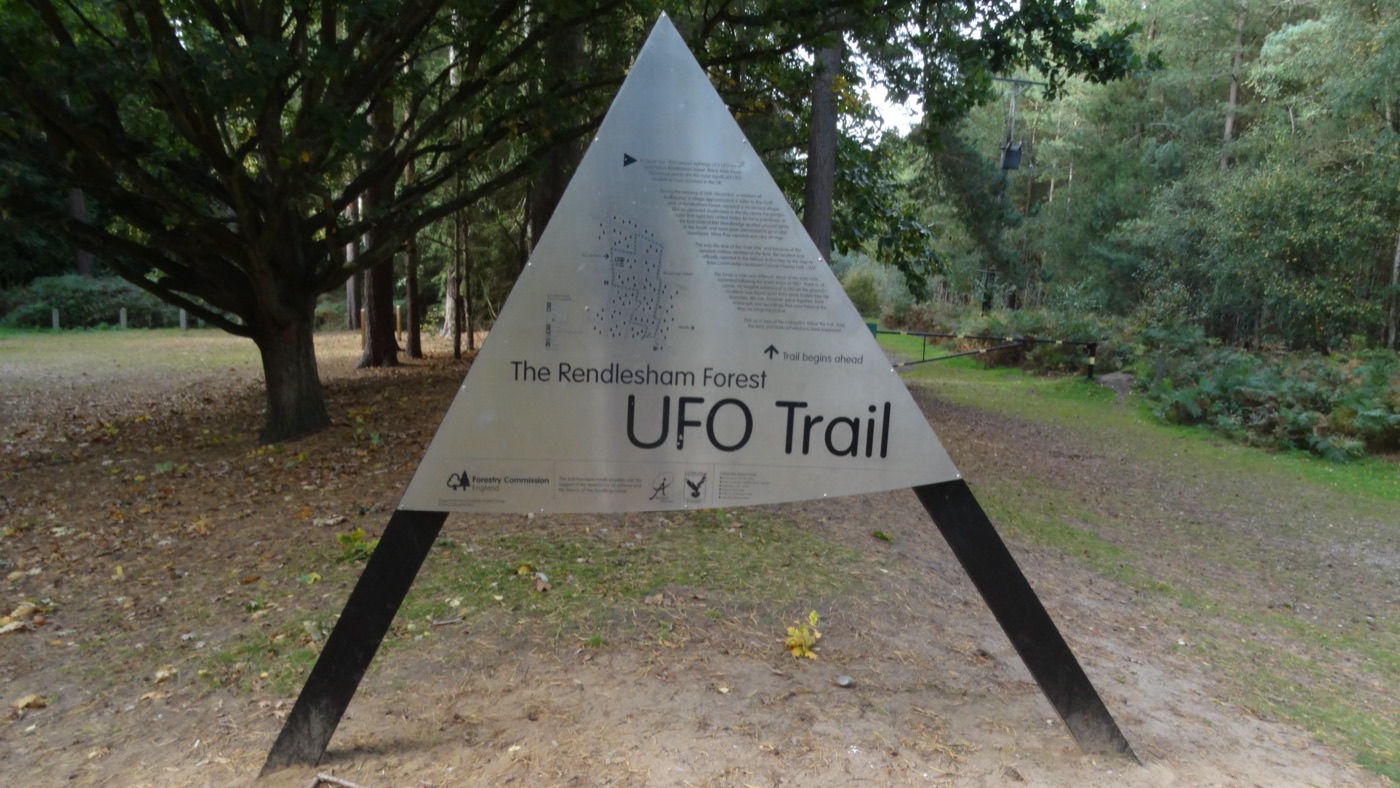
In the last week of December 1980, in Rendlesham Forest on the coast of Suffolk in eastern England, something happened that has been argued over ever since. The forest lay between two adjacent airbases, RAF Woodbridge and RAF Bentwaters, then used by the United States Air Force at the height of the Cold War, and it was American servicemen stationed there who became the witnesses to what is now often called 'Britain's Roswell.' In the small hours of 26 December, security personnel at the base saw strange lights descending into the forest, and, thinking an aircraft might have crashed, went in to investigate. What they reported finding — a metallic, structured craft with lights and strange markings, hovering or resting among the trees — became one of the most famous UFO accounts in the world. Two nights later the base's deputy commander, Lieutenant Colonel Charles Halt, led his own investigation into the forest and recorded it on tape as it unfolded, describing pulsing lights and objects in the sky. His subsequent official memorandum, released years later under freedom-of-information laws, gave the case a documentary weight that few UFO stories possess. And yet the incident has a strong and well-argued mundane explanation, centered on a nearby lighthouse, a bright meteor, and misperceived stars — an explanation the witnesses have always rejected. This is the story of what happened in Rendlesham Forest, and of why, more than four decades later, it remains unresolved.
Project Blue Book: The Air Force's Long Study of UFOs
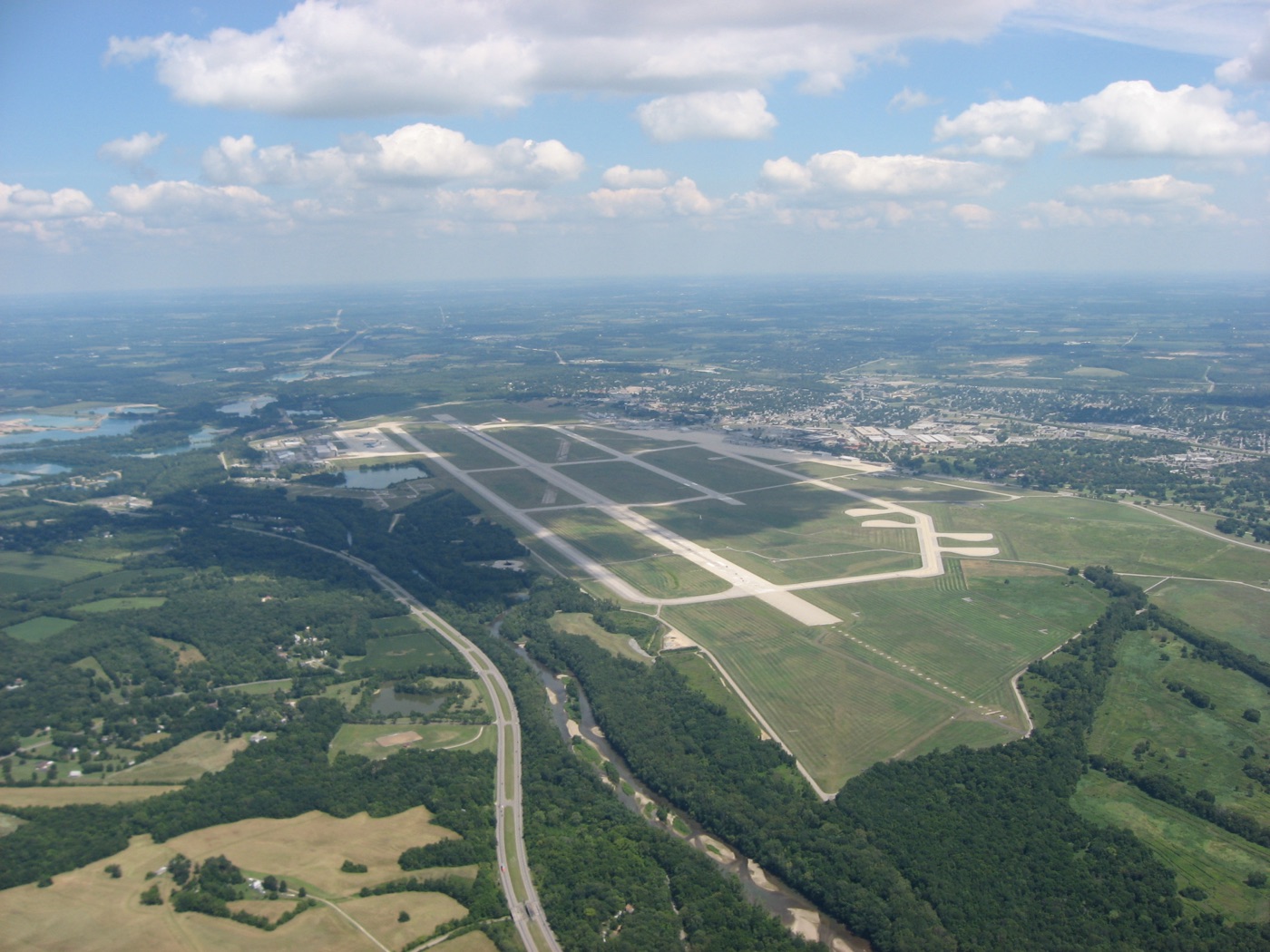
In the years after 1947, when the sighting by Kenneth Arnold and the events at Roswell launched the modern UFO era, the United States Air Force found itself confronting a steady stream of reports of unidentified objects in the sky — some from credible witnesses, some tracked on radar, all demanding some kind of official response in the anxious atmosphere of the early Cold War. The Air Force's answer was a series of official investigations, culminating in the longest and most famous of them: Project Blue Book, which ran from 1952 until 1969 and became the definitive government study of UFOs of its era. Over those seventeen years, Blue Book collected and examined more than twelve thousand reported sightings, seeking to determine what people were seeing and whether any of it threatened national security or represented technology beyond human capability. Its investigators concluded that the overwhelming majority of sightings had ordinary explanations — misidentified aircraft, weather balloons, stars and planets, atmospheric effects, and hoaxes — and that none of the cases provided evidence of extraterrestrial vehicles. Yet Blue Book also left behind a residue of several hundred cases that it could not explain, and it became the focus of a lasting controversy: was it a serious scientific effort that reached an honest, if unexciting, conclusion, or was it, as critics including its own scientific consultant came to argue, more a public-relations exercise designed to explain sightings away and reassure the public than to study them seriously? This is the story of Project Blue Book, of what it found and what it did not, and of the argument over how a government should investigate the unknown.