Tag
#cryptography
2 articles

The Zodiac Killer and the Cipher That Held Out for Fifty Years
Between December 1968 and October 1969, someone shot or stabbed seven people in the suburbs and countryside around San Francisco Bay, killing five of them, and then did something almost no murderer does: he wrote to the newspapers. In a series of letters to the San Francisco Chronicle, the San Francisco Examiner, and the Vallejo Times-Herald, a man claiming the killings announced himself, demanded that his words be printed on the front page on pain of further murders, signed himself with a crossed-circle symbol, and opened his messages with a line that became infamous — 'This is the Zodiac speaking.' He enclosed ciphers, blocks of strange symbols that he said concealed his identity, and he taunted the police forces of four separate jurisdictions who could not catch him. One of those ciphers, a 408-symbol cryptogram, was broken within a week by a pair of schoolteachers; another, the 340-symbol cipher he mailed in November 1969, defeated professional and amateur codebreakers for fifty-one years before an international trio cracked it in December 2020 — and, like the first, it contained taunts but no name. The Zodiac claimed thirty-seven victims; police could confirm five. He was never identified, never charged, never caught. The case remains officially open more than half a century later, the most famous unsolved serial-murder case in American history, and one whose grip on the public comes precisely from its central absence: a killer who told the world everything except the one thing it most wanted to know. This article reconstructs what is actually known — the confirmed murders, the letters, the ciphers and what they did and did not reveal — and separates it from the long parade of suspects and 'solutions' that have never quite closed the case.
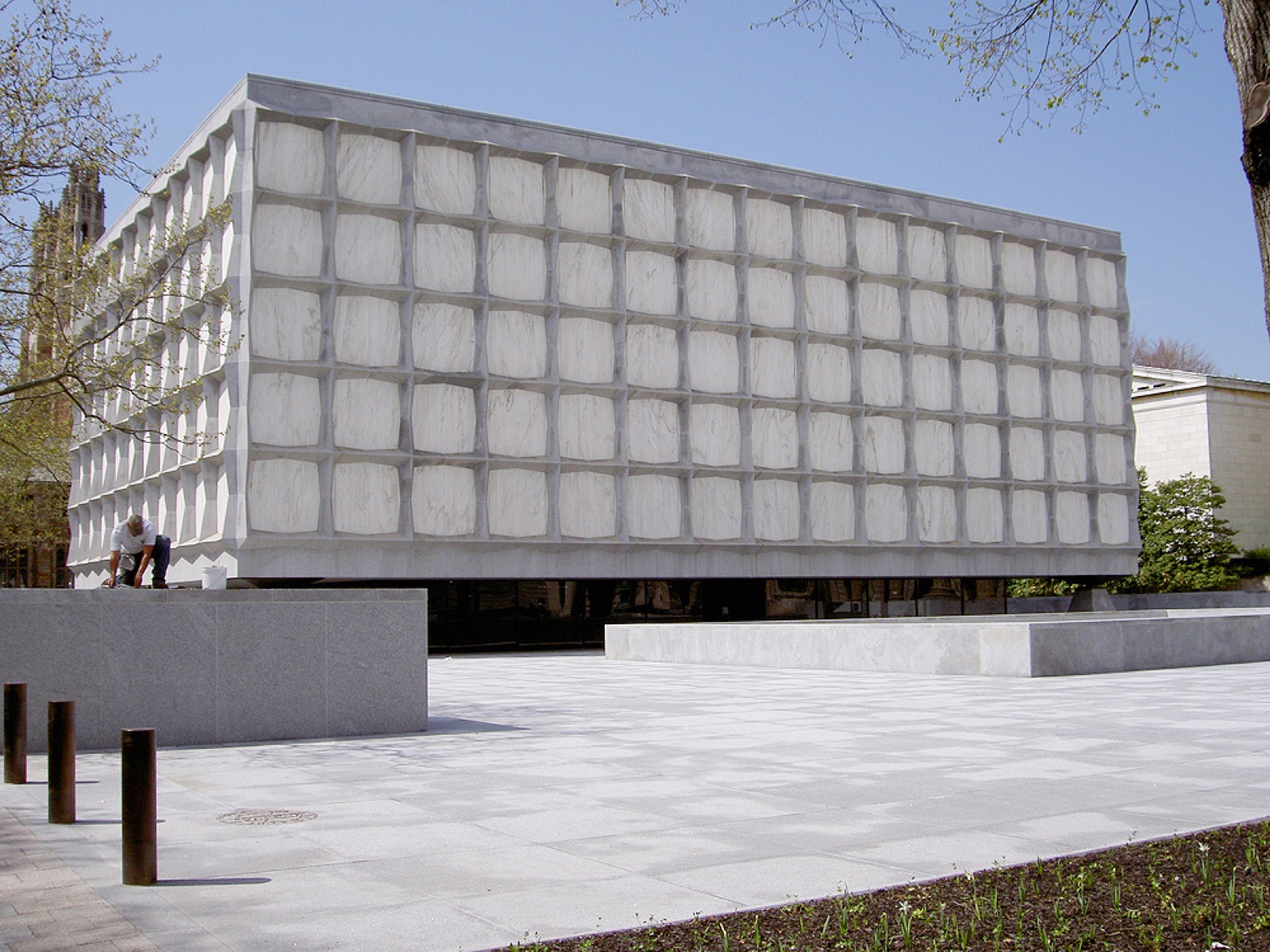
The Voynich Manuscript
Sometime between 1404 and 1438 — the period to which the University of Arizona's accelerator mass spectrometry laboratory carbon-dated four samples of its vellum in 2009 — someone, almost certainly in northern Italy, produced a 240-page illustrated manuscript in a script that no one before or since has been able to read. The codex is now held as MS 408 of the Beinecke Rare Book and Manuscript Library at Yale University. It is one of the most studied documents in existence. It has been examined by the leading cryptographers of two centuries — including the team at the U.S. Army's Signal Intelligence Service that broke Japanese diplomatic codes in 1940 — and by the leading natural-language statisticians and machine-learning researchers of the present generation. Every claimed decipherment, of which there have been several dozen, has been rejected by the broader academic consensus. The script — colloquially 'Voynichese' — exhibits statistical patterns that resemble those of natural human languages while corresponding to no known language. The illustrations are recognizably medieval in style but depict, in their botanical sections, plants that match no identified species, and in their balneological sections, scenes of small naked female figures in green pools connected by what appear to be plumbing systems. The manuscript surfaced in the historical record in 1639 (a letter from a Bohemian alchemist to the Jesuit polymath Athanasius Kircher), disappeared again, and re-emerged in 1912 when the Polish-American bookseller Wilfrid Voynich purchased it from a Jesuit college near Rome. It has been at Yale since 1969. The Beinecke made it freely downloadable in 2020. The case file is mathematical, philological, and codicological. It is open in every sense.
2 files · end of the line