
Lake Berryessa, in the hills of Napa County, California. On September 27, 1969, a hooded man wearing a crossed-circle symbol stabbed two college students picnicking on its shore, killing Cecelia Shepard and gravely wounding Bryan Hartnell — the only one of the Zodiac's confirmed attacks at which the survivor saw the costume and lived to describe it. Wikimedia Commons / Alex Wild, CC0 (public domain dedication).
The Zodiac Killer and the Cipher That Held Out for Fifty Years
Northern California, 1968-69 — five confirmed murders, a taunting correspondent who signed himself with a crossed circle, four ciphers, and a killer the police never named
- Category
- Assassinations & Disappearances
- Published
- Length
- 4,480 words · 18 min read
- Author
- The editors
The Zodiac Killer and the Cipher That Held Out for Fifty Years
Northern California, 1968-69 — five confirmed murders, a taunting correspondent who signed himself with a crossed circle, four ciphers, and a killer the police never named.
The murders
The confirmed crimes were few, brutal, and clustered into less than a year, and what set them apart from the era's other violence was not their number but what came after them.
It began on the night of December 20, 1968, on Lake Herman Road, a dark rural lane outside Benicia in Solano County used by local teenagers as a place to park. David Faraday, seventeen, and Betty Lou Jensen, sixteen, on their first date, were shot to death beside their car. There was no robbery, no sexual assault, no apparent motive, and no suspect. Just over six months later, near midnight on July 4, 1969, a man approached a car in Blue Rock Springs Park in Vallejo, a few miles away, and opened fire on the two people inside: Darlene Ferrin, twenty-two, who was killed, and Michael Mageau, nineteen, who was badly wounded but survived. Within the hour, a man telephoned the Vallejo police, directed them to the scene, and claimed the shooting — and the Lake Herman Road murders too.

The killer's method changed but his appetite did not. On September 27, 1969, at Lake Berryessa in Napa County, a man approached two students picnicking by the water — Bryan Hartnell and Cecelia Shepard — wearing a black hooded costume with a white crossed-circle symbol stitched to the chest. He tied them up at gunpoint and then stabbed them both; Shepard died of her wounds, Hartnell survived, and before leaving the killer wrote on the door of Hartnell's car a list of the earlier attacks. Two weeks later, on October 11, 1969, the violence moved into San Francisco itself. Paul Stine, a twenty-nine-year-old cab driver, was shot in the head at the corner of Washington and Cherry streets in Presidio Heights. The killer tore away a piece of Stine's bloodstained shirt and took it with him.
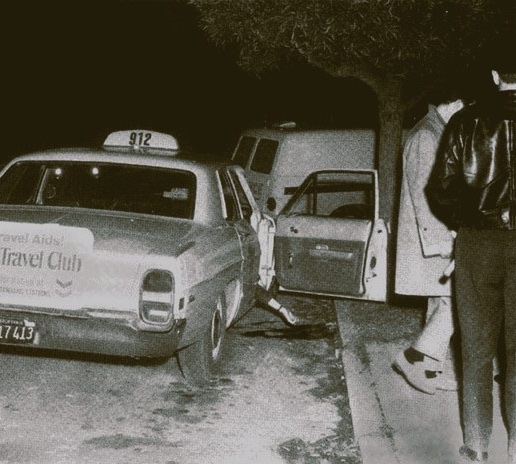
The Stine murder changed the case. The earlier attacks had happened at night, at the edges of towns, in places where violence could be half-imagined as belonging to the dark; this one happened in a wealthy residential neighbourhood of a major city, to a man simply doing his job. Patrol officers reached the corner within minutes and — in one of the case's enduring might-have-beens — passed a man walking a block away. They let him go, because the description radioed to them had wrongly said the suspect was Black; the Zodiac, in a later letter, needled the police about how close they had come. The killing brought the full resources and the press of San Francisco into a case that had until then been scattered across smaller jurisdictions, and it is the Stine murder, more than any other, that turned the Zodiac into a national figure.
Those five deaths — Faraday and Jensen, Ferrin, Shepard, and Stine — are the murders that investigators have been able to attribute to the Zodiac with confidence. He would claim many more, and other crimes have been linked to him with varying plausibility, but it is on these that the case rests.
"This is the Zodiac speaking"
What made the Zodiac the Zodiac was not the killing. It was the writing.
On August 1, 1969, the San Francisco Chronicle, the San Francisco Examiner, and the Vallejo Times-Herald each received a letter from a man claiming the Vallejo and Benicia murders, supplying details not released to the public, and enclosing one-third of a cryptogram — a block of symbols he said would reveal his identity. He demanded that each paper print its share of the cipher on the front page, threatening to 'cruse around all weekend killing lonely people' if they refused. The papers, after consulting police, published. In a follow-up letter the writer gave himself his name: 'This is the Zodiac speaking.' He adopted a signature — a circle crossed by vertical and horizontal lines, like a gunsight or a crosshair — and he used it, and the opening phrase, again and again over the years of letters that followed.
The correspondence is the spine of the case. Over several years the Zodiac sent dozens of letters, cards, and messages, taunting the police, claiming credit for murders, threatening to blow up school buses, enclosing more ciphers, and keeping score: by 1974 he claimed a tally of thirty-seven victims, a number no investigation has ever come close to substantiating. He sent along the swatches of Paul Stine's shirt to prove that the man writing the letters was the man who had done the killing. The effect — intended, plainly — was to make the public the audience for a performance, and to make the newspapers his stage.
Some of the letters became infamous in their own right. In late 1969 he sent the Chronicle a card promising a 'Halloween surprise' to the paper's crime reporter, Paul Avery, who had been writing about the case — a personal threat that prompted Avery's colleagues to take to wearing buttons that read 'I am not Paul Avery.' He mailed tracing-paper diagrams and a coded note he said marked where a bomb was buried to destroy a school bus. He kept a running scoreboard, taunting that the tally stood at 'Me = 37, SFPD = 0.' He enclosed, with one letter, the bloodied scrap of Paul Stine's shirt. The messages were menacing, misspelt, theatrical, and entirely deliberate — the work of someone who wanted, beyond the killing itself, to be reckoned with.
The ciphers
The ciphers are what lift the Zodiac out of the grim ordinary of serial murder and into something stranger, and they cut both ways: they are the case's most distinctive feature and its longest- running tease.
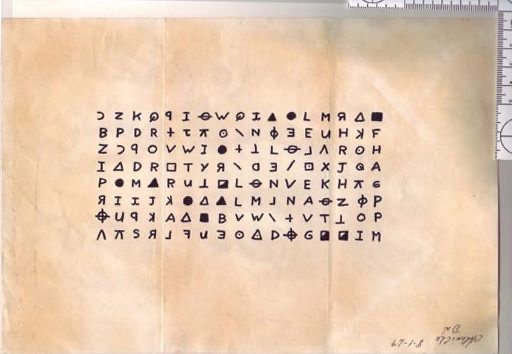
The first cipher, the 408 — so called for its number of symbols — went out in three parts on July 31, 1969, with the first letters. It was broken almost at once. Donald Harden, a high-school teacher in Salinas, and his wife Bethye worked at it over a weekend and cracked it within roughly a week, guessing that a vain killer would begin with the word 'I' and that the message would contain the word 'kill.' The solution was a chilling but rambling statement — 'I like killing people because it is so much fun' — that went on about collecting victims as 'slaves' for an afterlife. What it conspicuously did not contain, despite the Zodiac's claim that the cipher hid his identity, was any name.
The second and most notorious cipher, the 340, arrived in November 1969, and it held out far longer. For half a century it resisted the FBI, the NSA, professional cryptanalysts, and a global army of amateurs.
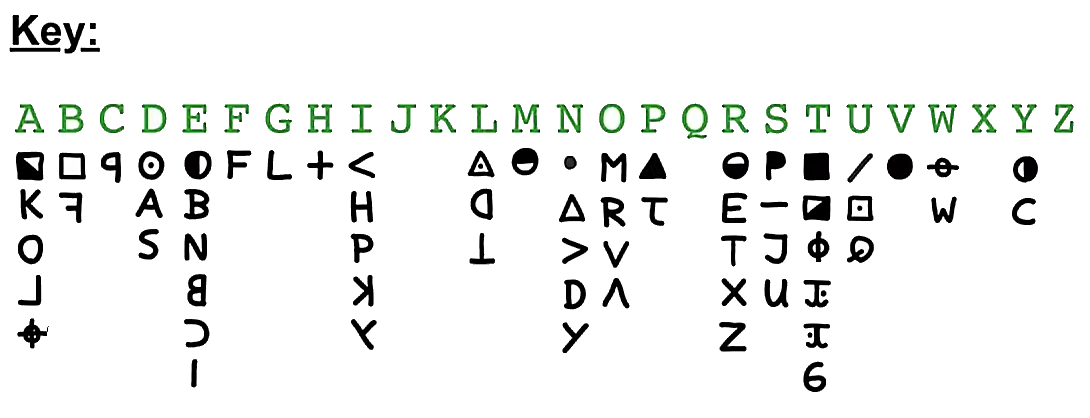
When it finally fell, in December 2020, it was to an international trio working with modern computing: David Oranchak, a software developer in Virginia who had chased the cipher for years; Sam Blake, an applied mathematician in Australia; and Jarl Van Eycke, a Belgian programmer and codebreaker. The 340, they showed, was a homophonic cipher — using several different symbols to stand for the same letter, to flatten the frequency patterns codebreakers rely on — and it had been written to be read in a diagonal, zigzagging order rather than straight across, which is what had foiled everyone before. The decoded message was, once again, pure Zodiac: 'I hope you are having lots of fun in trying to catch me… I am not afraid of the gas chamber because it will send me to paradice all the sooner.' And once again there was no name. Two further ciphers — a 13-symbol cryptogram the Zodiac claimed gave his name, and a 32-symbol one he said marked the location of a bomb — remain unsolved, and may be too short, or too much nonsense, ever to yield.
The 340's fall in 2020 was a genuine event, and not only for the case. For half a century it had been among the most famous unsolved ciphers in the world outside wartime cryptanalysis, worked at by the FBI's own codebreakers and by a sprawling online community that treated it as a kind of Everest. Oranchak had posted years of videos documenting dead ends before the breakthrough came, and the solution, when it arrived, turned on guessing the cipher's unusual zigzag reading order as much as on raw computing power. That a message mailed by a murderer in 1969 could absorb the efforts of professionals and hobbyists for two generations says something about the peculiar hold of this case; that the reward, after all that labour, was one more taunt and still no name says the rest.
The hunt
The investigation was, from the beginning, hobbled by geography. The crimes fell across at least four separate jurisdictions — Solano County, Vallejo, Napa County, and San Francisco — each with its own detectives, its own files, and, in an era before easy information-sharing, its own partial picture. No single agency owned the whole case.
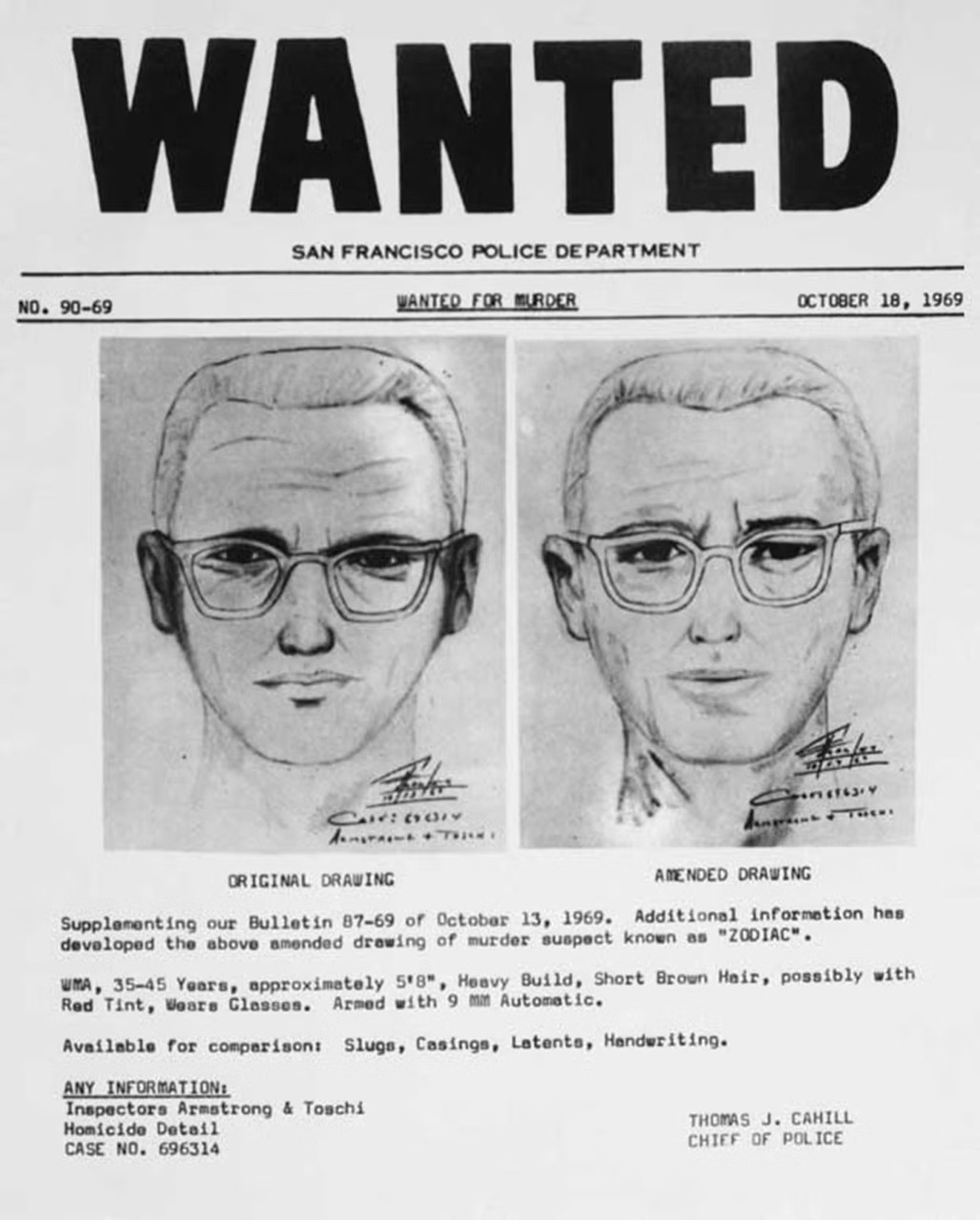
The San Francisco Police Department, which took the lead after the Stine murder, produced composite sketches from witness accounts — a heavyset man in glasses — and inspectors David Toschi and William Armstrong became the public faces of the hunt; Toschi would later be cited as an inspiration for the film detective 'Dirty Harry.' But the leads ran out. The handwriting in the letters was circulated and checked against thousands of samples. The ciphers were worked and reworked. Tips poured in by the thousand. None of it produced an arrest. The Zodiac's letters tapered off in the early 1970s, with disputed messages surfacing later, and the trail — never warm — went cold.
For a time the case gripped the Bay Area with genuine fear. The Zodiac had killed in a parked car, in a park, by a lake, and on a busy city street; he had threatened to shoot out the tyres of a school bus and 'pick off the kiddies' as they fled. Parents kept their children home; the papers that printed his letters printed the public's dread alongside them. And yet the very openness of his communication — which at the time felt like a taunt the police must surely be able to trace — produced nothing usable. Handwriting, postmarks, fingerprints, the ciphers: every channel the Zodiac opened turned out to lead nowhere. He remains most remarkable for how much he revealed while staying completely hidden.
The other victims
The five confirmed murders are not the whole of what has been laid at the Zodiac's door. He himself claimed thirty-seven, a figure no investigation has substantiated and most regard as boastful inflation. But two further cases have drawn serious, if unresolved, attention.
The first is the killing of Cheri Jo Bates, an eighteen-year-old student stabbed to death near the city library in Riverside, in Southern California, in October 1966 — more than two years before Lake Herman Road, and far from the Bay Area. Typed letters boasting of the crime were later sent to the Riverside police and press, and some investigators have seen in them the Zodiac's hand; others judge the link unproven and the geography wrong. The second is the case of Kathleen Johns, who in March 1970 was driven off her route and held for hours by a man who had stopped to 'help' her on a road near Modesto, before she escaped; she came to believe her abductor had been the Zodiac, and the Zodiac alluded to an abduction in a later letter. Neither case is settled, and both illustrate the gravitational pull of the legend: once a killer becomes a name, unsolved crimes drift toward him.
Arthur Leigh Allen
Over the decades one suspect rose above all the others, and the case for and against him is a microcosm of why the whole mystery has never closed.
Arthur Leigh Allen was a Vallejo man, a former elementary-school teacher dismissed for child molestation, who had lived near some of the crime scenes and was first interviewed by investigators in 1971. A number of things pointed his way. He owned a Zodiac-brand wristwatch — the brand whose logo was a crossed circle, the killer's very symbol. An acquaintance reported that Allen had spoken, before the murders, of killing couples and calling himself 'Zodiac.' He was physically not unlike the composite. And in 1991, Michael Mageau, the survivor of the Blue Rock Springs shooting, picked Allen's photograph out of a lineup as resembling his attacker.
But the evidence against him never closed the gap. Handwriting experts who compared Allen's writing to the Zodiac letters did not find a match. A partial DNA profile developed in 2002 from the saliva on the letters' stamps and envelopes did not match Allen — though, crucially, no one can be certain that DNA is the killer's rather than a handler's. Police searched his home and found suggestive odds and ends but nothing conclusive. Allen died in 1992, never charged. To this day some investigators consider him the likeliest Zodiac and others consider him cleared; the evidence genuinely supports neither certainty.
The false solutions
Around the vacuum where a verdict should be, a small industry of 'solutions' has grown, and the pattern of their rise and collapse is instructive.
The most prominent in recent memory was the 2014 book The Most Dangerous Animal of All, in which Gary Stewart argued that his own biological father, Earl Van Best Jr., had been the Zodiac. It drew enormous attention and then fell apart under scrutiny: the handwriting case did not hold, and a central fingerprint claim collapsed. In 2021 a group of cold-case hobbyists calling themselves the Case Breakers announced that the Zodiac had been a man named Gary Francis Poste; the FBI did not endorse the claim and most specialists dismissed it. Over the years others have been named — Richard Gaikowski, Lawrence Kane, and more — each with a constituency and none with proof.
The 'solutions' share a structure. They begin with a candidate, assemble a collage of resemblances — a physical likeness, a proximity, a coincidence of initials or dates — and present the accumulation as a case, while the hard forensic tests that could actually confirm a match (handwriting, and such DNA as exists) either fail or are waved away. The Zodiac's own ciphers and letters, which ought to be the richest evidence of all, have resisted every attempt to read a name out of them. The result is a case that is endlessly solvable in theory and never solved in fact.
What the question still is
The Zodiac case is, in an important sense, the opposite of a locked-room mystery. The room is wide open. We have the bodies, the ballistics, the survivors' accounts, dozens of the killer's own letters, his symbol, his voice on the phone to the police, two of his ciphers fully decoded. What we do not have is the one fact that all of it was supposed to lead to: a name.
That shape — abundant evidence surrounding a single permanent blank — is what has kept the case alive for more than fifty years and turned it into a genre of its own, complete with films, books, documentaries, and a perennial online community of would-be solvers. It rewards attention without ever paying out. Every few years a cipher falls, a suspect is named, a DNA technique improves, and the hope flares that this time the blank will be filled; and every time, so far, the killer's own taunt from the 340 cipher turns out to have been accurate — that he hoped we were having lots of fun trying to catch him, and that we would not.
The most sober reading is that the Zodiac was very likely a local man, probably known to the investigation at the time, who simply stopped — whether through death, imprisonment on some other matter, or sheer discipline — and was never tied to the crimes by the forensic threads that hang loose to this day. Arthur Leigh Allen may have been that man; the evidence is suggestive and inconclusive, which is the case in miniature. But 'very likely' and 'may have been' are where the Zodiac leaves us, and he arranged it so deliberately — the symbol, the ciphers, the withheld name — that the not-knowing can feel less like a failure of police work than like the final, intended message. He told the world he had a name and hid it inside a code. Half a century on, two of his codes are broken, and the name is still not in them.
Sources
Primary
- The Zodiac's letters and ciphers as published by the San Francisco Chronicle, the San Francisco Examiner, and the Vallejo Times-Herald, 1969 onward.
- Police records and composite bulletins of the San Francisco Police Department, Vallejo Police Department, Napa County Sheriff, and Solano County, and the FBI file on the case.
- The 1969 solution of the 408 cipher by Donald and Bethye Harden.
- The December 2020 solution of the 340 cipher by David Oranchak, Sam Blake, and Jarl Van Eycke, as verified by the FBI.
- Survivor statements of Michael Mageau and Bryan Hartnell.
Secondary
- Robert Graysmith, Zodiac (1986) and Zodiac Unmasked (2002).
- Contemporaneous and retrospective reporting in the San Francisco Chronicle, the Los Angeles Times, the BBC, and The New York Times on the murders, the ciphers, and the suspects.
- Coverage of the 2020 cipher solution and of the principal suspect claims, including the disputed Gary Stewart and Case Breakers theories.
Academic / reference
- Cryptanalytic accounts of the 340 cipher's homophonic structure and diagonal transposition.
- Scholarship and reference works on the Zodiac case and on the difficulties of attribution in long-cold serial-murder investigations.
Inspired this / based on it
David Fincher · ★ 7.7
Paramount/Warner Bros. The definitive dramatization, based on Robert Graysmith's books and centred on the obsessive hunt.
Robert Graysmith
St. Martin's Press. The best-known book-length account, source for the Fincher film; favours Arthur Leigh Allen as suspect.
Netflix
Documentary series revisiting the murders, the ciphers and the suspects with witness testimony.
Don Siegel
The Scorpio killer is modelled on the Zodiac; inspector Harry Callahan partly on SFPD's Dave Toschi.
Filed under
- #zodiac-killer
- #ciphers
- #cryptography
- #san-francisco
- #vallejo
- #lake-berryessa
- #arthur-leigh-allen
- #unsolved
- #serial-killer
- #z340
- #usa
- #1960s
- #mystery
Click any tag for every article carrying it.
Continue reading
D.B. Cooper and the Only Hijacking That Was Never Solved
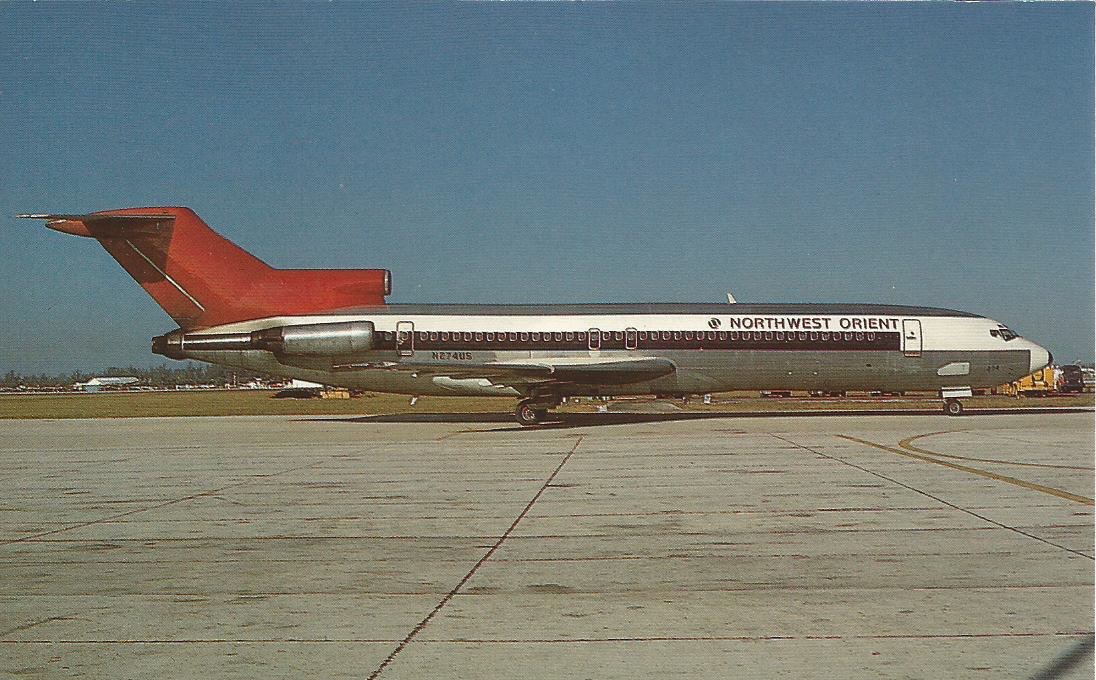
On the afternoon of Wednesday, November 24, 1971, the day before Thanksgiving, a man in a dark suit and a clip-on tie boarded Northwest Orient Airlines Flight 305, a Boeing 727 making the short hop from Portland, Oregon, to Seattle. He had bought his ticket with cash under the name Dan Cooper. Once airborne he handed a flight attendant a note saying he had a bomb, opened a briefcase to show her a tangle of wires and red cylinders, and dictated his terms: two hundred thousand dollars in twenty-dollar bills and four parachutes, to be waiting when the plane landed at Seattle-Tacoma. The airline paid. On the ground Cooper released the thirty-six passengers, kept four crew, had the jet refuelled, and ordered it back into the air toward Mexico City — flying low and slow, landing gear down, with the rear airstair lowered. Somewhere over the dark, rain-soaked forests of southwestern Washington, at around a quarter past eight in the evening, he stepped off the end of those stairs into the night with the money strapped to his body, and vanished. No body was ever found. No parachute was ever found. Of the ten thousand marked bills, exactly two hundred and ninety ever turned up — a packet of rotting twenties dug out of a riverbank by a child nine years later. The FBI worked the case for forty-five years, ran down more than a thousand suspects, and in 2016 quietly closed it without an answer. The skyjacking of Flight 305 remains the only unsolved act of air piracy in the history of American aviation, and 'D.B. Cooper' — a name born from a reporter's error — became the rarest kind of American legend: a criminal almost everyone half-hopes got away. This article reconstructs what actually happened that night, what the single scrap of physical evidence does and does not tell us, and why a fifty-year-old robbery has never let go of the public imagination.
MH370
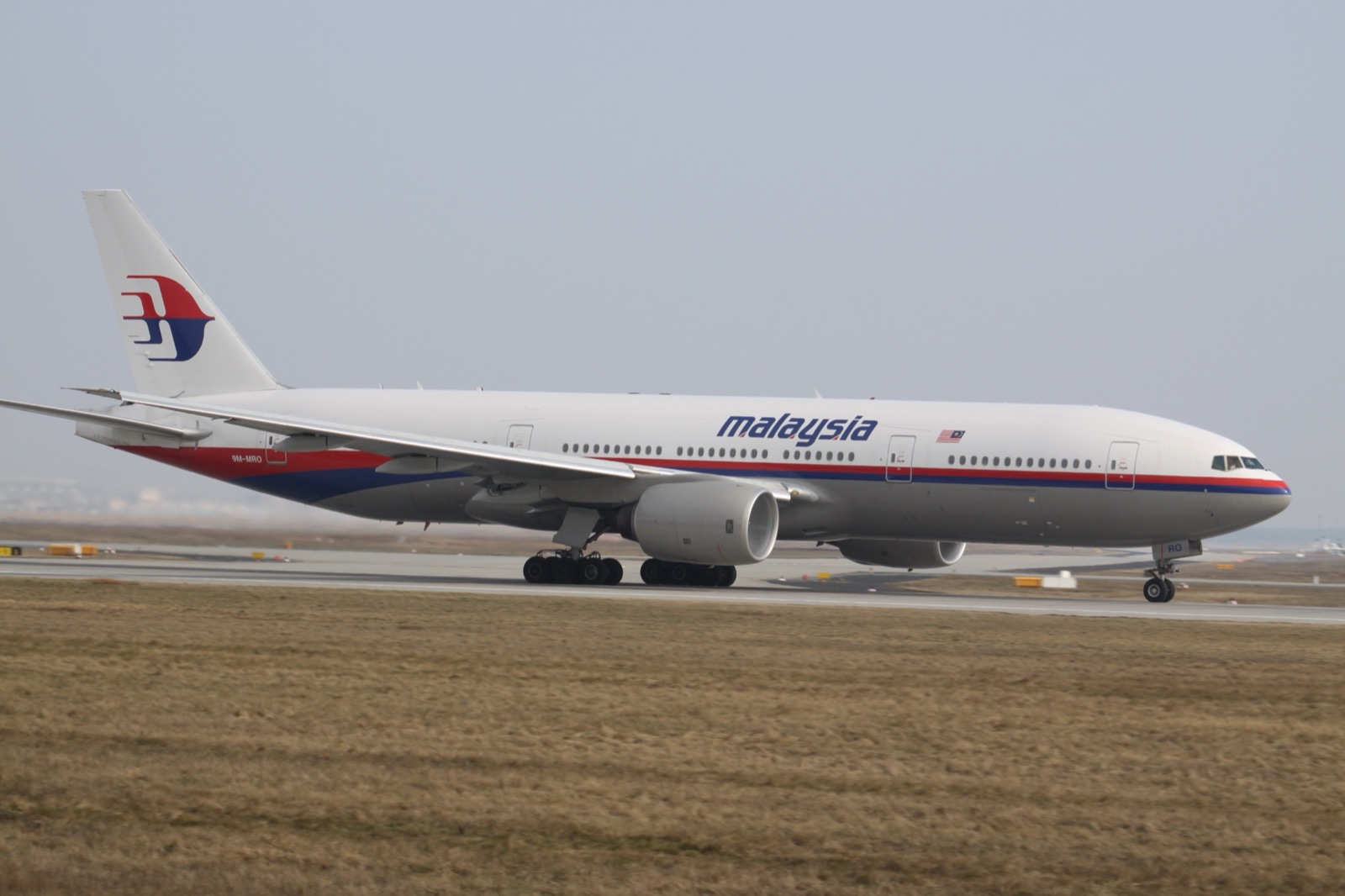
On March 8, 2014 at 12:41 a.m. Malaysia time, Malaysia Airlines flight 370 — a Boeing 777-200ER registered 9M-MRO — left Kuala Lumpur for Beijing with 239 people on board. Thirty-eight minutes later, the aircraft's transponder went dark over the South China Sea. Military primary radar then tracked an unidentified return making a hard left turn back across the Malay Peninsula, threading the gap between Malaysian and Thai air defense, before heading up the Strait of Malacca. The aircraft's satellite communications terminal made handshakes with Inmarsat's 3-F1 satellite for seven more hours. The final handshake, at 8:19 a.m., placed the aircraft along an arc somewhere in the southern Indian Ocean roughly 1,600 km west-southwest of Perth, Australia. Three years of surface and seabed search across 120,000 square kilometres found nothing. Thirty-three confirmed pieces of debris, beginning with a flaperon that washed ashore on Réunion in July 2015, are the only physical remains. The 2018 Malaysian Annex 13 report concluded that the aircraft was deliberately diverted but could not say by whom or why.
Dyatlov Pass
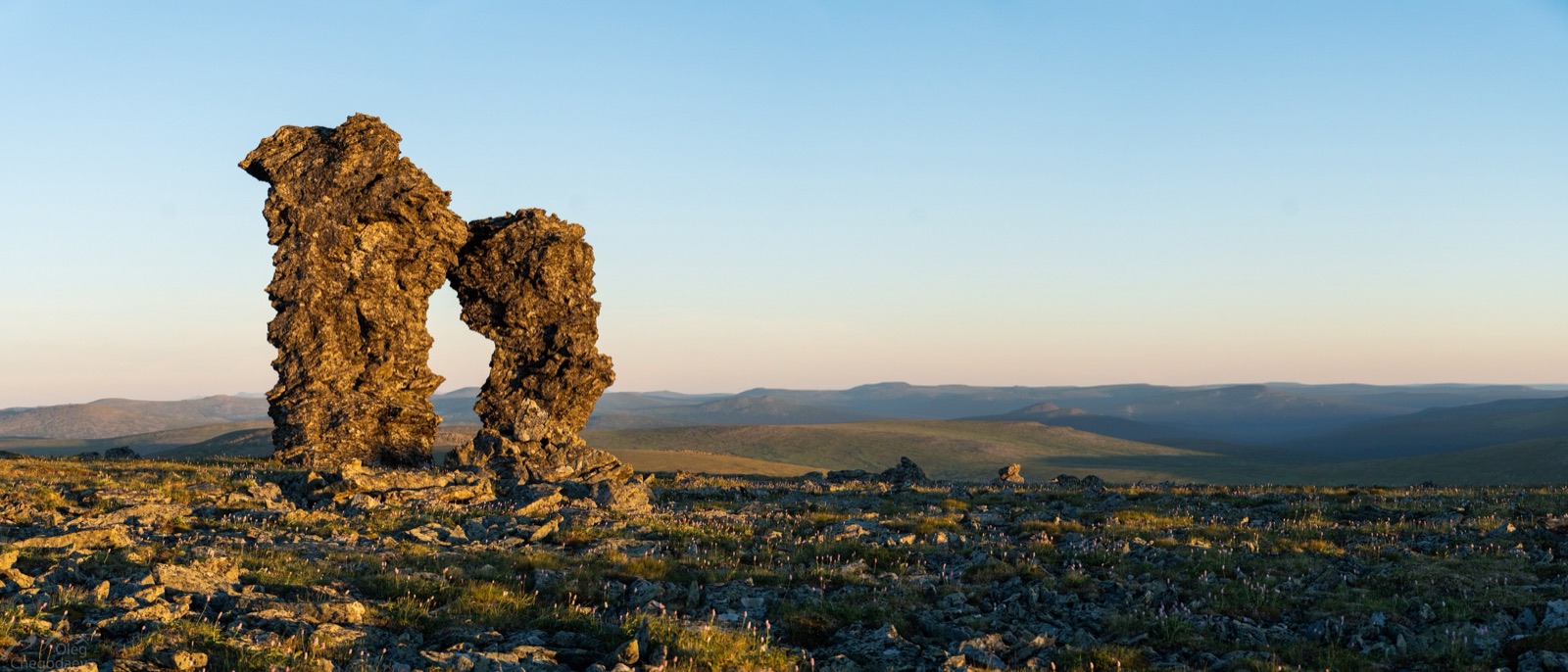
On the afternoon of February 1, 1959, a group of nine experienced Soviet ski-tourists — eight men and one woman, all between 20 and 38 years old, all members or alumni of the Ural Polytechnical Institute in Sverdlovsk (now Yekaterinburg) — pitched a four-pole canvas tent on the eastern slope of an undistinguished 1,079-meter mountain in the northern Urals named, in the Mansi language, Kholat Syakhl — 'Dead Mountain.' The group was led by 23-year-old Igor Dyatlov, a fifth-year radio-engineering student. The party had skied approximately 280 kilometers from the closest railway terminus over the prior nine days. Their planned summit, the following day, was the higher Otorten peak ten kilometers north. None of them reached it. When a search party located the abandoned tent on February 26, it had been cut open from the inside. Most of the group's clothing and equipment was still inside. The first three bodies — including Dyatlov — were found later that day, scattered along the slope below the tent, dressed only in underwear or light layers, none in proper outer clothing, none in their boots. Two further bodies were found nearer the tent over the following weeks. The final four bodies — including the only female member, Lyudmila Dubinina — were not located until May 4, 1959, in a snow-covered ravine approximately 1.5 kilometers downslope. Three of those four had massive internal trauma — equivalent in the words of the autopsy report to high-speed automobile-collision injuries — without corresponding external wounds. Two had missing soft tissue: Dubinina lacked her tongue and eyes. Some of the recovered clothing tested positive for elevated beta-particle radiation. The Soviet criminal investigation concluded in May 1959 that the deaths were caused by 'a compelling natural force which the hikers were unable to overcome.' The Russian Procurator-General's Office reopened the case in 2019 and concluded in July 2020 that the cause was a slab avalanche followed by hypothermia and disorientation. A 2021 computational study published in *Communications Earth & Environment* by Alpine snow scientists at EPFL Lausanne provided a quantitative mechanical model supporting the slab-avalanche conclusion. The case is closed in Russia. It is, in international public discussion, the most-debated cold-weather forensic mystery of the 20th century.