Tag
#russia
2 articles
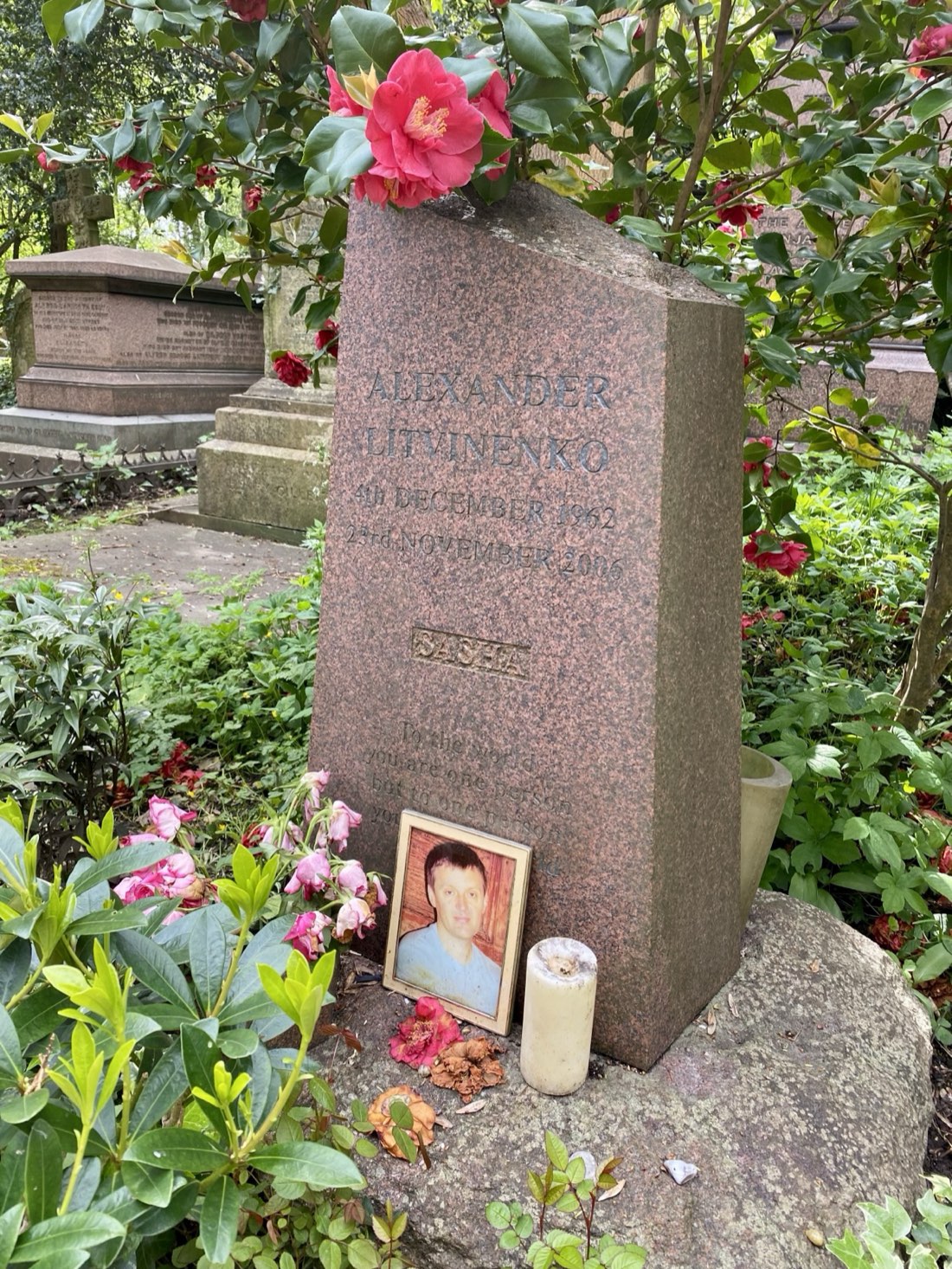
The Poisoning of Alexander Litvinenko: Polonium in a London Teapot
On 1 November 2006, Alexander Litvinenko, a former officer of Russia's FSB security service who had defected to Britain and become one of the Kremlin's most outspoken critics, met two Russian contacts for tea at the Pine Bar of the Millennium Hotel in London's Mayfair. Within hours he was violently ill; over the following three weeks he wasted away in a hospital bed, his hair falling out, his organs failing, as doctors struggled to identify what was killing him. Only as he lay dying did they discover the cause: polonium-210, a rare and extraordinarily radioactive isotope, which had been slipped into his teapot. He died on 23 November 2006, aged forty-four, but not before dictating a statement accusing President Vladimir Putin directly of ordering his murder. The polonium had left a faint radioactive trail across London — through the hotel, restaurants, offices, and aircraft — which investigators followed to two Russian men, and, they concluded, back to the Russian state itself. A decade later, a British public inquiry found that Litvinenko had been killed in an operation carried out by the FSB and 'probably approved' by Putin himself. It was an assassination by radiation on the streets of a Western capital, and one of the most brazen acts of state murder of the twenty-first century. This is the story of the polonium poisoning of Alexander Litvinenko.

The Russian Doping Conspiracy and the Hole in the Laboratory Wall
On the nights of the 2014 Winter Olympics in Sochi, in a building that was supposed to be one of the most secure anti-doping laboratories in the world, a quiet operation was running on the other side of a wall. In a storage room next to the official lab, an officer of Russia's federal security service, the FSB, sat with a stock of clean urine — frozen months earlier, when the country's top athletes were still drug-free — and a technique for opening the supposedly tamper-proof sample bottles that were meant to make cheating impossible. As protected athletes competed and produced their mandatory samples, those bottles were passed, in the dark, through a hand-sized hole drilled in the wall between the two rooms; the dirty urine inside was poured out, the clean urine poured in, the bottles resealed, and the results recorded as negative. Russia topped the medal table at its own Games. Two years later, the chemist who had directed the whole scheme — Grigory Rodchenkov, the head of the laboratory — was living under protection in the United States, telling the New York Times and a documentary filmmaker exactly how it had been done. What followed was the most thoroughly documented state-sponsored sports fraud in history: a WADA investigation that implicated more than a thousand athletes across dozens of sports, forensic proof of tampered bottles, and the exclusion of Russia, under its own flag, from the next several Olympic Games. This article sets out how the system worked, how it was exposed, and why — despite all of it — the reckoning was so much smaller than the crime.
2 files · end of the line