Tag
#syphilis
2 articles

The Guatemala Syphilis Experiments and the Deliberate Infection of the Powerless
Between 1946 and 1948, doctors working for the United States Public Health Service travelled to Guatemala and did something that even the medical ethics of their own era forbade: they deliberately gave people syphilis. Not by accident, not as a side effect of withholding treatment, but on purpose — infecting more than a thousand Guatemalan prisoners, soldiers, psychiatric patients, and commercial sex workers with syphilis, gonorrhea, and chancroid, in order to study how the diseases spread and whether the new wonder drug penicillin could prevent them. The subjects were chosen precisely because they were powerless: confined to a prison, a barracks, or an asylum, in a poor country far from American oversight, where no one would ask whether they had agreed. Many were never told what was being done to them. Some were infected by having the bacteria applied directly to abraded skin or injected into their bodies; psychiatric patients who could not possibly understand were among them. At least eighty-three of the people caught up in the studies later died, though the link to the experiments was never fully untangled. The work produced little usable science, was never published, and was quietly buried — its records filed away in the papers of the doctor who ran it, the same man who would go on to help direct the infamous Tuskegee study. It stayed hidden for over sixty years, until a historian found those records in 2010. This is the story of what the United States did in Guatemala, why it was done where it was done, and how a government came to apologise for a crime that almost no one had known about.
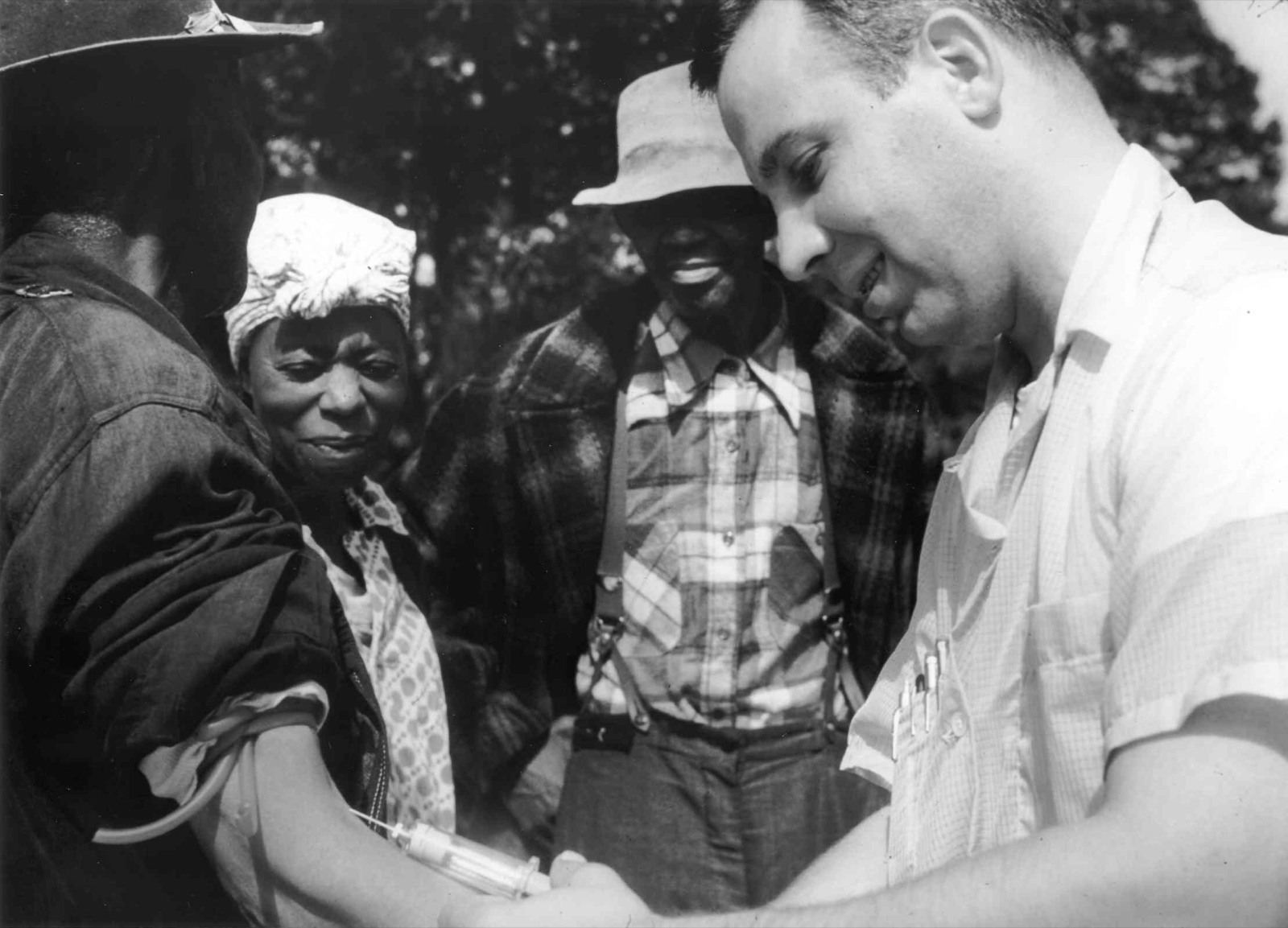
The Tuskegee Syphilis Study
In 1932, the U.S. Public Health Service began a study of 399 Black men in Macon County, Alabama, who had syphilis. They were told they were being treated. They were not. For forty years — including the twenty-five years after penicillin became standard care — the Public Health Service watched the disease take its course. A whistleblower's documents reached the Associated Press on July 25, 1972, and the study ended a few months later. President Clinton apologized on behalf of the United States government in 1997.
2 files · end of the line