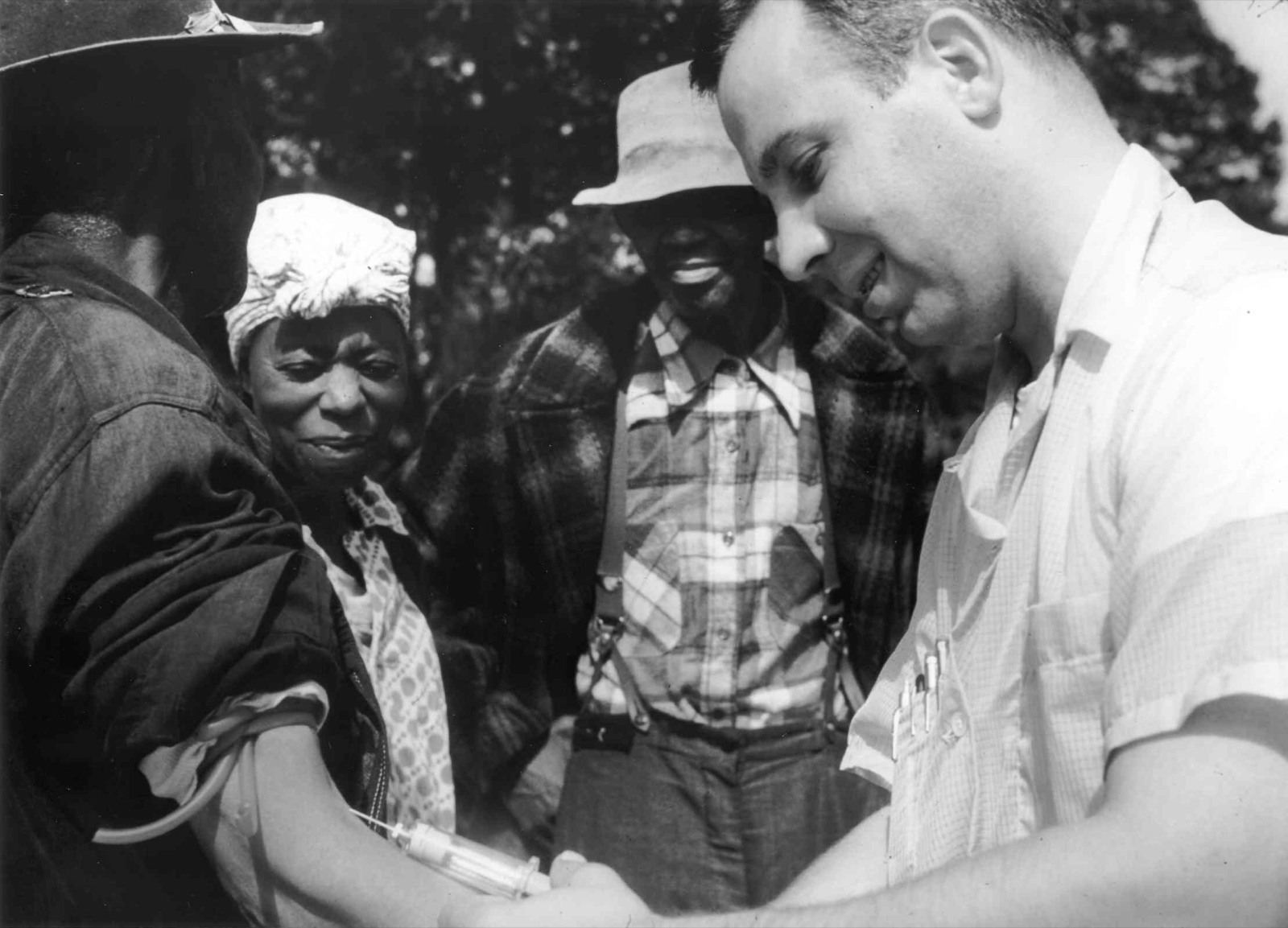
A Public Health Service doctor drawing blood from a participant in the Tuskegee Syphilis Study. National Archives, Record Group 442 (CDC), public domain.
The Tuskegee Syphilis Study
Forty years of withholding treatment
- Category
- Health & Medicine
- Published
- Length
- 3,700 words · 18 min read
- Author
- The editors
The Tuskegee Syphilis Study
Forty years of withholding treatment.
A poor county and a free clinic
In the summer of 1932, in the depths of the Depression, the United States Public Health Service entered into an agreement with the Tuskegee Institute — the historically Black college founded by Booker T. Washington in 1881 — to study what happened to people with untreated late-stage syphilis.
Macon County, Alabama, where Tuskegee sits, had what was at that time the highest documented rate of syphilis infection of any county in the United States. It was also, by every measure of income and education, one of the poorest. The Rosenwald Fund had a year earlier paid for a preliminary survey of the region's syphilis burden. The fund had intended its money to seed treatment programs. When the Depression collapsed the fund's endowment, the treatment money disappeared. What the PHS proposed to put in its place was research.
The PHS's choice was not without precedent in 1932. A long-running Norwegian study, published in 1929, had followed the natural history of untreated syphilis in a cohort of Oslo patients across half a century. The PHS proposed an American counterpart. The two studies differed in one respect that mattered: the Oslo subjects were not deceived. They were people whose syphilis had been diagnosed in the late-nineteenth century before any reliable treatment existed. The Tuskegee subjects, by contrast, were recruited in the 1930s — after multiple treatments existed, and were extant — and were enrolled under the explicit assurance that they were being treated.
The PHS recruited 399 Black men with latent-stage syphilis and 201 without it as controls. The men were poor sharecroppers, most illiterate. They were promised free medical examinations, free meals on examination days, and burial insurance of fifty dollars (about a thousand 2026 dollars). They were told they had "bad blood" — a local term that covered syphilis, anemia, fatigue, and several other conditions. They were given what they were told were treatments: aspirin and a tonic of mercurial and bismuth compounds, which were the standard pre-penicillin treatments at the time but were deliberately administered at sub-therapeutic doses. The control group received the same.1
The nurse who held it together
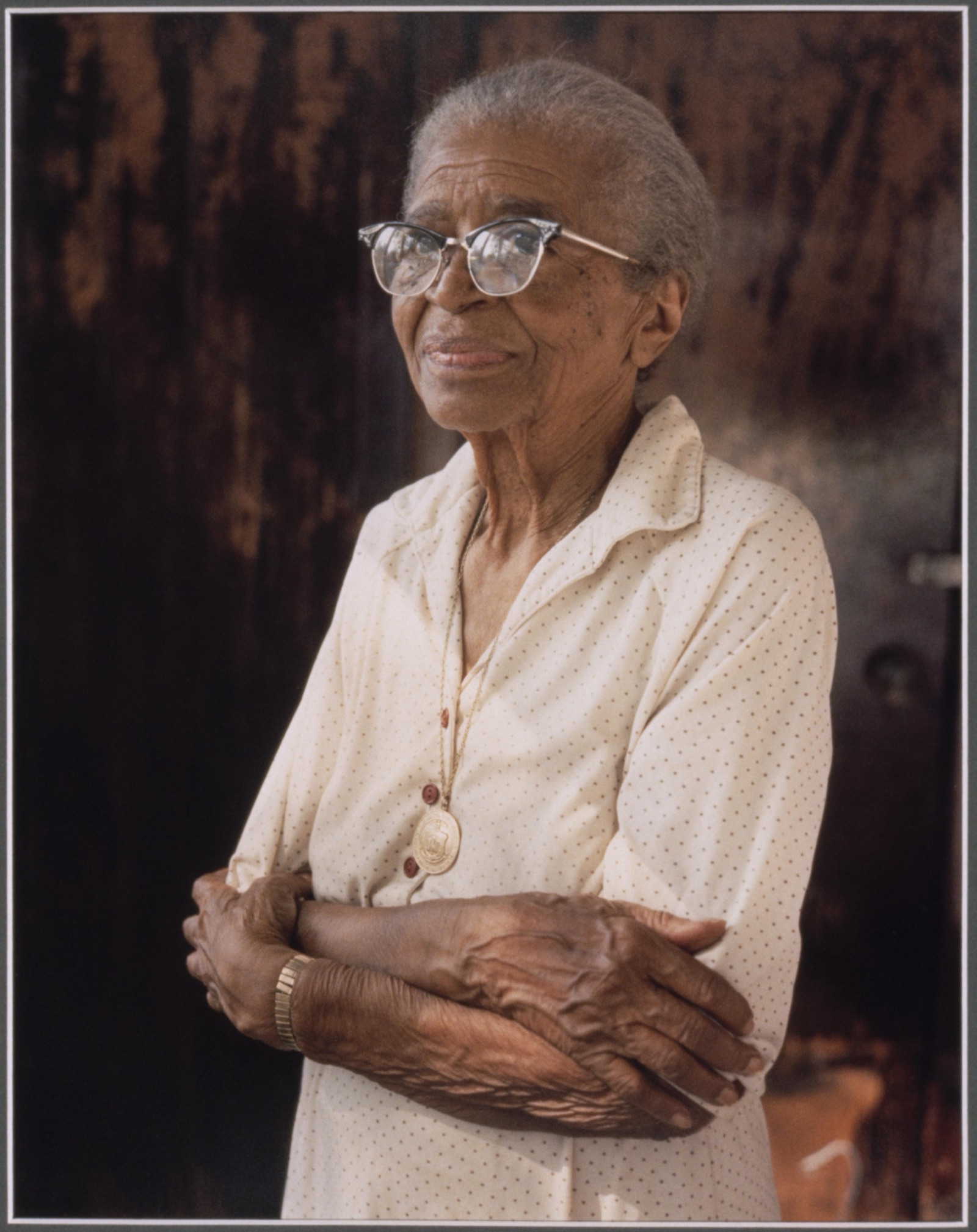
Eunice Rivers — later Eunice Rivers Laurie — was twenty-eight years old when she joined the study in 1932. She was a graduate of the Tuskegee Institute School of Nursing and was already a trusted figure in the rural Black households of Macon County, having worked since 1923 as a public-health nurse with the Movable School, the Tuskegee Institute's outreach program to sharecropping families.
Rivers was the one constant of the study. The PHS investigators in Washington rotated. The doctors who came down to Alabama for the biannual examinations rotated. Rivers stayed. She knew the participants' wives and children by name. She arranged transport when the men could not get to the clinic on their own. She made sure they ate the lunch that the PHS provided on examination days. She buried those who died from complications they were never told they were dying from, using the fifty-dollar policies the PHS provided.
When historians and journalists later tried to understand how the study had continued for four decades, they kept coming back to Rivers. Her presence — Black, local, deeply respected — was what made the deception sustainable. It would have been operationally impossible for the white PHS doctors, who arrived every six months from Washington or Atlanta, to maintain a study population of 600 illiterate Black sharecroppers without her. The historians have struggled to evaluate her moral culpability. Rivers herself, in interviews she gave before her death in 1986, defended her work as public-health service to her community. She did not say whether she had understood, in 1932 or any year afterward, that the men were not being treated.
Penicillin
In 1943, the U.S. Public Health Service began rationing penicillin as a treatment for syphilis in selected populations. By 1947, after the war's military demand had eased, penicillin became the standard nationwide treatment. Cure rates approached one hundred percent in early-stage cases and remained high in late-stage cases — exactly the population the Tuskegee study had enrolled.
What the study's investigators did, in 1947 and the years following, was prevent the participants from receiving the drug.
This was not a passive omission. The PHS sent letters to the local draft boards, then chasing tuberculosis-screened recruits, asking that listed Tuskegee participants not be referred for treatment. When the Macon County Health Department ran rapid-treatment programs for syphilis in the late 1940s and early 1950s, the PHS provided lists of Tuskegee participants to be excluded. When private physicians in the area considered treating a Tuskegee participant who had come in with apparently unrelated symptoms, the participant's PHS file would be flagged: do not treat.2
The internal PHS rationale, recorded in administrative correspondence from the late 1940s, was that interrupting the study at this point would destroy the unique value of a long natural-history cohort that could not be ethically reconstituted now that penicillin existed. The investigators wrote, repeatedly, that the men's wellbeing was being weighed against a scientific resource that could only be maintained by continuing what had been started.
What the men weighed in their own minds, they were not asked.
Inside dissent
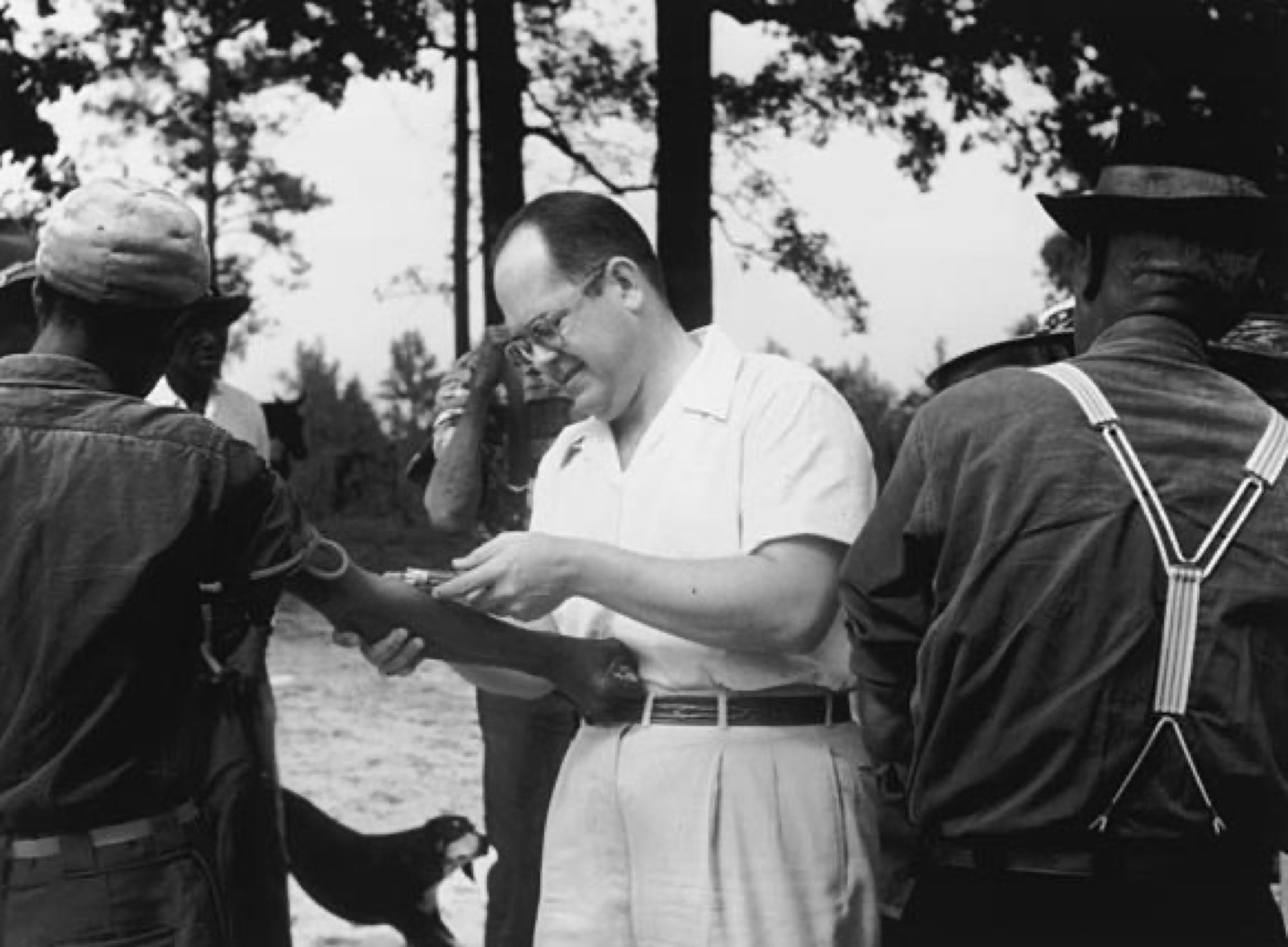
In November 1966, a 27-year-old PHS venereal-disease investigator named Peter Buxtun, working out of San Francisco, wrote a letter to his superiors at the PHS Division of Venereal Diseases in Atlanta. He had recently learned of the Tuskegee study through an internal report. He wrote that the study's ongoing failure to treat participants was a violation of basic medical ethics and that it could not, on the record then available to him, be reconciled with the post-Nuremberg standard for human experimentation.
The PHS responded by convening a 1969 review panel of senior investigators. The panel concluded that the study should continue. The names of the panel members were not made public until after the study ended; even then, several appeared in the documentary record only as "a senior PHS officer". Buxtun wrote again in 1968. The PHS responded with a second internal review in 1969. The second review reached the same conclusion as the first.
Buxtun was not the only person inside the PHS who had raised concerns. His correspondence cites at least four others. None of them was successful in stopping the study.
By 1972, Buxtun had resigned from the PHS, had spent the intervening years thinking, and had decided to take his documentation to the press. He approached Edith Lederer, an Associated Press reporter based in San Francisco. Lederer was junior, on the night desk, and not yet established. She passed the lead to a more experienced AP reporter — Jean Heller — based in Washington.
July 25, 1972
Jean Heller — 29 years old, an Associated Press national reporter — spent six weeks verifying what Buxtun had given her. She obtained the PHS's own administrative records. She talked to PHS officials, who confirmed the study's existence and its withholding of treatment. She talked to surviving participants and to their families.
Her story moved on the AP wire on the morning of Tuesday, July 25, 1972, with the lead:
"For 40 years the U.S. Public Health Service has conducted a study in which human guinea pigs, not given proper treatment, have died of syphilis and its side effects."
It ran on the front page of The Washington Star that evening and on the front page of The New York Times on July 26. Within seventy-two hours, every major American daily had picked it up.
The PHS confirmed the study to the press the same day Heller's first story ran. Senior officials professed surprise that the public would view the study as ethically problematic. The Department of Health, Education, and Welfare announced an investigation. Senator Edward Kennedy opened Senate hearings into the study in February 1973. The study was wound up that fall.
What the settlement did and did not include
In 1973, the National Association for the Advancement of Colored People filed a class action suit on behalf of the participants and their families. Fred Gray, the Alabama civil-rights attorney who had represented Rosa Parks and Martin Luther King Jr., took the case.
The settlement, reached in 1974, paid each living syphilitic participant approximately $37 500 (about $250 000 in 2026 dollars). Heirs of deceased syphilitic participants received about $15 000. Living non-syphilitic participants received about $16 500. Heirs of deceased non-syphilitic participants received about $5 000.
The settlement did not contain an admission of wrongdoing by the federal government. It did not establish criminal liability for any PHS officer. None of the PHS doctors or administrators who had directed the study, supervised it, or written its reports were prosecuted. The records of the study remained classified, except for the administrative skeleton that the Final Report of 1973 had made public.
The Tuskegee Health Benefit Program — which provides lifetime medical benefits to surviving participants, their widows, and their descendants — was established by the same settlement. It is administered today by the Centers for Disease Control and Prevention and remained in force for the children of participants as of 2024.
The apology
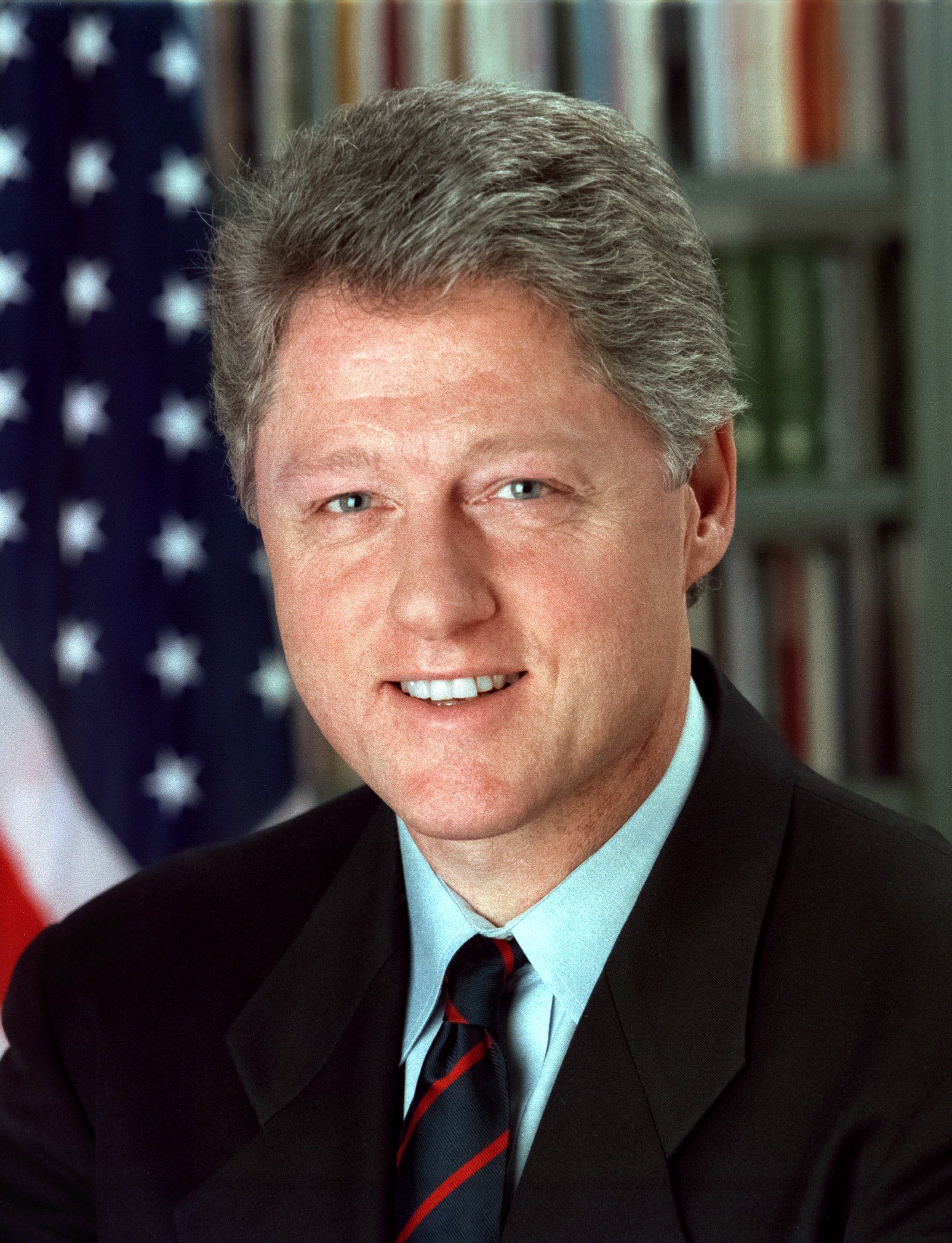
President Bill Clinton invited the eight surviving Tuskegee participants to the White House on May 16, 1997. Five of them — Mr. Herman Shaw, Mr. Charlie Pollard, Mr. Carter Howard, Mr. Frederick Moss, and Mr. Sam Doner — were well enough to attend.
In the East Room, in a ceremony broadcast live, Clinton said:
"The United States government did something that was wrong — deeply, profoundly, morally wrong. It was an outrage to our commitment to integrity and equality for all our citizens. To the survivors, to the wives and family members, the children and the grandchildren: I say what you know. No power on Earth can give you back the lives lost, the pain suffered, the years of internal torment and anguish. What was done cannot be undone. But we can end the silence. We can stop turning our heads away. We can look at you in the eye and finally say, on behalf of the American people, what the United States government did was shameful. And I am sorry."
The apology came twenty-five years after the study had ended.
Mr. Herman Shaw, who had spoken at the ceremony before the President, was ninety-four years old. He had been five years old when the study that had taken his health began. He died in 1999.
What proponents and critics still argue
The Tuskegee case occupies an unusual position in American historiography: there are no defenders. The factual record is unambiguous; the moral conclusion is too. What remains contested are narrower interpretive questions.
The "natural history" question. Some historians of medicine — Susan Reverby in particular, in Examining Tuskegee (2009) — have emphasized that the early years of the study (1932–1947) operated within the standards of contemporary American medical research, which were themselves grossly inadequate by present-day standards. On this view, the deeper failure was structural: a research culture that did not consider Black subjects worthy of informed consent. The treatment-withholding phase (1947–1972) was the moral catastrophe; the recruitment phase was the upstream condition that made it possible.
The Nurse Rivers question. Rivers's role has been the subject of sustained historical reassessment. Some accounts treat her as a co-perpetrator with full knowledge. Others — including more recent work — argue that her position as a Black community nurse in 1930s–60s Alabama gave her access to power she could exercise within the institution she could not exit, and that the historiographical work of evaluating her requires more contextual care than either dismissal or excusal allows.
The treatment-availability question. A residual academic disagreement turns on whether penicillin would have been universally beneficial to all the Tuskegee participants, given that many had late-stage neurosyphilis where treatment outcomes were less certain. The disagreement does not exculpate the study — late-stage syphilis patients still benefited substantially from treatment — but it complicates the simplest version of the moral arithmetic.
How we read the evidence
The factual record is closed. The PHS records the study, the period, the participant numbers, the withholding of treatment, the internal review panels' refusal to stop it, the AP exposure, and the settlement. The U.S. government, in 1997, accepted moral responsibility through its president.
What makes the Tuskegee case still worth writing about, fifty-four years after Jean Heller's first story, is not the moral verdict — that is settled — but the institutional one. The study was not a single villain's project. It was the work of an institution, over decades, that functioned exactly as designed. PHS officers raised the study's existence in conferences and journals. PHS administrative review panels considered it twice and approved it both times. The people who were horrified at it from within the PHS — Buxtun and others — were a small minority who could not move the institutional majority.
The lesson the medical-ethics literature has drawn from Tuskegee is informed consent. That is the right lesson. But it is not the only lesson. The other lesson is that informed institutions need mechanisms for correcting themselves that do not depend on a twenty-seven-year-old VD investigator deciding to walk his documents to a newspaper. The post-1972 institutional architecture — IRBs, the Belmont Report, the Common Rule — was designed in significant part with that question in mind.
Key figures
Further reading
Books:
- James H. Jones, Bad Blood: The Tuskegee Syphilis Experiment (Free Press, 1981; expanded 1993). The foundational scholarly account.
- Susan M. Reverby, Examining Tuskegee: The Infamous Syphilis Study and Its Legacy (UNC Press, 2009).
- Fred Gray, The Tuskegee Syphilis Study (NewSouth Books, 1998). By the participants' attorney.
Films and documentaries:
- Miss Evers' Boys (1997, dir. Joseph Sargent). HBO dramatization.
- Susceptible to Kindness: Miss Evers' Boys and the Tuskegee Syphilis Study (1996, ed. Susan Reverby).
Primary archives:
- National Archives at Atlanta — Tuskegee Records
- CDC — The Untreated Syphilis Study at Tuskegee
- Clinton White House Archive — Apology Remarks
Sources
Primary sources
- U.S. Public Health Service. Untreated Syphilis Study Records, 1929–1972. National Archives, Record Group 442.
- Tuskegee Syphilis Study Ad Hoc Advisory Panel. Final Report. U.S. Department of Health, Education, and Welfare, April 28, 1973.
- Heller, J. "Syphilis Victims in U.S. Study Went Untreated for 40 Years." Associated Press wire, July 25, 1972. Published in The New York Times, July 26, 1972, p. A1.
- U.S. Senate, Subcommittee on Health. Quality of Health Care — Human Experimentation. Hearings, 93rd Congress, 1st Session, February-March 1973. Chaired by Sen. Edward M. Kennedy.
- Clinton, W. J. "Remarks in Apology for Study Done in Tuskegee." White House, East Room, May 16, 1997.
Secondary sources
- Jones, J. H. (1993). Bad Blood: The Tuskegee Syphilis Experiment (expanded ed.). Free Press.
- Reverby, S. M. (2009). Examining Tuskegee: The Infamous Syphilis Study and Its Legacy. University of North Carolina Press.
- Gray, F. D. (1998). The Tuskegee Syphilis Study. NewSouth Books.
- Brandt, A. M. (1978). "Racism and Research: The Case of the Tuskegee Syphilis Study." Hastings Center Report, 8(6), 21–29.
- Thomas, S. B., & Quinn, S. C. (1991). "The Tuskegee Syphilis Study, 1932 to 1972: Implications for HIV Education and AIDS Risk Education Programs in the Black Community." American Journal of Public Health, 81(11), 1498–1505.
- Reverby, S. M. (2011). "'Normal exposure' and inoculation syphilis: A PHS 'Tuskegee' doctor in Guatemala, 1946–1948." Journal of Policy History, 23(1), 6–28.
- Associated Press, May 24, 2024. "Peter Buxtun, who exposed the Tuskegee syphilis study, has died at 86."
- CDC. (continuous). The Untreated Syphilis Study at Tuskegee Timeline.
- National Archives at Atlanta. (continuous). USPHS Untreated Syphilis Study at Tuskegee finding aid.
Academic sources
- Caplan, A. L. (1992). "Twenty Years After: The Legacy of the Tuskegee Syphilis Study." Hastings Center Report, 22(6), 29–32.
- Corbie-Smith, G., Thomas, S. B., & St. George, D. M. M. (2002). "Distrust, Race, and Research." Archives of Internal Medicine, 162(21), 2458–2463.
- Alsan, M., & Wanamaker, M. (2018). "Tuskegee and the Health of Black Men." Quarterly Journal of Economics, 133(1), 407–455.
Corrections & updates
(None yet.)
Footnotes
-
U.S. Public Health Service. (1932 onward). Untreated Syphilis Study Records. National Archives at Atlanta, Record Group 442 (CDC), Series: Tuskegee Syphilis Study Administrative Records, 1929–1972. Available at archives.gov/atlanta/highlights/tuskegee. The original 1932 proposal documents and annual progress reports are catalogued under ARC Identifier 956104. ↩
-
This active prevention of treatment is documented across PHS administrative records and confirmed in the Final Report of the Tuskegee Syphilis Study Ad Hoc Advisory Panel (Department of Health, Education, and Welfare, April 28, 1973), Section 4. The Advisory Panel was chaired by Broadus Butler. ↩
Inspired this / based on it
James H. Jones
The foundational scholarly account
Susan M. Reverby
Definitive modern history
Filed under
- #tuskegee
- #syphilis
- #public-health-service
- #macon-county
- #alabama
- #1930s
- #1972
- #usa
- #race
- #ethics
- #informed-consent
- #civil-rights
- #declassified
Click any tag for every article carrying it.
Continue reading
MK-Ultra
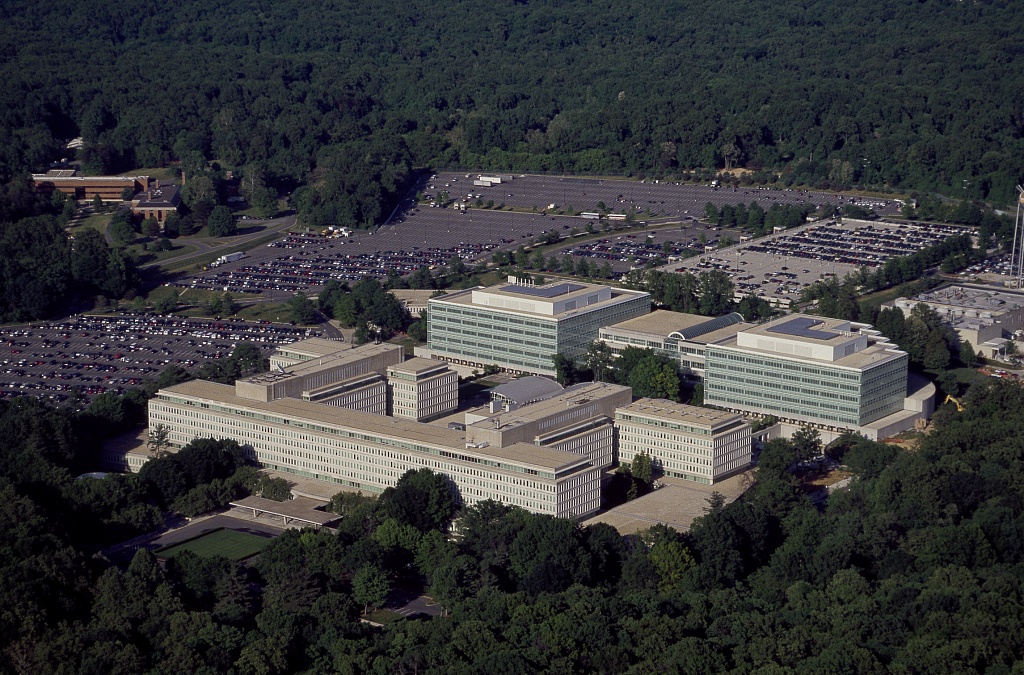
Between 1953 and 1973, the Central Intelligence Agency ran one of the most ambitious — and least restrained — human-experimentation programs in American history. The goal was mind control. The subjects rarely knew they were subjects. By the time the public found out, most of the records had been burned.

Watergate
In the early hours of June 17, 1972, five men were arrested inside the Democratic National Committee's offices on the sixth floor of the Watergate complex. Two years and 54 days later, on August 9, 1974, Richard Nixon became the only sitting U.S. president to resign. Between those dates lies the most thoroughly documented presidential cover-up in American history — and the deliberate destruction of careers, evidence, and finally the office itself.
The Snowden Disclosures
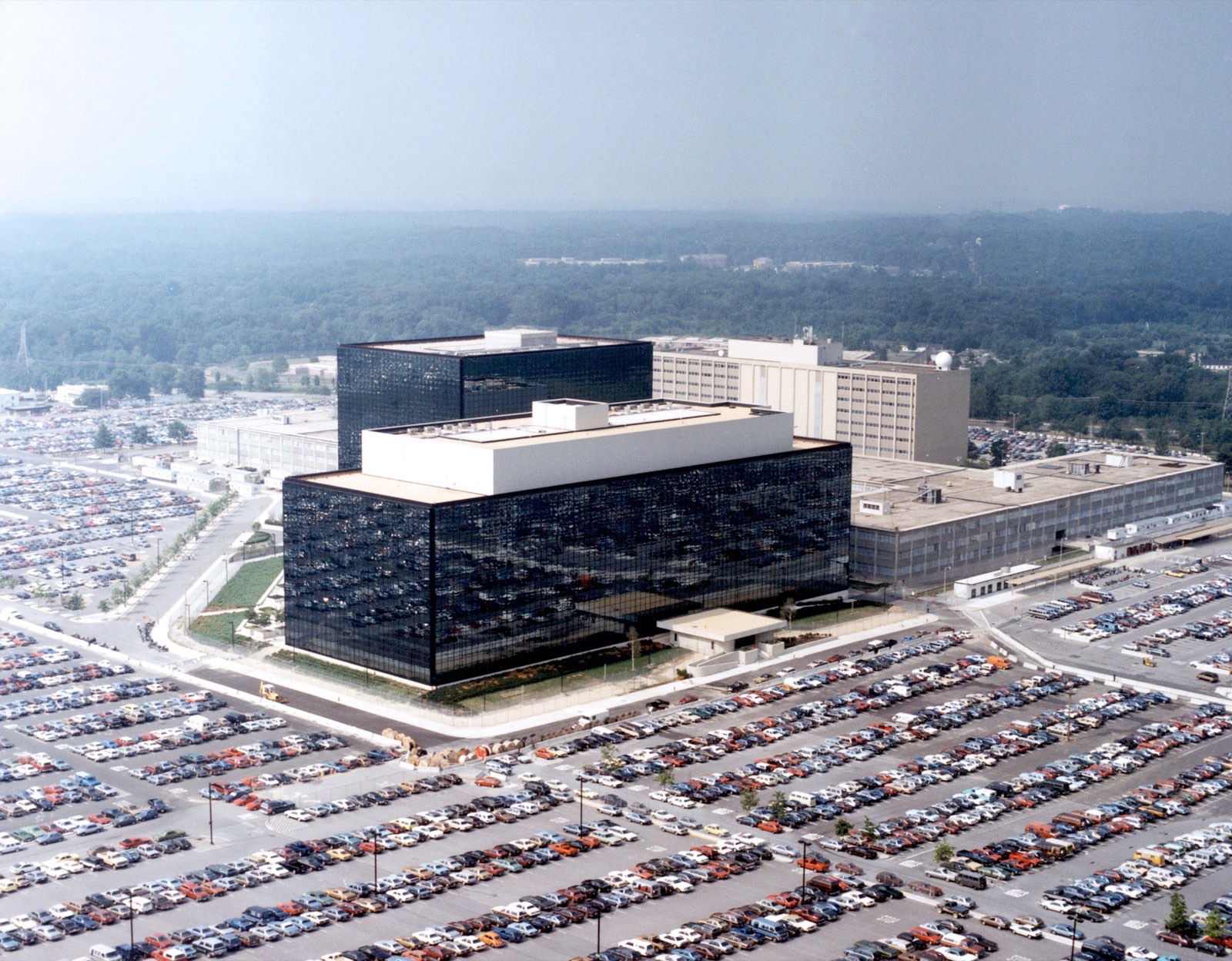
In May 2013, a 29-year-old NSA contractor named Edward Snowden boarded a flight from Honolulu to Hong Kong carrying four laptops loaded with classified documents from the world's largest signals-intelligence agency. Over the following months, *The Guardian*, *The Washington Post* and *Der Spiegel* published material from those drives that revealed the architecture of post-9/11 surveillance — PRISM, XKeyscore, Boundless Informant, MUSCULAR. Within ninety days, the global conversation about surveillance, sovereignty, and the limits of state power had shifted. Snowden has lived in Russia since August 2013.