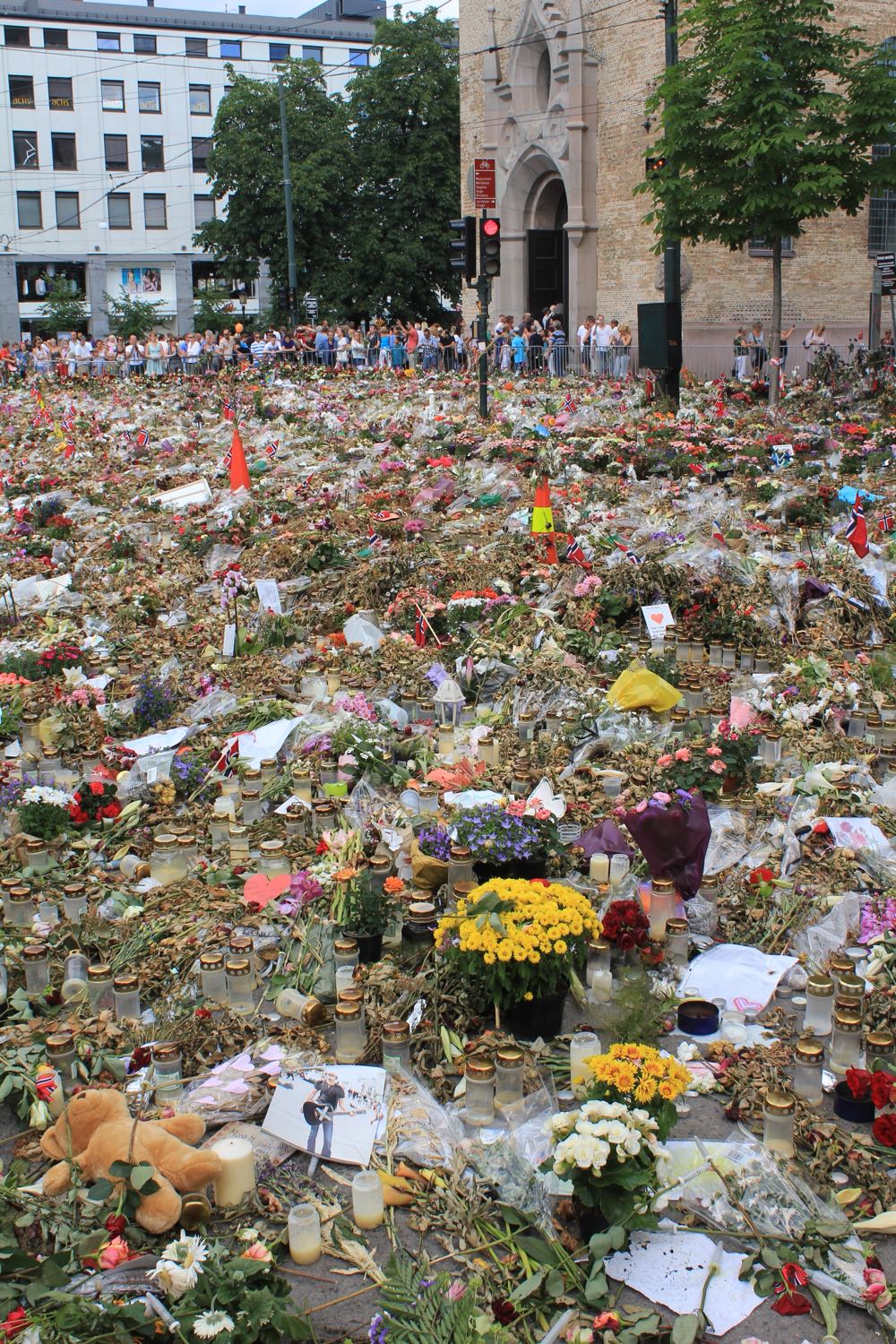
A sea of flowers fills the plaza outside Oslo Cathedral in the days after 22 July 2011, as Norwegians gathered to mourn the 77 people killed. Rather than respond with vengeance or repression, the country answered the attacks with grief held in common, rose marches, and a pledge of 'more democracy, more openness.' Wikimedia Commons, Public domain.
The 22 July Attacks and How Norway Refused to Answer Hatred with Hatred
Norway, 22 July 2011 — a far-right terrorist bombed Oslo's government quarter and then murdered scores of young people at a summer camp on the island of Utøya. Seventy-seven died, most of them teenagers. The country answered not with vengeance but with roses, openness, and democracy
- Category
- State & Intelligence Operations
- Published
- Length
- 4,260 words · 20 min read
- Author
- The editors
This is the hardest kind of story to tell well, because telling it badly does harm. A terrorist who murders the young in order to be noticed, to spread an ideology, and to inspire others is served by attention — by the recounting of his methods, the airing of his manifesto, the elevation of his name into infamy. So this account is written against that grain. It dwells on the victims and the country, not the killer; it describes his ideology only enough to understand and to reject it, never to transmit it; and it treats the central fact of 22 July not as the cleverness of one man but as the resilience of a society that refused to let him define it. The murderer wanted to be the story. He does not get to be.
This is the story of 22 July, and of how Norway answered it.
The day
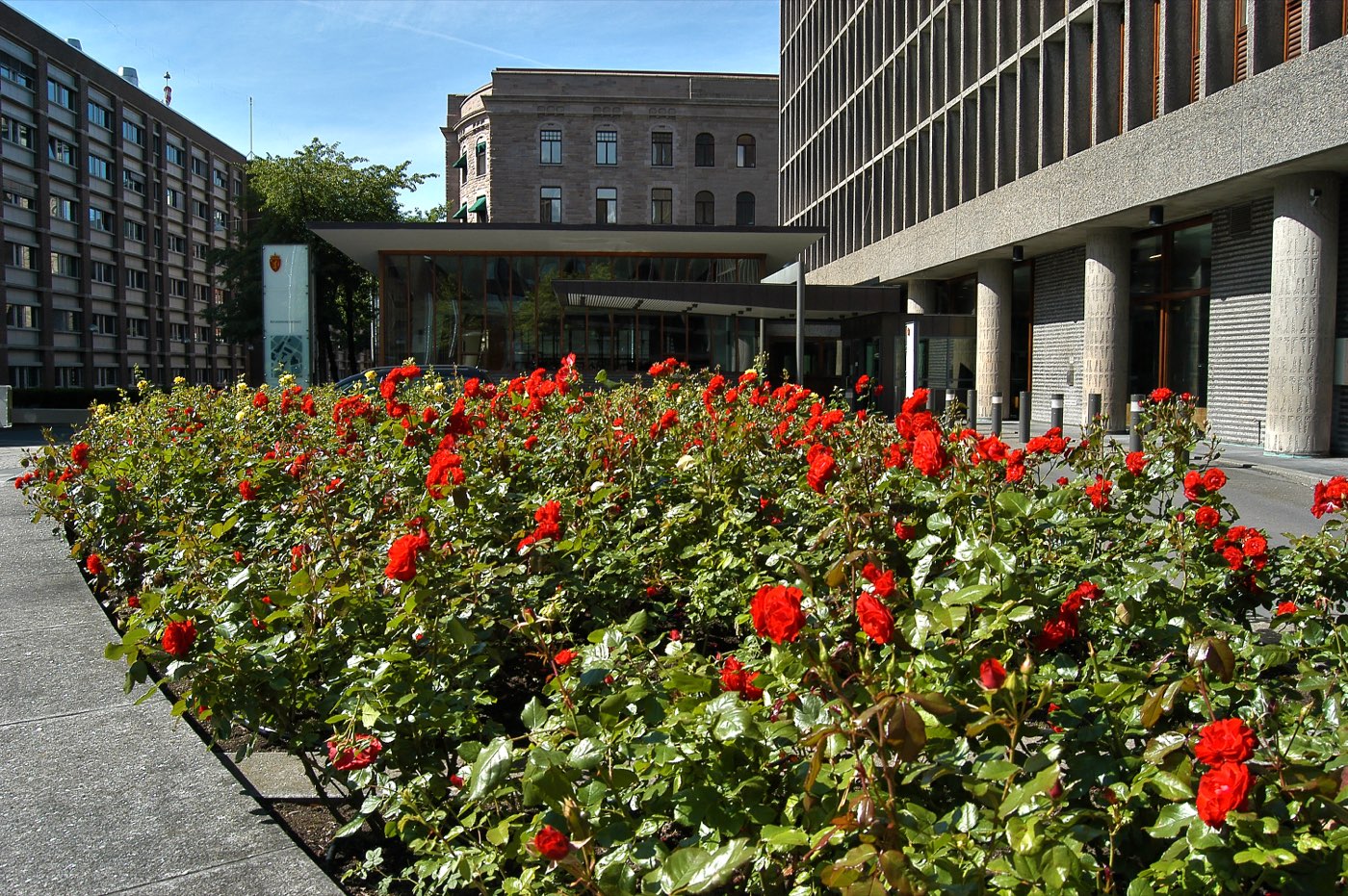
The morning of 22 July 2011 was an ordinary Norwegian summer Friday, many people already away on holiday. In the early afternoon, a vehicle packed with a homemade fertiliser bomb was left in the government quarter in the heart of Oslo, beside the high-rise that housed the prime minister's offices. It detonated at 3:25 p.m., shattering buildings across the area, killing eight people and injuring many. The city's emergency services rushed to the scene of what everyone assumed was the day's catastrophe — a terrorist bombing in the Norwegian capital, shocking in a country that thought itself far from such things.
But the bombing was not the end; it was the diversion. While Oslo's attention and resources were fixed on the wrecked government quarter, the perpetrator was already driving out of the city toward Tyrifjorden, a lake about forty kilometres away, and the small island of Utøya in its waters. On Utøya, the AUF — the youth organisation of the governing Labour Party — was holding its traditional summer camp, and around six hundred people, many of them teenagers, were on the island. Dressed in a police uniform and carrying weapons, the man took the ferry across, presenting himself as an officer sent to provide security after the Oslo bombing. Once on the island, he began to kill.
Utøya
What happened on Utøya over the following hour and more was an act of calculated mass murder against trapped and mostly very young people, and the decision of this account is not to narrate it in detail — not to walk through the methods or the movements, which serve no purpose here but to honour the killer's design. What matters is the human reality: that hundreds of young people who had come to a summer camp to talk about the future were hunted on a small island they could not easily leave, that many showed extraordinary courage in helping and shielding one another, that some swam into the cold lake to escape and were helped by local residents who took their own boats out to pull strangers' children from the water, and that, in the end, 69 people on Utøya were dead. Most were teenagers. The youngest victims were fourteen.
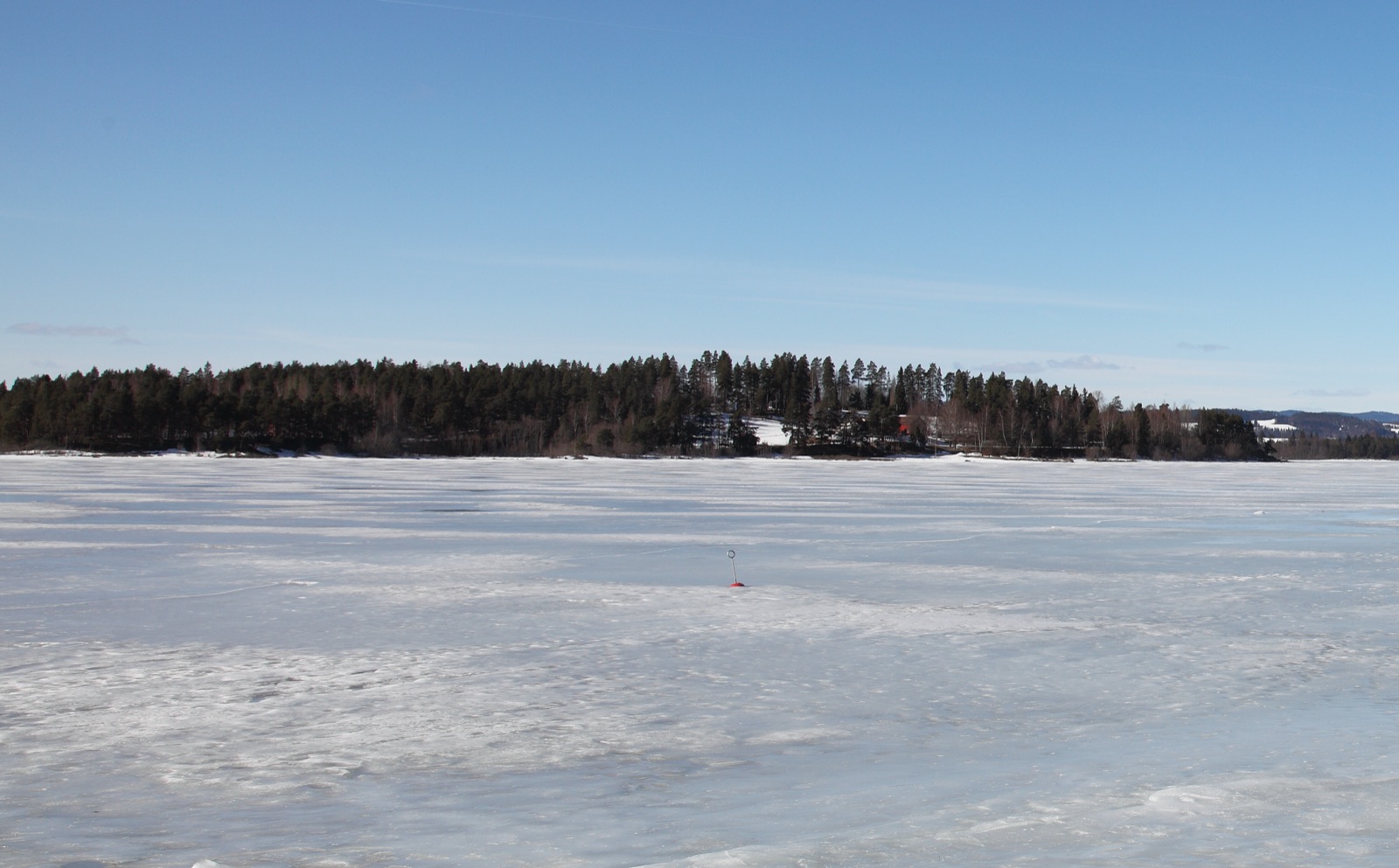
The police response was tragically slow. The first officers took far longer to reach the island than they should have, hampered by confusion, communication failures, and a lack of available transport across the water — failures later documented unsparingly. By the time police reached Utøya and the perpetrator surrendered without resistance, the killing had gone on for more than an hour. That delay, and the lives it may have cost, would become one of the most painful elements of the national reckoning.
Yet within that failure there were acts of ordinary heroism that Norway has rightly chosen to remember alongside the loss. As young people threw themselves into the cold water of Tyrifjorden to escape, local residents living around the lake launched their own private boats and went out, repeatedly, into uncertain danger — not knowing whether there were multiple attackers or whether they themselves might be fired upon — to haul frightened teenagers from the water and ferry them to safety. Campers helped one another, shielded strangers, and kept their heads in circumstances no one should ever face. The story of Utøya is not only one of a killer's calculation but of the courage of the young people he targeted and the ordinary adults who, with no uniform and no obligation, rowed toward danger to save children who were not their own. That, too, is part of the record — and the part Norway has been most determined to honour.
The victims
The dead of 22 July were overwhelmingly young. On Utøya they were members and friends of a political youth movement — teenagers and young adults who were, by definition, among the most engaged and idealistic of their generation, the kind of young people who give up part of their summer to talk about how to make their country and the world better. They came from across Norway, from many backgrounds; among them were children of immigrants, a reminder that the multicultural Norway the killer hated was present even among his victims. In Oslo, the eight killed by the bomb were ordinary people going about their work in and around the government quarter.
To list what was lost is to confront the particular cruelty of an attack on the young: not only the lives ended but the decades that would never be lived, the careers and families and contributions that vanished in an afternoon. Norway is a small country, and the loss rippled through it intimately; in a nation of five million, the dead and bereaved were connected by only a few degrees to a very large share of the population. Nearly everyone knew someone touched by it. The survivors, many of them wounded in body and all of them in spirit, carried the day forward into the rest of their lives — and a number of them went on to become public figures, politicians, and advocates, refusing to let the attack be the end of their engagement with the democratic life it had targeted.
A nation's response
What Norway did next is the part of the story that deserves to be remembered longest. A terrorist attack of this scale, especially one targeting a nation's children, creates enormous pressure toward fear, repression, and the politics of revenge — toward sweeping security measures, the curtailment of liberties, and the hardening of society against a designated enemy. Many countries, faced with far less, have gone down that road. Norway, in its grief, consciously did not.
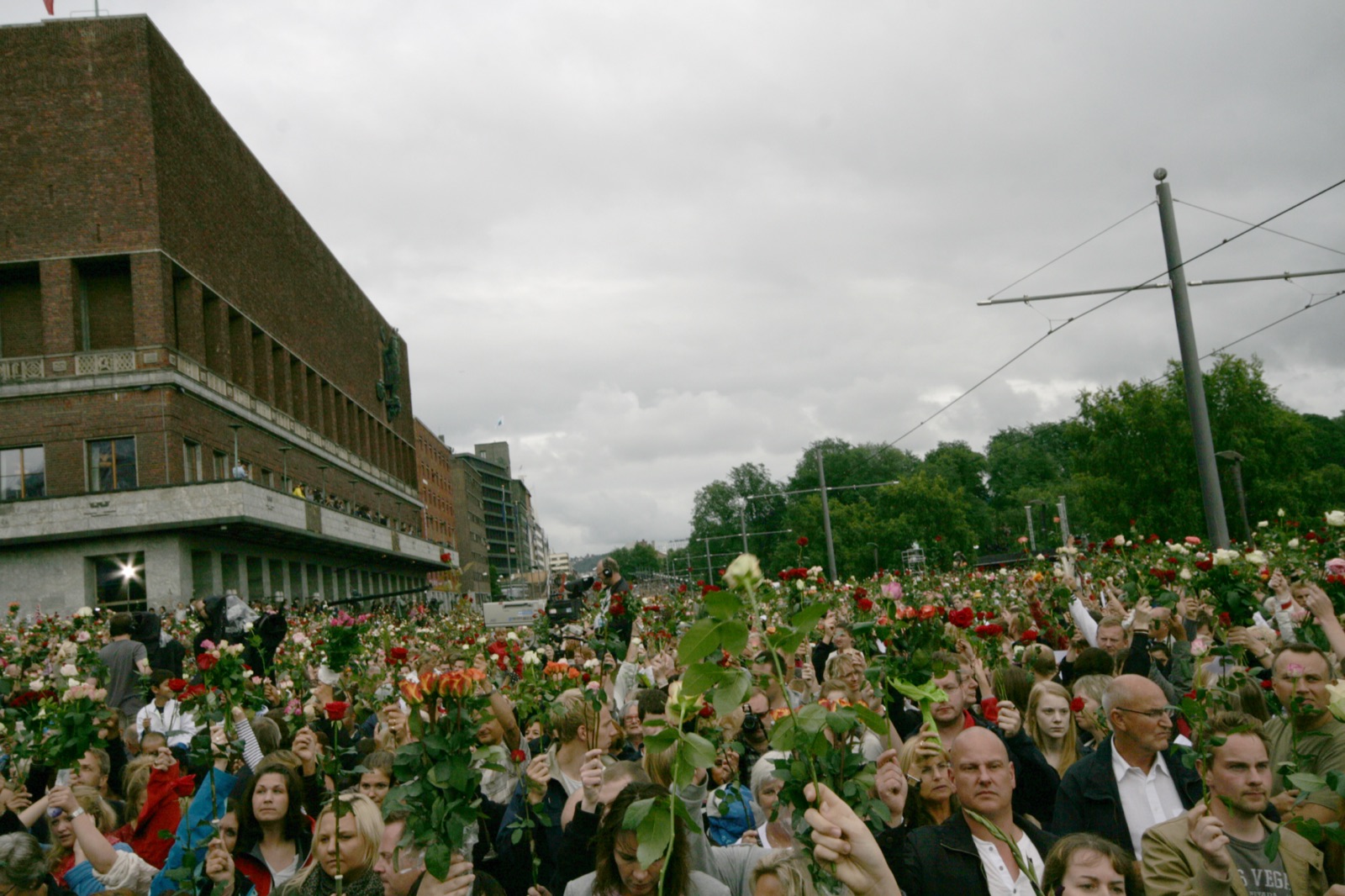
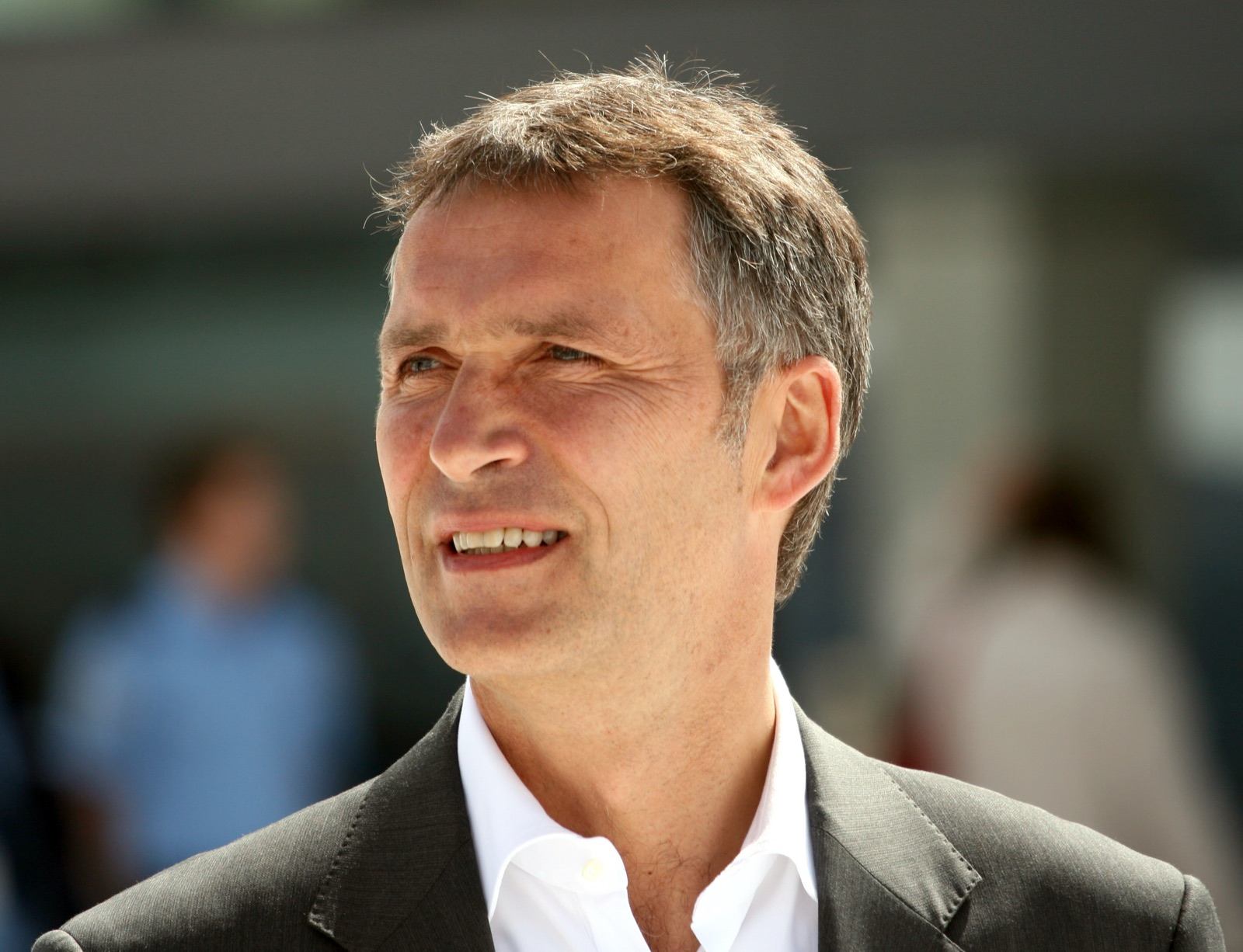
In the days after the attacks, hundreds of thousands of Norwegians gathered in Oslo and other cities for "rose marches," carrying flowers in silent, overwhelming tribute. The plazas of the capital filled with a sea of flowers, candles, and handwritten messages. Prime Minister Jens Stoltenberg — whose own party's youth had been the target, and who personally knew some of the victims — gave voice to the national mood in words that became famous: that Norway's answer to violence would be "more democracy, more openness, and more humanity," and that the country would not be bombed or shot into abandoning the values that made it what it was. King Harald V wept openly at the memorial service. The message, repeated across the society, was that the attack was an assault on Norwegian democracy and openness, and that the only fitting response was to hold those values more firmly, not to surrender them to fear.
This response was not naïve, and it did not mean ignoring the threat or forgoing justice. It meant refusing the specific outcome the terrorist had wanted: a Norway turned fearful, divided, and repressive, set against its own minorities. By answering with solidarity and an insistence on openness, Norwegians denied him his deeper objective. It is one of the most striking examples in modern history of a society declining to be terrorised in the truest sense — declining to let an act of terror reshape it into something crueller.
The perpetrator and his ideology
It is necessary to say something about the man and his motives, because to understand and guard against such attacks one must understand what drives them — but it will be said briefly, and critically, and without granting his ideas the platform he sought. The perpetrator was a Norwegian man in his early thirties, a far-right extremist who had spent years immersed in online anti-immigration, anti-Muslim, and anti-feminist ideologies, and who had written a long, derivative manifesto rehearsing the conspiracy theories of the radical right — above all the false and paranoid idea that European elites and the political left were deliberately engineering the destruction of white European societies through immigration. He attacked the government quarter and the Labour youth camp precisely because he blamed the governing Labour Party and its multicultural, social-democratic politics for this imagined betrayal, and he hoped his attacks would be the opening shot of a wider struggle.
His ideology was not original or coherent; it was a stitched-together catalogue of the far right's grievances and fantasies, the same broad worldview that has motivated other terrorists before and since. It does not deserve, and will not receive here, a careful exposition as though it were a serious body of thought. What it deserves is to be named for what it is — a paranoid, racist, anti-democratic ideology that dehumanises immigrants and Muslims and casts political opponents as existential enemies — and to be rejected. The danger of attacks like this lies partly in the way they are designed to broadcast such ideas; the responsible course is to understand the ideology's contours well enough to recognise and counter it, while denying it the amplification its adherents crave.
The trial
The legal proceedings in 2012 confronted a difficult question: was the perpetrator sane and therefore criminally responsible, or psychotic and therefore to be committed to psychiatric care rather than punished? Competing psychiatric evaluations reached opposite conclusions, and the question carried real weight for the survivors and bereaved, many of whom wanted him held criminally accountable rather than treated as insane. In the end, the court found him sane and criminally responsible, and convicted him of terrorism and mass murder. He was sentenced to Norway's maximum penalty: 21 years of preventive detention (forvaring), a sentence that can be — and almost certainly will be — extended indefinitely so long as he is judged a danger, meaning he is very unlikely ever to be released.
To some outside Norway, a maximum of 21 years for murdering 77 people seemed shockingly lenient. But the preventive-detention mechanism means the sentence is effectively open-ended, and the Norwegian justice system's restraint was itself part of the national response: the refusal to make an exception, even for this, to the country's humane penal principles was a deliberate assertion that the killer would not be allowed to degrade Norway's values, including its justice. He would be tried fairly, convicted, and confined under the same legal order he had attacked — and denied the spectacle of a system bending itself out of shape in response to him.
The reckoning
Alongside the trial came a hard institutional reckoning, centred on the question that haunted the survivors: could more have been done to stop the killing, especially on Utøya, where the police took so long to arrive? An independent commission, the Gjørv Commission, investigated and delivered, in 2012, an unsparing report. It found grave failures: the bombing in Oslo could potentially have been prevented or mitigated with better security measures; the police response to Utøya was too slow and poorly coordinated; communication broke down; and a series of operational failures meant the perpetrator was able to continue killing far longer than he should have been. The report's central finding was uncomfortable: the failures were less about a lack of resources than about leadership, culture, and the failure to implement plans and use the resources that existed.
The Gjørv Report was a model of democratic accountability — a country turning a clear, critical eye on its own institutions' failures in its worst hour, publishing the findings, and demanding reform. It led to changes in Norwegian emergency preparedness and policing. And it did so without scapegoating or hysteria, treating the examination of failure as a duty owed to the dead rather than an occasion for blame-shifting. That a grieving nation could both honour its victims and rigorously hold its own state to account, at the same time, is part of what made Norway's response so widely admired.
The afterlife
The 22 July attacks did not end the threat they came from; if anything, the years since have confirmed how real and how international it is. The same far-right ideology that motivated the Utøya killer has driven other atrocities around the world, and some later terrorists explicitly invoked or praised him — the perpetrator of the 2019 Christchurch mosque attacks in New Zealand among them. This is precisely why the refusal to amplify such killers matters: they form a grim transnational lineage in which each seeks to inspire the next, and each draws strength from the notoriety the last achieved. Denying them that notoriety — focusing on victims, refusing to broadcast manifestos, declining to turn murderers into dark celebrities — is now understood as a part of counter-terrorism itself.
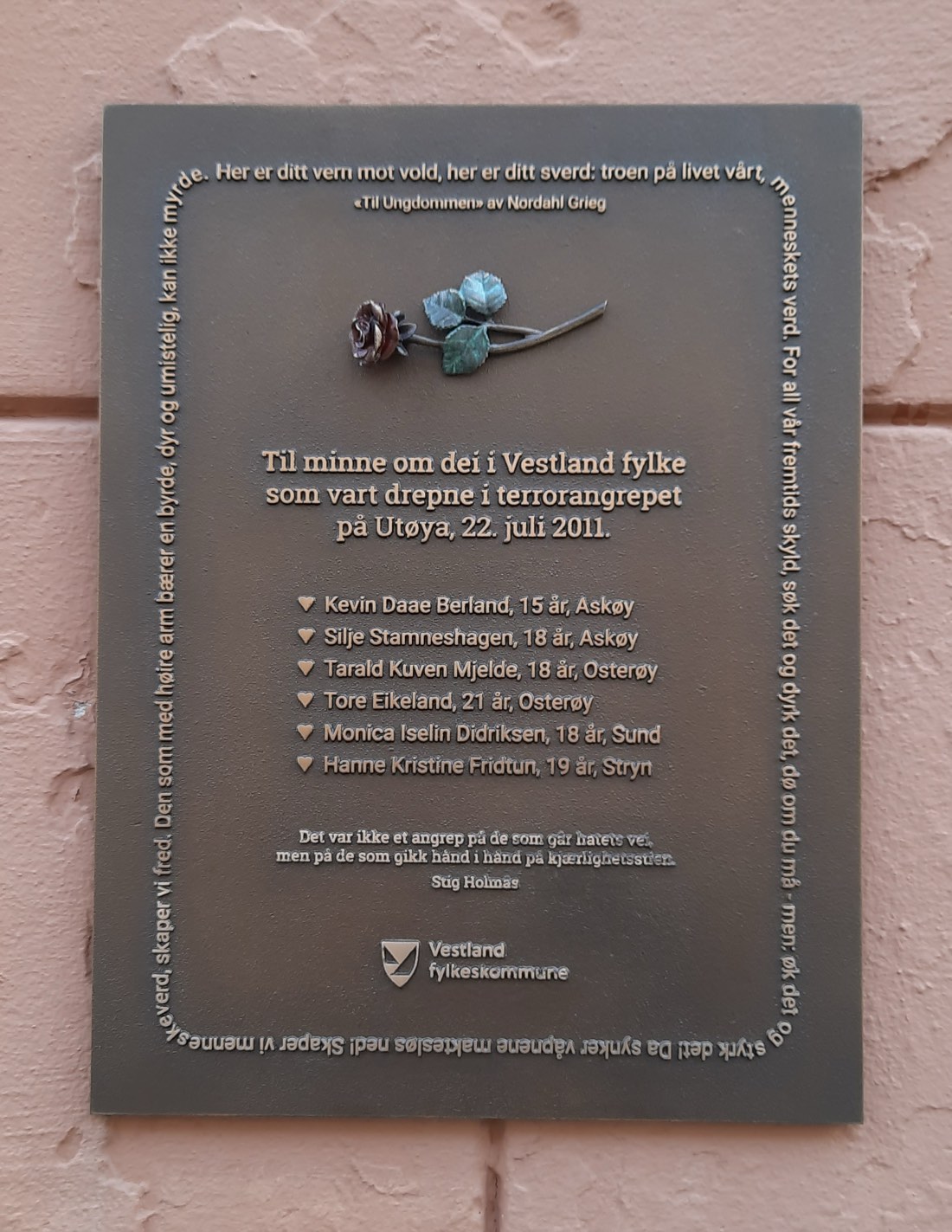
Norway chose to remember in ways that affirmed life over the attack. The AUF returned to Utøya, holding its summer camps there again, refusing to cede the island to its worst day. Permanent memorials were built; the names of the dead were inscribed and spoken; survivors told their stories on their own terms. The reconstruction of the government quarter became an occasion for debate about how to mark such a wound in the fabric of a city. Through all of it ran the same thread as the first response: that the proper memorial to those killed for their commitment to an open, democratic, multicultural society is the flourishing of exactly that society.
In the end, 22 July 2011 is remembered in Norway not primarily as the day a terrorist killed seventy-seven people, but as the day a country decided what kind of nation it would be in response. The attack was meant to be a beginning — the first blow in a war against an open, diverse, democratic society. It became, instead, a demonstration of that society's strength: the rose marches, the sea of flowers, the return to Utøya, the fair trial, the honest accounting of failure, the refusal to trade humanity for fear. The young people who died had given their summer to the belief that politics could make the world more just and more open. The most faithful memorial to them is the country that, in their name, chose to become more of what they believed in, and not less. That is the story of 22 July worth telling — and the killer, by the deliberate choice of a grieving nation, is not its hero, its villain, or its centre, but a footnote to the seventy-seven.
Sources
- The Gjørv Commission (22 July Commission), Official Norwegian Report NOU 2012:14 on the attacks and the authorities' response (2012) — primary.
- The verdict of the Oslo District Court in the 2012 trial — primary.
- Official Norwegian government and police records and statements on the attacks and the response — primary.
- Åsne Seierstad, One of Us: The Story of a Massacre in Norway and Its Aftermath (2015) — secondary.
- Contemporary reporting by NRK, Aftenposten, and international media on the attacks, the mourning, and the trial (2011–2012) — secondary.
- Jens Stoltenberg's speeches and statements in the aftermath (2011) — primary.
- Survivor testimony and accounts gathered in the years since — primary/secondary.
- Scholarship on far-right terrorism, on counter-terrorism communication (including the ethics of naming perpetrators), and on societal resilience after terrorist attacks — academic.
Inspired this / based on it
Åsne Seierstad
Farrar, Straus and Giroux. The definitive account, centred on the victims and the country.
Erik Poppe
A Norwegian film told from the victims' perspective on the island.
Filed under
Click any tag for every article carrying it.
Continue reading
The Olof Palme Assassination
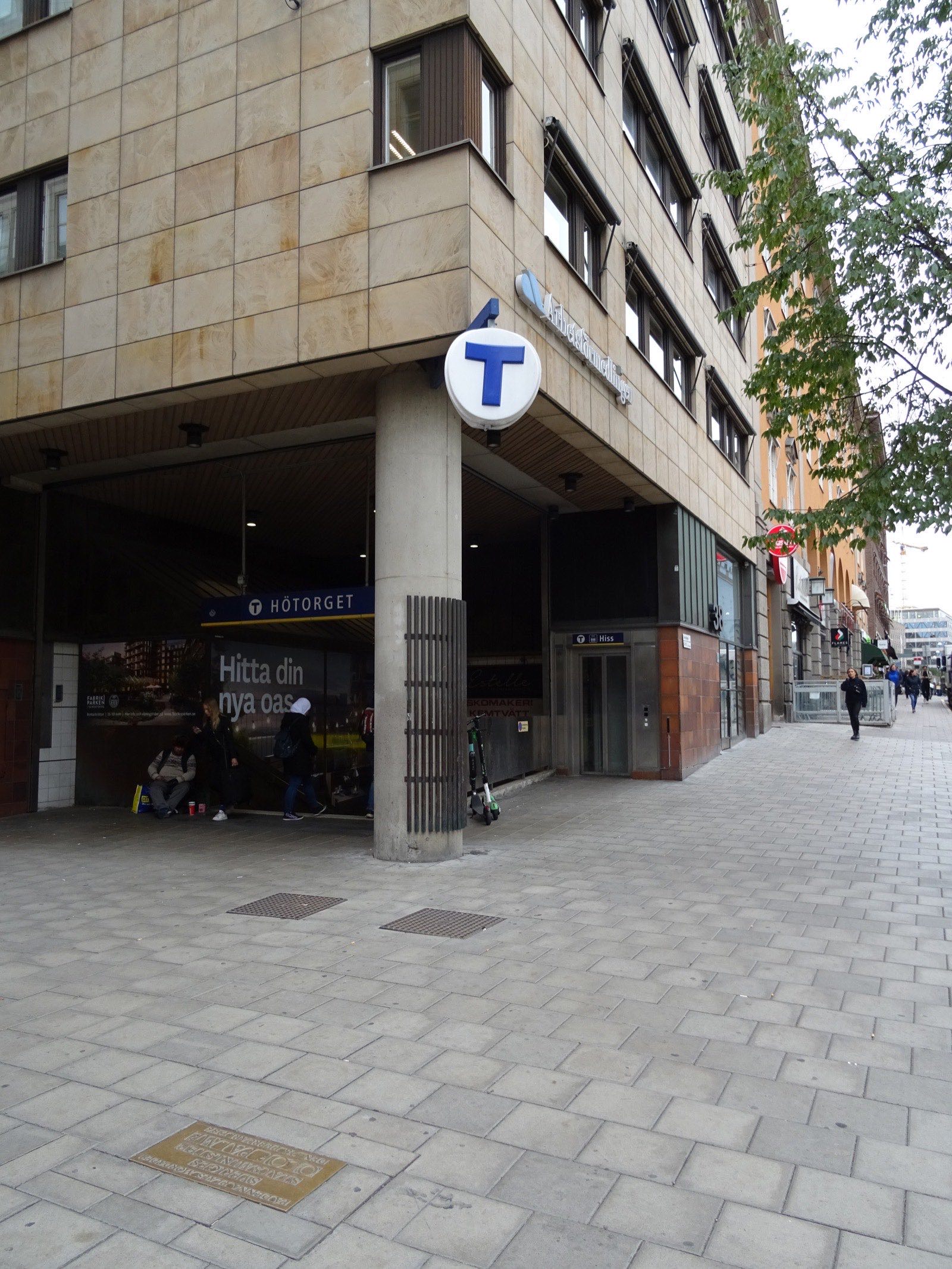
At 11:21 p.m. on Friday, February 28, 1986, the Prime Minister of Sweden, Olof Palme, was shot in the back at point-blank range on Sveavägen, Stockholm, while walking home from a cinema with his wife Lisbet. Lisbet Palme was grazed by a second shot. Olof Palme was 59 years old. He had been the Prime Minister of Sweden from 1969 to 1976 and again from 1982. He had no bodyguards that night. The killer ran east up Tunnelgatan and disappeared. He has never been positively identified. Sweden's Palme Commission and its successor police investigation ran for 34 years. On June 10, 2020, Chief Prosecutor Krister Petersson publicly named the most likely perpetrator — a Swedish graphic designer named Stig Engström, the so-called "Skandiamannen" — and simultaneously closed the case because Engström had died in 2000 and could not be tried. The 40-year-old investigation produced 22 binders of investigative material, dozens of failed theories, one wrongful conviction, and no court ruling. It is the largest unsolved political assassination in modern European history.
The Madrid Train Bombings and the Battle Over Who Did It
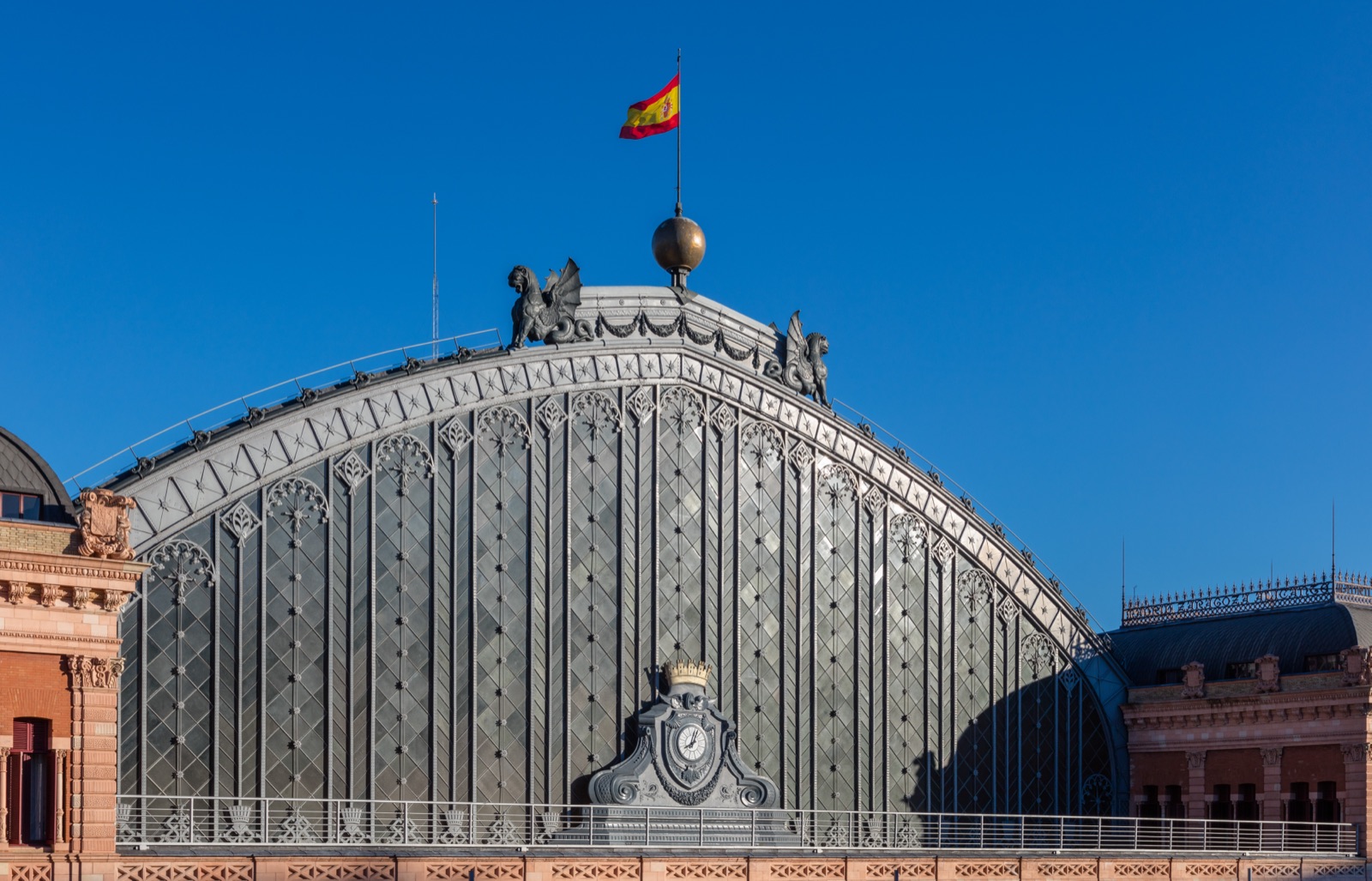
At the height of the morning rush on Thursday, March 11, 2004, ten bombs hidden in sports bags exploded within a few minutes of each other on four packed commuter trains converging on Madrid's Atocha station. One hundred and ninety-three people were killed and around two thousand injured — the deadliest terrorist attack in Spanish history and, at the time, in the history of post-war Europe. The bombs were crude and devastating: military plastic explosive packed with nails and screws, triggered by the alarms of cheap mobile phones. The attack fell three days before a general election that the governing conservative Partido Popular had expected to win, and from the first hours its government insisted, repeatedly and emphatically, that the perpetrator was ETA, the Basque separatist group it had spent years promising to defeat. The evidence pointed elsewhere almost at once — to an unexploded bag with a phone detonator, to a van near the departure station holding detonators and a cassette of Quranic verses, to a local cell of Islamist radicals enraged by Spain's participation in the war in Iraq. Over a frantic weekend the public came to believe it was being misled, gathered in spontaneous protests outside the ruling party's headquarters, and on March 14 voted the government out. Three years later, after the longest trial in modern Spanish history, the courts established the truth in detail: a jihadist cell, inspired by al-Qaeda, had carried out the massacre, and ETA had had nothing to do with it. And yet the case never closed in the public mind. A determined campaign — by newspapers, broadcasters, and politicians of the defeated right — kept alive the claim that the official account was a cover-up and that the real authors of 11-M had been hidden, for years after the verdict and, in corners of Spanish life, to this day. This article sets out what happened, what the courts proved, what genuinely remains murky, and how a fully solved crime became one of the most contested events in modern European politics.
The Rwandan Genocide and the Warnings the World Chose Not to Hear
Between the evening of April 6, 1994, and the middle of July, the small Central African country of Rwanda was the site of one of the swiftest and most concentrated mass killings in human history. In about a hundred days, organised militias, soldiers, and ordinary citizens murdered something on the order of 800,000 people — most estimates run between half a million and a million — the overwhelming majority of them Tutsi, killed for belonging to a group that colonial rulers had hardened, decades earlier, into a racial category stamped on an identity card. The killing was not the explosion of ancient, spontaneous hatred that early coverage suggested. It was prepared: there were arms caches and trained militias, lists of names, and a radio station that read those names on air and urged listeners to 'cut down the tall trees' and exterminate the 'cockroaches' among them. Neighbours killed neighbours with machetes; churches and schools where Tutsi gathered for safety became the sites of the largest massacres. And all of it happened in plain view of an international community that had a peacekeeping force on the ground, had been warned months in advance that an extermination was being planned, and chose — at the United Nations, in Washington, in Paris, in Brussels — not to reinforce that force but to withdraw it, and not to use the one word, 'genocide,' that would have obliged the world to act. This article sets out what happened in those hundred days: how the genocide was built, how it unfolded, how the world looked away, and how a country has tried, in the thirty years since, to live with the memory and to render some account of it. It is not a mystery in the usual sense. The facts are known and the perpetrators were named. The harder question it leaves is the one about everyone who watched.