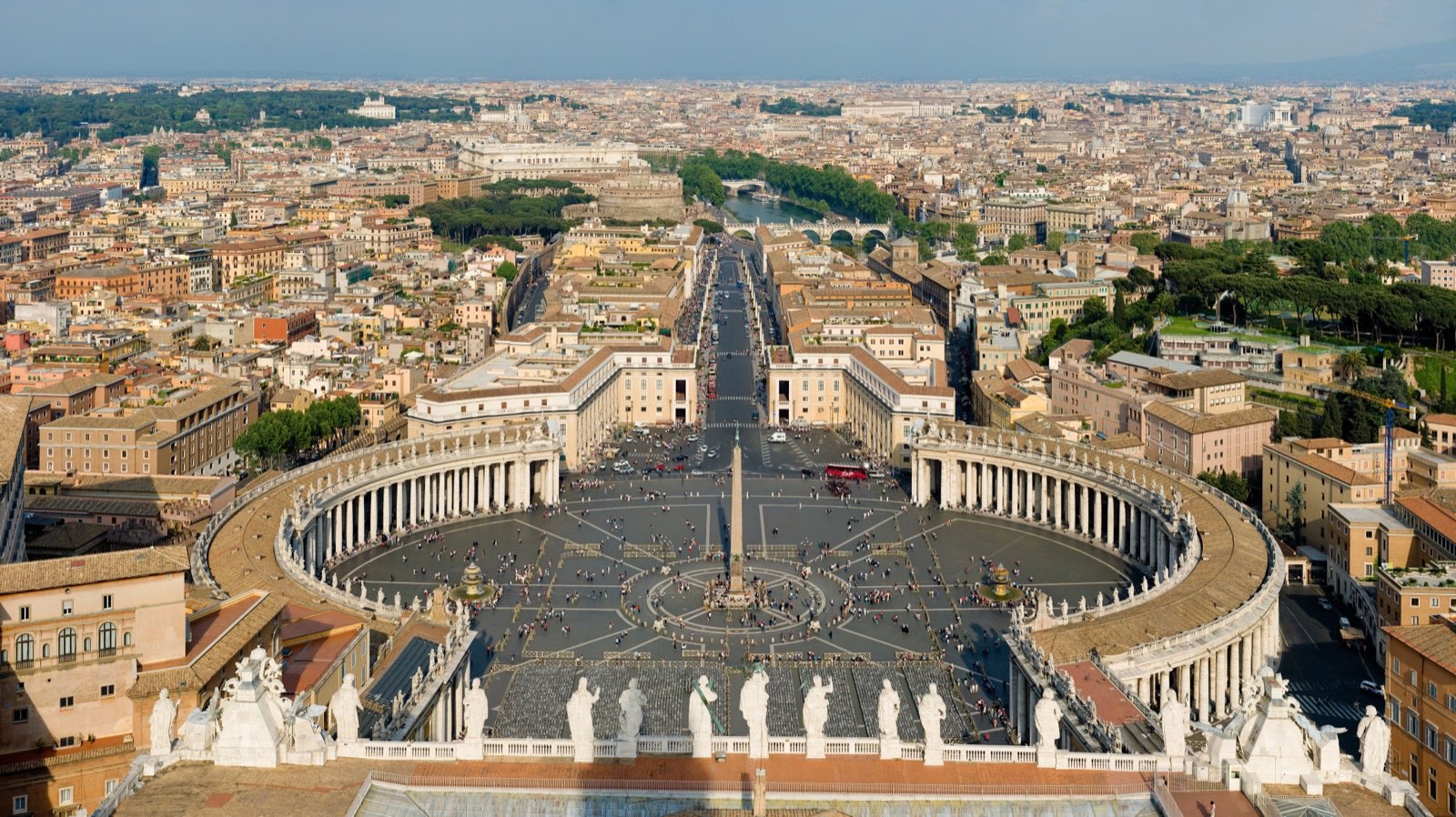
St. Peter's Square, Vatican City. The cover-up of clergy abuse was directed and tolerated at multiple levels of the Catholic hierarchy across decades. Public domain via Wikimedia Commons.
The Catholic Church Abuse Cover-Up
What the Globe found, what the world confirmed
- Category
- Religion, Cults & Spirituality
- Published
- Length
- 4,000 words · 19 min read
- Author
- The editors
The Catholic Church Abuse Cover-Up
What the Globe found, what the world confirmed.
The first article
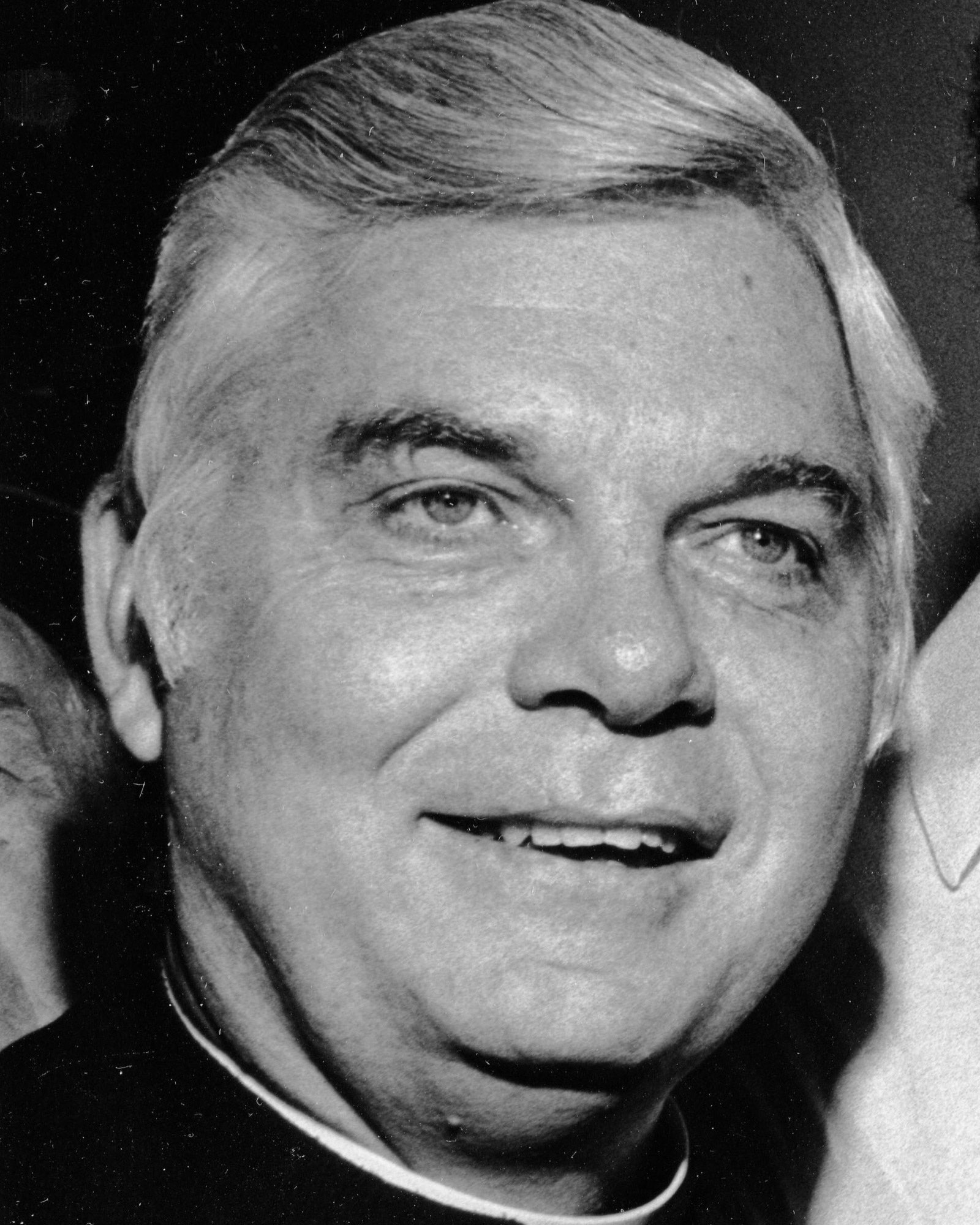
On Sunday morning, January 6, 2002, the Boston Globe's lead front- page story was titled "Church allowed abuse by priest for years." The byline credited four reporters: Matt Carroll, Sacha Pfeiffer, Michael Rezendes, and Walter Robinson. Above them the Spotlight Team logo identified the article as the product of the paper's investigative unit, the oldest continuously operating investigative reporting team at an American daily newspaper.
The article told the story of John J. Geoghan, a Boston priest ordained in 1962. Over thirty years, in six Greater Boston parishes, Geoghan had been accused by more than 130 victims of fondling or raping them as children. The Globe had obtained documentation — through court files made public by Judge Constance M. Sweeney during a January 2002 procedural ruling — that showed the Boston Archdiocese had known of complaints against Geoghan since at least 1984.
The Archdiocese had not removed Geoghan. It had transferred him. Bishop John D'Arcy, in a letter dated December 7, 1984, had warned Cardinal Bernard Law against the latest transfer ("Geoghan has a history of homosexual involvement with young boys"). Law had signed the transfer anyway. Two years later, in 1986, Geoghan was reassigned again. Three years after that, in 1989, again. The pattern continued until 1993, when he was placed on "sick leave" and ultimately defrocked in 1998.
The Globe identified what had taken place not as a single priest's crimes — though those were real — but as an institutional pattern of concealment in which the senior Archdiocesan leadership had been operationally aware.
The day's article was the first of approximately 600 the Globe would publish on the abuse story between January 2002 and the end of 2003. By the end of the first month, the paper had identified at least seventy priests in the Boston Archdiocese alone against whom quiet settlements had been paid.
The Spotlight method
The investigation that produced the January 2002 articles had begun in July 2001 when Globe editor Marty Baron, newly arrived at the paper, asked the Spotlight Team to look more closely at allegations the paper had previously reported in piecemeal fashion. The team spent six months reading court records, interviewing victims, and compiling a database of priests against whom allegations had been made.
The decisive evidentiary breakthrough came when the team requested that the court records in the ongoing Geoghan civil suits — which had been sealed at the Archdiocese's request — be made public. Judge Constance M. Sweeney granted the request in January 2002. The sealed records included the Archdiocese's own internal personnel files for Geoghan, including documents that showed senior officials had known of allegations and had approved the transfers anyway.
The pattern the Spotlight Team documented was operationally specific:
- Allegation comes to the Archdiocese (often through the parents of an abused child or through a parish administrator).
- Priest is sent for "treatment" at a Catholic-affiliated therapy facility, typically the Servants of the Paraclete in New Mexico.
- After treatment, priest is reassigned to a different parish, often in a different region.
- New parish leadership is not informed of the history.
- Civil authorities are not informed.
- The pattern repeats.
The Spotlight Team's articles documented this same pattern — transfer rather than removal, concealment from new parish leadership, no reporting to civil authorities — across decades of Boston archdiocesan practice. The pattern would subsequently be documented in nearly every diocese examined by subsequent investigators.
The pattern, generalized
By 2003 — the year the Spotlight Team's reporting received the Pulitzer Prize for Public Service — the Boston pattern had been documented in dioceses across the United States. The U.S. Conference of Catholic Bishops (USCCB), facing escalating press attention and mounting civil litigation, commissioned the John Jay College of Criminal Justice to conduct an independent national study.
The John Jay Report, published February 27, 2004, examined Catholic priest assignments and abuse allegations across all 195 dioceses in the United States from 1950 through 2002. The methodology was a diocese-by-diocese survey administered by John Jay's research team. Dioceses were required (by USCCB instruction) to participate and to disclose internally documented allegations.
The report's findings:
- 4,392 priests had been accused of child sexual abuse between 1950 and 2002.
- 10,667 victims had made allegations during that period.
- Approximately 4 percent of all priests active during the period had been the subject of at least one credible allegation.
- The vast majority of incidents had occurred between 1965 and 1985.
- The Church's documented response pattern, in approximately three-quarters of cases, was transfer or treatment rather than removal or civil-authority referral.
The John Jay Report became, immediately, the foundational document for subsequent international investigations. Its methodology was adapted by the 2005 Ferns Report (Ireland), the 2009 Murphy Report (Dublin Archdiocese), the 2017 Royal Commission (Australia), the 2018 Pennsylvania grand jury, the 2021 Sauvé Commission (France), and the 2022 Munich Report (Germany).
Each investigation, with local-context variation, reached the same structural conclusion: institutional pattern, not isolated incidents.
The Pennsylvania grand jury
On August 14, 2018, the Pennsylvania Attorney General released a 1,356-page grand-jury report that documented child sexual abuse by more than 300 Catholic priests against more than 1,000 identified victims in six Pennsylvania dioceses (Allentown, Erie, Greensburg, Harrisburg, Pittsburgh, Scranton) over a seventy-year period.
The report included redacted dossiers — based on the dioceses' own internal personnel files — for each of the 300+ priests. The internal documents showed:
- Priests being transferred to new parishes after credible complaints, exactly per the Boston pattern.
- Specific instances of senior diocesan officials writing letters that explicitly described allegations and approved transfers nonetheless.
- A 1980s diocese protocol for handling abuse allegations that included instructions for not writing things down ("not to use the word 'pedophile' in correspondence").
- One case involving a priest who had abused at least twenty-five young boys and had been transferred four times.
The Pennsylvania report was the most operationally detailed regional investigation conducted in any country before 2021. It became the template that the French Sauvé Commission (announced November 2018, just three months after Pennsylvania) and other later investigations used.
The Sauvé Commission
In November 2018, the French Conference of Catholic Bishops (CEF) and the Conference of Religious of France (CORREF) — partly in response to escalating public scandal in France itself, partly in acknowledgment of the international pattern by then established — commissioned the Independent Commission on Sexual Abuse in the Catholic Church (Commission indépendante sur les abus sexuels dans l'Église, abbreviated CIASE).
The commission was chaired by Jean-Marc Sauvé, honorary vice- president of the French Conseil d'État (the country's supreme administrative court). It included twenty-one members from outside the Catholic Church. Its operational mandate was full independence from the Church hierarchy.
The Sauvé Commission worked for thirty months. It interviewed victims, witnesses, theologians, historians, and (where willing) former and current clergy. It conducted demographic analysis on under-reporting using methods developed for sexual-assault statistical work in other countries. It studied diocesan, judicial, police, and press archives going back to 1950.
The commission's report, published October 5, 2021, contained two findings that reframed the international picture:
The aggregate estimate. The commission estimated 216,000 victims of priests directly, and an additional 114,000 victims of lay members in Catholic institutions (schools, scout troops, etc.). Total: approximately 330,000 victims of Catholic-institution abuse in France since 1950.
The structural finding. The commission concluded that the abuse constituted a "massive phenomenon" the institutional response to which had been, until very recently, a "veil of silence" rather than active engagement. The commission directly assigned institutional responsibility — not just individual priest culpability — to the French Catholic hierarchy and the Vatican.1
What the Vatican did, and did not, do
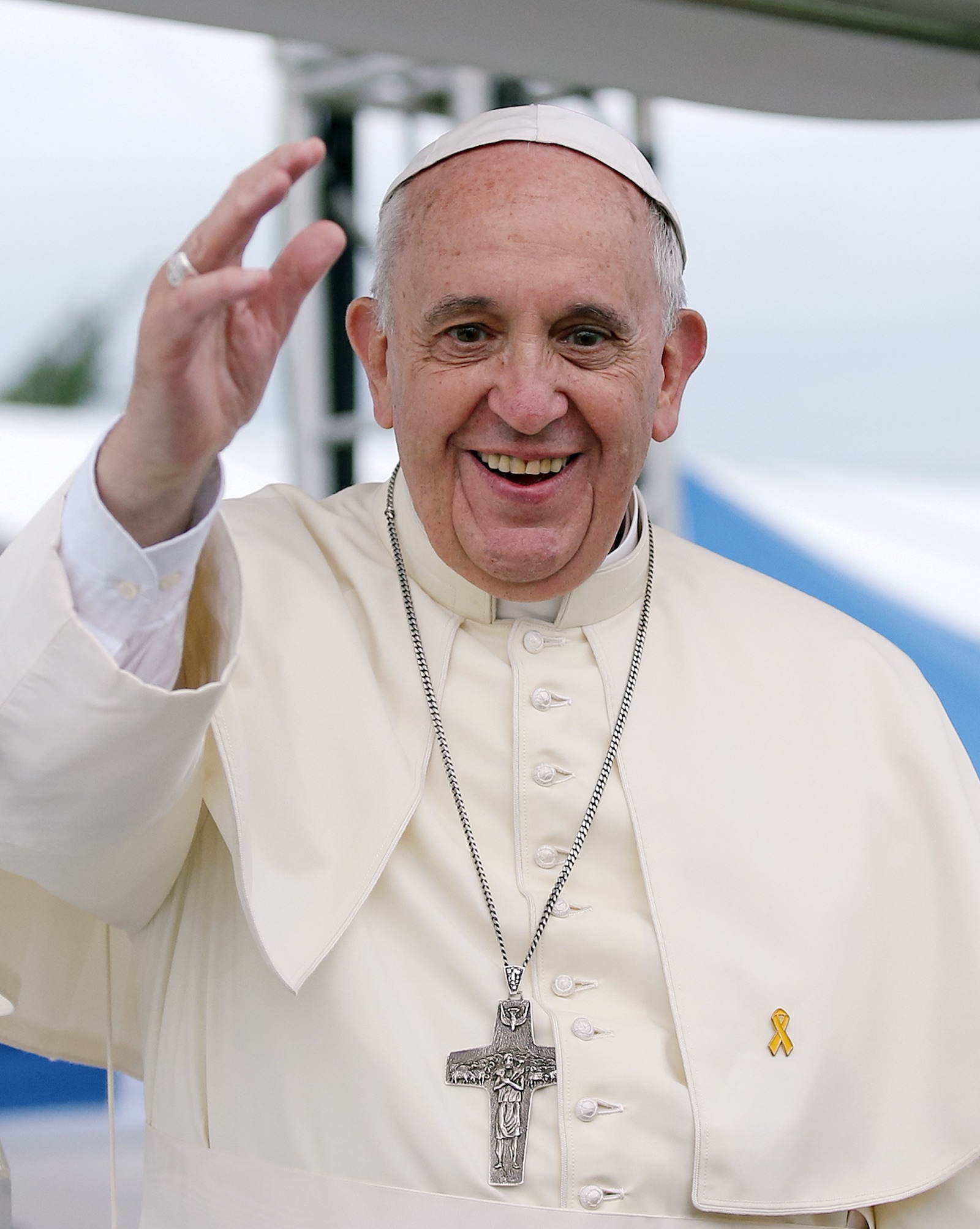
The institutional response from Rome has varied substantially across the three popes who have served during the documented crisis.
Pope John Paul II (1978-2005) responded to the early reports — including the 1985 National Catholic Reporter coverage of the Father Gilbert Gauthe case in Louisiana, the 1992 Boston settlement of Fr. James Porter cases, and the 2002 Spotlight reporting — largely through statements that emphasized clerical reformation as a primary remedy. Cardinal Law, after his December 2002 resignation from Boston, was given a position in Rome as Archpriest of the Basilica di Santa Maria Maggiore in May 2004. He held that position until 2011 and died in Rome in 2017 without facing criminal charges in any jurisdiction.
Pope Benedict XVI (2005-2013), as Cardinal Joseph Ratzinger, had served as Prefect of the Congregation for the Doctrine of the Faith from 1981 to 2005 — the office that had operational responsibility for canonical handling of priest-abuse cases during much of the period the documents reveal. As Pope, he issued modestly expanded reporting and procedural requirements, but the broader institutional architecture was not restructured. The 2022 Munich Report directly implicated him in transfers of accused priests during his 1977-1982 tenure as Archbishop of Munich.
Pope Francis (2013-present) has been substantially more direct. He convened the first Vatican summit on the crisis (February 2019), removed several archbishops, issued the apostolic letter Vos estis lux mundi (May 2019) mandating reporting of abuse complaints to ecclesiastical authorities and (more controversially) to civil authorities where required by local law, and reformed the Congregation for the Doctrine of the Faith's handling of cases. Critics — including survivors' groups in multiple countries — have characterized these measures as substantial but still inadequate relative to the scale of the documented institutional failure.
What proponents and critics still argue
The factual record of the cover-up is, at this point, no longer seriously contested. The interpretive disagreements that remain:
The "rotten apples" reading. Some defenders argue that abuse was the work of a small subset of individual priests and that the institutional response, however inadequate, was a series of bad local-leadership decisions rather than a directed system. This reading is difficult to maintain against the John Jay Report's 4-percent figure and the documentary record of multi-decade diocesan internal correspondence.
The "post-Vatican II crisis" reading. Several scholars (particularly within the Church) have suggested that the elevated abuse incidence between 1965 and 1985 corresponds with broader post–Vatican II disruptions in priesthood discipline. The correlation is real; the causal interpretation is contested.
The "Vatican vs. local diocese" question. Critics argue that operational responsibility for cover-up was Vatican-wide; defenders argue it was specific to local diocesan leadership. Documents like the Crimen Sollicitationis (Vatican instruction of 1962, partly disclosed in 2003) and the Congregation for the Doctrine of the Faith's handling protocols suggest the institutional structure was Vatican-coordinated, even if local execution varied substantially.
How we read the evidence
The Catholic Church abuse cover-up is, at this point in 2026, the most thoroughly documented institutional cover-up of large-scale harm in any organization in recorded history. The factual record runs across at least eight independent commissioned investigations in six countries, several hundred civil lawsuits with disclosed internal diocesan correspondence, and the Pennsylvania grand jury's 1,356 pages of personnel-file evidence. The conclusion of every one of these investigations was the same: institutional pattern, not isolated incidents.
What that documentation has not yet produced is structural change sufficient to prevent recurrence. The institutional architecture that enabled the cover-up — local-bishop autonomy over case disposition, canon-law proceedings parallel to civil-law processes, clerical privilege in interactions with secular authorities — remains largely intact. Pope Francis's reforms have modified the operational protocols but not the structural design.
The case is, in our judgment, the most successful confirmation in modern history of a thesis the Spotlight Team had pursued from the beginning of its January 2002 reporting: that institutional cover-ups of large-scale harm are typically operated not by individuals but by structures, and that the structures themselves require external accountability mechanisms to be dismantled.
The Catholic Church's accountability mechanism, for two decades and counting, has been external: the Globe, the John Jay Report, the Pennsylvania grand jury, the Sauvé Commission, the Munich Report. The Church has, in response, accepted documentation. It has not yet, in any country, accepted the structural changes the documentation implies.
Key figures
Further reading
Books:
- Boston Globe Investigative Staff, Betrayal: The Crisis in the Catholic Church (Little, Brown, 2002). The Spotlight Team's own account.
- David France, Our Fathers: The Secret Life of the Catholic Church in an Age of Scandal (Broadway Books, 2004).
- Frédéric Martel, In the Closet of the Vatican (Bloomsbury, 2019). Broader context.
- Pennsylvania Office of Attorney General, 40th Statewide Investigating Grand Jury, Report 1: Diocese of Allentown et al. (August 2018). The Pennsylvania grand jury report — fully published.
Films and documentaries:
- Spotlight (2015, dir. Tom McCarthy). Academy Award for Best Picture. The Globe team dramatization.
- Mea Maxima Culpa: Silence in the House of God (2012, dir. Alex Gibney). HBO documentary on a specific Wisconsin case and its journey to the Vatican.
- Deliver Us From Evil (2006, dir. Amy Berg). The Father Oliver O'Grady case in California.
Primary archives:
- CIASE Final Report, October 2021
- John Jay Report, 2004
- Boston Globe Spotlight Archive — Catholic Church Abuse
- Pennsylvania Grand Jury Report, 2018
- BishopAccountability.org — case database
Sources
Primary sources
- Pennsylvania Office of Attorney General. 40th Statewide Investigating Grand Jury, Report 1, August 14, 2018.
- Independent Commission on Sexual Abuse in the Catholic Church (CIASE). Sexual Violence in the Catholic Church France 1950–2020 — Final Report, October 5, 2021.
- John Jay College of Criminal Justice. The Nature and Scope of Sexual Abuse of Minors by Catholic Priests and Deacons in the United States 1950–2002, February 27, 2004.
- Murphy Commission. Report into the Catholic Archdiocese of Dublin, November 26, 2009.
- Ferns Report. Report Presented by Mr. Justice Francis D. Murphy, October 25, 2005.
- Munich Archdiocese Report (Westpfahl Spilker Wastl). Sexueller Missbrauch von Minderjährigen und erwachsenen Schutzbefohlenen, January 20, 2022.
Secondary sources
- Boston Globe Investigative Staff. (2002). Betrayal: The Crisis in the Catholic Church. Little, Brown.
- France, D. (2004). Our Fathers. Broadway Books.
- The Boston Globe Spotlight series, January 2002 – December 2003.
- The New York Times coverage, 2002–present.
- Robinson, W. V. (2003). "Spotlight on the Catholic Church Scandal." Frontline interview, PBS.
- La Croix (Paris) — French Catholic press coverage of CIASE 2021.
- Süddeutsche Zeitung — German coverage of the Munich Report, January 2022.
- McCarthy, T. (dir.) (2015). Spotlight. Open Road Films.
Academic sources
- Lamb, M. E., & Plotnikoff, J. (2016). Catholic Clergy Sexual Abuse: The Empirical Evidence. Cambridge University Press.
- Doyle, T. P. (2009). "The Catholic Church and Child Sexual Abuse: A Long History." Catholic Studies Bulletin, 5(2), 41–73.
Corrections & updates
(None yet.)
Footnotes
Inspired this / based on it
Tom McCarthy · ★ 8.1
Academy Award for Best Picture. The Globe Spotlight team dramatized.
Alex Gibney · ★ 7.7
HBO documentary; specific Wisconsin case traced to the Vatican
Boston Globe Investigative Staff
The Spotlight Team's own account
David France
Broader US history
Frédéric Martel
Broader Vatican context
Filed under
- #catholic-church
- #spotlight
- #boston-globe
- #cardinal-law
- #vatican
- #pope-francis
- #sauve-commission
- #john-jay-report
- #pennsylvania-grand-jury
- #abuse-cover-up
- #2002
- #global
- #investigation
Click any tag for every article carrying it.
Continue reading
The Tuskegee Syphilis Study
In 1932, the U.S. Public Health Service began a study of 399 Black men in Macon County, Alabama, who had syphilis. They were told they were being treated. They were not. For forty years — including the twenty-five years after penicillin became standard care — the Public Health Service watched the disease take its course. A whistleblower's documents reached the Associated Press on July 25, 1972, and the study ended a few months later. President Clinton apologized on behalf of the United States government in 1997.
Watergate
In the early hours of June 17, 1972, five men were arrested inside the Democratic National Committee's offices on the sixth floor of the Watergate complex. Two years and 54 days later, on August 9, 1974, Richard Nixon became the only sitting U.S. president to resign. Between those dates lies the most thoroughly documented presidential cover-up in American history — and the deliberate destruction of careers, evidence, and finally the office itself.
Operation Paperclip
Between 1945 and 1959, the U.S. Army Ordnance Corps and the Joint Intelligence Objectives Agency secretly transported more than 1,600 German scientists, engineers, and technicians from defeated Nazi Germany to the United States — together with files that had been quietly stripped of references to Nazi Party membership, SS rank, and slave-labour exploitation. The clip on the folder was where the program got its name. The most prominent of the imported men was Wernher von Braun, designer of the V-2 ballistic missile, who twenty-four years later watched the Saturn V — a rocket built by his Huntsville team — lift Apollo 11 toward the Moon.