
The Watergate complex on the Potomac. Five men entered the Democratic National Committee headquarters on the sixth floor at 2:30 a.m. on June 17, 1972.
Watergate
The break-in, the tapes, the only president to resign
- Category
- State & Intelligence Operations
- Published
- Length
- 3,900 words · 19 min read
- Author
- The editors
Watergate
The break-in, the tapes, the only president to resign.
A guard who didn't ignore something small
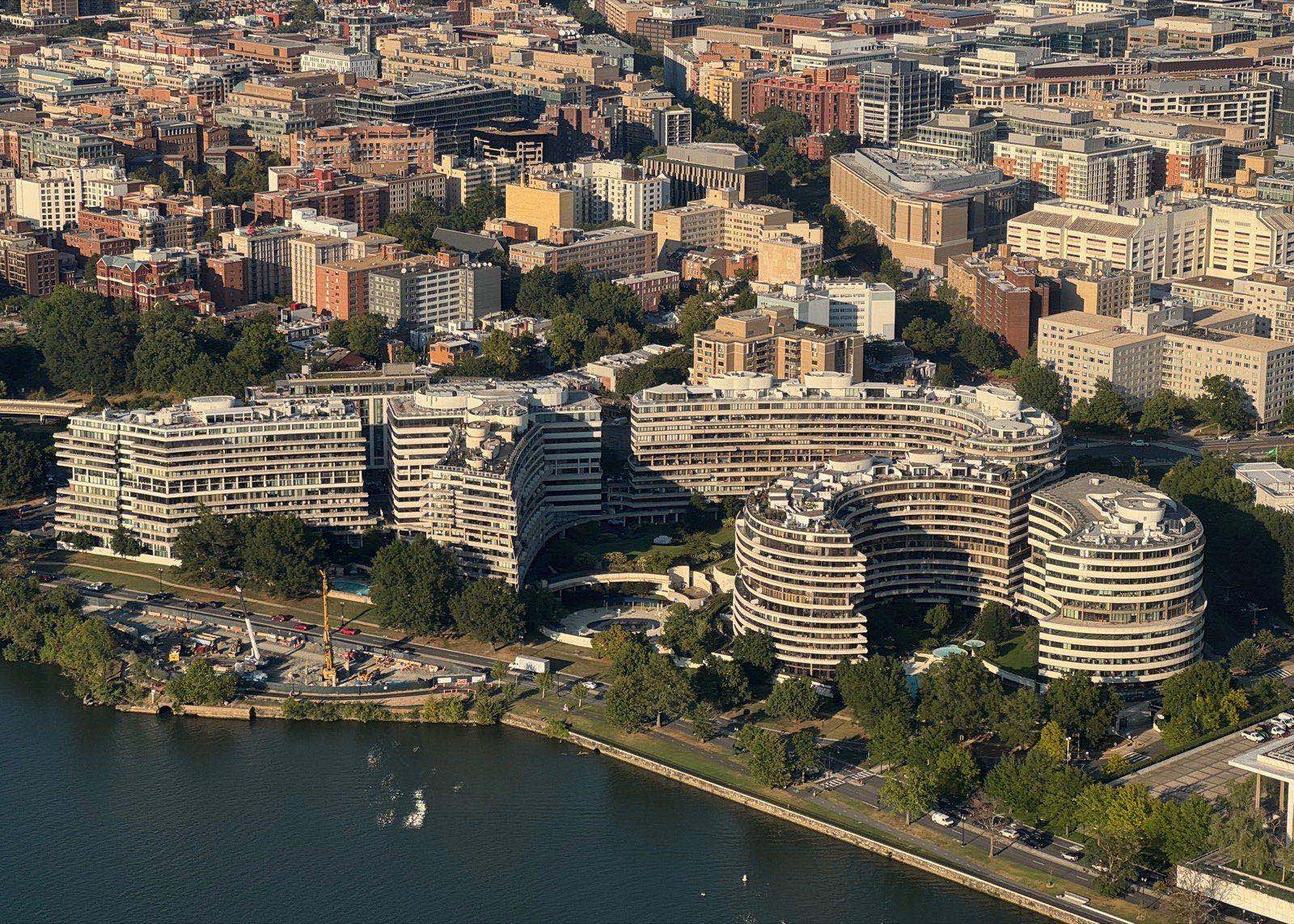
Frank Wills was twenty-four years old, a Black security guard from Savannah, Georgia, working the midnight shift in the office complex at 2600 Virginia Avenue Northwest. On his rounds early on the morning of Saturday, June 17, 1972, he noticed something in a basement stairwell door: a strip of duct tape, applied horizontally across the latch plate, so that the door would not lock when closed. He removed the tape and continued his rounds. Twenty minutes later, on his next pass, fresh tape was back on the door.
He called the District of Columbia police.
At about 2:30 a.m., three plainclothes officers from the District's tactical squad — Sergeant Paul W. Leeper and Officers John B. Barrett and Carl M. Shoffler — entered the sixth-floor offices of the Democratic National Committee. They found five men crouched behind desks, wearing surgical gloves, carrying lockpicking tools, a forty-foot length of antenna wire, two cameras with film loaded for document photography, and three pen-sized tear gas guns. The men were also carrying $2,300 in sequentially numbered hundred-dollar bills.
The five were arrested and booked. One of them, a quiet middle-aged man in a business suit, gave his name as Edward Martin. When asked his occupation, he said only that he was a "security consultant." The booking officer found his actual identification: James W. McCord, Jr., former officer of the Central Intelligence Agency, currently the security director of the Committee to Re-elect the President — Richard Nixon's campaign organization.1
The other four were Cuban exiles — Bernard Barker, Frank Sturgis, Eugenio Martínez, and Virgilio González — recruited primarily through Miami's anti-Castro community. Their tools and their cash had been provided by an operation run out of the White House.
The same morning, a sixth man checked out of his room at the Watergate Hotel and disappeared. He had been monitoring the operation by walkie-talkie from across the street. His name was E. Howard Hunt, a retired CIA officer working as a consultant for Charles Colson, special counsel to the President of the United States. In the burglars' hotel rooms, the FBI later found Hunt's name in two address books, alongside "W.H." and a White House switchboard number.
The investigation, in other words, did not have far to go.
Two reporters
The Washington Post assigned a local-crime reporter, Bob Woodward, twenty-nine, to cover the burglars' arraignment that Saturday afternoon. Woodward had been at the paper nine months. The man whose desk faced his was Carl Bernstein, who had been at the Post longer but was considered something of a problem — talented, undisciplined, perpetually behind on stories. He read Woodward's draft over Woodward's shoulder and started making suggestions. He never gave the story back.
Over the next two years, working most of their waking hours together at first the Post's metro desk and then a single shared cubicle off the city room, Bernstein and Woodward filed an estimated four hundred stories on Watergate, almost all of them under a double byline. Some of those stories were wrong — the famous Sloan / Haldeman article of October 25, 1972 stated as fact something the source had not actually said — but most were not, and the cumulative effect was to keep the story alive when the rest of the American press was treating the break-in as a third-rate burglary that the White House had ably deflected.
The reporters had an advantage no one else had. Late at night, in an underground parking garage in Rosslyn, Virginia, Woodward met an intermittent informant who refused on-the-record contact and would deliver guidance — "follow the money," in one famous (though probably apocryphal) instance — that pointed the Post toward financial transactions linking the burglars to Nixon's campaign committee. The informant was known in the Post's newsroom only by a nickname Howard Simons had given him: Deep Throat.
The reporters did not name him. Their editor, Ben Bradlee, knew his identity. So did Post publisher Katharine Graham. The four kept the secret intact for thirty-three years.
The investigation rises
By the time the burglars went to trial in January 1973 — facing federal charges before Chief Judge John J. Sirica of the D.C. District Court — the connections to higher levels of the White House had already started to surface in Post reporting and in U.S. Attorney Earl Silbert's grand jury work. Sirica, faced with what looked like a plea-bargained settling of the burglars' guilty pleas without any inquiry into who had directed them, made an extraordinary move: at the sentencing he handed the burglars provisional sentences of up to forty-five years and made clear that lighter sentences would depend on their full cooperation with the Senate investigation that was just forming.
James McCord broke first. In a letter to Sirica dated March 19, 1973, McCord wrote that there had been "political pressure" applied to the defendants to plead guilty and remain silent, that perjury had been committed during the trial, and that "others involved in the Watergate operation were not identified during the trial." The letter named no one. It opened a door.2
The hearings
The Senate had voted unanimously on February 7, 1973, to establish a Select Committee on Presidential Campaign Activities. Majority Leader Mike Mansfield offered the chair to Senator Sam J. Ervin of North Carolina — a Harvard-trained constitutional scholar, a Southerner who quoted Shakespeare and the Bible with equal facility, and a man whose slow folkiness on television concealed an attorney's relentless patience under cross-examination. Howard Baker (R-Tennessee), the ranking minority member, would later coin the question that became the hearings' refrain: "What did the president know, and when did he know it?"
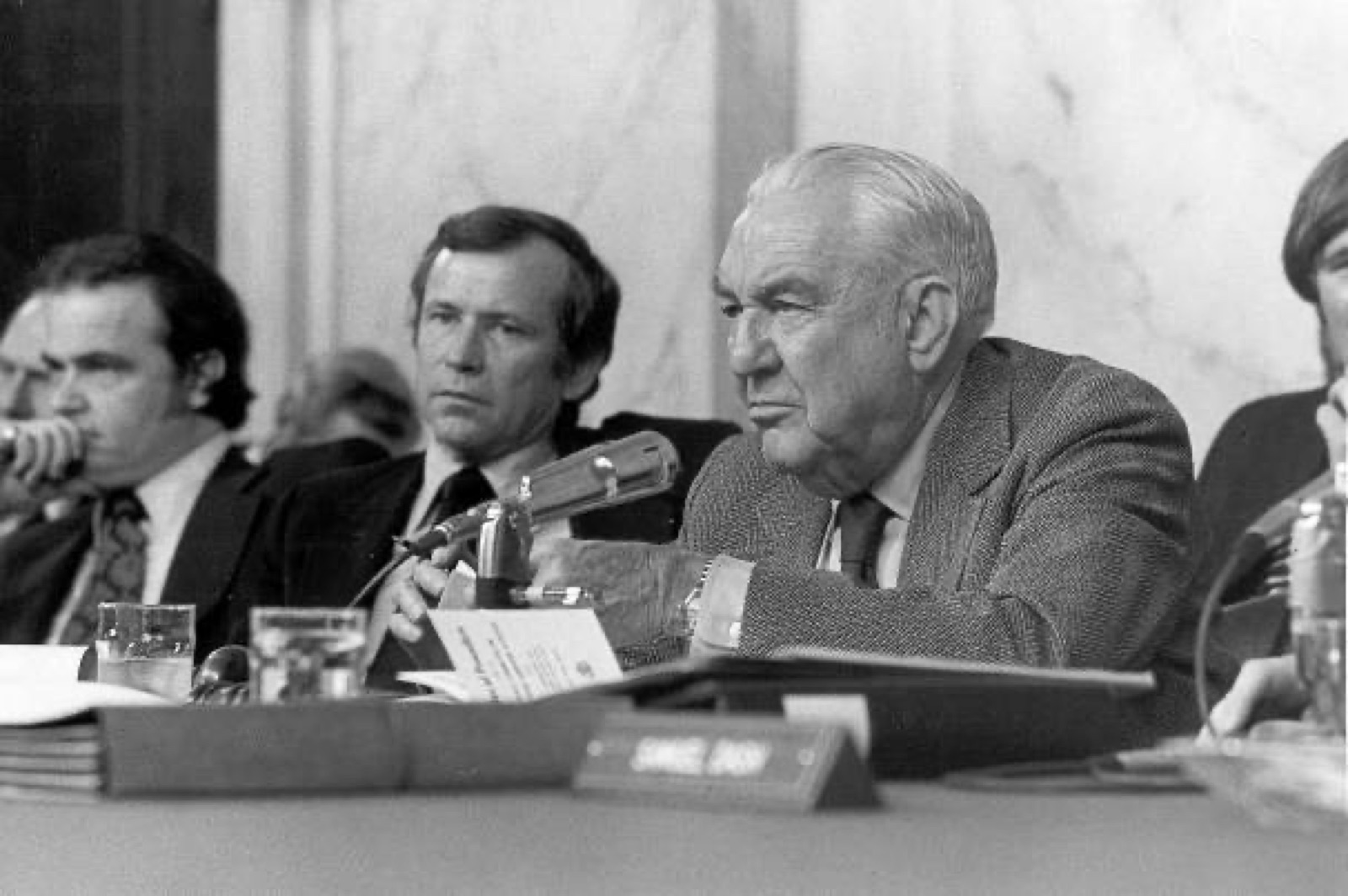
The hearings opened on May 17, 1973 and ran 37 days. The three major television networks carried them live. The Public Broadcasting System ran them again at night. An estimated 85 percent of American households watched some part of the proceedings.
The pivotal witness was the former White House counsel, John Dean. He testified for five days beginning June 25, 1973, reading from a 245-page opening statement that took him six hours to deliver. Dean told the committee that the cover-up of the Watergate break-in had been directed from within the White House, that the President had been personally involved, and that he had warned Nixon on March 21, 1973 that there was "a cancer growing on the presidency" that would consume it if not removed.
Dean was a single witness, in a long history of single witnesses against presidents who had subsequently kept their offices. He was, the White House correctly noted, a man trying to save himself from a federal indictment. His testimony was disputed by everyone else who had been in the relevant meetings.
What changed Watergate from a he-said-he-said into an evidentiary case was a White House staffer the committee had not previously planned to call.
The taping system
On Friday, July 13, 1973, in a closed pre-interview before his scheduled public testimony, Alexander Butterfield — formerly a deputy assistant to the President — was asked by minority staffer Donald Sanders whether the White House had any system that might confirm or refute Dean's testimony about the President's conversations. Butterfield paused, said he had been hoping no one would ask that question, and then disclosed that since February 1971 the Nixon White House had been continuously recording every conversation in the Oval Office, in the President's Executive Office Building hideaway, on his Camp David phones, and on selected other lines.
The system was voice-activated. The President knew it was there. Almost nobody else did.
Butterfield repeated the disclosure publicly the following Monday, July 16, in fewer than thirty minutes of testimony that made the committee's remaining work essentially structural. The tapes had to be obtained.
Archibald Cox — the Harvard Law School professor whom Attorney General Elliot Richardson had appointed as Watergate special prosecutor in May — subpoenaed nine specific tapes on July 23. The White House refused. Cox went to court. On October 12, 1973, the United States Court of Appeals for the District of Columbia Circuit ordered the White House to produce the tapes. The White House refused again.
On Saturday evening, October 20, 1973, in what became known as the Saturday Night Massacre, Nixon ordered Attorney General Richardson to fire Cox. Richardson refused and resigned. Nixon ordered Deputy Attorney General William Ruckelshaus to fire Cox. Ruckelshaus refused and resigned. Nixon ordered Solicitor General Robert Bork to fire Cox. Bork did. By the end of the evening, FBI agents had sealed off Cox's offices and the offices of Richardson and Ruckelshaus to prevent removal of files.
The public response was unlike anything the Nixon administration had yet seen. Western Union calculated that more than three million telegrams reached Capitol Hill in the next ten days, the largest volume of citizen communication to Congress in the institution's history at that point. Impeachment, theretofore a theoretical possibility, became a concrete proceeding. Leon Jaworski was appointed as the new special prosecutor and pressed for the tapes again.
The eighteen-and-a-half minutes
On November 21, 1973, the White House informed Judge Sirica that one of the subpoenaed tapes contained an erasure of eighteen and a half minutes within a single conversation between Nixon and his chief of staff H.R. Haldeman recorded on June 20, 1972 — three days after the break-in.
The White House offered, as the explanation, that Rose Mary Woods, the President's personal secretary, had accidentally erased part of the tape while reaching to answer a telephone with one hand while keeping her foot on the recorder's pedal with the other. A photograph released by the White House showing Woods demonstrating the position made the explanation difficult to credit; the photograph required Woods to stretch her body across her desk in a position that, when actually attempted, no one was able to hold for the duration in question.
An expert panel commissioned by Sirica found that the gap had been created by at least five separate manual erasures using the recorder's record-and-erase button, not by an accidental sweep. Who actually did the erasing has never been definitively established.
The smoking gun
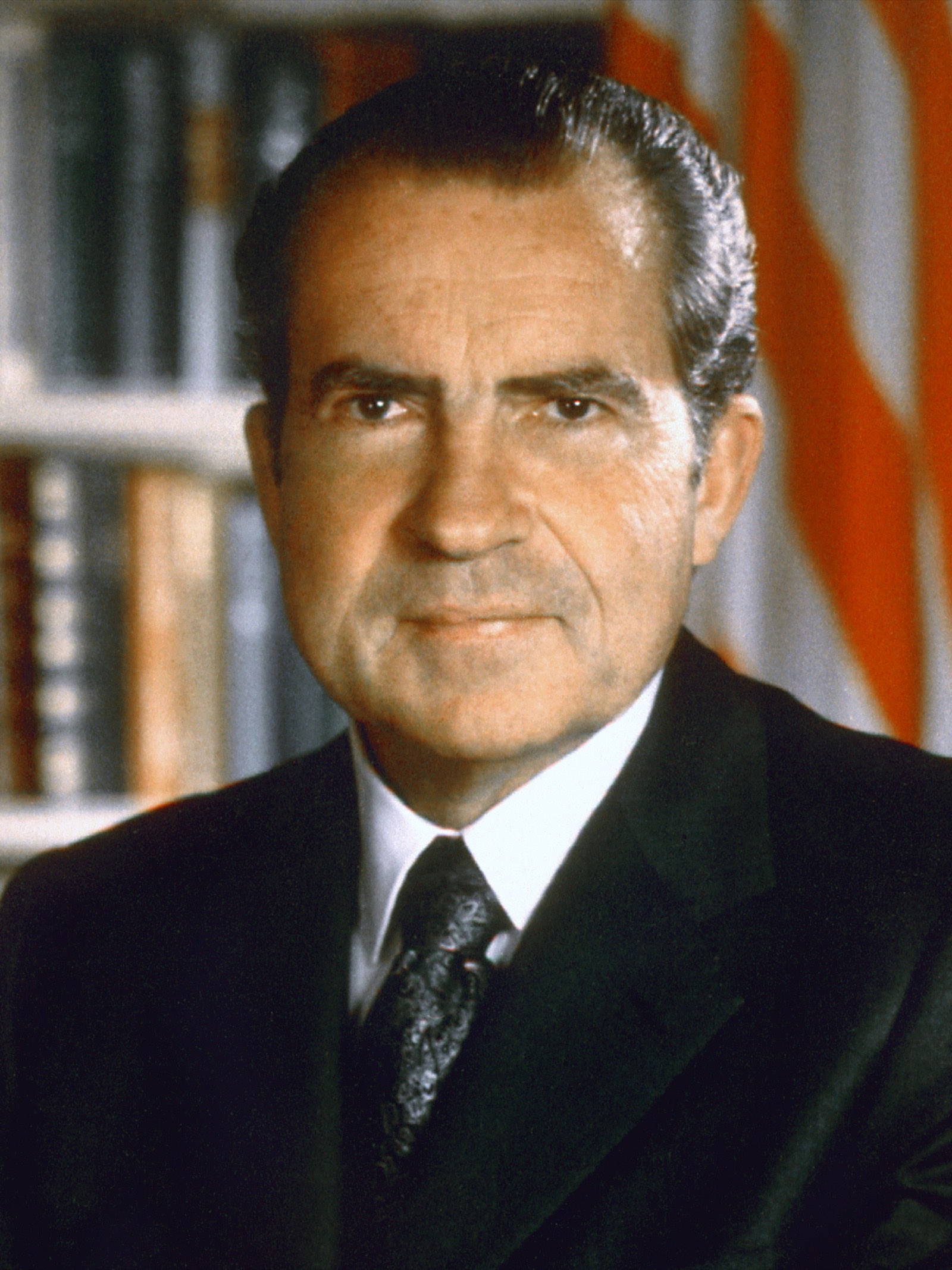
The U.S. Supreme Court ruled unanimously on July 24, 1974 (United States v. Nixon) that the President was obligated to produce the tapes. Three days later, the House Judiciary Committee voted out three articles of impeachment.
On Monday, August 5, 1974, the White House released the transcript of a previously unreleased conversation: Nixon and Haldeman, recorded on June 23, 1972 — six days after the break-in. On the tape, Nixon instructs Haldeman to have the CIA tell the FBI to drop the Watergate investigation on grounds of national security. The phrase Nixon uses to convey the false national-security cover is "the Bay of Pigs thing." There is no surviving Bay of Pigs context that connects the Watergate burglars to a continuing national-security operation; the instruction was, plainly, an order to use one federal agency to obstruct the criminal work of another.
The tape was Nixon's smoking gun. The Republican leadership in Congress told him so personally on August 7. He resigned in a televised speech on the evening of August 8. The resignation took effect at noon the next day, when Vice President Gerald Ford was sworn in as the thirty-eighth President of the United States.
A month later, on September 8, 1974, Ford issued a "full, free, and absolute pardon" for any federal crimes Nixon may have committed during his presidency.
Deep Throat
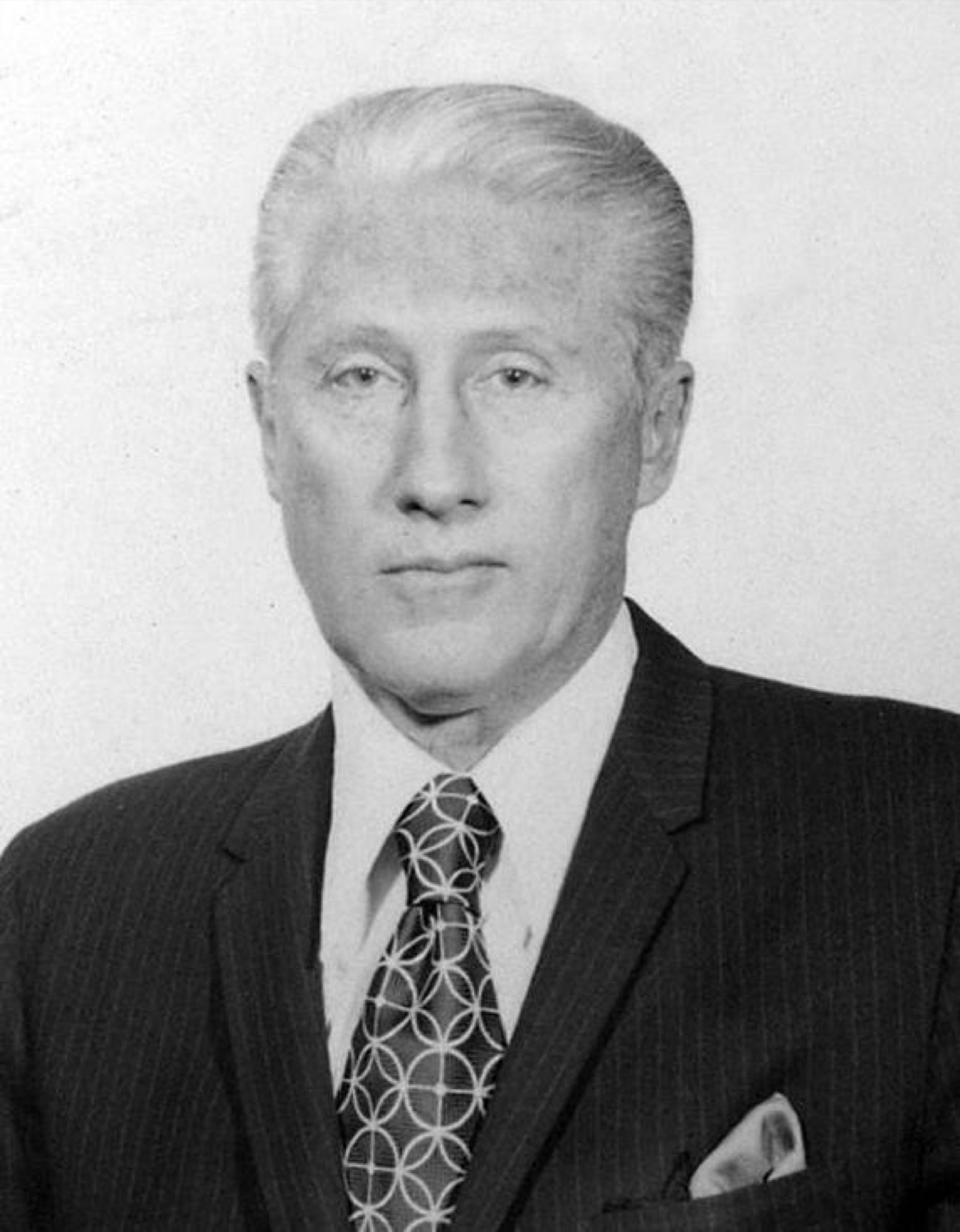
For thirty-three years, the Washington Post protected the identity of the senior official who had guided Woodward through the parking-garage meetings. Speculation ran through Hollywood (the 1976 film All the President's Men features the meetings without naming the source); through journalism schools; through Washington insider circles. The candidates included Pat Buchanan, Henry Kissinger, Diane Sawyer, and half the senior staff of the Nixon administration. Inside the Post newsroom, only four people knew the real name: Mark Felt.
On May 31, 2005, Vanity Fair published an article by John D. O'Connor, the family lawyer of W. Mark Felt — Deputy Director of the Federal Bureau of Investigation at the time of the break-in. Felt, then ninety-one and in declining health, had decided to come forward. His identification was confirmed by Woodward, Bernstein, and Ben Bradlee the same afternoon. He died three years later.
Felt's motives have been debated. He had wanted to be appointed director of the FBI after J. Edgar Hoover's death in May 1972; he was passed over in favor of L. Patrick Gray, a White House loyalist with no FBI background. His grandson later said the decision to come forward was driven by family who hoped to capitalize on book deals to fund the family's grandchildren's education. Whether the leaks were acts of institutional defense, personal ambition, or both is something Felt himself appears to have left ambiguous in his final years.
That an FBI deputy director leaked extensively to an outside newspaper about an ongoing federal investigation is not a celebrated norm of American governance. It is part of what makes the case complicated to hold as an unambiguous victory for the Republic. The free press worked. So did the courts. So did Congress. But the FBI's role required the deputy director to break the rules of his own institution to do it.
Key figures
What proponents and critics still argue
The thirty-fifty year of secondary literature on Watergate has narrowed, not widened, the interpretive space. Two questions remain genuinely contested:
Why the original break-in? The DNC offices in the Watergate were not, by most assessments, an obvious source of high-value intelligence for a re-election campaign that was already heading toward a 49-state landslide. Various explanations have been offered — that the burglars were trying to recover or plant information about Cuban exile financing, that the target was specifically Larry O'Brien's office because of his ties to Howard Hughes, that the operation was a probe rather than a real intelligence-gathering effort. None of these has become consensus. The break-in's strategic logic remains the most unresolved question in the entire case.
The 18.5-minute gap. No one has ever definitively established who manually erased the conversation, what it contained, or whether its removal made any actual difference to the cover-up's outcome (since Nixon was eventually convicted in the court of public opinion by other tapes). The forensic finding of at least five manual erasure events indicates that whoever did it was determined; the question of who remains open. The most cited candidates are Rose Mary Woods and Nixon himself.
How we read the evidence
The cover-up of the Watergate break-in is the most thoroughly documented presidential criminal conduct in American history. Every relevant participant either testified under oath, wrote a memoir, was recorded by the White House taping system, or in many cases all three. The legal record runs to thousands of pages of grand jury material, congressional reports, court rulings, and special prosecutor files; the journalistic record runs to thousands more pages of contemporaneous reporting.
What is sometimes lost in the cultural memory of Watergate is how contingent the discovery was. Frank Wills's call. Sirica's provisional sentences. McCord's letter. Butterfield's quiet disclosure of the taping system in a pre-interview. Cox's refusal to be fired. Each of those moments could have gone otherwise. The institutions that functioned in 1973 and 1974 functioned in part because individuals chose, at decisive moments, to put institutional duty ahead of self-interest or self-preservation.
The interesting and difficult lesson is not that institutions worked. It is that the institutions worked because particular people chose, in the moment, to make them work. That is a fragile insurance policy. Watergate's lasting question is whether the same set of choices, if put before the same institutions in our era, would still arrive at the same outcome.
Further reading
Books:
- Carl Bernstein and Bob Woodward, All the President's Men (Simon & Schuster, 1974). The reporting in the order in which it happened.
- Bernstein and Woodward, The Final Days (Simon & Schuster, 1976). The interior collapse of the Nixon White House.
- Stanley I. Kutler, The Wars of Watergate (W.W. Norton, 1990). The definitive scholarly history.
- Garrett M. Graff, Watergate: A New History (Simon & Schuster, 2022). The fiftieth-anniversary synthesis.
- John Dean, Blind Ambition (Simon & Schuster, 1976). The insider's account.
- Sam Ervin, The Whole Truth: The Watergate Conspiracy (Random House, 1980).
Films and documentaries:
- All the President's Men (1976, dir. Alan J. Pakula). The reporters.
- Frost/Nixon (2008, dir. Ron Howard). The 1977 interviews.
- Watergate (2018, dir. Charles Ferguson). The most comprehensive recent documentary.
Primary archives:
- U.S. Senate — Watergate Committee Records
- Nixon Presidential Library — Watergate Files
- National Archives — Watergate Special Prosecution Force
- The Washington Post — The Watergate Story (archive)
Sources
Primary sources
- U.S. Senate. (1974). Senate Select Committee on Presidential Campaign Activities, Final Report (S. Rep. 93-981, 93rd Congress, 2nd Session).
- Watergate Special Prosecution Force. (1975, 1977). Final Reports. National Archives, Record Group 460.
- United States v. Nixon, 418 U.S. 683 (1974). Supreme Court ruling on the tapes.
- Nixon White House tapes. Released in tranches 1974-2013. National Archives.
- McCord, James W. Letter to Hon. John J. Sirica, March 19, 1973. Reproduced in Senate Watergate Committee Report.
Secondary sources
- Bernstein, C. & Woodward, B. (1974). All the President's Men. Simon & Schuster.
- Bernstein, C. & Woodward, B. (1976). The Final Days. Simon & Schuster.
- Dean, J. (1976). Blind Ambition. Simon & Schuster.
- Sirica, J. J. (1979). To Set the Record Straight. W. W. Norton.
- Kutler, S. I. (1990). The Wars of Watergate: The Last Crisis of Richard Nixon. W. W. Norton.
- Graff, G. M. (2022). Watergate: A New History. Simon & Schuster.
- O'Connor, J. D. (2005). "I'm the Guy They Called Deep Throat." Vanity Fair, July 2005.
- The Washington Post, June 18, 1972 onward — contemporaneous reporting.
- The New York Times, June 18, 1972 onward — contemporaneous reporting.
Academic sources
- Genovese, M. A. (1999). The Watergate Crisis. Greenwood Press.
- Olson, K. W. (2003). Watergate: The Presidential Scandal That Shook America. University Press of Kansas.
Corrections & updates
(None yet.)
Footnotes
-
U.S. Senate Select Committee on Presidential Campaign Activities, Final Report, S. Rep. No. 93-981, 93rd Congress, 2nd Session, June 1974, pp. 17–24. The committee's archive is available via senate.gov. Carl Bernstein and Bob Woodward, All the President's Men (Simon & Schuster, 1974), chapter 1, gives the reportorial chronology of the arrest and its identification. ↩
-
Letter from James W. McCord to Hon. John J. Sirica, March 19, 1973. Reproduced in the Senate Watergate Committee's final report (Book 1, appendix). See also John Sirica, To Set the Record Straight (W.W. Norton, 1979). ↩
Inspired this / based on it
David Mandel · ★ 6.8
HBO. Justin Theroux, Woody Harrelson as Hunt & Liddy
Bernstein & Woodward
The original reportage book
Garrett M. Graff
50-year anniversary synthesis
Filed under
- #nixon
- #watergate
- #fbi
- #deep-throat
- #mark-felt
- #bernstein-woodward
- #1970s
- #usa
- #declassified
- #presidential-cover-up
- #sam-ervin
Click any tag for every article carrying it.
Continue reading
MK-Ultra
Between 1953 and 1973, the Central Intelligence Agency ran one of the most ambitious — and least restrained — human-experimentation programs in American history. The goal was mind control. The subjects rarely knew they were subjects. By the time the public found out, most of the records had been burned.
Operation Northwoods
In March 1962, the Joint Chiefs of Staff put a document on Robert McNamara's desk. It proposed a series of false-flag attacks against the United States — sunk ships, civilian terror campaigns in Miami and Washington, a faked civilian airliner shoot-down — to manufacture public support for invading Cuba. Every member of the Joint Chiefs signed it. Kennedy rejected it within days. The document stayed buried for thirty-five years.
Kodak and the Trinity Test
In January 1946, X-ray film from Eastman Kodak began coming back damaged with unexplained spots. When the company's chemists finally traced the source, they were forced to confront the U.S. government. What they were given went further than anyone expected — and stayed secret for fifty years.