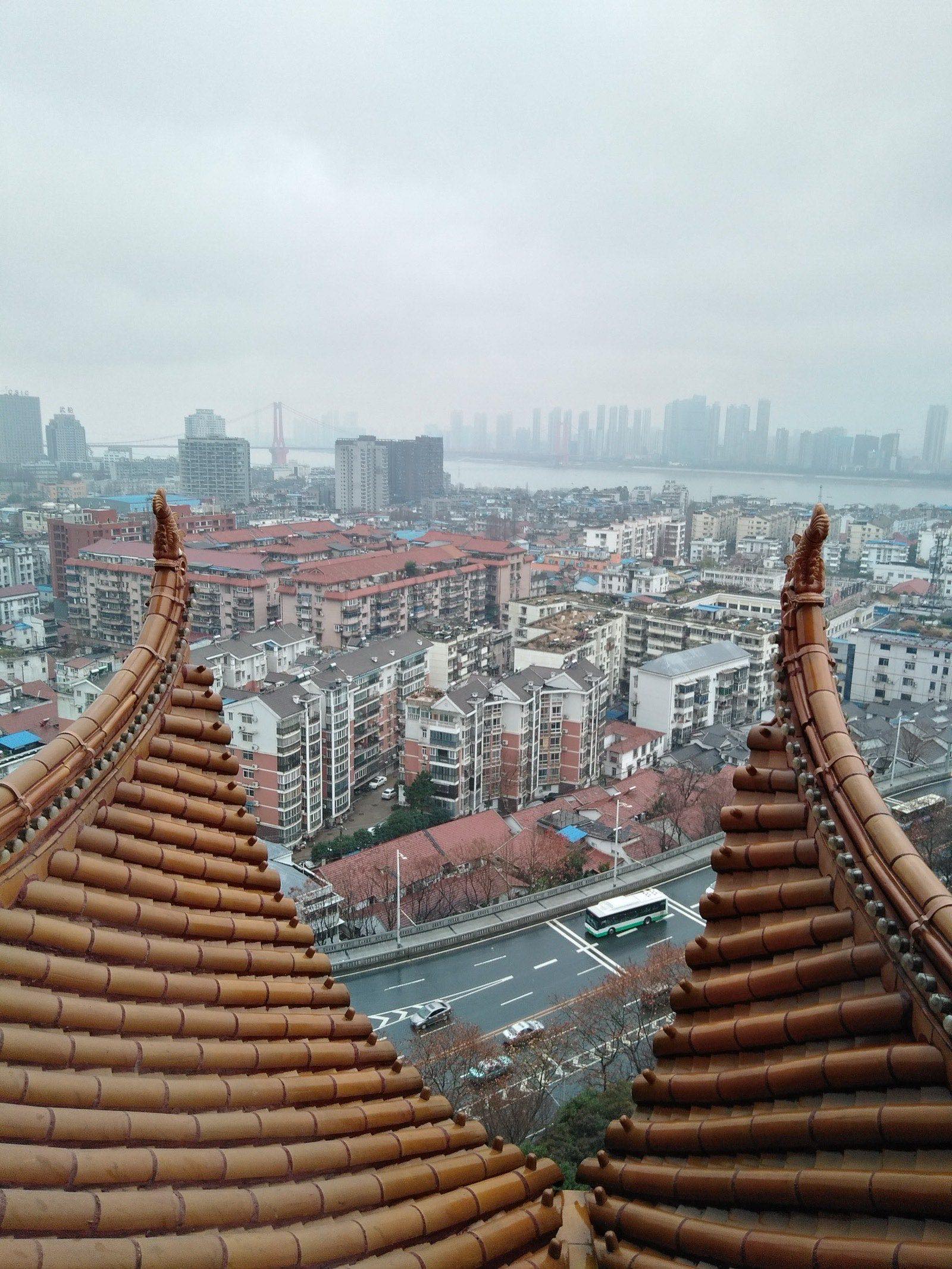
The Wuhan skyline along the Yangtze River. The first documented cluster of what would become SARS-CoV-2 emerged in this city of 11 million in early December 2019. Wikimedia Commons, CC BY-SA 4.0.
COVID-19 Origins
Wuhan, December 2019 — what is documented, what remains contested
- Category
- Health & Medicine
- Published
- Length
- 3,700 words · 17 min read
- Author
- The editors
COVID-19 Origins
Wuhan, December 2019 — what is documented, what remains contested.
The first weeks
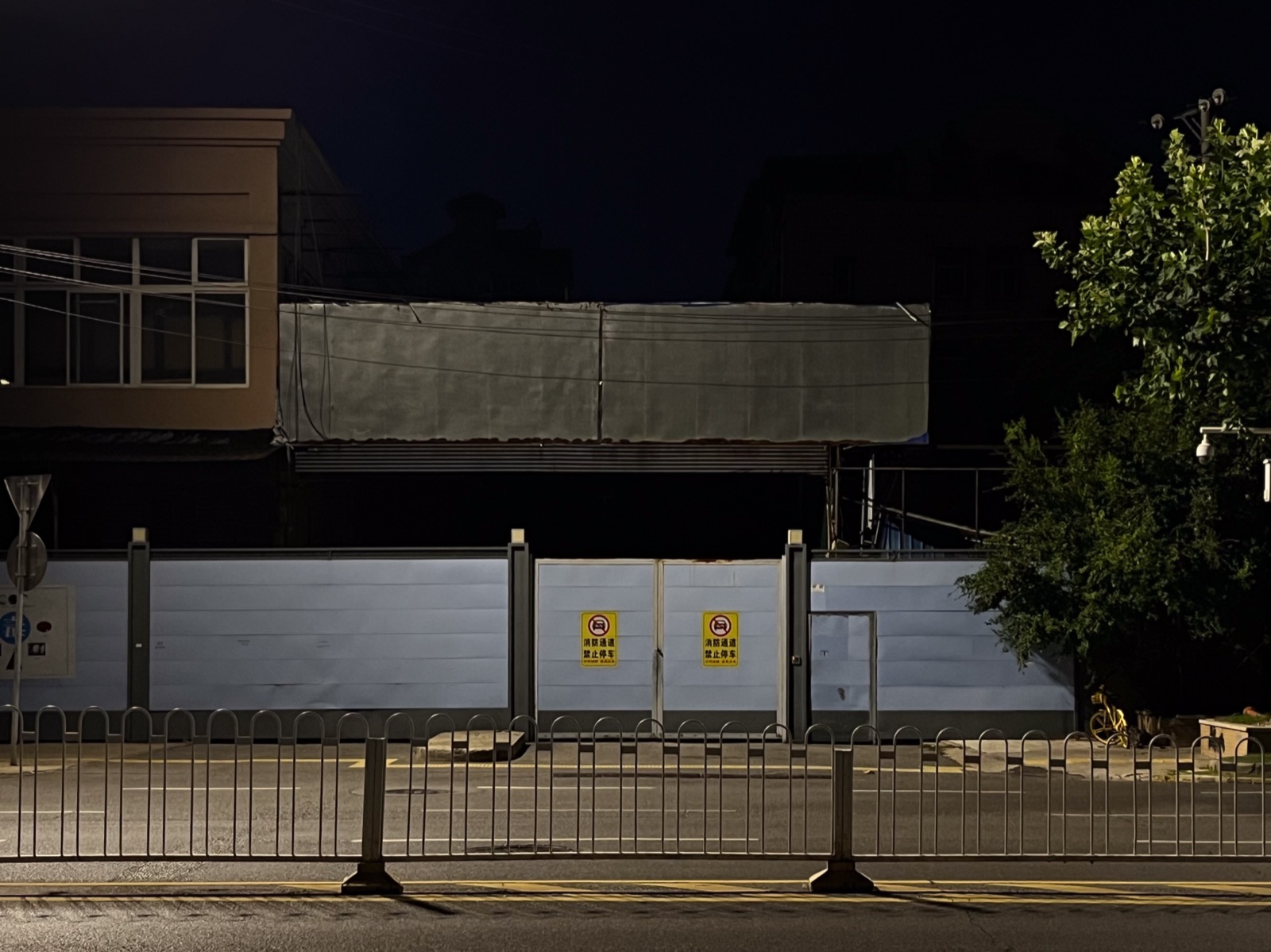
The Huanan Seafood Wholesale Market is a 50,000-square-metre wet market in the Jianghan district of central Wuhan. Despite its name, the market sold a wide variety of fresh meat and wildlife along with seafood. A scientific study by Zhou et al. (Scientific Reports, June 2021), based on field observations conducted between 2017 and 2019, documented 47,381 individual animals across 38 species sold at four Wuhan markets including Huanan — including raccoon dogs, civets, and other species known or suspected to be susceptible to coronavirus infection.
The first publicly identified COVID-19 case was a man, age 70, admitted to a Wuhan hospital with viral pneumonia on December 1, 2019, per the January 24, 2020 Lancet article by Huang et al. that constituted the first published clinical case series. He had no documented exposure to the market. The next nine cases, identified retrospectively by the same investigation, included a mix of market-linked and non-market-linked cases.
By December 27, 2019, Wuhan hospitals were seeing what one physician — Dr. Zhang Jixian of Hubei Provincial Hospital of Integrated Chinese and Western Medicine — recognized as a cluster of unusual pneumonia cases concentrated among market workers and customers. She reported it to the Wuhan Municipal Health Commission on December 27. On December 30, an internal alert was distributed within Wuhan's healthcare system.
That same day, the ophthalmologist Dr. Li Wenliang posted in a private WeChat group of medical colleagues warning of what looked like SARS-like cases. The post leaked to social media. Li was subsequently reprimanded by Wuhan public security on January 3, 2020, for "spreading rumors." He contracted COVID himself and died on February 7, 2020. He was 33.
On December 31, 2019, China's National Health Commission formally notified the World Health Organization. On January 1, 2020, the Huanan Seafood Wholesale Market was closed and physically disinfected. The first wildlife and environmental samples taken at the market were collected on January 1, after the disinfection.
The genome of the novel coronavirus was sequenced on January 5, 2020, by the Shanghai Public Health Clinical Center, and posted publicly on January 11 by Professor Yong-Zhen Zhang in defiance of formal Chinese government approval delays.
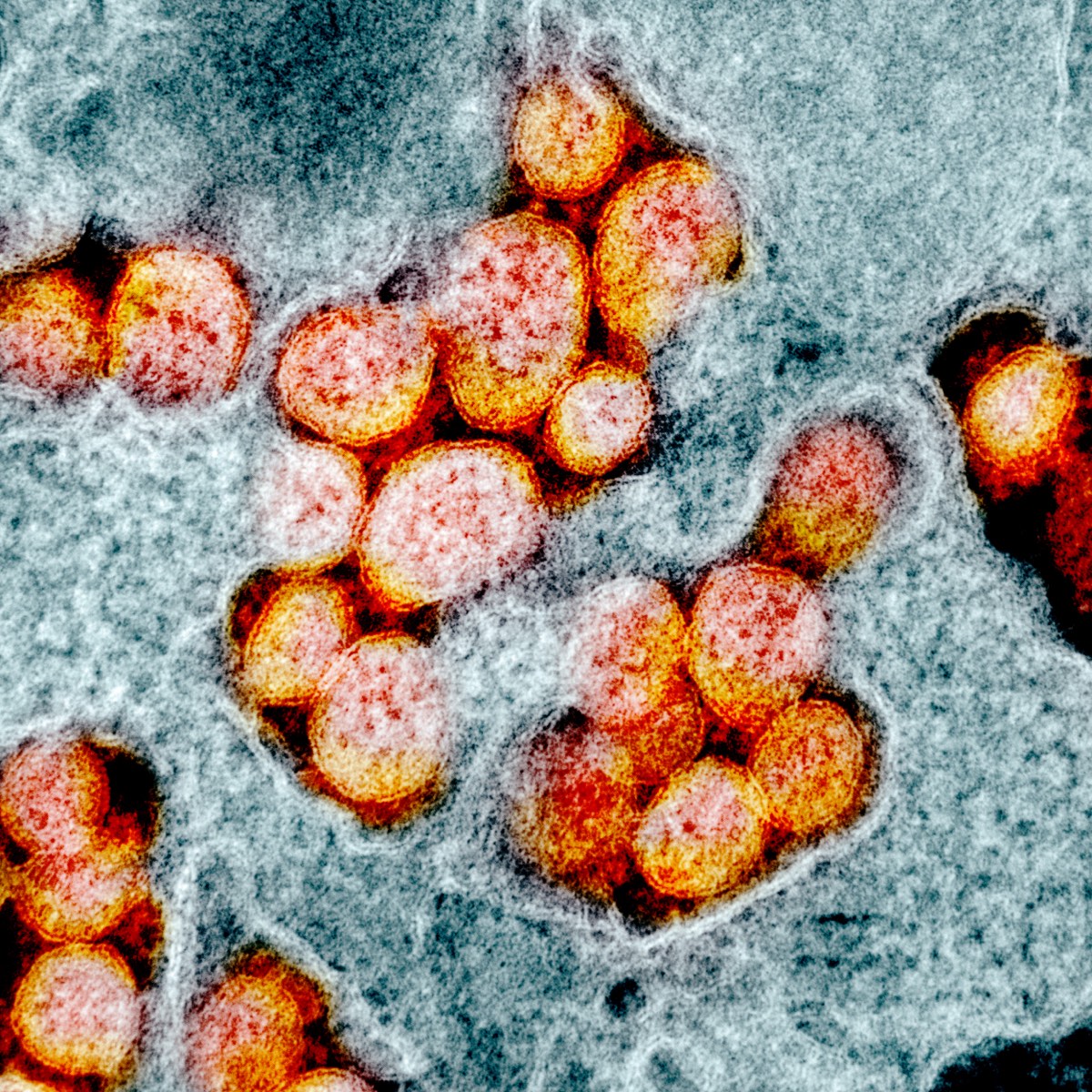
The Wuhan Institute of Virology

The Wuhan Institute of Virology (WIV) was founded in 1956 as the Wuhan Microbiology Laboratory. It is part of the Chinese Academy of Sciences. Since 2015 it has operated Asia's only BSL-4 (highest biosafety) laboratory at its Zhengdian campus, approximately 30 kilometres south of central Wuhan. A separate WIV campus at Xiaohongshan in central Wuhan operates BSL-2 and BSL-3 laboratories.
The WIV's coronavirus research program, led by Professor Shi Zhengli — known internationally as "the bat woman of China" — had since 2004 collected bat-borne coronaviruses from caves across southern China. The program had identified hundreds of SARS-related coronavirus sequences. The most-cited result, published in Nature in 2013 (Ge et al.), confirmed that SARS-1 had originated in Chinese horseshoe bats — a finding made by sampling at a specific cave in Yunnan province known as the Shitou cave.
In 2018-2019, the WIV's bat-virus research program intensified. The program operated in collaboration with the U.S.-based EcoHealth Alliance, headed by Peter Daszak. EcoHealth received NIH grants that subcontracted portions of the work to the WIV. The financial chain: NIH → NIAID (Fauci's agency) → EcoHealth Alliance → WIV. The grant agreements covered approximately $600,000 transferred to WIV over the period 2015-2019.
The research included what is termed "gain-of-function" work: deliberately modifying viruses to enhance their characteristics — transmissibility, virulence, host range — for research purposes ostensibly aimed at understanding pandemic risk. The category of research was the subject of a 2014 U.S. moratorium that was lifted in late 2017. Whether specific WIV experiments crossed the U.S.- defined threshold for "enhanced pandemic potential" research is the subject of ongoing dispute. Daszak's grant reports characterized the work as below that threshold; NIH internal review documents released through FOIA in 2021-2022 have shown contemporaneous NIH staff concerns about whether the threshold had been crossed.
In September 2019, the WIV took its public bat-coronavirus sequence database offline. The reason given by Shi Zhengli was "cybersecurity concerns." Independent verification of the reason has not been possible. The database remained offline through 2025.
The DEFUSE proposal

In March 2018, EcoHealth Alliance submitted a grant proposal to the U.S. Defense Advanced Research Projects Agency (DARPA) under the "PREEMPT" program. The proposal was titled Project DEFUSE: Defusing the Threat of Bat-borne Coronaviruses. It was a $14 million, three-year, multi-institution project. WIV was the primary international collaborator.
The DEFUSE proposal described, in technical detail, plans to:
- Survey bat colonies in southwestern China for novel SARS-related coronaviruses.
- Construct chimeric viruses combining the spike proteins of newly-discovered bat coronaviruses with the backbone of an established SARS-CoV-like virus.
- Insert "human-specific cleavage sites" — specifically, furin cleavage sites — into the spike proteins of selected SARS-related coronaviruses to enhance transmissibility.
- Test the resulting chimeric viruses in humanized mice.
The DEFUSE proposal was rejected by DARPA in 2018. The agency specifically cited concerns about the gain-of-function elements and the U.S.-China research-security framework.
The DEFUSE proposal was made public in September 2021 through a leak to the journalist group DRASTIC. It has since been authenticated by multiple parties including EcoHealth.
The significance of the DEFUSE proposal for the origins question is this: SARS-CoV-2 has a furin cleavage site at the S1/S2 junction of its spike protein. The site consists of a 12-nucleotide insertion that is unusual among SARS-related coronaviruses. Furin cleavage sites are well-documented in other coronaviruses (MERS, NL63, OC43) but their natural acquisition pattern typically involves recombination events leaving recognizable signatures. The SARS-CoV-2 furin site does not show those signatures clearly. Various peer-reviewed analyses have argued for both natural origin and unnatural origin of the furin site; the matter is genuinely contested in the virological literature.
A grant proposal that specifically described introducing furin cleavage sites into SARS-related bat coronaviruses, submitted in 2018 and partly conducted in 2018-2019 (according to subsequent DARPA and NIH internal documents), is operationally adjacent to a virus with a furin cleavage site emerging in 2019 from a city hosting one of the two collaborating institutions. The operational adjacency is a fact. The causal connection is the question.
The two hypotheses
Natural zoonotic spillover
The orthodox virological explanation for SARS-CoV-2 origin is natural spillover from a wildlife reservoir — most likely a bat, possibly via an intermediate species (raccoon dog, palm civet, pangolin, etc.) into a human at or near the Huanan Seafood Market.
Evidence favoring this hypothesis:
- The Huanan market hosted live wildlife sales known to include raccoon dogs, a SARS-CoV-2-susceptible species.
- The early epidemiological pattern (cases clustered around the market in December 2019) is consistent with a market-origin spillover.
- The Huanan market environmental samples taken on January 1, 2020 and later showed SARS-CoV-2 RNA in stalls associated with wildlife products.
- The Pekar et al. (Science, July 2022) analysis of the early genomic data identified two distinct viral lineages (Lineage A and Lineage B) emerging at the market — consistent with two separate spillover events.
- The Worobey et al. (Science, July 2022) spatial analysis placed the early case cluster in close geographic proximity to the wildlife sections of the market.
- SARS-1 (2002-04) and MERS (2012-) both demonstrated zoonotic spillover via animal markets / camels respectively.
Evidence problems for this hypothesis:
- The specific intermediate-host animal has not been identified despite extensive sampling. SARS-1's intermediate host (palm civet) was identified within months.
- The Huanan market samples cannot definitively rule out market workers having brought infected material to the market rather than the market itself being the spillover site.
- China's restriction of access to early case data and to the market wildlife stocks before disinfection has limited independent verification of market-origin claims.
Research-related incident
The alternative hypothesis is that SARS-CoV-2 originated in or through the WIV's bat-coronavirus research program — either through a laboratory-acquired infection of a WIV worker, a sampling-and- transport accident, or a deliberate (most plausibly, deniability- preserving) infrastructural release.
Evidence favoring this hypothesis:
- The WIV held the largest collection of SARS-related bat coronaviruses worldwide and was conducting active gain-of-function research on them in 2018-2019.
- The DEFUSE proposal specifically described introducing furin cleavage sites into bat-origin SARS-related coronaviruses.
- The WIV took its public sequence database offline in September 2019.
- Multiple WIV staff members are reported (by Wall Street Journal citing U.S. intelligence, 2021) to have sought hospital treatment for COVID-like symptoms in November 2019.
- The geographic improbability of a natural spillover originating in a city 2,000 km from the nearest known SARS-related-coronavirus bat habitat.
- The furin cleavage site is the only genomic feature among ~5,000 sequenced SARS-related coronaviruses; its presence in SARS-CoV-2 is anomalous for natural acquisition.
- The genomic features that would normally distinguish natural vs. engineered origin — recombination signatures, codon bias, specific restriction-site patterns — have shown evidence in both directions in peer-reviewed analyses.
Evidence problems for this hypothesis:
- No specific WIV sample matching SARS-CoV-2 has been publicly identified.
- The early epidemiological pattern is more consistent with a market-origin (Worobey et al. 2022) than a lab-origin focus.
- The 2018 DEFUSE proposal was rejected; its actual implementation cannot be documented.
- Multiple peer-reviewed analyses (Holmes et al. 2021, Pekar et al. 2022, Worobey et al. 2022) have argued for natural origin from genomic and epidemiological data.
The intelligence-community assessments
The U.S. intelligence community has produced multiple assessments:
August 2021 ODNI Assessment. The Office of the Director of National Intelligence issued an unclassified summary stating that the IC could not determine origin with high confidence. Four agencies favored natural origin at low confidence; one agency favored lab origin at moderate confidence; three remained undecided; the assessment characterized the matter as not resolvable without further information.
February 2023 Department of Energy update. DOE leaked to Wall Street Journal that its intelligence-component assessment favored lab origin at low confidence — based primarily on the geographic- proximity and lab-research-pattern arguments, not on a specific piece of new intelligence.
February 2023 FBI assessment. FBI Director Christopher Wray publicly confirmed the FBI had assessed lab origin at moderate confidence since 2021. The FBI's reasoning was reportedly classified.
January 2025 CIA assessment. Newly-released by the CIA under the Trump administration's second term, an assessment at low confidence favored lab origin. The CIA's reasoning was reportedly the geographic improbability of a natural Wuhan origin combined with the operational pattern of the WIV's 2018-2019 research.
These assessments have been characterized in the popular press as "the intelligence community shifting toward lab leak." This is partly accurate. The assessments remain low-confidence — meaning the IC does not consider them dispositive — but the trend across 2021-2025 has been toward greater weight on the lab-origin hypothesis.
It is worth noting what these assessments do not constitute: peer-reviewed scientific consensus. The IC and the scientific community use different evidentiary frameworks. The scientific community, through formal peer-reviewed analysis, remains divided.
What the WHO investigation could and could not do
The WHO's January-March 2021 joint study with Chinese authorities ("WHO-convened global study of origins of SARS-CoV-2") was the formal international investigation. Its findings, published March 30, 2021:
- Animal-to-human spillover via intermediate host: "likely to very likely"
- Direct animal-to-human spillover from a primary reservoir host: "possible to likely"
- Introduction through cold-chain food products: "possible"
- Laboratory incident: "extremely unlikely"
The study was led by Dr. Peter Ben Embarek (WHO) and Dr. Liang Wannian (China). Multiple subsequent statements by Embarek and by other WHO investigators have qualified the "extremely unlikely" characterization. WHO Director-General Tedros Adhanom Ghebreyesus publicly stated in July 2021 that the lab leak hypothesis had been "prematurely dismissed."
The WHO investigation operated under Chinese-government access constraints. The investigators did not have:
- Independent access to early Wuhan patient records.
- Independent access to WIV personnel (interviews were limited and pre-arranged).
- Access to the WIV sequence database that had been taken offline in September 2019.
- The ability to take independent samples at the WIV or to audit research records.
A 2024 follow-up WHO statement acknowledged these limitations and formally re-opened the origins question.
The cast
Why this case is filed as "mystery"
The COVID origins question is genuinely open. The scientific literature is divided. The intelligence-community assessments are divided. The WHO investigation is acknowledged to have operated under access constraints. China has not granted the independent audit that would resolve the question.
Unlike the moon-landing or Roswell cases — where the documentary evidence is conclusive and the persistent doubt is sociological — COVID origins is a case where the doubt is factually grounded. Reasonable scientists hold both positions in good faith.
This is what a real-time mystery looks like before resolution: arguments on both sides, evidence partially available, restricted access blocking definitive answers.
What we still don't know
The intermediate host. No specific animal carrier of an immediate SARS-CoV-2 ancestor has been identified.
The early WIV staff illness pattern. The November 2019 reports of WIV staff with COVID-like symptoms remain partially classified in U.S. intelligence channels and have not been independently investigated in China.
The WIV sequence database. The September 2019 database takedown's reason has not been independently verified. The database has not been restored.
The DEFUSE-implementation question. Whether the rejected DARPA proposal's gain-of-function work was nonetheless conducted at WIV with alternative funding is unknown.
The early case records. China has not allowed independent audit of pre-December-2019 Wuhan medical records. Whether earlier cases existed — and if so, when and where — is the most basic empirical question that an independent investigation would address.
Sources
Primary documents:
- WHO-convened global study of origins of SARS-CoV-2: China Part — Joint WHO-China study, March 30, 2021. 120 pages.
- ODNI, Unclassified Summary of Assessment on COVID-19 Origins — Office of the Director of National Intelligence, August 27, 2021.
- Department of Energy intelligence component update on COVID-19 origins, leaked to Wall Street Journal February 26, 2023.
- FBI Director Christopher Wray statement on FBI assessment, Fox News interview February 28, 2023.
- CIA COVID origin assessment, January 2025 declassification.
- DEFUSE: Defusing the Threat of Bat-borne Coronaviruses — EcoHealth Alliance grant proposal to DARPA PREEMPT, March 2018. Publicly released September 2021 via DRASTIC / Project Veritas.
- NIH grant records, EcoHealth Alliance subcontracts to Wuhan Institute of Virology 2015-2019. Released through FOIA 2021-2022.
Secondary investigative reporting: 8. Michael Worobey, Lorenzo Boni, et al., "The Huanan Seafood Wholesale Market in Wuhan was the early epicenter of the COVID-19 pandemic" — Science, July 2022. 9. Jonathan Pekar, Andrew Rambaut, et al., "The molecular epidemiology of multiple zoonotic origins of SARS-CoV-2" — Science, July 2022. 10. Edward Holmes et al., "The origins of SARS-CoV-2: A critical review" — Cell, August 2021. 11. Rossana Segreto et al., "The genetic structure of SARS-CoV-2 does not rule out a laboratory origin" — BioEssays, November 2020. 12. Katherine Eban, "The Lab-Leak Hypothesis" — Vanity Fair, June 2021. Definitive long-form treatment of the lab-origin investigation. 13. Nicholson Baker, "The Lab-Leak Hypothesis" — New York Magazine, January 2021. 14. Alina Chan and Matt Ridley, Viral: The Search for the Origin of COVID-19 (Harper, 2021). 15. Lori Robertson, FactCheck.org, "The Origin of COVID-19" updating coverage 2020-2024. 16. Glenn Kessler, Washington Post, "Timeline: How the Wuhan lab-leak theory suddenly became credible" updating coverage 2020-2024.
Academic / scientific scholarship: 17. Kristian Andersen et al., "The proximal origin of SARS-CoV-2" — Nature Medicine, March 2020. The early "natural origin" consensus statement. 18. Lancet COVID-19 Commission Statement, 2021. The successor Commission of 2023 acknowledged origin remains open. 19. Multiple national academies (US NAS, UK Royal Society, AAAS) statements 2020-2024 on origins research. 20. Yuri Deigin, "Lab-Made? SARS-CoV-2 Genealogy Through the Lens of Gain-of-Function Research" — Medium / Researchgate, April 2020. The early lab-origin essay that catalyzed the DRASTIC research community.
Corrections & updates
2026-05-26: First publication.
Inspired this / based on it
Alina Chan & Matt Ridley
Definitive book-length treatment of the lab-leak hypothesis. Harper.
HBO Documentary Films
Multi-perspective COVID coverage; emerging origin questions chapter.
HBO
Includes early-pandemic information-environment context.
Nanfu Wang (HBO) · ★ 7.4
Personal documentary of Wuhan lockdown and the early pandemic Chinese-government information control.
Vanity Fair
The June 2021 long-form magazine article that established the lab-leak hypothesis in mainstream press.
DW Documentary
German public broadcaster three-part documentary updating the WHO-investigation timeline through 2023.
Filed under
- #covid-19
- #sars-cov-2
- #wuhan
- #wuhan-institute-of-virology
- #huanan-seafood-market
- #shi-zhengli
- #anthony-fauci
- #peter-daszak
- #ecohealth-alliance
- #defuse
- #gain-of-function
- #ratg13
- #furin-cleavage
- #who
- #2019
- #asia
- #china
- #lab-leak
- #zoonotic
Click any tag for every article carrying it.
Continue reading
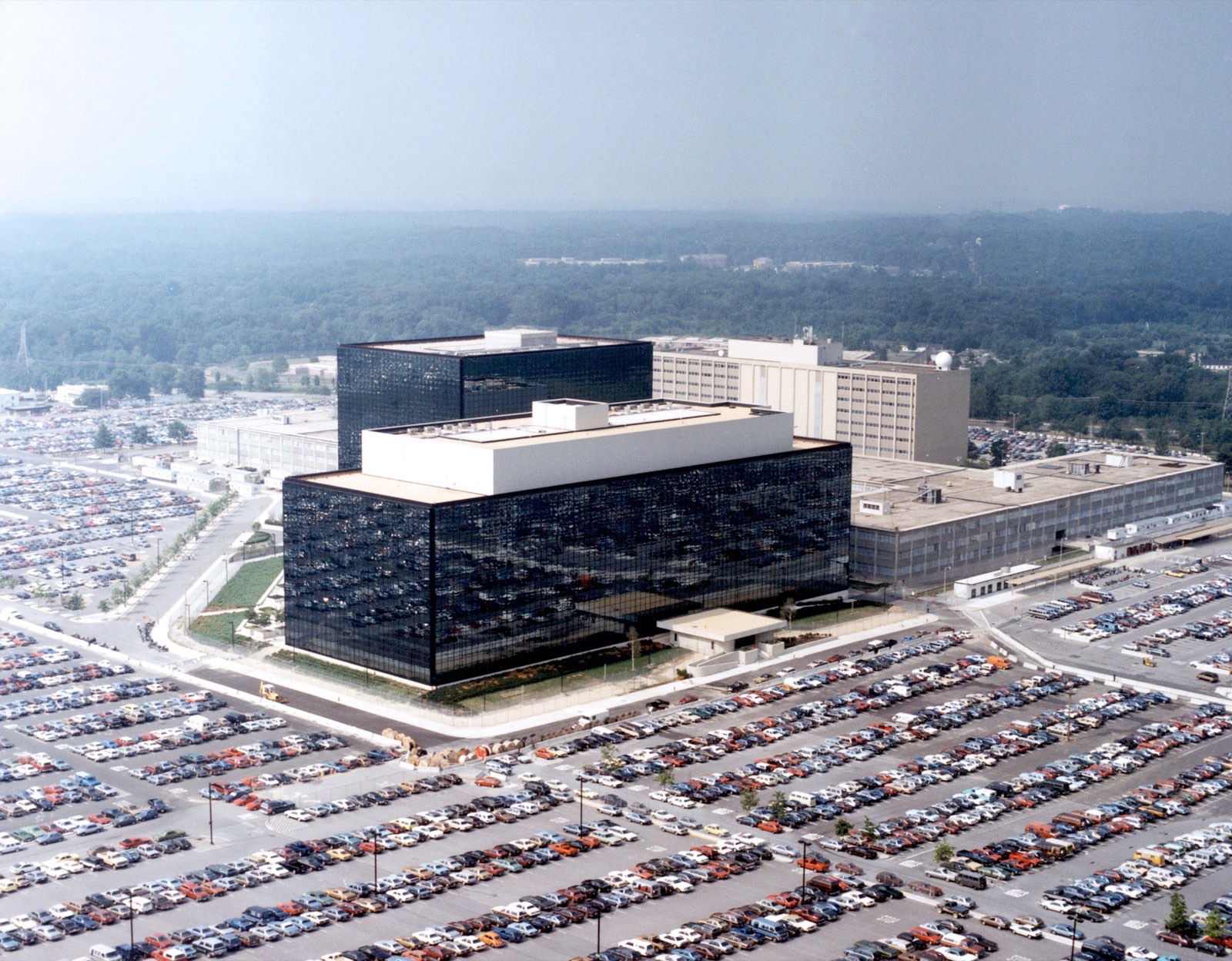
The Snowden Disclosures
In May 2013, a 29-year-old NSA contractor named Edward Snowden boarded a flight from Honolulu to Hong Kong carrying four laptops loaded with classified documents from the world's largest signals-intelligence agency. Over the following months, *The Guardian*, *The Washington Post* and *Der Spiegel* published material from those drives that revealed the architecture of post-9/11 surveillance — PRISM, XKeyscore, Boundless Informant, MUSCULAR. Within ninety days, the global conversation about surveillance, sovereignty, and the limits of state power had shifted. Snowden has lived in Russia since August 2013.
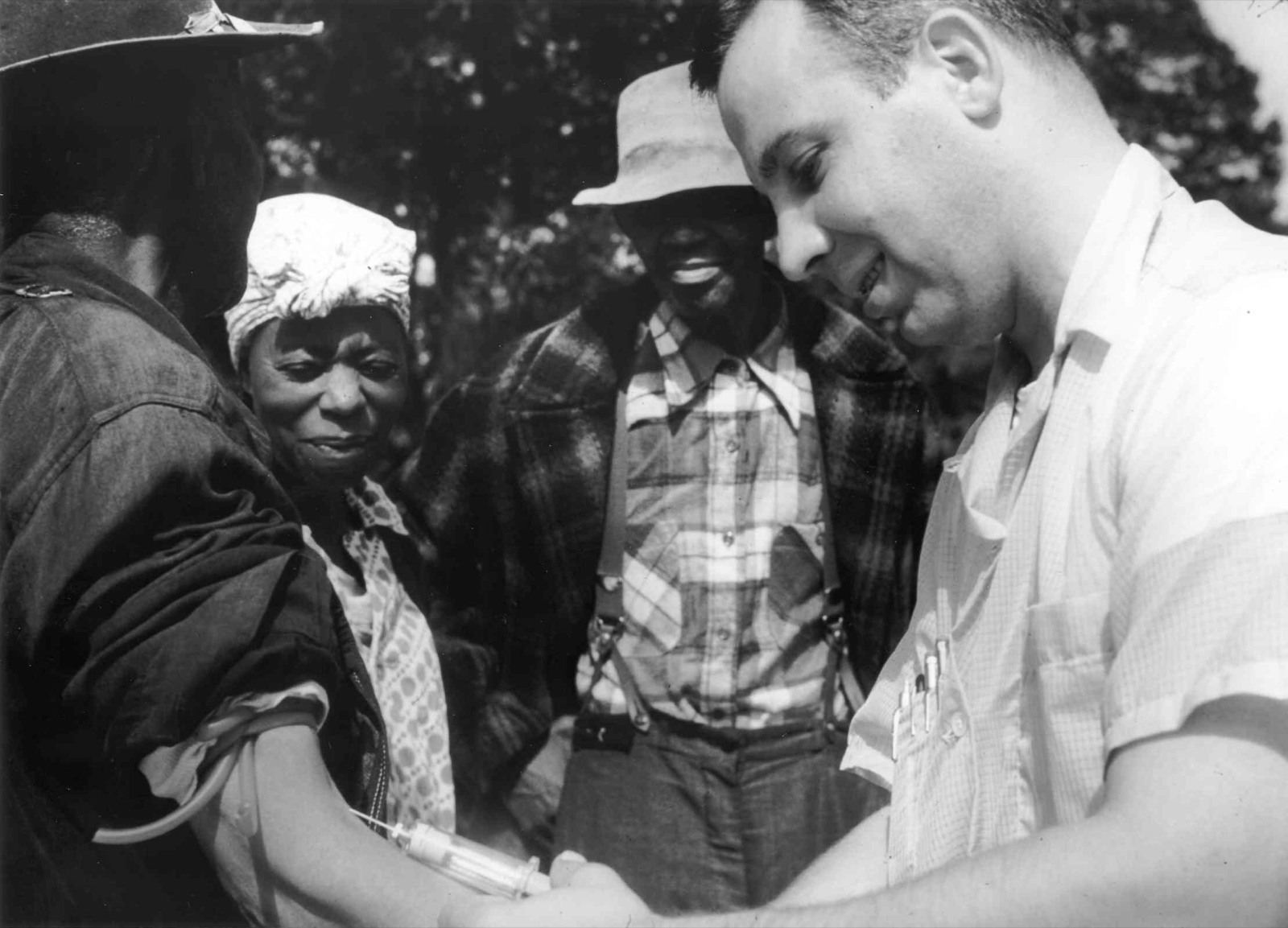
The Tuskegee Syphilis Study
In 1932, the U.S. Public Health Service began a study of 399 Black men in Macon County, Alabama, who had syphilis. They were told they were being treated. They were not. For forty years — including the twenty-five years after penicillin became standard care — the Public Health Service watched the disease take its course. A whistleblower's documents reached the Associated Press on July 25, 1972, and the study ended a few months later. President Clinton apologized on behalf of the United States government in 1997.
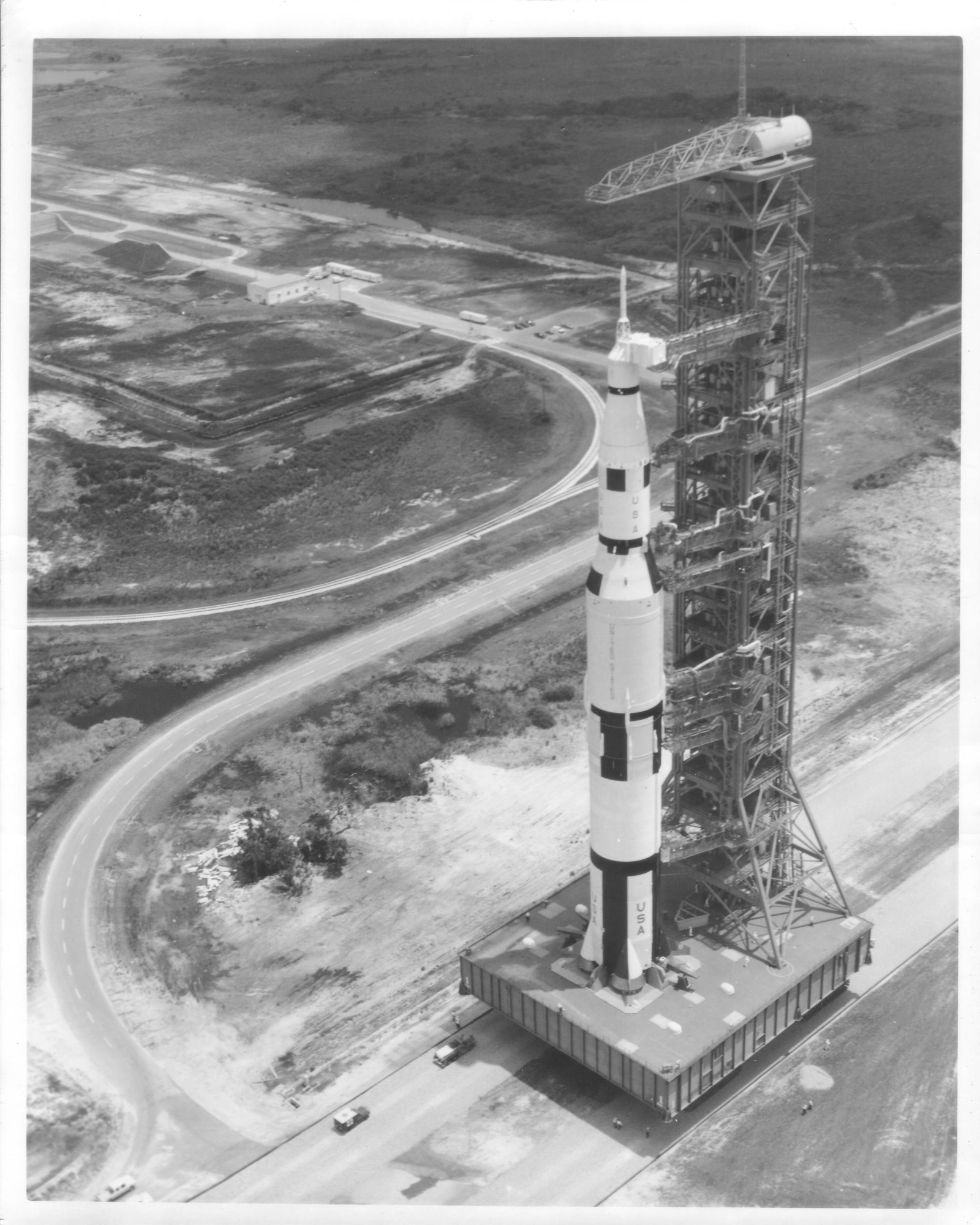
Operation Paperclip
Between 1945 and 1959, the U.S. Army Ordnance Corps and the Joint Intelligence Objectives Agency secretly transported more than 1,600 German scientists, engineers, and technicians from defeated Nazi Germany to the United States — together with files that had been quietly stripped of references to Nazi Party membership, SS rank, and slave-labour exploitation. The clip on the folder was where the program got its name. The most prominent of the imported men was Wernher von Braun, designer of the V-2 ballistic missile, who twenty-four years later watched the Saturn V — a rocket built by his Huntsville team — lift Apollo 11 toward the Moon.