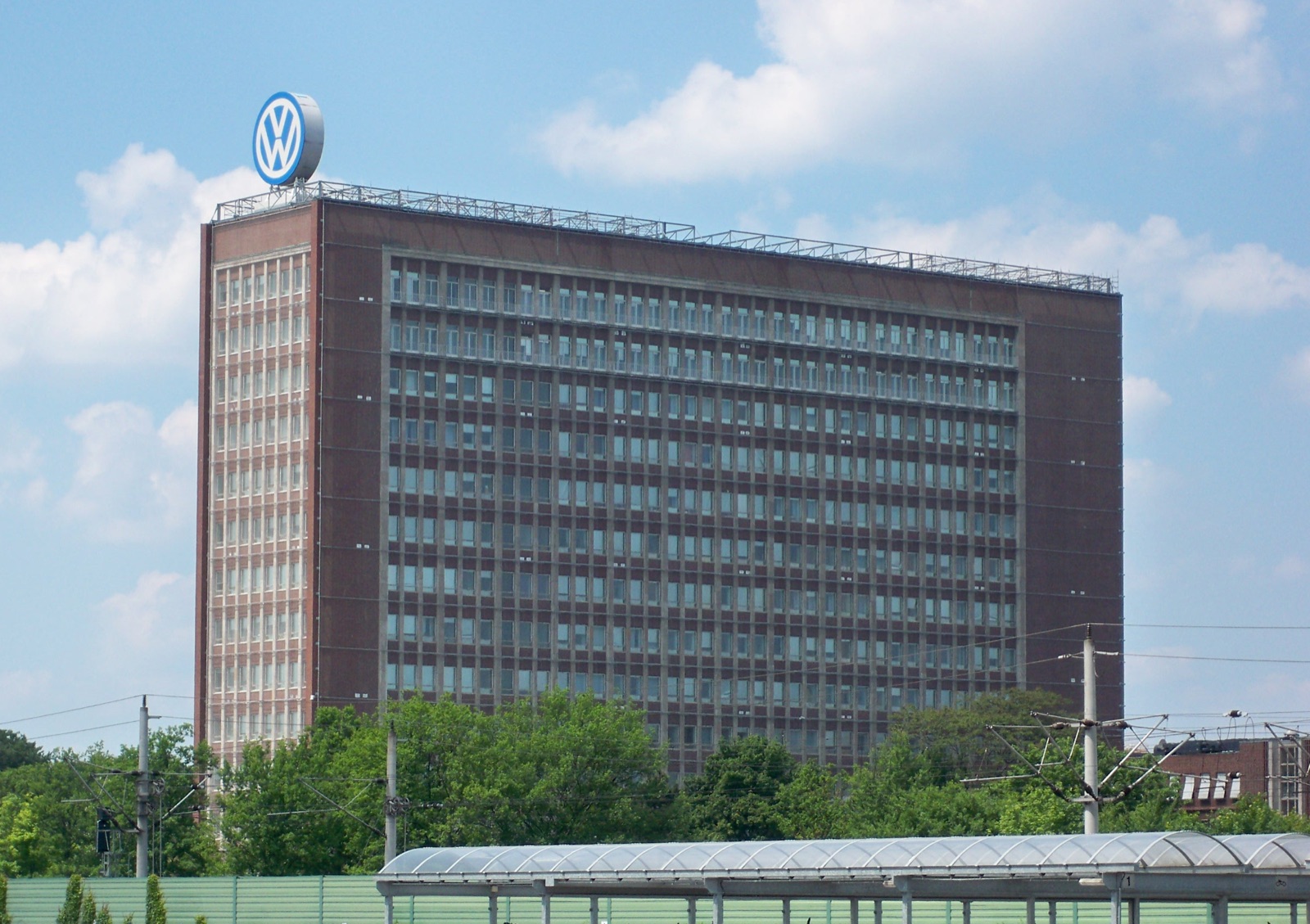
Volkswagen's Wolfsburg headquarters, Germany. The deception was engineered here, executed worldwide, and exposed by a small academic test on the highways of California. Wikimedia Commons.
Dieselgate
Eleven million cars that lied to a testing machine
- Category
- Corporate Cover-ups
- Published
- Length
- 3,500 words · 17 min read
- Author
- The editors
Dieselgate
Eleven million cars that lied to a testing machine.
The road test
In late 2013, an environmental nonprofit called the International Council on Clean Transportation (ICCT) commissioned what was supposed to be a routine technical study. The ICCT was funded primarily by the William and Flora Hewlett Foundation and existed to provide technical assistance to government regulators on transport emissions. Its director was a former U.S. EPA staffer named John German. Its budget was a fraction of any of the major auto-manufacturer lobbying organizations.
German had a small operational hypothesis to test. In the United States, diesel vehicles had to meet much stricter nitrogen-oxide (NOx) emissions standards than in Europe. The American Volkswagen Jetta TDI, Passat TDI, and Audi A3 TDI passed those U.S. standards. Volkswagen had been running aggressive American marketing campaigns positioning "TDI Clean Diesel" as the environmentally responsible choice for the U.S. market.
If those cars could be shown to meet U.S. standards in real driving — not just on the dynamometer — German thought, that would be useful data for the European debate about whether to tighten European emissions standards to match.
ICCT contracted with West Virginia University's Center for Alternative Fuels, Engines, and Emissions (CAFEE). The principal investigator was Daniel Carder, a quiet 38-year-old mechanical engineer. His team was four people. The contract value was approximately $50,000.
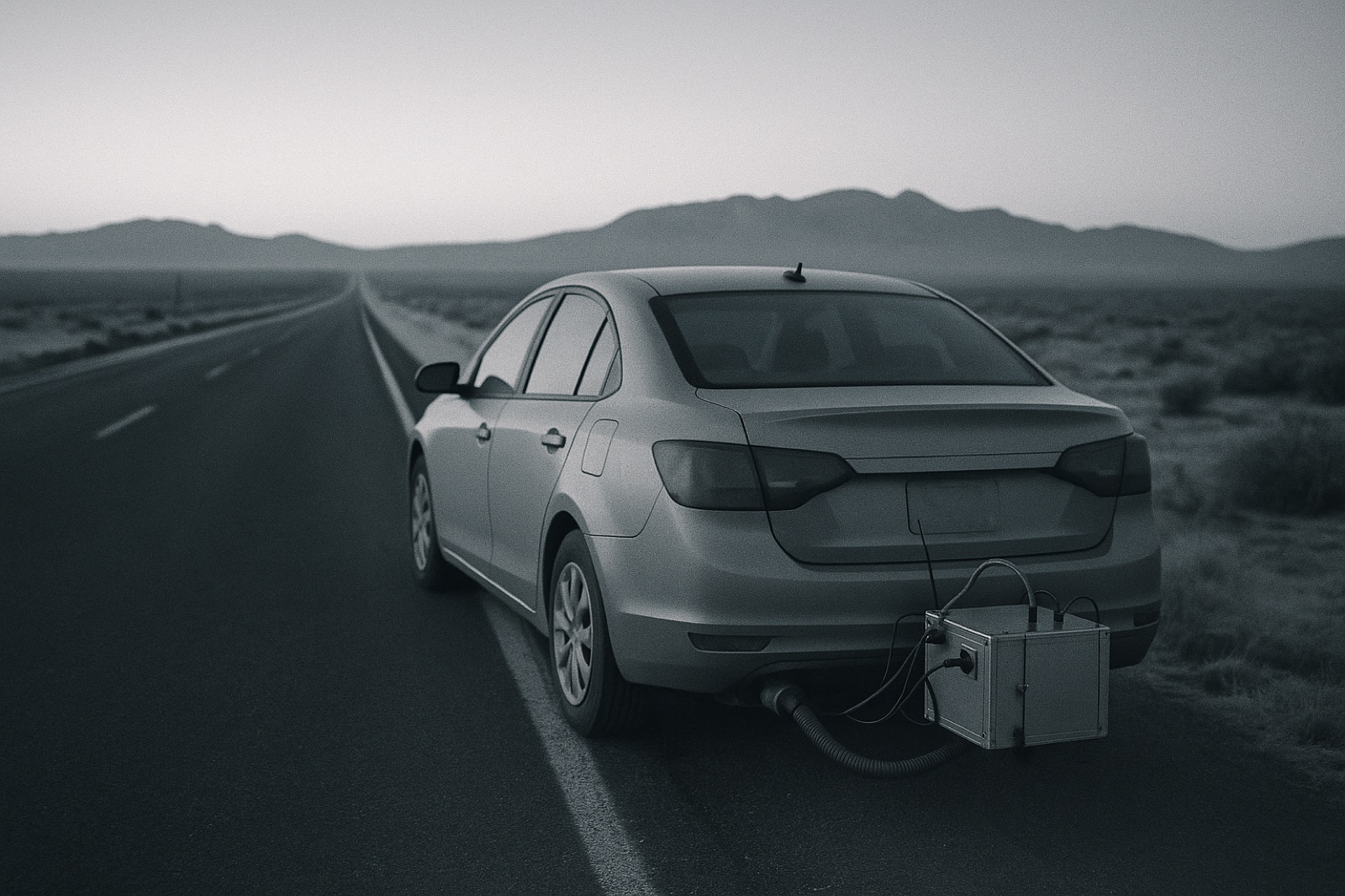
In May 2013, the CAFEE team rented a 2012 Volkswagen Jetta, a 2013 Volkswagen Passat, and a 2012 BMW X5. They equipped each car with a Portable Emissions Measurement System (PEMS) — a rolling laboratory the size of a small refrigerator, attached to the car's exhaust — and drove the cars on real American roads. Los Angeles to San Francisco. San Francisco to Seattle. Seattle to San Diego. Total distance covered: approximately 4,000 kilometers.
The BMW data was unremarkable. The X5 was a heavier vehicle but performed broadly in line with its EPA certification numbers.
The Jetta data was wrong. The Passat data was very wrong.
The CAFEE team triple-checked the calibration. They re-ran tests. They eliminated the possibility of sensor error by comparing PEMS readings against simultaneous fixed-station measurements at multiple points. The numbers held. The Volkswagens were emitting between five and forty times the U.S. legal NOx standard during real-world driving. The same vehicles, on a standard EPA dynamometer test, were emitting at or below the limit.
Carder did what an engineer does. He sent his data, with full methodology, to John German at the ICCT in May 2014.
What Volkswagen did when the data arrived
The ICCT brought the West Virginia data to the U.S. Environmental Protection Agency and the California Air Resources Board (CARB) on May 15, 2014. Both regulators opened internal investigations and asked Volkswagen for an explanation.
What followed, over the next sixteen months, has been documented in remarkable detail by the U.S. Department of Justice criminal filings against Volkswagen executives. Volkswagen offered the EPA and CARB a sequence of technical explanations that the federal prosecutors later characterized as deliberately false:
- June 2014 — September 2014: Volkswagen attributed the emissions discrepancy to "technical issues" with the EA189 engine family — implicitly suggesting hardware problems rather than software cheating.
- October 2014: Volkswagen offered a "voluntary recall" of approximately 500,000 affected U.S. vehicles, applying a software update that was characterized as fixing the emissions problem.
- November 2014 — June 2015: CARB tested vehicles that had received the recall software update. The vehicles' on-road emissions remained out of compliance — in some cases worse than before. The "fix" had not actually addressed the underlying defeat-device.
- July 2015 — September 2015: CARB informed Volkswagen that unless Volkswagen could provide a satisfactory technical explanation, CARB would not certify Volkswagen diesel vehicles for sale in California for the 2016 model year. Without California certification, the cars could not be sold in any U.S. state.
On September 3, 2015, after CARB had effectively threatened to remove Volkswagen from the U.S. diesel market entirely, Volkswagen management informed the EPA — orally — that the company's vehicles had been operating with a defeat-device.
On September 18, 2015, the EPA issued a formal Notice of Violation of the Clean Air Act. The notice was made public the same day.1
- Available at epa.gov/vw/learn-about-volkswagen-violations.
How the defeat-device worked
The technical mechanism became public over the following months through DOJ criminal filings, EPA technical reports, and academic analysis of the affected ECU (Engine Control Unit) firmware.
The EA189 diesel engine — the engine in question — used a Selective Catalytic Reduction (SCR) system to control NOx emissions, plus an EGR (Exhaust Gas Recirculation) system. The technologies worked, but they imposed costs: SCR required regular topping-up of urea solution ("DEF" or "AdBlue"); EGR reduced fuel economy. In aggressive real-world driving, with EGR fully engaged, fuel economy degraded to a point Volkswagen's marketing positioning could not tolerate.
Volkswagen's engineering team programmed the ECU to recognize the characteristic input patterns of an EPA-style dynamometer test: steering wheel held at exactly zero degrees for extended periods, specific throttle profile patterns, specific drive-cycle phases. When the ECU detected these patterns, the engine activated full emissions control. When the ECU did not detect them — i.e., in normal road driving — the engine ran in a "cleaner" calibration that meant less clean for the air and better for fuel economy and EGR component longevity.
The technique was elegant. The deception was deliberate.
In subsequent DOJ filings, Volkswagen engineer James Liang — who pleaded guilty in August 2016 — testified that the team had realized in 2006 that the EA189 could not meet U.S. emissions standards through legitimate engineering. The defeat-device was the solution they chose. It was approved by their immediate management. It was deployed across Volkswagen's diesel fleet worldwide.
The CEO and the criminal cases
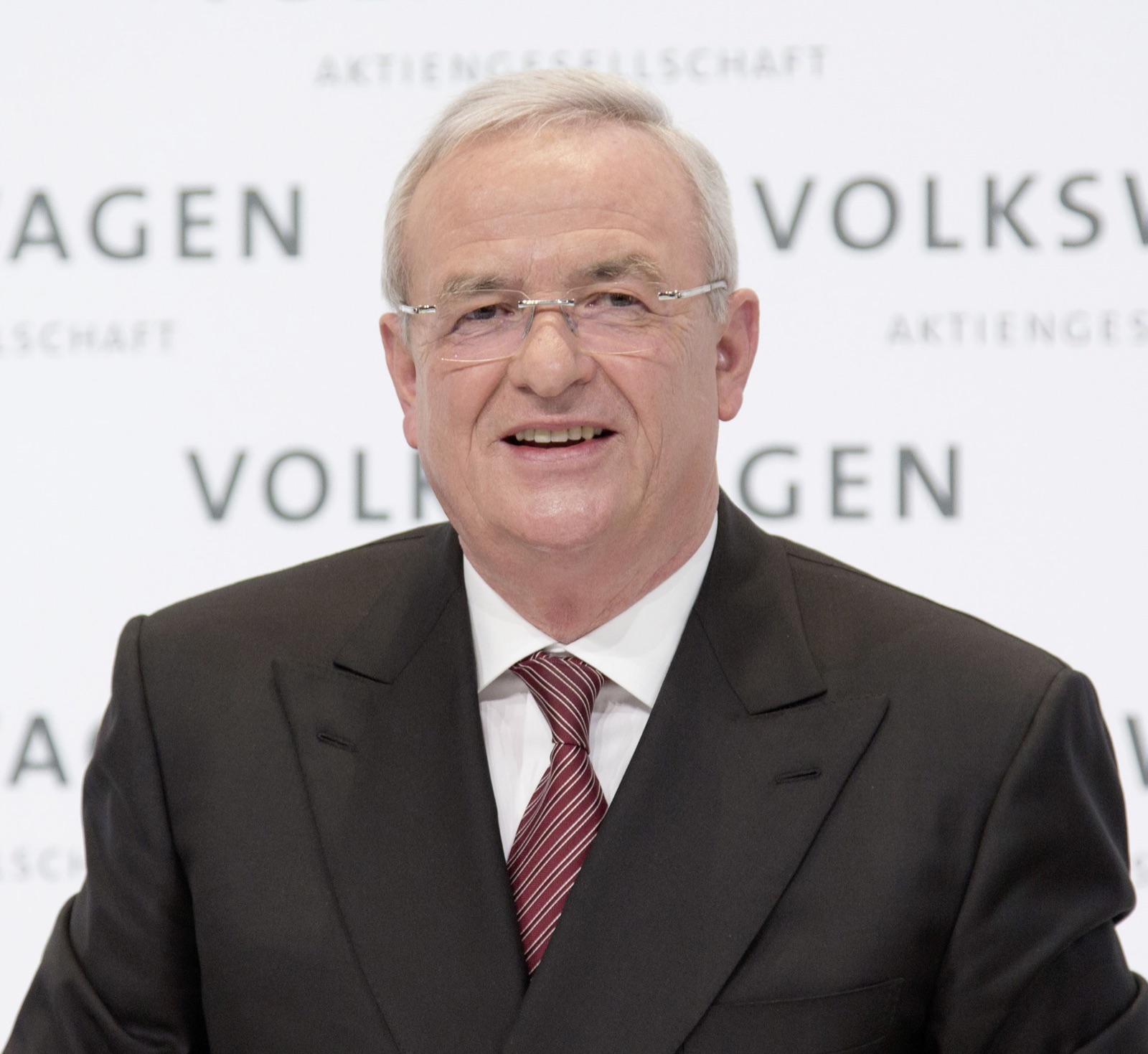
On September 23, 2015 — five days after the EPA notice — Martin Winterkorn resigned as CEO of Volkswagen. His resignation statement denied personal knowledge of the cheating. Subsequent U.S. and German criminal filings have produced significant evidence that Winterkorn and other senior Volkswagen executives knew of the defeat-device by no later than mid-2014, when the West Virginia data first surfaced.
The U.S. Department of Justice criminal cases unfolded across 2016-2018:
- September 2016: Volkswagen engineer James Liang pleaded guilty to conspiracy to defraud the U.S. government. Sentenced August 2017 to 40 months and a $200,000 fine.
- January 11, 2017: Volkswagen pleaded guilty to conspiracy, wire fraud, customs violations, and obstruction of justice. Combined criminal fine: $4.3 billion. Six VW executives were indicted at the same time, most in Germany.
- January 2017: Oliver Schmidt — Volkswagen's general manager for the engineering and environmental office in the United States — was arrested at Miami International Airport while attempting to return to Germany. He pleaded guilty and was sentenced to seven years and a $400,000 fine.
- May 2018: Martin Winterkorn was personally indicted by U.S. federal authorities for wire fraud and conspiracy. Germany, which does not extradite its citizens to the United States, has refused to extradite him.
A separate German prosecution against Winterkorn was opened in 2019 and was still ongoing in 2024.
What the costs actually purchased
The financial accounting on Dieselgate is, by 2024, reasonably established. Volkswagen's cumulative cost — fines, settlements, buybacks, retrofits, civil penalties, and ongoing class-action work — is approximately $34 billion.
The market cost was substantial in the immediate aftermath. The Volkswagen share price lost approximately 30 percent of its value in the first week after the EPA notice. The company's debt was downgraded by Moody's and Standard & Poor's. The German government, which holds 20 percent of Volkswagen through the state of Lower Saxony, was politically embarrassed.
The reputational cost was deeper. Diesel passenger vehicles, which had been approximately half of European new-car sales in 2015, fell to less than 15 percent of European new-car sales by 2024. The European Union's earlier policy of incentivizing diesel through preferential tax treatment was effectively reversed.
The most consequential effect was probably on Volkswagen's strategic direction. The Group accelerated its electric-vehicle program by several years, accelerating the discontinuation of further diesel-engine development, and committed to electric becoming the company's primary technology platform by 2030. The CEO who succeeded Winterkorn, Matthias Müller, was replaced in April 2018 by Herbert Diess, whose explicit mandate was electrification.
In one operational sense, the deception purchased the world's largest automaker an additional decade of diesel-platform investment that should have ended sooner. In another sense, the discovery and fallout accelerated the company's eventual pivot away from internal- combustion engines by approximately five years.
What proponents and critics still argue
The factual record of Dieselgate is no longer seriously contested. The interpretive questions:
Did the deception kill people? Various academic studies have attempted to estimate the excess mortality attributable to excess NOx emissions from the affected vehicles. Estimates range widely. A 2017 study by MIT and Harvard placed U.S. excess deaths at approximately 60; European estimates range from 1,200 to 12,000. The wide variance reflects methodological uncertainty more than genuine factual disagreement.
Was Volkswagen exceptional or representative? Investigations into Renault (2015-2016), Fiat-Chrysler (2017), and Mercedes-Benz (2018) revealed similar defeat-device approaches in different manufacturers' fleets, with substantially lower (but real) fines in each case. The industry-wide question of how widespread the practice was remains open. The EU's introduction of Real Driving Emissions (RDE) testing in 2017, and the U.S. EPA's similar methodological updates, were designed to close the gap between laboratory and real-world testing that Dieselgate had exposed.
Why did regulators take sixteen months? The interval between the WVU/ICCT data arriving at the EPA in May 2014 and the EPA Notice of Violation in September 2015 has been criticized — in the words of one EPA insider quoted by The New York Times — as a "failure of the agency to be more aggressive earlier." The counter-defense is that Volkswagen's technical explanations during 2014 and early 2015 were detailed and superficially plausible, and that the EPA's resources for forensic engine analysis were limited.
How we read the evidence
Dieselgate is the most thoroughly documented corporate engineering fraud of the early 21st century. The factual record is closed — criminal pleas, judicial findings, internal Volkswagen documents released in discovery, and detailed academic forensic analysis all support the same narrative. The deception was deliberate. It was institutional. It was operationally directed by middle management with documented authorization from at least some senior executives.
What is unusual about the case, set against other cover-ups we have written about, is the brevity of the cover-up's collapse. The West Virginia data became indisputable in spring 2014. The EPA Notice of Violation came sixteen months later. The CEO resigned five days after that. The criminal pleas began nine months after that. The total elapsed time between scientific discovery and public collapse was approximately twenty-five months.
Comparable corporate cover-ups (Big Tobacco, DuPont/PFOA, Sackler/ OxyContin) ran for decades before institutional accountability arrived. The reason Dieselgate collapsed faster was, in our judgment, structural: the technical signature of the deception was detectable by independent third-party testing once anyone thought to try. The defeat-device was elegant engineering, but it was not invisible engineering. Once Daniel Carder's PEMS recorded the numbers it did, the rest was bookkeeping.
What Dieselgate did not produce was reform sufficient to prevent recurrence at scale. Auto-industry emissions testing in 2026 still relies on a combination of laboratory and on-road methodologies that any sufficiently motivated engineering organization could defeat with comparable cleverness. The institutional answer to Dieselgate, in other words, was to make laboratory tests harder to fool — not to make the underlying economic incentive to fool them go away.
Key figures
Further reading
Books:
- Jack Ewing, Faster, Higher, Farther: The Volkswagen Scandal (W.W. Norton, 2017). The definitive popular history.
- Bryan Reimer & Edmund King, Diesel and the Death of the Combustion Engine (Springer, 2020).
- Bernhard Schmid (ed.), Der Skandal: Wie die Wahrheit kam (Bertelsmann, 2017). German-language insider account.
Films and documentaries:
- Dirty Money — Season 1, Episode 1 "Hard NOx" (2018, Netflix, dir. Alex Gibney). Best video account.
- Volkswagen: The Faulty Software (2017, BBC Panorama). UK perspective.
Primary archives:
- U.S. EPA: Learn About Volkswagen Violations
- U.S. v. Volkswagen plea agreement (January 11, 2017)
- WVU CAFEE / ICCT In-Use Emissions Testing of Light-Duty Diesel Vehicles in the U.S. (May 2014)
Sources
Primary sources
- U.S. Environmental Protection Agency. Notice of Violation: Volkswagen AG, September 18, 2015.
- U.S. Department of Justice. United States v. Volkswagen AG, plea agreement, January 11, 2017.
- U.S. Department of Justice. United States v. Martin Winterkorn et al., indictment, May 3, 2018.
- WVU CAFEE / ICCT. In-Use Emissions Testing of Light-Duty Diesel Vehicles in the U.S., ICCT Report, May 15, 2014.
Secondary sources
- Ewing, J. (2017). Faster, Higher, Farther: The Volkswagen Scandal. W.W. Norton.
- The New York Times — Jack Ewing's continuous coverage, September 2015 onward.
- Der Spiegel — German-language investigative coverage.
- Süddeutsche Zeitung — Munich newspaper's reporting.
- Bloomberg News — finance-side coverage.
- Frontline (PBS), "Dirty Money: Hard NOx" (Netflix), 2018.
- The Wall Street Journal — corporate-governance angle.
- Auto Bild (Germany) — industry trade press.
- Automotive News — U.S. industry trade.
Academic sources
- Anenberg, S. C. et al. (2017). "Impacts and mitigation of excess diesel-related NOx emissions in 11 major vehicle markets." Nature, 545, 467-471.
- Holland, S. P., Mansur, E. T., & Yates, A. J. (2017). "Decompositions and Policy Consequences of an Extraordinary Decline in Air Pollution from Electricity Generation." American Economic Journal: Economic Policy, 9(2), 207-243.
Corrections & updates
(None yet.)
Footnotes
-
U.S. Environmental Protection Agency. Notice of Violation: Volkswagen AG, Audi AG, Volkswagen Group of America, September 18, ↩
Inspired this / based on it
BBC Panorama
UK investigative perspective
Jack Ewing
The definitive popular history by the NYT's German correspondent
Bryan Reimer & Edmund King
Broader technical context
Bernhard Schmid (ed.)
German-language insider account
Filed under
- #dieselgate
- #volkswagen
- #vw
- #winterkorn
- #schmidt
- #liang
- #epa
- #carb
- #wvu
- #icct
- #clean-diesel
- #defeat-device
- #2015
- #germany
- #usa
- #emissions
Click any tag for every article carrying it.
Continue reading
Cambridge Analytica
In 2014, a 27-year-old Canadian data scientist named Christopher Wylie helped design what he would later describe as a 'psychological warfare tool.' His employer, Cambridge Analytica, had paid an academic researcher to build a personality quiz that, through a quirk of Facebook's developer policy, harvested data not only on the people who took it but on every Facebook friend of every taker — eventually some 87 million profiles. The data was used to target voters in the 2016 Brexit referendum and the 2016 Trump presidential campaign. Wylie went to The Guardian in March 2018. Within ten weeks, Cambridge Analytica had shut its doors.
Operation Paperclip
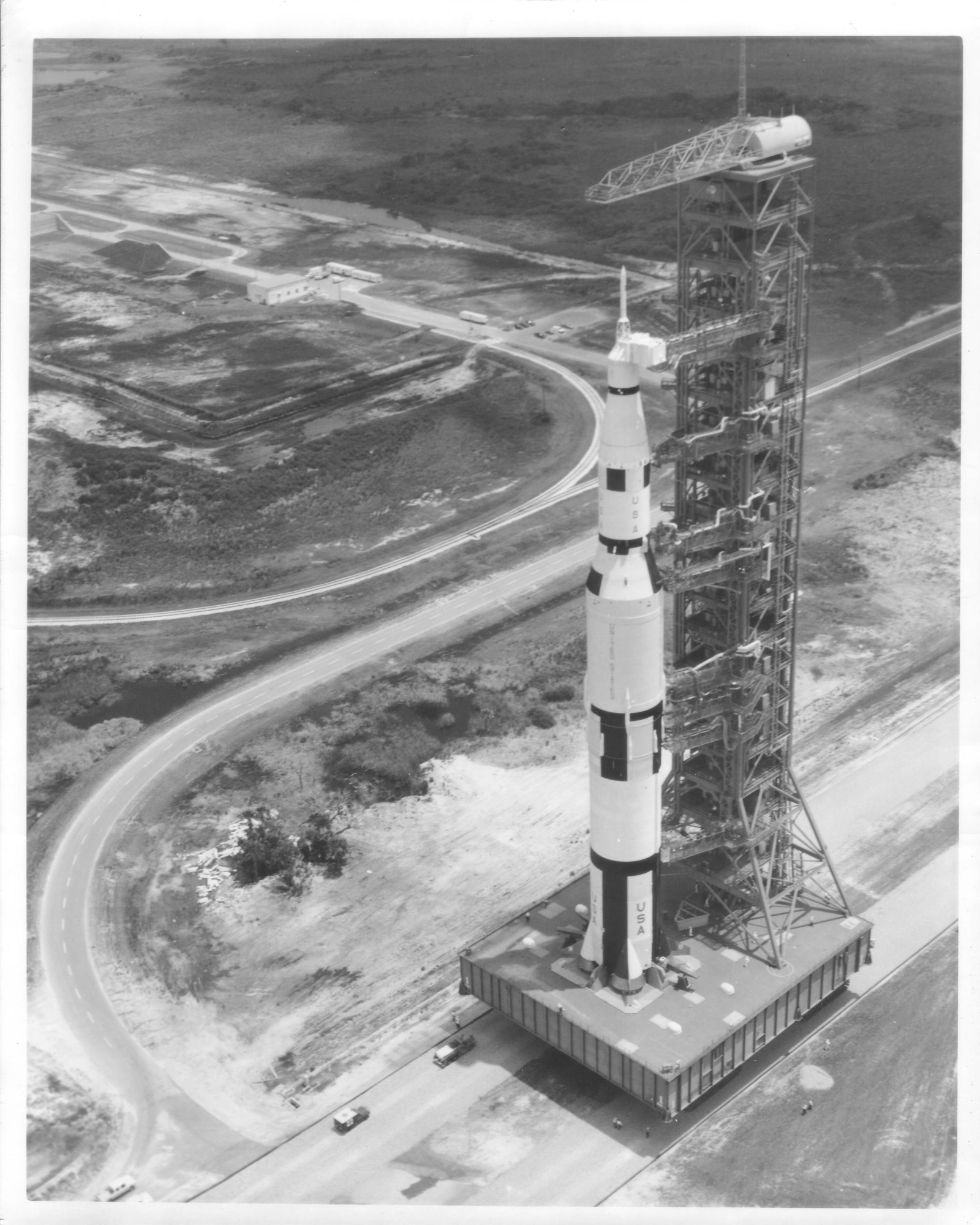
Between 1945 and 1959, the U.S. Army Ordnance Corps and the Joint Intelligence Objectives Agency secretly transported more than 1,600 German scientists, engineers, and technicians from defeated Nazi Germany to the United States — together with files that had been quietly stripped of references to Nazi Party membership, SS rank, and slave-labour exploitation. The clip on the folder was where the program got its name. The most prominent of the imported men was Wernher von Braun, designer of the V-2 ballistic missile, who twenty-four years later watched the Saturn V — a rocket built by his Huntsville team — lift Apollo 11 toward the Moon.
Iran-Contra
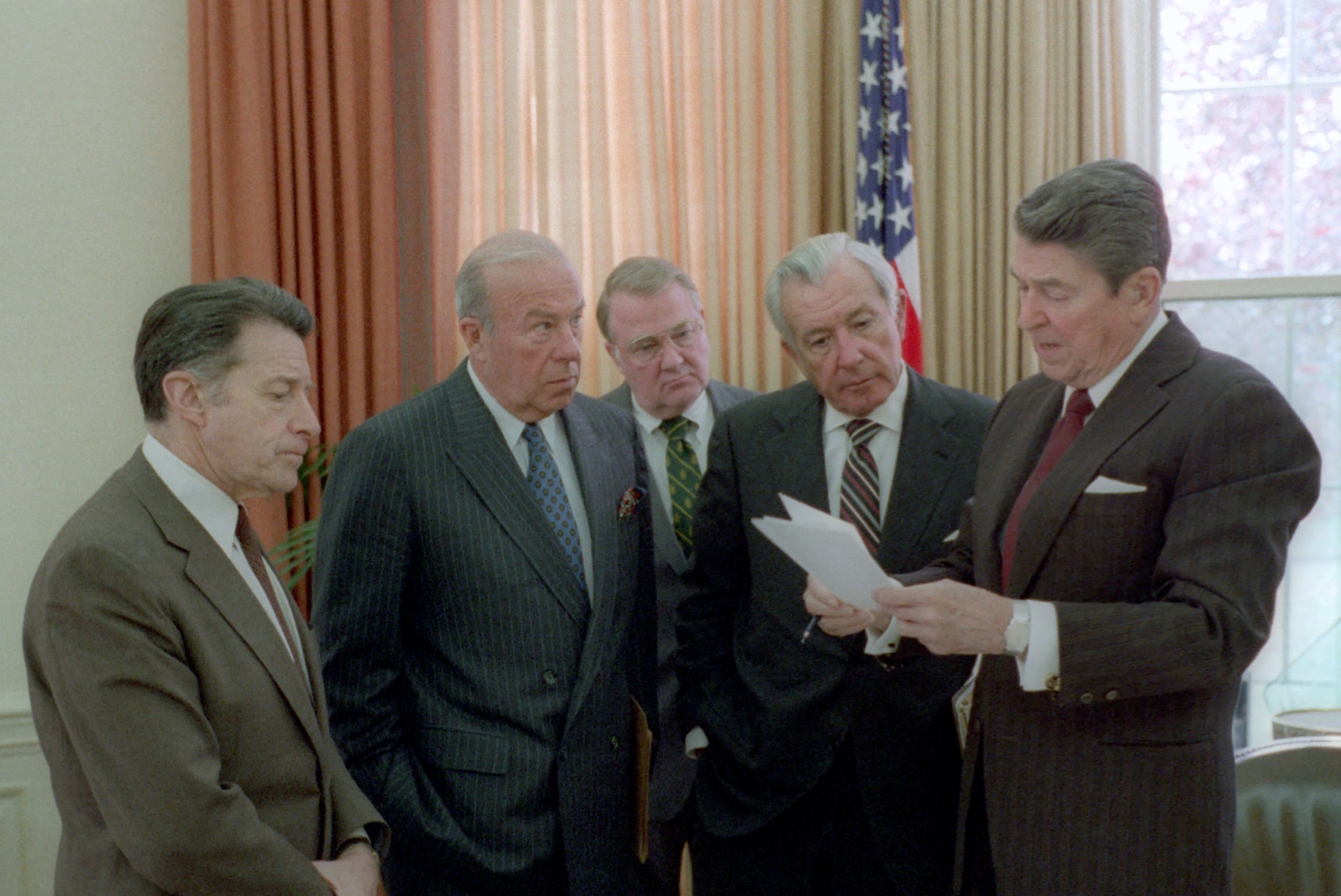
Between August 1985 and October 1986, the Reagan administration secretly sold anti-tank and anti-aircraft missiles to the Islamic Republic of Iran — an officially designated state sponsor of terrorism, in the middle of a war with Iraq. The cash went into Swiss bank accounts. From there a portion was diverted, in defiance of two congressional bans, to the Contra rebels fighting the Sandinista government in Nicaragua. The scheme was exposed by a Lebanese magazine, dismantled by a special commission, and partly prosecuted before President George H. W. Bush issued the pardons that ended the cases.