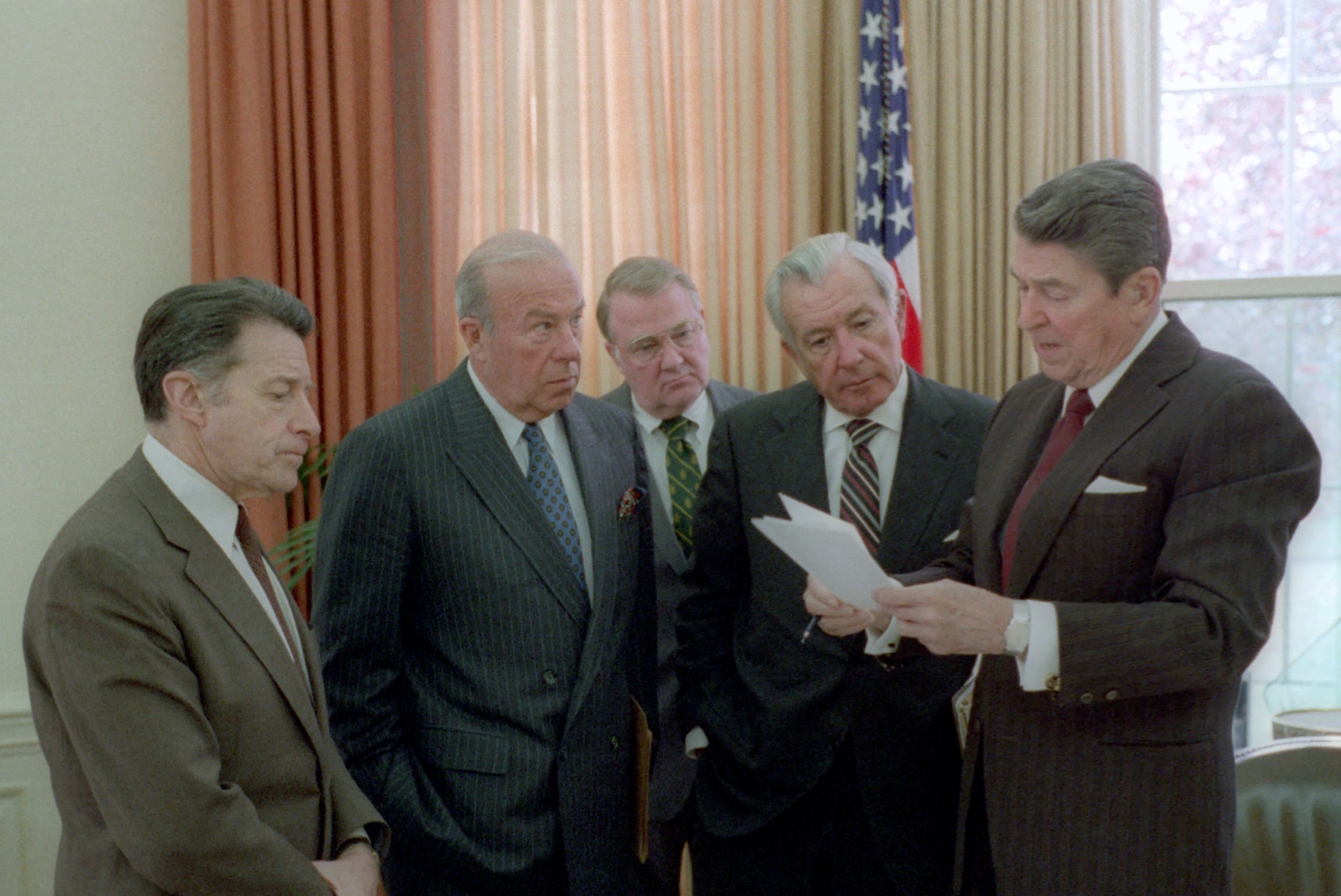
President Reagan meets with Caspar Weinberger, George Shultz, Edwin Meese, and Donald Regan in the Oval Office during the Iran-Contra crisis. Two of the men in this room (Shultz and Weinberger) opposed the policy. White House photograph, public domain.
Iran-Contra
Missiles to Tehran, money to Managua
- Category
- State & Intelligence Operations
- Published
- Length
- 3,800 words · 18 min read
- Author
- The editors
Iran-Contra
Missiles to Tehran, money to Managua.
The two policies that couldn't legally co-exist
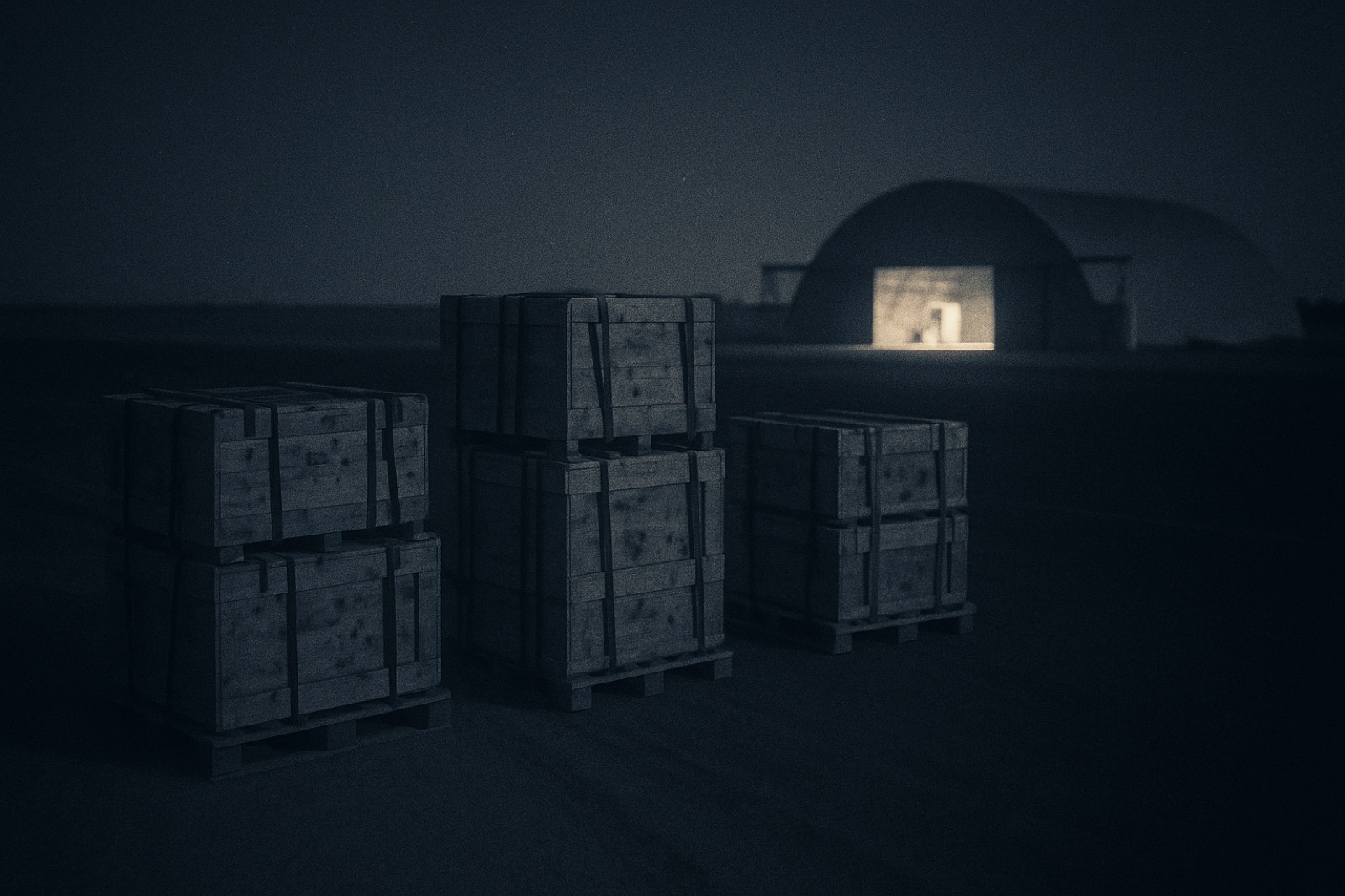
By the spring of 1985, the second Reagan administration had two foreign-policy priorities that could not, under U.S. law, be pursued through ordinary channels.
The first was the Contras. Since 1981 the CIA had been arming and training a Nicaraguan insurgency known as the Contrarrevolucionarios — the Contras — to fight Daniel Ortega's left-wing Sandinista government. Congress had grown uneasy about CIA assassination plots and the mining of Nicaraguan harbors. The Boland Amendment, in three escalating versions between 1982 and 1984, prohibited the CIA, the Defense Department, and "any other agency or entity of the United States involved in intelligence activities" from spending money "for the purpose of overthrowing the Government of Nicaragua." By October 1984 the Contras' formal U.S. funding was zero.
The second priority was the hostages. Between 1982 and 1985, at least seven American citizens — including CIA Beirut Station Chief William Buckley, and Beirut bureau chief of the Associated Press Terry Anderson — had been kidnapped in Lebanon by Hezbollah-affiliated groups operating under the umbrella of "Islamic Jihad." Reagan had publicly committed, repeatedly, that the United States would not negotiate with terrorists. He had also begun, privately, to take the hostages very personally.
By the summer of 1985, the National Security Council under National Security Advisor Robert McFarlane had quietly begun exploring whether the Islamic Republic of Iran — which had what the State Department characterized as "significant influence" over Hezbollah — might be persuaded to use that influence in exchange for something the Iranians badly needed.
Iran was in the fifth year of the Iran-Iraq War. Saddam Hussein's forces, supported with intelligence from the United States, were inflicting heavy casualties. Iran had a shortage of two things in particular: TOW anti-tank missiles and HAWK anti-aircraft missiles. American-made.
McFarlane's proposal, approved by Reagan in July 1985, was to route the missiles to Iran via Israel — keeping U.S. fingerprints off the shipping manifest — in exchange for Iranian help freeing the Lebanese hostages.
The first 96 TOW missiles arrived in Tehran on August 20, 1985. One hostage, the Reverend Benjamin Weir, was released six weeks later.
The operation had begun.
The "Enterprise"
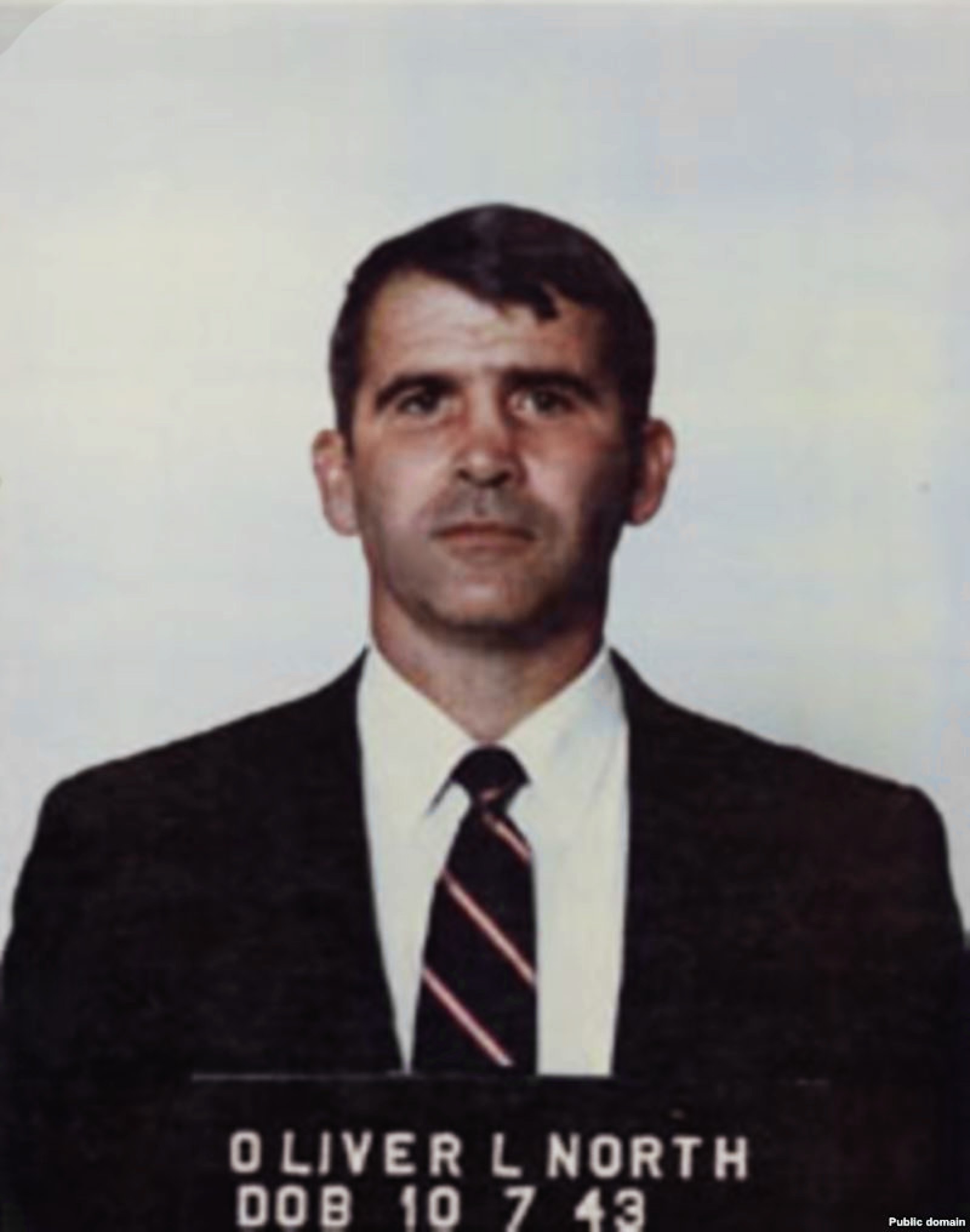
By November 1985, McFarlane had resigned. His deputy, Vice Admiral John Poindexter, succeeded him as National Security Advisor. Beneath Poindexter on the NSC staff was a forty-three-year-old Marine lieutenant colonel named Oliver North.
North had been on the NSC since 1981. By 1985 his portfolio included counter-terrorism, the Contras, and now — under Poindexter's authorization — the Iran arms-for-hostages program. North also began, in late 1985, to run a parallel covert operation under the name "the Enterprise."
The Enterprise was a private network of retired U.S. military officers and arms dealers, operating outside the formal U.S. government, that North used as the operational vehicle for both the Iran sales and the Contra resupply. Its principals included:
- Retired Air Force Major General Richard Secord — operational lead
- Albert Hakim — Iranian-American businessman, financial structurer
- Manucher Ghorbanifar — Iranian arms dealer middleman to Tehran
The financial structure was deliberate. The Enterprise would buy weapons from the Department of Defense at one price, sell them to Iran at a substantially higher price, deposit the proceeds in Swiss bank accounts under shell-company names, and then route a portion of the markup — at North's direction — to the Contras through additional shell-company chains.
This had multiple advantages from North's point of view. The Enterprise was not a federal agency, so it was not bound by the Boland Amendment. The Enterprise was not officially authorized by any congressional committee, so its activities did not have to be reported. The Enterprise was not part of the CIA's covert action finding system, so it did not require a presidential signature on a formal authorization.
What it did require, and had, was Poindexter's verbal authorization and North's day-to-day operational control.
The diversion
By the spring of 1986, the Enterprise had moved approximately 1,500 TOW missiles and several hundred HAWK missile parts to Iran. Iran had paid the Enterprise approximately $48 million for these shipments. The Department of Defense had been paid roughly $42 million for the underlying weapons. The difference — approximately $6 million in markup — was held in Enterprise Swiss accounts.
In December 1985, North had floated to Israeli Defense Ministry officials the suggestion that "future arms sales should generate profits for activities in Nicaragua." That suggestion became operational policy in early 1986. By the time the Enterprise was unwound, at least $3.8 million had been routed to the Contras for weapons purchases, logistical support, and what North's contemporaneous notes refer to as "operational expenses" that have never been fully specified in the public record.1
The diversion was North's idea, executed under Poindexter's authorization, without (Poindexter would later swear under oath) the knowledge of President Reagan.
That has been the most contested factual claim in the entire case.
The plane that fell in Nicaragua
The operational collapse began with a piece of bad luck. On October 5, 1986, a U.S. C-123 cargo aircraft on a Contra resupply run was shot down by Sandinista forces over southern Nicaragua. Two of the three Americans on board were killed in the crash. The third — Eugene Hasenfus, a forty-five-year-old former Marine from Marinette, Wisconsin — parachuted to safety and was captured.
Hasenfus, under interrogation by Sandinista authorities, identified himself, named his employer (the Enterprise, though he did not use that word), and described an air-resupply operation flying out of Ilopango Air Base in El Salvador under the supervision of a CIA contractor he knew as "Max Gomez" — later identified as Cuban-American operative Felix Rodriguez.
The Hasenfus interrogation tapes were released to international media. The Reagan administration, through White House Press Secretary Larry Speakes, formally denied U.S. government involvement in the supply operation.
The denial held for four weeks.
November 3, 1986
On the morning of Monday, November 3, 1986, a small Beirut weekly magazine called Ash-Shiraa — published by Hassan Sabra, with funding sources widely understood to include Syrian intelligence — ran a front-page story headlined "Tehran's Most Important Secret."
The story alleged that retired National Security Advisor Robert McFarlane had personally traveled to Tehran in May 1986 on an Israeli aircraft, carrying forged Irish passports and a personal gift from President Reagan: a Bible inscribed with handwritten verses, and a chocolate cake shaped like a key.
The story was correct. McFarlane had made exactly that trip, accompanied by Oliver North, Manucher Ghorbanifar, and CIA operative George Cave. The Bible and the cake had been intended as gestures of goodwill to Speaker of the Iranian Parliament Akbar Hashemi Rafsanjani. McFarlane's delegation had spent four days in a Tehran hotel waiting for high-level meetings that never materialized.
The leak had come, depending on which account one credits, from either an Iranian dissident faction inside the Revolutionary Guard opposed to dealing with America, or from Syrian intelligence acting on its own strategic interest in damaging Reagan. The Wikipedia account favors Mehdi Hashemi, a senior official in the Islamic Revolutionary Guard Corps who was subsequently executed. Several later accounts, including Patrick Seale's biography of Hafez al-Assad, attribute the leak to Syrian president Hafez al-Assad directly.
What is not in dispute is that within seventy-two hours of the Ash-Shiraa story, the story had been picked up by every major American newspaper.
The president on television
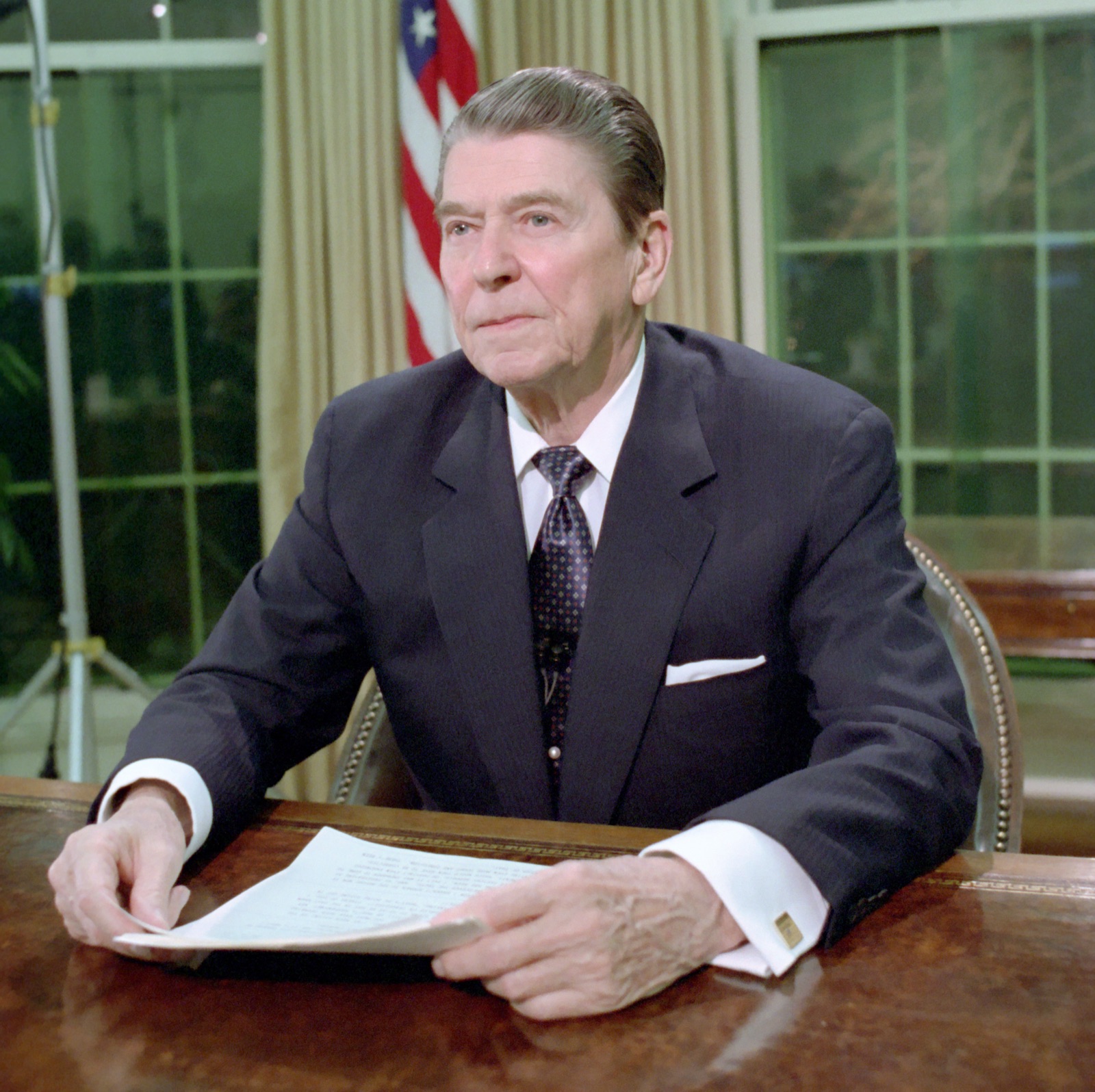
On the evening of Thursday, November 13, 1986, ten days after the Ash-Shiraa story broke, President Reagan addressed the nation from the Oval Office. He acknowledged that "modest deliveries of defensive weapons and spare parts" had been made to Iran, but denied that the transaction constituted arms-for-hostages and denied that "any third country" had been involved (Israel).
Both denials were false. The arms-for-hostages framework was the operational center of the program. Israel had been the routing country for every shipment.
On November 25 — twelve days later — Attorney General Edwin Meese held a press conference in which he announced that part of the proceeds from the Iran arms sales had been diverted to the Contras. Oliver North, Meese said, had been fired. John Poindexter had resigned.
That afternoon, the FBI began an investigation. By the end of the week, a Special Review Board ("the Tower Commission") had been appointed by Reagan himself.
The Tower Commission
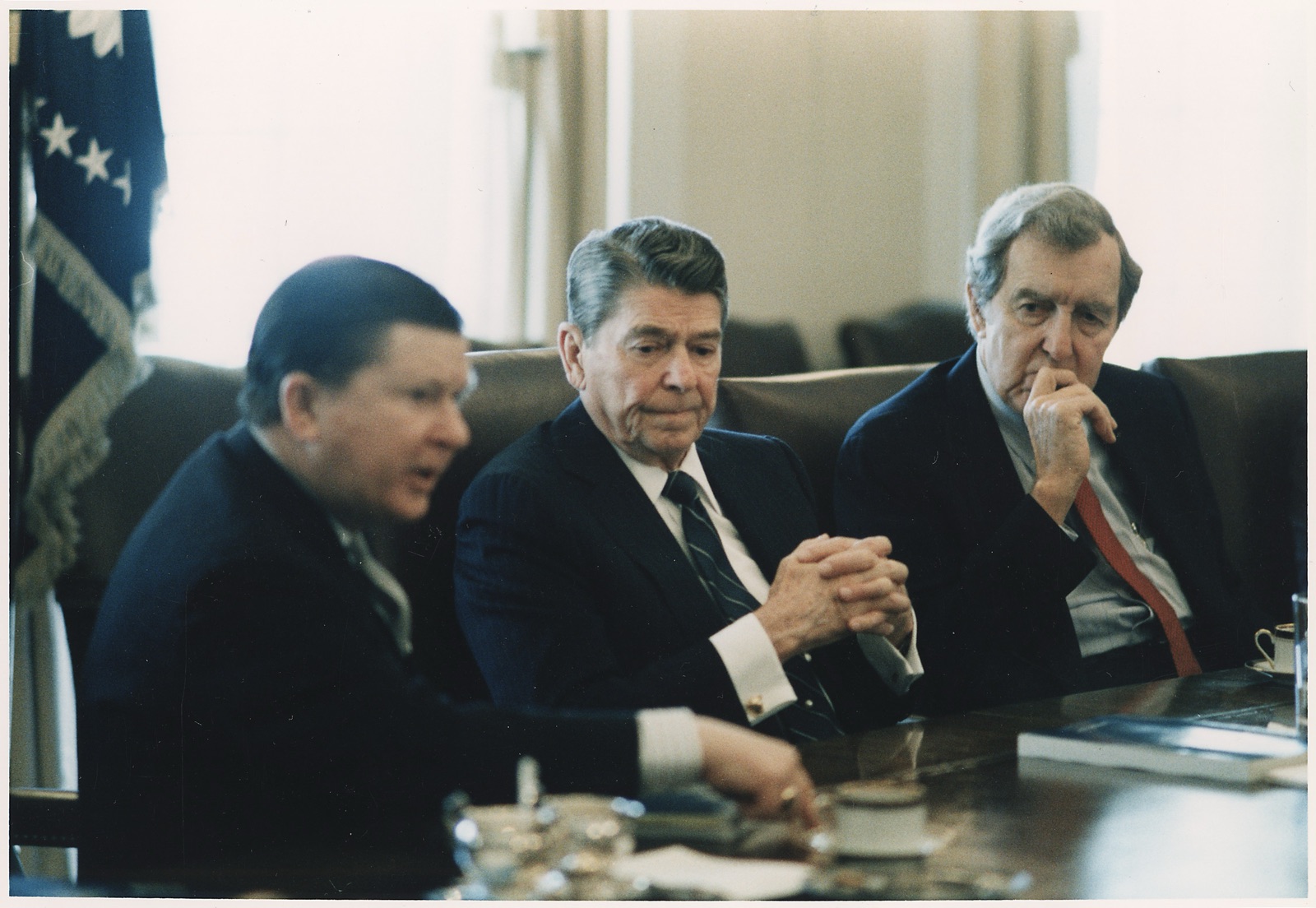
The Tower Commission — chaired by retired Senator John Tower (R-Texas) and including former Secretary of State Edmund Muskie and former National Security Advisor Brent Scowcroft — delivered its report to the White House on February 26, 1987. Its conclusions on the operational record were stark.
The Commission found that the National Security Council staff had:
- Negotiated arms sales to Iran in violation of stated U.S. policy on terrorism.
- Failed to keep the President's senior advisors informed.
- Conducted a covert operation off-the-books from the formal CIA covert action structure.
- Diverted funds to the Contras in apparent violation of the Boland Amendment.
On Reagan himself, the Commission found "a lax managerial style and aloofness from policy detail" but stopped short of finding the President had directly known about the diversion. The phrase the Commission used — that Reagan's "personal management style placed the heaviest responsibility on the President" — has been quoted both as a finding of negligence and as a partial exoneration, depending on the reader.
The prosecutions and the pardons
The Walsh independent counsel investigation, which ran from December 1986 to August 1993, ultimately produced fourteen indictments and eleven convictions. The most prominent:
- John Poindexter — convicted of conspiracy, obstruction, and false statements (1990); conviction overturned on appeal on Fifth Amendment grounds (1991).
- Oliver North — convicted of three felonies (1989); convictions overturned on appeal (1991) for the same Fifth Amendment reason.
- Robert McFarlane — pleaded guilty to four misdemeanors (1988).
- Caspar Weinberger (Secretary of Defense) — indicted June 1992 on five counts including perjury.
- Elliott Abrams (Assistant Secretary of State) — pleaded guilty to two misdemeanors of withholding information from Congress.
On December 24, 1992 — six days before George H. W. Bush left office, having lost the November election to Bill Clinton — Bush pardoned Weinberger, McFarlane, Abrams, and three other Iran-Contra defendants or witnesses. Walsh, who had been preparing to bring Weinberger to trial in January 1993, characterized the pardons in his final report as "the last act of a six-year cover-up" and noted that the pardons foreclosed any possibility of testimony that might have established the role of Bush himself in the affair.2
What proponents and critics still argue
The factual record of Iran-Contra is established. The interpretive disagreements that remain are narrower:
Did Reagan know? Poindexter testified under oath that he had not informed the President about the diversion. The Tower Commission accepted this account. Reagan publicly stated that he could not remember whether or not he had been told. Bob Woodward, Patrick Tyler, and several other historians have argued that the documentary record is too fragmentary to rule out direct presidential knowledge. The Walsh independent counsel did not bring charges against Reagan, but his final report explicitly stated that Reagan's actions in some respects "fell well below the legal standard."
Did Bush know? Bush, as Vice President, was on the August 6, 1985 NSC meeting where the arms-for-hostages framework was first discussed. His own diary entries, declassified in the 1990s, show that he was "in the loop" on the operation. During his successful 1988 presidential campaign Bush characterized himself as having been "out of the loop." The accuracy of that characterization remained a topic of contention in the 1992 campaign.
Was Casey the operational mastermind? Cumulative evidence — including Casey memos cited by the Tower Commission and Walsh's own investigative findings — points toward Casey as the conceptual architect of using arms-sale markup to fund unauthorized covert operations. The fact that Casey died in May 1987 before he could be deposed has made this question impossible to resolve definitively.
How we read the evidence
Iran-Contra is the most fully documented case in American history of an executive branch operation that violated both U.S. law and stated U.S. policy, was conducted off-the-books from the formal national security apparatus, was discovered through a foreign press leak rather than through any internal oversight mechanism, and ended without the prosecution of the most senior officials involved.
That last clause is the part that still matters. Watergate produced forty convictions and the resignation of a president. Iran-Contra produced eleven convictions, all of which were either overturned on appeal or pardoned, and a president who left office on schedule and spoke at his successor's inauguration. The differential consequences between the two cases are usually attributed to the timing — Watergate hit a presidency at its weakest, Iran-Contra hit Reagan's at the height of his post-1984 popularity — but the cumulative effect on institutional norms has been worth thinking about for forty years.
The story Iran-Contra tells about the post-Watergate architecture of intelligence oversight is uncomfortable: it was possible to run a major foreign policy operation in violation of two acts of Congress for over a year before the press caught up, and once the press did catch up, the most senior officials were neither prosecuted nor politically defeated. The system did not stop them. The system stopped them after the fact, partially, and then forgave most of them. What that tells us about the next analogous case is the part of the story that has never quite resolved.
Key figures
Further reading
Books:
- Lawrence E. Walsh, Firewall: The Iran-Contra Conspiracy and Cover-Up (W.W. Norton, 1997).
- Theodore Draper, A Very Thin Line: The Iran-Contra Affairs (Hill and Wang, 1991).
- Peter Kornbluh & Malcolm Byrne (eds.), The Iran-Contra Scandal: The Declassified History (New Press, 1993).
- Robert Parry, Trick or Treason: The October Surprise Mystery (Sheridan Square Press, 1993).
- Bob Woodward, Veil: The Secret Wars of the CIA, 1981-1987 (Simon & Schuster, 1987).
Films and documentaries:
- The Iran-Contra Affair (PBS American Experience, 2000, dir. Eric Stange & Robert Stone). Definitive documentary treatment.
- Cocaine Cowboys 2: Hustlin' With the Godmother (2008). Tangential — covers some related Florida/Contra/cocaine ties.
- Kill the Messenger (2014, dir. Michael Cuesta). Gary Webb's investigation into the CIA/Crack/Contras connection.
Primary archives:
- National Security Archive — The Iran-Contra Affair 20 Years On
- Walsh Independent Counsel Report (full text)
- Tower Commission Report (full text)
Sources
Primary sources
- U.S. Senate Select Committee on Secret Military Assistance to Iran and the Nicaraguan Opposition and U.S. House Select Committee to Investigate Covert Arms Transactions with Iran. Report of the Congressional Committees Investigating the Iran-Contra Affair, November 1987.
- Walsh, L. E. Final Report of the Independent Counsel for Iran/Contra Matters, August 4, 1993.
- President's Special Review Board ("Tower Commission"). Report, February 26, 1987.
- U.S. State Department. Cable traffic relating to Iran arms shipments, 1985–1986. Declassified through National Security Archive FOIA litigation.
- NSC staff records, North files. Released through Walsh investigation discovery.
Secondary sources
- Draper, T. (1991). A Very Thin Line: The Iran-Contra Affairs. Hill and Wang.
- Walsh, L. E. (1997). Firewall: The Iran-Contra Conspiracy and Cover-Up. W.W. Norton.
- Kornbluh, P. & Byrne, M. (eds.) (1993). The Iran-Contra Scandal: The Declassified History. New Press.
- Woodward, B. (1987). Veil: The Secret Wars of the CIA, 1981-1987. Simon & Schuster.
- Parry, R. (1993). Trick or Treason. Sheridan Square Press.
- The New York Times, November 4, 1986 onward. Contemporaneous reporting.
- Time, November 17, 1986 onward.
- Ash-Shiraa (Beirut), November 3, 1986. The Lebanese magazine that broke the story.
Academic sources
- Cottam, R. (1988). "Inside Revolutionary Iran." Middle East Journal, 42(2), 168–185.
- Lynch, T. J. (1987). "Iran-Contra: A Constitutional Crisis." PS: Political Science and Politics, 20(2), 234–238.
Corrections & updates
(None yet.)
Footnotes
-
U.S. Senate Select Committee on Secret Military Assistance to Iran and the Nicaraguan Opposition; U.S. House Select Committee to Investigate Covert Arms Transactions with Iran. Report of the Congressional Committees Investigating the Iran-Contra Affair, H. Rep. No. 100-433/S. Rep. No. 100-216, 100th Congress, 1st Session, November 1987. Available via archives.gov/research/jfk/select-committee-report. The diversion figures are documented in chapter 8. ↩
-
Lawrence E. Walsh, Final Report of the Independent Counsel for Iran/Contra Matters, August 4, 1993. Available via fas.org/irp/offdocs/walsh/. Walsh's account of the Christmas Eve pardons is in chapter 27 of Volume I. ↩
Inspired this / based on it
Lawrence E. Walsh
The Independent Counsel's own account
Bob Woodward
Contains the contested Casey deathbed claim
Theodore Draper
Academic synthesis; the standard scholarly account
Filed under
- #iran-contra
- #reagan
- #oliver-north
- #poindexter
- #mcfarlane
- #casey
- #cia
- #nsc
- #nicaragua
- #contras
- #iran
- #1980s
- #usa
- #declassified
Click any tag for every article carrying it.
Continue reading
COINTELPRO
Between 1956 and 1971, the Federal Bureau of Investigation ran a counter-intelligence program against Americans. Not foreign agents — Americans. The targets were Martin Luther King Jr., Malcolm X, the Black Panther Party, the American Indian Movement, the Students for a Democratic Society, the Communist Party, the Ku Klux Klan, and dozens of others. The methods included blackmail, forged letters, planted informants, and — in at least one documented case — collaboration in a killing. The program stayed secret until eight people walked into an FBI office in Pennsylvania on the night of a heavyweight title fight.
Operation Northwoods
In March 1962, the Joint Chiefs of Staff put a document on Robert McNamara's desk. It proposed a series of false-flag attacks against the United States — sunk ships, civilian terror campaigns in Miami and Washington, a faked civilian airliner shoot-down — to manufacture public support for invading Cuba. Every member of the Joint Chiefs signed it. Kennedy rejected it within days. The document stayed buried for thirty-five years.
Watergate
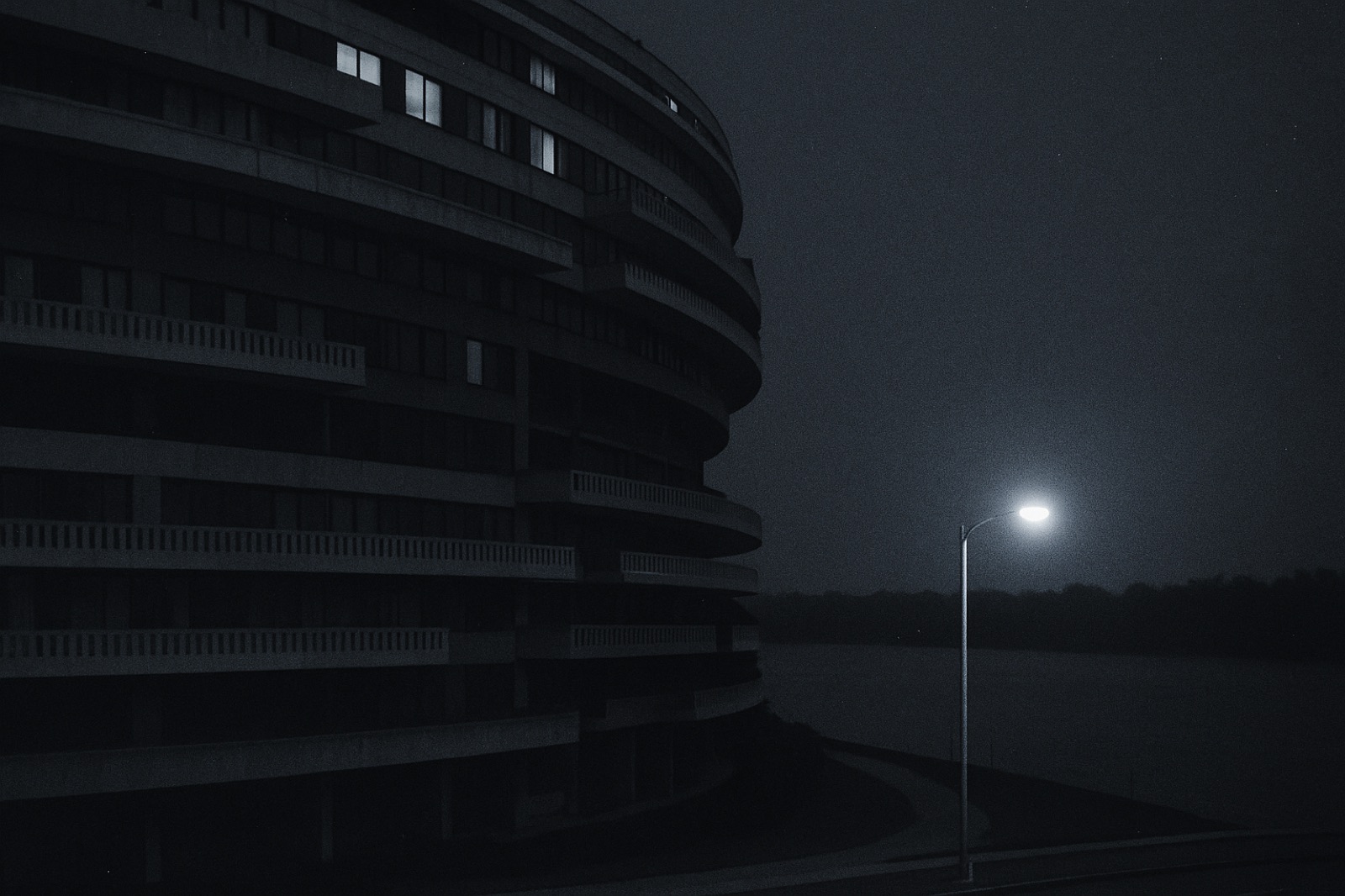
In the early hours of June 17, 1972, five men were arrested inside the Democratic National Committee's offices on the sixth floor of the Watergate complex. Two years and 54 days later, on August 9, 1974, Richard Nixon became the only sitting U.S. president to resign. Between those dates lies the most thoroughly documented presidential cover-up in American history — and the deliberate destruction of careers, evidence, and finally the office itself.