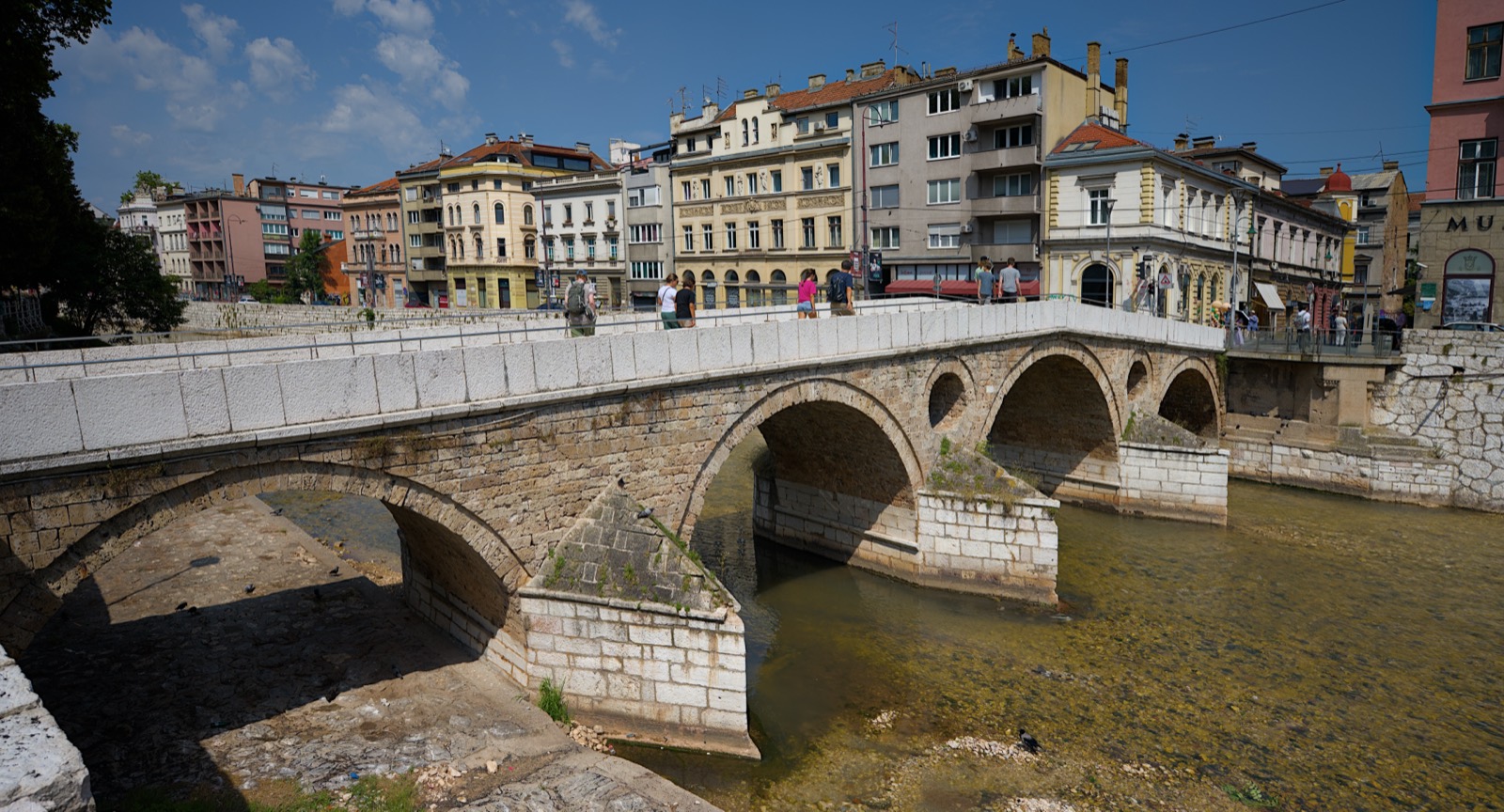
The Latin Bridge in Sarajevo, beside the corner where, on 28 June 1914, Gavrilo Princip shot Archduke Franz Ferdinand and his wife Sophie. The murder here set in motion the First World War. Wikimedia Commons / CC BY-SA 4.0.
The Assassination of Franz Ferdinand: The Shot That Lit the World
Sarajevo, 28 June 1914 — Two pistol shots fired by a nineteen-year-old at a stalled motorcade killed the heir to the Austro-Hungarian throne and his wife, and within six weeks the great powers of Europe were at war. It is the most consequential murder in modern history — and it very nearly did not happen
- Category
- State & Intelligence Operations
- Published
- Length
- 3,550 words · 18 min read
- Author
- The editors
The assassination of Archduke Franz Ferdinand is remembered, when it is remembered at all, as the "cause" of the First World War — a single line in the textbook, the spark that set Europe ablaze. But that shorthand hides two truths worth recovering. The first is that the murder was a human tragedy in its own right: two people, a husband and wife devoted to one another and to their children, shot dead in the street on a summer morning. The second is that the event was extraordinarily contingent — a thing of accidents, wrong turns, and rotten luck, which came within a hair's breadth of never happening at all, and whose monstrous consequences were in no way inevitable from the deed itself. To understand Sarajevo is to hold both of these at once: to see the killing as the small, avoidable, deeply human thing it was, and to grasp how a continent primed for catastrophe converted it into the deadliest war the world had yet seen. The bullets that Gavrilo Princip fired were not, by themselves, powerful enough to destroy four empires. What made them so was everything already in place, waiting for a spark.
This is the story of the shot that lit the world.
The heir and his wife
Franz Ferdinand was not a beloved figure, but he was an important one. As heir presumptive to the aged Emperor Franz Joseph, he stood to inherit the sprawling, fragile multi-ethnic empire of Austria-Hungary, and he had ideas about how to hold it together — notably a vague plan to give its Slavic subjects greater autonomy, a "United States of Greater Austria," which, ironically, made him a threat precisely to the Serbian nationalists who wanted those Slavs for a Greater Serbia. He was stiff, conservative, and not widely liked at court, in part because of his marriage. In 1900 he had married Sophie Chotek, a Czech countess of insufficiently royal rank; the emperor permitted the union only as morganatic, meaning Sophie could not share his rank and their children were barred from the throne, and she was subjected to continual humiliations of protocol. Yet by all accounts the marriage was a genuine love match, and the couple were devoted parents to their three children.
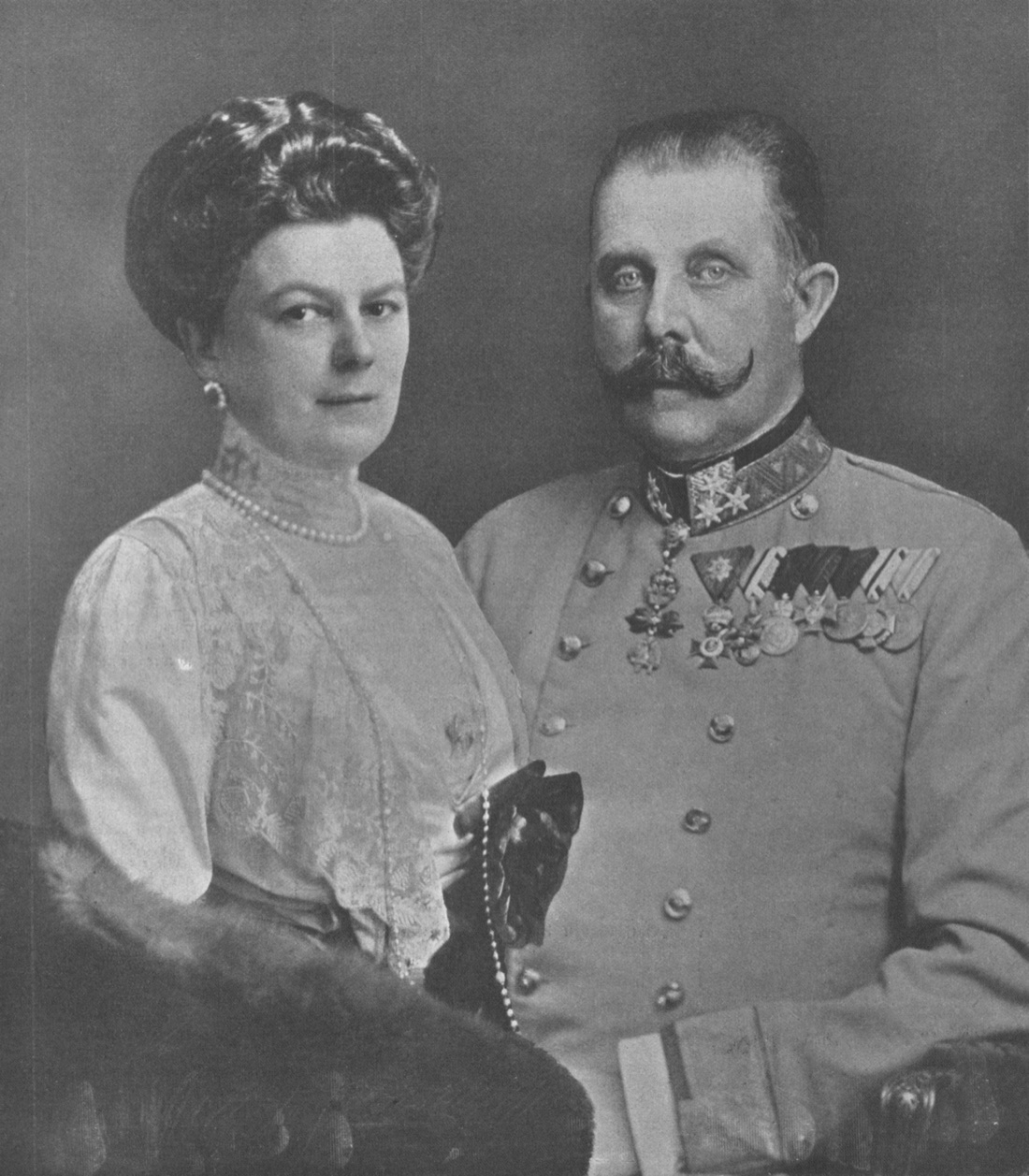
There is a bitter poignancy in the fact that Sarajevo was, for Sophie, a rare occasion of honour. Because the visit was in Franz Ferdinand's military capacity rather than a formal state function, protocol relaxed, and she was permitted to ride beside him in public as his equal — something the court usually denied her. The couple had, in a sense, come to Bosnia to be together in a way they seldom could be at home. That their wedding anniversary fell at the end of June only deepens the tragedy. The two people who died in Sarajevo were not abstractions but a husband and wife on a June morning, and any honest account of the assassination should begin by remembering that.
A powder keg
To understand why young men were waiting to kill the Archduke, one must understand the tinderbox of the Balkans. Bosnia, with its mixed population of Serbs, Croats, and Muslims, had been occupied by Austria-Hungary since 1878 and formally annexed in 1908 — an act that enraged neighbouring Serbia and Serb nationalists, who dreamed of uniting all South Slavs in a single state. Into this volatile situation stepped secret societies. Princip and his comrades belonged to Young Bosnia, a loose movement of idealistic, radical youth; behind them stood the Black Hand, formally "Unification or Death," a conspiratorial network reaching into the Serbian army and intelligence services, led by the shadowy chief of Serbian military intelligence known as Apis. It was the Black Hand that supplied the assassins with pistols, bombs, and cyanide, and smuggled them across the border. The plot was thus not the work of lone fanatics but of an organised conspiracy with roots in the Serbian state's own military — a crucial and genuine fact, and one that would give Austria-Hungary its pretext.
The date itself was a provocation on both sides. The 28th of June was Vidovdan, St. Vitus's Day, the most sacred day in the Serbian national calendar, commemorating the Battle of Kosovo of 1389 — a day of Serbian memory and grievance. For the heir to the occupying empire to parade through Sarajevo on that of all days was, to Serb nationalists, an insult; and for the assassins it lent their act the weight of historical destiny. The stage was set with a terrible symbolic charge: the representative of imperial power riding in state through a restive city, on the very day its people mourned a six-hundred-year-old defeat, watched by young men with bombs and pistols in their pockets.
The first attempt
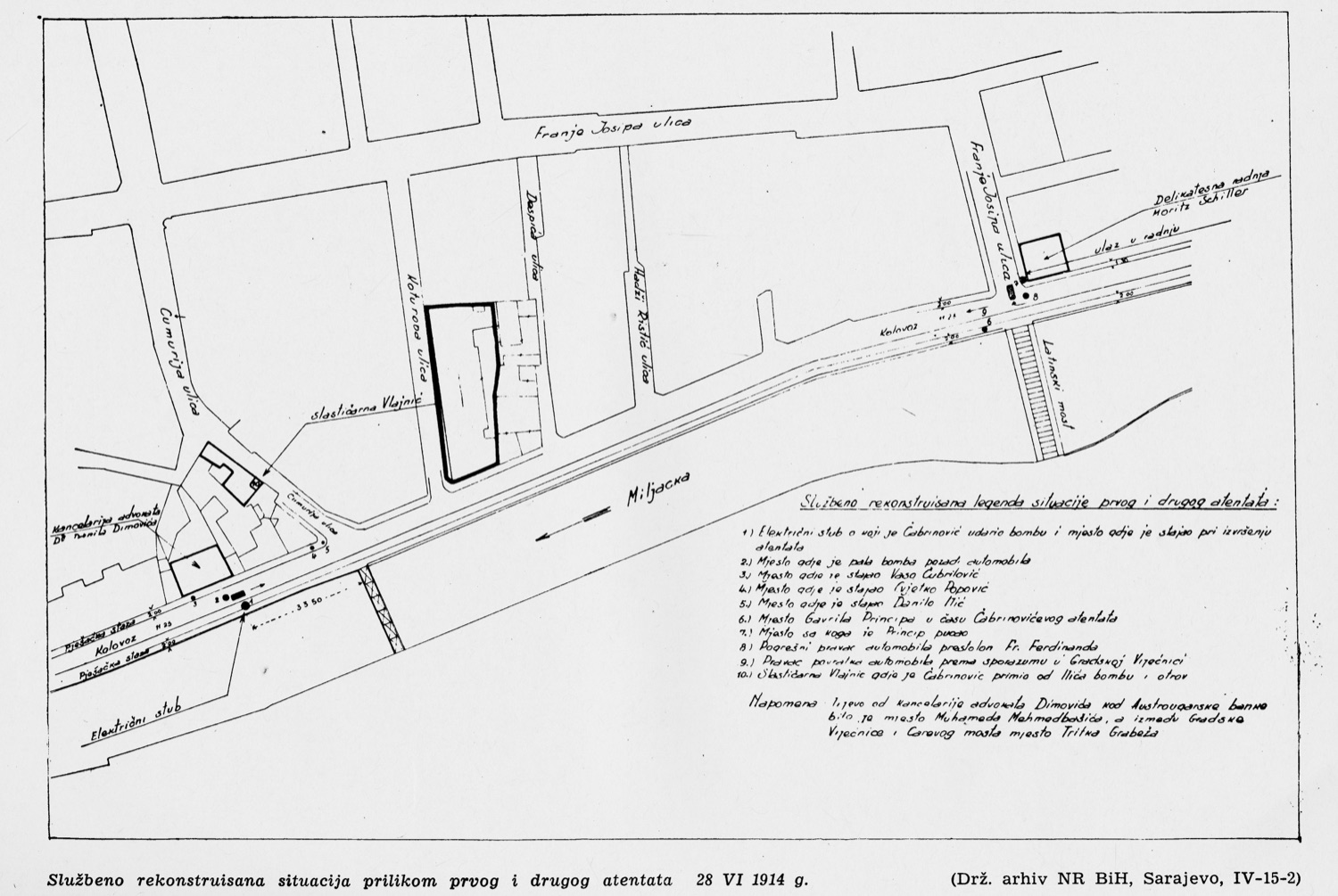
The assassins spaced themselves along the Appel Quay, the broad avenue running beside the Miljacka river, along which the motorcade would pass. The first to act was Nedeljko Čabrinović, who, as the cars approached, hurled a bomb at the Archduke's vehicle. The device bounced off the folded roof or the Archduke's arm and fell into the street, exploding beneath the following car, wounding several officers and bystanders. Čabrinović swallowed his cyanide and leapt into the river, but the poison only sickened him and the river was nearly dry; he was seized. The Archduke's car, meanwhile, accelerated away to safety, and the motorcade sped to the Town Hall, its remaining assassins having failed to act as it flashed past. By every reasonable expectation, the plot had now failed. Franz Ferdinand was alive, the attackers scattered or captured, and the security around the heir about to tighten.
At the Town Hall, a shaken and angry Franz Ferdinand endured a welcoming speech, reportedly interrupting the mayor to protest that he had come to Sarajevo as a guest and been met with bombs. Then came the fateful decision. Rather than flee the city, the Archduke resolved to change his programme and visit the officers wounded in the bombing at the hospital — an act of decency that would cost him his life. A new route was agreed: the motorcade would proceed straight along the Appel Quay, avoiding the narrow streets of the city centre where the earlier attack had occurred. It was a sound plan. Its only flaw was that no one clearly told the drivers.
The wrong turn
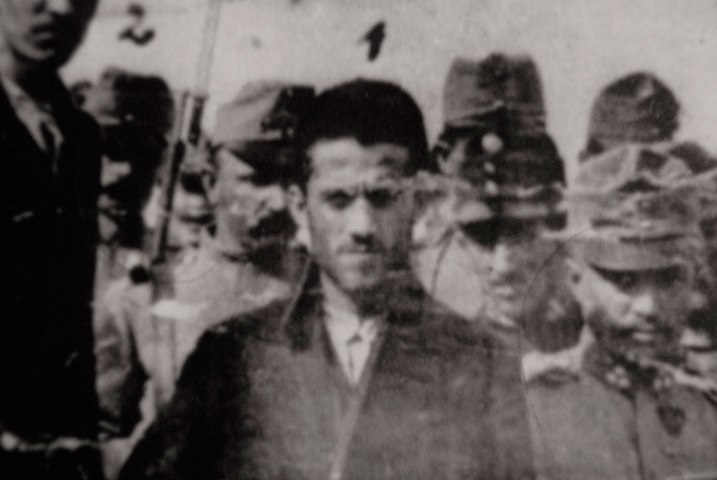
What happened next is one of history's most consequential accidents. The lead driver, following the original itinerary, turned right off the Appel Quay into Franz Josef Street — the wrong way. An official in the car called out that this was a mistake, that they were to continue straight on. The driver of the Archduke's car braked and, to correct the error, began to reverse slowly back toward the quay. And there, on that corner, stood Gavrilo Princip. Having believed the plot a failure after the morning's chaos, he had drifted from his post and was standing near a delicatessen, by the Latin Bridge, when the open car carrying his target rolled to a stop directly in front of him and paused to change gear. The heir to the empire was suddenly, motionlessly, within a few feet of him.
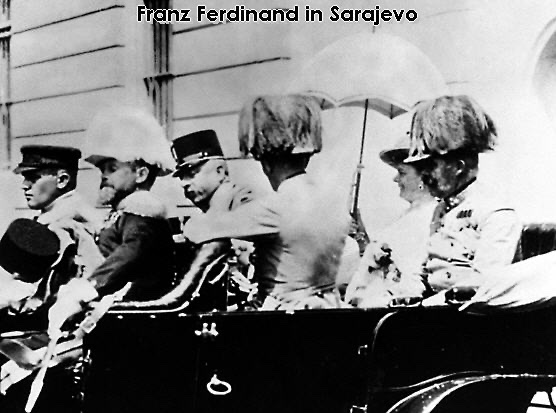
Princip stepped forward, drew his pistol, and fired twice at close range. One bullet struck Franz Ferdinand in the neck, severing the jugular vein; the other hit Sophie in the abdomen. For a moment those in the car did not grasp what had happened; the couple sat upright, and the Archduke, blood at his mouth, was heard to plead with his wife: "Sophie, Sophie, don't die — stay alive for our children." Both were beyond saving. Sophie died almost at once; Franz Ferdinand within minutes, as the car raced to the governor's residence. The heir to Austria-Hungary and his wife were dead, killed not by the elaborate ambush that had failed that morning but by a chance encounter born of a wrong turn.
From a murder to a world war
The murder need not have led to a general war; that it did was the work of the weeks that followed, the so-called July Crisis, in which the statesmen of Europe walked, or stumbled, into catastrophe. Austria-Hungary, humiliated and seeing a chance to crush the Serbian nationalist threat once and for all, resolved on a hard line — but first sought the backing of its ally Germany. Berlin gave it: the famous "blank cheque," a promise of unconditional support that emboldened Vienna to act. On 23 July, Austria-Hungary delivered to Serbia an ultimatum of deliberately humiliating severity, designed to be rejected. Serbia's reply, remarkably conciliatory, accepted almost every demand — but not quite all, and Austria-Hungary, wanting its war, declared it on 28 July, one month to the day after the assassination.
The dominoes fell with terrible speed. Russia, bound by sympathy and alliance to Serbia, began to mobilise; Germany, its war plans built around striking France before Russia could fully deploy, demanded Russia stop, and when it did not, declared war on Russia on 1 August and on France on 3 August. To reach France, German armies drove through neutral Belgium, and this violation brought Britain, guarantor of Belgian neutrality, into the war against Germany on 4 August. In little more than a week, a murder in Sarajevo had become a continental war among all the great powers of Europe — a war that would draw in empires around the globe, last more than four years, and kill on a scale humanity had never witnessed.
Aftermath and legacy
The immediate perpetrators met varied fates. Because Princip was under twenty at the time of the crime, Austro-Hungarian law spared him the death penalty; he was sentenced to twenty years' imprisonment and died of tuberculosis in a prison fortress in 1918, before the war he had helped ignite was even over. Others were hanged or imprisoned. But the true reckoning was on a scale beyond any courtroom. The First World War killed some sixteen to twenty million people and wounded twenty million more; it toppled the Austro-Hungarian, Russian, Ottoman, and German empires; it sowed the economic ruin and bitterness that would feed fascism and a second, even deadlier war; and it remade the map of the world. Franz Ferdinand's three children were orphaned; two of his sons would later be imprisoned by the Nazis in Dachau. The consequences of the two shots on Franz Josef Street radiate through the entire twentieth century.
Historians have argued ever since about how to apportion responsibility, and the debate illuminates the deeper truth of Sarajevo. Some, like A. J. P. Taylor, stressed the rigidity of mobilisation timetables — "war by timetable" — that left statesmen feeling they had no choice; the historian Fritz Fischer controversially emphasised German ambitions for war; more recent work, such as Christopher Clark's study of the men who "sleepwalked" into the abyss, has stressed the miscalculations and shared failures of leaders across Europe. What nearly all agree on is that the assassination was the occasion, not the root, of the war — the trigger pulled on a weapon that many hands had spent years loading. To blame Gavrilo Princip alone for the First World War is to mistake the spark for the explosion.
Gavrilo Princip's own memory remains bitterly contested, and the division says much about the region's unhealed history. To some in Serbia and among Bosnian Serbs, he has been remembered as a hero and a freedom fighter, a young man who struck at an occupying empire in the name of South Slav liberation; statues and plaques have honoured him, and in the Yugoslav era a plaque near the Latin Bridge celebrated the spot. To others — Bosniaks, Croats, and many beyond the Balkans — he is a terrorist whose act unleashed unimaginable slaughter, and the commemorations are an outrage. The centenary of the assassination in 2014 laid these fault lines bare, as rival ceremonies and competing narratives showed that the wounds of Sarajevo, and of the wars that tore Yugoslavia apart in the 1990s, were still raw. That a single act can be sincerely seen, a century later, as both heroism and atrocity is itself a measure of how tangled the moral legacy of Sarajevo remains — and a caution against the comfort of simple villains and heroes.
What it means
The assassination of Franz Ferdinand endures as the supreme example of how the small and the vast are joined in history — how a chain of trivial accidents on a single street corner could open into a catastrophe that consumed a generation. It is a story that resists every tidy moral. The killing was at once a genuine conspiracy and a fluke; a political act by idealistic young men and a squalid double murder; the trigger of a world war and, in itself, nowhere near sufficient to cause one. Its lesson is not that individuals do not matter — Princip's finger on the trigger mattered enormously — but that their acts play out within structures far larger than themselves, and that catastrophe usually requires both: the spark and the powder, the deed and the world prepared to magnify it beyond all reckoning.
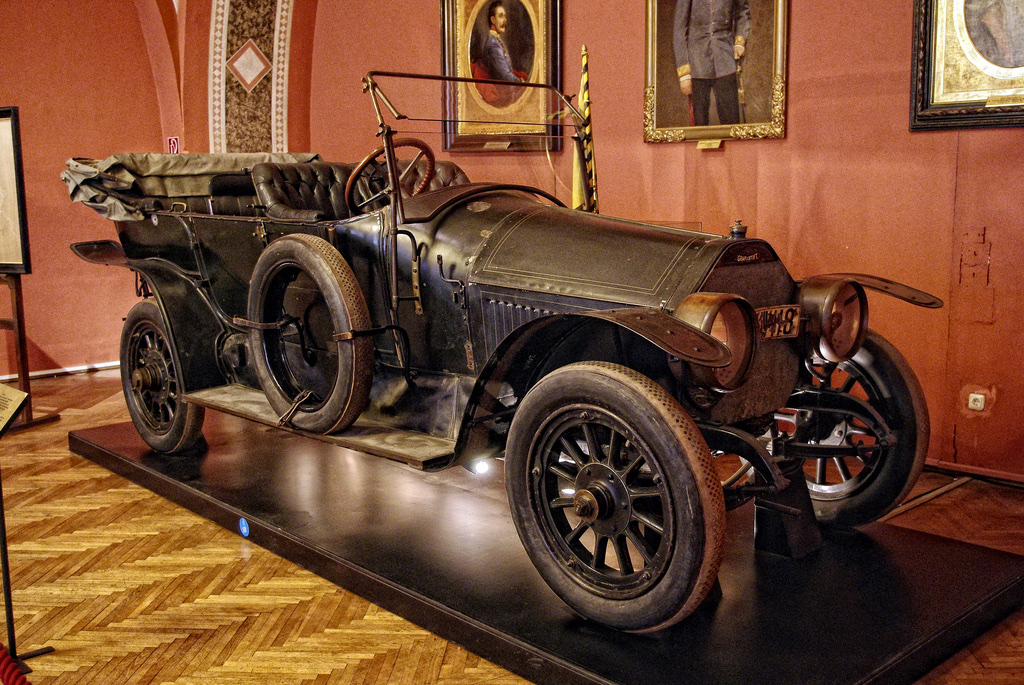
In the end, what happened at Sarajevo is best remembered not as a textbook "cause" but as a warning about contingency and consequence. Two people were murdered on a June morning through a series of mistakes so improbable that a novelist would hesitate to invent them, and because the great powers of Europe had spent decades building the machinery of their own destruction, those two deaths became twenty million. The Latin Bridge still stands in Sarajevo, and the corner beside it is marked, and the car in which the couple died sits in a Vienna museum with the clock, it is said, stopped at the hour of the shots. They are quiet monuments to a loud truth: that history can turn on an instant, that the line between a local tragedy and a global one can be as thin as a driver's wrong turn, and that the deadliest wars are lit by sparks that need never have caught — but for everything we had already made ready to burn.
In the end, the murder at Sarajevo remains the most fateful two seconds of the modern age — a reminder that the largest events can hinge on the smallest chances, and that the peace of the world can be more fragile than anyone believes until it breaks. Franz Ferdinand and Sophie were not great historical forces but a middle-aged couple who loved each other and their children, killed by a teenager's pistol on a street where they had no business stopping. That their deaths became the doorway to the twentieth century's horrors was not written in the deed itself; it was the work of the world that received it — of alliances and armies and prideful, frightened men who chose, step by step, to turn a crime into a cataclysm. The shot that lit the world was fired by one hand, but the fire was laid by many, and it is that hard truth, more than any single villain or victim, that Sarajevo has to teach.
Inspired this / based on it
Christopher Clark
An influential account of the July Crisis and the leaders who stumbled into war.
Barbara Tuchman
The Pulitzer-winning history of the outbreak of the First World War.
Filed under
- #franz-ferdinand-1914
- #sarajevo
- #world-war-one
- #gavrilo-princip
- #assassination
- #austria-hungary
- #black-hand
- #history
- #confirmed
Click any tag for every article carrying it.
Continue reading
The Assassination of Trotsky: Stalin's Ice Axe in Mexico
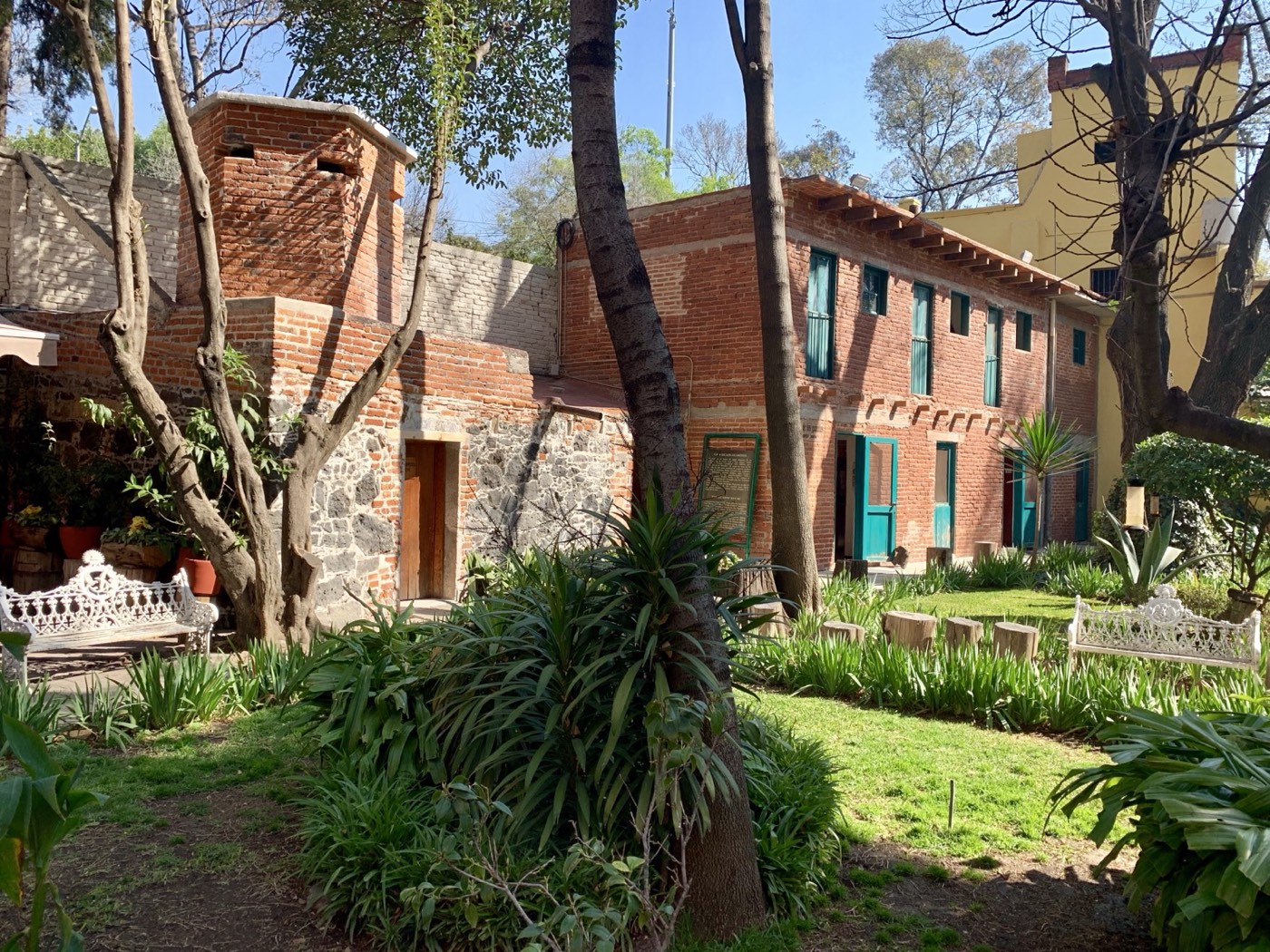
Leon Trotsky had once stood at the very summit of the Russian Revolution — the organiser of the Bolshevik seizure of power in 1917, the founder and commander of the Red Army, the man many expected to succeed Lenin. Instead he lost the struggle for power to Joseph Stalin, and became the most hunted political exile on Earth. Expelled from the Soviet Union in 1929, he wandered from Turkey to France to Norway before Mexico granted him asylum, and everywhere he went the long arm of Stalin's secret police followed. One by one, his collaborators, his secretaries, and his own children were killed or died in suspicious circumstances, until Trotsky, living behind the high walls and watchtowers of a fortress-like house in the Coyoacán district of Mexico City, was almost the last of his circle left alive. On 20 August 1940, a young man he believed to be a devoted follower came to show him an article. As Trotsky bent over his desk to read it, the visitor drew a mountaineer's ice axe from beneath his coat and drove it into the old revolutionary's skull. Trotsky died the next day. The killer was an agent of Stalin's NKVD, and the operation had been approved at the very top of the Soviet state. Unlike so many political murders shrouded in doubt, this one is documented down to its code name. This is the story of how Stalin finally killed Leon Trotsky.
The Building of the Berlin Wall, 1961
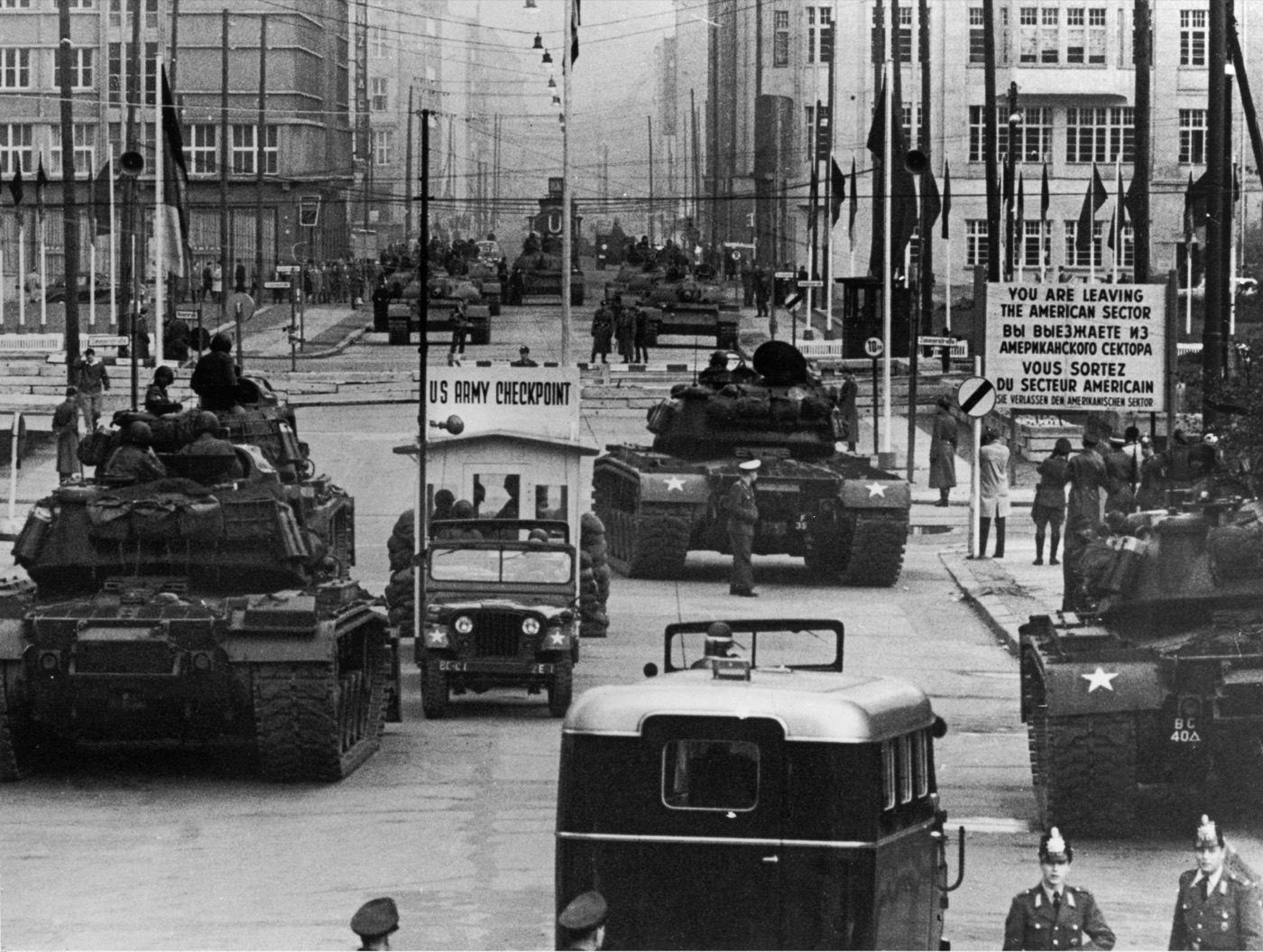
For more than a decade after the Second World War, Berlin was the great open wound of the Cold War and its most dangerous flashpoint. The city lay deep inside communist East Germany, yet it was itself divided into a Soviet-controlled east and a Western-controlled west, and the border that ran through it remained, almost uniquely, open. Through that gap, across the 1950s, millions of East Germans simply walked to freedom — boarding a train or a tram in the east and stepping off in the west, and from there flying out to a new life. They were disproportionately the young, the skilled, the educated: doctors, engineers, teachers, the very people a struggling socialist state could least afford to lose. By 1961 this haemorrhage threatened the survival of East Germany itself, and its leaders, with the backing of the Soviet Union, resolved to stop it the only way they could — by closing the door. In the early hours of Sunday 13 August 1961, East German troops and police moved into position along the sector boundary and began to seal it with barbed wire, tearing the city in two while most of its people slept. Within days the wire was giving way to concrete, and a permanent wall was rising through streets and squares, separating families, neighbours, and workplaces with a suddenness that stunned the world. The Western powers protested furiously but did not intervene, for they understood that the wall, monstrous as it was, did not threaten their own position in West Berlin — and that to challenge it by force risked a war that might go nuclear. The Berlin Wall would stand for twenty-eight years as the physical embodiment of a divided world. This is the story of the weekend it went up.
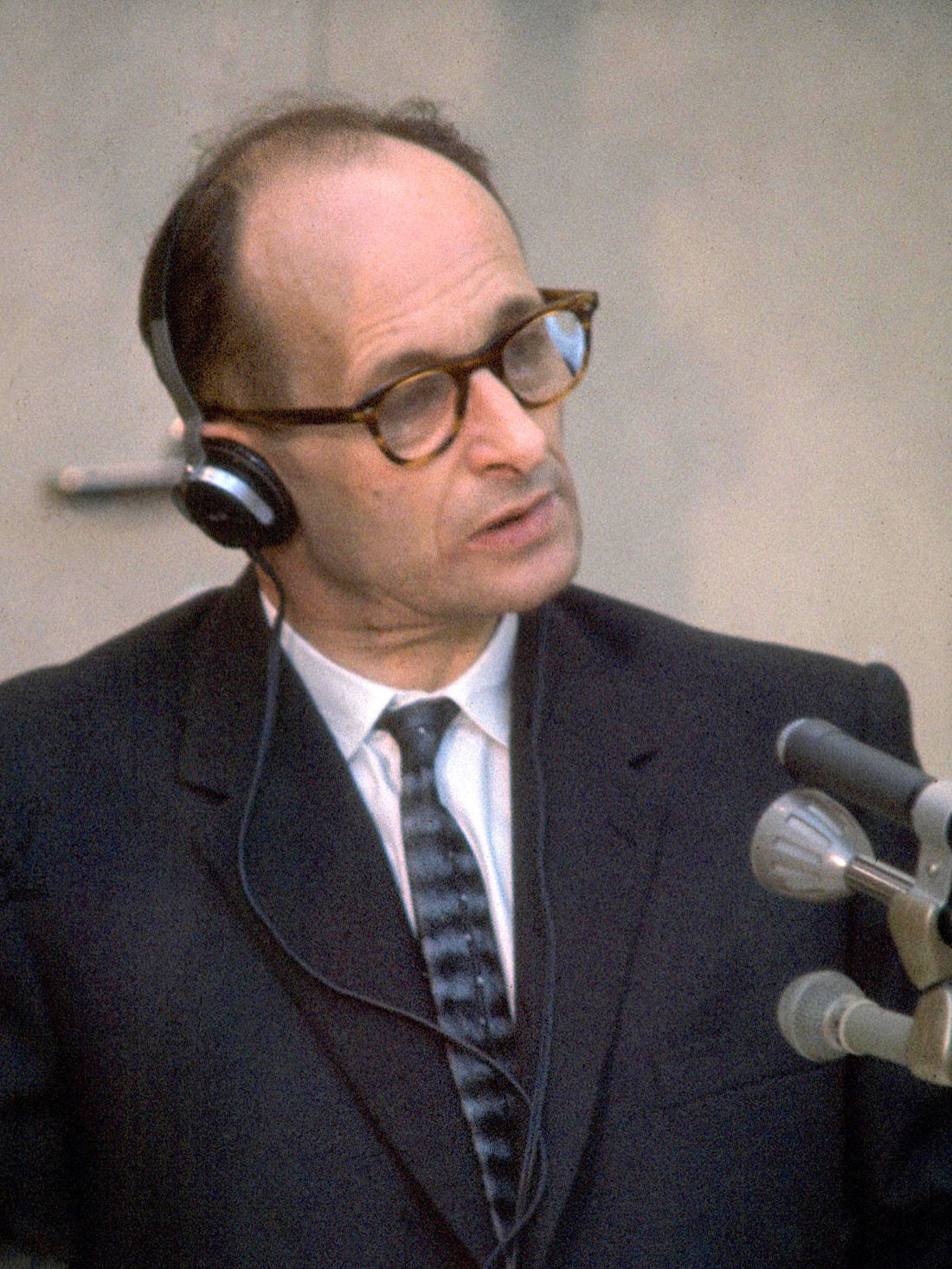
The Capture of Adolf Eichmann
Adolf Eichmann had been one of the principal administrators of the Holocaust — the SS officer who managed the vast machinery of deportation that carried millions of Jews to the ghettos and the killing centres of Nazi-occupied Europe. When the Second World War ended, he slipped away, hid his identity, and eventually escaped along the clandestine routes that carried fugitive Nazis to South America. By the 1950s he was living in Argentina under the name Ricardo Klement, an unremarkable factory worker in the suburbs of Buenos Aires, his family around him, his past apparently buried. But he had not been forgotten. A chance tip, passed through a courageous West German prosecutor who did not trust his own country's institutions to act, reached the intelligence service of the young state of Israel. In 1960 a small team of Israeli operatives travelled secretly to Argentina, confirmed that the quiet Herr Klement was indeed Eichmann, and on the evening of 11 May seized him as he walked home from the bus near his house on Garibaldi Street. They held him in a safe house, secured his signature on a statement agreeing to be tried, and then — because Argentina would never have handed him over — smuggled him out of the country disguised as a member of an airline crew, aboard a flight that had brought an Israeli delegation to Buenos Aires. Days later, Israel's prime minister announced to a stunned parliament that Eichmann was in Israeli hands and would face justice. The trial that followed, in Jerusalem in 1961, became one of the defining events in the world's reckoning with the Holocaust. This is the story of how he was found, taken, and brought to account.