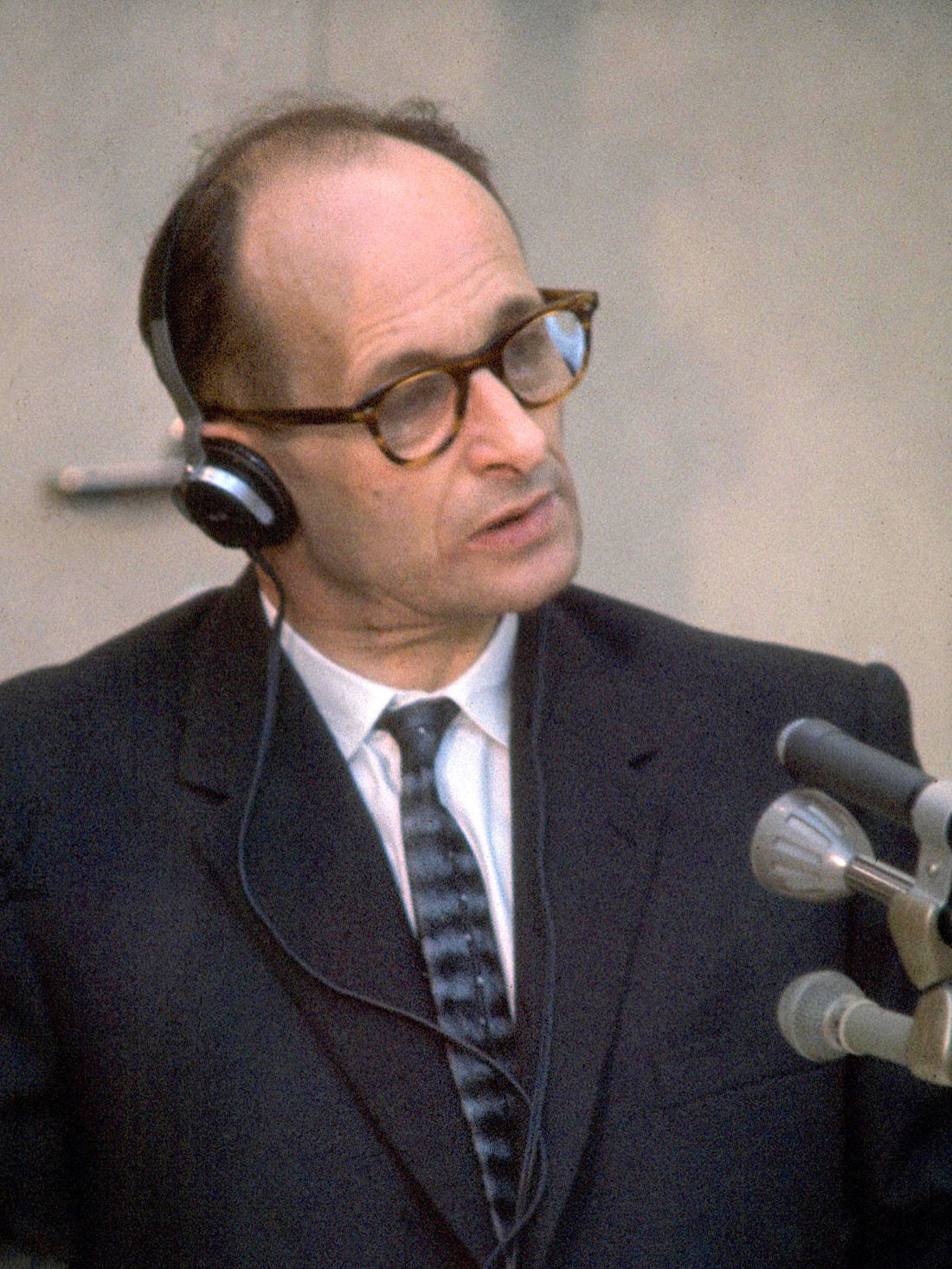
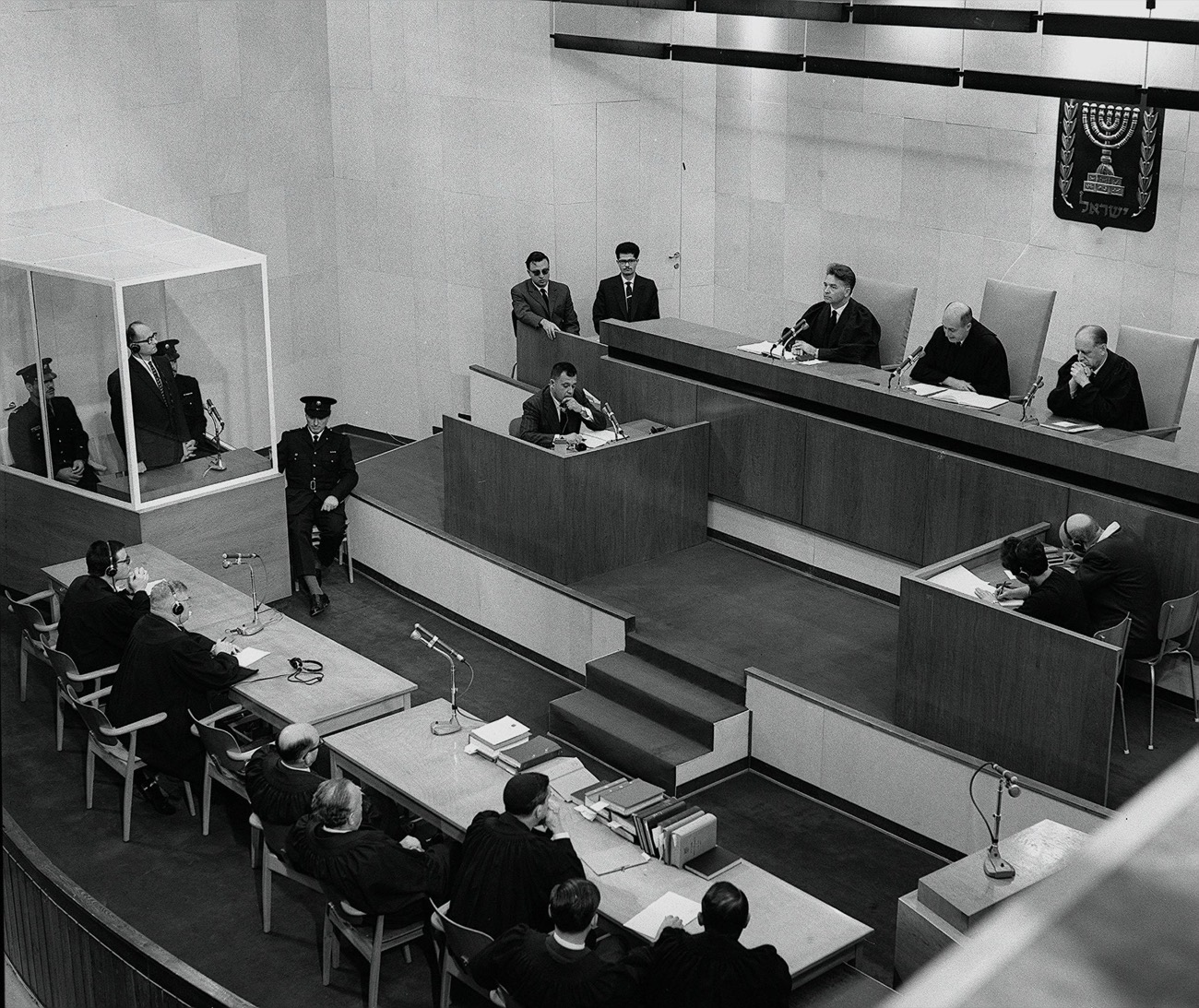
Adolf Eichmann in the bulletproof glass booth at his trial in Jerusalem, 1961. The man who had organised the deportation of millions now faced his accusers and the testimony of survivors, in a courtroom that became a reckoning with the Holocaust itself. Wikimedia Commons / Israel Government Press Office, Public domain.
The Capture of Adolf Eichmann
Argentina and Israel, 1960 — The SS officer who organised the transport of millions to the death camps had vanished into a quiet life in Buenos Aires under a false name. A team of Israeli agents found him, seized him on a darkened street, and smuggled him out of the country to stand trial — a reckoning that reshaped how the world remembered the Holocaust
- Category
- State & Intelligence Operations
- Published
- Length
- 3,850 words · 20 min read
- Author
- The editors
The capture of Adolf Eichmann is, on its surface, one of the great operational adventures of twentieth-century intelligence — a daring secret mission across the world to seize a fugitive and bring him to justice. But it is more than an adventure story, and to treat it only as one would be to miss its weight. Eichmann was not a soldier or a spy but an organiser of genocide, and his capture and trial were not merely an intelligence triumph but a moral and historical event: the moment when the survivors of the Holocaust, through the machinery of a court, compelled one of its architects to sit and hear what had been done, and when a watching world was made to reckon with it anew. The operation matters because of the man, and the man matters because of the crime.
This is the story of the finding, the taking, and the judgement of Adolf Eichmann.
The fugitive
To understand the operation, one must first understand the man it targeted. Adolf Eichmann had risen within the SS as a specialist in Jewish affairs, and during the war he headed the department responsible for the logistics of the "Final Solution" — the organised deportation of Europe's Jews to the killing centres of the east. He did not, for the most part, kill with his own hands; his weapon was the timetable, the transport order, the bureaucratic machinery that moved human beings by the millions to their deaths with grim efficiency. He was, in the words later used at his trial, a manager of genocide.
When Germany collapsed in 1945, Eichmann was captured by American forces but concealed his true identity and escaped from custody. He spent several years in hiding in Germany, and then, around 1950, he made his way along one of the so-called "ratlines" — the clandestine escape networks that funnelled fugitive Nazis out of Europe — to Argentina, a country whose government under Juan Perón was notoriously willing to receive them. There, under the name Ricardo Klement, he eventually brought over his wife and sons and settled into an obscure life, working at one point at a Mercedes-Benz plant and living, by the late 1950s, in a modest house he had built on Garibaldi Street in a suburb of Buenos Aires.
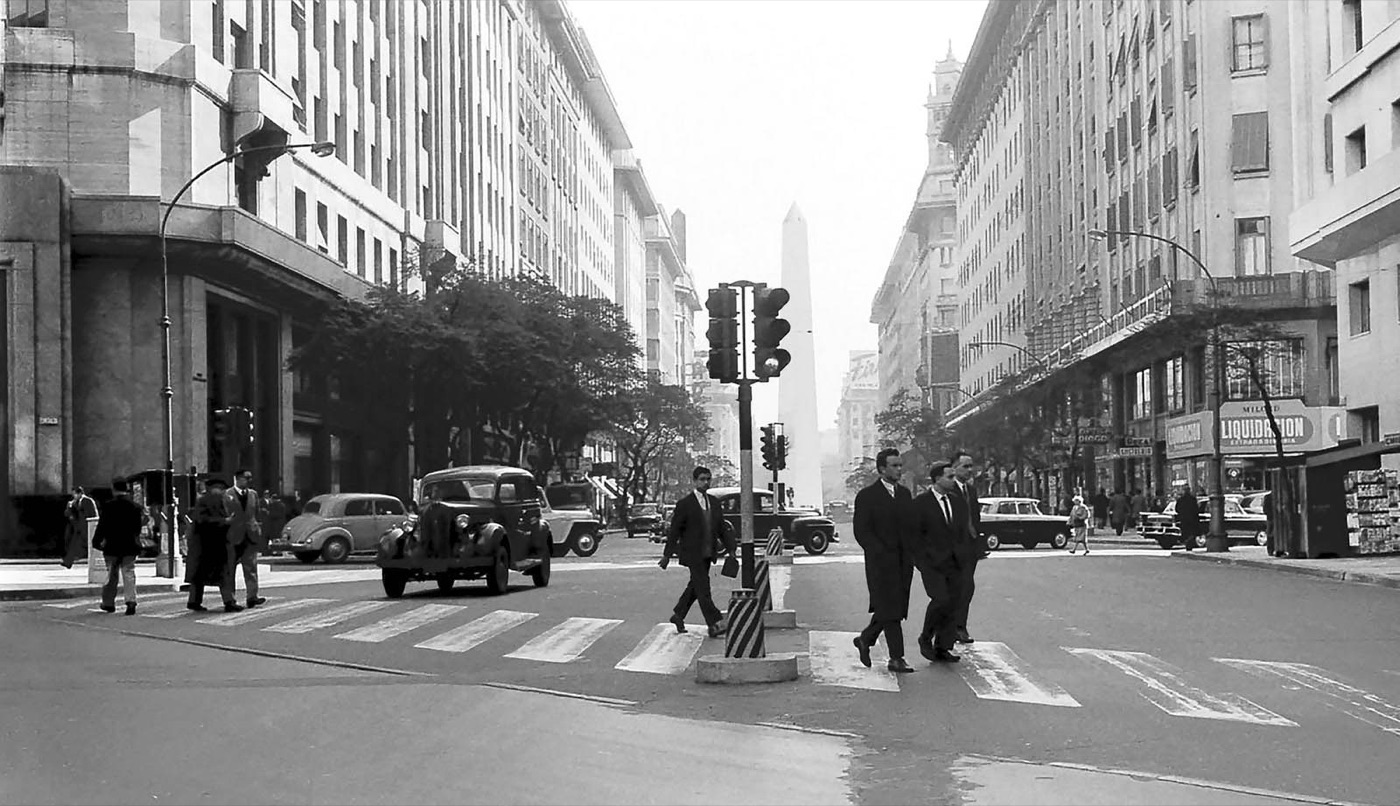
The escape that carried Eichmann to safety was not a lone fugitive's improvisation but the product of an organised system. The ratlines that spirited Nazis out of Europe relied on a network of sympathisers, forged or complaisant documents, and transit points, and they delivered their charges to countries willing to look the other way. Argentina under Juan Perón was the foremost of these, its government actively recruiting German technical expertise and indifferent to the wartime records of those who arrived. Eichmann travelled under false papers, reinvented himself as Ricardo Klement, and joined a sizeable community of former Nazis who had found refuge in the same corner of South America. That such a system existed, and functioned for years, is part of the scandal the Eichmann case exposed: the architect of the deportations had escaped not by genius but because too many institutions, in Europe and the Americas alike, lacked the will to stop him.
For years he was, in effect, safe. The chaos of the postwar world, the onset of the Cold War, and the limited will of many governments to pursue Nazi fugitives meant that men like Eichmann could vanish into new lives. Nazi-hunters such as Simon Wiesenthal kept the search alive, but Eichmann's precise whereabouts remained unknown, and the trail had largely gone cold. What undid him in the end was not a vast manhunt but a small, human coincidence.
The tip
In the mid-1950s, a half-Jewish German émigré named Lothar Hermann, who had himself suffered under the Nazis and was living in Argentina, found that his daughter Sylvia had befriended a young man named Klaus Eichmann. The young man spoke, with startling openness, of his father's Nazi past and wartime role — apparently unaware, or unconcerned, that he was talking to people for whom this was no idle matter. Hermann came to suspect that the father of his daughter's acquaintance was the notorious Adolf Eichmann, and he began, cautiously, to pursue the lead.
Hermann's information eventually reached Fritz Bauer, the attorney general of the German state of Hesse. Bauer was himself Jewish, had fled Nazi Germany, and had returned after the war determined to force his country to confront its crimes — a lonely mission in a West German legal establishment still riddled with former Nazis. It was that very distrust that shaped what happened next. Bauer feared that if he handed the Eichmann lead to the German authorities, it would be leaked, bungled, or buried, and Eichmann warned off. So he took the extraordinary step of going around his own government and passing the information secretly to Israel.
Operation in Buenos Aires
Israel took the lead seriously, but with caution; a false move could send Eichmann fleeing again. The Mossad, Israel's intelligence service, mounted an operation to verify the lead and, if it proved true, to bring Eichmann to Israel. Agents travelled secretly to Buenos Aires and placed the house on Garibaldi Street under surveillance. The decisive confirmation was almost mundane: on a particular day in 1960, agents observed "Ricardo Klement" return home and present his wife with flowers — and the date matched Eichmann's wedding anniversary. The quiet factory worker was the architect of deportations.
The team that assembled to take him was small and composed of experienced operatives, several of them themselves survivors or relatives of victims of the Nazi genocide, for whom the mission carried an intense personal weight. They planned to seize Eichmann near his home, hold him in a rented safe house, and then face the central problem: how to get him out of Argentina. Extradition was hopeless — Argentina had no will to surrender him, and a public legal process would simply allow him to disappear. The decision was made to remove him secretly.
On the evening of 11 May 1960, as Eichmann walked from the bus stop toward his house, the Israeli team moved. Agents seized him, bundled him into a car, and drove him to the safe house, where they confirmed his identity beyond doubt — he eventually acknowledged who he was — and held him under guard. Over the following days they persuaded or pressured him to sign a statement declaring that he agreed, of his own free will, to be tried by a court in Israel. It was a legal formality of dubious weight given the circumstances, but it mattered to the Israelis, who wished to frame what followed as a process of law rather than mere abduction.
The flight out
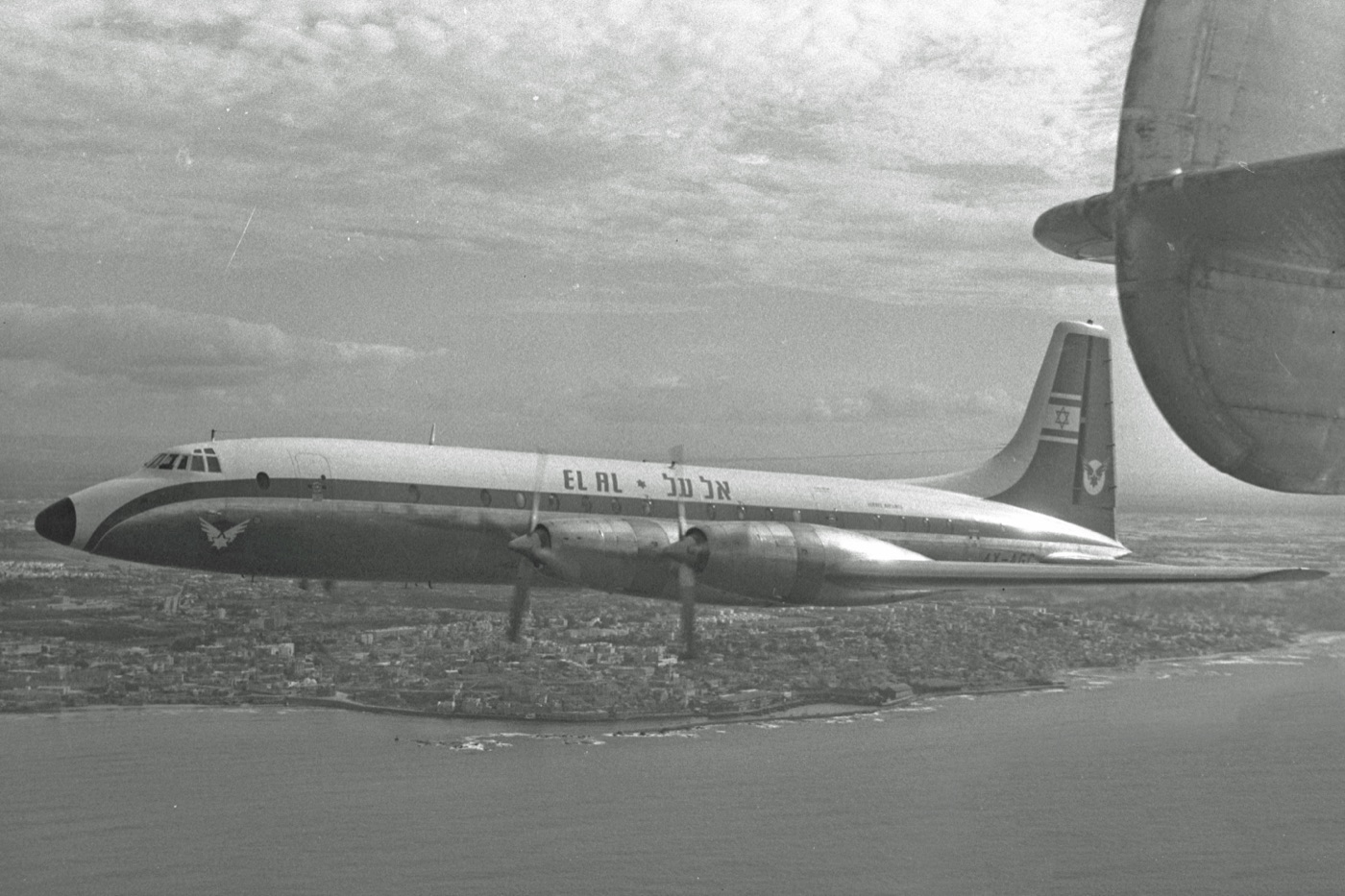
The means of escape was as audacious as the capture. Israel's national airline, El Al, had been chartered to fly an official Israeli delegation to Buenos Aires for the celebrations of Argentina's 150th anniversary of independence — a rare and convenient official Israeli presence in the country. The capture team arranged to smuggle Eichmann aboard the return flight. On 21 May 1960, Eichmann was sedated, dressed in an El Al uniform, and presented as a member of the flight crew who had fallen ill — a ruse that carried him through the airport and onto the aircraft, a Bristol Britannia, which then flew him out of Argentina and, ultimately, to Israel.
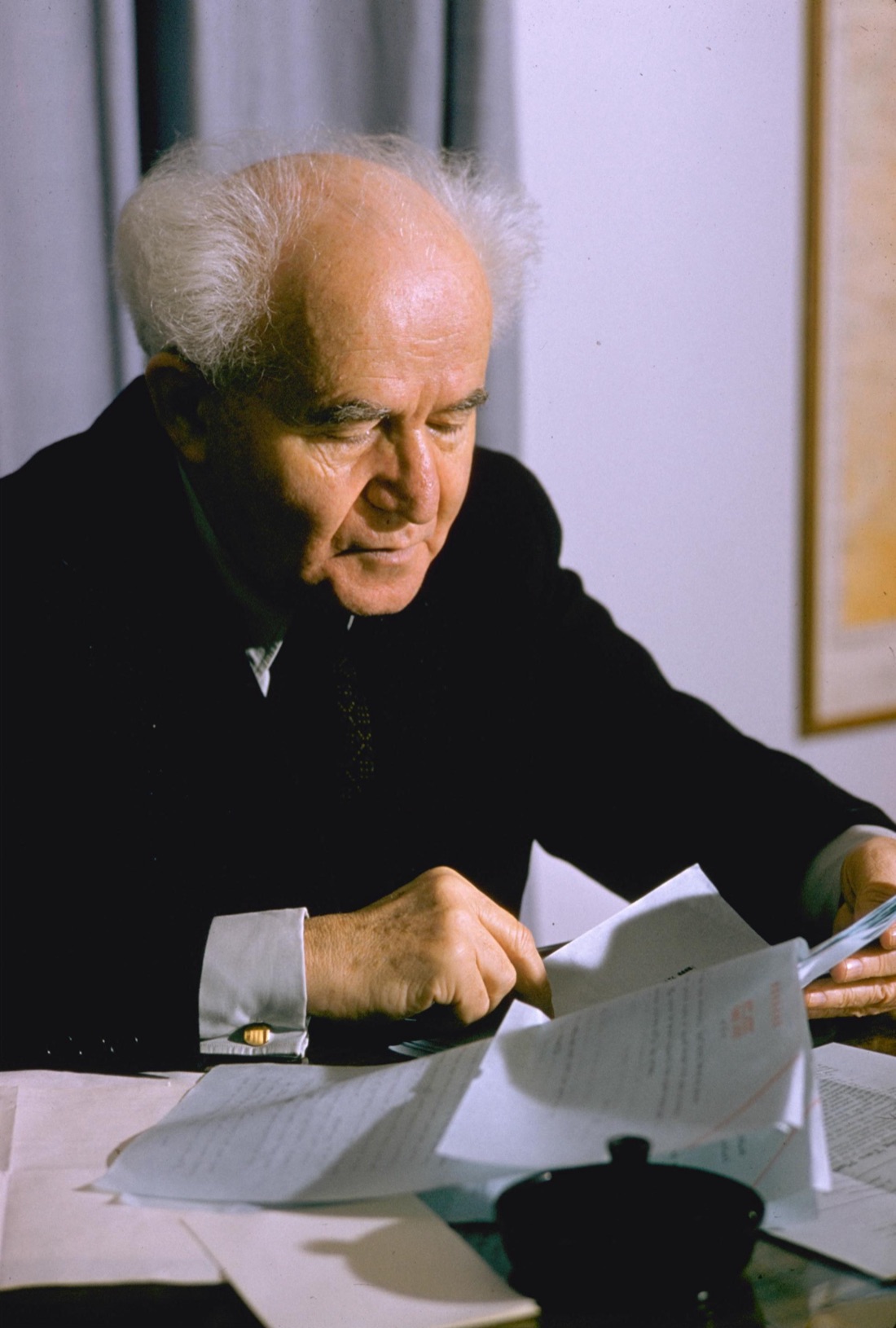
On 23 May 1960, Prime Minister David Ben-Gurion rose in the Knesset, Israel's parliament, and made the announcement that electrified the world: Adolf Eichmann, one of the great criminals of the Nazi regime, was in Israel and would stand trial. The news was a sensation, but it also detonated a diplomatic crisis. Argentina was outraged that foreign agents had seized a man on its soil and spirited him abroad in violation of its sovereignty, and it protested vigorously, bringing the matter to the United Nations Security Council, which passed a resolution acknowledging the breach. In time, Israel and Argentina issued a joint statement to defuse the dispute, and the storm passed — but the tension between the demands of justice and the norms of sovereignty would remain one of the case's enduring controversies.
The trial in Jerusalem
The trial opened in Jerusalem in April 1961, in a converted theatre, and it was conceived from the outset as something more than the prosecution of one man. Ben-Gurion intended it as a means of placing the entire history of the Holocaust on the record, before the eyes of the world and especially of a younger generation, Israeli and foreign, that had not lived through it. The prosecutor, Gideon Hausner, built his case not only on documents but on the voices of those who had survived: witness after witness took the stand to describe what had been done to them, to their families, and to their communities. For many it was the first time such testimony had been heard on so public a stage, and it transformed the trial into a vast act of collective remembrance.
Eichmann himself sat throughout in a booth of bulletproof glass, built to protect him from any attempt at vengeance — an image that became iconic. His defence was the one that would echo through the postwar decades: that he had been a small functionary, a cog in a great machine, who had merely followed orders and administered policy made by others. He presented himself not as a fanatical murderer but as an obedient official, which raised, in the starkest possible form, the question of how to judge the bureaucratic perpetrator who organises atrocity from behind a desk.
Among those watching was the political philosopher Hannah Arendt, who covered the trial for the New Yorker and developed from it one of the most debated ideas of the century. In Eichmann she saw not a sadistic monster but a disturbingly ordinary man, a careerist of limited imagination who had committed monstrous acts less out of demonic hatred than out of thoughtlessness, ambition, and a failure to think about the meaning of what he did. She called it "the banality of evil," and the phrase — and her portrait of Eichmann — provoked fierce controversy that continues still, with critics arguing that she underestimated the depth of his anti-Semitism and his awareness of his crimes. Whatever its merits as a description of Eichmann specifically, the idea posed a permanent and uncomfortable question about how ordinary people become instruments of mass murder.
Judgement and execution
The court rejected Eichmann's defence. It found that he had not been a mere passive instrument but an active and knowing participant in the machinery of genocide, who had carried out his role with initiative and zeal. In December 1961 he was convicted on the principal counts against him, including crimes against the Jewish people and crimes against humanity, and sentenced to death. His appeal to Israel's Supreme Court was rejected, as was a plea for clemency. On the night of 31 May into 1 June 1962, Adolf Eichmann was hanged. His body was cremated and the ashes scattered at sea, beyond Israeli territorial waters, so that no grave and no nation would hold his remains. It was the only time the State of Israel has ever carried out a judicial execution.
The trial's reach was amplified by a deliberate decision to let the world watch. Proceedings were recorded and televised, and footage was distributed internationally, carrying the survivors' testimony far beyond the Jerusalem courtroom into homes around the globe. For a generation that had come of age after the war, much of it only dimly aware of the scale of what had happened, the broadcasts were a revelation. The effect was lasting: the trial is widely credited with reshaping public consciousness of the Holocaust, shifting it from a subject discussed in generalities to one understood through the concrete, unbearable particulars of individual experience. It helped inaugurate an era in which survivor testimony became central to historical memory, and in which the pursuit of Nazi war criminals gained new urgency and legitimacy.
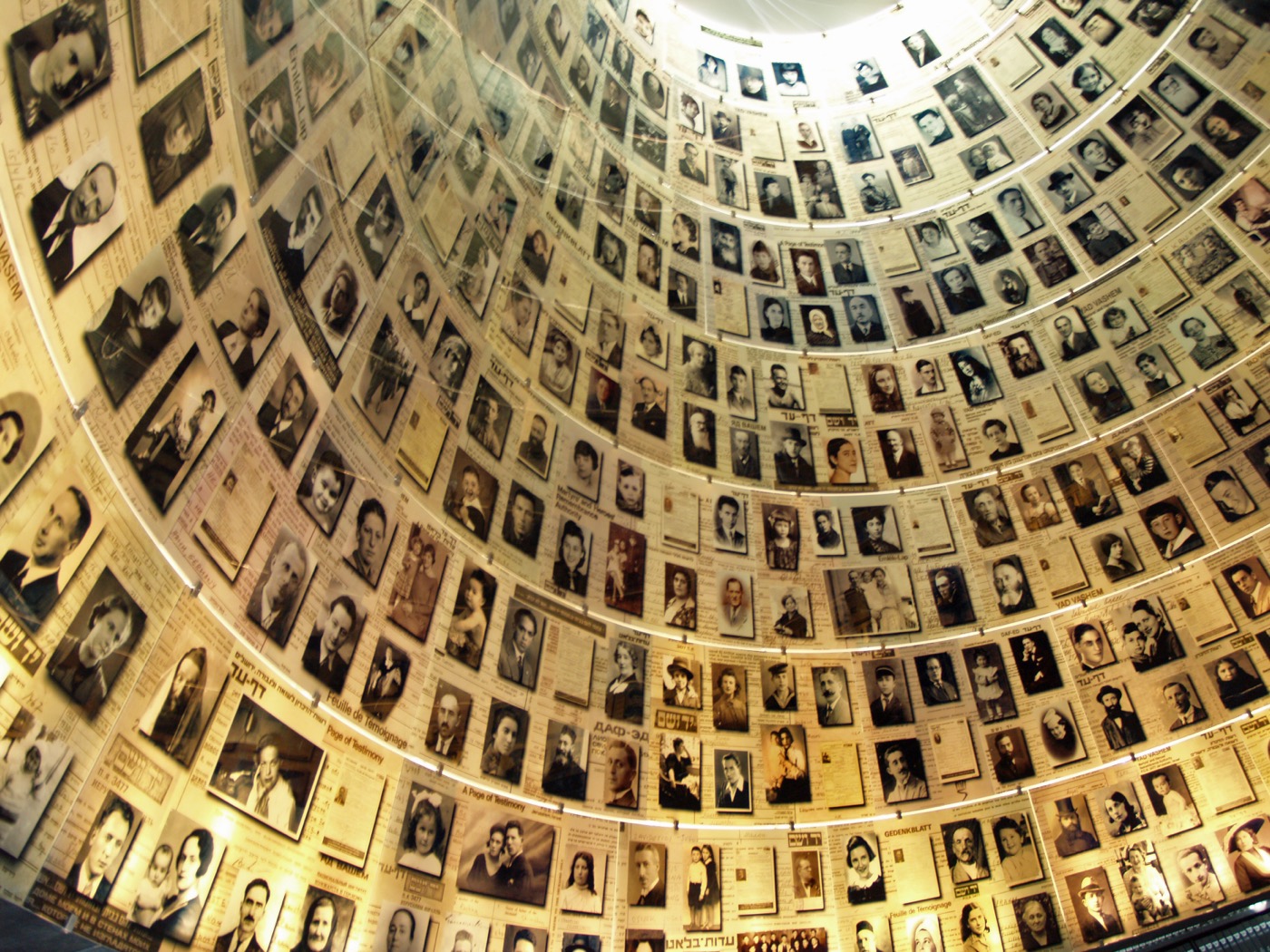
The meaning of what had been done extended far beyond the fate of one man. The trial had brought the Holocaust into the centre of public consciousness in a new way, anchored not in abstract numbers but in the testimony of those who had lived it. For survivors, it was a measure of acknowledgement and justice long denied; for the wider world, it was an education and a reckoning; and for the project of international law, it became a reference point in the long, unfinished effort to hold the perpetrators of mass atrocity to account.
The reckoning
In the end, the capture of Adolf Eichmann endures as a story in which daring and justice met. The operation itself — the patient surveillance, the seizure on the darkened street, the audacious flight out disguised as an airline crew — would be remarkable in any case. But its true significance lies in what it delivered: not vengeance in the dark, but a man set before a court, compelled to hear the witnesses of his crimes, and judged according to law. The survivors who testified in Jerusalem gave the dead a voice they had been denied, and the world was made to listen. Eichmann had tried to disappear into an ordinary life, to become again the anonymous functionary he had always claimed to be. The people who hunted him refused to let him, and in refusing they affirmed a principle that outlives him: that no distance of years or miles, and no plea of mere obedience, places the organiser of genocide beyond the reach of justice.
Inspired this / based on it
Hannah Arendt
Viking. Arendt's controversial and influential account of the trial.
Isser Harel
The Mossad spymaster's account of the capture operation.
Chris Weitz
Dramatization of the Mossad operation, starring Oscar Isaac and Ben Kingsley.
Filed under
- #eichmann-capture
- #adolf-eichmann
- #mossad
- #holocaust
- #nazi-hunting
- #israel
- #argentina
- #ben-gurion
- #1960s
- #confirmed
Click any tag for every article carrying it.
Continue reading
The Mitrokhin Archive: The KGB Clerk Who Stole the KGB's Secrets
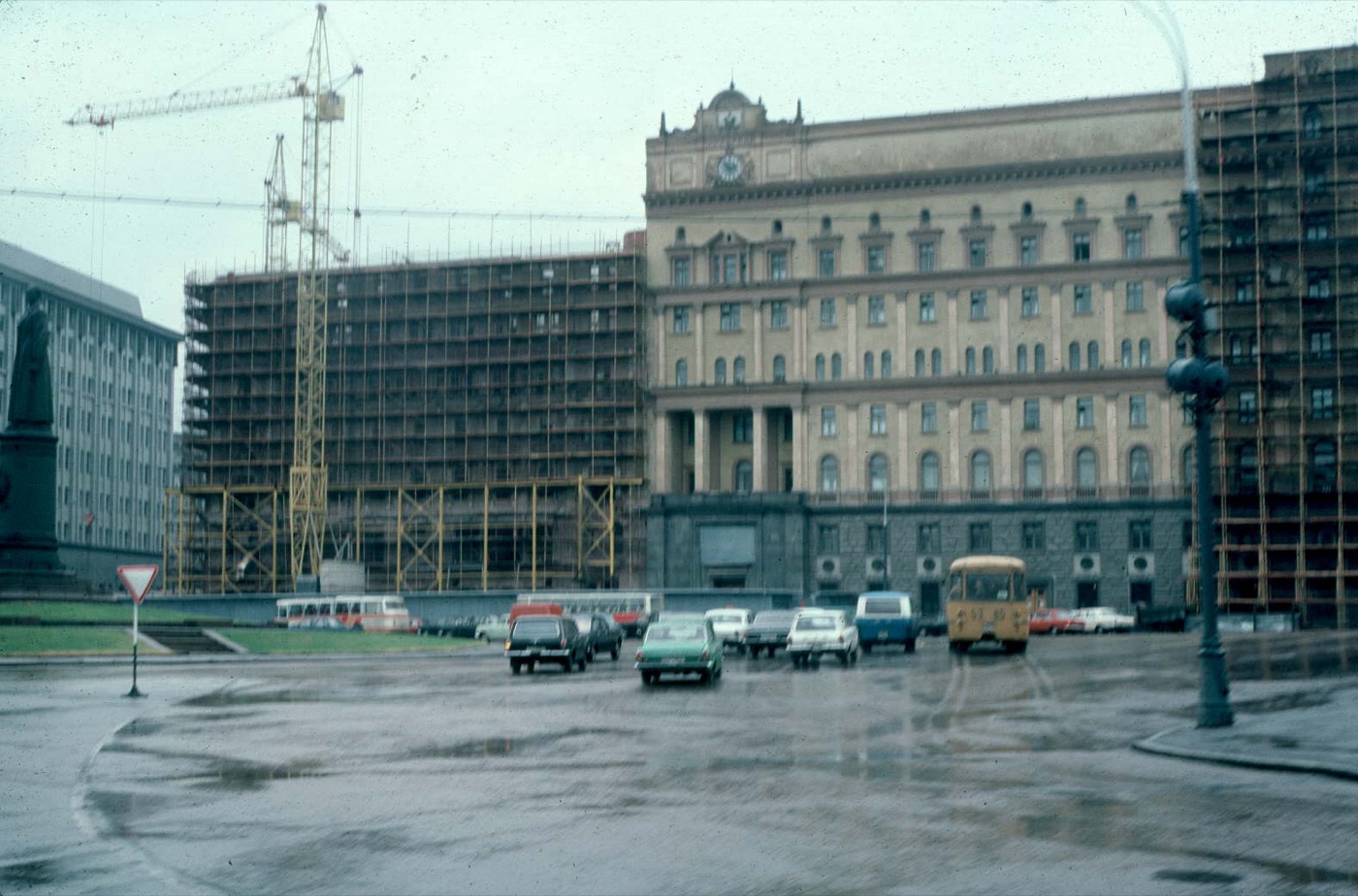
Vasili Mitrokhin was not a spy in the usual sense, and that is exactly what made him so dangerous to the organisation he served. He was a KGB officer who, after years of disillusionment, had been moved sideways into the archives of the First Chief Directorate — the service's foreign-intelligence arm — and given responsibility for supervising the transfer of its entire secret file collection to a new headquarters. It was the most sensitive paper in the Soviet Union: decades of records on agents, operations, and informants spread across the West and the wider world. For roughly twelve years, from 1972 until his retirement in 1984, Mitrokhin used his extraordinary access to commit one of the most audacious acts of intelligence defiance in history. Alone, by hand, he copied and summarised thousands of the KGB's most secret documents, scribbling notes on scraps of paper that he hid in his shoes and clothing and carried out of headquarters past the guards, day after day, year after year. At home he transcribed them, and then he hid the growing archive — sealed in milk churns and tin containers and buried beneath the floor and in the garden of his dacha outside Moscow. He could not get it to the West while the Soviet Union stood. But when the USSR collapsed, in 1992, Mitrokhin travelled to the newly independent Baltic states, walked into a Western embassy, and offered his life's secret work. British intelligence grasped what he was holding, spirited him, his family, and six cases of material out of Russia, and acquired in a single stroke the most comprehensive record of Soviet foreign intelligence operations ever to reach the West. This is the story of the quiet archivist who stole the KGB's own history.
The Cambridge Five and the Spies at the Heart of British Intelligence
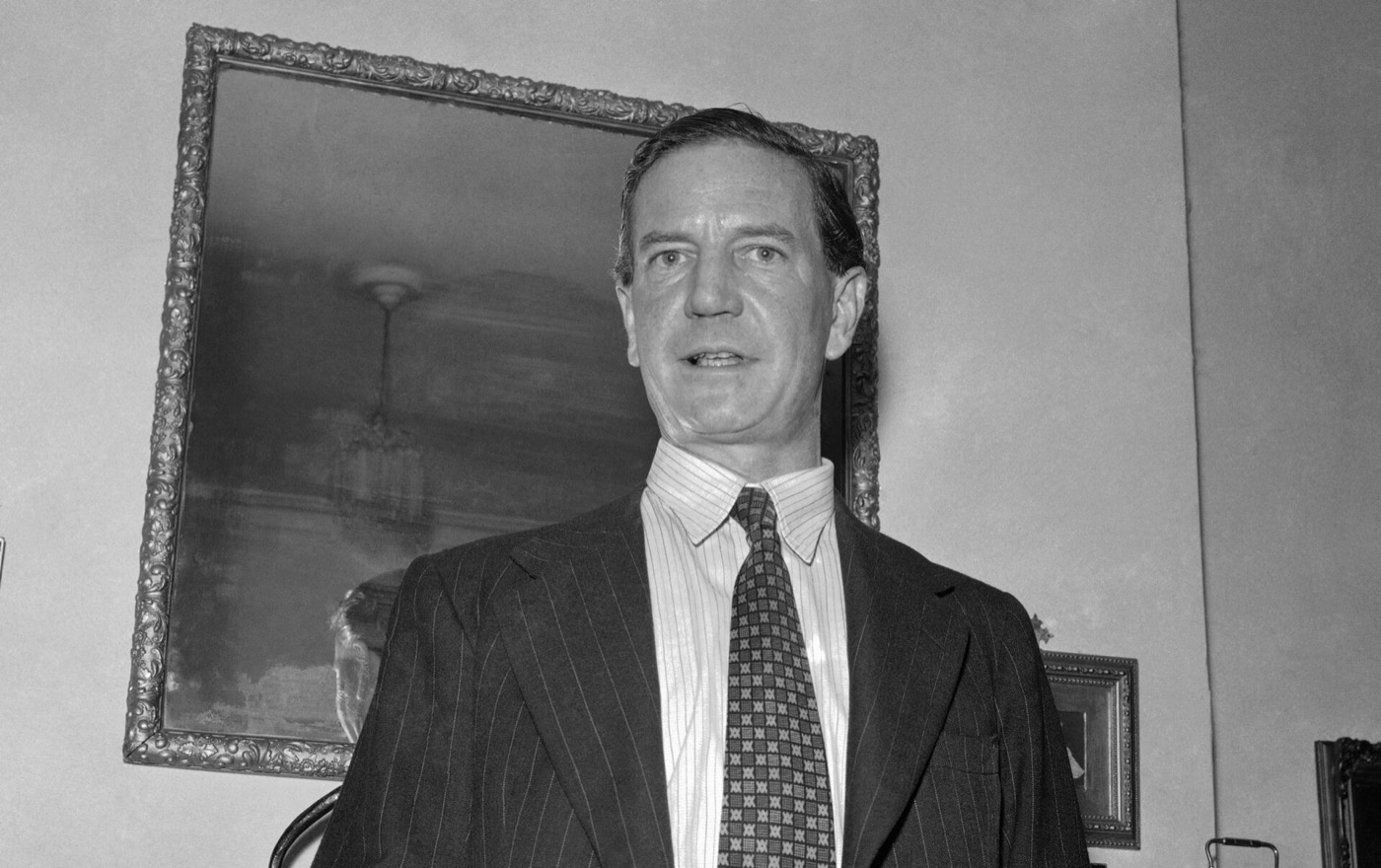
In the 1930s, Soviet intelligence undertook one of the most ambitious recruitment operations in the history of espionage: rather than buying secrets from disgruntled clerks, it would cultivate brilliant young Britons at the start of their careers, men of the right schools and the right accents who could be guided, over decades, into the very heart of the British establishment. The most famous of these recruits were five Cambridge University men — Kim Philby, Guy Burgess, Donald Maclean, Anthony Blunt, and John Cairncross — who became known as the Cambridge Five. They were not desperate or marginal figures but charming, talented members of the elite, and that was precisely the point. Over the following decades they penetrated the Foreign Office, the security service MI5, the secret intelligence service MI6, and the wartime codebreaking establishment, passing a torrent of British and American secrets to Moscow. Philby rose so high within MI6 that he was considered a future chief of the service — while serving the entire time as a Soviet agent, even as he was nominally in charge of countering the Soviet threat. The ring began to unravel in 1951, when Burgess and Maclean vanished to Moscow one step ahead of exposure; Philby fell under suspicion but was protected by an establishment unable to believe one of its own could be a traitor, and he did not flee to Moscow until 1963. Blunt, by then a knighted royal art adviser, secretly confessed but was not publicly named until 1979. The damage they did — to operations, to agents, to trust between Britain and its allies — was immense and, in places, fatal. This is the story of how five men of the establishment betrayed it from within, and how the establishment's own blindness let them.
Operation Condor
On November 25, 1975, in the headquarters of Chile's National Intelligence Directorate (DINA) in Santiago, the intelligence chiefs of six South American military dictatorships — Argentina, Bolivia, Brazil, Chile, Paraguay, and Uruguay — signed the founding charter of what they named *Operación Cóndor*. The agreement was sponsored by DINA's director, Colonel Manuel Contreras, with the formal cooperation of his counterparts in the participating regimes. Operation Condor was a clandestine cross-border intelligence-sharing and counter-insurgency apparatus designed to identify, locate, surveil, abduct, interrogate, and — where the participating regimes determined it warranted — assassinate political opponents of any of the member governments, anywhere they could be reached. The operation conducted hundreds of cross-border abductions, was directly responsible for several thousand documented disappearances within the participating countries, and carried out at least three documented international assassinations: General Carlos Prats in Buenos Aires on September 30, 1974 (in the pre-charter operational period); the attempted assassination of Bernardo Leighton and his wife in Rome on October 6, 1975; and the September 21, 1976 car-bomb killing of former Chilean Foreign Minister Orlando Letelier and his American assistant Ronni Moffitt at Sheridan Circle, two miles from the White House. The United States Department of State, under Secretary Henry Kissinger, was briefed on Condor's existence and capabilities; the Central Intelligence Agency provided communications infrastructure (a continental cryptocommunications system known as 'Condortel') in 1976. The full organizational structure was unknown to the public until December 1992, when Paraguayan dissident lawyer Martín Almada and a Paraguayan judge located 60,000 pages of operational records — the 'Archives of Terror' — in a police facility in a Lambaré suburb of Asunción. The Argentine 'Mega-Causa Plan Cóndor' trial concluded in May 2016 with the conviction of 15 senior officers including former Argentine President Reynaldo Bignone. The Italian Court of Cassation issued final convictions in absentia of 24 South American officers in 2019. The case is closed in legal terms; it is the most operationally-documented multinational state-sponsored political-murder program of the late 20th century.