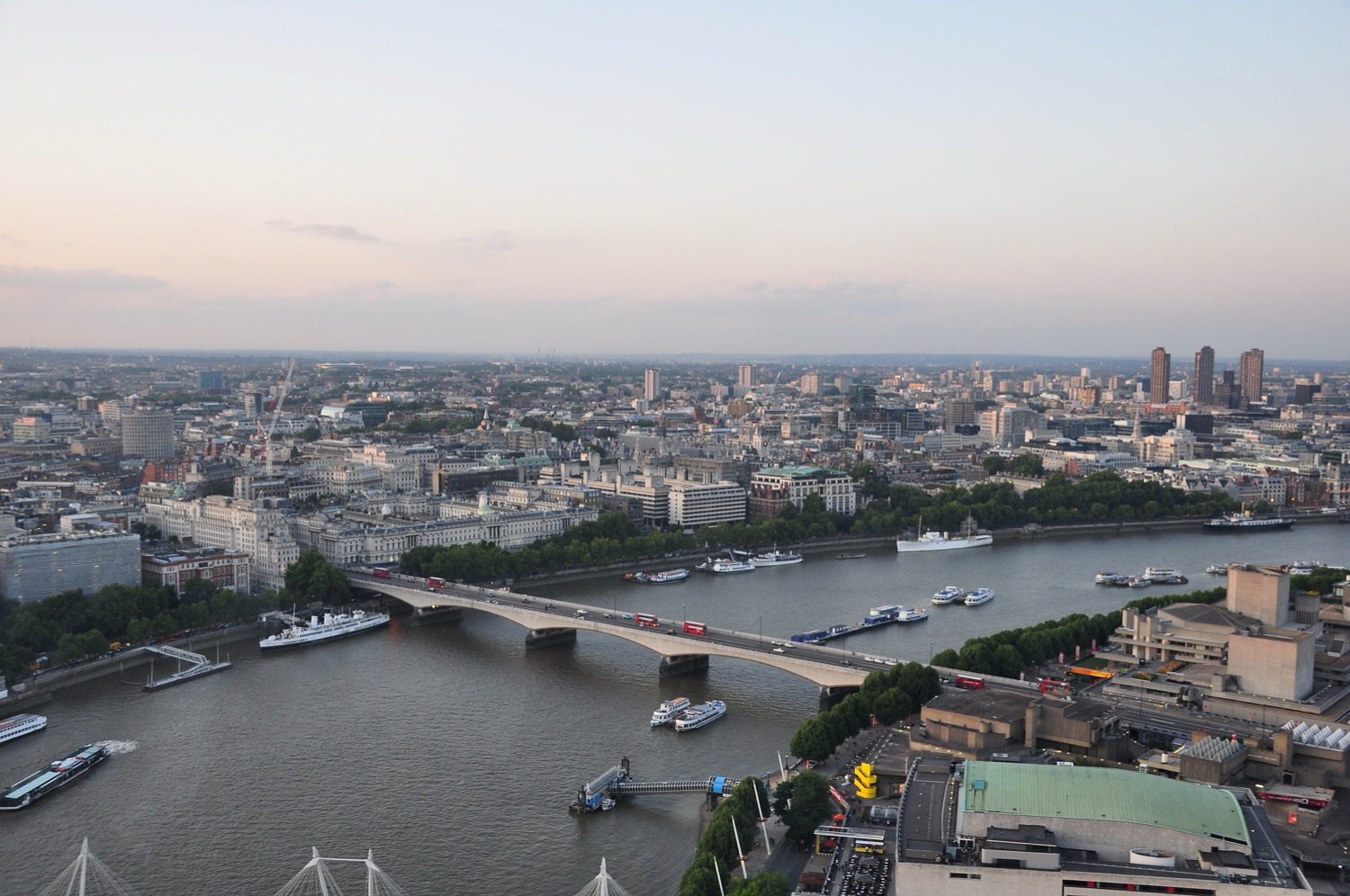
Waterloo Bridge in London, where Georgi Markov felt the fatal jab at a bus stop on 7 September 1978. The Bulgarian dissident writer was on his way to the BBC when he was poisoned. Wikimedia Commons / CC BY-SA 2.0.
The Umbrella Murder: The Poisoning of Georgi Markov
London, 7 September 1978 — A Bulgarian dissident writer felt a sharp jab in his leg at a London bus stop. Three days later he was dead, killed by a tiny ricin-filled pellet fired, it is believed, from a modified umbrella — a Cold War state assassination carried out on the streets of Britain
- Category
- State & Intelligence Operations
- Published
- Length
- 3,550 words · 18 min read
- Author
- The editors
The murder of Georgi Markov is remembered above all for its method — the poison umbrella, a device so redolent of spy fiction that it has become shorthand for the whole shadowy world of Cold War assassination. But the weapon, ingenious and macabre as it was, is not the most important thing about the case. What matters is why Markov was killed and by whom: a writer, murdered on a London street by a foreign state, for the offence of telling the truth about a dictatorship over the radio. It was an act of transnational terror, a communist regime demonstrating that no distance and no border could protect a critic from its reach, carried out with a coldness and technical sophistication that implicated the machinery of Soviet intelligence itself. And it is a case that sits, like several Cold War assassinations, at an instructive midpoint of certainty: the fact of the murder and its broad authorship are established beyond reasonable doubt, confirmed in part by the opened archives of the regime that ordered it; yet the individual who wielded the umbrella was never brought to trial, and some details remain, to this day, unresolved. To tell it honestly is to separate the solid from the uncertain, and to remember that at its centre was a brave man killed for his words.
This is the story of the umbrella murder.
The writer who defected
Georgi Markov had once been an insider. Born in 1929, he became, in communist Bulgaria, a successful and celebrated writer — a novelist and playwright whose work was published and staged, who moved in the country's cultural elite, and who was even, for a time, on friendly terms with the regime's leadership. But success within a dictatorship exacted a price he grew unwilling to pay: the censorship, the compromises, the suffocating control over what a writer could say. Increasingly disillusioned with the corruption and hypocrisy of the communist system and its elite, Markov made the decisive break in 1969, travelling to the West and choosing not to return. He settled in London, a defector, leaving behind the comfortable life of a favoured author for the uncertain freedom of exile.
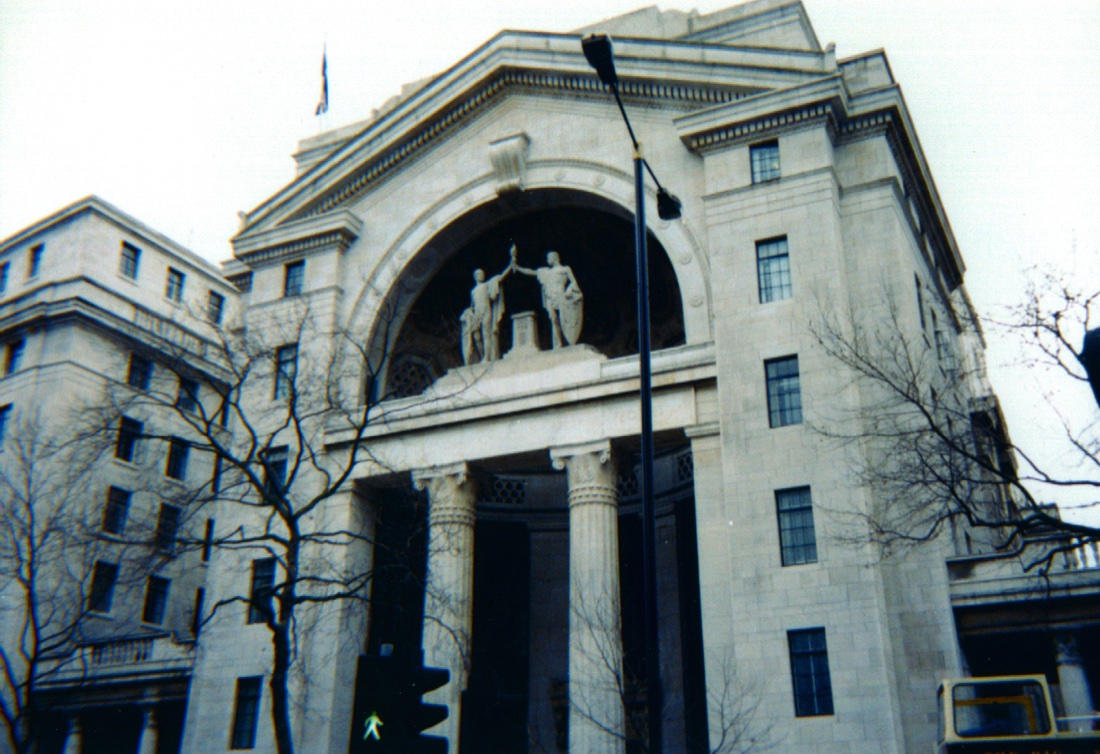
In London, Markov rebuilt his life around the thing the regime had denied him: the freedom to speak. He found work as a broadcaster, joining the BBC World Service and also contributing to Radio Free Europe and Deutsche Welle — Western stations whose signals reached across the Iron Curtain into Bulgaria and the wider Eastern Bloc. Through the airwaves he could now say what he had never been permitted to say at home, and he used the opportunity to devastating effect, becoming one of the most effective and infuriating critics of the Bulgarian regime broadcasting to his countrymen. It was this work — the steady, truth-telling voice reaching into Bulgarian homes — that would mark him for death.
The broadcasts that enraged a regime
The specific provocation that sealed Markov's fate was a series of broadcasts he made for Radio Free Europe: personal, unsparing reports on life inside communist Bulgaria and, above all, on the character and corruption of its ruling elite and its long-time leader, Todor Zhivkov. Later collected and published as The Truth That Killed, these "In Absentia Reports" stripped away the regime's dignified façade, exposing the privileges, absurdities, and moral squalor of the men who ruled Bulgaria, and doing so with the intimate knowledge of a former insider and the skill of a gifted writer. To a dictatorship obsessed with its own image, this was intolerable. Markov was not a spy or a saboteur; he was something the regime found more threatening — a truth-teller with a talent for making his listeners see, and laugh at, the emperors who had no clothes.
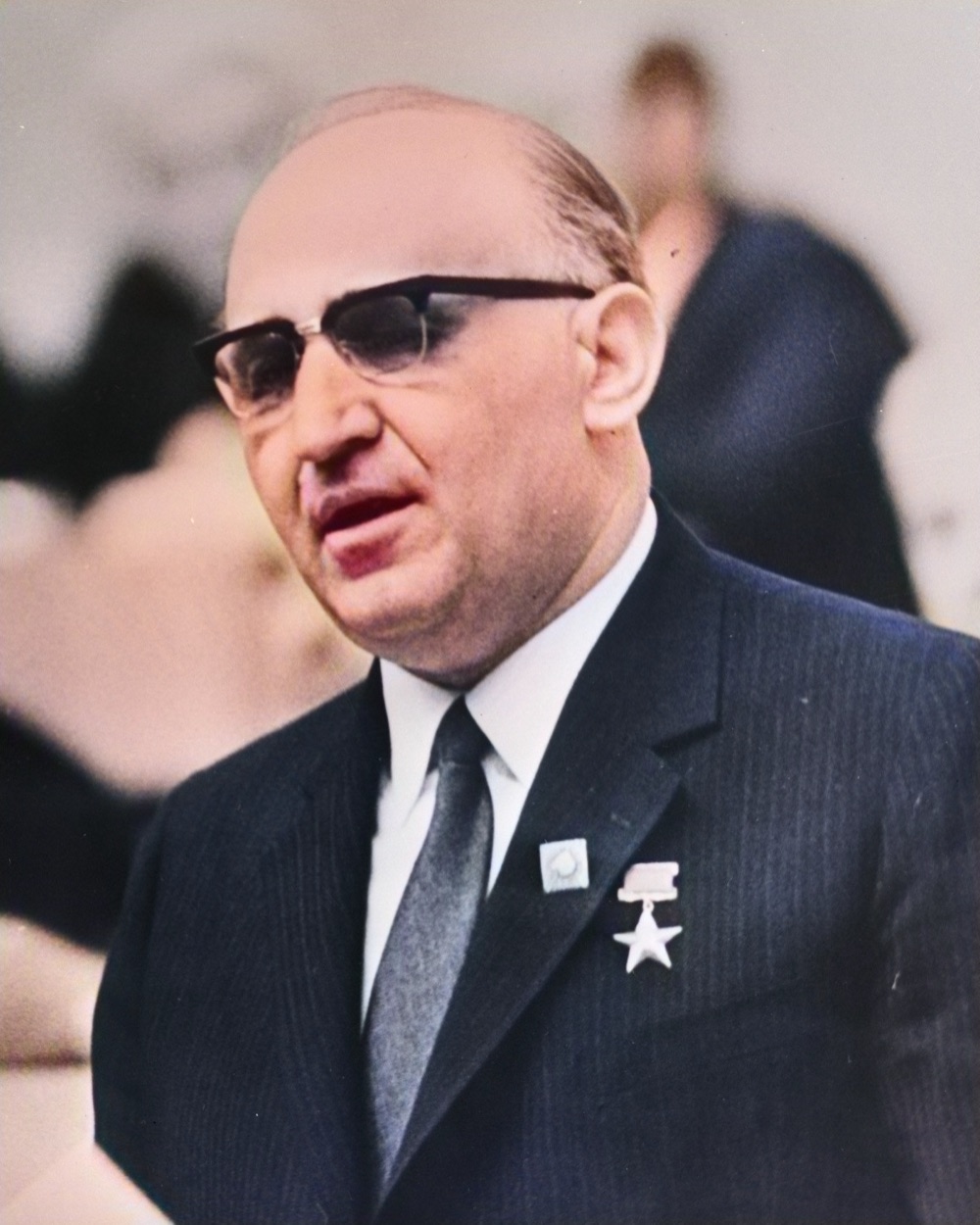
The regime's fury was not hidden. Markov had reportedly received threats warning him to stop his broadcasts, and the Bulgarian security services had him marked. There is a grim and often-noted detail: the attack came on 7 September, the eve of a significant date in the regime's calendar and close to Zhivkov's own birthday, leading to the widespread belief that Markov's death was intended, in part, as a macabre birthday offering to the dictator. Whether or not that specific flourish is true, the essential point is not in doubt: a European state, angered by a writer's words, resolved to have him murdered in the capital of another country, and set its intelligence service to the task.
The jab on Waterloo Bridge
The killing itself was a masterpiece of cold professionalism. As Markov stood among the crowd at the Waterloo Bridge bus stop, he felt the sharp sting in his thigh and turned to see the man with the umbrella. The apology, the foreign accent, the hurried departure by taxi — it all seemed, in the moment, an unremarkable piece of London clumsiness. Markov mentioned the odd incident, and the small red mark it left, but neither he nor anyone else grasped its significance until it was far too late. That evening he became feverish; by the next day he was seriously ill and was admitted to hospital, where his condition deteriorated with frightening speed as his body was overwhelmed. The doctors, with no knowledge of what had poisoned him, could do nothing to reverse it. Three days after the jab, Georgi Markov was dead.
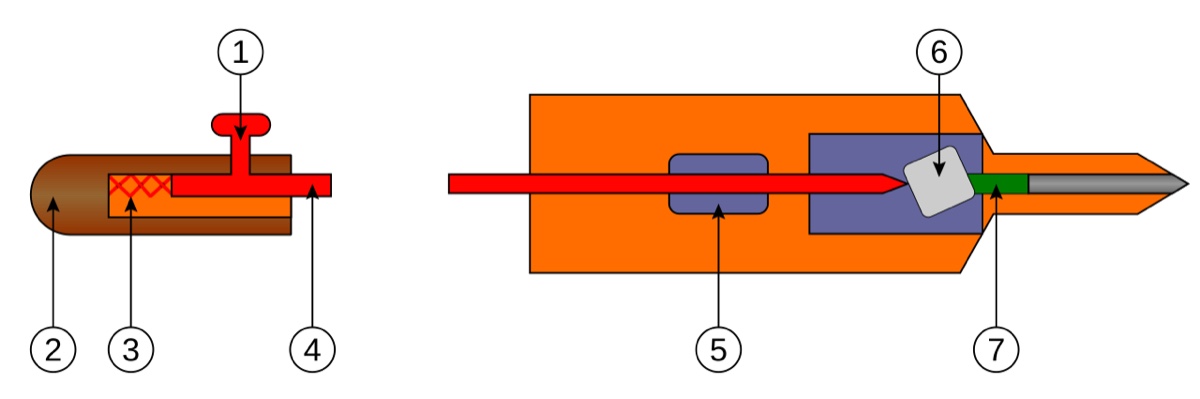
It was only after death that the mechanism of his murder was uncovered. A careful post-mortem examination, alert to Markov's own account of the umbrella incident, recovered from the wound in his thigh a minuscule metal sphere — a pellet of platinum-iridium alloy, about one and a half millimetres in diameter, into which two tiny holes had been drilled to create a cavity. That cavity had been filled with ricin and sealed with a coating designed to melt at body temperature, releasing the poison into Markov's bloodstream over the hours after it was fired. The umbrella, investigators concluded, had almost certainly been engineered to conceal a compressed-gas or spring mechanism capable of punching the pellet through clothing and into flesh — a purpose-built assassination weapon disguised as the most ordinary object on a rainy London street.
The poison
Ricin is among the reasons the Markov case was so chillingly effective. Derived from the beans of the castor oil plant, it is one of the most toxic naturally occurring substances known: it kills by entering cells and shutting down their ability to make the proteins they need to survive, causing organ failure over a day or more, and there is no cure or antidote once a lethal dose has been delivered. A quantity small enough to fit inside a pinhead-sized pellet is more than enough to kill an adult. Its slow action — hours to days between exposure and death — made it ideal for an assassination meant to look, at first, like a sudden mysterious illness, giving the killer ample time to vanish before anyone understood that a murder had even taken place.

The sophistication of the toxin and its delivery pointed unmistakably beyond the capabilities of a lone assassin or even a modest intelligence service. The engineering of the pellet, the weaponised umbrella, and above all the use of ricin sealed in a temperature-sensitive coating bespoke a laboratory and a programme — and here the trail led to Moscow. It is well established that the Bulgarian secret service carried out the killing with the technical assistance of the Soviet KGB, which is understood to have supplied the poison and the technology behind the weapon. The murder of Georgi Markov was thus not merely a Bulgarian crime but a product of the wider Soviet intelligence apparatus, lending a single émigré writer's death the full, cold weight of a superpower's secret services.
The hunt for the assassin
The pursuit of the man who actually jabbed the umbrella has been long, frustrating, and ultimately inconclusive. Investigators in Britain and, after communism fell, in Bulgaria pieced together much of the operation from intelligence sources and surviving records, but the effort to name and prosecute the assassin ran into a wall of destroyed evidence and elapsed time. It emerged that senior Bulgarian officials had, during the collapse of the regime, deliberately destroyed the Markov dossiers to protect those involved — an act for which one former intelligence chief was actually convicted, not of the murder but of destroying the files about it. The prime suspect to emerge was a Danish resident of Italian origin, a Bulgarian secret-service agent operating under the codename "Piccadilly," who was identified by investigators as the likely killer. But he denied involvement, was never charged, and lived out his life a free man, dying in 2021 without ever facing trial.
The case was formally reopened and re-examined more than once, in Britain and in Bulgaria, as archives opened and new information surfaced. But each effort foundered on the same obstacles: the destruction of key records, the death or disappearance of witnesses and suspects, and, eventually, the expiry of the legal window in which charges could be brought. In 2013, Bulgarian prosecutors formally closed their investigation, the statute of limitations having run out, with no one ever held to account for the murder. The result is a case in which the truth is, in its essentials, known — a state killed a man for his words — while justice, in the narrow sense of a conviction, was never done.
What it means
The murder of Georgi Markov became one of the defining images of the Cold War — the poison umbrella on Waterloo Bridge, a phrase that still evokes the whole sinister apparatus of communist state assassination. But its deeper meaning lies in what it reveals about the nature of the regimes that carried out such killings, and about the courage of those who defied them. Markov was killed not for any act of violence or espionage but for speaking; his weapon was a microphone, his crime the truth, and the state's response was to reach across a continent and murder him on the street of a free city. In doing so, the Bulgarian regime and its Soviet patrons revealed both their power and their fear — the power to kill a critic anywhere, and the fear of what a single honest voice, beamed back across the Iron Curtain, could do to their carefully guarded lie.
The Markov case also proved to be a grim precursor rather than an aberration. The use of an exotic poison to assassinate a critic on the streets of a Western city, in a way designed to be hard to detect and to deny, established a template that would recur with chilling fidelity decades later. In 2006, the former Russian security officer Alexander Litvinenko was murdered in London with radioactive polonium-210, a killing a British public inquiry linked to the Russian state; in 2018, the former double agent Sergei Skripal and his daughter were poisoned in Salisbury with a military nerve agent, Novichok, in an attack Britain attributed to Russian military intelligence. The through-line from Markov's umbrella to these later crimes is unmistakable: the same willingness of a state to reach into another country and poison an enemy, the same reliance on substances few besides a state could obtain, and the same contempt for the sovereignty and safety of the nation on whose soil the murder was done. The Bulgarian umbrella was, in retrospect, an early chapter in a long and continuing story of state poison on foreign streets.
In the end, the umbrella murder endures as a testament to two things: the reach of a police state, and the price of truth-telling under one. Georgi Markov gave up comfort and safety to speak freely, and he paid for it with his life, struck down by a weapon of almost cartoonish ingenuity that was, in fact, the product of a deadly serious machinery of state terror. His broadcasts, published after his death as The Truth That Killed, outlived both the man and the regime that murdered him: Zhivkov's Bulgaria collapsed within little more than a decade, and Markov's words remain as a record of the courage it took to speak against it. That no one was ever convicted of his killing is a lasting injustice, but it does not diminish what his death made plain — that the communist states of the Cold War feared nothing so much as the truth, and would go to almost any length, and any distance, to silence those who told it. On a bridge over the Thames, one such truth-teller was murdered for his words; and in remembering how and why, we keep faith with what he died saying.
In the end, the poisoning of Georgi Markov stands as one of the coldest and most emblematic crimes of the Cold War — a state's murder of a writer, on a foreign street, for the words he spoke into a microphone. The weapon was so strange it passed into legend, but the reality behind it was deadly serious: a purpose-built device, a Soviet-supplied poison, and an intelligence service dispatched to kill a man whose only offence was telling the truth about the regime he had fled. The essential facts are settled, confirmed in part by the archives of the very system that ordered the killing; only the individual assassin escaped the reckoning, his files destroyed and his name never entered in a verdict. Georgi Markov died for his words, and his words survived him. That is the meaning the umbrella murder carries still — a reminder of how much a dictatorship can fear a single free voice, and of how far it will go to still it.
Inspired this / based on it
Georgi Markov
Markov's own broadcasts against the Bulgarian regime, published posthumously.
Filed under
Click any tag for every article carrying it.
Continue reading
The Poisoning of Alexander Litvinenko: Polonium in a London Teapot
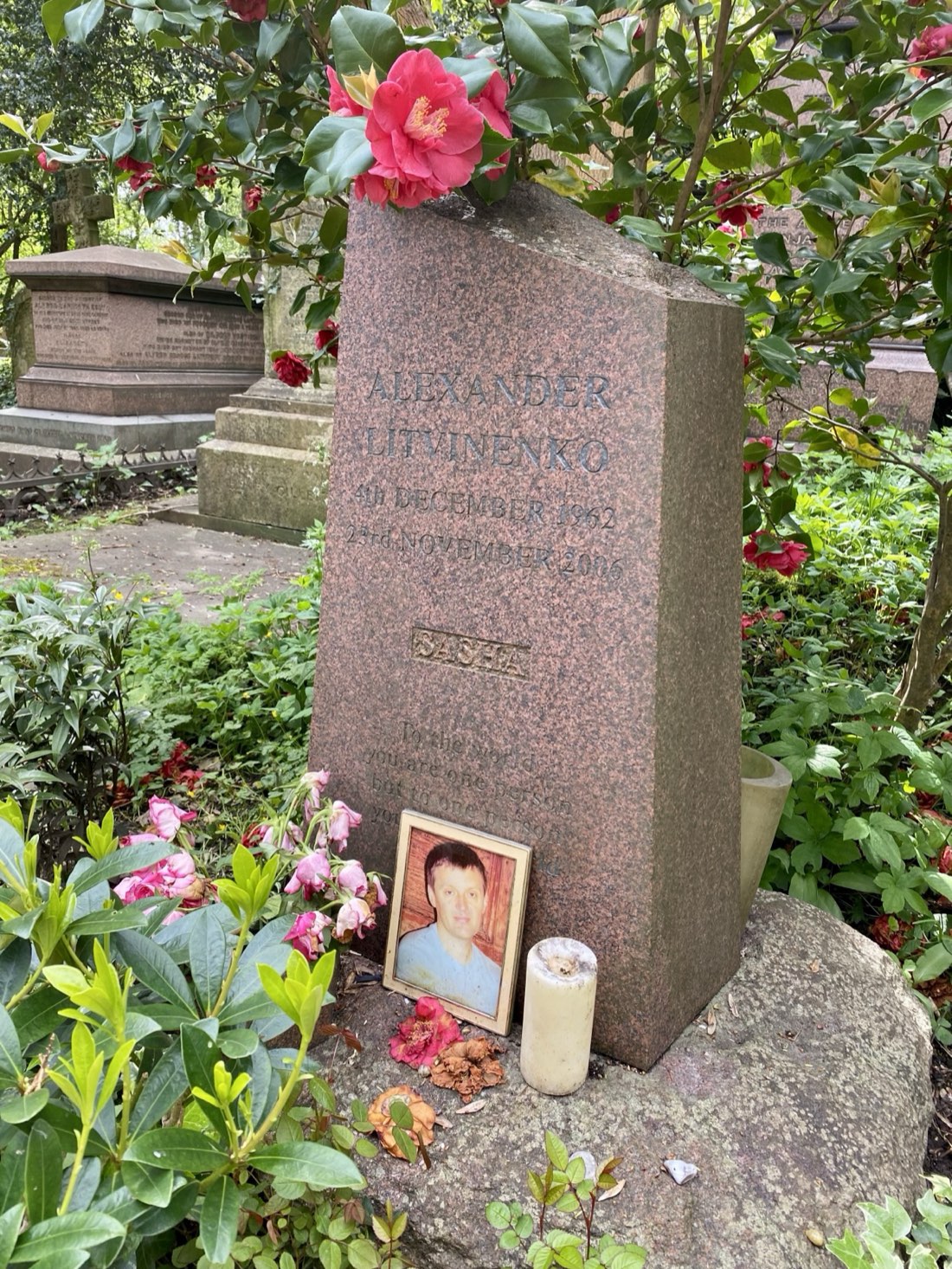
On 1 November 2006, Alexander Litvinenko, a former officer of Russia's FSB security service who had defected to Britain and become one of the Kremlin's most outspoken critics, met two Russian contacts for tea at the Pine Bar of the Millennium Hotel in London's Mayfair. Within hours he was violently ill; over the following three weeks he wasted away in a hospital bed, his hair falling out, his organs failing, as doctors struggled to identify what was killing him. Only as he lay dying did they discover the cause: polonium-210, a rare and extraordinarily radioactive isotope, which had been slipped into his teapot. He died on 23 November 2006, aged forty-four, but not before dictating a statement accusing President Vladimir Putin directly of ordering his murder. The polonium had left a faint radioactive trail across London — through the hotel, restaurants, offices, and aircraft — which investigators followed to two Russian men, and, they concluded, back to the Russian state itself. A decade later, a British public inquiry found that Litvinenko had been killed in an operation carried out by the FSB and 'probably approved' by Putin himself. It was an assassination by radiation on the streets of a Western capital, and one of the most brazen acts of state murder of the twenty-first century. This is the story of the polonium poisoning of Alexander Litvinenko.
The Assassination of Trotsky: Stalin's Ice Axe in Mexico
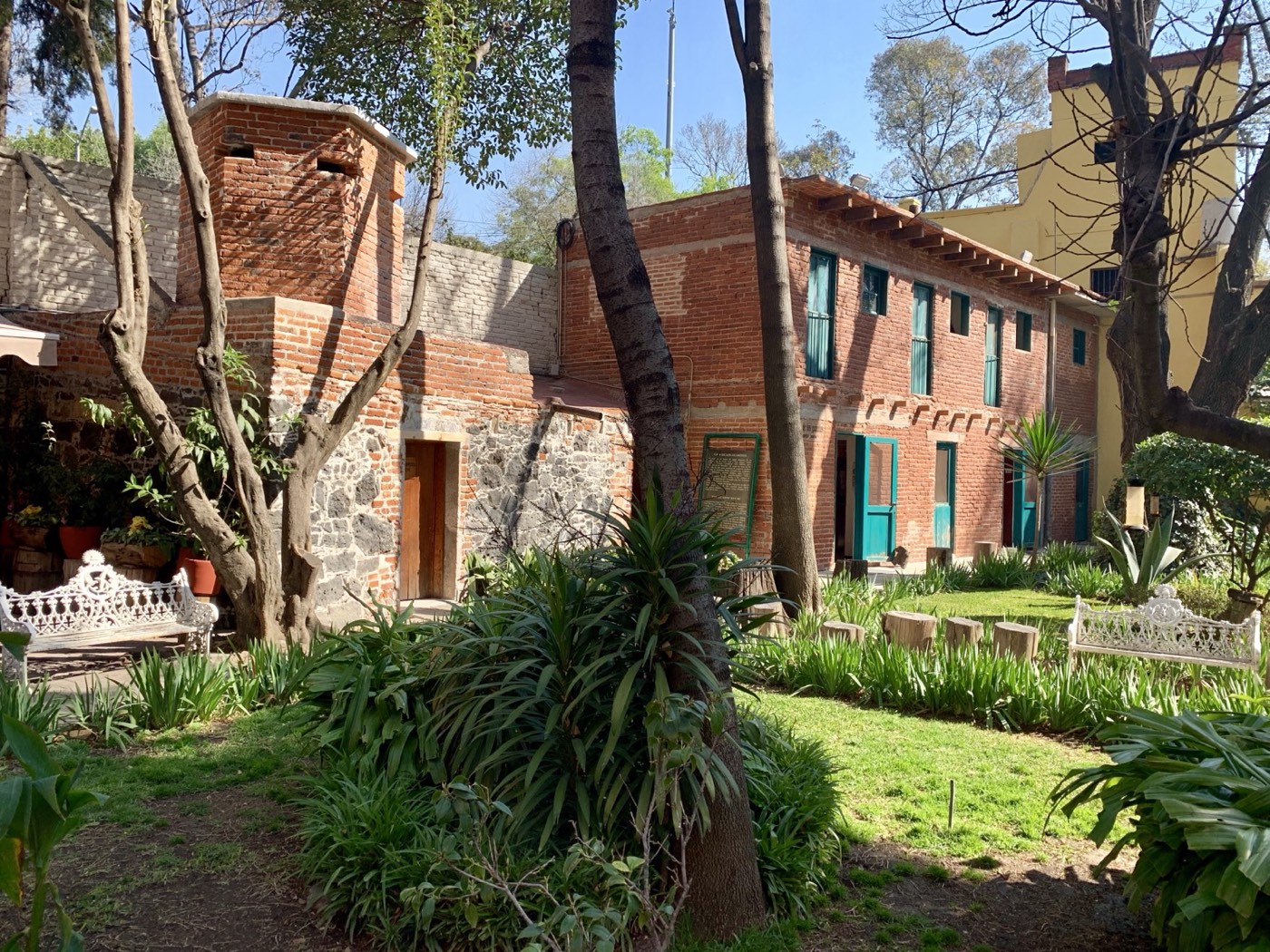
Leon Trotsky had once stood at the very summit of the Russian Revolution — the organiser of the Bolshevik seizure of power in 1917, the founder and commander of the Red Army, the man many expected to succeed Lenin. Instead he lost the struggle for power to Joseph Stalin, and became the most hunted political exile on Earth. Expelled from the Soviet Union in 1929, he wandered from Turkey to France to Norway before Mexico granted him asylum, and everywhere he went the long arm of Stalin's secret police followed. One by one, his collaborators, his secretaries, and his own children were killed or died in suspicious circumstances, until Trotsky, living behind the high walls and watchtowers of a fortress-like house in the Coyoacán district of Mexico City, was almost the last of his circle left alive. On 20 August 1940, a young man he believed to be a devoted follower came to show him an article. As Trotsky bent over his desk to read it, the visitor drew a mountaineer's ice axe from beneath his coat and drove it into the old revolutionary's skull. Trotsky died the next day. The killer was an agent of Stalin's NKVD, and the operation had been approved at the very top of the Soviet state. Unlike so many political murders shrouded in doubt, this one is documented down to its code name. This is the story of how Stalin finally killed Leon Trotsky.
The Mitrokhin Archive: The KGB Clerk Who Stole the KGB's Secrets
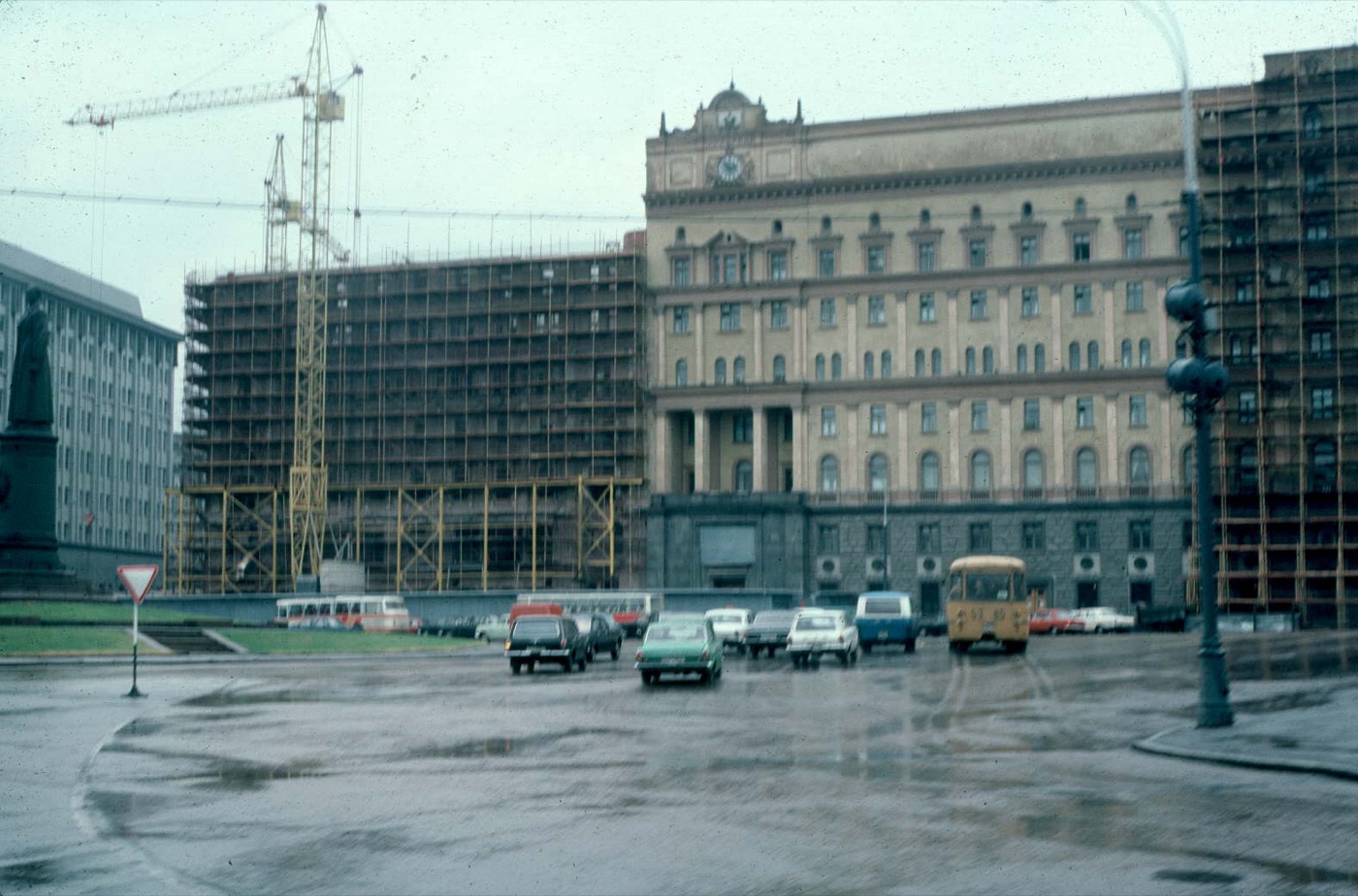
Vasili Mitrokhin was not a spy in the usual sense, and that is exactly what made him so dangerous to the organisation he served. He was a KGB officer who, after years of disillusionment, had been moved sideways into the archives of the First Chief Directorate — the service's foreign-intelligence arm — and given responsibility for supervising the transfer of its entire secret file collection to a new headquarters. It was the most sensitive paper in the Soviet Union: decades of records on agents, operations, and informants spread across the West and the wider world. For roughly twelve years, from 1972 until his retirement in 1984, Mitrokhin used his extraordinary access to commit one of the most audacious acts of intelligence defiance in history. Alone, by hand, he copied and summarised thousands of the KGB's most secret documents, scribbling notes on scraps of paper that he hid in his shoes and clothing and carried out of headquarters past the guards, day after day, year after year. At home he transcribed them, and then he hid the growing archive — sealed in milk churns and tin containers and buried beneath the floor and in the garden of his dacha outside Moscow. He could not get it to the West while the Soviet Union stood. But when the USSR collapsed, in 1992, Mitrokhin travelled to the newly independent Baltic states, walked into a Western embassy, and offered his life's secret work. British intelligence grasped what he was holding, spirited him, his family, and six cases of material out of Russia, and acquired in a single stroke the most comprehensive record of Soviet foreign intelligence operations ever to reach the West. This is the story of the quiet archivist who stole the KGB's own history.