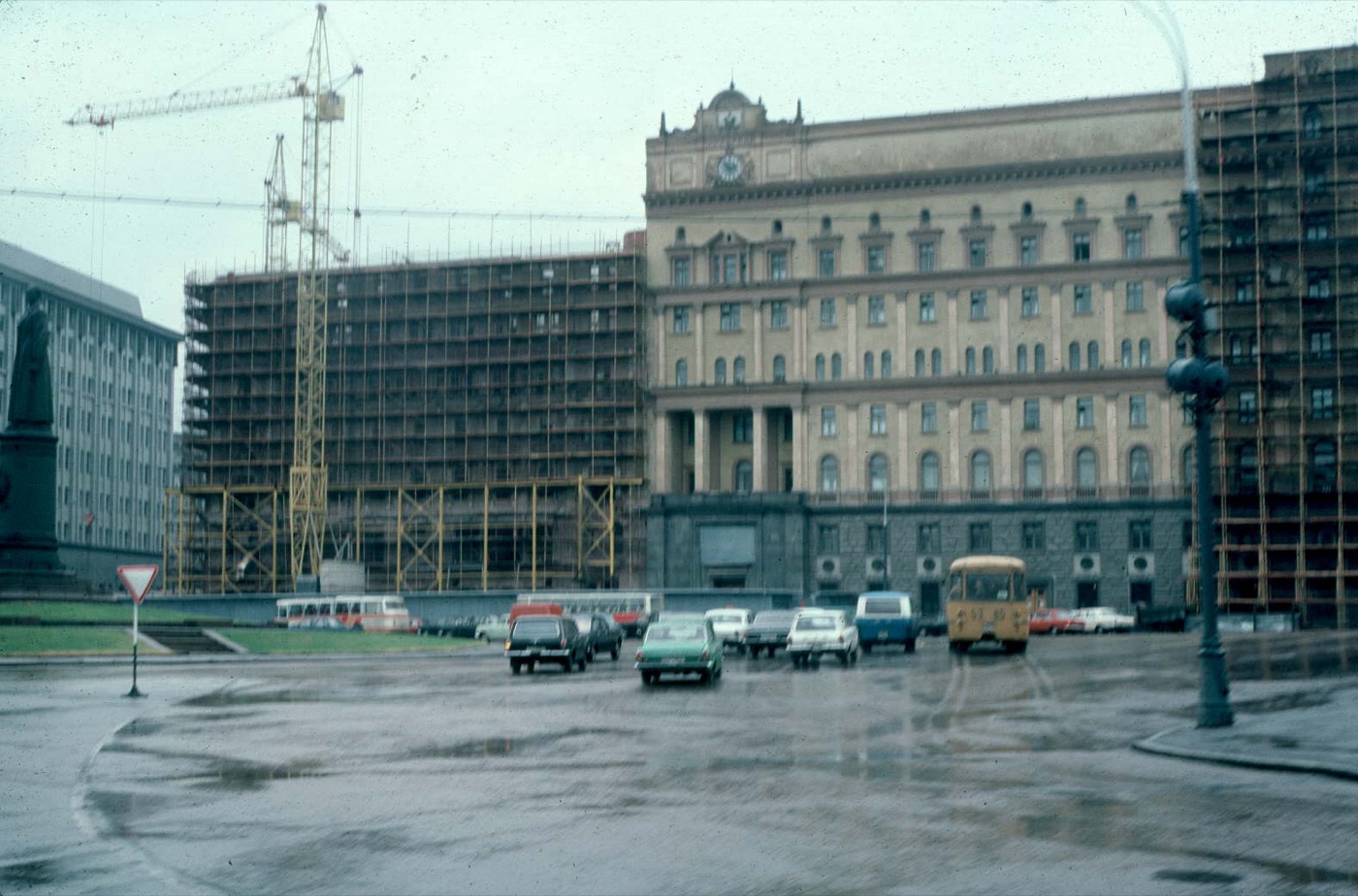
The Lubyanka in Moscow, the headquarters of the KGB. From inside the foreign-intelligence service's archives, Vasili Mitrokhin spent twelve years secretly copying its most closely guarded files by hand — and carrying the notes out past the guards. Wikimedia Commons / Public domain.
The Mitrokhin Archive: The KGB Clerk Who Stole the KGB's Secrets
USSR and United Kingdom, 1972–1992 — For twelve years a disillusioned KGB archivist secretly copied the foreign-intelligence service's most closely guarded files by hand, smuggled the notes out one pocketful at a time, and buried them beneath his country house. When the Soviet Union fell, he carried the secret history of the KGB to the West
- Category
- Cold War Files
- Published
- Length
- 3,800 words · 19 min read
- Author
- The editors
The great spy stories of the Cold War are usually tales of agents recruited, secrets passed, and traitors unmasked. The Mitrokhin Archive is something rarer and, in its way, more remarkable: the story of a man who betrayed not his country to a foreign power, but a brutal intelligence service to history itself. Vasili Mitrokhin stole no current operations and sold nothing for money. What he did was quieter and stranger — he copied out, by hand and at enormous personal risk, the institutional memory of the KGB's foreign intelligence, and he preserved it so that the world might one day read the record the Soviet state intended to keep secret forever. He was, in the end, less a spy than an archivist with a conscience, and his patient theft of the truth is one of the most extraordinary acts of the entire Cold War.
This is the story of the man who stole the KGB's secrets.
The making of a doubter
Vasili Mitrokhin had been a loyal servant of Soviet intelligence before he became its most damaging archivist. Born in 1922, he joined the security organs after the war and served abroad as an operations officer in the 1950s. But a series of disillusionments slowly turned him against the system he served. The brutal Soviet suppression of the Hungarian uprising in 1956, Nikita Khrushchev's secret denunciation of Stalin's crimes that same year, and his own professional setbacks combined to corrode his belief. After a falling-out connected to a failed operation, he was moved out of active operations and into the archives — a demotion in the eyes of the service, but the most consequential reassignment in the KGB's history.
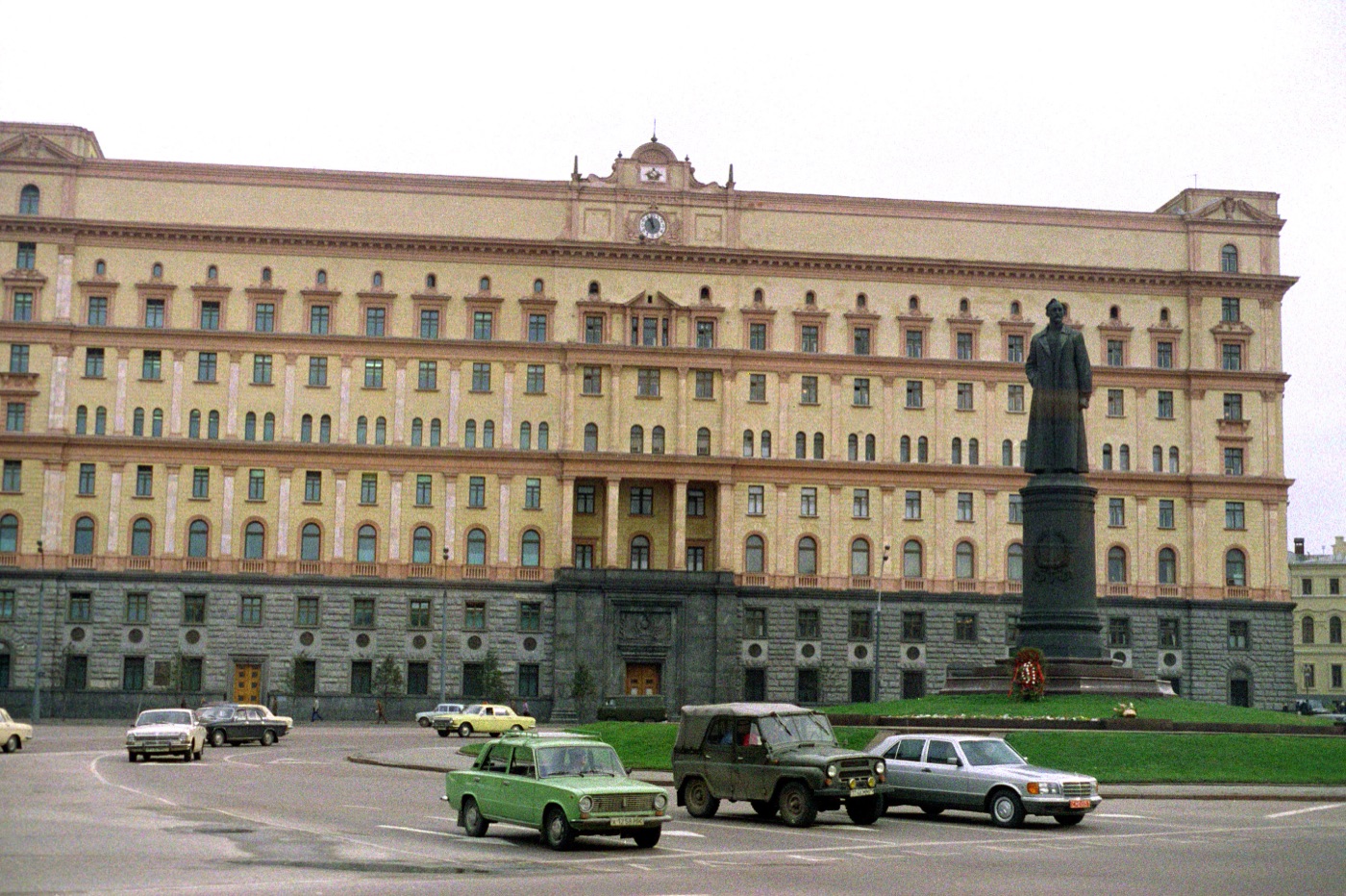
What is striking about Mitrokhin's turn is how little it owed to the usual motives of the spy. He was not blackmailed, not bought, not chasing advancement; if anything, copying the files cost him peace of mind and risked everything he had. His motive appears to have been something quieter and more stubborn — a moral revulsion at the gulf between the Soviet system's professed ideals and its actual record of repression, and a conviction that the truth recorded in those files ought not to die with the regime that wrote it. He had served the service loyally enough to be trusted with its memory, and it was precisely that intimate knowledge of what the memory contained that turned him against keeping it secret. In this he belongs less to the world of espionage than to the long tradition of the conscience-stricken insider, the official who comes to believe that loyalty to the truth outranks loyalty to the institution.
By the early 1970s, Mitrokhin was a senior archivist of the First Chief Directorate, the elite foreign-intelligence arm of the KGB. In 1972, the directorate moved its headquarters from the centre of Moscow to a new complex at Yasenevo on the city's outskirts, and Mitrokhin was given the task of supervising the transfer of its entire archive — the accumulated files of Soviet foreign-intelligence operations going back decades. It is hard to overstate the access this gave him. He could read, check, and handle the service's most secret records: the identities of agents, the locations of arms and radio caches hidden across the West, the details of operations against foreign governments, the whole hidden anatomy of Soviet espionage. And he had decided, quietly, that the world should one day know what those files contained.
Twelve years of theft
What Mitrokhin did next required a discipline and a steadiness of nerve that are difficult to imagine sustained over more than a decade. Forbidden, of course, to remove or photograph documents, he simply read them and copied their contents by hand — making notes, summaries, and transcriptions on small scraps of paper, sometimes miniaturised, which he concealed in his pockets, his shoes, and the lining of his clothing. Each day he carried a little of the KGB's secret history out through the doors of one of the most secure buildings in the Soviet Union, past guards who never thought to search a trusted senior archivist. Then he did it again the next day, and the next, for some twelve years.
At home, Mitrokhin transcribed and organised his smuggled notes into a coherent secret archive, typing and writing them up into something approaching a systematic record. Then came the problem of keeping it safe. A man hiding such material in Brezhnev's Soviet Union faced ruin or death if it were ever found, and so he hid it with great care at his dacha, the modest country house outside Moscow that many Russians kept. He sealed the papers in milk churns and metal containers and buried them — beneath the floor, in the garden — building, season by season, a hidden library of the KGB's sins under the soil of his own holiday garden.
He retired in 1984 with his enormous secret intact and unsuspected. But a hidden archive is only half an act of conscience; to mean anything, it had to reach the world, and that remained impossible while the Soviet state and its security apparatus stood. For years Mitrokhin waited, an old man sitting atop the most explosive collection of secrets in the country, with no safe way to deliver it. Then history opened a door.
The walk into the embassy
The Soviet Union collapsed at the end of 1991, and with it the wall that had kept Mitrokhin's archive trapped. In 1992, the former republics of the USSR were newly independent states, and travel that had once been impossible became feasible. In March of that year, Mitrokhin gathered a sample of his material and travelled to Riga, the capital of the newly independent Latvia, where he could approach Western representatives outside the reach of the old Moscow machinery.
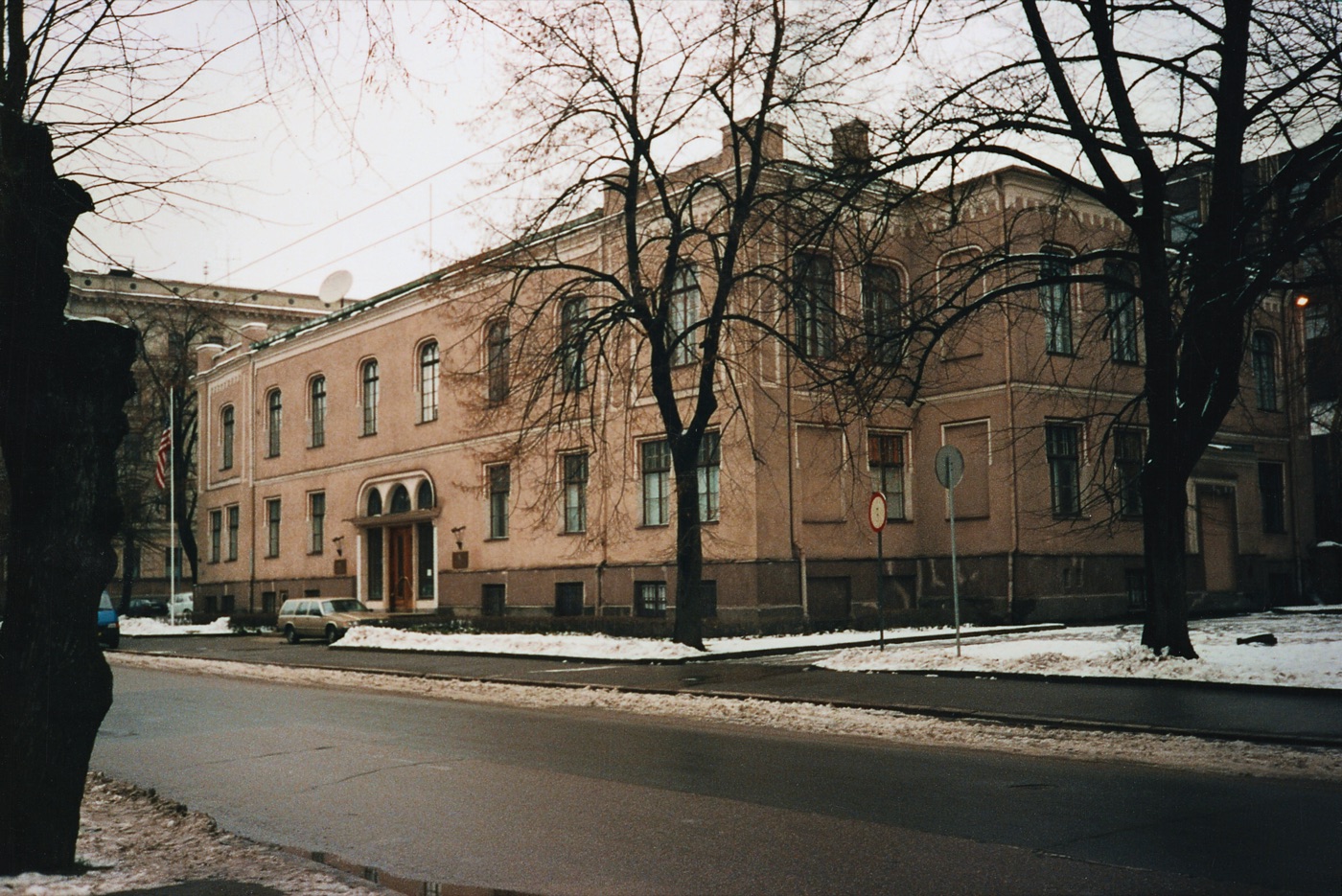
His first approach, according to the accounts that later emerged, was to the Americans. He went to the United States embassy with a sample of his notes — and was, by these accounts, met with scepticism or indifference; the CIA did not seize the opportunity. It was a striking lapse, if so, but an understandable one in a chaotic moment when embassies were besieged by all manner of people claiming to have secrets to sell. Mitrokhin then turned to the British. The Secret Intelligence Service, MI6, took him seriously, examined what he had brought, and quickly understood that this unassuming retired archivist was offering something close to the entire institutional memory of KGB foreign intelligence.
What followed was a careful and substantial operation. Over the course of 1992, British intelligence verified Mitrokhin's bona fides and arranged to bring out not only the man but everything he had hidden. In November 1992, MI6 exfiltrated Mitrokhin, his family, and his archive — the six cases of buried notes, recovered from the dacha — out of Russia and to Britain. A retired clerk and his life's secret labour had crossed safely to the West, and with them came the secrets of half a century of Soviet espionage.
Mitrokhin's defection came at a singular moment. The collapse of the Soviet Union had thrown open, however briefly, doors that had been sealed for seventy years: archives were partially unlocked, former officers spoke more freely than ever before, and a window opened onto the secret history of the Soviet state. Mitrokhin's archive was the richest single fruit of that moment, but it belonged to a wider flowering of revelation in the early 1990s, when the long silence of the Cold War briefly broke and historians glimpsed what the records had hidden. That window would not stay open forever; within a decade the Russian state was again closing its archives and reasserting control over its past. Mitrokhin had carried his treasure out just in time, and in doing so he ensured that at least one comprehensive account of KGB operations would survive in the open regardless of how the politics of memory turned in Moscow.
What the archive revealed
The Mitrokhin material was not a single bombshell but a vast, detailed map of Soviet intelligence activity across the globe and across decades. It described agents and operations in country after country; it logged the hidden caches of weapons and radio equipment the KGB had buried across Western Europe for use in a future war; it detailed plans for sabotage and influence; and it named, or gave enough detail to identify, a great many people who had secretly served Soviet intelligence. For Western security services, it was years of work — a guide for reopening cold cases, confirming old suspicions, and understanding operations that had never been detected at all.
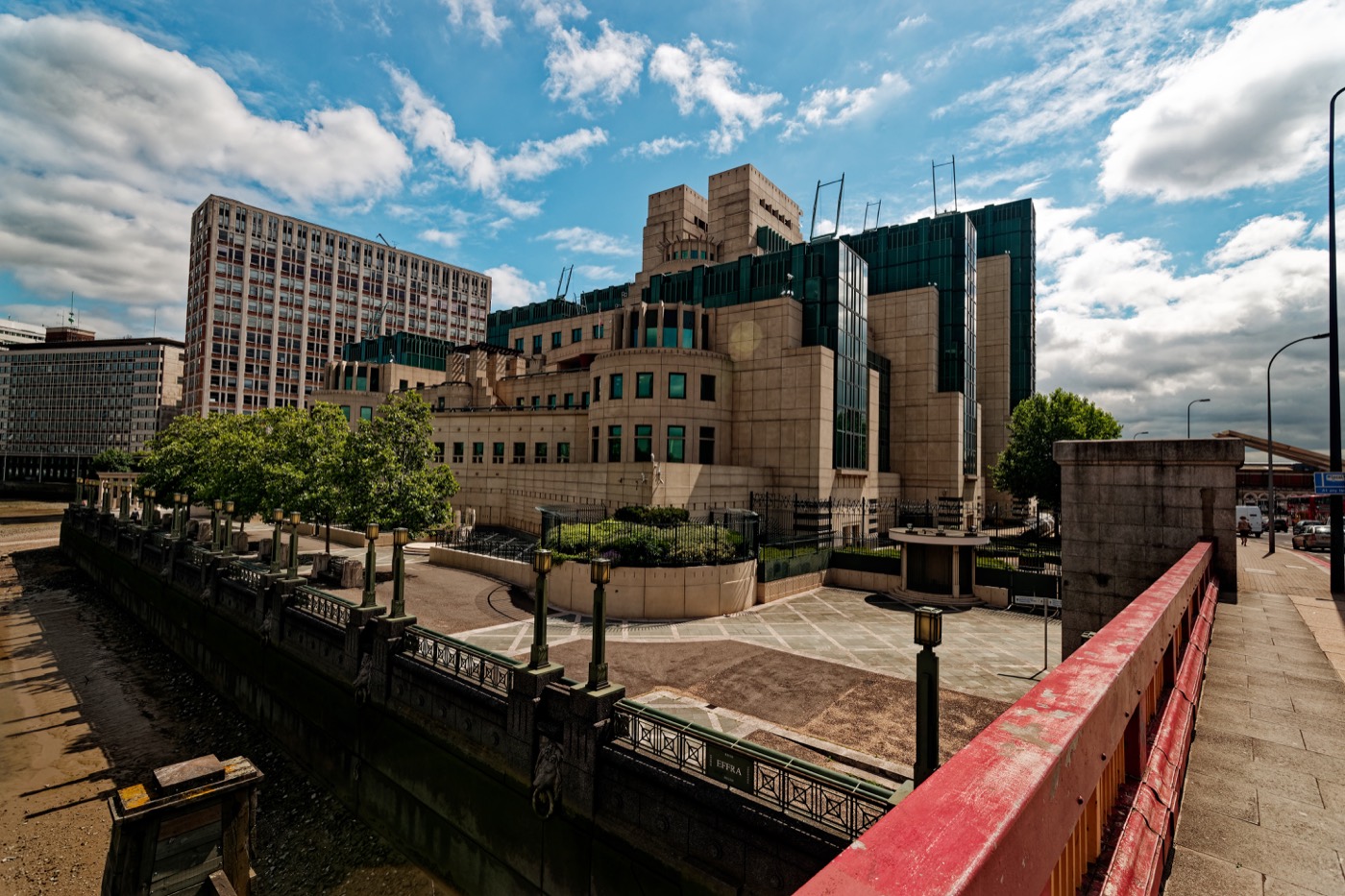
The single most famous revelation concerned an elderly Englishwoman living quietly in the suburbs. Melita Norwood had worked as a secretary at a British non-ferrous metals research association with links to the atomic programme, and the archive showed that she had been a dedicated Soviet agent for some forty years — passing scientific and atomic-related secrets to Moscow since before the Second World War, motivated by communist conviction. When the story broke publicly in 1999, the spectacle of "the spy who came in from the Co-op," an unrepentant great-grandmother in her late eighties defending her decades of espionage, gripped Britain. Norwood was never prosecuted, a decision that, like several others arising from the archive, provoked controversy about why long-exposed traitors were left untouched.
Beyond the named agents, the archive opened a window onto the operational machinery of Soviet intelligence that the West had only dimly understood. It documented the KGB's networks of "illegals" — deep-cover officers living under false identities in foreign countries, without the protection of diplomatic cover — and the elaborate legends constructed to sustain them. It revealed the locations of secret caches the KGB had concealed across Western Europe: hidden stores of weapons, radio equipment, and sabotage material, some of them booby-trapped, buried in forests and fields for use by agents and special forces in the event of war. In the years after the archive arrived, Western services quietly worked through these leads, recovering caches and reopening investigations that Mitrokhin's notes had reawakened. The picture that emerged was of a service that had prepared, in painstaking secret detail, to wage war and subversion deep inside its adversaries' territory.
The archive's broader value was corroboration. It confirmed and enriched what other sources — among them the Venona decrypts and earlier defectors — had suggested about the depth of Soviet penetration of the West. It put names and operational detail to suspicions, closed debates, and demonstrated, in the KGB's own record, that the Soviet intelligence assault on the West had been even more extensive than many had believed. Taken together with the revelations of the Cambridge Five and Venona, it completed a picture of an espionage campaign of remarkable reach and ambition.
The historian and the books
Rather than keep the archive entirely secret, British intelligence took the unusual step of allowing much of it to be published. The material was entrusted to the Cambridge historian Christopher Andrew, a leading scholar of intelligence, who worked with Mitrokhin to turn the mass of notes into a coherent history. The result appeared in 1999 as The Mitrokhin Archive: The KGB in Europe and the West (published in the United States as The Sword and the Shield), followed in 2005 by a second volume covering the KGB's operations in the wider world. The books drew directly on the smuggled notes to tell the story of Soviet foreign intelligence in unprecedented detail.
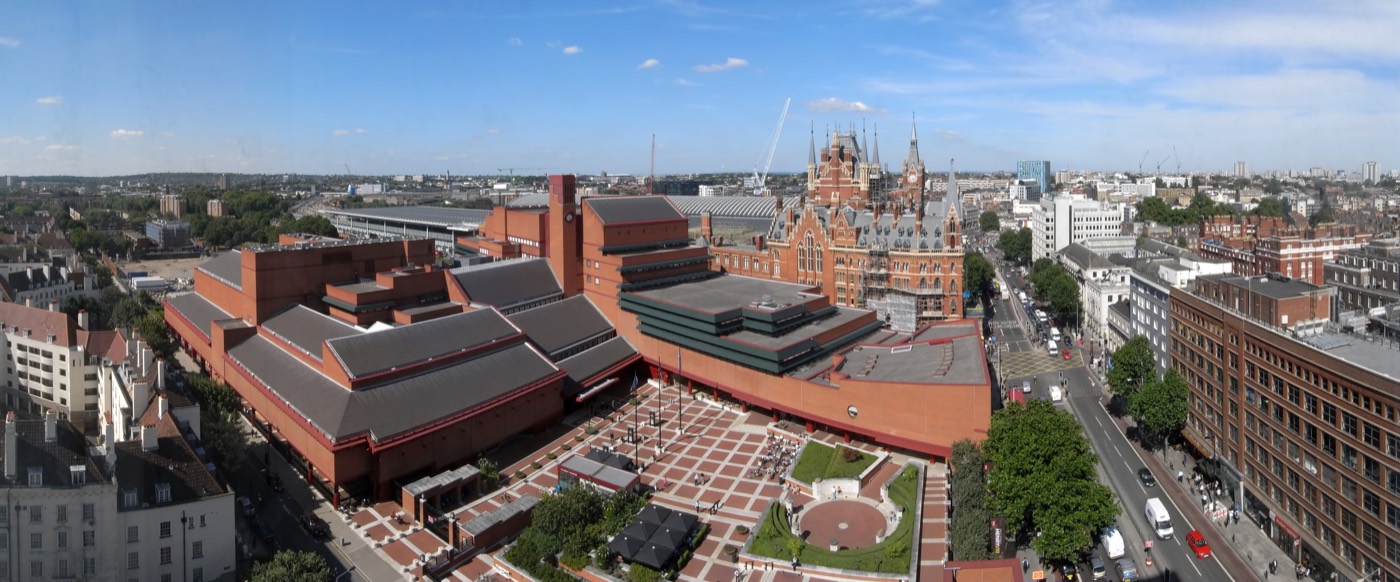
Publication transformed Mitrokhin from a secret asset into a historical figure, and it ensured that his decades of patient copying would achieve what he had always intended: not a momentary intelligence coup, but a lasting record. The papers were eventually deposited in an academic archive, available to scholars — the KGB's own secrets, preserved for history in the open, in the very democracies the service had spent decades trying to subvert. Mitrokhin himself lived out his remaining years in Britain under a new identity, and died there in 2004, an old man who had accomplished something almost no one in his position had ever dared.
The meaning of the archive
Mitrokhin's act resists easy classification, and that is part of what makes it so compelling. He was not a mercenary, for he sold nothing; he was not a conventional defector, for he did not flee with current secrets to gain an advantage in a live conflict. He was something closer to a whistleblower of history — a man who decided that the record of what his service had done was too important to be allowed to vanish into the locked vaults of a dictatorship, and who appointed himself, at terrible risk, its secret custodian.
In the end, the Mitrokhin Archive stands as one of the strangest and most moving episodes of the Cold War — not a tale of glamorous tradecraft, but of a stubborn old archivist and a pencil. For twelve years Vasili Mitrokhin carried the KGB's deepest secrets out of its headquarters a few notes at a time, and for years more he kept them buried beneath his garden, waiting for a world that could receive them. When that world finally arrived, he gave it the most complete record of Soviet espionage it had ever seen, and then he let it be published for anyone to read. He proved that the secrets of even the most fearsome security state are only ever as safe as the conscience of the people entrusted to keep them — and that a single determined person, armed with nothing but patience and the conviction that the truth should survive, can carry the hidden history of an empire out into the light.
Inspired this / based on it
Christopher Andrew & Vasili Mitrokhin
Allen Lane. Published in the US as "The Sword and the Shield"; the definitive account drawn from the archive.
Christopher Andrew & Vasili Mitrokhin
Allen Lane. The second volume, on KGB operations in the wider world.
Filed under
- #mitrokhin-archive
- #vasili-mitrokhin
- #kgb
- #defector
- #mi6
- #melita-norwood
- #espionage
- #cold-war
- #archive
- #confirmed
Click any tag for every article carrying it.
Continue reading
The Cambridge Five and the Spies at the Heart of British Intelligence
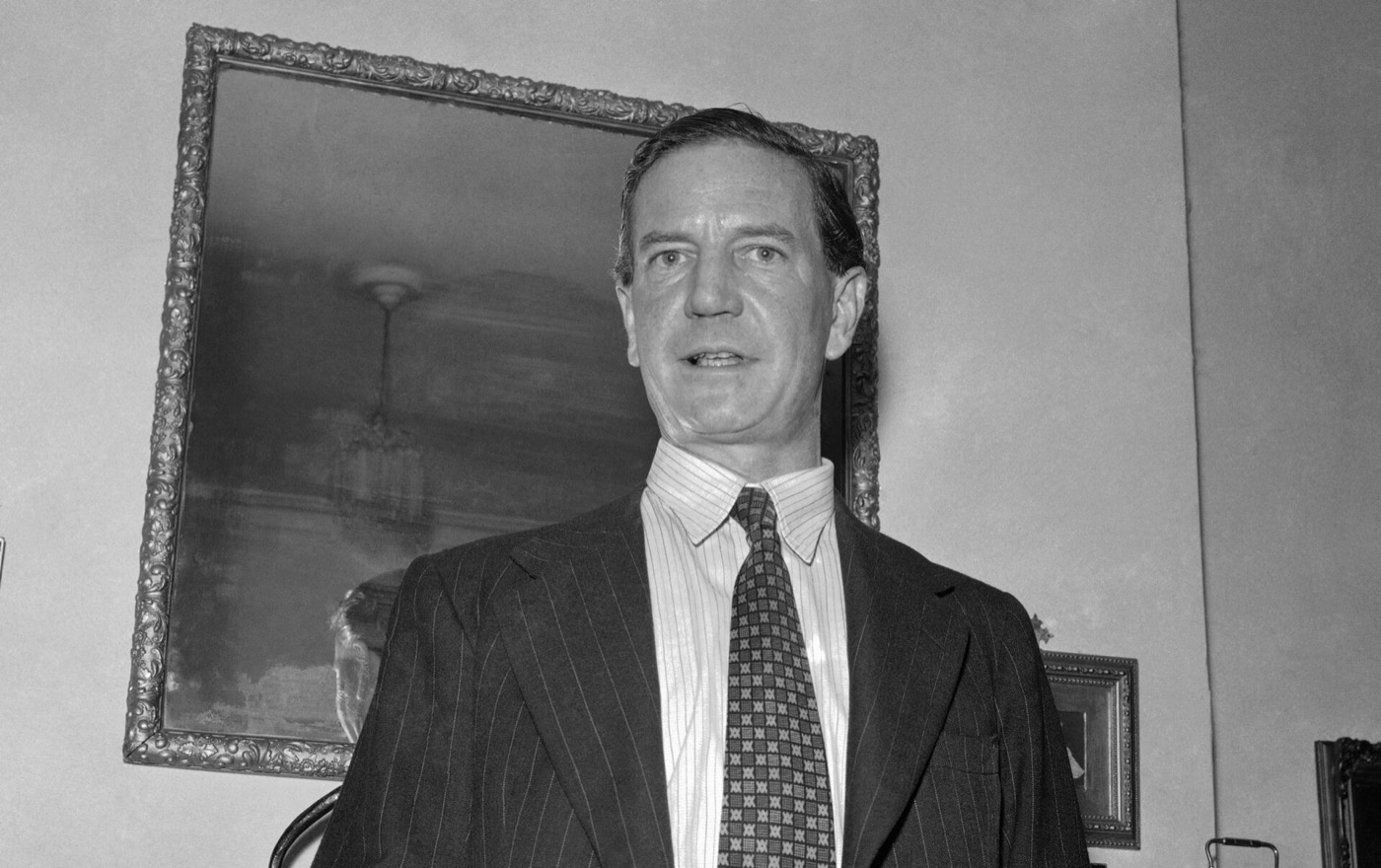
In the 1930s, Soviet intelligence undertook one of the most ambitious recruitment operations in the history of espionage: rather than buying secrets from disgruntled clerks, it would cultivate brilliant young Britons at the start of their careers, men of the right schools and the right accents who could be guided, over decades, into the very heart of the British establishment. The most famous of these recruits were five Cambridge University men — Kim Philby, Guy Burgess, Donald Maclean, Anthony Blunt, and John Cairncross — who became known as the Cambridge Five. They were not desperate or marginal figures but charming, talented members of the elite, and that was precisely the point. Over the following decades they penetrated the Foreign Office, the security service MI5, the secret intelligence service MI6, and the wartime codebreaking establishment, passing a torrent of British and American secrets to Moscow. Philby rose so high within MI6 that he was considered a future chief of the service — while serving the entire time as a Soviet agent, even as he was nominally in charge of countering the Soviet threat. The ring began to unravel in 1951, when Burgess and Maclean vanished to Moscow one step ahead of exposure; Philby fell under suspicion but was protected by an establishment unable to believe one of its own could be a traitor, and he did not flee to Moscow until 1963. Blunt, by then a knighted royal art adviser, secretly confessed but was not publicly named until 1979. The damage they did — to operations, to agents, to trust between Britain and its allies — was immense and, in places, fatal. This is the story of how five men of the establishment betrayed it from within, and how the establishment's own blindness let them.
Venona: The Secret Code-Break That Exposed the Soviet Spies
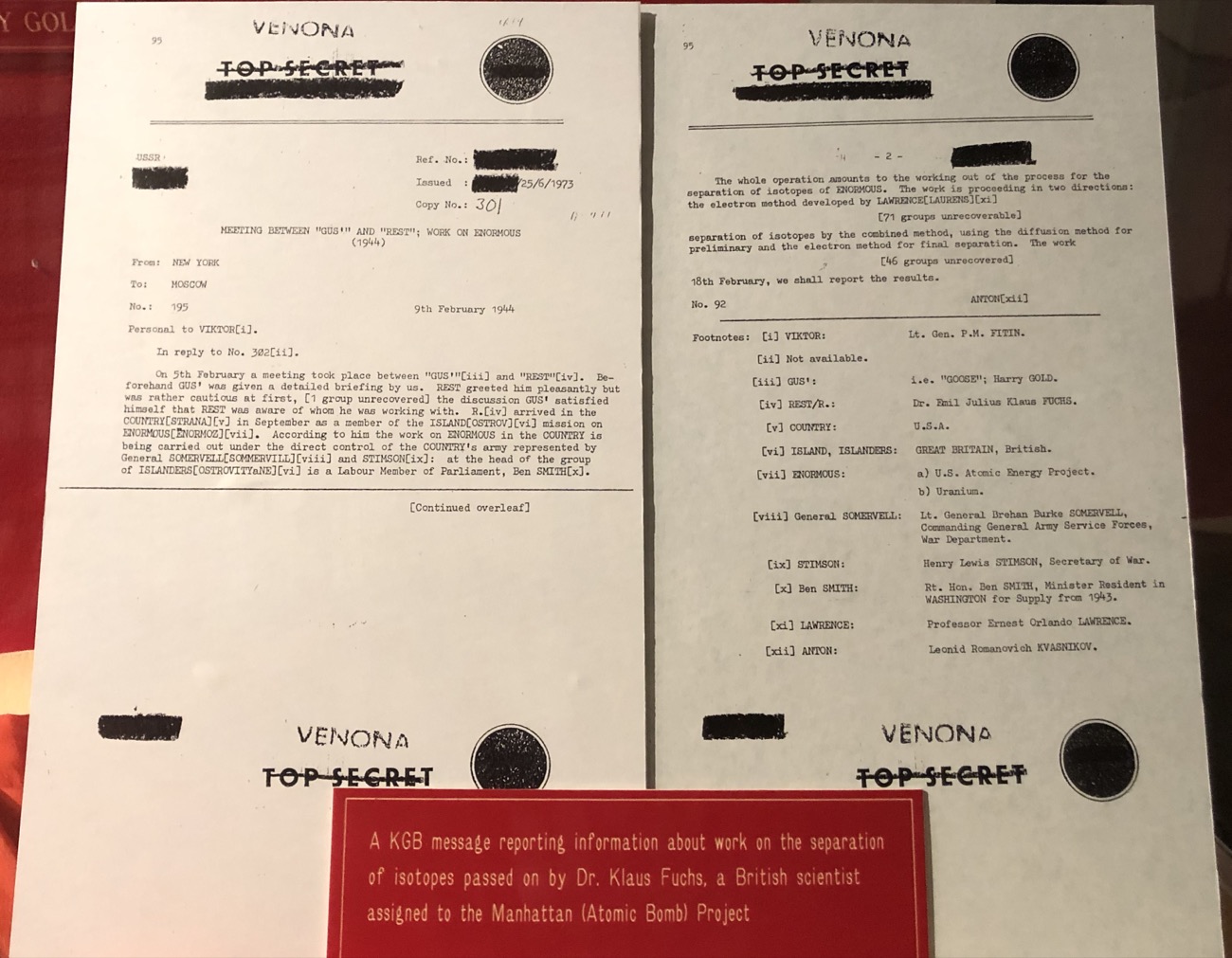
In February 1943, in a converted girls' school outside Washington, a small team of American codebreakers began an attack on a target almost everyone believed was hopeless: the enciphered cable traffic of Soviet intelligence. The Soviets encrypted their most secret messages using a one-time pad, a system that is, in theory, mathematically unbreakable — and the Soviet Union was, at that moment, an ally of the United States in the war against Hitler. Yet the project, later given the codename Venona, would become one of the most consequential intelligence operations of the twentieth century. Exploiting a wartime mistake by Soviet cipher clerks, who had reused pages of supposedly single-use pads, the American cryptanalysts slowly, painstakingly began to read the unreadable. What they found, message by fragmentary message across years of labour, was staggering: the Soviet Union had run a vast espionage campaign inside the United States during the war, with hundreds of sources reaching into the Manhattan Project that built the atomic bomb, the State Department, the Treasury, and the heart of the intelligence services of both America and Britain. Venona helped expose the atomic spy Klaus Fuchs, the ring around Julius and Ethel Rosenberg, and the British traitor Donald Maclean of the Cambridge Five. But the decrypts were guarded with such obsessive secrecy that they could not be used as evidence in open court, and for decades the government knew truths it could not prove and could barely speak. The project remained classified until 1995, when the release of its files rewrote the secret history of the early Cold War. This is the story of the code-break that saw into the heart of Soviet espionage, and of the silence that surrounded it for fifty years.
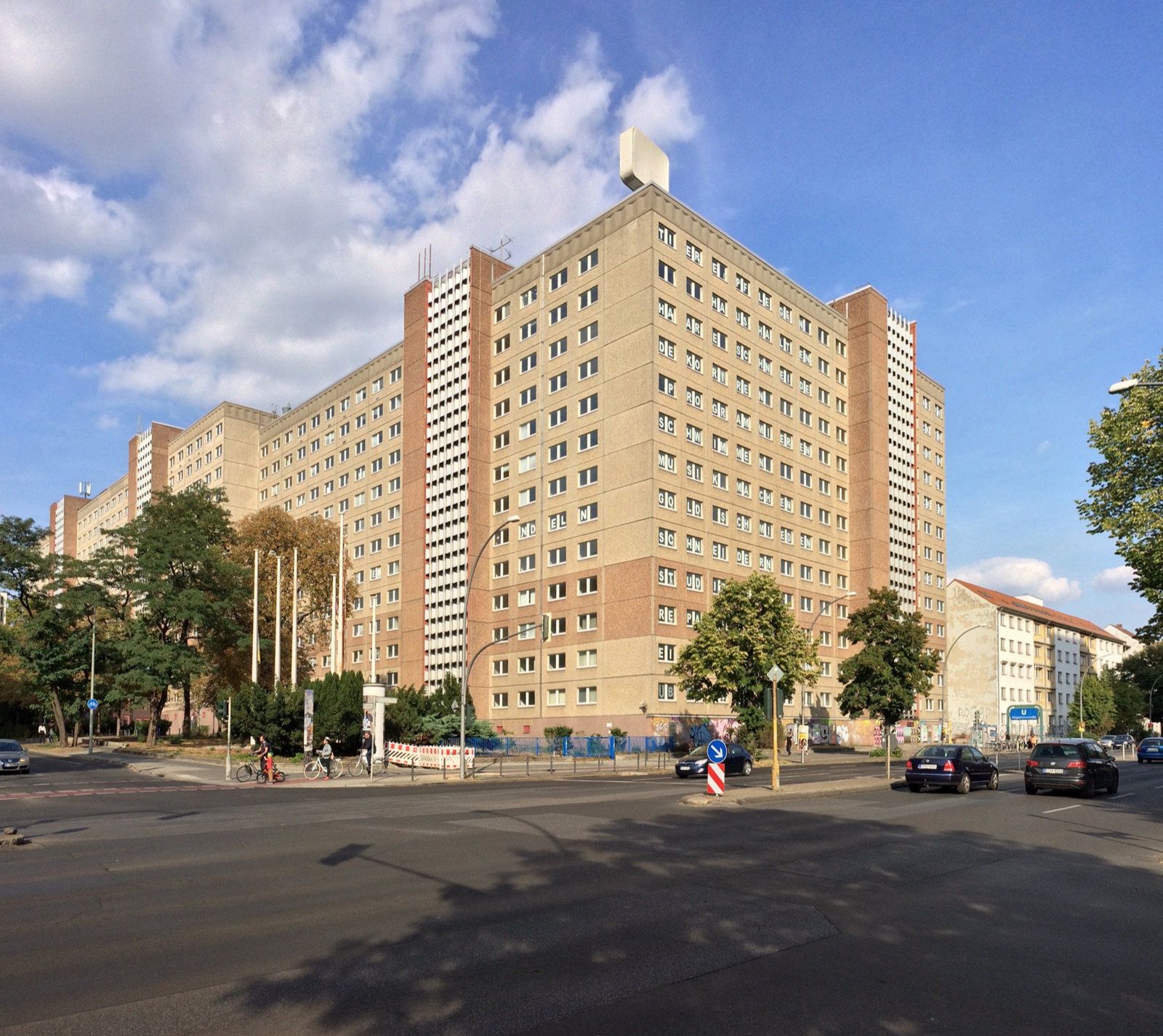
The Stasi Archives
On the evening of Monday, January 15, 1990 — eight weeks after the Berlin Wall opened and four weeks after the Round Table had begun negotiating East Germany's transition — approximately five thousand demonstrators forced their way through the iron gates of the Ministry for State Security headquarters on Normannenstraße in the East Berlin district of Lichtenberg. The Bürgerkomitee 15. Januar (Citizens' Committee of 15 January) had organized the breach in response to evidence that Stasi officers had spent the prior weeks systematically shredding operational files. Inside the headquarters — a complex of 22 connected buildings housing approximately 7,000 of the Ministry's central-office personnel — the demonstrators found Stasi staff still at desks. The shredding stopped that night. Over the following 24 months, the East German interim government, the post-reunification Bundestag, and the citizen committees of fourteen East German cities preserved what would become the most extensive corpus of state-surveillance operational records in modern human history: approximately 111 kilometers of paper files in the central Berlin archive, approximately 47 kilometers in regional offices, 1.7 million photographs, 30,000 video and audio tapes, 15,500 bags of pre-shredded fragments awaiting reconstruction, and the operational, biographical, and personal-network files of an estimated 5.6 million individuals. The Stasi-Unterlagen-Gesetz (Stasi Records Act) of December 20, 1991 established the Federal Commissioner for the Records of the State Security Service (BStU), with East German pastor and civil-rights activist Joachim Gauck as its founding director. The Records Act authorized any individual to request their personal Stasi file. By the end of 2024, the BStU had processed approximately 7.4 million such requests. The aggregate human record of what those requesters read — who had informed on them, what had been documented, what had been done in consequence — constitutes the most comprehensive case study of institutional state surveillance against a domestic civilian population that the historical record contains.