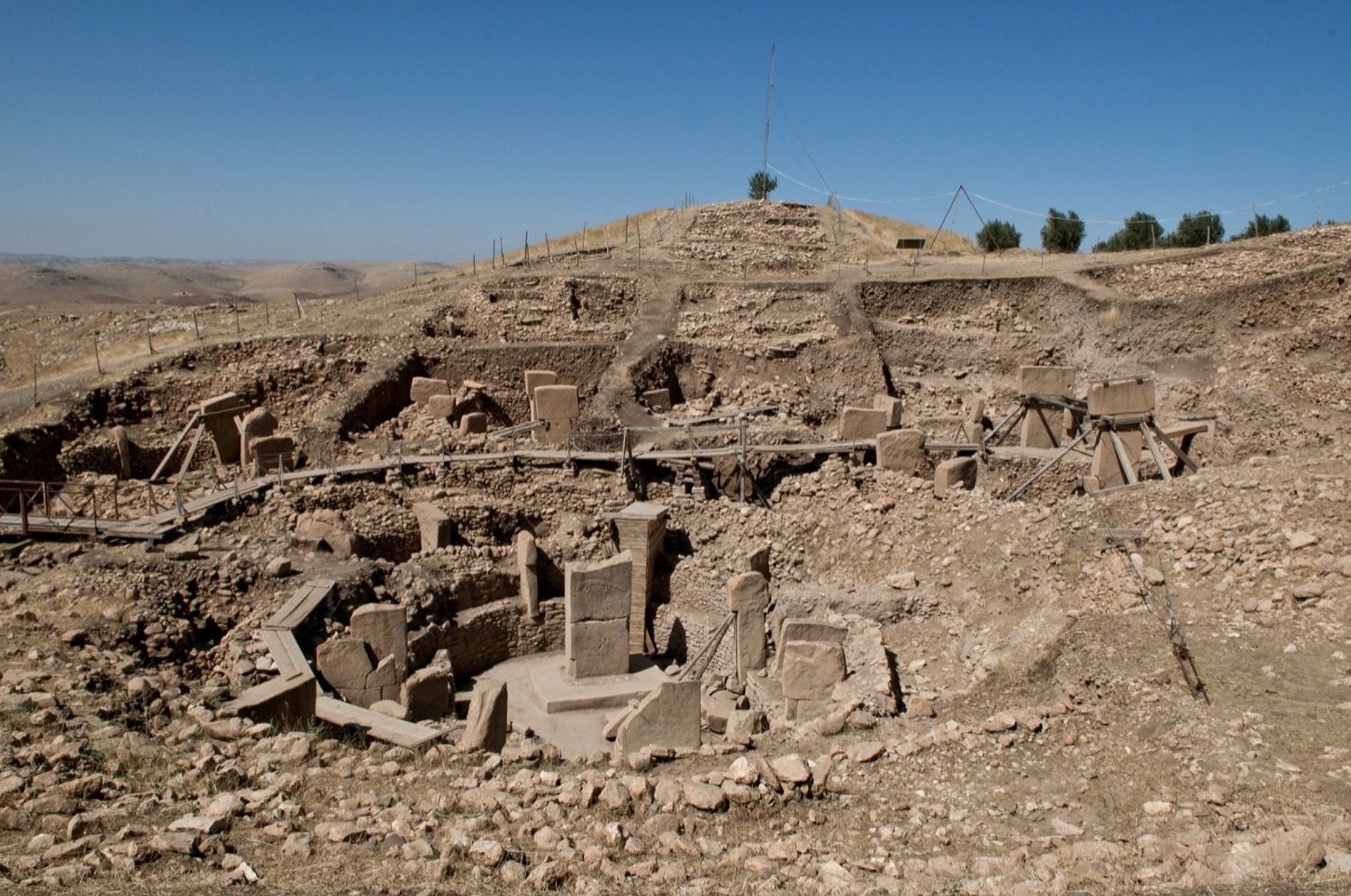
The great enclosures of Göbekli Tepe, their T-shaped limestone pillars standing where hunter-gatherers raised them some 11,500 years ago — thousands of years before Stonehenge or the pyramids. Wikimedia Commons / Teomancimit, CC BY-SA 3.0.
Göbekli Tepe: The Temple That Rewrote Prehistory
Turkey, c. 9500 BCE — On a barren hilltop in southeastern Anatolia, hunter-gatherers raised rings of towering carved stone pillars some six thousand years before Stonehenge — before pottery, before writing, and before farming. Göbekli Tepe overturned the story of how civilisation began
- Category
- Ancient & Historical Mysteries
- Published
- Length
- 3,550 words · 18 min read
- Author
- The editors
Few archaeological discoveries have overturned settled assumptions as completely as Göbekli Tepe. For most of the twentieth century, the story of how civilisation began ran in a familiar order: first, at the end of the last Ice Age, human beings learned to farm; farming produced surplus food and settled villages; villages grew into towns and cities; and only then, with the wealth and organisation that agriculture allowed, could societies afford priests, temples, and monuments. Grand communal architecture was the fruit of civilisation, not its seed. Göbekli Tepe broke that sequence. Here was monumental building on an enormous scale — rings of carved megaliths demanding the coordinated labour of hundreds — erected by people who had not yet, so far as we can tell, become farmers at all. The temple, it seemed, came before the town. That single inversion sent a shock through the study of prehistory, and it is why a hill in southeastern Turkey has become one of the most important sites ever excavated. It is also, inevitably, why it has been seized upon by those who would spin its genuine wonder into fantasies of lost civilisations. The truth is remarkable enough without them.
This is the story of the world's first temple.
A hill of carved stone
The site had, in a sense, been found before it was understood. In 1963, a survey by American and Turkish researchers noted the hill and its scatter of stone, but, seeing broken limestone slabs and assuming they were gravestones from a medieval cemetery, recorded the place as archaeologically minor and moved on. It was one of the great missed discoveries of the century. Three decades later, in 1994, the German archaeologist Klaus Schmidt, who had been working at the nearby Neolithic site of Nevalı Çori, re-examined the hill, recognised the broken slabs not as medieval graves but as the tops of enormous prehistoric pillars, and grasped almost at once that he was standing on something extraordinary. Systematic excavation began in 1995, under the German Archaeological Institute, and Schmidt would devote the rest of his life to the site until his death in 2014.
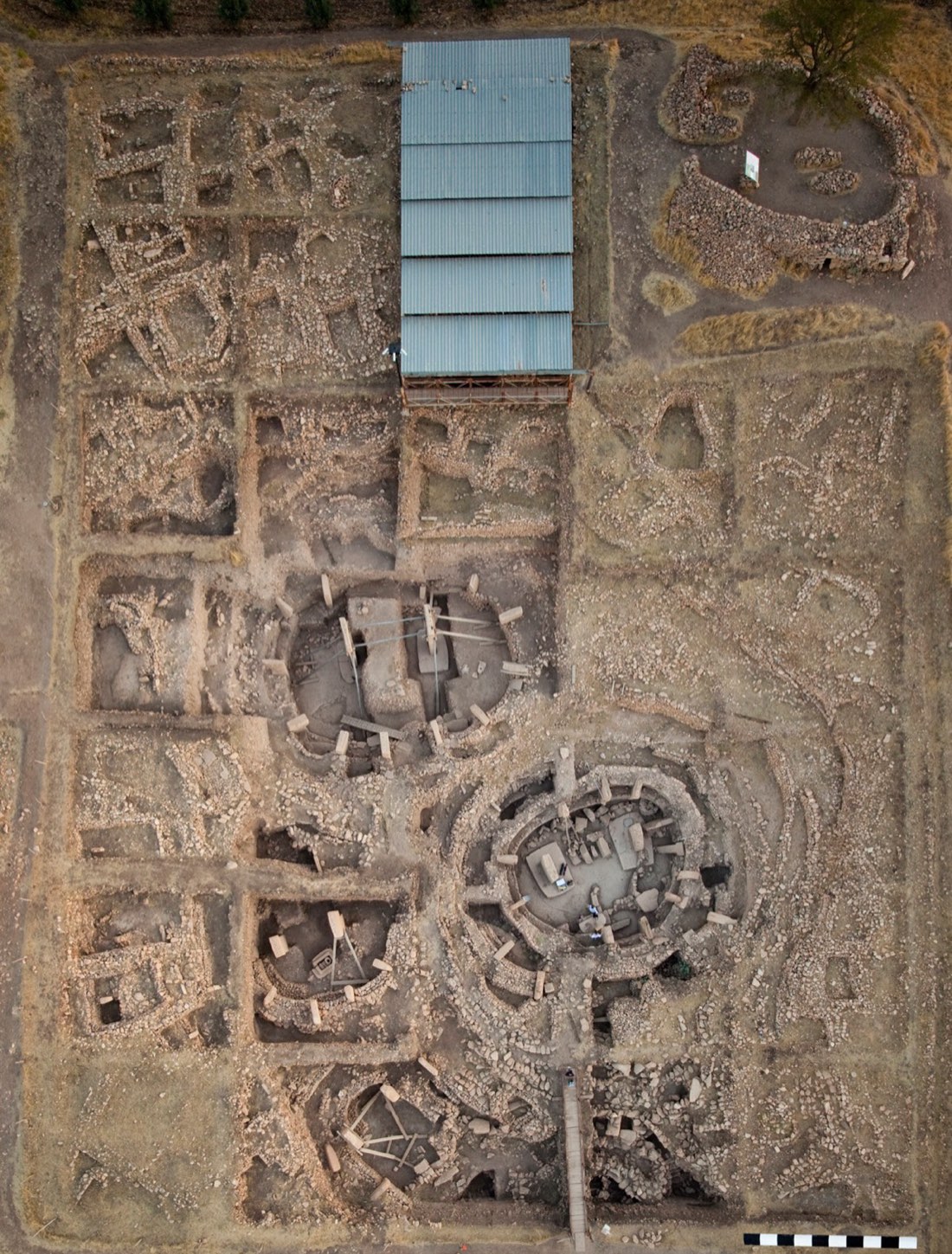
What Schmidt uncovered exceeded any reasonable expectation. Beneath the soil of the mound lay a series of great enclosures, each formed of a ring of T-shaped limestone pillars set into the ground and linked by stone walls and benches, with two still larger pillars standing at the centre. The pillars had been quarried from the surrounding limestone, shaped, transported, raised, and in many cases carved — all by a people who had no metal tools, only stone, bone, and wood. And the radiocarbon dates, when they came, were almost hard to believe: the oldest layers reached back to around 9500 BCE and before. This was not merely old. It was older than essentially every other monument humanity had ever been credited with building — a structure raised at the very dawn of the Neolithic, when the last Ice Age had only recently loosened its grip.
The pillars and the enclosures
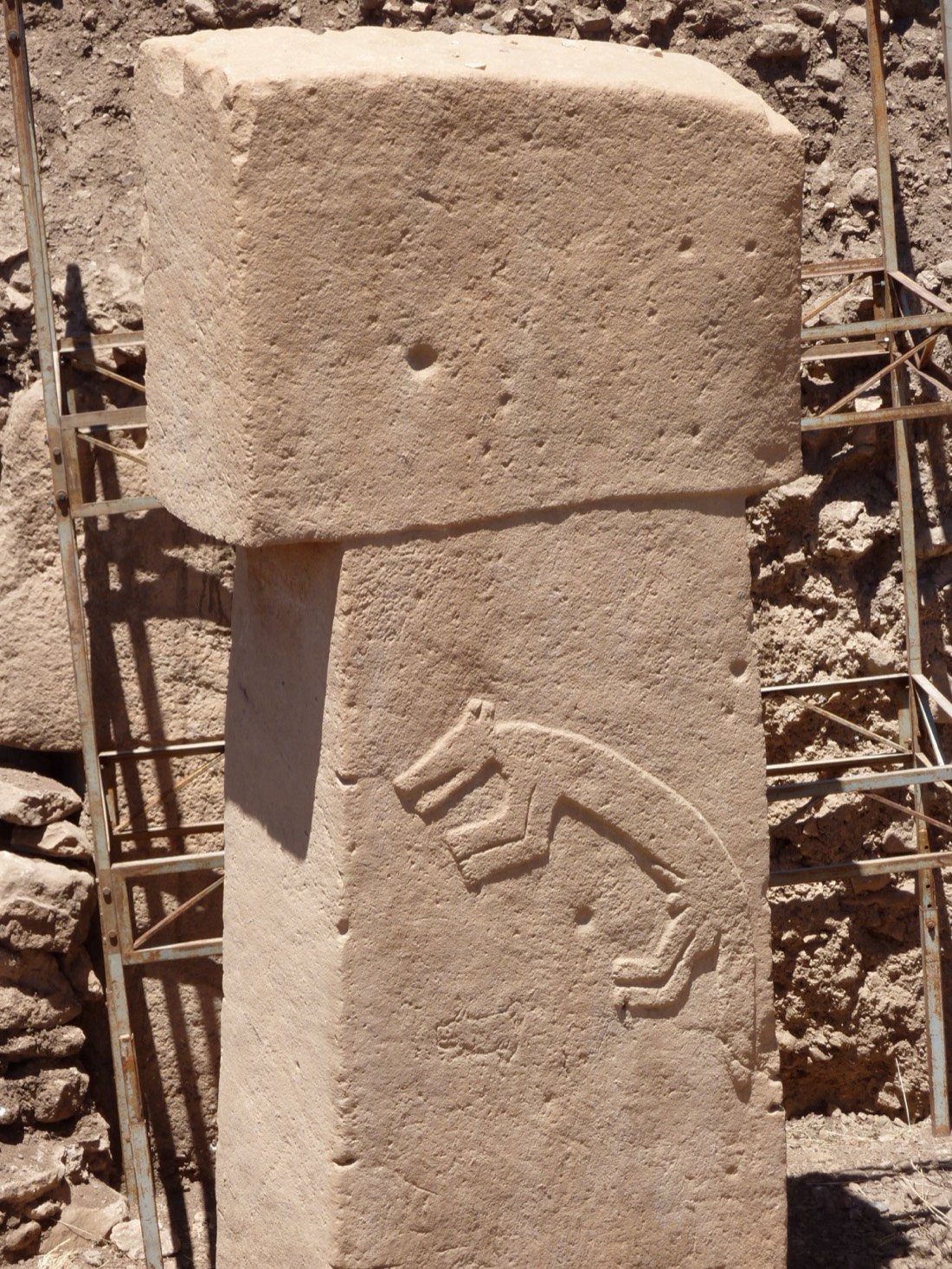
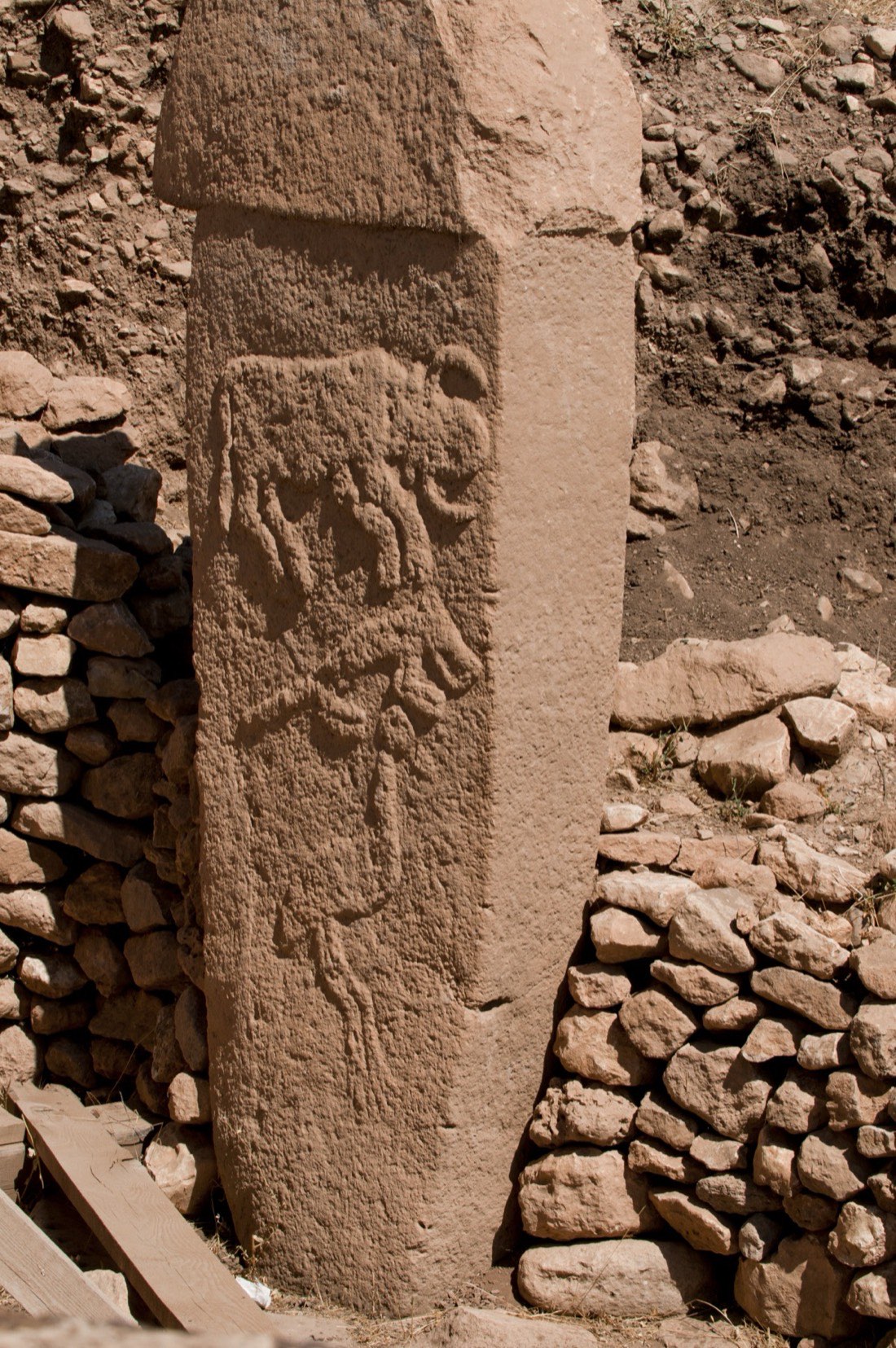
The architecture of Göbekli Tepe is its first astonishment. The T-shaped pillars are not random standing stones but clearly deliberate forms: a tall vertical shaft topped by a broad horizontal capital, so that the whole resembles a great letter T. On many of them, carved in low relief, are human arms bending down the sides of the shaft, with hands meeting above a belt or loincloth — a detail that transforms the reading of the whole structure. The pillars are not merely posts; they appear to be stylised anthropomorphic beings, abstract figures with the head implied by the horizontal top, standing in a ring and facing inward toward the two great central pillars. Whether these represent ancestors, spirits, gods, or something for which we have no word, they turn each enclosure into a kind of gathering of stone figures.
The scale of the undertaking is what makes the builders' identity so remarkable. Raising a single pillar meant quarrying a monolith weighing several tons from the limestone bedrock — one unfinished example still lying in a nearby quarry is over seven metres long — moving it without draft animals or wheels, shaping and carving it with stone tools, and setting it upright in a prepared socket. Doing this many times over, to build ring after ring, required not just labour but organisation: the mobilisation and feeding of a substantial workforce, coordinated toward a shared and entirely non-utilitarian goal. That such an effort was mounted by people without cities, without agriculture, without any of the machinery of a state, is precisely what makes the site so important. It is evidence that large numbers of Stone Age hunter-gatherers could come together and accomplish something monumental.
The animals in the stone
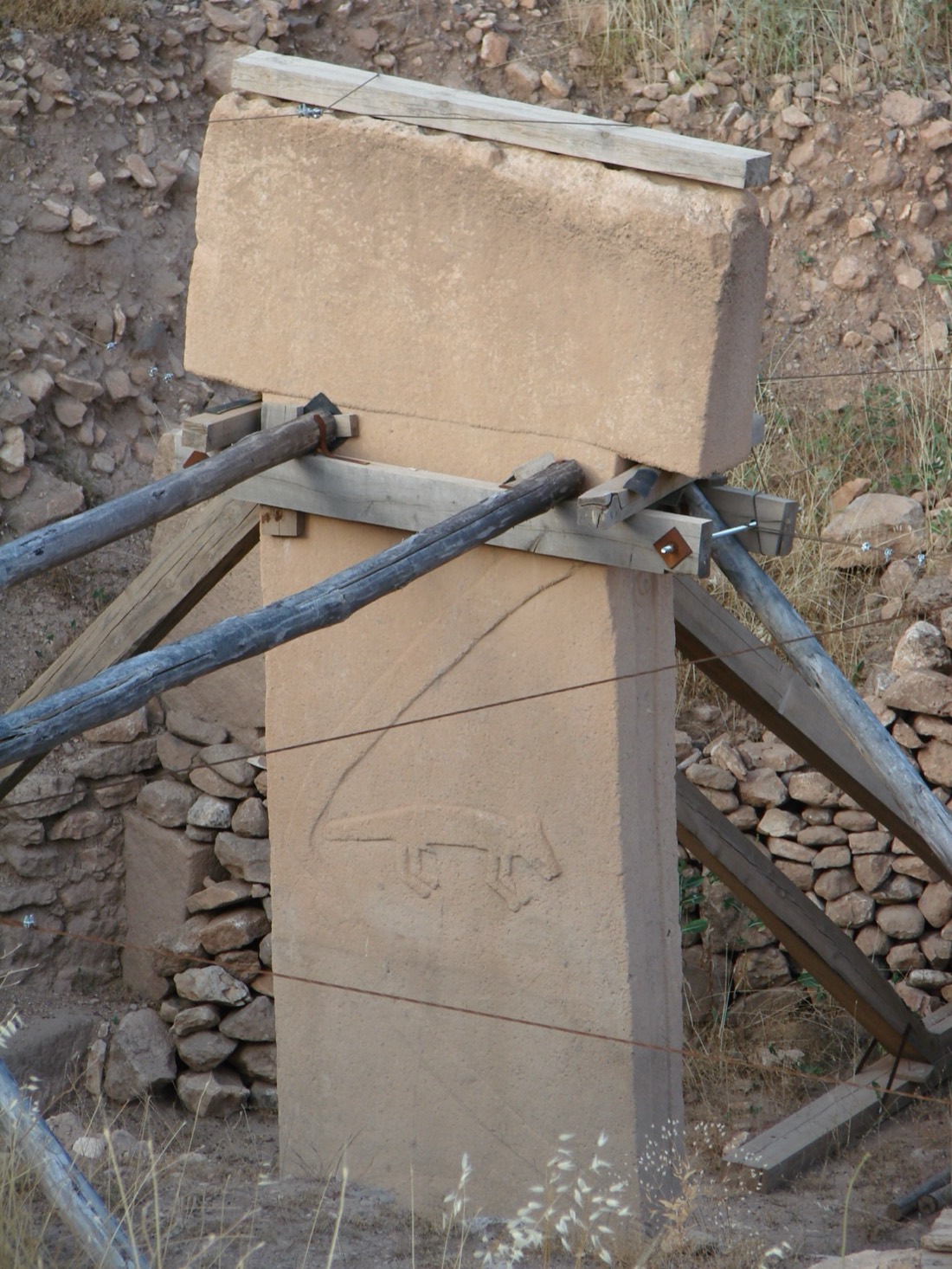
If the pillars are the skeleton of Göbekli Tepe, the carvings are its strange, vivid flesh. Across the monoliths march an entire bestiary of the wild: foxes, boars, aurochs, gazelles, snakes in writhing bundles, scorpions, spiders, and birds — cranes and, above all, vultures. The carving ranges from flat relief to nearly three-dimensional sculpture, with some creatures projecting boldly from the stone. The animals are overwhelmingly wild and often dangerous, and they are rendered with an attentiveness that speaks of a people intimately bound to the natural world they hunted and feared. What the imagery meant — whether the animals were totems, clan symbols, guardians, participants in myth, or actors in beliefs about death and the spirit world — we cannot know. But the consistency and skill of the carving make clear that this was a rich and deliberate symbolic language, not decoration.
Vultures recur with particular emphasis, and this has invited cautious interpretation. In the Neolithic Near East, there is evidence of mortuary practices in which the dead were exposed and their flesh stripped by scavenging birds before the bones were gathered — so-called excarnation or "sky burial." The prominence of vultures at Göbekli Tepe, together with imagery elsewhere in the region linking birds and human heads, has led some researchers to suspect that the enclosures were bound up with rites concerning death and the dead. This remains a hypothesis, offered tentatively by serious scholars, and it is a good example of the difference between disciplined inference from the evidence and the free-floating speculation the site so often attracts.
Temple before the city?
The interpretation that made Göbekli Tepe famous was Schmidt's bold reading of it as, in essence, the world's first temple — a purely ritual sanctuary, built for gathering and worship rather than for daily living. Schmidt argued that the site showed no clear signs of ordinary domestic habitation in its monumental phase: no obvious houses, hearths for cooking in the normal way, or the debris of settled life he expected, only the great enclosures and the remains of what he read as large-scale communal feasting. From this he drew his celebrated thesis: that the drive to come together for ritual and monument-building was itself a powerful force pushing scattered foragers toward permanent gathering, food storage, and ultimately the domestication of the wild grains that grew in these very hills — that the sacred, not the practical, may have midwifed the Neolithic Revolution. It was an elegant and provocative inversion of the standard story, and it captured the world's imagination.
Like all bold theses, it has been complicated by further work. More recent excavation and analysis have found evidence that people did carry out domestic activities at Göbekli Tepe — traces of water management, tool-making, and habitation — suggesting the sharp division between "temple" and "settlement" may be too clean, and that the site was a place where people lived as well as gathered and built. Some researchers now prefer to see it less as a pure sanctuary set apart from life than as a large communal centre in which the ritual and the everyday were interwoven. This is not a debunking of the site's importance; it is normal science, refining a first dramatic interpretation as more is learned. The core fact — monumental construction by pre-agricultural or early-agricultural hunter-gatherers — stands firm. The precise nature of the place, and the exact relationship between its building and the birth of farming, remain open and actively studied questions.
The setting sharpens the significance. Göbekli Tepe rose at a pivotal moment in the Earth's climate, in the centuries after the end of the last Ice Age, when a warming world was transforming the landscapes of the Near East. The hills of this region were, at that time, rich in the wild ancestors of the crops that would become the foundation of Old World agriculture — and the point is not incidental. Genetic studies of einkorn wheat have traced its domestication to the very area around Göbekli Tepe, near the slopes of the nearby Karacadağ range. In other words, the world's oldest monumental sanctuary stands in the same corner of Anatolia where one of humanity's first crops was tamed, at roughly the same threshold of time. Whether the gathering of people to build and worship helped push them toward cultivating those wild grains — Schmidt's hypothesis — or whether the two developments simply unfolded together in a region unusually blessed with the raw materials of both, the coincidence of place and moment is extraordinary. Göbekli Tepe sits precisely at the hinge between the world of the hunter and the world of the farmer.
A wider world, and a warning
Göbekli Tepe is no longer alone. As archaeologists have looked across the surrounding region — the rolling country of southeastern Anatolia now called the Taş Tepeler, or "Stone Hills" — they have found a whole cluster of related sites of similar antiquity: Nevalı Çori, where Schmidt first saw the T-pillar form; Karahan Tepe, with its own enclosures and startling carvings; and others still being uncovered. This matters enormously, because it shows that Göbekli Tepe was not a freakish one-off but the grandest known expression of a widespread Neolithic culture, a whole society of early Anatolian peoples who shared this monumental, symbolic tradition. Far from being inexplicable, the site fits into a growing and coherent picture of a formative moment in human history — one that archaeology is steadily filling in.
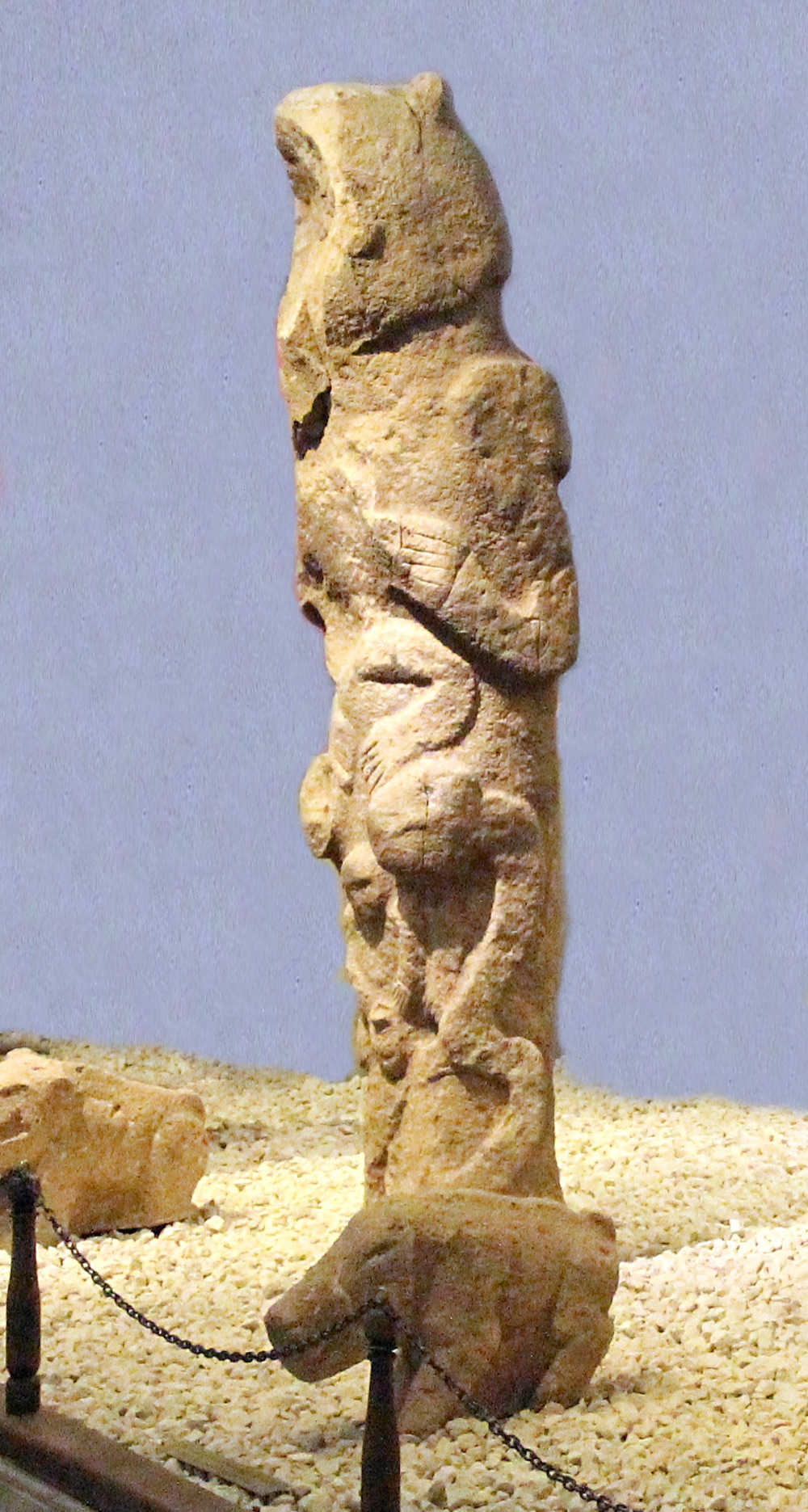
It is precisely because Göbekli Tepe is so genuinely astonishing that it has become a magnet for pseudoarchaeology. Its age and sophistication are routinely enlisted as "proof" of a lost advanced civilisation wiped out at the end of the Ice Age, or of contact with beings from elsewhere; one carved pillar, the so-called Vulture Stone, has been claimed to encode a record of a comet impact, a reading the site's excavators reject and that rests on a strained interpretation of the imagery. These claims follow a familiar pattern: take a real and impressive achievement of ancient people, declare it impossible for those people to have managed, and substitute a more exotic explanation. The move is not only unsupported by the evidence; it quietly insults the human beings who actually did the work.
What it means
Göbekli Tepe endures as one of the most consequential discoveries in the history of archaeology, not because it defies explanation but because it reset the starting point of the human story. Before it, the temple was the crown of civilisation; after it, the temple — or something like it — looks like one of civilisation's foundations. The site tells us that the deep human impulses toward the sacred, the communal, and the monumental did not wait for cities and kings but were present at the very threshold of the Neolithic, among people still living by the hunt. And it reminds us how much of that early world remains buried, literally: only a fraction of the hill has been excavated, and the surrounding region is yielding new sites faster than they can be studied. The full story of these Anatolian builders is still being written.
In the end, the pillars of Göbekli Tepe stand as a monument to human capacity itself. Eleven and a half thousand years ago, on a hilltop above the plains of what is now southeastern Turkey, people with no metal, no writing, no wheel, and no cities quarried and raised rings of great carved stones, populated them with a menagerie of animals and with figures that may have been their gods or their ancestors, gathered there across generations, and then, for reasons we cannot recover, buried the whole thing and left it to the millennia. They did this not because they had to but because they were moved to — by belief, by the need to come together, by something we can recognise across all that distance of time even when we cannot name it. That is the true wonder of Göbekli Tepe, and it needs no embellishment. The people who built it were not gods or aliens or the survivors of some drowned Atlantis. They were us, near the very beginning, already reaching for something greater than survival — and already able, together, to make it real in stone.
In the end, Göbekli Tepe is a place that enlarges our sense of what human beings have always been. It took a hill mistaken for a medieval graveyard, a persistent archaeologist, and a set of radiocarbon dates that seemed at first impossible, to reveal that the story of civilisation begins earlier, and stranger, than anyone had supposed — not with farmers and their fields, but with foragers who raised a ring of carved giants on a barren summit and gathered in their shadow. The pillars have stood again in the open air for only a few decades, after eleven millennia beneath the earth, and already they have changed how we understand our own origins. They keep their deepest secrets still — why they were made, what they meant, why they were buried — and in keeping them they remind us that the past is not a settled tale but a country we are only beginning to explore. Göbekli Tepe is not a riddle handed down from some lost or alien world. It is a message from the dawn of our own.
Inspired this / based on it
Various
One of several documentaries on the site and its overturning of the standard account of the Neolithic.
Filed under
- #gobekli-tepe
- #neolithic
- #archaeology
- #turkey
- #anatolia
- #prehistory
- #hunter-gatherers
- #megalith
- #ancient-history
Click any tag for every article carrying it.
Continue reading
The Antikythera Mechanism: The Ancient Greek Computer
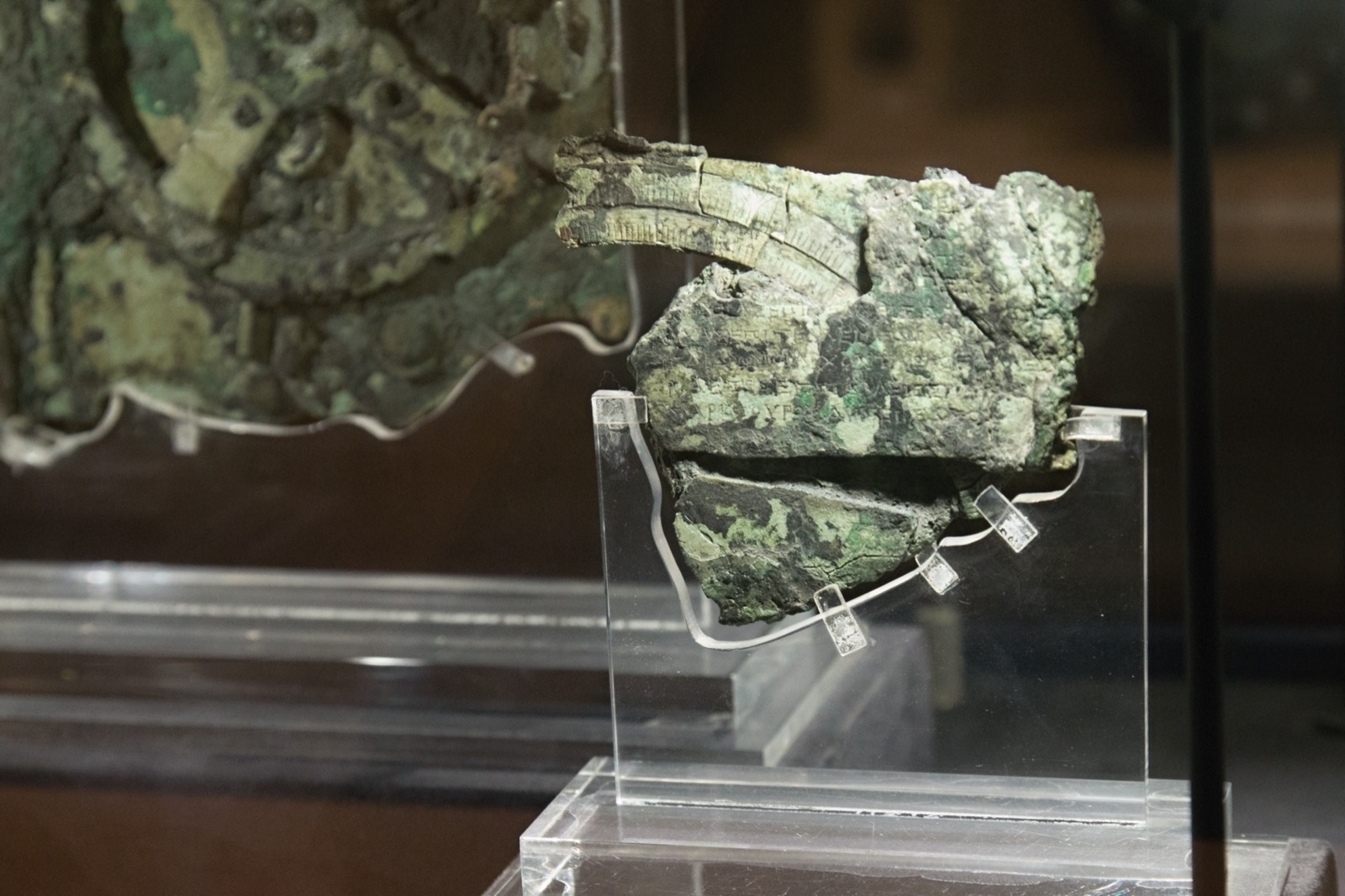
In 1901, Greek sponge divers sheltering from a storm off the tiny island of Antikythera, between Crete and the Peloponnese, stumbled on the wreck of an ancient ship laden with bronze and marble statues, glassware, and coins — a Roman-era cargo of Greek treasures that had gone down around the first century BCE. Among the finds hauled to the surface and shipped to Athens was an unpromising, shoebox-sized lump of corroded bronze and rotted wood, easily overlooked beside the museum's new statues. Months later, an archaeologist noticed something impossible protruding from it: a precisely cut gear wheel. Over the following century, X-rays and then advanced computed tomography would reveal that this lump was the wreckage of a hand-cranked mechanical device containing dozens of finely toothed bronze gears — an astronomical calculator that modeled the movements of the Sun, the Moon, and the planets, predicted eclipses, and tracked the cycles of the Greek calendar and the Olympic Games. Nothing of remotely comparable complexity is known to have existed for well over a thousand years afterward. The Antikythera Mechanism is not a hoax, not a fantasy, and — despite the claims of some — not evidence of anything from beyond the Earth. It is something stranger and more moving: a genuine artifact of ancient Greek genius, and a window onto a world of knowledge that was very nearly lost forever. This is its story.
Stonehenge: The Great Stone Circle of Salisbury Plain
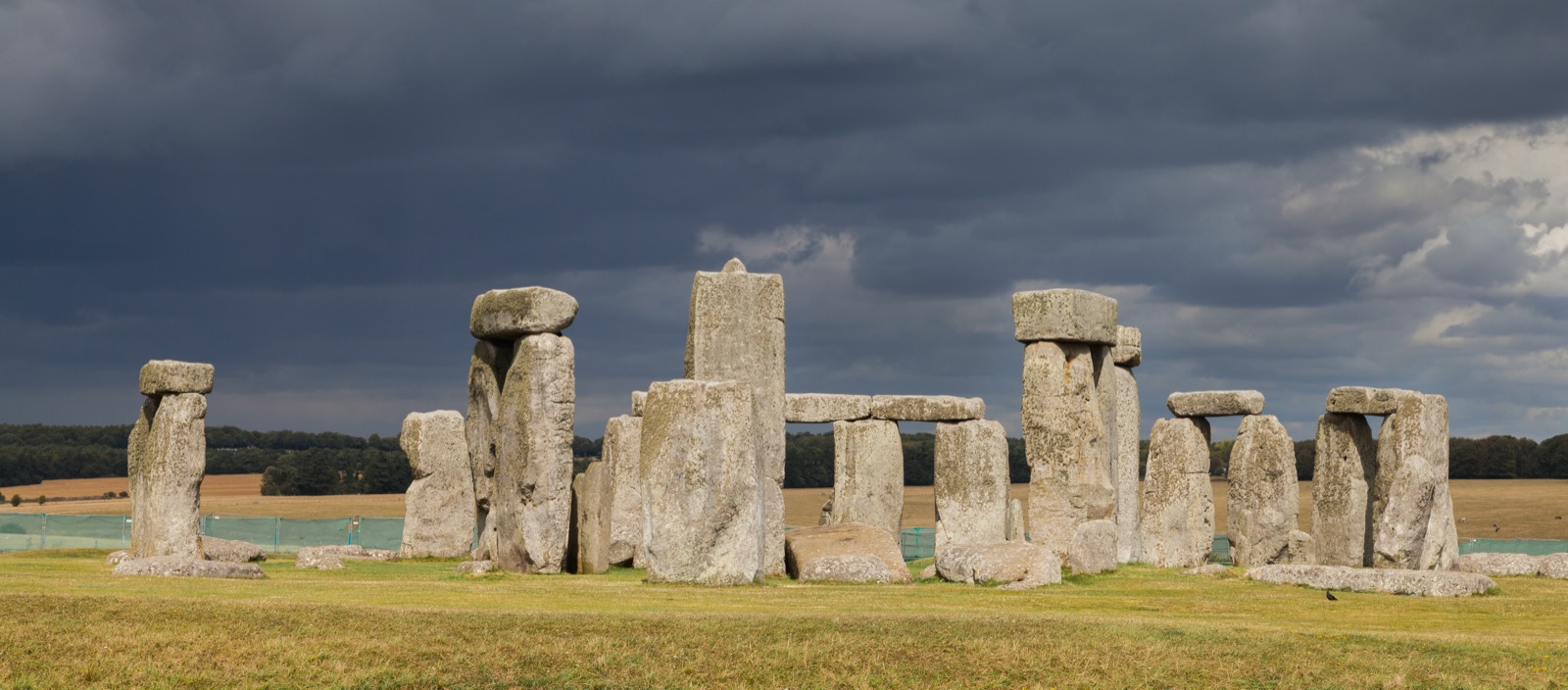
On the open chalk downland of Salisbury Plain in southern England stands the most famous prehistoric monument in the world: a ring of enormous standing stones, some capped by level lintels, arranged with a precision that has drawn wonder and speculation for more than a thousand years. Stonehenge was not built in a day, or in a single lifetime, or by a single people. It grew over roughly fifteen hundred years, from about 3000 BCE, beginning as a simple circular earthwork and cremation cemetery and culminating, centuries later, in the great stone architecture we know — the towering sarsens quarried from the hills to the north, and the smaller 'bluestones' brought, astonishingly, some 150 miles overland from the mountains of west Wales. Its builders, working with antler picks, timber, rope, and muscle, dressed the stones with woodworking joints translated into rock, raised lintels weighing tonnes onto uprights, and aligned the whole monument to the rising and setting of the sun at the solstices. For centuries, outsiders credited the achievement to anyone but the people who actually managed it — to Merlin and giants, to Druids, and in our own age to visitors from the stars. The truth is that Stonehenge is the work of prehistoric Britons of extraordinary skill and organisation. How they built it, we largely understand. Why they built it is a question we are still, carefully, trying to answer. This is the story of the great stone circle.
The Nazca Lines: Giant Drawings in the Peruvian Desert
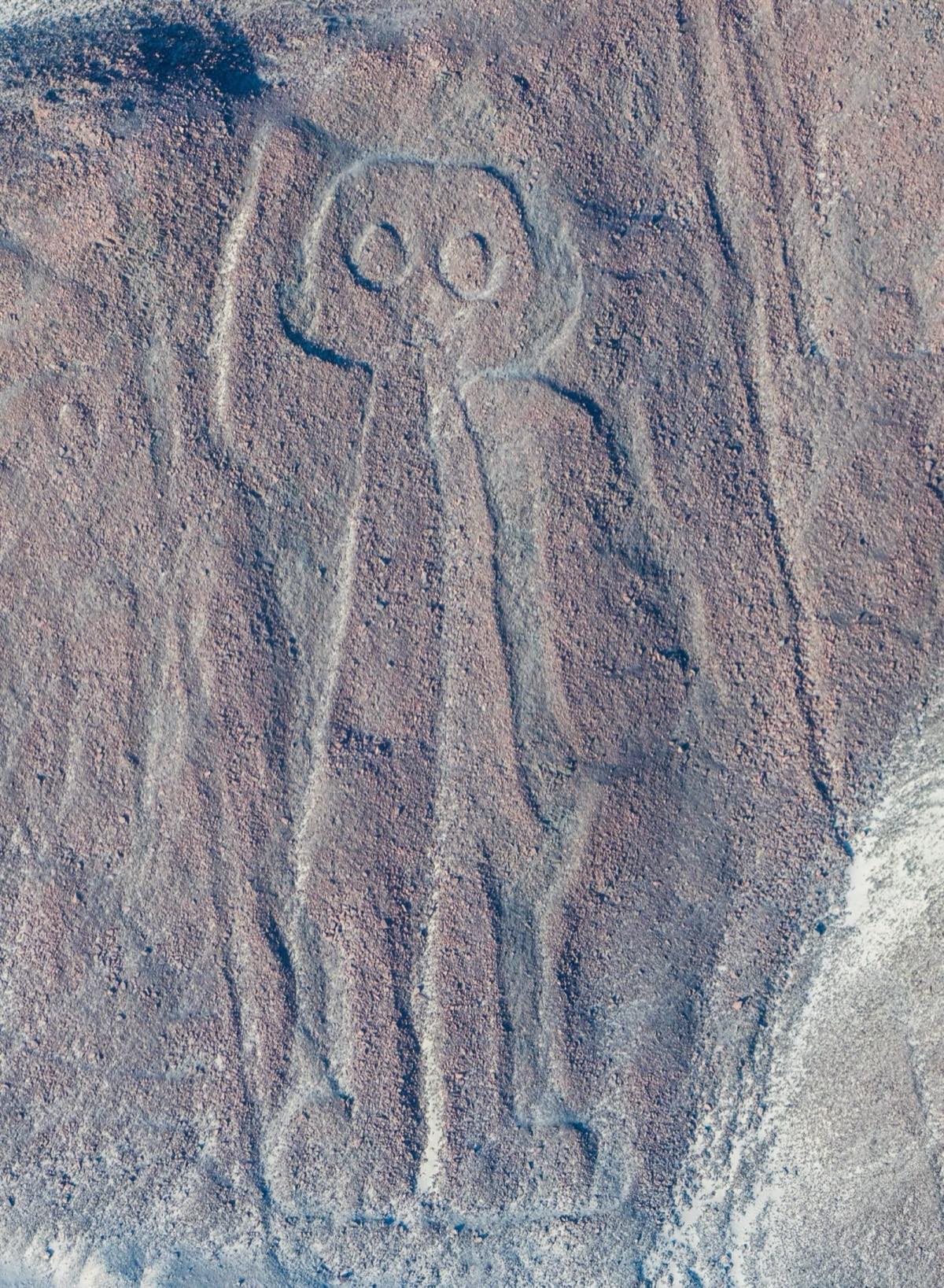
On the arid, wind-still plateau between the towns of Nazca and Palpa in southern Peru lies one of the most extraordinary bodies of ancient art on Earth: hundreds of vast figures and lines etched into the desert floor, so large that many are only fully legible from the air. There are straight lines running ruler-true for kilometres across the pampa; there are trapezoids, triangles, and spirals; and there are some seventy or more great biomorphic figures — a hummingbird, a monkey with a curling tail, a spider, a condor, a heron, a dog, a pair of hands, a flowering tree, and a humanoid figure on a hillside so often nicknamed 'the Astronaut.' They were made by the Nazca people, and by their Paracas predecessors, across roughly a thousand years around the start of the common era, by the simple and ingenious method of clearing away the dark, iron-stained stones of the desert surface to expose the paler ground beneath. Because it almost never rains here, and the wind barely stirs, the drawings have survived for two millennia. How they were made is, in fact, no mystery at all; the techniques are well within the reach of the people who made them, and required no view from the sky and certainly no help from beyond it. The genuine and unsolved question is why — what these enormous figures and lines were for. This is the story of the giant drawings in the desert.