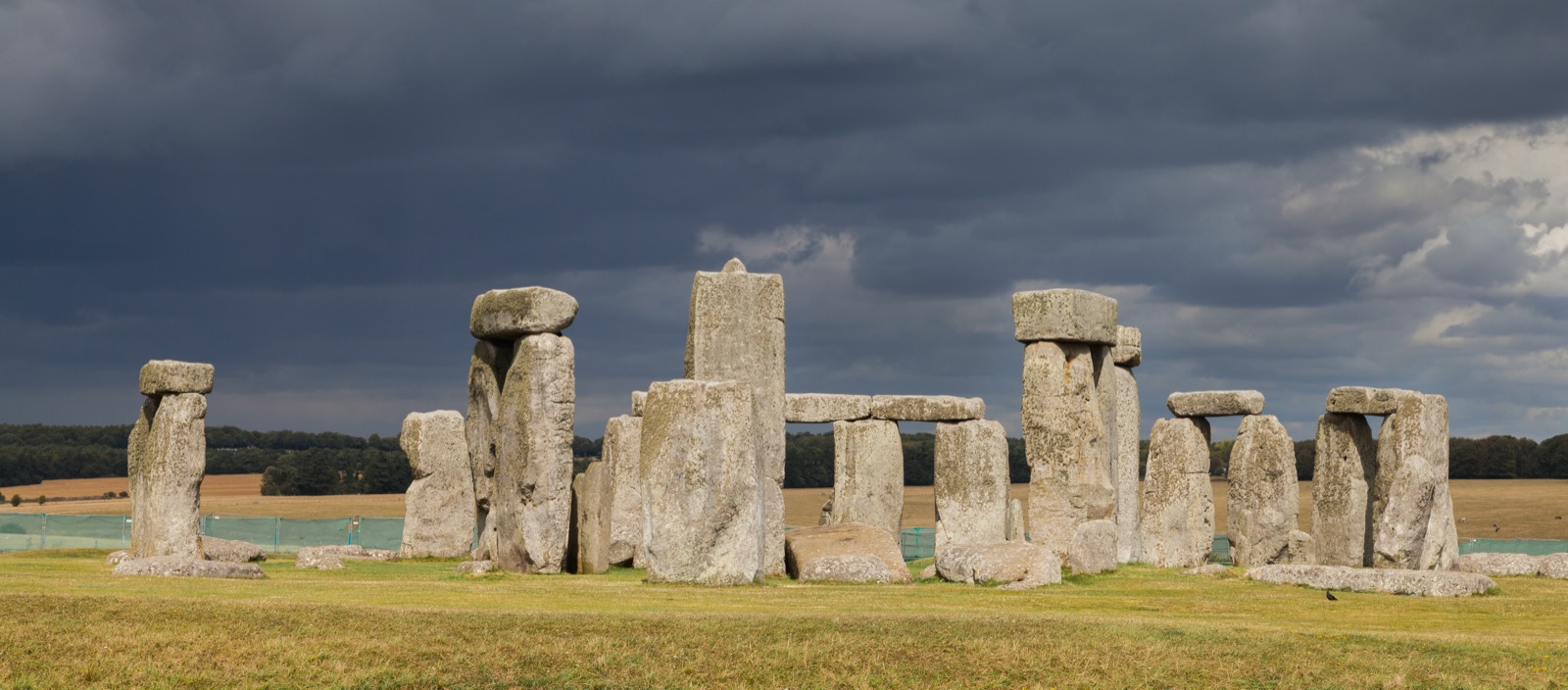
Stonehenge on Salisbury Plain, Wiltshire. The great sarsen circle and its lintels, with the taller trilithons within, represent the culmination of some fifteen centuries of building on the site. Wikimedia Commons / Diego Delso, CC BY-SA 4.0.
Stonehenge: The Great Stone Circle of Salisbury Plain
England, c. 3000–2000 BCE — Over fifteen centuries, Neolithic and Bronze Age Britons raised a circle of colossal stones on a chalk plain, hauling some of them 150 miles from Wales, and aligned it to the turning of the sun. How they built it is largely understood. What it was for remains one of archaeology's great open questions
- Category
- Ancient & Historical Mysteries
- Published
- Length
- 3,550 words · 18 min read
- Author
- The editors
Stonehenge is so familiar an image — the ring of grey stones against the sky — that it is easy to forget how strange and how difficult a thing it actually is. It is not a natural formation or a simple pile of rocks; it is a deliberate work of architecture, planned and executed by people without writing, without metal tools, without the wheel in any useful form, and without draft animals to speak of, who nonetheless quarried, moved, shaped, and raised stones weighing up to thirty tonnes, and did so with such care that the monument still stands, and still catches the solstice sun, five thousand years later. The wonder of Stonehenge is not diminished by understanding it; it is deepened. And understanding it means resisting two opposite temptations: the temptation to declare it an unfathomable mystery beyond the capacity of its makers, which has fed centuries of nonsense from Druids to spacemen, and the opposite temptation to imagine we have it all figured out. The honest position lies between: we now know a great deal about who built Stonehenge, when, and how — and we are still genuinely uncertain, in the deepest sense, about why.
This is the story of the great stone circle of Salisbury Plain.
A monument built over centuries
The first thing to understand about Stonehenge is that "it" is really many monuments in one place, layered across a vast span of time. What survives is the accumulated result of episode after episode of building, altering, and rebuilding over some fifteen hundred years — longer than the span from the Norman Conquest to the present day. The earliest Stonehenge, around 3000 BCE, was not stone at all in its most prominent features but earth: a roughly circular ditch and bank, a henge, enclosing a ring of fifty-six pits known as the Aubrey Holes, which may once have held upright stones or timber posts. In this early phase, and for centuries after, Stonehenge was among the largest cremation cemeteries in Neolithic Britain; the burned remains of scores of people were buried within it, marking the site as a place bound up with the dead from the very beginning.
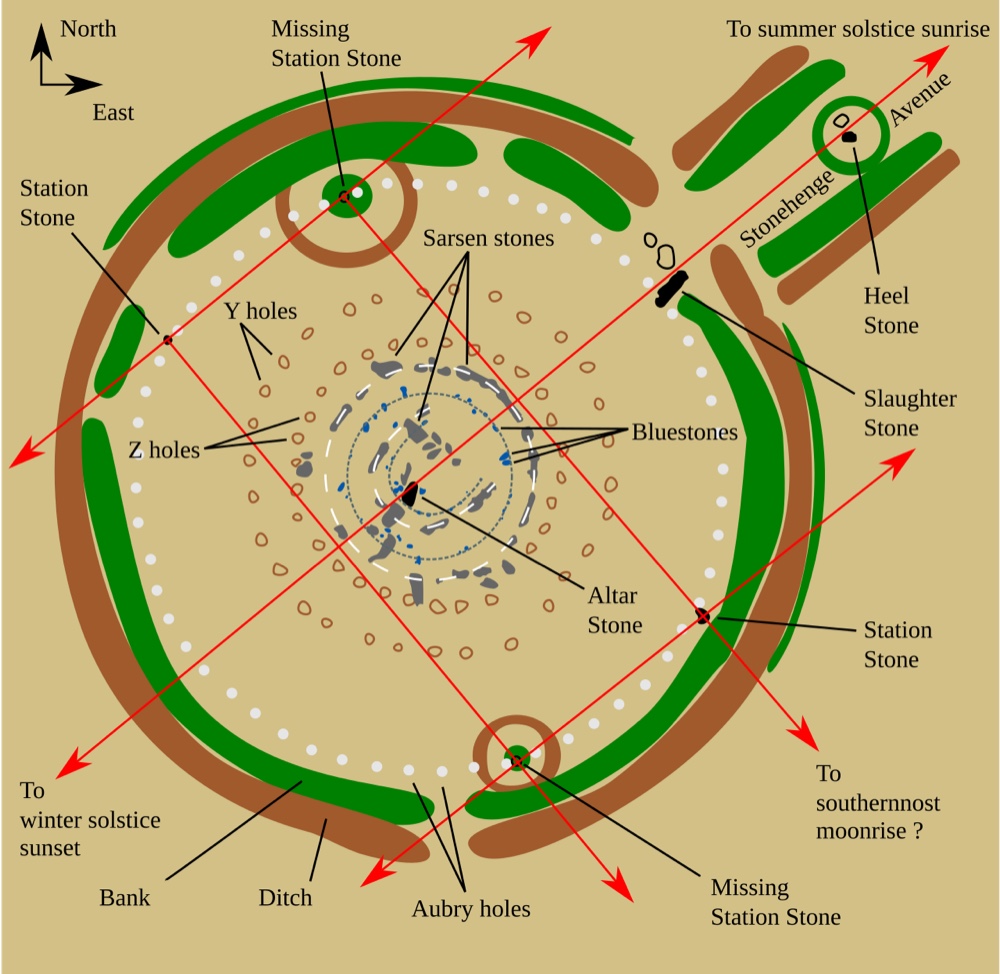
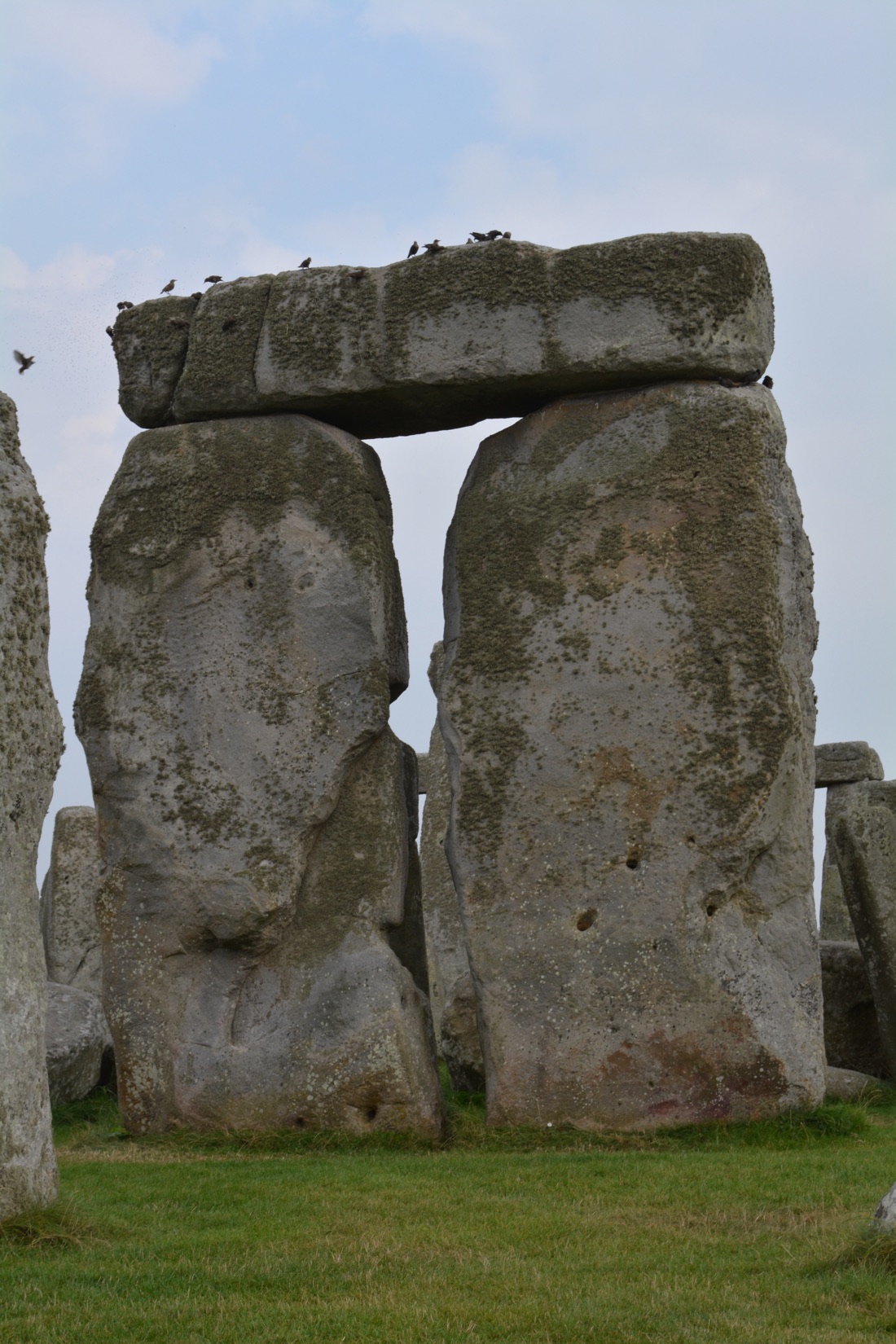
The great stones came in later phases, principally between about 2600 and 2400 BCE, and they too were arranged and rearranged more than once. The design that finally emerged — and that partly survives — is a masterpiece of concentric geometry: an outer ring of about thirty upright sarsen stones, originally capped by a continuous circle of lintels; within it, a horseshoe of five colossal sarsen trilithons, each a pair of uprights bearing a single lintel; and, threaded among these, the smaller bluestones, set in a circle and an inner horseshoe of their own. The whole was approached by an earthwork avenue linking it to the nearby River Avon. To build it, its makers returned to this one spot over dozens of generations, each adding to and reshaping the work of their ancestors — a continuity of purpose across centuries that is itself remarkable.
Sarsens and bluestones
The stones of Stonehenge are of two very different kinds, and the distinction is central to its story. The larger and more dominant are the sarsens — immense blocks of silcrete, an extremely hard sandstone, which form the outer circle and the great trilithons. These are the giants: the tallest standing stone rises over seven metres with its buried base, and the heaviest weigh around thirty tonnes. For a long time their source was uncertain, but in 2020 a geochemical analysis of a core drilled from one of the stones matched them conclusively to West Woods, near Marlborough, about twenty-five kilometres to the north — meaning even the "local" stones had to be dragged a considerable distance across the landscape.
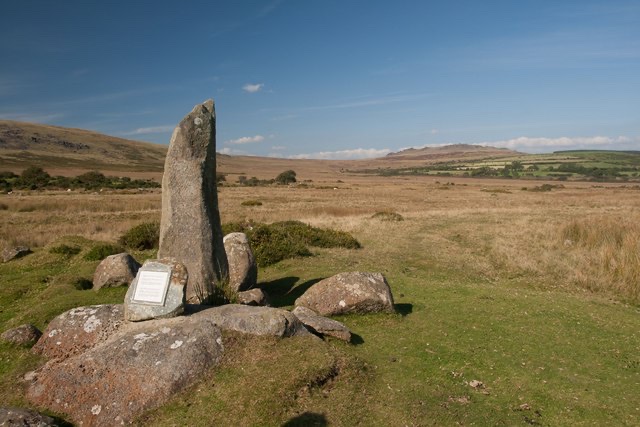
The smaller stones — the bluestones — are the true enigma of transport. They are a mixed group of igneous rocks, mostly dolerite, each weighing a few tonnes, and they pose a question that has fascinated archaeologists for a century: they come from the Preseli Hills of Pembrokeshire, in west Wales, roughly 250 kilometres — 150 miles — from Salisbury Plain. That a Neolithic society chose to bring dozens of multi-tonne stones across such a distance, rather than use the abundant stone nearer to hand, is one of the most striking facts in all of European prehistory. It tells us that these particular stones mattered enormously — that they carried some meaning, some power or origin, worth an almost unimaginable collective effort to bring them to this place.
The long journey of the bluestones
Exactly how the bluestones made their journey has been debated for decades. An older theory held that glaciers had carried them partway during the Ice Age, leaving them closer to Salisbury Plain for the builders to collect; but this has been largely rejected, as no convincing glacial deposit of Preseli stone has been found near Stonehenge, and the evidence now points firmly to deliberate human transport. Archaeologists led by Mike Parker Pearson have identified the actual Neolithic quarries in the Preseli Hills — outcrops such as Carn Goedog and Craig Rhos-y-felin — where the stones were extracted, and have found that some were quarried centuries before they reached Stonehenge, raising the possibility that they first stood in a stone circle in Wales before being moved east. The likeliest means of transport was overland, on sledges and rollers hauled by large teams, and perhaps in part by water; the precise route is unknown, but the human achievement is not in doubt.
If anything, recent research has deepened the mystery rather than dispelling it. In 2024, geochemical analysis of the so-called Altar Stone — a large sandstone slab at the heart of the monument, long assumed to be Welsh — matched it instead to the far north of Scotland, most likely the Orkney region, some 750 kilometres away. If confirmed, this means that at least one of Stonehenge's stones was brought the length of Britain, implying connections and coordination across the whole island in the third millennium BCE that few would have imagined. Far from reducing Stonehenge to a solved problem, the more we learn, the more extraordinary the reach and ambition of its builders appears.
The turning of the sun
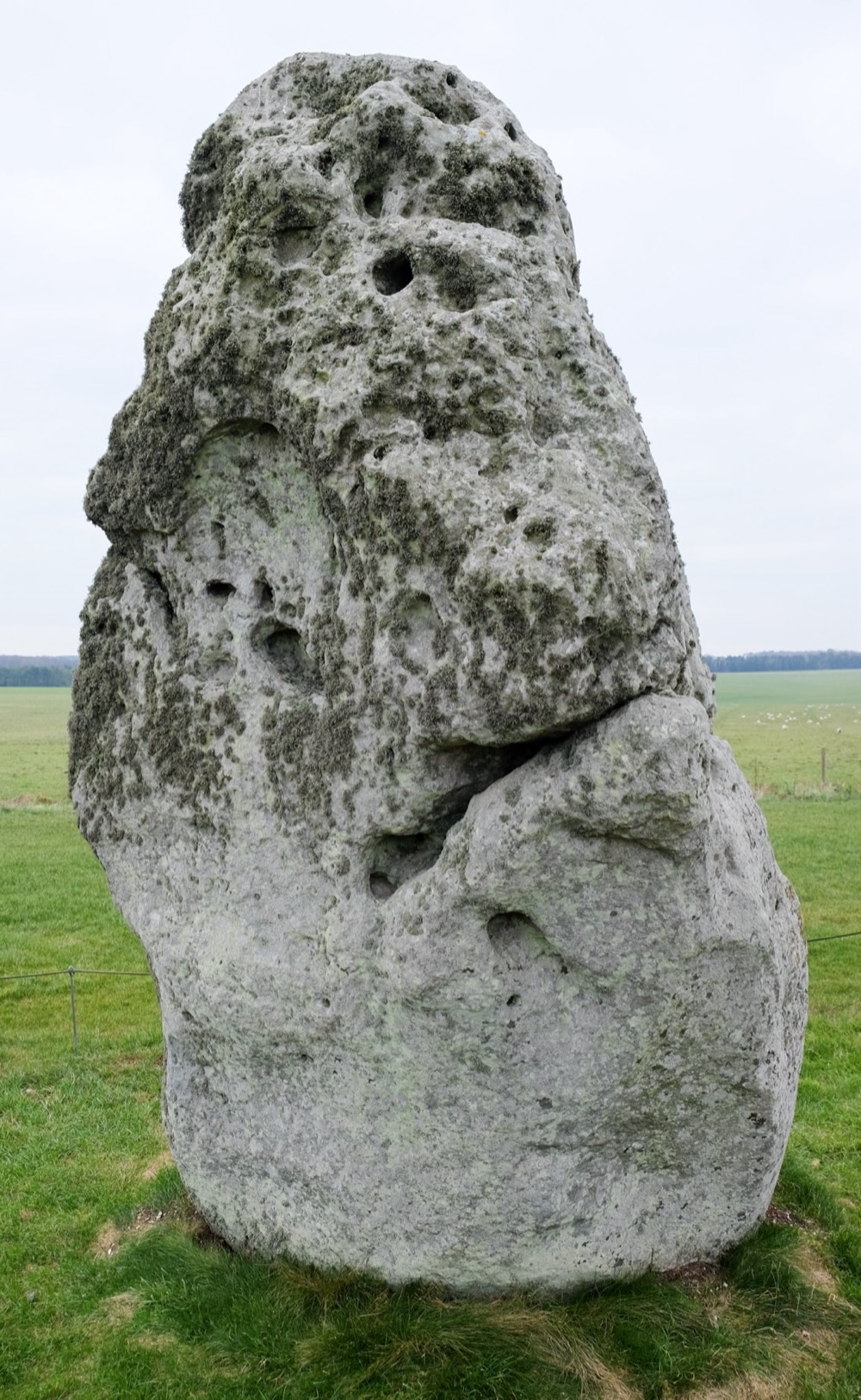
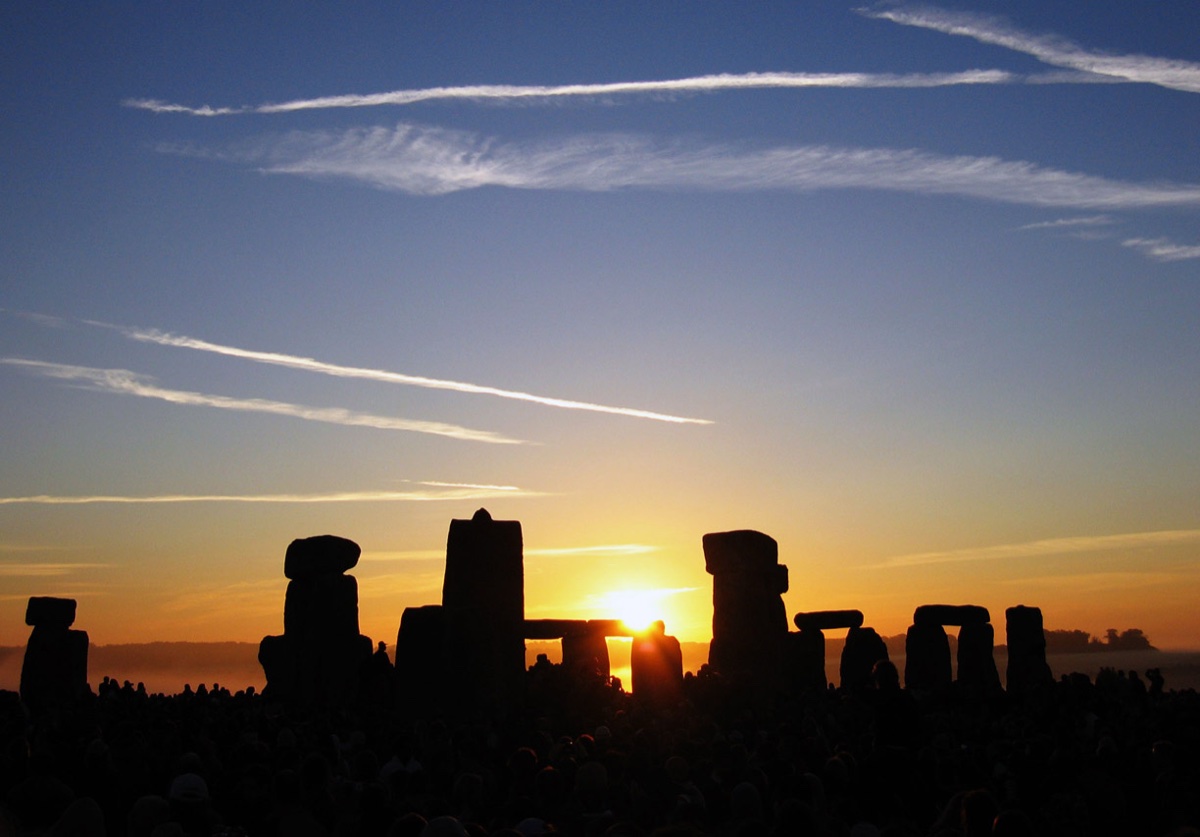
Whatever else Stonehenge was, it was built to face the sun. The monument's principal axis is aligned on the solstices: looking outward along the avenue to the north-east, the axis frames the point of sunrise at the summer solstice, the longest day; and looking the opposite way, it frames the sunset at the winter solstice, the shortest. Standing just outside the circle on this axis is the Heel Stone, a great unshaped sarsen beside which the midsummer sun rises. This alignment is deliberate and unmistakable, and it makes Stonehenge, among other things, a vast instrument for marking the year's turning points — a fixed connection between the monument, the landscape, and the sky.
It is important, though, to keep the astronomy in proportion, because here too enthusiasm has run ahead of evidence. In the 1960s the astronomer Gerald Hawkins, in his book Stonehenge Decoded, argued that the monument was a sophisticated astronomical computer, capable of predicting eclipses and encoding numerous celestial alignments. This claim, in its strong form, has not survived scrutiny: most archaeologists regard the elaborate eclipse -predicting functions as reading far more into the stones than the evidence supports, a pattern imposed rather than intended. What is solidly established is the solstice alignment — real, deliberate, and central. The likelihood is that the great gatherings at Stonehenge centred on the winter solstice, midwinter being a key moment in the agricultural and ritual year, a reading supported by evidence of large midwinter feasts at the nearby settlement of Durrington Walls.
Crucially, Stonehenge was never meant to stand alone. It sits at the heart of one of the richest ceremonial landscapes in the world, and understanding it means understanding its neighbours. Less than three kilometres away lies Durrington Walls, a vast henge enclosing what was once a large settlement and a great timber circle, where the builders of Stonehenge appear to have lived and feasted, especially at midwinter. Nearby stand Woodhenge, the long earthwork known as the Cursus, and hundreds of burial mounds, or barrows, raised by later generations who wished to lie near the sacred place. Twenty-five miles to the north is Avebury, an even larger henge and stone circle. Recent surveys have continued to reveal how much remains hidden: a ring of enormous prehistoric pits was identified around Durrington in 2020, one of the largest prehistoric structures ever found in Britain. Stonehenge, in other words, was the monumental centrepiece of a whole sacred region, worked and reworked over millennia — not an isolated riddle on an empty plain.
The people who built and used it are themselves coming into sharper focus. Analysis of ancient DNA and of chemical isotopes in the bones and teeth of those buried in the landscape has begun to reveal who they were and where they came from. The first farmers of Britain, who raised the earliest Stonehenge, were descended from Neolithic populations that had spread from Anatolia across Europe; some individuals buried near the monument, such as the richly furnished "Amesbury Archer" found nearby, had grown up as far away as the Alps, showing that Stonehenge drew people and objects from across the continent. Later, around 2500 BCE, a new population associated with the distinctive "Bell Beaker" pottery arrived from mainland Europe and largely replaced the earlier inhabitants — so that the monument passed through the hands of more than one people over its long life. The stones outlasted the very populations that raised them.
Not Druids, not Merlin, not aliens
Few monuments have attracted as many false explanations as Stonehenge, and clearing them away is part of seeing it clearly. The most persistent association — with the Druids — is simply an error of chronology. The Druids were a priestly class of the Iron Age Celts, and they belong to a period around two thousand years after Stonehenge was built; the link between them and the monument is an invention of antiquarians such as John Aubrey and William Stukeley in the seventeenth and eighteenth centuries, with no basis in prehistory. Older still is the medieval legend, recorded by Geoffrey of Monmouth, that the wizard Merlin magically transported the stones from Ireland — a story that, charmingly, preserves a folk memory of the stones coming from far away, but is otherwise pure fable. And in the modern era Stonehenge has been enlisted, like every great ancient monument, into fantasies of ancient astronauts and lost civilisations. All of these share the same flawed premise: that the Britons of five thousand years ago could not have built it themselves. They could, and they did.
What it means
Stonehenge endures as the supreme symbol of prehistoric Europe, and its meaning for us has matured along with our understanding of it. It is no longer credible to see it as the work of Druids, of Merlin, or of extraterrestrials, and it is no longer necessary: the real story, of Neolithic farmers and Bronze Age Britons organising themselves across centuries to raise a monument of astonishing scale and precision, is more impressive than any fantasy. Every decade of research fills in more of the picture — the sourcing of the sarsens, the Welsh quarries of the bluestones, the possible Scottish origin of the Altar Stone, the feasts at Durrington, the cremated dead — and every decade the achievement of the builders looks greater, their world more connected, their purposes more layered. The monument has become, in a sense, a measure of how far archaeology has come: from a blank enigma onto which anyone could project anything, to a richly documented human accomplishment whose remaining mysteries are specific, disciplined, and real.
In the end, Stonehenge stands on its plain as it has for five thousand years, catching the solstice sun as its makers meant it to, a ring of shaped stone raised by people who left no writing to tell us what was in their hearts. We have learned to read a great deal of their work — the where and the when and the how — and in doing so we have restored to them the credit that fable and pseudoscience so long withheld. What remains beyond our reach is the why: the beliefs, the gods or ancestors, the hopes and fears that drove a scattered prehistoric people to haul mountains across the land and set them in a circle beneath the sky. That final question keeps Stonehenge alive as more than a ruin. It is not a puzzle handed down by gods or aliens, but a message in stone from our own ancestors — one whose language we have largely deciphered, and whose deepest meaning we are still, patiently and humbly, working to understand.
In the end, the great stone circle of Salisbury Plain remains what it has always been: a monument that humbles and astonishes in equal measure. It was raised by human hands over a span of time we can scarcely imagine sustaining a single purpose, from stones dragged across a country, shaped with patient skill, and aligned to the eternal turning of the sun. We know, now, that its builders were not gods or wizards or visitors from the stars but our own prehistoric forebears, and that knowledge is not a diminishment but a gift: it returns Stonehenge to humanity, and makes of it a testament to what people, working together across generations toward something they believed in, have always been capable of. The stones still stand, and the sun still rises along their ancient axis, and somewhere in that alignment — in the meeting of stone and sky that a vanished people arranged five thousand years ago — lies a question we may never fully answer, and a wonder that needs no answer at all.
Inspired this / based on it
Gerald Hawkins
The bestseller arguing Stonehenge was an astronomical "computer" — a claim later archaeology has largely rejected in its strong form.
BBC
A documentary on Mike Parker Pearson's research linking the bluestones to a Welsh stone circle.
Filed under
Click any tag for every article carrying it.
Continue reading
Göbekli Tepe: The Temple That Rewrote Prehistory
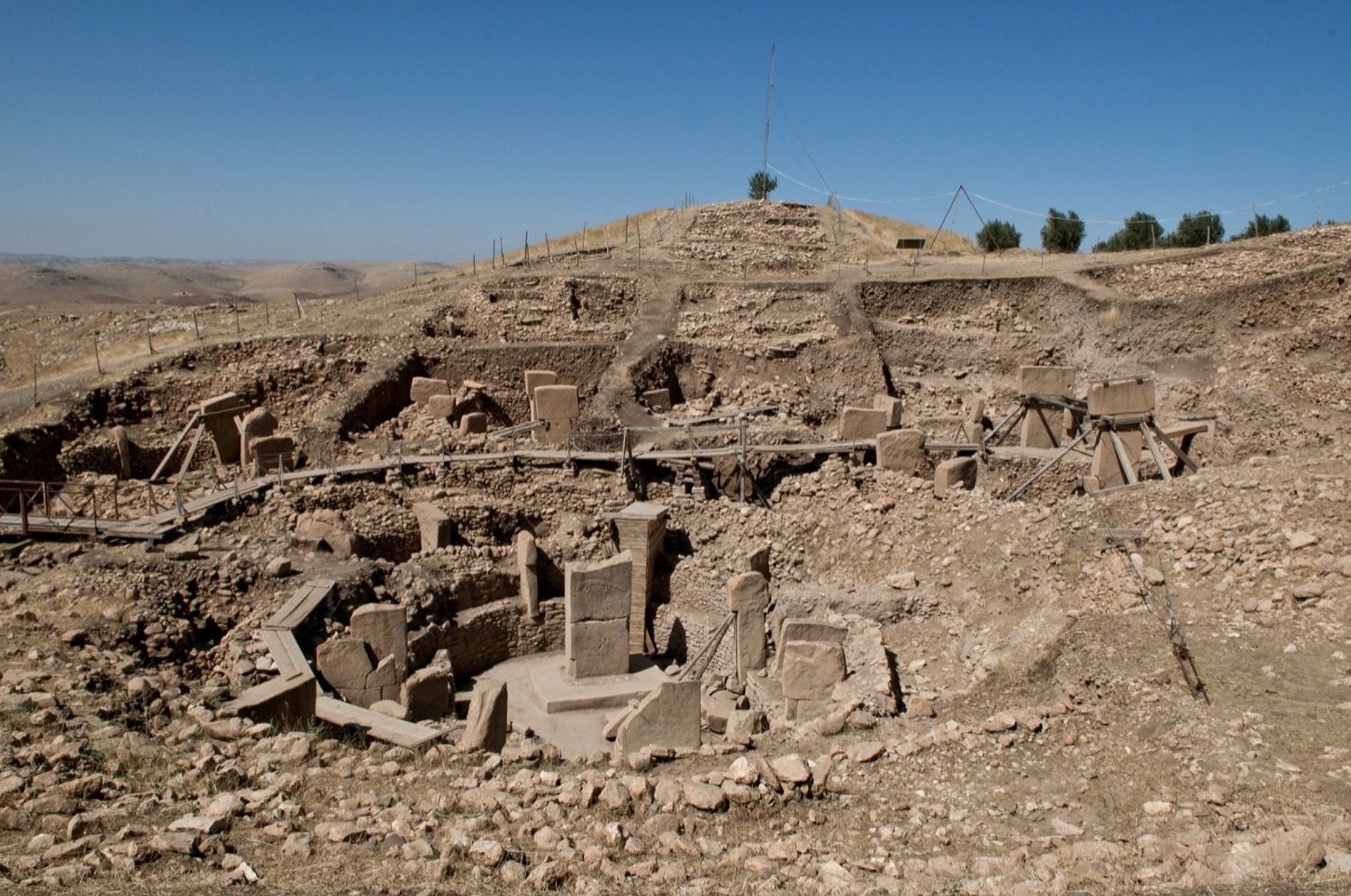
On a limestone ridge overlooking the plains of southeastern Turkey, near the ancient city of Urfa, stands a place that forced archaeologists to rewrite the earliest chapter of the human story. Göbekli Tepe — the name means 'Potbelly Hill' in Turkish — is a complex of great circular enclosures built from massive T-shaped stone pillars, some more than five metres tall and weighing many tons, many of them carved in relief with foxes, boars, snakes, scorpions, vultures, and other animals. It is staggeringly old. Radiocarbon dating places its construction to around 9500 BCE and earlier, making it roughly eleven and a half thousand years old — some six thousand years older than Stonehenge and seven thousand older than the Great Pyramid. What made the discovery revolutionary was not merely its age but who built it: not a settled society of farmers with cities and kings, but hunter-gatherers, people without pottery, without metal, without the wheel, and without — at least at first — agriculture itself. The prevailing wisdom had long held that monumental architecture was a product of civilisation, something only settled, food-producing societies could afford. Göbekli Tepe stood that assumption on its head, and suggested that the impulse to gather and build something great may have come first. It is a genuine mystery — but a mystery of human achievement, not of lost super-civilisations or visitors from the stars. This is the story of the temple that rewrote prehistory.
The Moai of Easter Island: The Statues That Walked
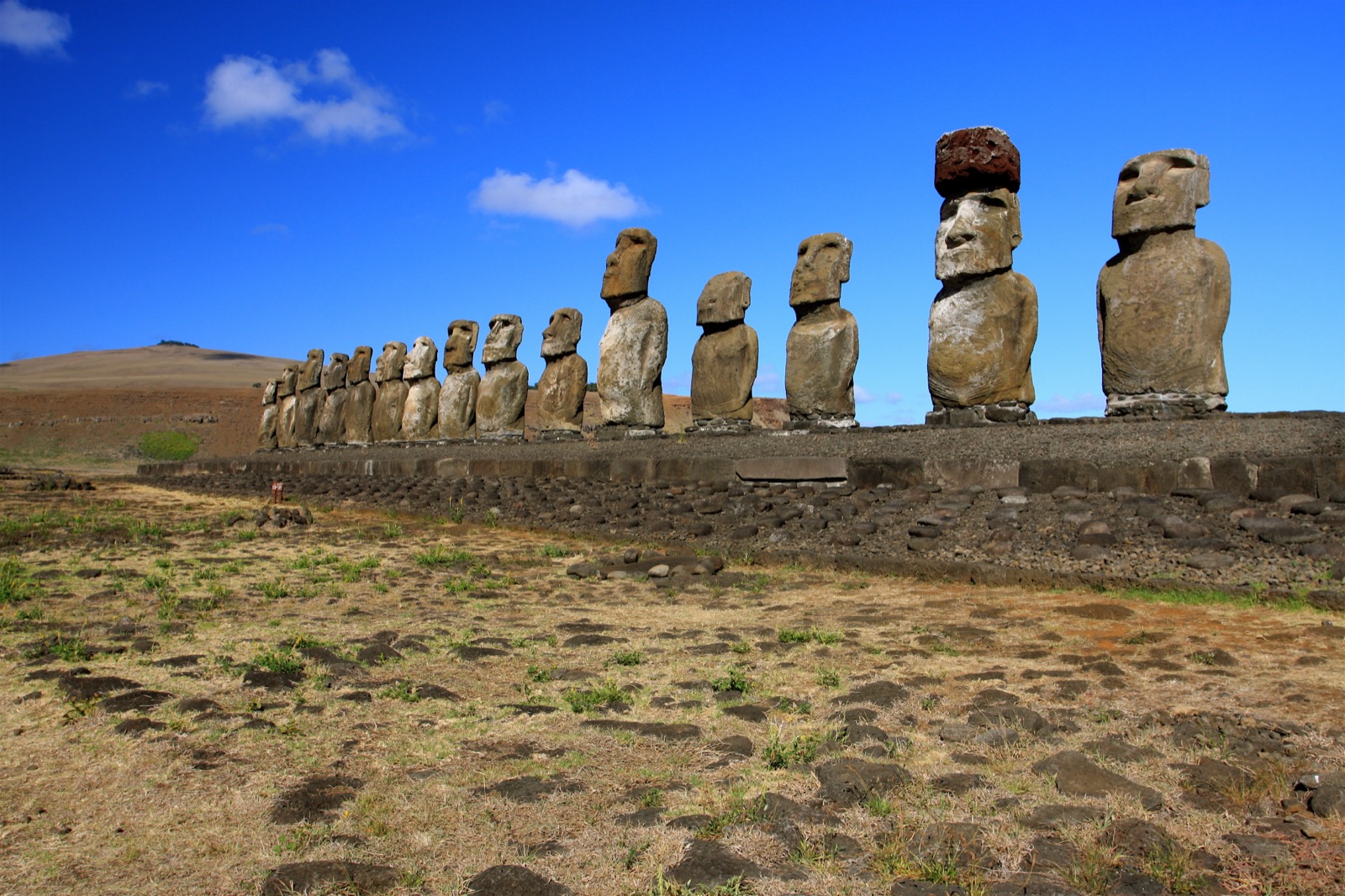
Rapa Nui — Easter Island — is one of the loneliest places inhabited by human beings, a small volcanic triangle in the southeastern Pacific more than three thousand kilometres from the coast of Chile and some two thousand from the nearest inhabited island. On this remote speck of land, a Polynesian society created one of the most recognisable bodies of monumental art in the world: the moai, nearly a thousand colossal stone figures, carved from volcanic rock and raised on stone platforms to gaze inland over the people they were made to protect. For centuries, outsiders looked at these statues on their treeless island and asked how so 'primitive' a people could have made and moved them — a question that led, at its worst, to fantasies of lost continents and ancient astronauts, and, more insidiously, to a powerful modern morality tale in which the islanders supposedly destroyed their own environment, felled their last tree to haul their idols, and collapsed into famine and war: a cautionary fable of self-inflicted ecological ruin. Both the wonder and the warning turn out to be built on misunderstanding. The moai are unmistakably the work of the Rapanui themselves; recent experiments suggest they were 'walked' upright to their platforms, exactly as island tradition always said; and the story of ecological suicide has been steadily dismantled, revealing instead a resilient people whose real catastrophe came not from within but from the arrival of outsiders. This is the story of the statues that walked.
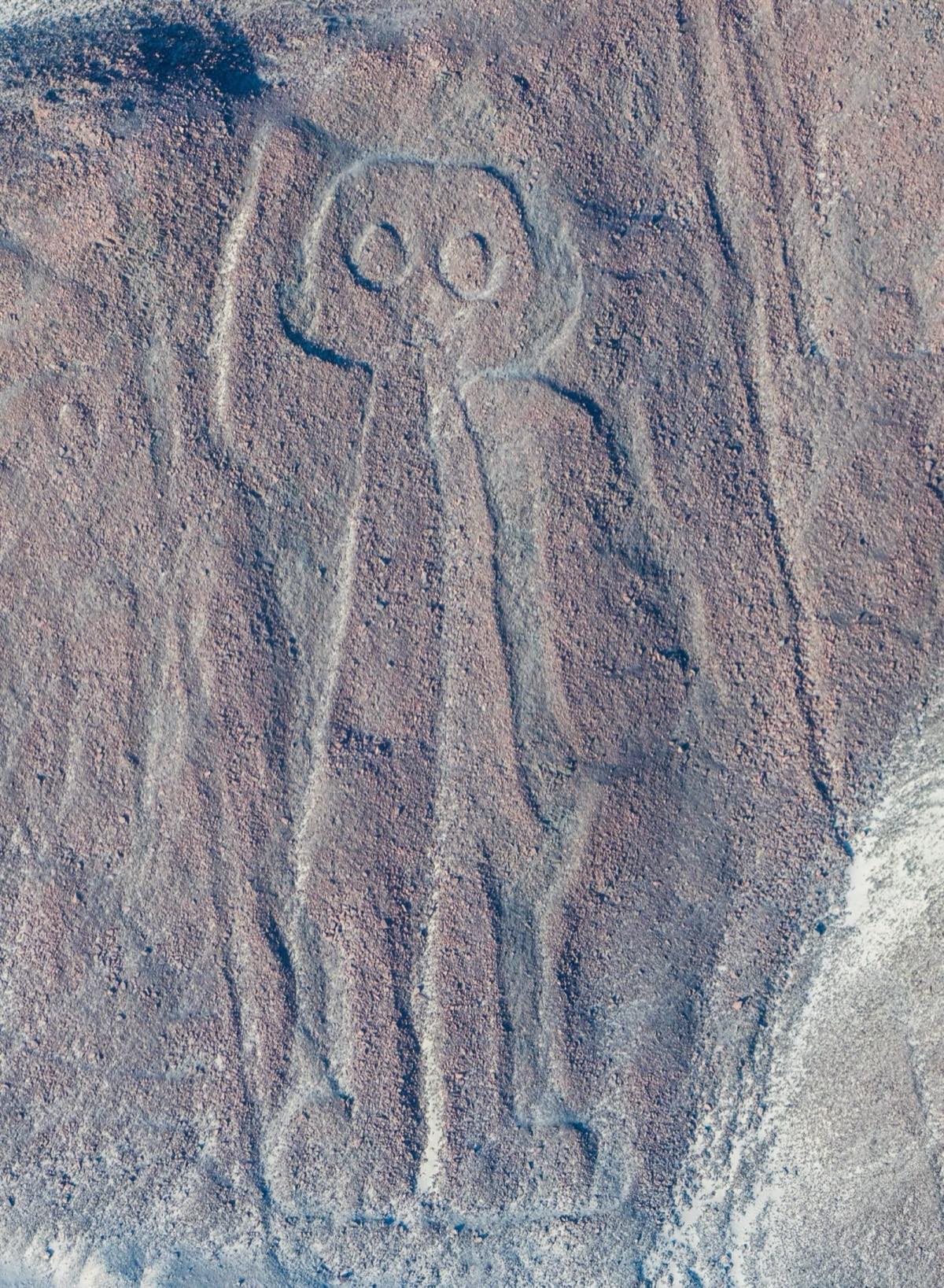
The Nazca Lines: Giant Drawings in the Peruvian Desert
On the arid, wind-still plateau between the towns of Nazca and Palpa in southern Peru lies one of the most extraordinary bodies of ancient art on Earth: hundreds of vast figures and lines etched into the desert floor, so large that many are only fully legible from the air. There are straight lines running ruler-true for kilometres across the pampa; there are trapezoids, triangles, and spirals; and there are some seventy or more great biomorphic figures — a hummingbird, a monkey with a curling tail, a spider, a condor, a heron, a dog, a pair of hands, a flowering tree, and a humanoid figure on a hillside so often nicknamed 'the Astronaut.' They were made by the Nazca people, and by their Paracas predecessors, across roughly a thousand years around the start of the common era, by the simple and ingenious method of clearing away the dark, iron-stained stones of the desert surface to expose the paler ground beneath. Because it almost never rains here, and the wind barely stirs, the drawings have survived for two millennia. How they were made is, in fact, no mystery at all; the techniques are well within the reach of the people who made them, and required no view from the sky and certainly no help from beyond it. The genuine and unsolved question is why — what these enormous figures and lines were for. This is the story of the giant drawings in the desert.