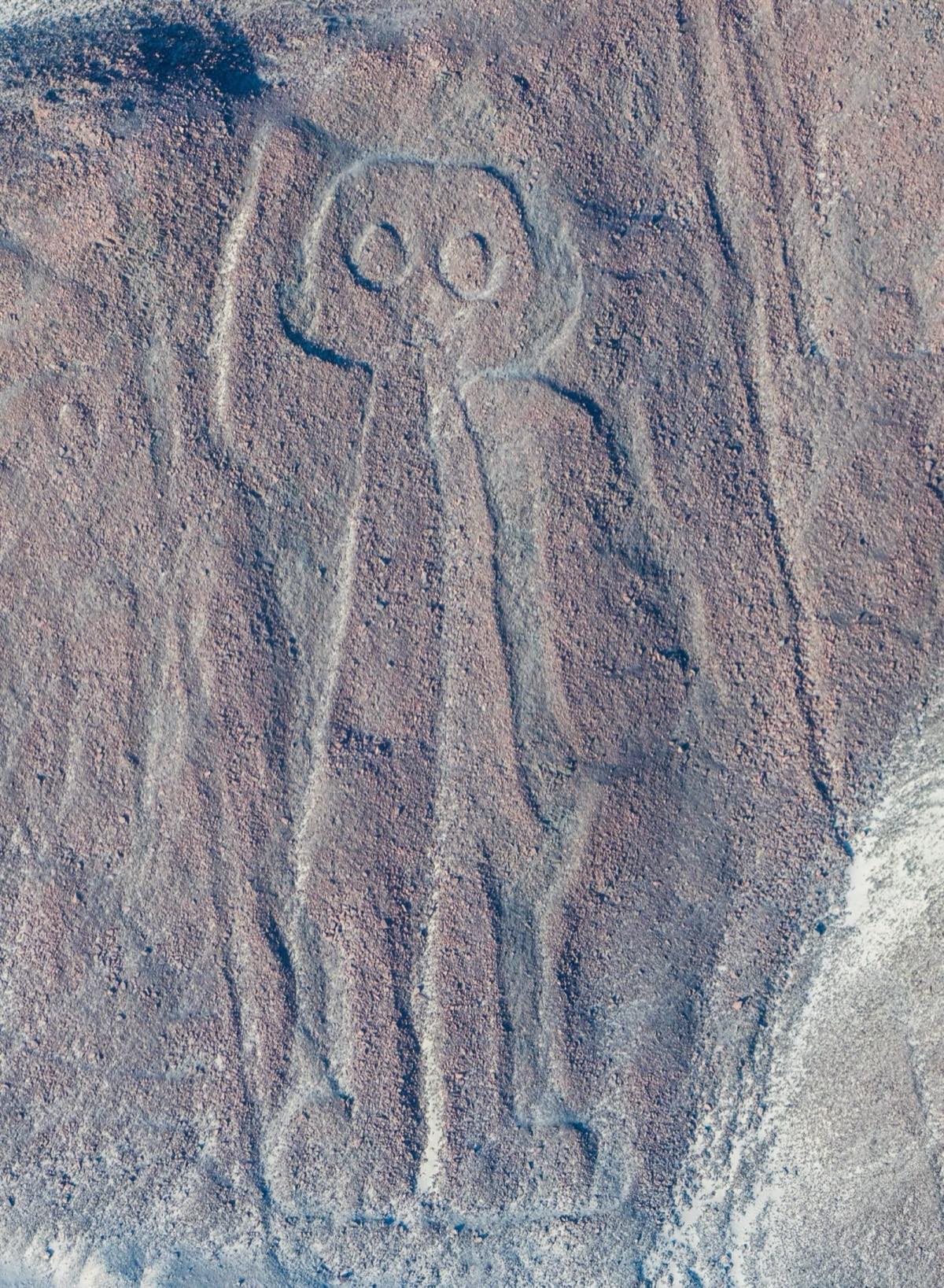
The hillside figure nicknamed 'the Astronaut' or 'Owlman.' Its rounded head and large eyes fuelled fantasies of ancient extraterrestrials — but it is a Nazca depiction of a figure, one of hundreds across the desert, and its true meaning is human, not alien. Wikimedia Commons / Diego Delso, CC BY-SA 4.0.
The Nazca Lines: Giant Drawings in the Peruvian Desert
Peru, c. 500 BCE–500 CE — Across a high desert plateau in southern Peru, an ancient people scraped hundreds of enormous figures and lines into the ground — a hummingbird, a monkey, a spider, lines running arrow-straight for kilometres. How they made them is understood. Why they made them is one of archaeology's real open questions
- Category
- Ancient & Historical Mysteries
- Published
- Length
- 3,550 words · 18 min read
- Author
- The editors
The Nazca Lines occupy an unusual place among the world's ancient enigmas, because they are simultaneously one of the least mysterious and one of the most genuinely mysterious things ever made. The part that looks most baffling — how a people without aircraft could lay out accurate figures hundreds of metres across, best appreciated from above — turns out, on examination, to have a straightforward and thoroughly human answer. The part that seems, at first glance, almost trivial — what the drawings were for — turns out to be a deep and still-open question that serious archaeologists continue to debate. This inversion is worth holding onto, because the Nazca Lines are among the most heavily exploited of all sites by those who peddle ancient astronauts and lost civilisations, and the exploitation depends entirely on getting the two halves backwards: on manufacturing mystery where there is none, and ignoring the real mystery that remains. The truth is more interesting than the fantasy. The people of Nazca made these vast works themselves, with cords and stakes and their own hands and feet, and they made them for reasons that mattered enormously to them — reasons we are still working to understand.
This is the story of the drawings in the desert.
Lines in the desert
The setting is essential to understanding the lines. The Pampa de Nazca is part of one of the driest deserts on Earth, a high, flat plateau where rain falls only a few times a decade, the wind is gentle, and the ground is stable. The surface is a pavement of small stones darkened over ages by a coating of iron and manganese oxides — "desert varnish" — that gives the pampa its reddish-brown colour. Beneath this thin dark layer lies paler, yellowish-grey soil. This simple contrast is the whole secret of the lines' creation: scrape away the dark stones along a path, and you expose a bright line of lighter ground that stands out sharply against the desert floor. Because the climate almost never disturbs the surface, such a line, once made, can last for thousands of years. The Nazca did not carve deep into rock; they simply cleared the stones, piling them at the edges, and the desert did the rest by not changing.
The lines were made by the Nazca civilisation, a culture that flourished in these coastal valleys of southern Peru from around 100 BCE to 800 CE, known also for its vivid polychrome pottery, its fine textiles, and the remarkable underground aqueducts, the puquios, that let it farm this parched land. The oldest geoglyphs in the region, around Palpa, are older still, made by the earlier Paracas culture, and some figures appear on hillsides rather than the flat pampa. Across these centuries the people of the desert produced an astonishing accumulation of ground drawings — not in a single grand project but over many generations, layer upon layer, lines crossing older lines, a vast and evolving palimpsest scraped into the skin of the desert.
How they were made
The question that most troubles newcomers — how could people who could not fly create designs so large and so accurate that they read best from the air? — dissolves under scrutiny. The Nazca did not need to see the figures from above to make them, any more than a person needs to hover over a page to draw on it. Large designs can be laid out on the ground by straightforward methods well attested in antiquity: fixing a central point and a cord to sweep arcs and circles; using stakes and taut lines to extend perfectly straight paths across long distances by sighting from one marker to the next; and scaling up a small drawing to enormous size by proportional measurement, a technique experiments have shown can reproduce the Nazca figures faithfully using only wooden stakes and string. The makers knew exactly what they were drawing because they had the design in hand and executed it point by point. Straight lines over the flat, stable pampa are, if anything, easier to make accurately at length than short ones, since a small sighting error does not compound.
There is, moreover, direct evidence that this is how they worked: wooden stakes have been found at the ends of some lines, and the piled stones cleared from the paths still lie along their edges. The figures themselves echo the imagery the Nazca painted on their pots and wove into their cloth, the same hummingbirds and monkeys and killer whales, showing that the geoglyphs are simply the desert-scale expression of a well-developed artistic tradition. None of this requires balloons, aerial observers, or any technology the Nazca did not possess. The making of the lines is a solved problem, and the solution is a testament to patient human skill.
The figures and the lines
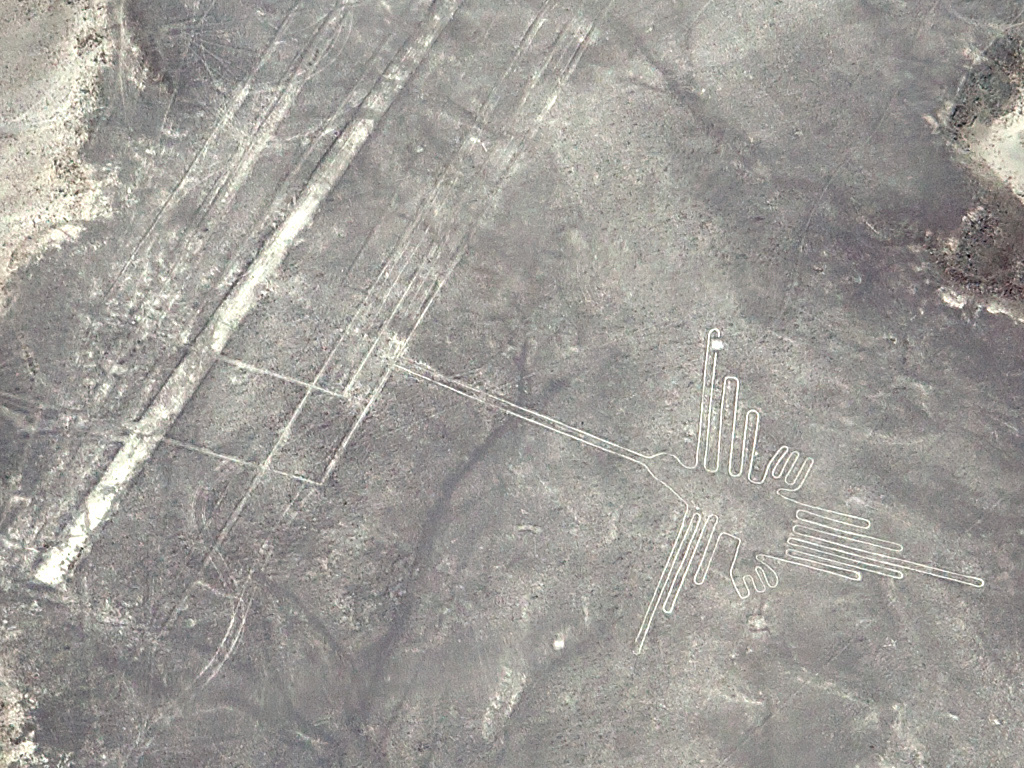
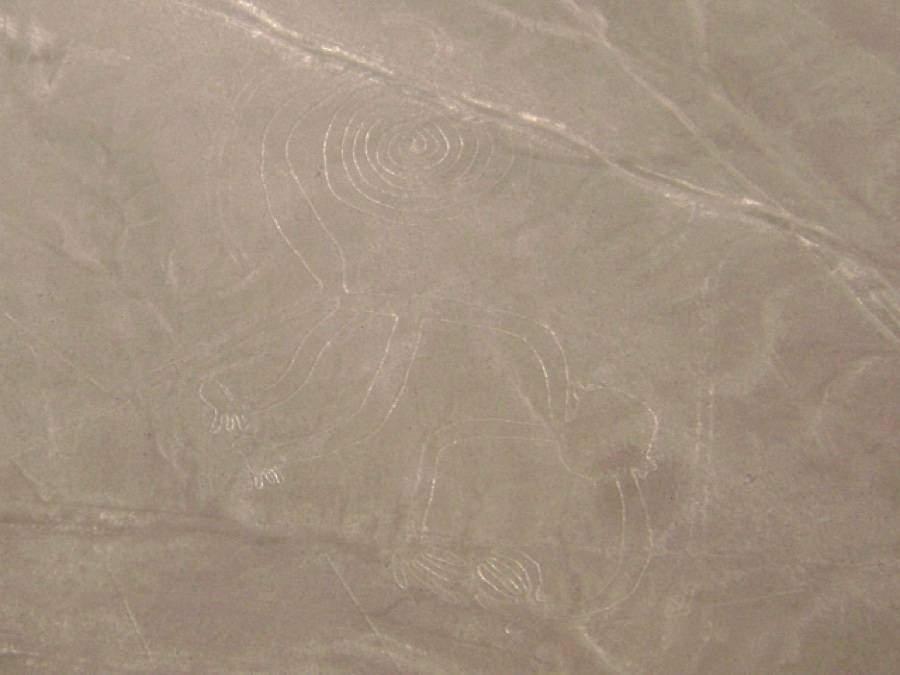
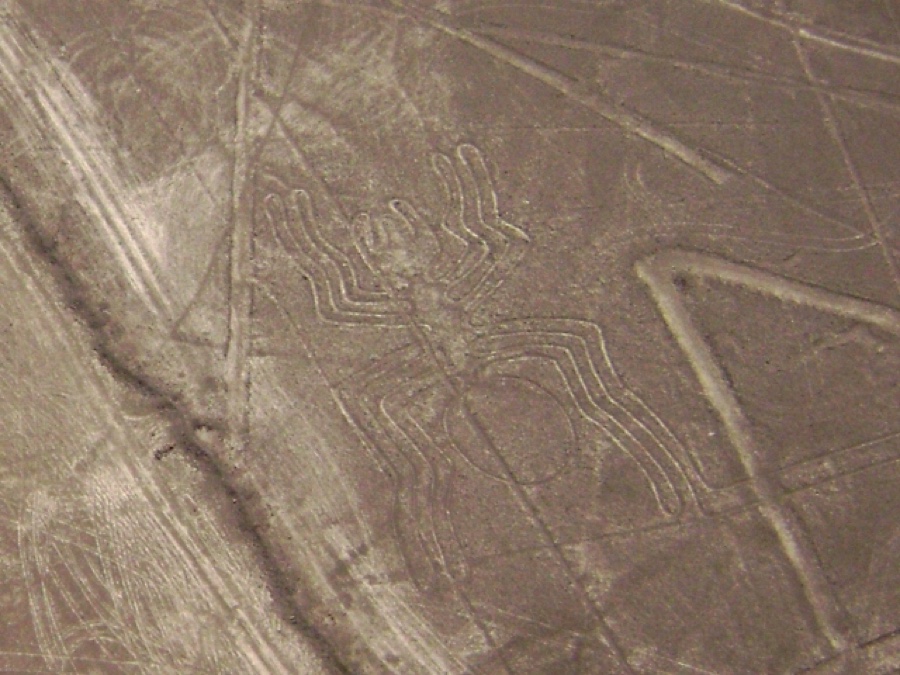
The variety of the geoglyphs is part of their fascination. The most celebrated are the biomorphs — the great figures of living things. There is the hummingbird with its long beak and symmetrical wings; the monkey with a tail curled into a spiral; the spider; the condor and other birds with vast wingspans; a heron, a pelican, a dog, a lizard, a flowering tree, and a pair of outstretched hands. Many are formed from a single continuous line that enters and exits the figure without crossing itself, so that the whole shape could be walked in one unbroken path — a feature that has become central to interpreting them. Alongside the figures are the far more numerous straight lines and geometric forms: lines radiating from central hubs across the pampa, and huge trapezoids and triangles that look like cleared "runways" but are nothing of the kind — they are open ground scraped clear, sometimes pointing toward hills or water sources.
The figures and the geometric lines were not necessarily made for the same reasons or at the same time, and this matters for interpretation. The biomorphs, many of them older and often on the approaches to the pampa, may belong to a different phase and purpose than the vast fields of straight lines and trapezoids that dominate the plateau. Any explanation of "the Nazca Lines" has to reckon with the fact that it is really explaining several overlapping traditions of ground-marking spread across a thousand years — which is one reason no single tidy answer has ever fully satisfied.
Why? The real question
Here is where the genuine mystery lives. The earliest serious student of the lines, the American scholar Paul Kosok, who began studying them in the 1940s, was struck one evening by a line pointing to the setting sun near the winter solstice, and famously called the pampa "the largest astronomy book in the world." His collaborator, the German-born mathematician Maria Reiche, took up and championed the astronomical interpretation, arguing that many lines aligned with the rising and setting of the sun, moon, and stars, and served as a giant calendar. It is an appealing idea, but it has not held up well. When the astronomer Gerald Hawkins subjected a large sample of lines to rigorous statistical testing in the 1960s, he found no more solar, lunar, or stellar alignments than chance would produce. With so many lines running in so many directions, some are bound to point at astronomical events; the pattern Reiche saw was largely in the eye of the beholder. The calendar theory, in its strong form, is not supported.
Maria Reiche and the fragile desert
No account of the Nazca Lines is complete without Maria Reiche, the woman who gave her life to them. A German mathematician who settled in Peru, Reiche began working on the lines in the 1940s and devoted the next half century to measuring, mapping, studying, and above all protecting them. She lived frugally in the desert, swept the lines clean by hand, paid for guards out of her own pocket, and campaigned tirelessly to shield the pampa from damage, becoming known as the "Lady of the Lines" and, more than anyone, the reason the geoglyphs were recognised, studied, and preserved. Though her astronomical theories have not survived scholarly scrutiny, her devotion did something arguably more important: it saved the lines for the world and made their study possible. She died in 1998, honoured in Peru, and is buried near the desert she protected.
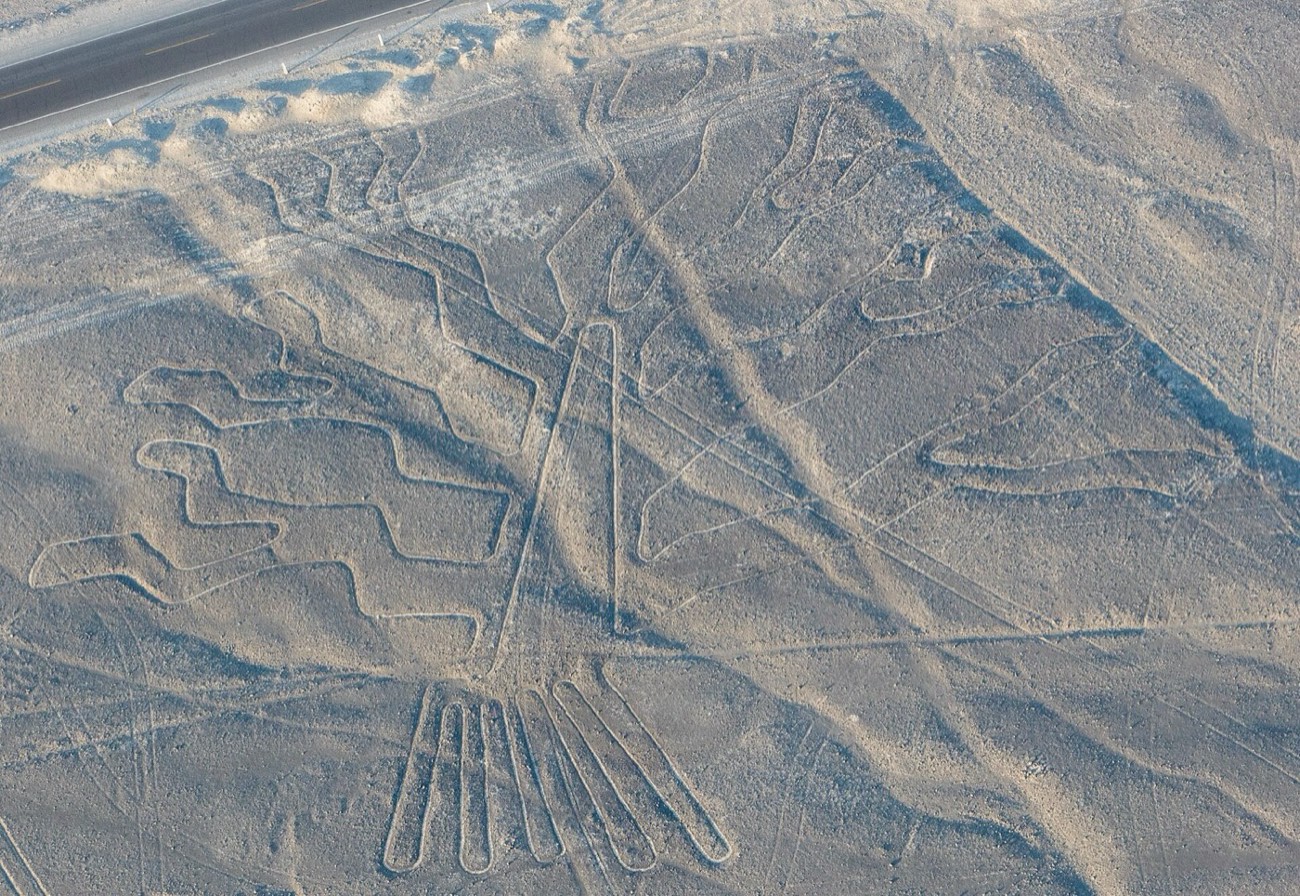
The lines remain acutely vulnerable, precisely because they are so shallow and depend on a surface that must never be disturbed. The Pan-American Highway was built straight across the pampa in the twentieth century, slicing through some figures. Flash floods in rare El Niño years, the spread of squatter settlements and mining, and sheer carelessness all threaten them: in 2014 activists staging a stunt trampled the fragile ground near the hummingbird, leaving marks that may last centuries, and in 2018 a truck driver ploughed across several figures. A single set of footprints or tyre tracks in the wrong place can scar the desert for a thousand years. The same stillness that preserved the lines makes any damage all but permanent.

The alien myth
The Nazca Lines owe much of their global fame to a spectacular falsehood. In his 1968 bestseller Chariots of the Gods?, the Swiss writer Erich von Däniken presented the lines as evidence of ancient astronauts, describing the long trapezoids as "runways" built for alien spacecraft and the hillside figure as a depiction of a visiting spaceman — the origin of the "Astronaut" nickname. The claim is nonsense on every level. The soft, stony desert surface could not bear the weight of any aircraft; a "runway" scraped a few centimetres deep is a physical absurdity. The figures are unmistakably the work of the Nazca, matching their pottery and textiles, made with their techniques, on their land. And the notion that the people of Nazca could not have made their own art without ext raterrestrial help is not merely wrong but demeaning to them. Yet the fantasy proved commercially irresistible, and it has clung to the lines ever since, a testament to how readily genuine wonder can be hijacked by manufactured mystery.
What it means
More than a century into their serious study, the Nazca Lines remain a place where two very different stories are told. In one, endlessly recycled in documentaries and paperbacks, they are a cosmic riddle, a message from or to the stars, a thing their makers could not possibly have managed alone. In the other — the true one — they are a monument to the Nazca themselves: to a people who mastered a brutal desert with underground aqueducts and terraced fields, who painted and wove with brilliant invention, and who expressed their deepest concerns, above all their need for water, by marking the earth on a colossal scale. The lines are not a puzzle that defeats human explanation. They are a window into a human world, most of whose thoughts are lost to us, but whose surviving handiwork still stretches, astonishing, across the pampa.
In the end, the drawings in the desert endure as a double marvel: a solved mystery wrapped around an unsolved one. We can say with confidence how they were made and by whom, and in saying it we restore to the Nazca the credit that fantasists have tried to take from them. What we cannot yet say for certain is what moved them — what the hummingbird and the monkey and the long straight roads to the mountains meant to the men and women who made them, kneeling on the stones under the enormous sky. That question keeps the lines alive as more than a spectacle. They are among the largest messages any human society has ever inscribed upon the world, written in a language of figure and path we are still learning to read — and every year, as drones and patient survey reveal yet more of them hidden in the desert, the message grows longer, and the wonder deeper. The Nazca Lines were made by human hands, for human reasons, and that, and not any fable of the stars, is exactly what makes them extraordinary.
It is worth adding that the study of the lines is, far from being finished, entering an especially productive phase. For most of the twentieth century, new figures were found on foot and from small aircraft, one at a time. In recent years, high-resolution drone photography, satellite imagery, three-dimensional scanning, and machine-learning analysis have transformed the pace of discovery. A team from Yamagata University in Japan, led by the archaeologist Masato Sakai, has used these tools to identify large numbers of previously unknown geoglyphs — many of them smaller "relief" figures on hillsides, older than the great pampa figures and often depicting human-like beings and domesticated animals, which appear to have been made to be seen from nearby trails rather than from a distance. In a 2024 collaboration drawing on artificial intelligence to sift enormous quantities of aerial imagery, researchers reported roughly doubling the number of known figurative geoglyphs in a single field season. Each new discovery refines the picture — distinguishing earlier figures from later lines, linking geoglyphs to trails and settlements, and slowly building the context in which the great question of purpose might finally be answered. The desert, it turns out, still has a great deal to say.
In the end, the Nazca Lines stand as one of the great achievements of the ancient Americas, and as a standing rebuke to the impulse to explain away human genius by reaching for the stars. A desert people, obsessed with water and rich in art, spent a thousand years marking their world with figures and paths of breathtaking scale, using nothing but cord, stake, and their own hands — and the dry, still desert kept their work for us to find. How they did it we know. Why they did it we are still, carefully and humbly, working out. And in that gap between the solved and the unsolved, between the technique we can reconstruct and the meaning we can only approach, lies the true and lasting fascination of the giant drawings in the Peruvian sand.
Inspired this / based on it
Erich von Däniken
The bestseller that spread the debunked ancient-astronaut fantasy and the "Astronaut" nickname.
Maria Reiche
Reiche's own account of her study of the lines.
Filed under
- #nazca-lines
- #peru
- #geoglyphs
- #archaeology
- #nazca-culture
- #ancient-art
- #maria-reiche
- #unsolved-mystery
- #mystery
Click any tag for every article carrying it.
Continue reading
Göbekli Tepe: The Temple That Rewrote Prehistory
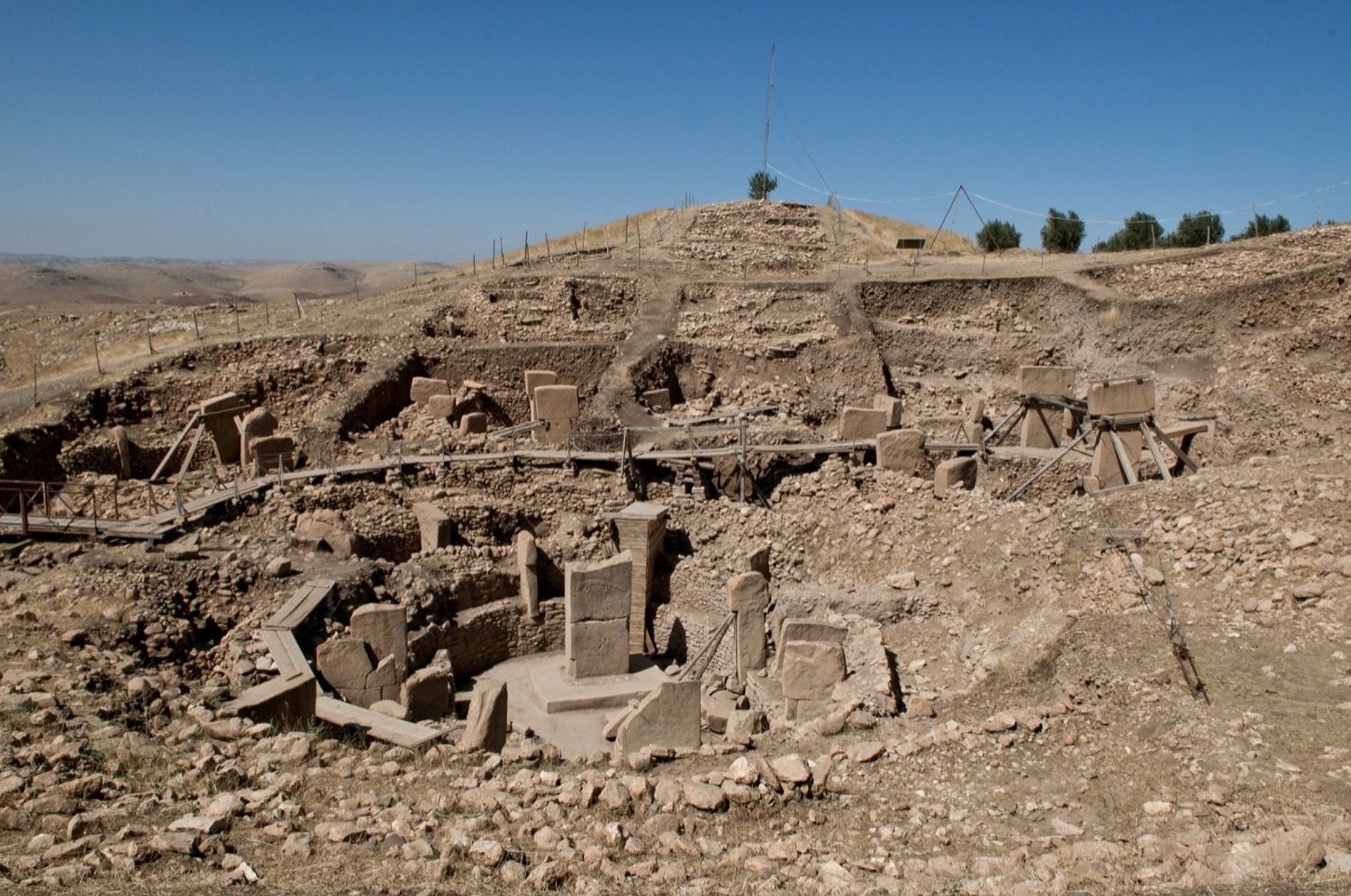
On a limestone ridge overlooking the plains of southeastern Turkey, near the ancient city of Urfa, stands a place that forced archaeologists to rewrite the earliest chapter of the human story. Göbekli Tepe — the name means 'Potbelly Hill' in Turkish — is a complex of great circular enclosures built from massive T-shaped stone pillars, some more than five metres tall and weighing many tons, many of them carved in relief with foxes, boars, snakes, scorpions, vultures, and other animals. It is staggeringly old. Radiocarbon dating places its construction to around 9500 BCE and earlier, making it roughly eleven and a half thousand years old — some six thousand years older than Stonehenge and seven thousand older than the Great Pyramid. What made the discovery revolutionary was not merely its age but who built it: not a settled society of farmers with cities and kings, but hunter-gatherers, people without pottery, without metal, without the wheel, and without — at least at first — agriculture itself. The prevailing wisdom had long held that monumental architecture was a product of civilisation, something only settled, food-producing societies could afford. Göbekli Tepe stood that assumption on its head, and suggested that the impulse to gather and build something great may have come first. It is a genuine mystery — but a mystery of human achievement, not of lost super-civilisations or visitors from the stars. This is the story of the temple that rewrote prehistory.
The Antikythera Mechanism: The Ancient Greek Computer
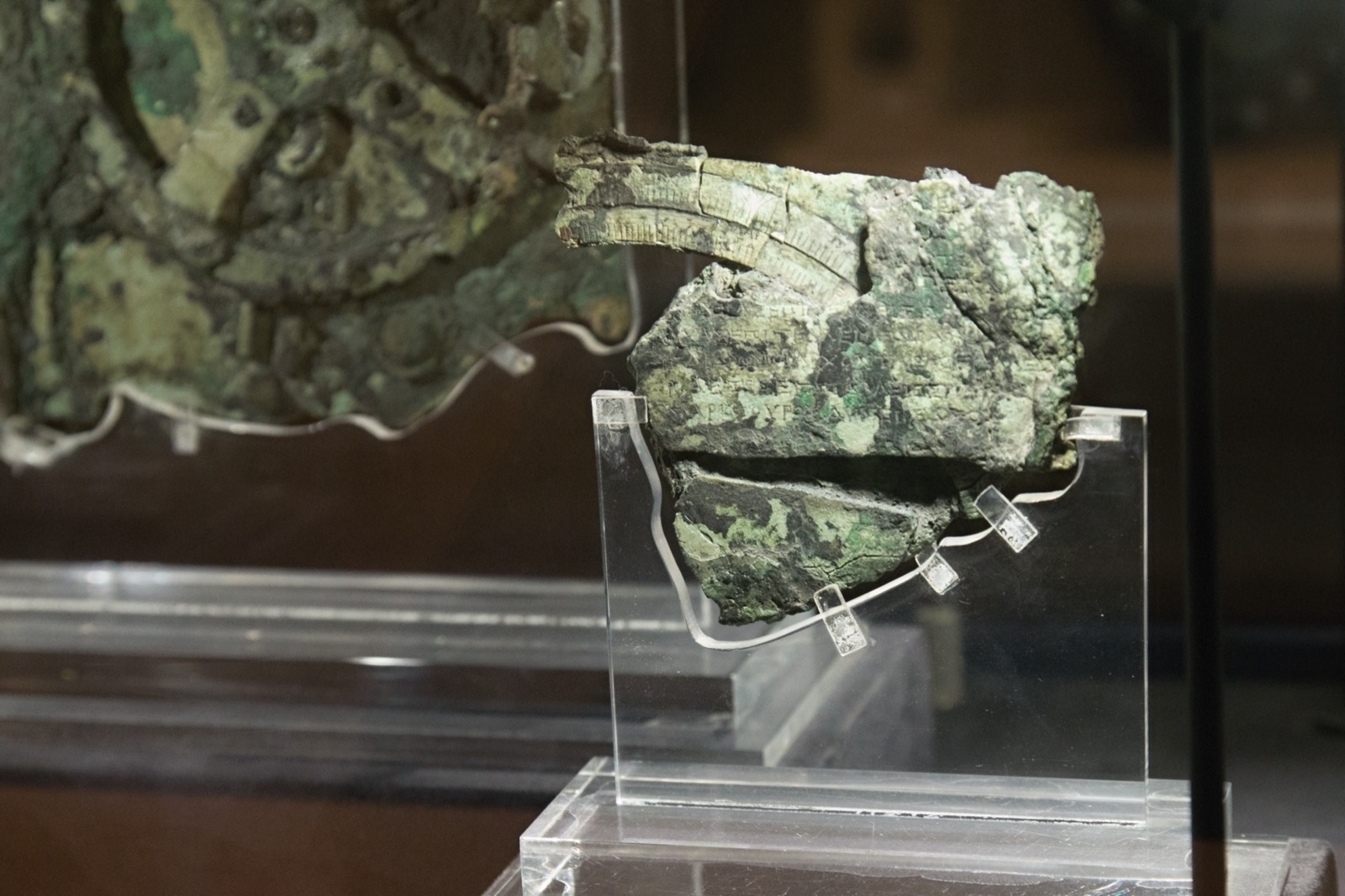
In 1901, Greek sponge divers sheltering from a storm off the tiny island of Antikythera, between Crete and the Peloponnese, stumbled on the wreck of an ancient ship laden with bronze and marble statues, glassware, and coins — a Roman-era cargo of Greek treasures that had gone down around the first century BCE. Among the finds hauled to the surface and shipped to Athens was an unpromising, shoebox-sized lump of corroded bronze and rotted wood, easily overlooked beside the museum's new statues. Months later, an archaeologist noticed something impossible protruding from it: a precisely cut gear wheel. Over the following century, X-rays and then advanced computed tomography would reveal that this lump was the wreckage of a hand-cranked mechanical device containing dozens of finely toothed bronze gears — an astronomical calculator that modeled the movements of the Sun, the Moon, and the planets, predicted eclipses, and tracked the cycles of the Greek calendar and the Olympic Games. Nothing of remotely comparable complexity is known to have existed for well over a thousand years afterward. The Antikythera Mechanism is not a hoax, not a fantasy, and — despite the claims of some — not evidence of anything from beyond the Earth. It is something stranger and more moving: a genuine artifact of ancient Greek genius, and a window onto a world of knowledge that was very nearly lost forever. This is its story.
The Moai of Easter Island: The Statues That Walked
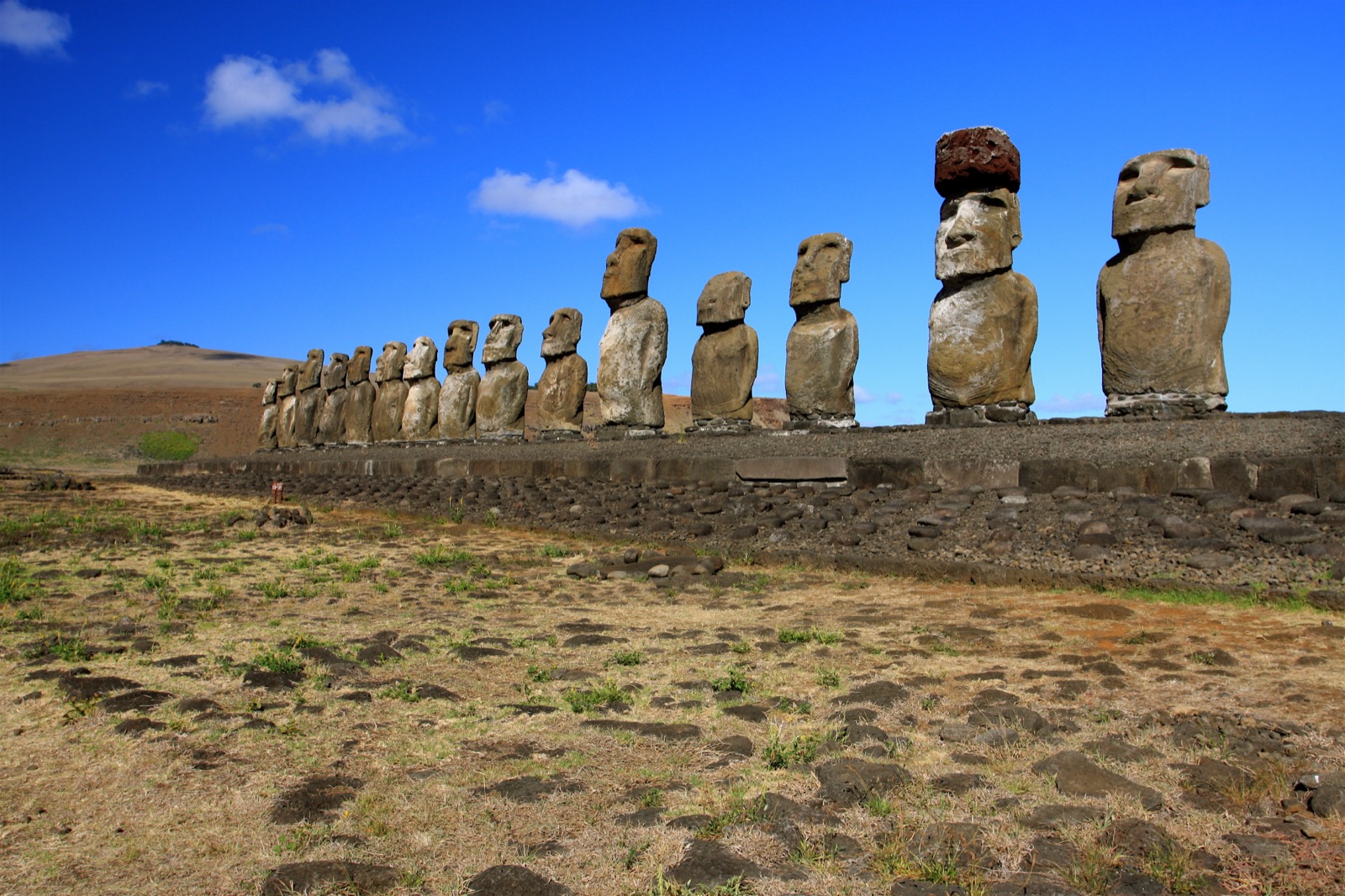
Rapa Nui — Easter Island — is one of the loneliest places inhabited by human beings, a small volcanic triangle in the southeastern Pacific more than three thousand kilometres from the coast of Chile and some two thousand from the nearest inhabited island. On this remote speck of land, a Polynesian society created one of the most recognisable bodies of monumental art in the world: the moai, nearly a thousand colossal stone figures, carved from volcanic rock and raised on stone platforms to gaze inland over the people they were made to protect. For centuries, outsiders looked at these statues on their treeless island and asked how so 'primitive' a people could have made and moved them — a question that led, at its worst, to fantasies of lost continents and ancient astronauts, and, more insidiously, to a powerful modern morality tale in which the islanders supposedly destroyed their own environment, felled their last tree to haul their idols, and collapsed into famine and war: a cautionary fable of self-inflicted ecological ruin. Both the wonder and the warning turn out to be built on misunderstanding. The moai are unmistakably the work of the Rapanui themselves; recent experiments suggest they were 'walked' upright to their platforms, exactly as island tradition always said; and the story of ecological suicide has been steadily dismantled, revealing instead a resilient people whose real catastrophe came not from within but from the arrival of outsiders. This is the story of the statues that walked.