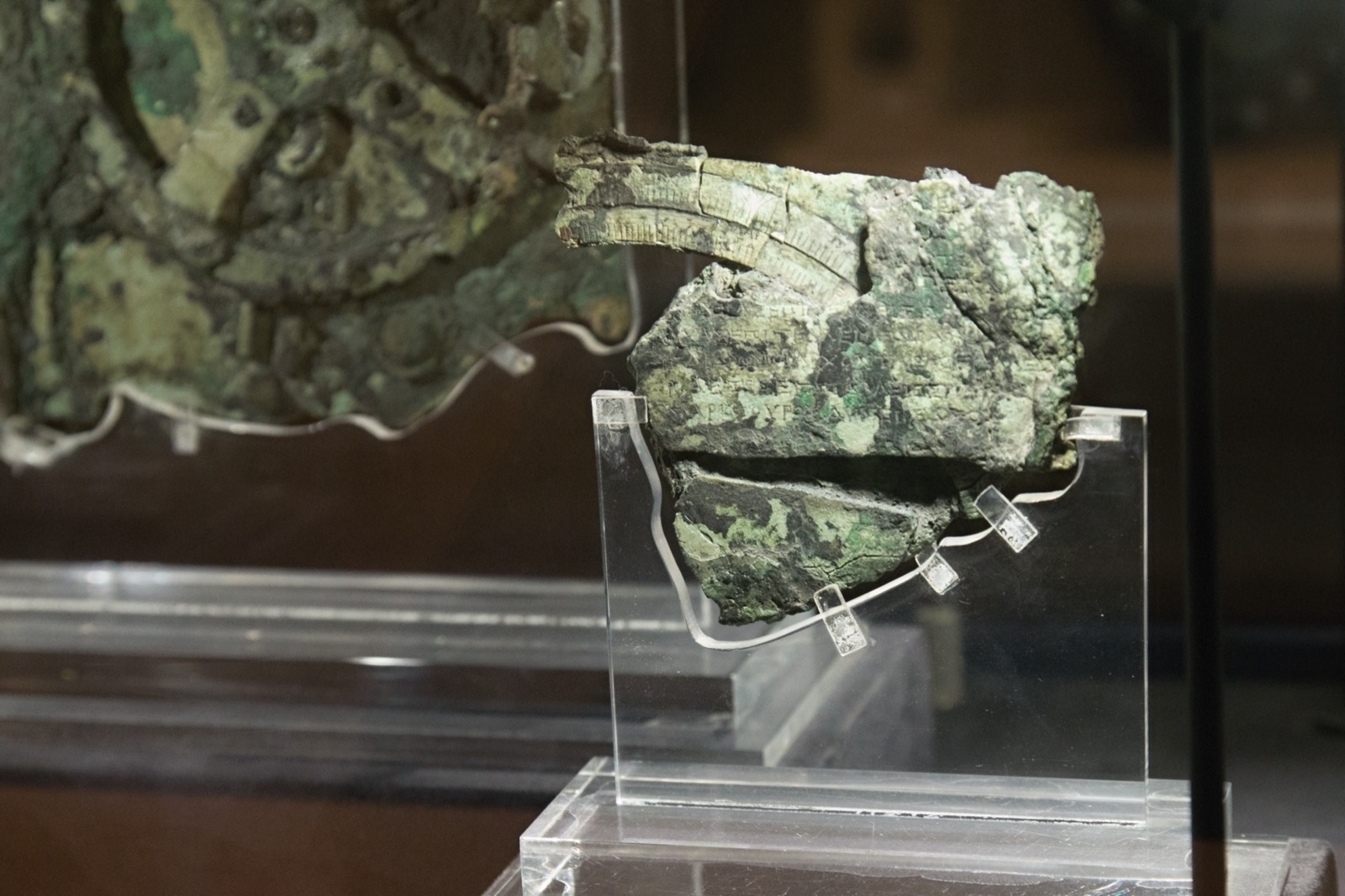
The largest surviving fragment of the Antikythera Mechanism, in the National Archaeological Museum in Athens. The great gear wheel — once part of a train of dozens — is clearly visible in the corroded bronze. Wikimedia Commons / Zde, CC BY-SA 4.0.
The Antikythera Mechanism: The Ancient Greek Computer
Greece, c. 100 BCE — A corroded lump of bronze hauled from a Roman-era shipwreck turned out to be a hand-cranked astronomical calculator of staggering sophistication, two thousand years ahead of anything like it. It is real, it is Greek, and it is one of the most astonishing objects ever recovered from the ancient world
- Category
- Ancient & Historical Mysteries
- Published
- Length
- 3,550 words · 18 min read
- Author
- The editors
Of all the objects that survive from the ancient world, the Antikythera Mechanism is perhaps the one most likely to make a modern person doubt what they think they know about the past. We are accustomed to a story in which technology advances more or less steadily, in which the ancients had philosophy and geometry and magnificent architecture but nothing we would recognise as precision machinery — nothing with gears. The Antikythera Mechanism breaks that story. Here, from around the first or second century BCE, is a device of dozens of interlocking bronze gears, cut and arranged with a sophistication that would not be seen again in any surviving object until the astronomical clocks of medieval Europe, more than a thousand years later. It is easy, faced with such a thing, to reach for the sensational explanation — that it is out of place, out of time, impossible for its era, and therefore evidence of some lost super-civilisation or visitor from the stars. That reach is a mistake. The truth is at once more disciplined and more wonderful: the mechanism is unmistakably a product of Greek astronomy and Greek craftsmanship, and its real lesson is about how much the ancient world knew, and how much of that knowledge we lost.
This is the story of the ancient Greek computer.
A wreck off Antikythera
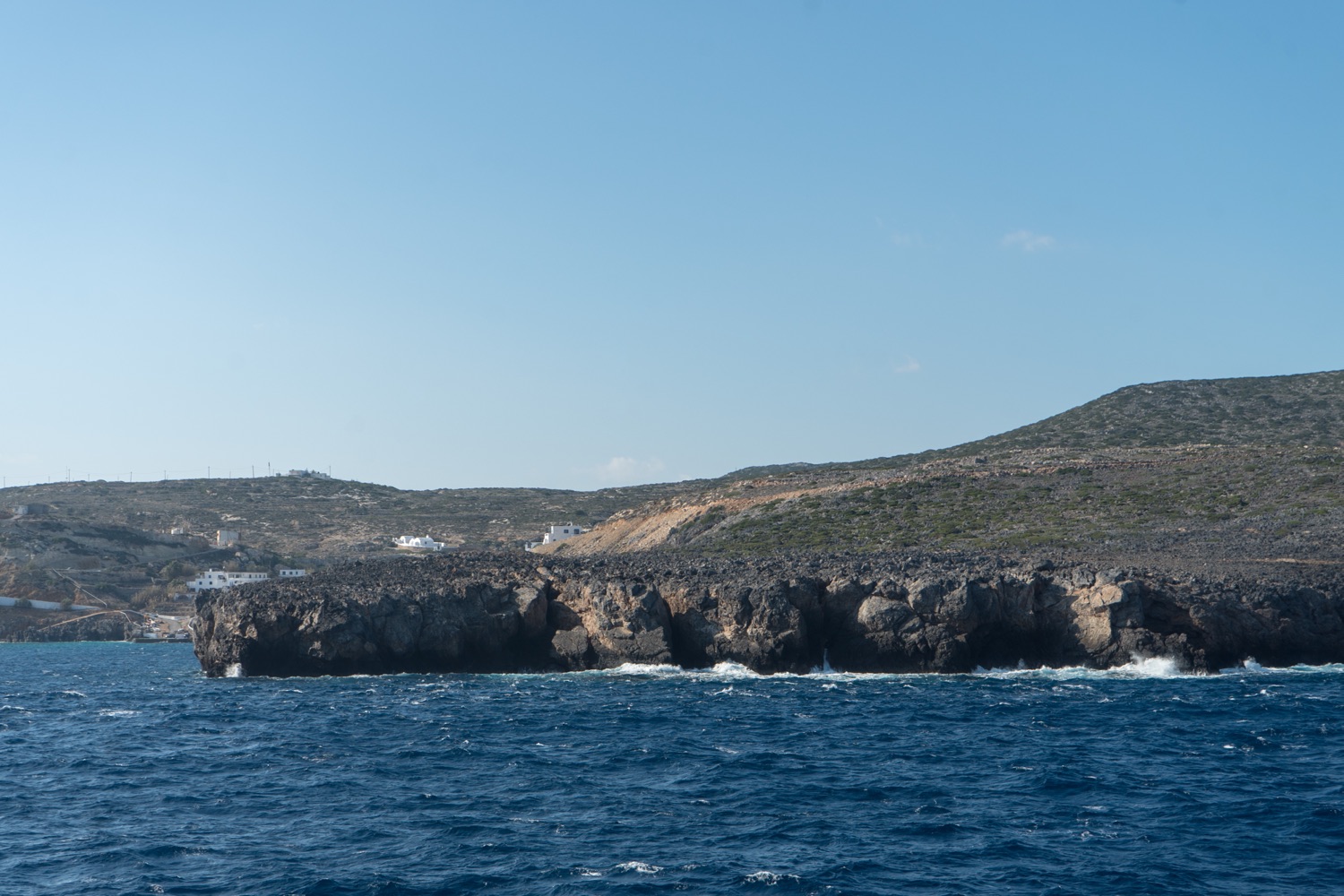
The story begins not with a search for lost technology but with sponge diving. In the spring of 1900, a crew of Greek sponge divers returning from the waters off North Africa was driven by a storm to shelter near Antikythera, a small, rocky island in the channel between Crete and the southern tip of mainland Greece. Diving off the island's coast, one of them surfaced with an alarming report: the seabed, some forty-five metres down, was strewn with corpses — bronze and marble limbs, he had thought, were the bodies of the drowned. They were, in fact, statues. The divers had found the wreck of an ancient ship, and over the following months, in one of the first major underwater archaeological operations ever attempted, they and the Greek authorities recovered an extraordinary haul: bronze and marble sculptures, fine glassware, coins, jewellery, and furniture, the cargo of a large vessel that had sunk around the middle of the first century BCE.
The ship itself is generally understood to have been a Roman-era vessel carrying Greek goods westward, most likely toward Italy — perhaps looted or traded art and luxury objects of the kind wealthy Romans prized. Among the crates of sculpture and glass, the mechanism would have been just one more object, and not an obviously precious one. Made of bronze and wood, it had spent two thousand years in seawater; what came up was a shapeless, calcified mass, its metal corroded and its wooden case largely gone. It was catalogued, set aside, and for a time all but ignored, while the museum's attention fixed naturally on the spectacular statues. The most important object in the wreck was very nearly overlooked.
The gear in the bronze
The discovery that changed everything came in 1902, when the Greek archaeologist Valerios Stais, examining the corroded lumps from the wreck, noticed a gear wheel embedded in one of them — a precisely toothed disc of bronze that had no business being in a two-thousand-year-old artifact. At first the find provoked more confusion than excitement. A geared machine of such apparent precision seemed so wildly out of place in antiquity that some scholars suspected it must be a later object that had somehow fallen into the wreck, or doubted that it could be as old as the rest of the cargo. But the mechanism was unmistakably part of the ancient assemblage, and slowly the realisation took hold that this shapeless lump was the remains of a mechanical device of a sophistication no one had thought the Greeks possessed.
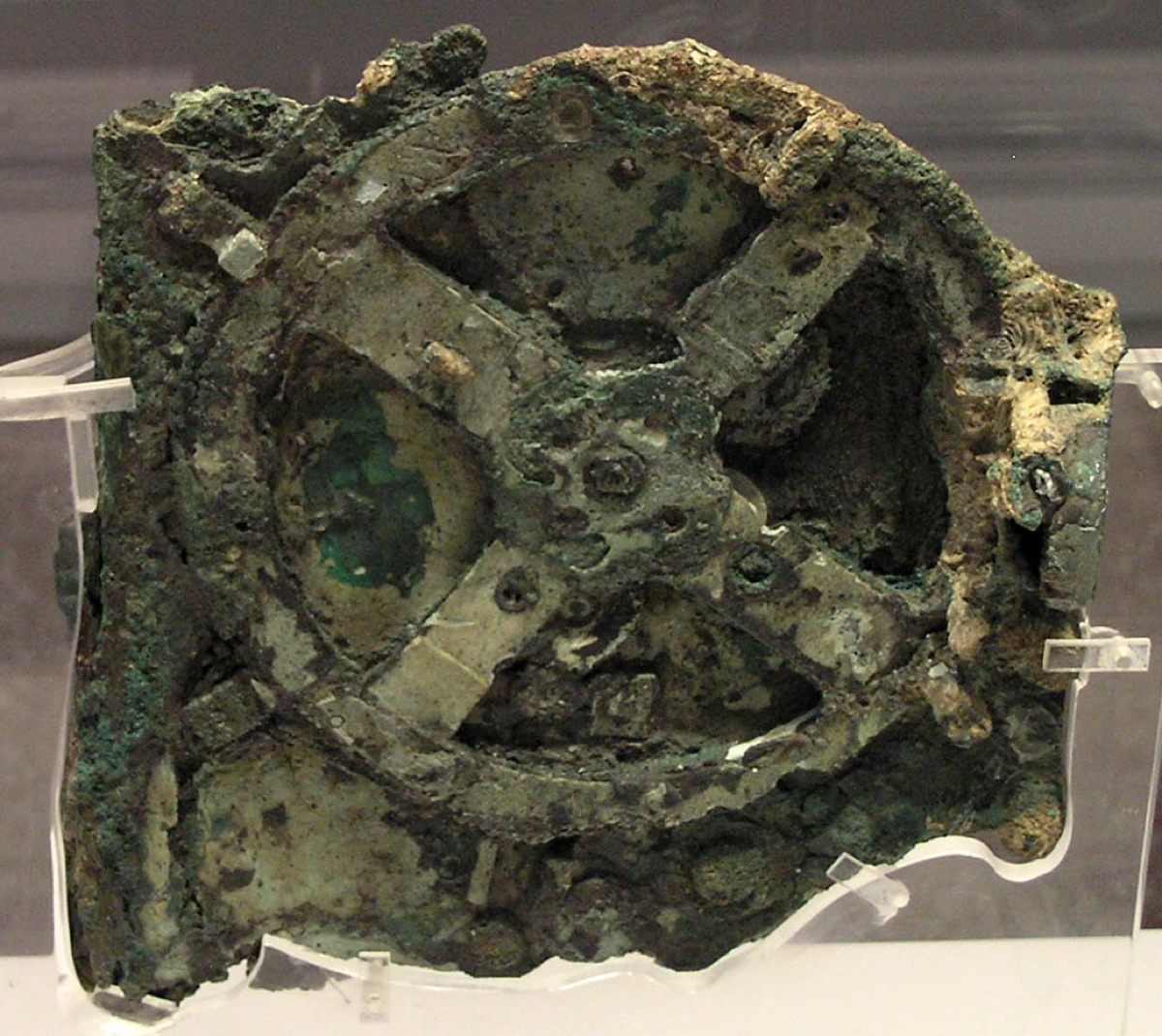
What survives today is fragmentary: several main pieces and dozens of smaller ones, the bronze so corroded that its gears are fused together and its inscriptions buried within the metal. For decades this made the mechanism nearly impossible to read. Scholars could see gears, could count some teeth, could make out patches of Greek lettering on the dials, but could not resolve the whole into a working understanding of what the device had been for. The object was clearly an instrument of some kind, plainly astronomical given its inscriptions, but its inner logic remained locked inside the corroded bronze — a puzzle that would take the better part of a century, and technologies its makers could never have imagined, to solve.
What it did
The picture that eventually emerged is breathtaking. The Antikythera Mechanism was a hand-cranked model of the cosmos as the Greeks understood it. Turning the crank advanced the whole system of gears, and with it a set of pointers moving across inscribed dials. On the front, a large dial showed the zodiac and the calendar, with pointers marking the position of the Sun and Moon against the stars; a small rotating ball, half black and half silver, displayed the phase of the Moon. Crucially, the mechanism reproduced not just the average motion of the Moon but its variable speed — the fact, known to Greek astronomers, that the Moon moves faster at some points in its orbit than others — by means of an ingenious arrangement of two gears mounted slightly off-centre, one driving the other through a pin riding in a slot, so that the output speed sped up and slowed down through each cycle. It was, in effect, a mechanical embodiment of a subtle astronomical theory.
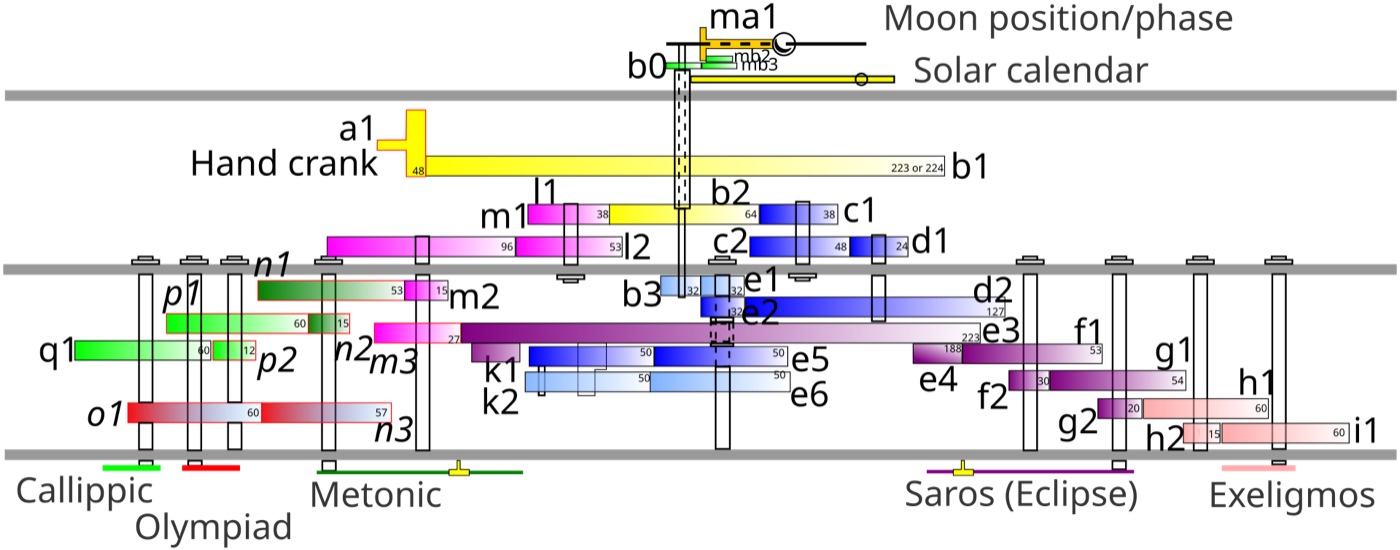
On the back, two large dials laid out in spirals tracked the long calendar cycles that governed Greek timekeeping and religious life. The upper spiral followed the Metonic cycle — the discovery, attributed to the astronomer Meton of Athens, that 235 lunar months come very nearly to 19 solar years, allowing lunar and solar calendars to be reconciled. The lower spiral followed the Saros cycle, the roughly eighteen-year period after which the pattern of solar and lunar eclipses repeats; using it, the mechanism could predict when eclipses would occur, with inscribed glyphs noting details such as the anticipated time and even the colour the eclipsed body might appear. Most reconstructions hold that the front of the device also carried pointers for the five planets known to the Greeks — Mercury, Venus, Mars, Jupiter, and Saturn — though this part of the mechanism is the most damaged and the most debated, and the exact arrangement of the planetary gearing remains partly conjectural.
Decoding the machine
That we understand the mechanism at all is the achievement of a succession of researchers wielding ever more powerful tools. The first to argue seriously that it was a complex astronomical calculator, rather than a simple instrument, was the British-American historian of science Derek de Solla Price, who studied it from the 1950s and, using X-ray and gamma -ray images, published in 1974 a landmark analysis, Gears from the Greeks, proposing a gear scheme and identifying the Metonic function. Price's work was pioneering but incomplete, limited by the imaging of his day. Later the horologist Michael Wright, working with the physicist Allan Bromley and building physical models, pushed the reconstruction further, demonstrating that the mechanism could plausibly have modeled the planets and refining the understanding of its gear trains.
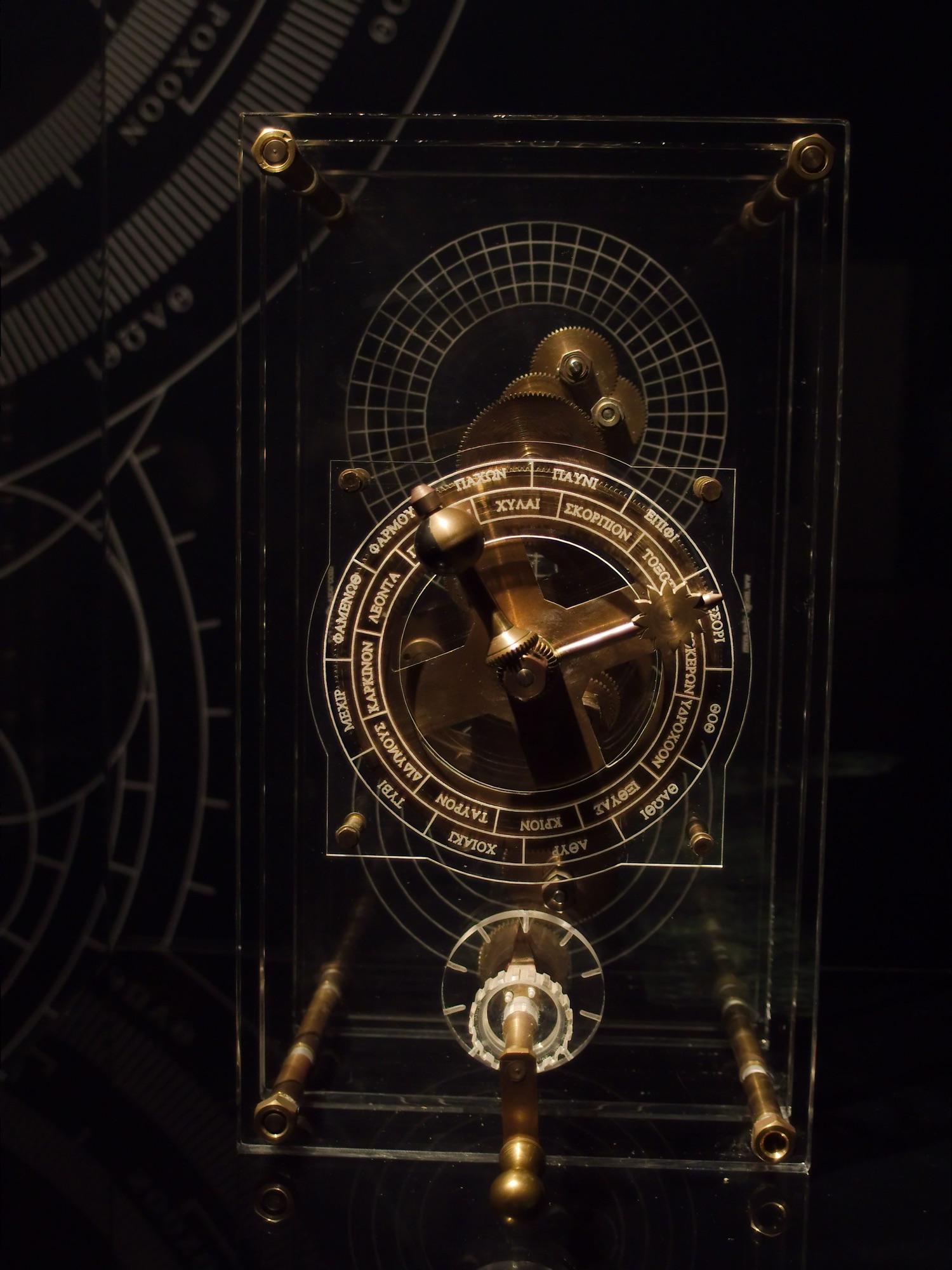
The decisive breakthrough came after 2005, when the Antikythera Mechanism Research Project — an international collaboration including the mathematician and film-maker Tony Freeth and the astronomer Mike Edmunds — brought two advanced imaging technologies to bear on the fragments. A purpose-built, high-resolution computed-tomography scanner peered inside the corroded bronze, resolving gears and counting teeth that had never been seen, while a technique called polynomial texture mapping enhanced the faint surface inscriptions. The results transformed the field. The CT scans allowed precise tooth counts and revealed hidden gears; the imaging of the text uncovered thousands of characters of Greek inscription — a kind of instruction manual and astronomical commentary — much of it never read before. From this work came the detailed modern understanding of the Metonic and Saros dials, the eclipse prediction scheme, the lunar anomaly mechanism, and the Olympiad dial.
Even the mechanism's date is a subject of careful scholarly argument, and the debate is revealing precisely because of how it is conducted — with astronomy and epigraphy, not speculation. The style of the Greek lettering points to roughly 150–100 BCE, and the wreck itself is dated by its coins and pottery to around the middle of the first century BCE. But some researchers, analysing the specific sequence of eclipses inscribed on the Saros dial, have argued that the eclipse predictions are calibrated to a starting point around 205 BCE, which would push the mechanism's design, or its underlying astronomical scheme, earlier still — into the generation after Archimedes. Others dispute the inference. The very fact that the device can be interrogated this way — that one can ask which real eclipses its dial was set to predict — is a measure of how much genuine information survives in it. Likewise the small subsidiary dial for the Panhellenic Games: its inscriptions name not only the Olympics but lesser games such as those at Nemea, Isthmia, Dodona, and elsewhere, a detail that has itself been used to argue for the mechanism's regional origins. This is what serious study of the object looks like — the patient extraction of real history from corroded bronze, not the invention of fantasy to fill the gaps.
Who made it, and the world that was lost
Who built the mechanism, and where, remains genuinely unknown, though there are strong candidates. Ancient writers describe devices that sound tantalisingly similar. Cicero, writing in the first century BCE, refers to a bronze planetarium built by the great Archimedes of Syracuse, and to another made by the philosopher Posidonius of Rhodes that modeled the motions of the Sun, Moon, and planets — precisely what the Antikythera Mechanism does. These references establish that the making of geared astronomical models was a known, if evidently rare, art in the Greek world. On this basis, scholars have variously argued for an origin in Rhodes, a centre of astronomy associated with the great astronomer Hipparchus, whose lunar theory the mechanism appears to embody; in Corinth or its colonies, hinted at by the calendar month-names inscribed on it; or in the tradition descending from Archimedes. The truth is that we cannot say with certainty, and the maker of the most sophisticated surviving object of ancient technology is anonymous.
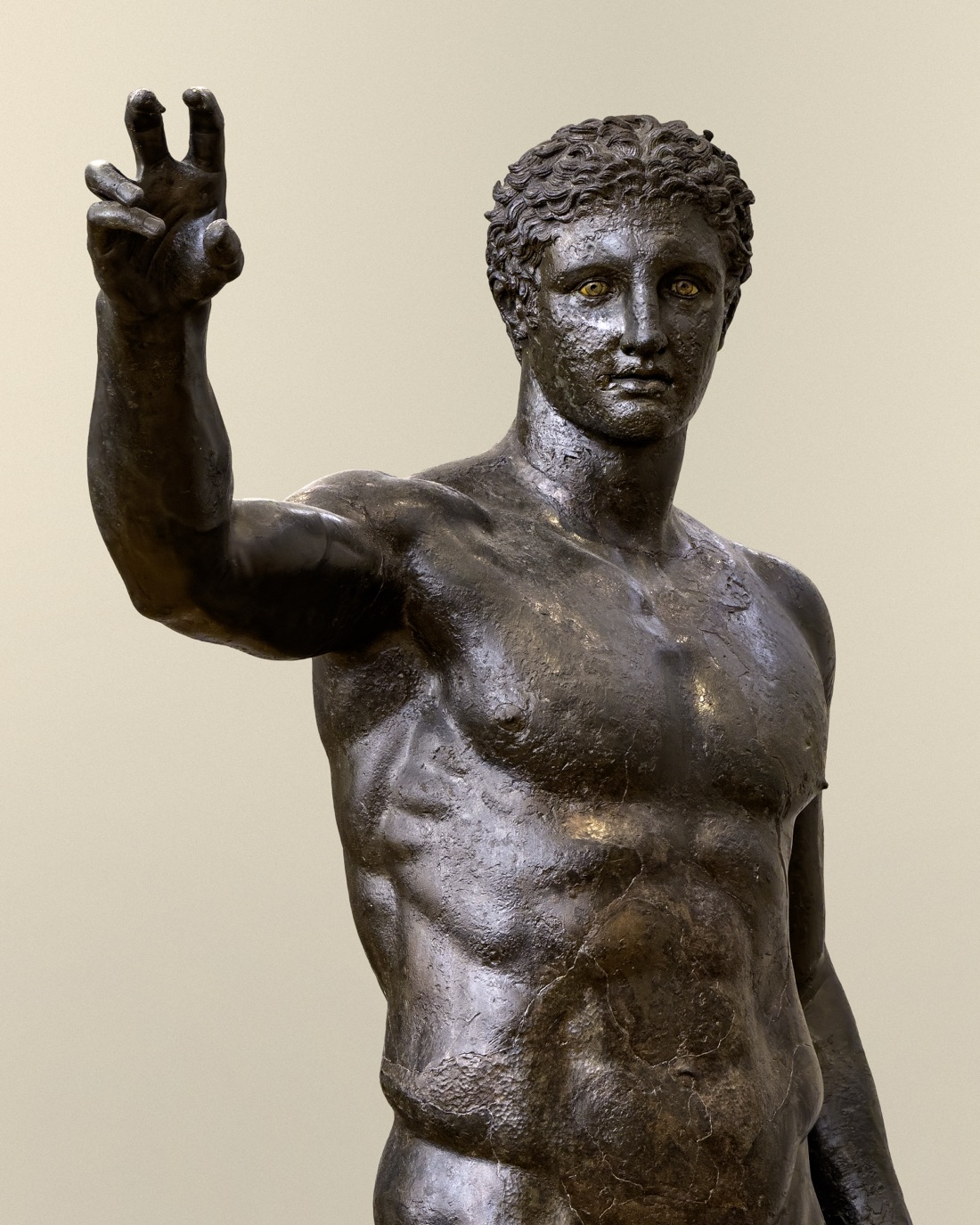
What the mechanism testifies to, more than to any individual, is the sophistication of Hellenistic science and the tragedy of its partial disappearance. The Greeks of this era had a mathematical astronomy of real predictive power, a tradition of fine metalworking, and — as this object proves — the ability to translate the one into the other, to make abstract theory turn on an axle. Much of that knowledge was scattered and lost in the centuries that followed: libraries burned, workshops closed, skills died with their masters, and bronze was melted for its metal. The mechanical modeling of the heavens would not reappear in the surviving record until the astronomical clocks and astrolabe-driven devices of the medieval Islamic world and, later, of Europe. The Antikythera Mechanism is a survivor from a lost peak — proof of how high the ancient world had climbed, and a measure of how much fell away.
What it means
More than a century after Valerios Stais first saw a gear in the bronze, the Antikythera Mechanism has settled into its true significance. It is not a paradox to be explained away, nor a mystery in the tabloid sense; in its broad function it is understood, its cycles read, its purpose clear. What keeps it endlessly compelling is what it represents: a single, battered, salt-eaten object that forces a wholesale revision of what we thought the ancients could do, and that gestures at a vanished world of knowledge whose full extent we can only guess at. Every time a new scan resolves another gear or another line of text, the picture grows richer, and the sense deepens of standing before a fragment of something once whole and now mostly gone.
The mechanism endures, then, as the most eloquent possible argument against condescension toward the past. Here is a device that computed the heavens by hand, that predicted eclipses and phased the Moon and turned the long wheels of the calendar, built by Greek hands more than two thousand years ago and lost beneath the sea within living memory of its making. It tells us that the ancient world contained minds and skills we are still struggling to reconstruct, and that history is not a steady climb but a thing of peaks and terrible falls, in which whole traditions of knowledge can rise, flower, and disappear so completely that when one relic of them surfaces, we scarcely believe it is real. The Antikythera Mechanism is real. That is the wonder, and the warning.
In the end, the Antikythera Mechanism stands as the finest surviving proof that the ancient world was not what we lazily assume it to have been. From a shipwreck off a barren island, from a lump of bronze that a museum nearly ignored, came the wreckage of a machine that modeled the sky — a hand -cranked cosmos of interlocking gears, embodying centuries of Greek astronomy in a case the size of a shoebox. It required a hundred years and the invention of technologies its makers could not have dreamed of before we could read what it did, and even now its planetary gears and its unknown maker keep some of their secrets. But the essential truth is settled, and it is more remarkable than any fantasy: two thousand years ago, someone in the Greek world built a computer of bronze, and then that world, and very nearly all memory of what it could do, slipped beneath the waves. What surfaced off Antikythera is not a message from elsewhere. It is a message from ourselves, from the reach of human ingenuity — and from everything we are capable of losing.
Inspired this / based on it
Derek de Solla Price
The landmark study arguing the mechanism was a complex astronomical calculator.
BBC
A BBC documentary on the mechanism and the CT-scanning research that decoded it.
Filed under
- #antikythera-mechanism
- #ancient-greece
- #archaeology
- #astronomy
- #shipwreck
- #ancient-technology
- #history-of-science
- #unsolved-mystery
- #mystery
Click any tag for every article carrying it.
Continue reading
Göbekli Tepe: The Temple That Rewrote Prehistory
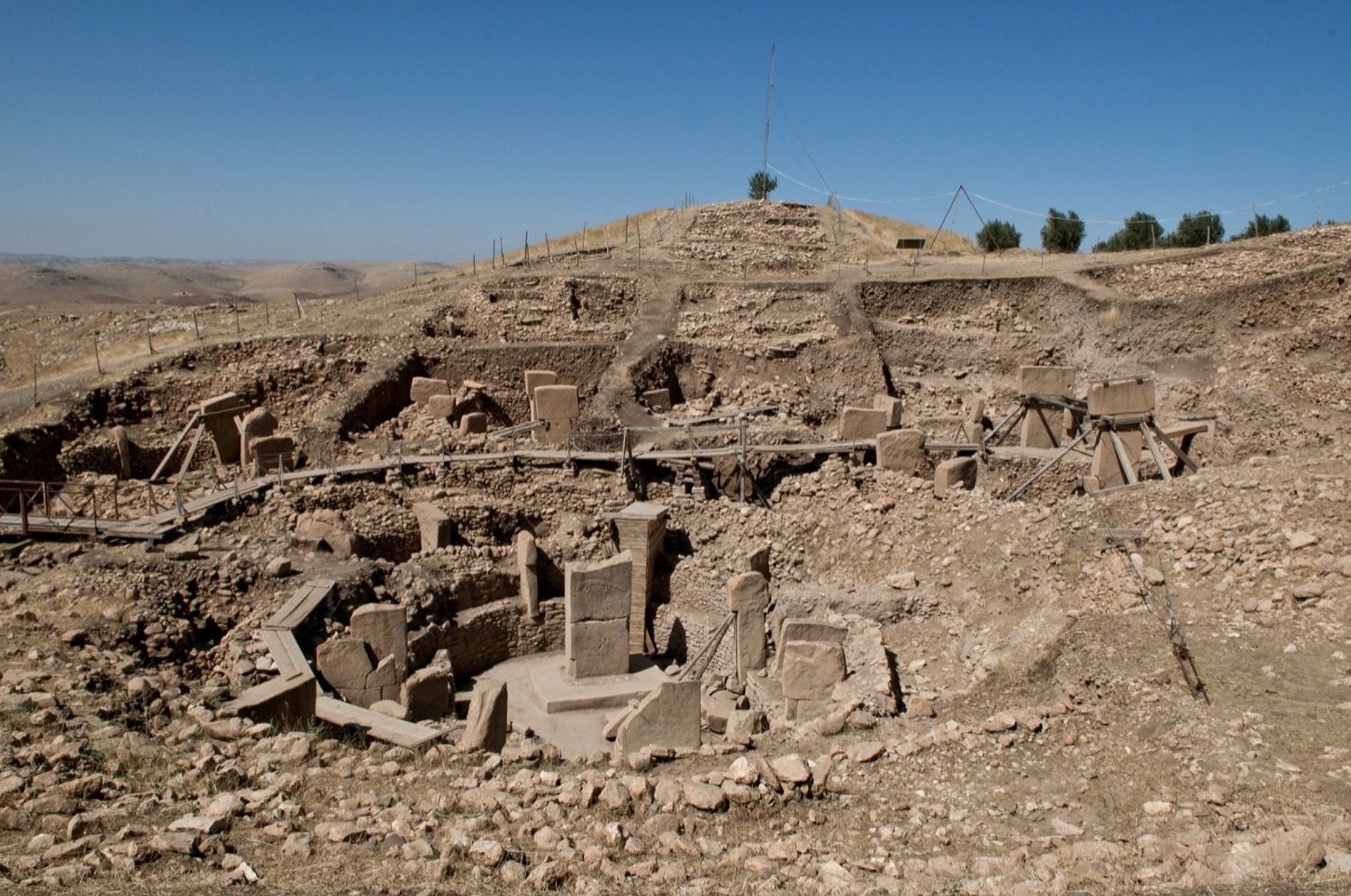
On a limestone ridge overlooking the plains of southeastern Turkey, near the ancient city of Urfa, stands a place that forced archaeologists to rewrite the earliest chapter of the human story. Göbekli Tepe — the name means 'Potbelly Hill' in Turkish — is a complex of great circular enclosures built from massive T-shaped stone pillars, some more than five metres tall and weighing many tons, many of them carved in relief with foxes, boars, snakes, scorpions, vultures, and other animals. It is staggeringly old. Radiocarbon dating places its construction to around 9500 BCE and earlier, making it roughly eleven and a half thousand years old — some six thousand years older than Stonehenge and seven thousand older than the Great Pyramid. What made the discovery revolutionary was not merely its age but who built it: not a settled society of farmers with cities and kings, but hunter-gatherers, people without pottery, without metal, without the wheel, and without — at least at first — agriculture itself. The prevailing wisdom had long held that monumental architecture was a product of civilisation, something only settled, food-producing societies could afford. Göbekli Tepe stood that assumption on its head, and suggested that the impulse to gather and build something great may have come first. It is a genuine mystery — but a mystery of human achievement, not of lost super-civilisations or visitors from the stars. This is the story of the temple that rewrote prehistory.
The Nazca Lines: Giant Drawings in the Peruvian Desert
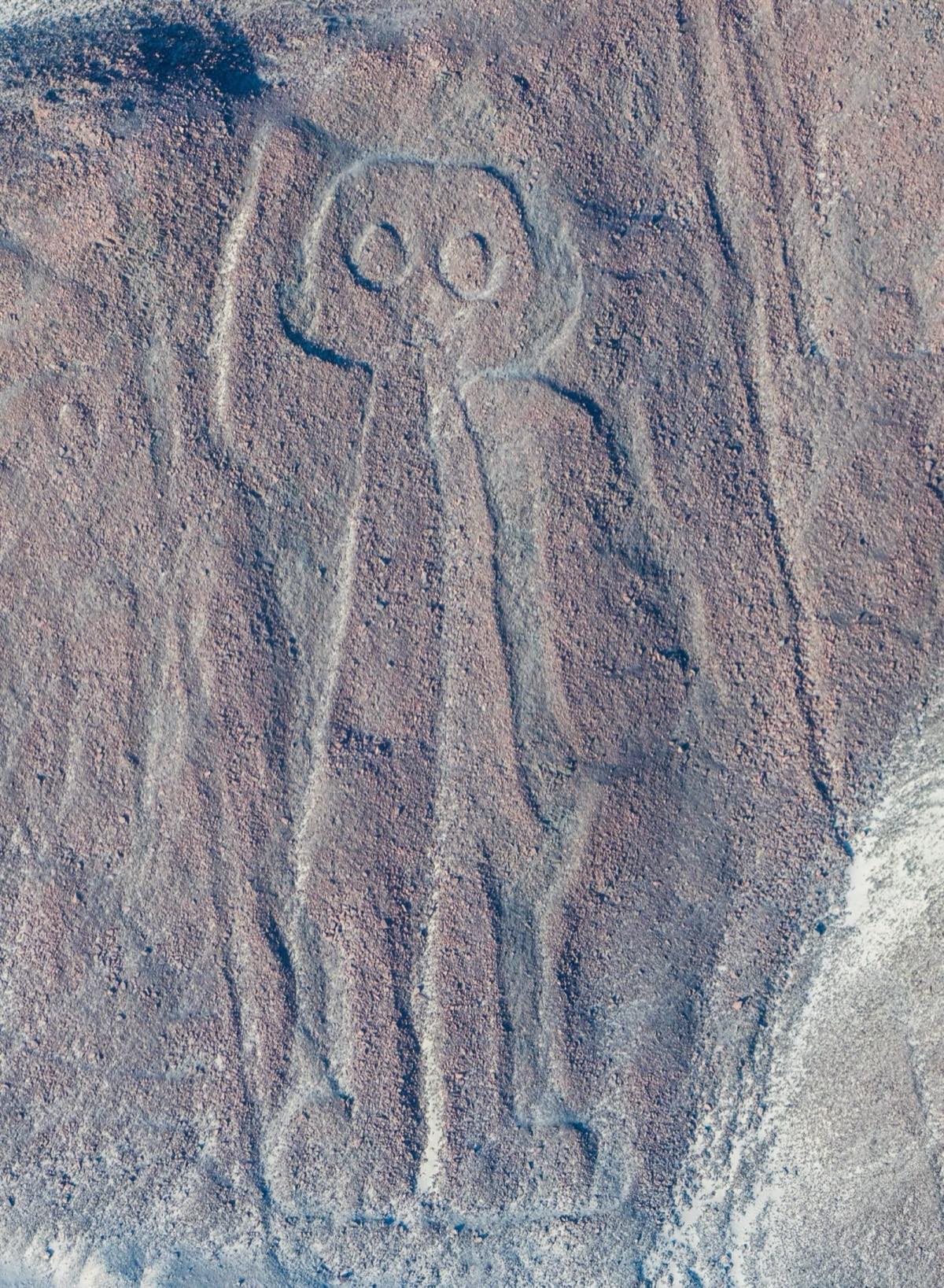
On the arid, wind-still plateau between the towns of Nazca and Palpa in southern Peru lies one of the most extraordinary bodies of ancient art on Earth: hundreds of vast figures and lines etched into the desert floor, so large that many are only fully legible from the air. There are straight lines running ruler-true for kilometres across the pampa; there are trapezoids, triangles, and spirals; and there are some seventy or more great biomorphic figures — a hummingbird, a monkey with a curling tail, a spider, a condor, a heron, a dog, a pair of hands, a flowering tree, and a humanoid figure on a hillside so often nicknamed 'the Astronaut.' They were made by the Nazca people, and by their Paracas predecessors, across roughly a thousand years around the start of the common era, by the simple and ingenious method of clearing away the dark, iron-stained stones of the desert surface to expose the paler ground beneath. Because it almost never rains here, and the wind barely stirs, the drawings have survived for two millennia. How they were made is, in fact, no mystery at all; the techniques are well within the reach of the people who made them, and required no view from the sky and certainly no help from beyond it. The genuine and unsolved question is why — what these enormous figures and lines were for. This is the story of the giant drawings in the desert.
Stonehenge: The Great Stone Circle of Salisbury Plain
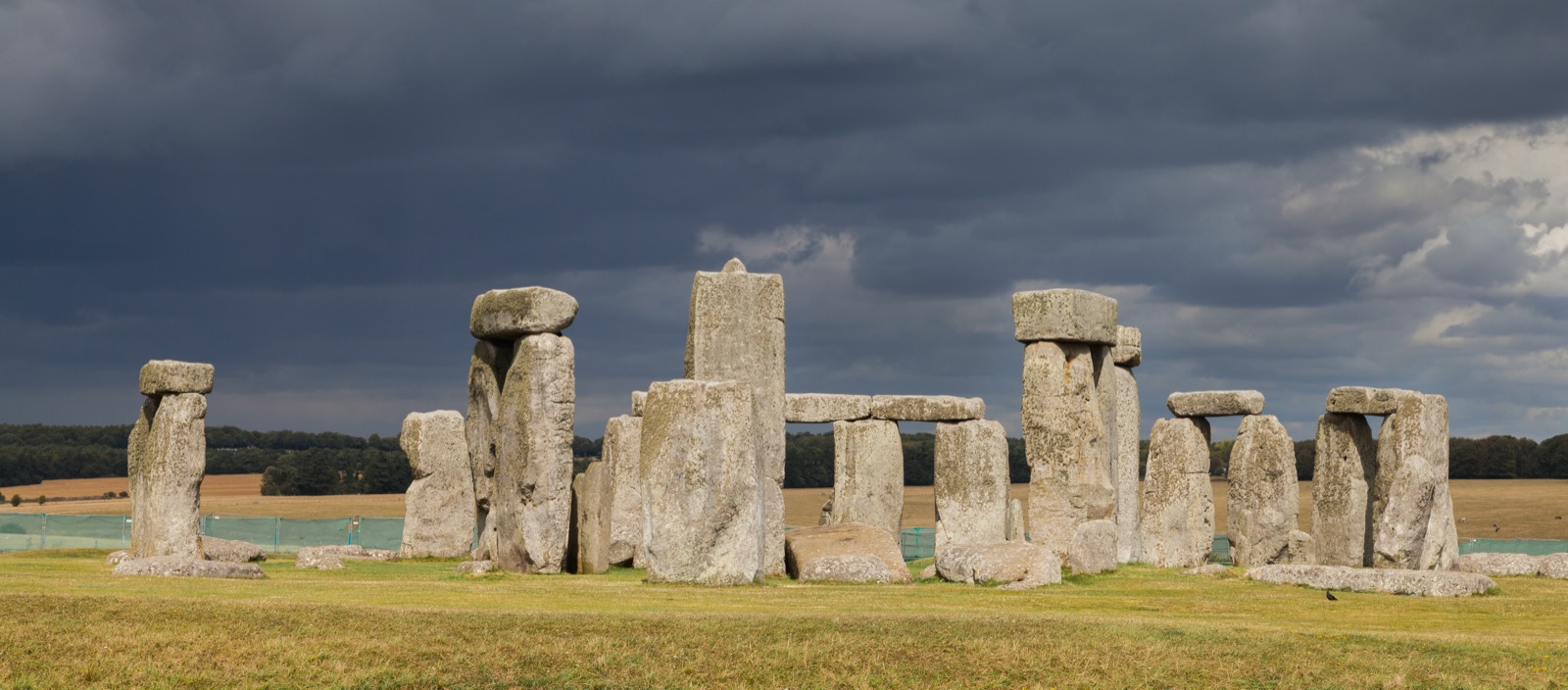
On the open chalk downland of Salisbury Plain in southern England stands the most famous prehistoric monument in the world: a ring of enormous standing stones, some capped by level lintels, arranged with a precision that has drawn wonder and speculation for more than a thousand years. Stonehenge was not built in a day, or in a single lifetime, or by a single people. It grew over roughly fifteen hundred years, from about 3000 BCE, beginning as a simple circular earthwork and cremation cemetery and culminating, centuries later, in the great stone architecture we know — the towering sarsens quarried from the hills to the north, and the smaller 'bluestones' brought, astonishingly, some 150 miles overland from the mountains of west Wales. Its builders, working with antler picks, timber, rope, and muscle, dressed the stones with woodworking joints translated into rock, raised lintels weighing tonnes onto uprights, and aligned the whole monument to the rising and setting of the sun at the solstices. For centuries, outsiders credited the achievement to anyone but the people who actually managed it — to Merlin and giants, to Druids, and in our own age to visitors from the stars. The truth is that Stonehenge is the work of prehistoric Britons of extraordinary skill and organisation. How they built it, we largely understand. Why they built it is a question we are still, carefully, trying to answer. This is the story of the great stone circle.