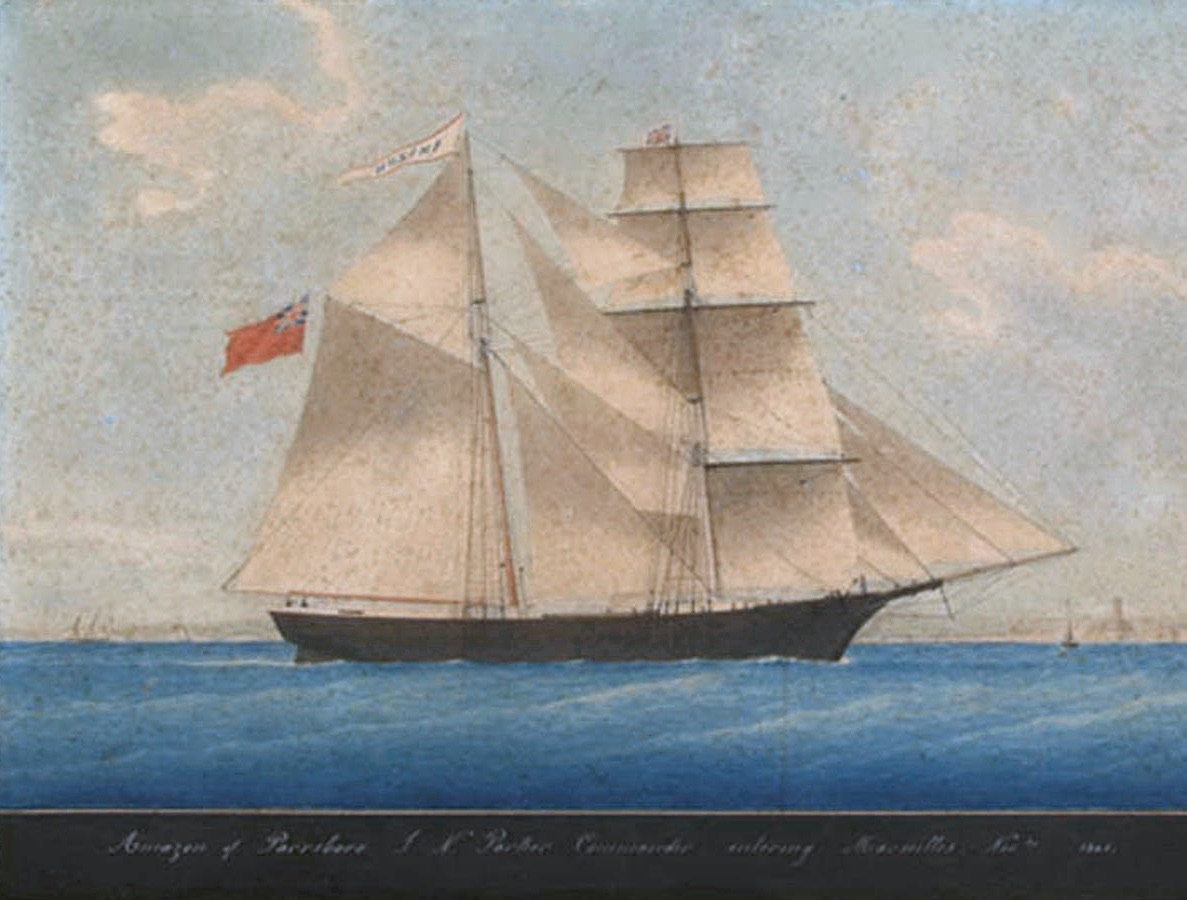
The only known contemporary image of the ship, painted in 1861 under her original name, Amazon, entering Marseille. Built that year in Nova Scotia, she was an unremarkable merchant brigantine — square-rigged on the foremast, fore-and-aft on the main — before she was sold, renamed Mary Celeste, and sailed into legend. Contemporary painting, 1861 — public domain (Wikimedia Commons).
The Mary Celeste and the Ship That Sailed Itself
Atlantic Ocean, 1872 — a sound, well-provisioned ship was found drifting under sail with not a soul aboard, her crew and the captain's wife and infant daughter gone without trace. The single missing lifeboat is the heart of the puzzle
- Category
- Assassinations & Disappearances
- Published
- Length
- 4,260 words · 17 min read
- Author
- The editors
The Mary Celeste and the Ship That Sailed Itself
Atlantic Ocean, 1872 — a sound, well-provisioned ship was found drifting under sail with not a soul aboard, her crew and the captain's wife and infant daughter gone without trace. The single missing lifeboat is the heart of the puzzle.
The ship found adrift
The Dei Gratia was about halfway between the Azores and the coast of Portugal, homeward from New York, when her helmsman noticed a sail a few miles off that was not behaving as a crewed ship should. She was making headway under a scrap of canvas but wallowing and yawing, coming up into the wind and falling off again, as though the wheel were untended. Captain David Morehouse, who as it happened knew the other ship's master, watched her for two hours and then sent his chief mate, Oliver Deveau, across in a boat to investigate.
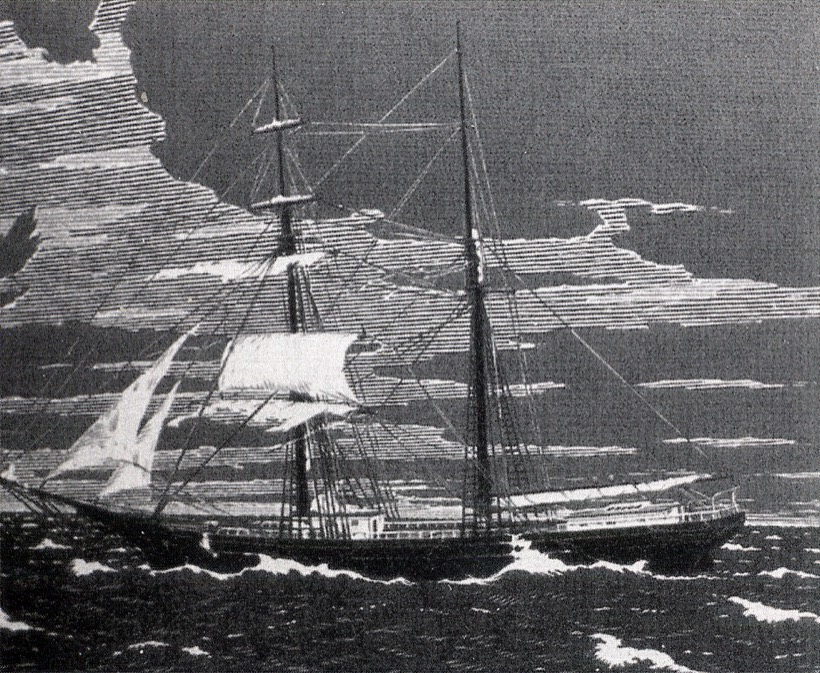
What Deveau and his men found aboard the Mary Celeste was not a scene of horror but something stranger: a scene of absence. There was no one at the wheel and no one in the cabins. There was no blood, no sign of a struggle, no disorder beyond what a few days of sailing untended would produce — some water below, a couple of hatch covers off, a frayed rope or two over the side. The ship had taken perhaps three and a half feet of water into her hold, which sounds alarming and was not: the pumps were in working order and could have cleared it, and a vessel of her kind could ride out far more. She was, in short, in no danger of sinking. She had simply been left.
Deveau's account of those first minutes aboard is the closest thing the case has to an eyewitness. The wheel was not lashed and swung free; the binnacle that held the compass had been knocked from its place and the compass glass broken; the main hatch was secured, but two smaller hatch covers had been lifted off and lay on the deck. Below, there was water sloshing between decks and about three and a half feet of it in the hold, and one of the ship's two pumps had been drawn — taken apart, as if someone had been sounding the well. The cabins were wet, some windows covered over with canvas and boards, the clock stopped, the skylight open. It was the picture not of a fight but of a ship left in some haste and then knocked about by ten days of weather with no hand to tend her. Deveau formed the view at once that she had been abandoned in a hurry — and that there was no good reason visible for why.
What was, and was not, aboard
The detail of what the boarding party found is the whole of the mystery, because almost everything about it argues against the obvious explanations.
The cargo — 1,701 barrels of crude alcohol, bound for the wine-fortifiers of Genoa — sat in the hold very nearly intact. There were six months' provisions and plenty of fresh water. In the captain's cabin were the personal effects of Benjamin Briggs, his wife, and their small daughter: clothing, the child's toys, Sarah Briggs's harmonium and her sheet music, a sewing machine. The crew's quarters held the sailors' oilskins, their boots, their pipes and tobacco — the things a man does not leave behind if he has any choice, least of all the pipe a 19th-century sailor kept always to hand. Nothing of value had been taken; there was no robbery. Whatever had emptied the ship had not been after her cargo or her people's possessions.
It is worth saying plainly what was not found, because the popular image of the Mary Celeste is largely an invention. There were no half-eaten breakfasts still warm on the cabin table, no mugs of tea abandoned mid-sip, no cooking fire still burning in the galley, no sign of a meal interrupted between one second and the next. Those details — the ones that make the ship sound like the scene of a supernatural snatching — come not from the boarding party's testimony but from a piece of fiction written twelve years later. What the real boarders described was a working ship, recently and deliberately left, her stores and belongings in place, her galley cold, her people simply gone. The truth was stranger for being so orderly.
Two absences point the way the rest of the evidence cannot. The ship's chronometer, its sextant, and its register and papers were gone — exactly the things a captain would gather up if he were leaving his ship in an orderly way and expected to have to find his position again. And the yawl, the ship's only boat, normally lashed across the main hatch, was missing, with signs that it had been deliberately launched rather than swept away. Taken together, those two facts reframe the whole picture. The people aboard the Mary Celeste did not vanish into thin air, and they were not, on the evidence, dragged off by force. They got into the boat, on purpose, taking the means to navigate — and then something went wrong.
The ship and her people
The Mary Celeste had a history that the superstitious would later make much of. She had been built in 1861 at Spencer's Island in Nova Scotia and launched under the name Amazon; her first captain died within days of taking command, and a run of minor mishaps followed, enough to earn her, in hindsight, a reputation as an unlucky ship. She was sold, passed through several hands, came under American registry, and in 1869 was renamed Mary Celeste and refitted.
Her captain on the final voyage was no reckless adventurer. Benjamin Spooner Briggs, thirty-seven, was an experienced, respected, and notably sober master — a religious man, part-owner of the ship, who had brought his family along as he had on earlier voyages. Aboard with him were his wife, Sarah, thirty, and their daughter Sophia Matilda, who was two; their seven-year-old son had been left at home for school. The crew of seven were, by all accounts, competent and unremarkable: an American first mate, Albert Richardson, a second mate, and four German sailors. There is nothing in the make-up of the ship's company to suggest a crew primed for mutiny or a captain likely to panic. That ordinariness is part of what has always made the case so hard to dismiss.
The Mary Celeste left New York Harbour on November 7, 1872, with her cargo of alcohol, bound for Genoa. The Dei Gratia, under Morehouse, left the same port about a week later on a similar route. The two ships' captains had reportedly dined together before sailing — a coincidence that the Gibraltar inquiry would later seize upon.
There was nothing about the voyage, in prospect, to mark it for disaster. It was an ordinary cargo run on an ordinary route, of a kind Briggs had made many times; the alcohol was a routine industrial freight; the season was late autumn, with the weather that implies but nothing exceptional. Sarah Briggs had written home cheerfully before sailing. The family had a comfortable cabin fitted out for them, the harmonium aboard for the long evenings, a small library, the toys for Sophia. Everything we know of the ship's company on the eve of departure describes people settling in for a long, dull, familiar crossing — which is part of what makes their disappearance so disquieting. Whatever happened between New York and the Azores happened to a perfectly ordinary ship doing a perfectly ordinary thing, and that is why no one has ever been able to wave it away as the predictable end of a reckless venture.
Gibraltar
Deveau and two volunteers sailed the Mary Celeste the several hundred miles to Gibraltar, where both ships put in and the salvage of the derelict became a legal matter before the Vice-Admiralty Court. And there the mystery acquired its second life, because the official who took charge of the inquiry was convinced from the outset that he was looking at a crime.
The man was Frederick Solly-Flood, the Attorney General of Gibraltar and Advocate-General, and he attacked the case with a suspicion that has become almost as famous as the mystery itself. He theorised murder: that the crew had broken into the alcohol cargo, got drunk, killed the Briggs family and the officers, and fled. He theorised conspiracy: that Briggs and Morehouse had plotted together to abandon the ship and split an insurance or salvage payout. He pored over the vessel for evidence of violence and thought he had found it — stains on the deck and on a sword beneath a bunk that looked like blood, marks on the bow that looked like deliberate cuts. Forensic examination undid him at every turn: the stains were not blood, the marks on the hull were consistent with natural wear, and there was simply nothing to support a tale of slaughter. No bodies, no weapons used in anger, no plunder, no disorder. After months of suspicion, the court could establish no wrongdoing at all.
Some of that suspicion fell, inevitably, on the men who had found the ship. The very thing that made the Dei Gratia's crew heroes — they had boarded a derelict and sailed her to port for salvage — also gave them a motive, in a suspicious mind, for the worst: had they come upon the Mary Celeste still crewed, murdered her people, and invented the tale of finding her empty, all to claim the salvage? Solly-Flood entertained the idea. But it foundered on the same rocks as his other theories. The Dei Gratia's people gave consistent accounts; there was no blood and no sign of a fight on the Mary Celeste; nothing had been stolen; and the notion that a merchant crew would murder ten people, including a woman and a small child, for a fraction of a salvage award, and leave behind a ship scrubbed of every trace of the crime, asked far more of the evidence than the evidence would give. The salvors were, in the end, not accused — only, in the size of their award, quietly doubted.
The salvors were eventually awarded their due — though a notably small sum, about a fifth of the combined value of ship and cargo, a figure widely read as the court's way of registering a suspicion it could not substantiate. Solly-Flood's theories collapsed for want of evidence, but the flavour of them — foul play, dark doings at sea — seeped into the public story of the Mary Celeste and has never entirely left it.
What most likely happened
Strip away the lurid theories the evidence demolished — the mutiny, the massacre, the conspiracy, and the later inventions of pirates and sea monsters — and a quieter, sadder, and far more plausible reconstruction remains.
The leading explanation begins with the cargo. The Mary Celeste was carrying more than seventeen hundred barrels of crude alcohol, and when the ship reached Gibraltar nine of those barrels were found to be empty — they had been made of red oak, a more porous wood than the rest, and had leaked. In the hold of a ship sailing from the cold of a New York November into warmer Atlantic waters, leaking alcohol would have given off vapour, and vapour in a closed hold can build toward the point of ignition. The reconstruction runs like this: somewhere near the Azores, Briggs became aware of fumes, or heard the rumble of venting vapour, or saw the hatches blown — something that convinced him, rightly or not, that his ship was about to explode. Faced with a cargo of alcohol and his family aboard, a cautious captain might do exactly what the evidence suggests was done: order everyone into the yawl, gather the navigation instruments and papers, and stand off from the ship at the end of a long rope, meaning to wait until the danger passed and then return.
And then the rope failed. A squall, a shift of wind, the ship gathering way under her remaining sail — any of these could have parted or pulled away the towline, leaving ten people in a small open boat, without the ship, on the open Atlantic. The Mary Celeste, lightened and under canvas, would have sailed away from them faster than they could row, and the yawl, overloaded and far from land, would not have lasted long in any sea. It is a theory that fits the facts the others cannot: the seaworthy ship, the missing boat, the taken instruments, the untouched belongings, the absence of any violence. It requires only one human decision — a captain's misjudged caution in the face of a frightening cargo — to turn an orderly precaution into a catastrophe.
It is not the only candidate. Some have argued that the ship's pump, found partly dismantled, left Briggs unable to gauge how much water was really in the hold, so that a routine amount looked like dangerous flooding and panicked him into abandoning a ship that was never sinking. Others have invoked a waterspout, which could have driven water below and dropped the barometric pressure enough to make the hold seem to be filling fast. These too end in the same place — a hasty, fatal decision to take to the boat — and none of them can be proven. What they share, and what marks them off from the sensational alternatives, is that they require no crime and no villain: only fear, a small boat, and a large ocean.
One detail is often raised against the fumes theory and is worth meeting head-on: there was no fire damage aboard, no scorching, no soot, nothing burned. But that objection misunderstands what the theory requires. It does not need an explosion that wrecked the ship — only a frightening one that did not. A build-up of alcohol vapour can ignite or vent in a sudden, low-temperature flash that blows a hatch cover and fills the hold with a terrifying rush of sound and pressure while leaving almost no lasting mark — a flash fire of vapour rather than a blast of fuel. To a captain standing on deck above a cargo of seventeen hundred barrels of alcohol, such a report would not need to do any damage at all to be the most alarming thing he had ever heard; it would only need to suggest that the next one might. The absence of scorching, in other words, is not evidence against the theory. It is exactly what the theory predicts.
The legend
The Mary Celeste might have remained a melancholy footnote of the sea had it not been adopted, twelve years later, by a young doctor with a gift for fiction.
In 1884 a then-unknown Arthur Conan Doyle published, anonymously, a short story called 'J. Habakuk Jephson's Statement,' a lurid first-person tale of murder and racial revenge aboard the abandoned ship. It was fiction, and sensational fiction at that, but it was taken by many readers as fact dressed up, and it did two lasting things to the real case. It renamed the ship 'Marie Celeste' — a misspelling that has dogged her ever since — and it seeded the popular imagination with details that were never true: half-eaten breakfasts still warm on the table, a cooking fire still burning, mugs of tea abandoned mid-sip, as if the crew had been snatched away between one heartbeat and the next. None of that was in the real record. The actual Mary Celeste was not a tableau frozen in an instant of supernatural disappearance; she was a ship methodically and deliberately abandoned by frightened people who took their instruments with them. But the legend was better story than the truth, and the legend is what survived.
The ship herself sailed on for another thirteen years under a succession of owners, her reputation as a jinx growing, until in 1885 her last captain ran her deliberately onto a reef off Haiti in a crude attempt at insurance fraud — a scheme that was exposed and that ruined him. Even her end, then, was a fraud rather than a mystery. But it is not the wreck off Haiti that anyone remembers. It is the deck off the Azores, in December 1872, with the wheel swinging untended and the cabins full of the ordinary belongings of ten people who had stepped into a small boat and were never seen again.
What the question still is
The Mary Celeste endures because it is the purest kind of mystery: a complete set of physical facts arranged around a single missing explanation, with no body, no confession, and no wreckage to force the issue either way.
The likeliest answer has been clear for over a century, and it is not supernatural and not even very dramatic: a captain carrying a volatile cargo took a precaution that turned into a disaster, and the sea did the rest. The alcohol-fumes reconstruction, or one of its close cousins, accounts for everything the boarding party found — the sound ship, the launched boat, the gathered instruments, the untouched belongings, the early-stopped log — and demands nothing that did not routinely happen to small boats lost in open water. By the standards of historical explanation, the case is, in its essentials, solved: the people of the Mary Celeste almost certainly died in the ship's own yawl, within sight, for a while, of the vessel that would have saved them.
What keeps it alive is the gap between that sober probability and the absence of proof. No yawl was ever found; no body was ever recovered; no one survived to say what the fumes or the water or the fear had looked like from the deck that morning. Into that silence the legend rushed — Conan Doyle's warm teacups, the snatched-away crew, the ghost ship sailing itself across a calm sea — and the legend is far more memorable than nine leaking barrels of red oak. The truth of the Mary Celeste is human and specific and almost certainly knowable in outline: ten people, a frightening cargo, a misjudged decision, a parted rope. It is the not-quite-knowing, the missing last page, that has kept a sound ship abandoned off the Azores sailing through the imagination for a hundred and fifty years.
Sources
Primary
- Records of the Vice-Admiralty Court at Gibraltar and the salvage hearing of 1872-73, including the testimony of the Dei Gratia's crew.
- The Mary Celeste's surviving log and the boarding party's account of the ship's condition.
- Contemporary newspaper reporting of the discovery and the Gibraltar inquiry, 1872-1873.
Secondary
- Brian Hicks, Ghost Ship: The Mysterious True Story of the Mary Celeste and Her Missing Crew (2004).
- Charles Edey Fay, Mary Celeste: The Odyssey of an Abandoned Ship (1942).
- Retrospective coverage in Smithsonian, the BBC, and other outlets on the abandonment, the theories, and the ship's later fate.
Reference
- Arthur Conan Doyle, 'J. Habakuk Jephson's Statement' (1884) — the fiction that shaped the popular legend.
- Maritime-history analyses of the alcohol-cargo and abandonment reconstructions, and of the ship's deliberate wrecking off Haiti in 1885.
Inspired this / based on it
Brian Hicks
Ballantine. The leading modern narrative history of the ship and the abandonment.
Charles Edey Fay
The classic documentary study, drawing on the Gibraltar court records.
Smithsonian / Channel 5
Documentary reconstructing the voyage and testing the leading abandonment theories.
Arthur Conan Doyle
The sensational short story that renamed the ship "Marie Celeste" and invented the popular ghost-ship legend.
Filed under
- #mary-celeste
- #ghost-ship
- #atlantic
- #benjamin-briggs
- #dei-gratia
- #gibraltar
- #azores
- #brigantine
- #maritime-mystery
- #unsolved
- #1870s
- #mystery
Click any tag for every article carrying it.
Continue reading
Amelia Earhart and the Speck in the Pacific
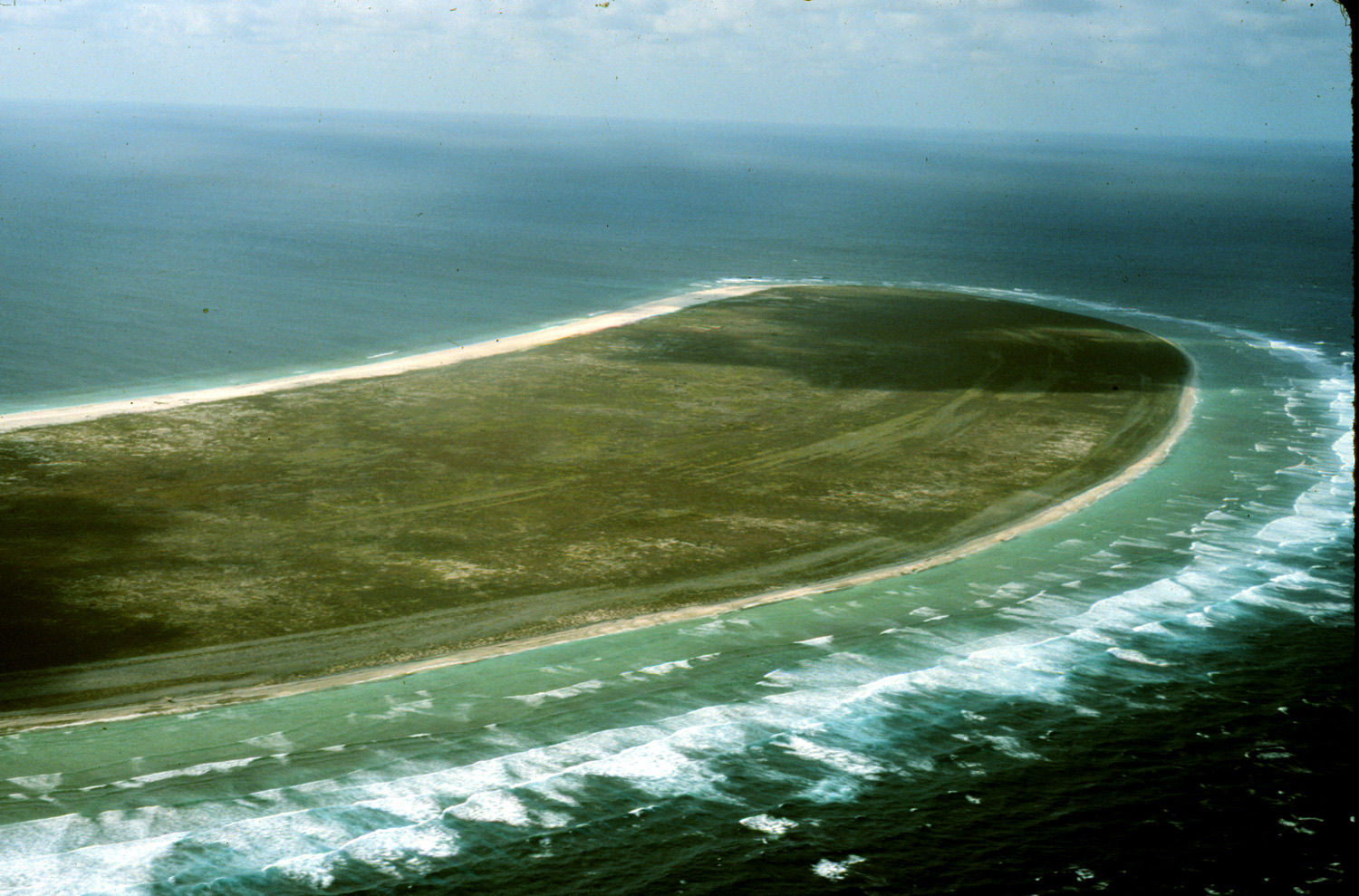
On July 2, 1937, Amelia Earhart — the first woman to fly the Atlantic solo, the most celebrated aviator on earth — took off from Lae, in New Guinea, with her navigator Fred Noonan, bound for a flat coral speck in the central Pacific called Howland Island. It was the most dangerous leg of an attempt to circle the globe near the equator: more than 2,500 miles of open ocean to a target a mile and a half long and twenty feet high, which they had to find by dead reckoning and the stars after a night and a morning over featureless water. A United States Coast Guard cutter, the Itasca, waited off Howland to guide them in by radio and to lay a column of smoke. It was never needed. Through the morning the Itasca's crew heard Earhart's voice growing tense as she searched for an island she could not see — 'We must be on you but cannot see you… gas is running low' — and then, in her last understood transmission, a line of position and the words that she was running north and south along it. After that there was silence. The largest air and sea search in American history to that date found nothing: no plane, no wreckage, no bodies. Earhart and Noonan were declared lost, and in the decades since, their disappearance has hardened into the most enduring mystery in the history of flight, fought over by three incompatible theories — that they ran out of fuel and sank near Howland; that they came down as castaways on a different island and died there; and that they fell into Japanese hands and never came home. This article sets out what is actually known about the flight and its final hours, and weighs the rival explanations — the plausible, the contested, and the long-debunked — against the evidence.
D.B. Cooper and the Only Hijacking That Was Never Solved
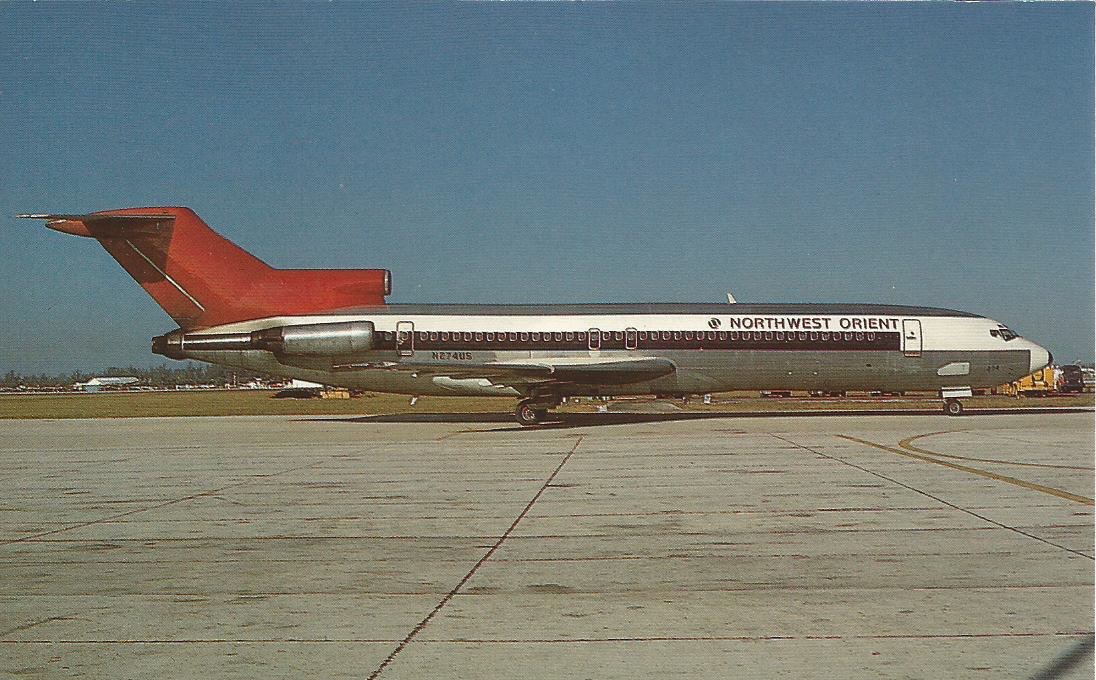
On the afternoon of Wednesday, November 24, 1971, the day before Thanksgiving, a man in a dark suit and a clip-on tie boarded Northwest Orient Airlines Flight 305, a Boeing 727 making the short hop from Portland, Oregon, to Seattle. He had bought his ticket with cash under the name Dan Cooper. Once airborne he handed a flight attendant a note saying he had a bomb, opened a briefcase to show her a tangle of wires and red cylinders, and dictated his terms: two hundred thousand dollars in twenty-dollar bills and four parachutes, to be waiting when the plane landed at Seattle-Tacoma. The airline paid. On the ground Cooper released the thirty-six passengers, kept four crew, had the jet refuelled, and ordered it back into the air toward Mexico City — flying low and slow, landing gear down, with the rear airstair lowered. Somewhere over the dark, rain-soaked forests of southwestern Washington, at around a quarter past eight in the evening, he stepped off the end of those stairs into the night with the money strapped to his body, and vanished. No body was ever found. No parachute was ever found. Of the ten thousand marked bills, exactly two hundred and ninety ever turned up — a packet of rotting twenties dug out of a riverbank by a child nine years later. The FBI worked the case for forty-five years, ran down more than a thousand suspects, and in 2016 quietly closed it without an answer. The skyjacking of Flight 305 remains the only unsolved act of air piracy in the history of American aviation, and 'D.B. Cooper' — a name born from a reporter's error — became the rarest kind of American legend: a criminal almost everyone half-hopes got away. This article reconstructs what actually happened that night, what the single scrap of physical evidence does and does not tell us, and why a fifty-year-old robbery has never let go of the public imagination.
Dyatlov Pass
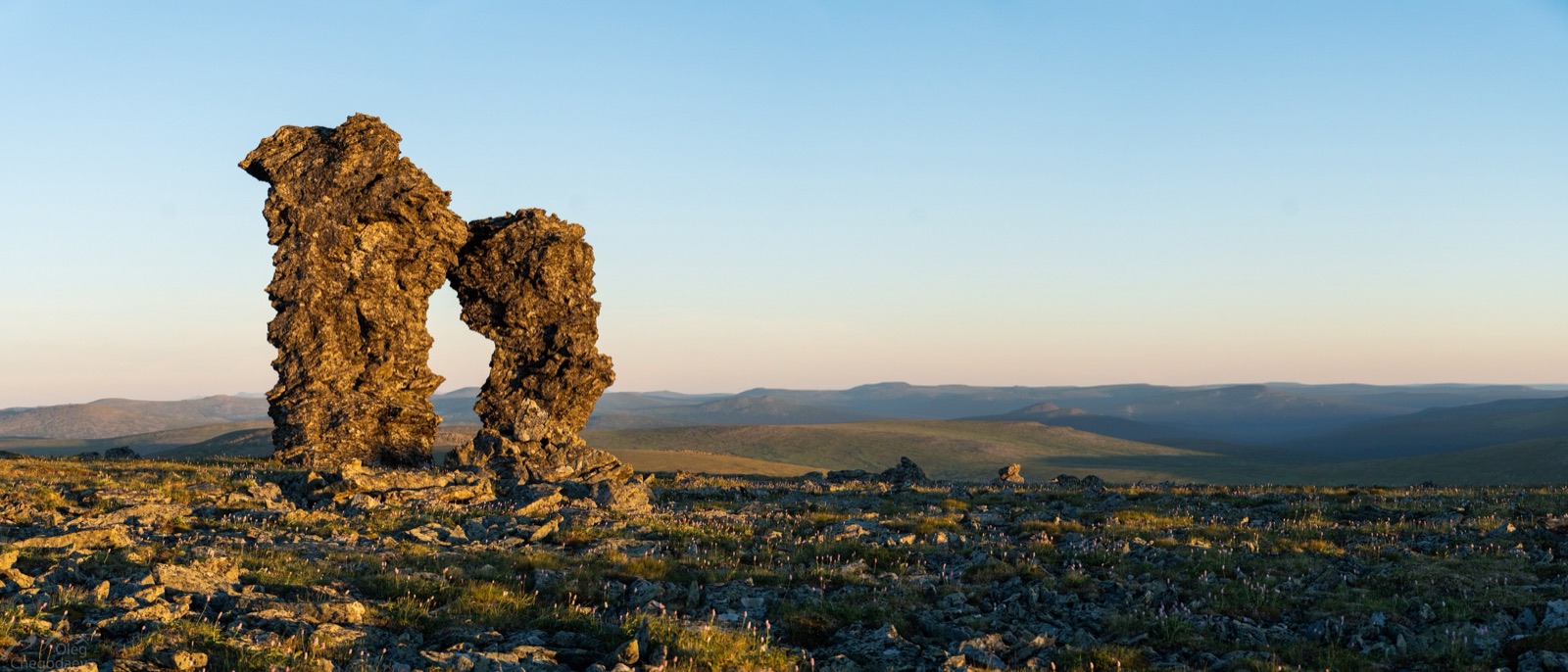
On the afternoon of February 1, 1959, a group of nine experienced Soviet ski-tourists — eight men and one woman, all between 20 and 38 years old, all members or alumni of the Ural Polytechnical Institute in Sverdlovsk (now Yekaterinburg) — pitched a four-pole canvas tent on the eastern slope of an undistinguished 1,079-meter mountain in the northern Urals named, in the Mansi language, Kholat Syakhl — 'Dead Mountain.' The group was led by 23-year-old Igor Dyatlov, a fifth-year radio-engineering student. The party had skied approximately 280 kilometers from the closest railway terminus over the prior nine days. Their planned summit, the following day, was the higher Otorten peak ten kilometers north. None of them reached it. When a search party located the abandoned tent on February 26, it had been cut open from the inside. Most of the group's clothing and equipment was still inside. The first three bodies — including Dyatlov — were found later that day, scattered along the slope below the tent, dressed only in underwear or light layers, none in proper outer clothing, none in their boots. Two further bodies were found nearer the tent over the following weeks. The final four bodies — including the only female member, Lyudmila Dubinina — were not located until May 4, 1959, in a snow-covered ravine approximately 1.5 kilometers downslope. Three of those four had massive internal trauma — equivalent in the words of the autopsy report to high-speed automobile-collision injuries — without corresponding external wounds. Two had missing soft tissue: Dubinina lacked her tongue and eyes. Some of the recovered clothing tested positive for elevated beta-particle radiation. The Soviet criminal investigation concluded in May 1959 that the deaths were caused by 'a compelling natural force which the hikers were unable to overcome.' The Russian Procurator-General's Office reopened the case in 2019 and concluded in July 2020 that the cause was a slab avalanche followed by hypothermia and disorientation. A 2021 computational study published in *Communications Earth & Environment* by Alpine snow scientists at EPFL Lausanne provided a quantitative mechanical model supporting the slab-avalanche conclusion. The case is closed in Russia. It is, in international public discussion, the most-debated cold-weather forensic mystery of the 20th century.