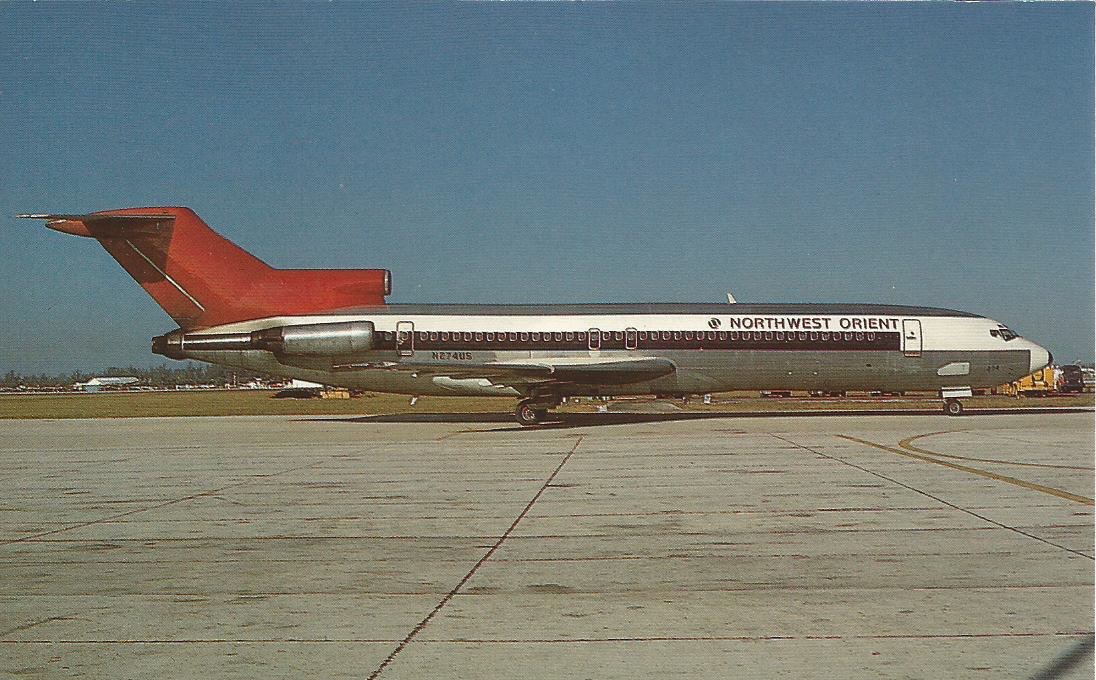
A Northwest Orient Airlines Boeing 727 in the livery of the era. Flight 305, the Portland-to-Seattle service hijacked on November 24, 1971, was a 727-100 — a type whose rear ventral airstair, which could be lowered in flight, made it the one airliner from which a person could parachute. It was the aircraft, as much as the man, that made the crime possible. Public domain (Wikimedia Commons).
D.B. Cooper and the Only Hijacking That Was Never Solved
United States, 1971 — a man in a business suit jumped out of the back of a jet over the forests of Washington with $200,000 and was never seen again. Fifty years and a thousand suspects later, the FBI gave up
- Category
- Assassinations & Disappearances
- Published
- Length
- 4,400 words · 18 min read
- Author
- The editors
D.B. Cooper and the Only Hijacking That Was Never Solved
United States, 1971 — a man in a business suit jumped out of the back of a jet over the forests of Washington with $200,000 and was never seen again. Fifty years and a thousand suspects later, the FBI gave up.
The man in seat 18C
He was, by every account, unremarkable. A man somewhere in his mid-forties, perhaps six feet tall, with a receding hairline and a calm, businesslike manner, wearing a dark suit, a white shirt, a black clip-on tie, and a raincoat, carrying a briefcase. He bought a one-way ticket at the Portland counter for twenty dollars, in cash, giving the name Dan Cooper, and took seat 18C near the rear of the Boeing 727. He ordered a bourbon and soda. When the aircraft — carrying thirty-six other passengers and six crew on the short run up to Seattle — lifted off at around 2:50 in the afternoon, nothing about him had drawn a second glance.
Shortly after takeoff he handed a folded note to Florence Schaffner, the flight attendant seated nearest him on the jump seat. She assumed it was the phone number of a lonely passenger and dropped it, unread, into her bag. He leaned toward her and said, quietly, that she had better look at it. The note, printed in neat capital letters, said he had a bomb in his briefcase and wanted her to sit beside him. When she did, he opened the case just far enough for her to see what looked like red sticks of dynamite, a tangle of wire, and a battery. Then he told her, without raising his voice, what he wanted.
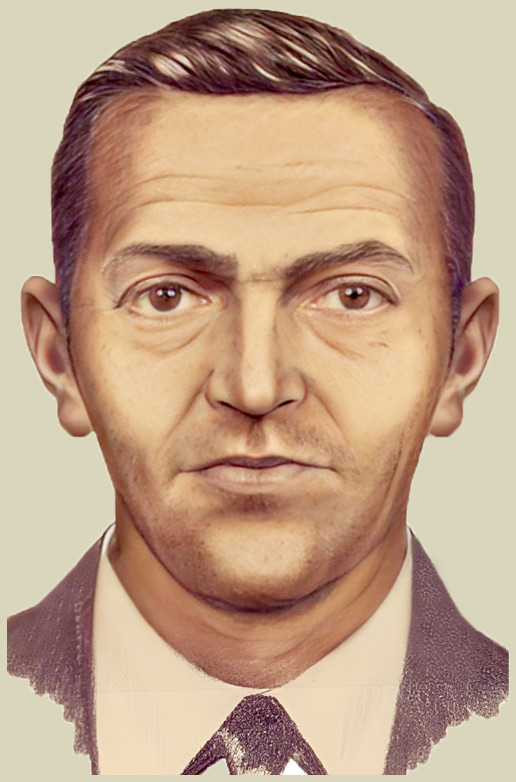
Everything witnesses remembered about him was a study in composure. He chain-smoked filter-tip cigarettes and drank bourbon and soda, and when the time came he tried to settle his bar tab and, told to keep the change, offered the money to the crew. He wore dark wraparound sunglasses for part of the flight. He was unhurried and unfrightened, even courteous, and he showed flashes of local knowledge — remarking at one point, as the city lights slid below, that they were over Tacoma, and observing that the aircraft could be refuelled at nearby McChord Air Force Base. He never raised his voice and never lost his temper, and he left the crew with the abiding impression of a man who knew exactly what he was doing and had rehearsed it, in his head, many times before. That impression — of competence, of planning, of a person wholly in control — is one of the few things every witness agreed on, and it has shaped every theory since.
His demands were precise: two hundred thousand dollars in American currency, in twenty-dollar bills; four parachutes — two main and two reserve; and a fuel truck standing by at Seattle to refuel the aircraft on arrival. He specified the parachutes in a way that mattered: by asking for four, including civilian rigs, he created the impression that he might force one or more of the crew to jump with him, which discouraged the authorities from handing over a sabotaged chute. Schaffner relayed the demands to the cockpit. The pilot, William Scott, radioed Northwest Orient, which made the decision within minutes to comply. While the money and the parachutes were assembled on the ground, Flight 305 circled Puget Sound for two hours, the passengers told only that a minor mechanical problem was delaying the landing.
$200,000 and four parachutes
On the ground, the FBI moved fast to meet the demand and to mark what it handed over. It assembled two hundred thousand dollars in unmarked twenty-dollar bills — ten thousand notes — but before delivering them, agents photographed every one, recording the serial numbers, the great majority of them from a single Federal Reserve series. The bundles, weighing about twenty pounds, went into a knapsack. Four parachutes were gathered from local sources, including civilian skydiving rigs.
The parachutes came from a Seattle-area skydiving school, and they carried their own quiet drama. The authorities had considered slipping Cooper a sabotaged or non-functional canopy, but his demand for four rigs — hinting that he might force a crew member to jump with him — had made that too dangerous to attempt. The set that came aboard was a mix of types, and the question of which Cooper took and which he left would later become a small battleground of interpretation. He jumped with a main parachute and left behind, among others, a reserve that had been sewn shut for training and could never have opened. To some readers of the case that showed real knowledge — he could tell a working canopy from a dummy at a glance; to others, the particular rig he chose was an older, unsteerable military model that no seasoned skydiver would have picked. Like the man himself, the parachutes pointed in two directions at once.
The 727 landed at Seattle-Tacoma at about 5:39 in the evening. Cooper had the money and the parachutes brought aboard, and in exchange he released all thirty-six passengers and Florence Schaffner. He kept four: Captain Scott, First Officer Robert Rataczak, flight engineer Harold Anderson, and Tina Mucklow. The aircraft was refuelled — a process he grew impatient with, threatening at one point to act if it dragged on — and then, on his instructions, the crew prepared for an unusual second flight.
The jump
Cooper's flight plan was as deliberate as everything else about him, and it was tailored to the one thing he plainly understood: how to get out of a 727 in the air. He ordered the aircraft flown toward Mexico City at the lowest practical altitude — under ten thousand feet — with the landing gear down, the wing flaps set to fifteen degrees, and the cabin left unpressurised, a configuration that would hold the jet to a slow, low, stable flight. When the crew told him the aircraft could not reach Mexico City in that configuration without refuelling, he agreed to a stop at Reno, Nevada.
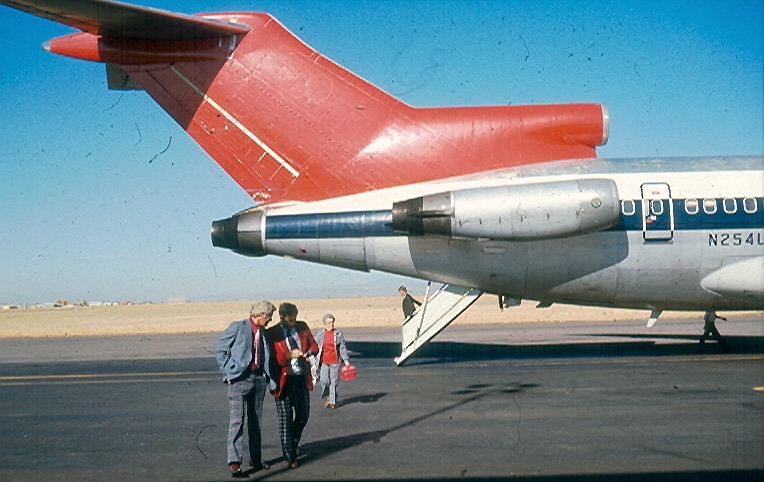
The 727 took off from Seattle at about 7:40 p.m. Once airborne, Cooper ordered the four crew into the cockpit and told them to stay there. He had Mucklow show him how to operate the aft airstair before she joined the others; the crew, sealed behind the cockpit door, communicated with him through the intercom. At around 8:00 p.m. a warning light showed that the rear stairway had been activated. The crew asked over the intercom whether he needed help; he said no. At about 8:13 p.m., somewhere over the rugged, forested country of southwestern Washington, in cold rain and near-total darkness, the aircraft's tail bobbed with a sudden change of pressure — a small bump the crew felt in the cockpit. That moment, give or take, is believed to be when Cooper stepped off the end of the airstair into the night, the knapsack of money lashed to his body. He took one or two of the parachutes; he left two behind, including a sewn-shut training reserve that could not have been used. The aircraft flew on to Reno and landed, its airstair still scraping the runway, with no one in the cabin.
NORJAK
The hunt began that night, and it never entirely ended. The FBI gave the case the codename NORJAK, for Northwest hijacking, and it became one of the most exhaustively investigated crimes in the bureau's history. Fighter jets had shadowed Flight 305 without seeing anyone leave it; now the search moved to the ground, to the enormous problem of where, in the dark and the weather, a man might have come down.

The presumed drop zone was a vast expanse of forest and water southeast of the planned flight path, and the search of it turned up nothing — no body, no parachute, no money, no equipment, no trace at all. Investigators dredged and combed the area; among the places searched in the years that followed was Lake Merwin, a reservoir on the Lewis River near the hamlet of Ariel, which sat close to where the jump was thought to have occurred.
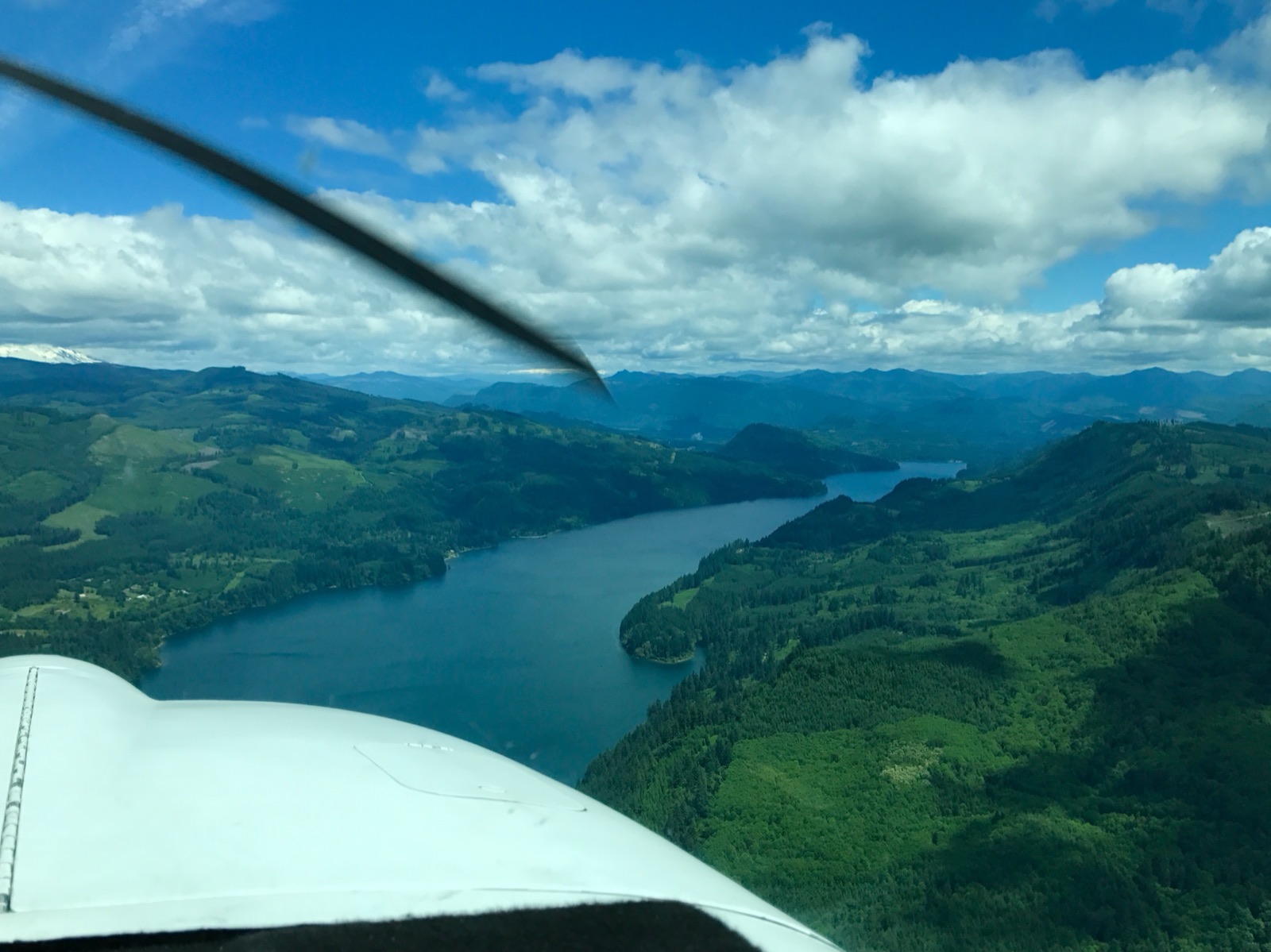
The scale of that first search is hard to overstate. Soldiers from the army base at Fort Lewis combed the ground; aircraft and helicopters quartered the forest; agents went door to door through the scattered settlements of the region and watched the reservoirs and rivers. Submarines were used in Lake Merwin. The terrain fought them at every step — steep, timbered, soaked, and in much of the suspected zone without roads — and the weather that had covered Cooper's exit covered his landing too. Months of effort produced not a buckle, not a banknote, not a shred of parachute silk. It was as if the forest had closed over him without a ripple.
The bureau built and circulated composite sketches from the crew's descriptions, checked the recorded serial numbers against money turning up across the country and the world, and worked through a list of suspects that would eventually number in the many hundreds. None of it converged on a person. The serial numbers never showed up in circulation. The sketches never found their man. For nearly a decade, the only thing the case produced was its own growing legend.
Tena Bar
Then, in February 1980, a piece of it surfaced — literally.
An eight-year-old boy named Brian Ingram, on a family outing to a beach called Tena Bar on the Columbia River a few miles downstream of Vancouver, Washington, was smoothing the sand for a fire when he uncovered three bundles of decaying twenty-dollar bills. There were about two hundred and ninety notes, badly rotted but still banded, totalling some $5,800. The serial numbers matched the Cooper ransom. It was, and remains, the only physical evidence from the hijacking ever recovered.
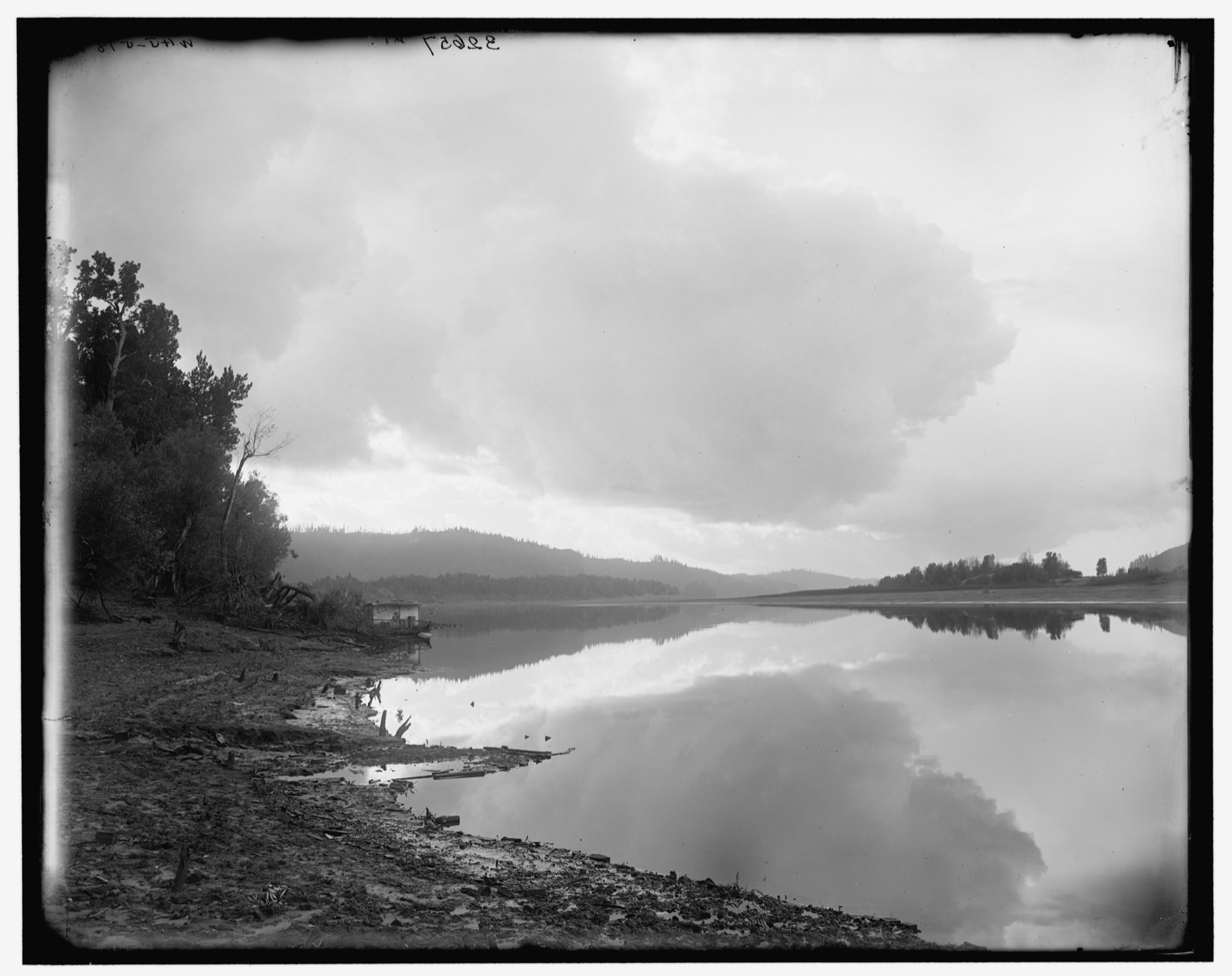
The find answered one question and opened a dozen. It confirmed that the money was real and that at least some of it had ended up in the Columbia. But how it got to Tena Bar — whether it washed down a tributary from the drop zone, was deposited by a dredging operation, or was placed there — could not be settled, and the state of the bills, banded but disintegrating, fit some theories and contradicted others. The rest of the two hundred thousand dollars has never appeared. Not one of the remaining bills has ever turned up in commerce, anywhere, in more than half a century — a silence that itself is evidence of a kind, suggesting the money was never spent because the man who took it could not, or did not live to, spend it.
The suspects
Over the decades the case attracted a long parade of candidates, each championed by investigators, relatives, or authors, and none ever confirmed.
The most suggestive was Richard Floyd McCoy Jr., who in April 1972 — five months after Cooper — carried out a strikingly similar hijacking of a 727, extorting a ransom and parachuting from the aft stairs; he was caught, convicted, and later killed in a 1974 shootout after a prison escape. But McCoy did not match the description of Cooper especially well, and the FBI did not regard him as the man. Others came and went: Kenneth Christiansen, a Northwest Airlines employee with parachute experience; Robert Rackstraw, a charismatic ex-serviceman promoted as the culprit in a 2016 documentary but discounted by the bureau; Duane Weber, who made a deathbed claim to his wife; L.D. Cooper; Sheridan Peterson; and, in more recent years, fresh claims advanced by the families of several earlier suspects. Each theory has its evidence and its believers; none has the proof.
The hunt outlived the official investigation. After the FBI stepped back in 2016, a loose community of amateurs — retired agents, scientists, engineers, hobbyists — kept working the evidence, re-analysing the particles on the tie, modelling how the money might have travelled to Tena Bar, and chasing new candidates; into the 2020s the children of Richard McCoy pressed a renewed claim that their father had been Cooper after all. The bureau has endorsed none of it. What the citizen efforts really demonstrate is not a solution but the case's strange gravity: half a century on, people are still giving years of their lives to a robbery in which nobody was hurt and the only lasting casualty, arguably, was the pride of the FBI.
One genuinely odd thread runs through the physical evidence. The clip-on tie Cooper left behind on the aircraft was, decades later, examined under electron microscope by researchers, who reported finding particles of titanium and rare-earth elements — materials associated with aerospace and specialty-metal work of the period. It is not a name, but it is a hint: that the calm man in seat 18C may have spent his working life somewhere in the industry whose aircraft he used to disappear.
Did he survive?
The question that hangs over everything is whether Cooper lived through the night, and the honest answer is that no one knows.
The case against survival is the jump itself. He went out the back of a jet at around two hundred miles an hour, at night, in heavy rain and near-freezing cold at altitude, over steep, heavily timbered, roadless wilderness, wearing a business suit and slip-on shoes — not the gear of a man equipped to come down softly and walk out. He had taken a parachute, but the rig and his evident familiarity with it have been debated; an expert skydiver would have chosen differently in several respects. Against all that stands the simple fact that no body, no parachute, and almost none of the money was ever found, despite one of the most intensive searches in FBI history — and the counter-argument that an experienced jumper, having planned everything else with such care, might have planned his landing too. The Tena Bar money is read both ways: as the residue of a man who drowned or died and whose cash washed into the river, or as a fragment deliberately shed by a survivor. The evidence genuinely does not decide it.
What is certain is that on July 12, 2016, after forty-five years, the FBI formally suspended its active investigation, redirecting its resources and acknowledging, in effect, that the trail had gone as cold as a trail can go. The physical evidence — the tie, the recovered bills, two of the parachutes — was preserved; the file was left open in principle but closed in practice.
The door that closed behind him
Cooper's apparent success — and for a giddy few months it looked like success — set off a contagion. Through 1972 a wave of copycat parachute-extortion hijackings broke over American aviation, with something on the order of fifteen attempts to repeat the trick of a ransom and a jump from the tail of a jet. Most failed; some were lethal; one, by Richard McCoy in April, came close enough to be mistaken for a sequel. The response reshaped flying itself. Boeing fitted its 727s with a simple spring-loaded paddle, christened the 'Cooper vane,' that made it impossible to lower the aft airstair in flight, sealing the exact exit Cooper had used. And the wider alarm over hijacking helped drive the introduction, from early 1973, of universal physical screening of passengers and their bags at American airports — the metal detectors and X-ray belts now so ordinary that it takes an effort to remember they were once new. The man in seat 18C had boarded a jet without anyone glancing into his briefcase; within fifteen months of his jump, that world was gone, in part because of what he had shown could be done.
What the question still is
D.B. Cooper endures, and the reasons have as much to do with America as with the crime. He hurt no one. He was polite to the crew, paid his bar tab, worried aloud about the passengers' comfort, and then vanished with a fortune into the wilderness in a way that looked, to a public soured by Vietnam and Watergate, less like terrorism than like a magic trick played on the authorities. The 727's airstair, the very feature he exploited, was bolted shut against imitators with a device the industry nicknamed the 'Cooper vane'; the man himself slipped through the one window of opportunity that aviation ever left open and then closed it behind him forever.
The mystery is unusually clean. Almost everything about the crime is documented — the demands, the timeline, the configuration of the flight, the serial numbers of the money — and only the two things that matter most are blank: who he was, and whether he lived. That precise shape, a fully recorded event with a single unbridgeable gap at its centre, is what keeps the case alive, because it offers endless room for theory without ever rewarding it. Every few years a new suspect is named, a relative comes forward, a particle of titanium is re-examined, and the gap stays exactly where it was.
In the end the most likely truth is probably the least romantic: that a middle-aged man with some knowledge of parachutes and aircraft, and a cool head, jumped into terrible conditions and did not survive them, his body and most of his money lost in country that swallows such things without trace. But 'most likely' is not 'known,' and into that small space between them an entire American folk legend has grown. The man who called himself Dan Cooper got the one thing almost no criminal ever gets, and the one thing that guarantees he will never be forgotten: he got away clean enough that we cannot even say whether he got away at all.
Sources
Primary
- FBI case file and public statements on the NORJAK investigation, including the July 2016 announcement suspending active work on the case.
- Statements and later interviews of the Flight 305 crew — Florence Schaffner, Tina Mucklow, and the flight deck — on the events of November 24, 1971.
- The recorded serial numbers of the $200,000 ransom, and the forensic record of the Tena Bar recovery of 1980.
- Reporting on the electron-microscope analysis of the necktie left aboard the aircraft.
Secondary
- Contemporaneous and retrospective reporting in The Oregonian, The Seattle Times, the Associated Press, the BBC, and The New York Times on the hijacking, the search, the Tena Bar find, and the case's closure.
- Geoffrey Gray, Skyjack: The Hunt for D.B. Cooper (2011).
- Coverage of the principal suspect theories (McCoy, Rackstraw, Christiansen, and others) and the citizen-investigator efforts of the 2010s.
Reference
- Aviation-history accounts of the Boeing 727's ventral airstair and the post-1971 'Cooper vane' modification mandated to prevent in-flight use.
Inspired this / based on it
Geoffrey Gray
Crown. The leading book-length investigation, drawing on the FBI file and the principal suspect theories.
Roger Spottiswoode
Treat Williams as a fictionalized, surviving Cooper — the folk-hero version of the legend.
Netflix / Marina Zenovich
Four-part series on the case and the community of amateur sleuths who never stopped chasing it.
History Channel
Documentary advancing the Robert Rackstraw theory, later disputed and rejected by the FBI.
Filed under
- #db-cooper
- #hijacking
- #norjak
- #northwest-orient
- #boeing-727
- #tena-bar
- #fbi
- #unsolved
- #pacific-northwest
- #parachute
- #usa
- #1970s
- #mystery
Click any tag for every article carrying it.
Continue reading
MH370
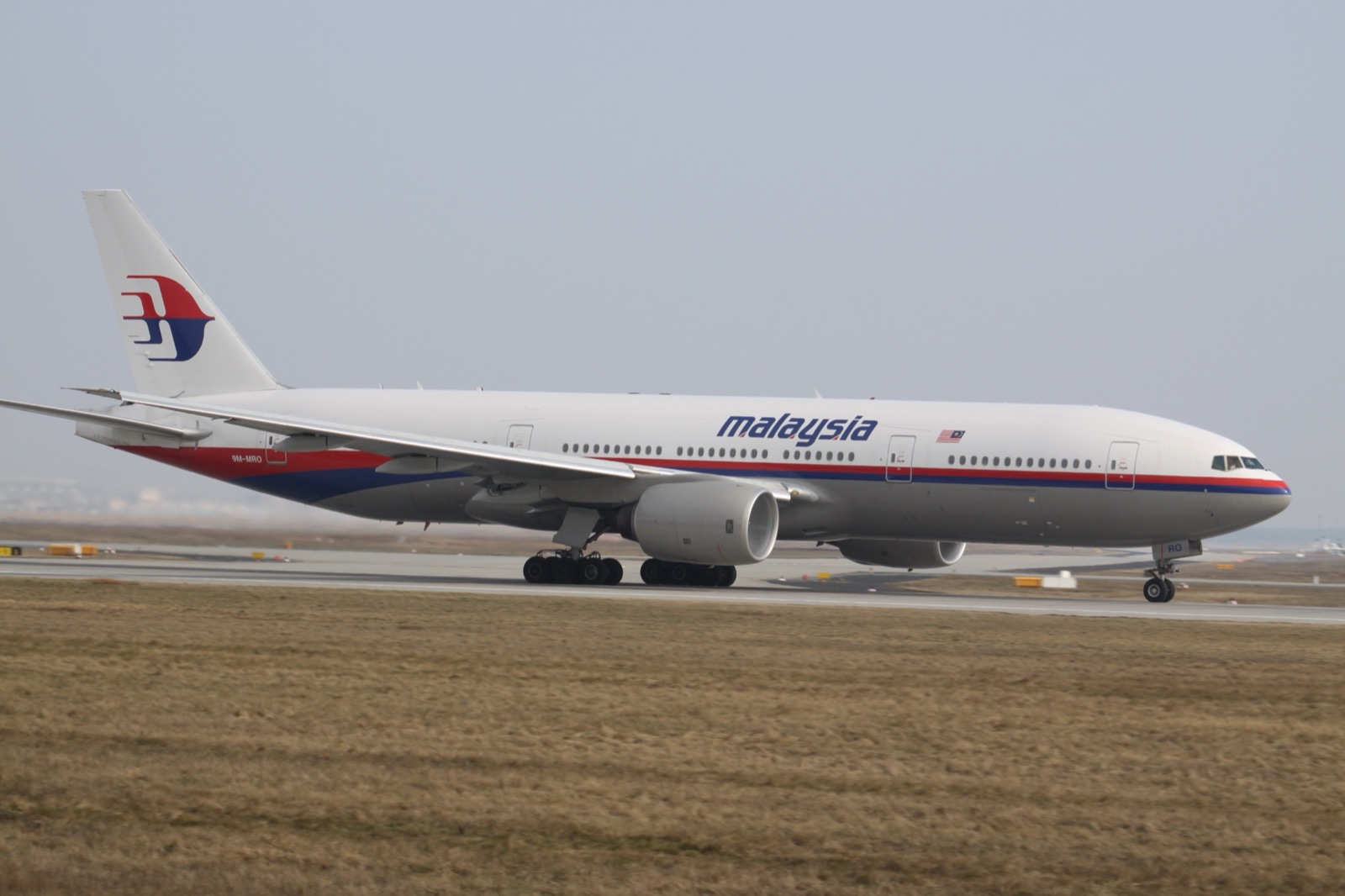
On March 8, 2014 at 12:41 a.m. Malaysia time, Malaysia Airlines flight 370 — a Boeing 777-200ER registered 9M-MRO — left Kuala Lumpur for Beijing with 239 people on board. Thirty-eight minutes later, the aircraft's transponder went dark over the South China Sea. Military primary radar then tracked an unidentified return making a hard left turn back across the Malay Peninsula, threading the gap between Malaysian and Thai air defense, before heading up the Strait of Malacca. The aircraft's satellite communications terminal made handshakes with Inmarsat's 3-F1 satellite for seven more hours. The final handshake, at 8:19 a.m., placed the aircraft along an arc somewhere in the southern Indian Ocean roughly 1,600 km west-southwest of Perth, Australia. Three years of surface and seabed search across 120,000 square kilometres found nothing. Thirty-three confirmed pieces of debris, beginning with a flaperon that washed ashore on Réunion in July 2015, are the only physical remains. The 2018 Malaysian Annex 13 report concluded that the aircraft was deliberately diverted but could not say by whom or why.
Dyatlov Pass
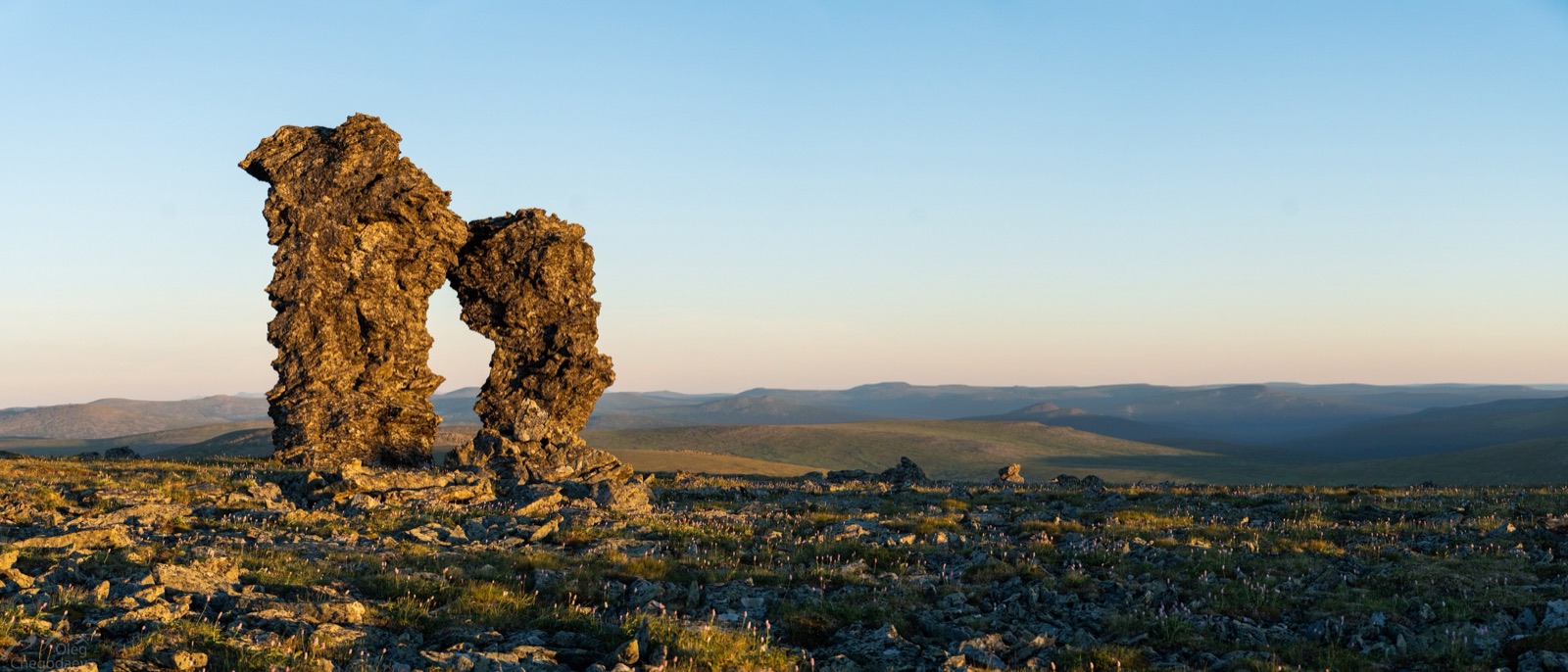
On the afternoon of February 1, 1959, a group of nine experienced Soviet ski-tourists — eight men and one woman, all between 20 and 38 years old, all members or alumni of the Ural Polytechnical Institute in Sverdlovsk (now Yekaterinburg) — pitched a four-pole canvas tent on the eastern slope of an undistinguished 1,079-meter mountain in the northern Urals named, in the Mansi language, Kholat Syakhl — 'Dead Mountain.' The group was led by 23-year-old Igor Dyatlov, a fifth-year radio-engineering student. The party had skied approximately 280 kilometers from the closest railway terminus over the prior nine days. Their planned summit, the following day, was the higher Otorten peak ten kilometers north. None of them reached it. When a search party located the abandoned tent on February 26, it had been cut open from the inside. Most of the group's clothing and equipment was still inside. The first three bodies — including Dyatlov — were found later that day, scattered along the slope below the tent, dressed only in underwear or light layers, none in proper outer clothing, none in their boots. Two further bodies were found nearer the tent over the following weeks. The final four bodies — including the only female member, Lyudmila Dubinina — were not located until May 4, 1959, in a snow-covered ravine approximately 1.5 kilometers downslope. Three of those four had massive internal trauma — equivalent in the words of the autopsy report to high-speed automobile-collision injuries — without corresponding external wounds. Two had missing soft tissue: Dubinina lacked her tongue and eyes. Some of the recovered clothing tested positive for elevated beta-particle radiation. The Soviet criminal investigation concluded in May 1959 that the deaths were caused by 'a compelling natural force which the hikers were unable to overcome.' The Russian Procurator-General's Office reopened the case in 2019 and concluded in July 2020 that the cause was a slab avalanche followed by hypothermia and disorientation. A 2021 computational study published in *Communications Earth & Environment* by Alpine snow scientists at EPFL Lausanne provided a quantitative mechanical model supporting the slab-avalanche conclusion. The case is closed in Russia. It is, in international public discussion, the most-debated cold-weather forensic mystery of the 20th century.
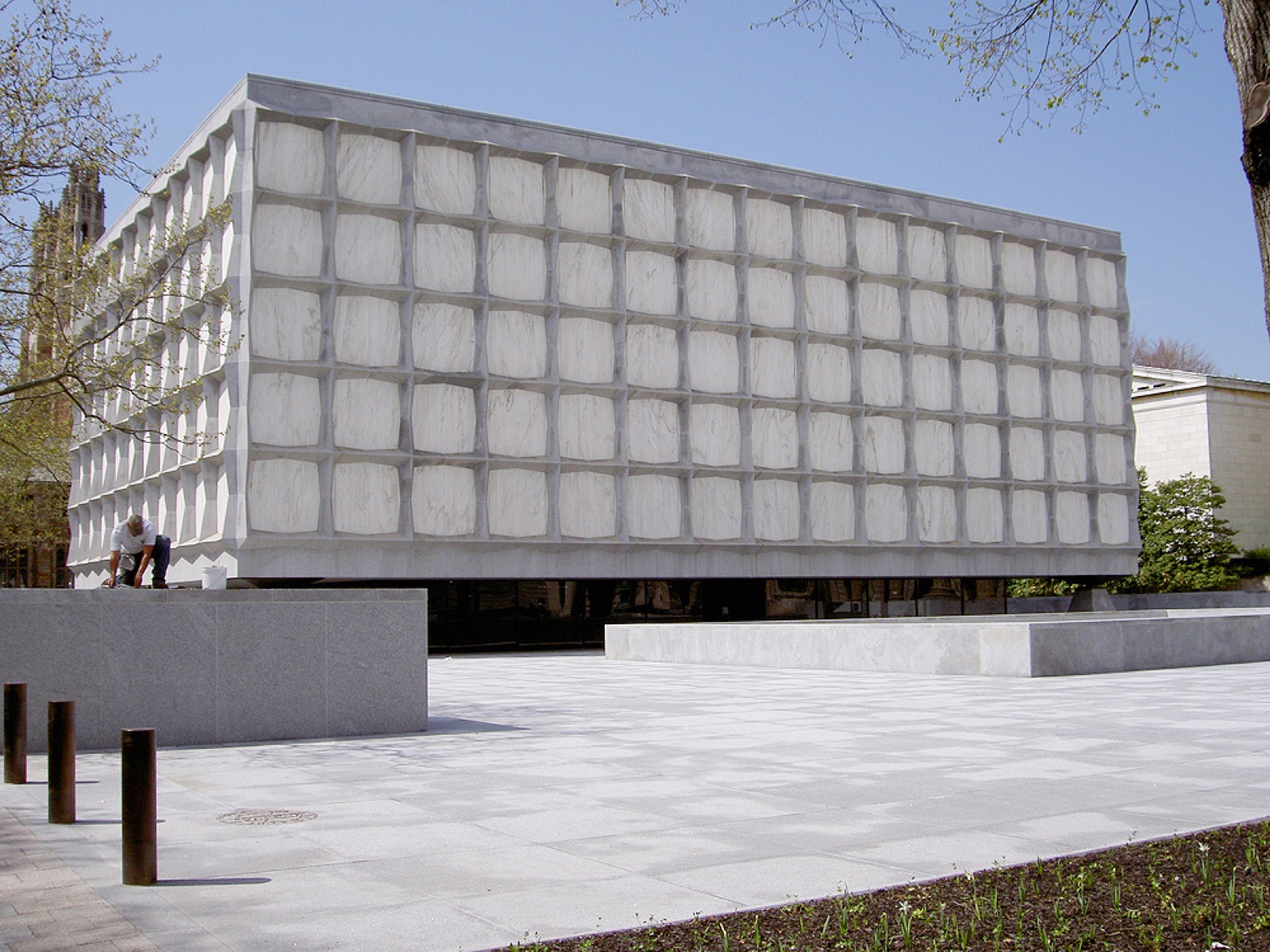
The Voynich Manuscript
Sometime between 1404 and 1438 — the period to which the University of Arizona's accelerator mass spectrometry laboratory carbon-dated four samples of its vellum in 2009 — someone, almost certainly in northern Italy, produced a 240-page illustrated manuscript in a script that no one before or since has been able to read. The codex is now held as MS 408 of the Beinecke Rare Book and Manuscript Library at Yale University. It is one of the most studied documents in existence. It has been examined by the leading cryptographers of two centuries — including the team at the U.S. Army's Signal Intelligence Service that broke Japanese diplomatic codes in 1940 — and by the leading natural-language statisticians and machine-learning researchers of the present generation. Every claimed decipherment, of which there have been several dozen, has been rejected by the broader academic consensus. The script — colloquially 'Voynichese' — exhibits statistical patterns that resemble those of natural human languages while corresponding to no known language. The illustrations are recognizably medieval in style but depict, in their botanical sections, plants that match no identified species, and in their balneological sections, scenes of small naked female figures in green pools connected by what appear to be plumbing systems. The manuscript surfaced in the historical record in 1639 (a letter from a Bohemian alchemist to the Jesuit polymath Athanasius Kircher), disappeared again, and re-emerged in 1912 when the Polish-American bookseller Wilfrid Voynich purchased it from a Jesuit college near Rome. It has been at Yale since 1969. The Beinecke made it freely downloadable in 2020. The case file is mathematical, philological, and codicological. It is open in every sense.