
The former NXIVM headquarters in the Albany, New York area. From here, Keith Raniere ran a company that presented itself as executive coaching and self-improvement — and concealed a coercive group and a criminal inner circle. Wikimedia Commons / CC BY-SA 4.0.
NXIVM: The Self-Help Company That Was a Coercive Cult
United States, 1998–2020 — It presented itself as an executive-coaching and personal-growth company, and it drew in professionals, heiresses, and Hollywood actresses. Behind the seminars was a coercive group in which a secret inner circle branded women and held blackmail over them — and its leader was convicted of sex trafficking
- Category
- Religion, Cults & Spirituality
- Published
- Length
- 3,700 words · 19 min read
- Author
- The editors
NXIVM is a different kind of cult story from the mass tragedies of Jonestown or Heaven's Gate. No one died in a compound or a mansion; the victims survived, and many of them testified, and the leader was tried in an ordinary courtroom and convicted of ordinary, nameable crimes. In that sense it is a more legible case, one that ended not in fire or poison but in a federal prison sentence. But it is no less instructive for that, because NXIVM shows how the machinery of coercive control can operate in plain sight, dressed in the respectable language of self-improvement and empowerment, funded by the wealthy and populated by the accomplished — and how it can escalate, in secret, into criminal exploitation. Its exposure is also, importantly, a story of resistance: of the members who saw what was being done to them, refused it, and brought the whole structure down. This is a story with survivors, and they are its heroes.
This is the story of NXIVM.
The self-help empire
NXIVM began, in the late 1990s, as a self-improvement business, and for years it grew and prospered under that guise. Keith Raniere, together with a former nurse and hypnotherapist named Nancy Salzman, developed a curriculum of courses called Executive Success Programs, which promised to help people overcome their psychological limitations, communicate better, and achieve success in their careers and lives. The programs were expensive, sold through a multi-level structure in which members recruited others and rose through ranks marked by colored sashes, and they were wrapped in a distinctive jargon and a set of proprietary concepts that gave the organization the feel of a closed world with its own language.

At the heart of it all was reverence for Raniere. His followers were taught that he was a man of extraordinary intellect — he was promoted as one of the smartest people in the world — and of exceptional ethical insight, and they gave him the honorific "Vanguard," celebrating his birthday in an annual event called "Vanguard Week." Salzman was called "Prefect." Members were encouraged to see Raniere's teachings as the key to their growth and NXIVM as a movement that might transform the world. This guru-like devotion, cultivated over years, is the foundation on which everything darker was later built: a membership conditioned to trust Raniere completely, to defer to his judgment, and to interpret their own doubts as personal failings to be overcome.
The powerful and the famous
NXIVM was notable for the prominence and wealth of some of its members, which brought it money, protection, and a veneer of legitimacy. Most significant were Clare and Sara Bronfman, heiresses to the Seagram liquor fortune, who became devoted followers and poured enormous sums of their inherited wealth into NXIVM and Raniere's ventures and legal campaigns. Their money funded the organization's expansion and its aggressive litigation against critics and former members. The involvement of such wealthy backers gave NXIVM resources far beyond those of an ordinary self-help company and helped shield it from scrutiny.
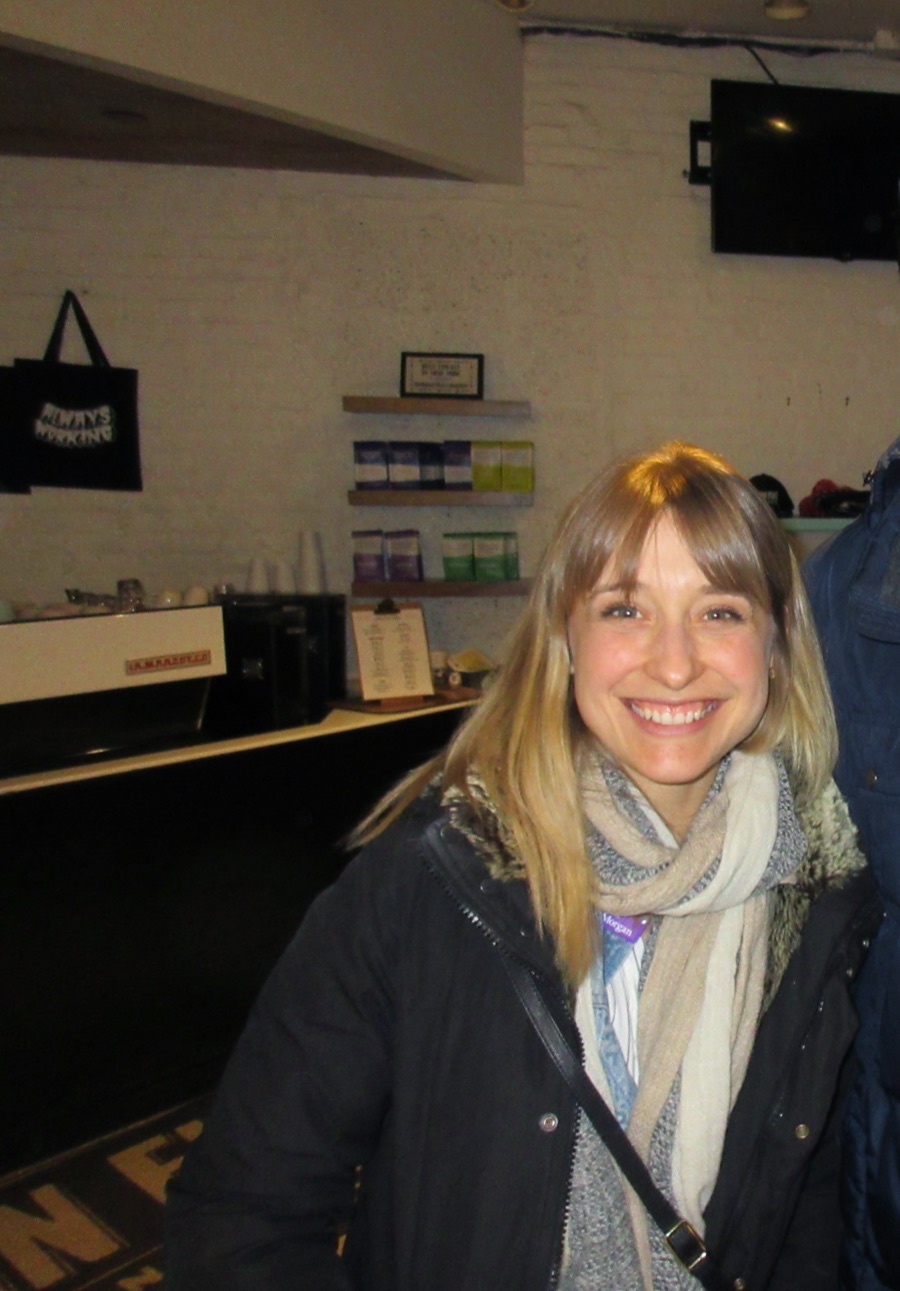
The organization also drew in figures from the entertainment world, most prominently the actress Allison Mack, known for the television series Smallville, who became a fervent adherent and, later, a central figure in NXIVM's secret inner circle. The presence of celebrities and heiresses lent NXIVM an aura of success and respectability, making it harder for outsiders, and for members themselves, to see it as anything sinister. Who would suspect a company backed by Seagram money and populated by accomplished professionals and television actresses of being a vehicle for exploitation? That very improbability was part of its cover.
The machinery of control
Crucially, no one joined NXIVM intending to be exploited, and no one was confronted at the outset with its darkest demands. The entry point was benign and even appealing: a five-day workshop, a set of tools for communication and confidence, a warm and welcoming community of people apparently committed to growth. Only gradually, as a member invested more money and time and rose through the ranks, did the demands escalate and the world outside recede. This incremental quality is central to how coercive groups work and to why intelligent people fall into them: at no single step is the next demand so much greater than the last as to trigger alarm, and by the time the demands become extreme, the member is already deeply enmeshed, financially committed, socially embedded, and psychologically conditioned to interpret her own resistance as a personal failing. NXIVM did not recruit people into DOS; it recruited them into a self-help course, and moved them, step by patient step, toward the branding room.
Over years, this machinery drew members deeper, extracting their money, their time, their loyalty, and their secrets, and isolating them within NXIVM's world. Critics and defectors who spoke out found themselves targeted by the organization's well-funded litigation and investigation, a pattern of aggression that discouraged dissent and punished those who left. To be inside NXIVM was to be enmeshed in a totalizing environment that shaped how members thought, whom they trusted, and what they believed about themselves — the classic condition in which coercive control flourishes. But the full darkness of what Raniere had built would only become clear with the exposure of the secret group at its core.
DOS
Around 2015, Raniere created a clandestine group within NXIVM, hidden even from most of the membership, known as DOS — a Latinate acronym its insiders understood to mean, roughly, "master over the slave women." It was presented to the women recruited into it as a secret sisterhood, a women's empowerment and mentorship group designed to help them overcome their weaknesses through discipline and mutual accountability. In reality it was a pyramid of coercion. It was structured in tiers of "masters" and "slaves," with each woman a "slave" to the "master" who had recruited her and a potential "master" to those she recruited in turn — and, unknown to the women, with Raniere himself secretly at the apex, the ultimate master of a group they believed to be run by and for women.
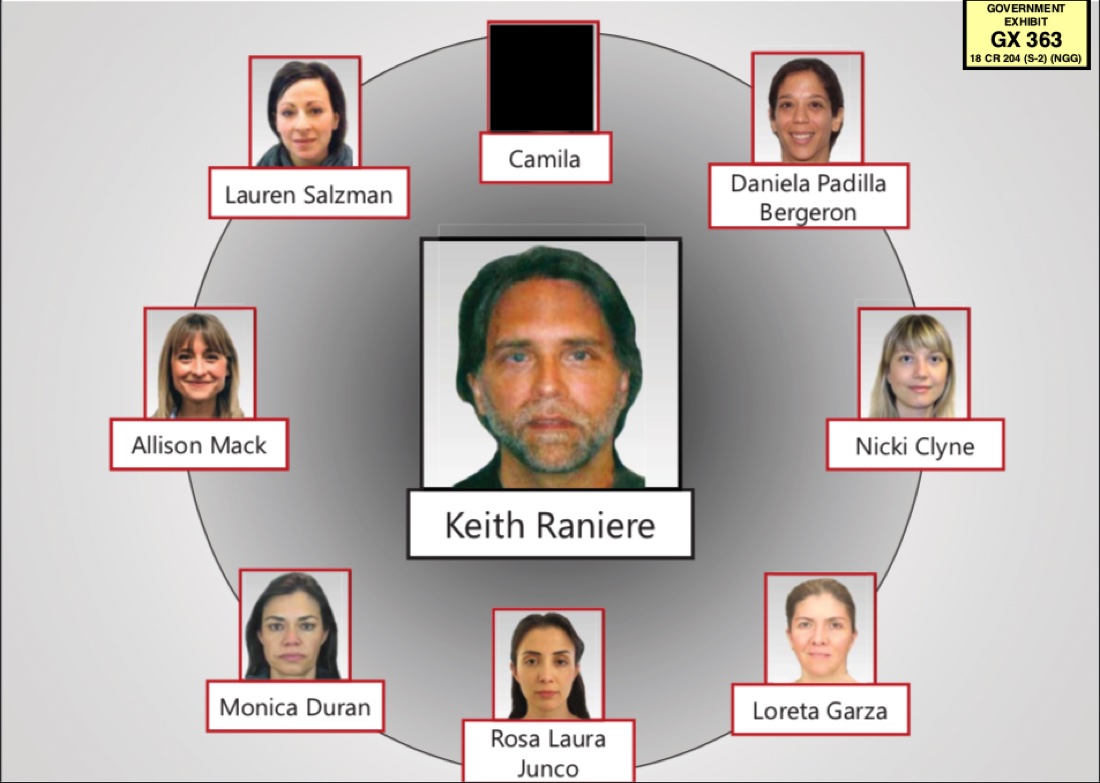
The mechanism that bound the women to DOS was blackmail. To join, each woman was required to provide "collateral" — material so damaging or humiliating that she would never dare to expose the group or disobey, for fear it would be released. This collateral included nude photographs, videotaped confessions of embarrassing or incriminating secrets (some invented at the group's direction), rights to assets, and similar hostages to fortune. Having surrendered such collateral, a woman was trapped: any resistance or attempt to leave could be met with the threat of ruin. On this foundation of coercion, the "masters" issued commands to their "slaves" — controlling their diets to an extreme degree, since Raniere preferred women to be very thin, depriving them of sleep, assigning them tasks, and, in the group's most grievous abuse, directing some of them to have sexual contact with Raniere. Women who believed they had joined a program of empowerment found themselves starved, sleepless, and sexually exploited, held in place by the collateral they had given.
The branding
The single most shocking revelation about DOS was the branding. As part of their initiation, women in the group were branded — a symbol was cauterized into the skin, low on the abdomen near the pelvis, using a device that burned the mark permanently into the flesh, during a ceremony in which the women were held down. They were told the symbol was a meaningful emblem of their commitment; they were not told, at the time, that it incorporated Keith Raniere's initials, so that each branded woman carried his monogram scarred into her body. The branding, performed without honest disclosure of what it was, became the emblem of everything predatory about DOS: the false pretenses, the physical violation, the ultimate subordination of the women to a man they did not even know sat at the top of their supposed sisterhood.
It was the branding, above all, that broke the group open. Some of the women, realizing the true nature of what they had joined and horrified by the mark burned into their skin, began to leave and to speak out.
The exposure
The unraveling of NXIVM was driven by the courage of survivors and the work of journalists. Among the first to go public was Sarah Edmondson, a NXIVM member who had been branded and who, on discovering the reality of DOS, left and told her story. Others followed, and a former NXIVM insider-turned-critic and independent journalists had been investigating and reporting on the organization's abuses. The decisive moment came in October 2017, when the New York Times published an investigation that brought the branding and the DOS group to national attention. The carefully guarded secret was out.
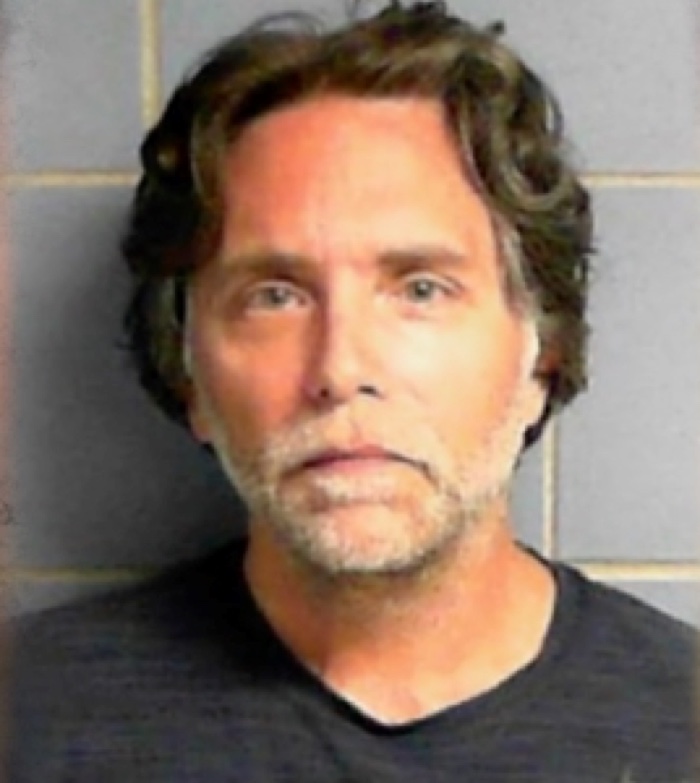
The exposure triggered investigations, and the legal reckoning came swiftly. As the scandal broke, Raniere fled to Mexico, but he was located and arrested there in March 2018 and returned to the United States to face prosecution in the Eastern District of New York. He was charged, along with several associates, with a range of serious crimes. The allegations that emerged in the case went beyond DOS: evidence indicated that Raniere had, over the years, engaged in sexual relationships with underage girls, adding a further dimension of predation to the record against him.
The reckoning
The prosecution of Keith Raniere and his associates was a comprehensive one. Facing overwhelming evidence, most of the co-defendants pleaded guilty. Nancy Salzman, the co-founder, pleaded guilty; so did her daughter Lauren Salzman, a high-ranking member who became an important cooperating witness; so did Allison Mack, who had been a central figure in DOS and had recruited women into it; and so did Clare Bronfman, the heiress whose money had sustained the organization. Their guilty pleas and, in some cases, their cooperation, helped build the case against Raniere himself.

Raniere alone went to trial, in the spring of 2019. The evidence included the testimony of survivors, the collateral and communications that documented DOS, and the accounts of women who had been coerced. In June 2019, the jury convicted him on all counts, including racketeering, racketeering conspiracy, forced labor conspiracy, sex trafficking, and related charges. In October 2020, he was sentenced to 120 years in prison — effectively a life sentence — and ordered to pay restitution. His associates received sentences ranging from probation and short terms for the cooperators to nearly seven years for Clare Bronfman. The man his followers had revered as the most ethical person alive was a convicted sex trafficker.
The survivors did not simply return to private life. Many became public advocates, determined that what had happened to them should be understood and not repeated. Sarah Edmondson wrote a book about her experience, and former members participated in documentaries and series that brought the mechanics of NXIVM's control to a wide audience, turning their ordeal into a form of public education about coercive groups. Their willingness to speak — despite the shame the collateral had been designed to exploit, and despite the intimate nature of the abuses they described — transformed NXIVM from a hidden horror into one of the best-documented case studies of coercive control in existence. The courage that had broken the group open continued, afterward, in the work of making sure its methods were laid bare.
The meaning of NXIVM
In the end, NXIVM stands as a warning that the machinery of coercive control can hide in the most respectable of places, and a testament to the power of those who refuse it. For two decades, Keith Raniere ran a company that promised people the tools to better themselves, and used that promise to draw thousands into a world of manipulation, financial exploitation, and reverence for him — and, at its secret core, into a group where women were blackmailed, starved, sexually exploited, and branded with his hidden monogram. It was funded by heiresses and adorned by celebrities, protected by wealth and by the sheer improbability that such a thing could be happening behind so respectable a face. But it was undone, in the end, not by the authorities acting alone but by the courage of the women who saw what had been done to them, walked away despite the collateral held over them, and told the truth. Their testimony sent Raniere to prison for the rest of his life. NXIVM is the rare cult story with survivors as its heroes and a conviction as its ending — a reminder that coercion, however cleverly disguised, can be exposed and broken, and that the people it seeks to own can refuse to be owned.
Inspired this / based on it
Sarah Edmondson
Chronicle Prism. A survivor's firsthand account of the group and DOS.
HBO
A documentary series on NXIVM drawing on members' own footage.
Starz
A survivor-centered documentary series, featuring India Oxenberg.
Filed under
- #nxivm
- #keith-raniere
- #cult
- #coercive-control
- #sex-trafficking
- #dos
- #allison-mack
- #religious-movements
- #2010s
- #confirmed
Click any tag for every article carrying it.
Continue reading

Jonestown: How a Dream of Justice Became a Massacre
The Peoples Temple did not begin as a death cult. It began, in the 1950s and 1960s, as a church that preached racial integration and social justice at a time when both were radical, that fed the poor and cared for the addicted and the elderly, and that drew to it thousands of idealistic people — many of them Black, many of them poor, many of them sincere seekers of a better and fairer world. At its head was Jim Jones, a charismatic preacher who could speak movingly of equality and who built real influence in California, courted by politicians and admired by progressives. But behind the movement's humane public face, Jones was constructing something else: a system of total control, sustained by manipulation, humiliation, sexual and physical abuse, financial exploitation, and a deepening, drug-fueled paranoia. As scrutiny closed in, he moved his followers to a remote agricultural settlement carved out of the Guyanese jungle — Jonestown — where, cut off from the outside world and utterly under his power, some thousand people lived in isolation and fear. When a United States congressman flew in to investigate reports of abuse, Jones had him murdered at a nearby airstrip. And that same day, 18 November 1978, he set in motion the final act he had long rehearsed: the deaths of everyone in Jonestown. More than nine hundred people died, poisoned with cyanide — many of them forced, many coerced, and more than three hundred of them children who could not consent at all. It was not, for most of the victims, a suicide. It was a massacre. This is the story of how a dream of justice became one of the worst atrocities of its kind in modern history — and of the people who died in it.

Heaven's Gate: The UFO Cult That Died to Reach the Comet
In late March 1997, in a quiet, affluent suburb north of San Diego, thirty-nine members of a group called Heaven's Gate died together in a rented mansion, in one of the most methodical mass deaths in modern history. They were not coerced at gunpoint, and there were no children among them; they were adults, aged from their twenties to their seventies, who shared a belief so complete that they went to their deaths calmly and by their own choice. That belief, strange as it was, had an internal logic. Heaven's Gate held that the human body was merely a temporary 'vehicle' or 'container' for the soul, and that a higher extraterrestrial realm — the 'Next Level,' the 'Evolutionary Level Above Human' — awaited those who were ready to graduate to it. When the bright comet Hale-Bopp appeared in the skies of early 1997, amid rumors that a spacecraft was following hidden in its tail, the group's leader, Marshall Applewhite, concluded that the sign they had awaited for two decades had finally come: a craft had arrived to carry them home. To board it, they believed, they had to shed their earthly bodies. Over three days, in carefully organized shifts, the thirty-nine ended their lives, each dressed identically, each with a small bag packed as if for a journey. They left behind videos and a website explaining, serenely, that they were simply 'exiting their vehicles.' The deaths shocked the world and became a defining case of what a totalizing belief can lead rational people to do. This is the story of Heaven's Gate — not a mockery of the dead, but an attempt to understand how thirty-nine human beings came to believe that dying was the way home.

Waco: The Branch Davidian Siege and the Fire That Followed
In the spring of 1993, the eyes of the United States were fixed on a sprawling compound in the Texas countryside near Waco, where a religious community called the Branch Davidians, led by a man named David Koresh, was locked in a standoff with the federal government. It had begun on 28 February, when agents of the Bureau of Alcohol, Tobacco, and Firearms attempted a dynamic raid to serve warrants over illegal weapons — a raid that went catastrophically wrong. A gun battle erupted, each side later blaming the other for firing first, and when it ended four federal agents and six Branch Davidians were dead. The failed raid became a 51-day siege, as the FBI surrounded the compound and negotiators tried, with growing frustration, to talk Koresh and his followers out. Inside were roughly a hundred people, including many children. On 19 April 1993, the government launched a final assault, using armored vehicles to punch holes in the building and inject tear gas to force the occupants out. Around midday, fires broke out inside the compound and swept through it within minutes. Some 76 Branch Davidians died, among them David Koresh and about 25 children. The tragedy became one of the most contested events in modern American history — argued over ever since by those who blame Koresh for leading his followers to death, those who blame the government for reckless and aggressive tactics, and those who see failures on every side. It reshaped how the government handles such standoffs, and it became a rallying cry for the anti-government movement, cited by the man who, exactly two years later, bombed a federal building in Oklahoma City. This is the story of Waco, told with care for the facts and for the dead.