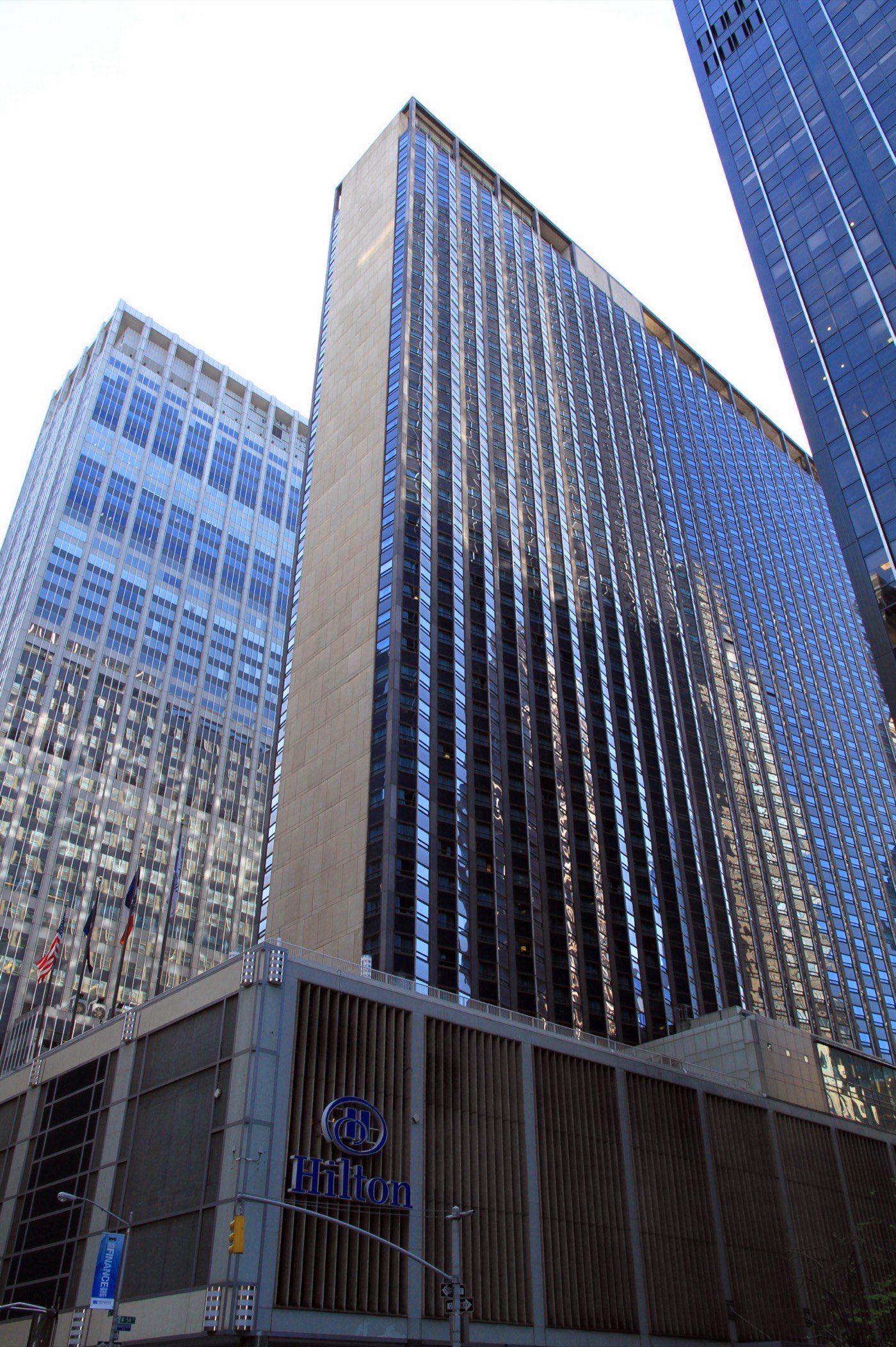
The New York Times headquarters. The Times's June 13, 1971 front-page article triggered the first prior-restraint injunction against an American newspaper in 154 years. Wikimedia Commons.
The Pentagon Papers
Seven thousand pages, photocopied at night
- Category
- State & Intelligence Operations
- Published
- Length
- 3,500 words · 17 min read
- Author
- The editors
The Pentagon Papers
Seven thousand pages, photocopied at night.
A Defense Secretary's private crisis
By the spring of 1967, Robert McNamara had been Secretary of Defense for six years. He had presided over the escalation of American forces in Vietnam from 16,000 advisors in late 1961 to nearly 500,000 combat troops in 1967. He had personally signed off on Operation Rolling Thunder, the strategic bombing campaign that by 1967 had dropped more tonnage on North Vietnam than the United States had dropped on Japan in 1944–1945. He had also, beginning sometime in 1966, begun privately concluding that the war was unwinnable.
What McNamara did not do — by his own later acknowledgement — was tell President Lyndon Johnson. What he did instead, in June 1967, was instruct his staff to begin a comprehensive secret study of how the United States had gotten into the war in the first place. The classification was TOP SECRET — SENSITIVE. The participants were 36 analysts: a mix of historians, RAND contractors, Defense Department staff, and (for the post-1965 period) active officers. The director was Leslie Gelb, then a Pentagon staffer, later a New York Times columnist.
The study took eighteen months. The final product was 7,000 pages across 47 volumes. Only fifteen complete copies were produced.
McNamara would later say, in his 1995 memoir In Retrospect, that he had commissioned the study because he wanted to leave behind a record that future historians could use to understand what had been done and why. He would also say that he had hoped, perhaps, the study itself would force the conclusion he was unable to argue publicly.
He did not anticipate that one of the fifteen copies would end up in the hands of a 38-year-old former Marine.
The man who decided to do it
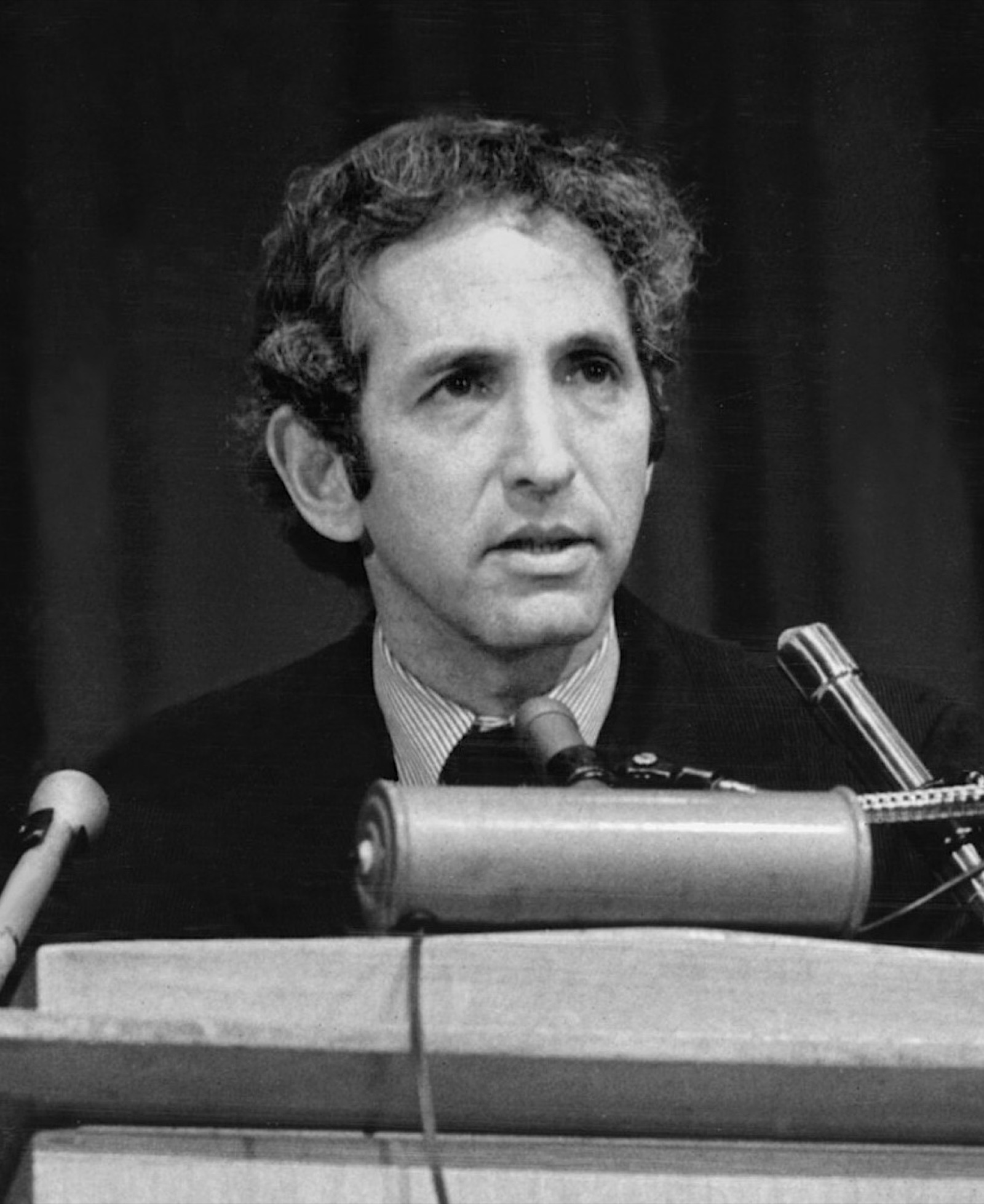
Daniel Ellsberg in 1969 was thirty-eight years old. He had been a Marine company commander during the Suez Crisis. He had a Harvard PhD in economics. He had spent the early 1960s at RAND as a Cold War nuclear-strategy theorist (he is often credited with helping develop the original mathematical formulations of mutually assured destruction). In 1964 he had moved to the Pentagon as a special assistant to Assistant Secretary of Defense John McNaughton — the official responsible for Southeast Asian policy. In 1965 he had gone to Vietnam himself, for two years, as a U.S. State Department adviser observing combat operations and provincial pacification.
He had returned to RAND in 1967 a different man.
By his own account, what radicalized him was not any single moment but the accumulating contradiction between what he saw on the ground in Vietnam and what was being said in Washington about what was being seen. By 1968 he had begun describing the war privately as a moral catastrophe. By 1969, when he was given a copy of the Pentagon Papers as part of his RAND work, he had begun to consider that releasing them might be the most useful act of his career.
What the Pentagon Papers showed, in their accumulating detail, was that four successive administrations — Truman, Eisenhower, Kennedy, Johnson — had progressively expanded American commitment in Vietnam while telling the American public a substantially different story about that commitment. The papers documented private acknowledgements, internal memoranda, contingency plans, and policy debates that contradicted the public record at almost every major decision point.
Ellsberg later said the study finally crystallized something he had been moving toward intellectually for two years: that the American public had been systematically deceived about the war, that the deception was operationally documented in the Pentagon's own records, and that someone with access to those records had a moral obligation to make them public.
In October 1969 he began.
The photocopying
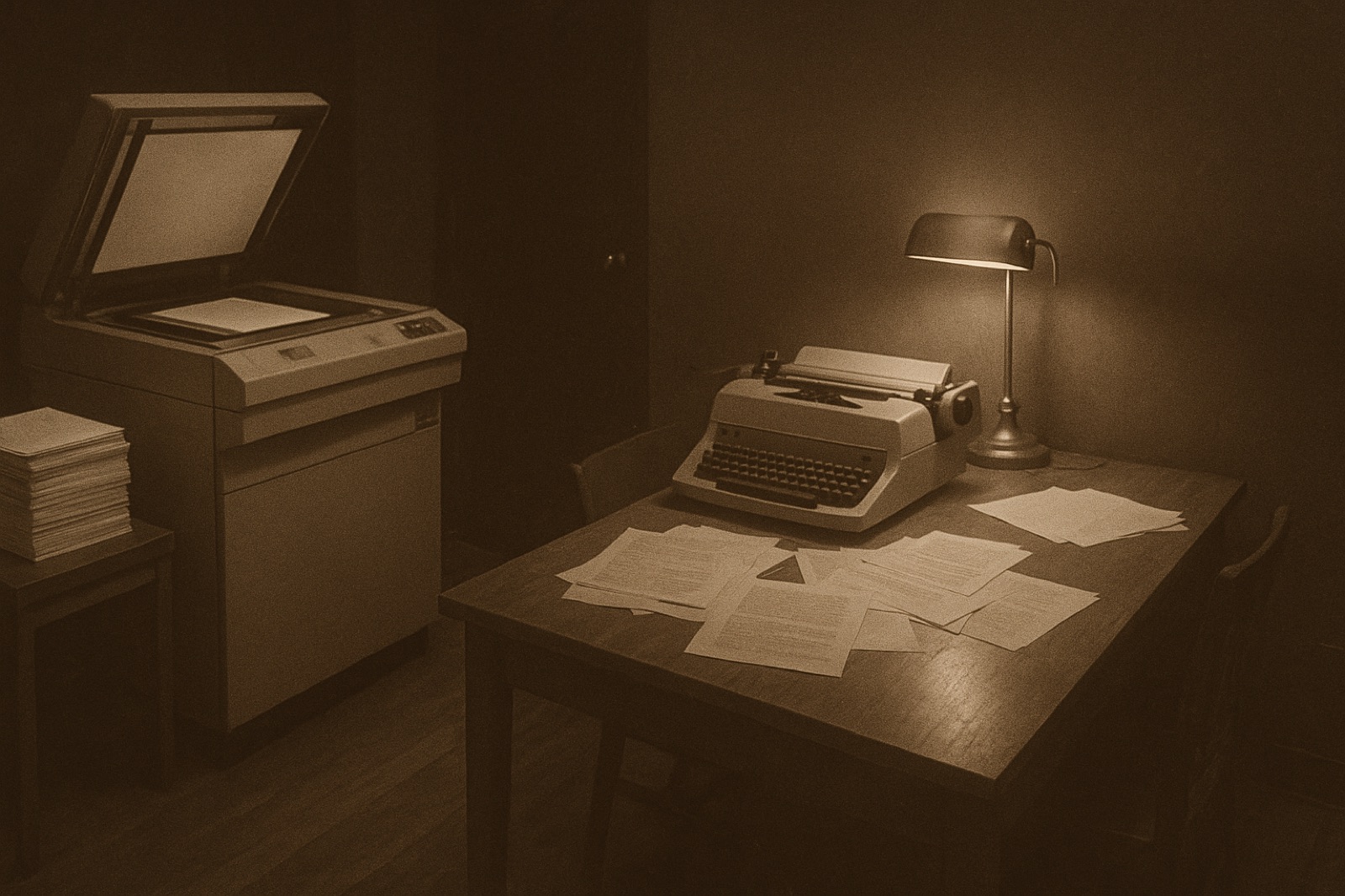
The photocopying took several months. Ellsberg worked at night, typically at a commercial Xerox machine in the back office of an advertising agency owned by a sympathetic friend. He was assisted by his RAND colleague Anthony Russo. Some sessions, his thirteen- year-old daughter Mary, then visiting him in Los Angeles, helped him collate pages.
What followed was eighteen months of attempted dissemination through legitimate channels. Ellsberg approached senators including Senator J. William Fulbright (Senate Foreign Relations Committee chair) and Senator George McGovern, hoping one of them would enter the documents into the Congressional Record under the Speech or Debate Clause constitutional protection. Each declined. By March 1971, after two years of attempts, Ellsberg concluded that no senator would do it.
On March 2, 1971, he met New York Times reporter Neil Sheehan at the Sheehans' house in Washington, D.C. Sheehan had been covering Vietnam for the Times since 1964 and was one of the journalists Ellsberg trusted. Over several visits, Ellsberg gave Sheehan several thousand pages of the Papers, with the agreement (which Sheehan ultimately did not honor) that Sheehan would not photocopy them without explicit permission.
Sheehan photocopied them. The Times's lawyers were briefed. The paper's editorial leadership — managing editor A.M. Rosenthal, executive editor James Reston — were briefed. Sheehan and a small team of reporters were sequestered in suite 1106 of the New York Hilton in late April 1971 to begin reading and organizing the material.
June 13, 1971
The first article ran on the front page of the Sunday New York Times on June 13, 1971. The headline was "Vietnam Archive: Pentagon Study Traces Three Decades of Growing U.S. Involvement." The byline was Neil Sheehan. The story ran across six full pages of news copy plus four pages of documents. It was the first of what the Times planned as a nine-day series.
The Nixon administration's initial response, on the morning of June 13, was indecision. Henry Kissinger, the National Security Adviser, was on a trip to California. Nixon himself had been at Camp David the previous weekend. The Pentagon Papers covered events through 1968 — entirely under previous administrations — so they were not politically embarrassing for Nixon's own decisions. Nixon's first instinct, captured on the recently declassified White House tapes, was to let the story run.
By Tuesday, June 15, the position had hardened. Kissinger, returning to Washington, argued that allowing the publication to continue would establish a precedent that would devastate American intelligence operations: foreign governments would conclude that the United States could not protect its secrets, and presidential sources would dry up. He persuaded Nixon to seek an injunction.
The Department of Justice filed for a restraining order in U.S. District Court for the Southern District of New York on Tuesday afternoon. Judge Murray Gurfein, then in his first week on the federal bench, granted a temporary restraining order against the Times. Tuesday's article (the third in the series) was published. Wednesday's was not. For the first time since 1817, an American newspaper had been ordered by a federal court to stop publishing.
The Washington Post had been working in parallel, having obtained its own copy of the Papers from Ellsberg through an intermediary. On Friday, June 18 — three days after the Times was enjoined — the Post published its first Pentagon Papers article. The Justice Department immediately sought an injunction against the Post as well. The case had two parallel tracks moving toward the Supreme Court.
The Supreme Court
The combined case — New York Times Co. v. United States and the parallel United States v. Washington Post — was argued before the Supreme Court on June 26, 1971, just thirteen days after the first article. The case was unusual in two respects: it had reached the Court at unprecedented speed (most cases take years), and the Court heard it on a Saturday.
On June 30, 1971, the Court issued its decision: 6–3 in favor of the newspapers. The majority opinion was per curiam — a single short statement that the government had not met "the heavy burden of showing justification for the imposition of [prior] restraint." Six justices then wrote separately. The most-quoted of the concurring opinions was Justice Hugo Black's:
"Only a free and unrestrained press can effectively expose deception in government."
The case became, in subsequent First Amendment jurisprudence, the foundational ruling against prior restraint in American press law. It did not, however, hold that the Times and Post could not be prosecuted for publishing classified material — only that they could not be prevented from publishing in the first place. That distinction has been the subject of subsequent litigation through the Snowden era and beyond.
The Plumbers and Watergate
The most significant operational consequence of the Pentagon Papers inside the Nixon White House was not the legal proceedings — those Nixon had largely accepted as a political setback — but a parallel internal decision to take action against Ellsberg personally.
In July 1971, Nixon and his domestic-policy adviser John Ehrlichman authorized the formation of a small intelligence unit within the White House. Its members were E. Howard Hunt (a former CIA officer who had been involved in Bay of Pigs planning), G. Gordon Liddy (a former FBI agent), Egil "Bud" Krogh (an Ehrlichman aide), and David Young (an NSC staffer). The unit's nickname inside the White House — coined by Krogh — was "the Plumbers," from their mission to plug leaks.
The Plumbers' first major operation was on September 3, 1971. They broke into the Beverly Hills office of Dr. Lewis Fielding, who had been Daniel Ellsberg's psychiatrist from 1968 to 1970. The purpose was to steal Ellsberg's psychiatric file, which the Plumbers believed might contain information that could be used to publicly discredit him. The break-in was operationally amateurish. They broke in, ransacked the office, found no file specifically labeled with Ellsberg's name (Fielding kept his patient records under coded identifiers), photographed what they could of other materials, and left.
The break-in was kept secret. Krogh, Liddy, Hunt, and Young discussed the operation only within a small circle. The Plumbers unit itself continued operating, with mission expansion through the fall of 1971 and into 1972.
On June 17, 1972, five of the men associated with the same Plumbers network — including Hunt and James McCord, with Liddy directing from a separate Watergate hotel room — were arrested inside the Democratic National Committee headquarters at the Watergate complex.
The Fielding break-in itself did not become public until April 1973, when Federal Judge William Matthew Byrne Jr., presiding over Ellsberg's criminal trial in Los Angeles, was informed by the Justice Department of "irregularities." The Justice Department had been ordered to disclose by leaks from inside the Plumbers operation that had reached Byrne through a Watergate-related grand jury.
On May 11, 1973, Judge Byrne dismissed all charges against Ellsberg and his co-defendant Anthony Russo, citing government misconduct that he characterized as "incurable":
"The bizarre events have incurably infected the prosecution of this case."
Ellsberg, who had been facing 115 years in federal prison on Espionage Act charges, was free.
What proponents and critics still argue
The factual record of the Pentagon Papers case is, fifty-three years later, no longer seriously contested. The interpretive questions:
Was Ellsberg's leak the right precedent? Defenders argue that the Pentagon Papers established a critical principle that has benefited American democracy. Critics — most prominently in the post-Snowden literature — argue that the Pentagon Papers case created a precedent for leakers that has been subsequently used to justify substantially more damaging disclosures. The factual basis for the comparison is contested.
Did Ellsberg deserve to be tried? The Justice Department's charges against Ellsberg (115 years total potential sentence) have been variously characterized as appropriate for a serious breach of classification rules, or as a political prosecution that disproportionately exceeded the actual national-security harm of the disclosure. The Court of Appeals never ruled on the substantive question because Judge Byrne's dismissal foreclosed appeal.
Did McNamara's commissioning of the study reflect remorse or calculation? McNamara himself, in In Retrospect (1995) and subsequent interviews, characterized his decision as a moral acknowledgement of the war's failure. Other historians have argued that the study was intended as institutional preservation — ensuring the Pentagon's version of events would be available to future historians on the Pentagon's preferred terms. The question of motive is unresolvable.
How we read the evidence
The Pentagon Papers case is the cleanest documented example in American history of a single individual exercising what we now call "whistleblower" judgment in a way that subsequent institutional analysis has, by overwhelming consensus, vindicated. Ellsberg's disclosure showed the American public an institutional pattern that American institutions had been actively concealing. The Supreme Court ruled that the disclosure could continue. The subsequent prosecution against Ellsberg himself collapsed because of government misconduct. The Plumbers unit set up to prevent further Ellsbergs became, eight months later, the Watergate burglars.
What the case did not produce — despite its symbolic stature — was a reliable structural protection for future whistleblowers. The Espionage Act under which Ellsberg was charged remains the primary statutory tool used against later disclosures, including those of Edward Snowden, Chelsea Manning, and Reality Winner. The post-1971 reform architecture protects journalists publishing classified material from prior restraint, but it does not substantially protect their sources.
The Pentagon Papers case is, in our reading, the foundational document of the modern American press-freedom regime — and a useful demonstration of how narrow that regime actually is. Ellsberg himself, who died in June 2023 at age 92, spent his final decades arguing for the broader Whistleblower Protection Enhancement Act that the case had not produced. He did not live to see it pass.
Key figures
Further reading
Books:
- Daniel Ellsberg, Secrets: A Memoir of Vietnam and the Pentagon Papers (Viking, 2002).
- Neil Sheehan, A Bright Shining Lie: John Paul Vann and America in Vietnam (Random House, 1988). The reporter's masterwork on Vietnam.
- David Rudenstine, The Day the Presses Stopped: A History of the Pentagon Papers Case (University of California Press, 1996). The legal account.
- Inside the Pentagon Papers (eds. John Prados & Margaret Pratt Porter, 2004). Documents reproduced.
Films and documentaries:
- The Most Dangerous Man in America: Daniel Ellsberg and the Pentagon Papers (2009, dir. Judith Ehrlich & Rick Goldsmith). Academy Award–nominated documentary.
- The Post (2017, dir. Steven Spielberg). Dramatization centered on the Washington Post side of the story (Meryl Streep as Katharine Graham, Tom Hanks as Ben Bradlee).
Primary archives:
- National Archives — Pentagon Papers (full text)
- Daniel Ellsberg archive — UMass Amherst
- Supreme Court opinion: New York Times Co. v. United States, 403 U.S. 713 (1971)
Sources
Primary sources
- Office of the Secretary of Defense. Report of the Office of the Secretary of Defense Vietnam Task Force (the Pentagon Papers), 1969. National Archives.
- Supreme Court of the United States. New York Times Co. v. United States, 403 U.S. 713 (1971).
- U.S. District Court for the Central District of California. Order dismissing United States v. Ellsberg and Russo, May 11, 1973. (Judge William Matthew Byrne Jr.)
- Watergate Special Prosecutor. Files concerning the Fielding break-in, 1973–1975. NARA Record Group 460.
Secondary sources
- Ellsberg, D. (2002). Secrets: A Memoir of Vietnam and the Pentagon Papers. Viking.
- Rudenstine, D. (1996). The Day the Presses Stopped. University of California Press.
- Sheehan, N. et al. (1971). The Pentagon Papers as Published by The New York Times. Bantam Books.
- The New York Times, June 13 onward, 1971.
- The Washington Post, June 18 onward, 1971.
- The Boston Globe, June 22 onward, 1971 (third paper to publish).
- McNamara, R. with VanDeMark, B. (1995). In Retrospect: The Tragedy and Lessons of Vietnam. Times Books.
- Ehrlich, J. & Goldsmith, R. (dirs.) (2009). The Most Dangerous Man in America. Documentary.
Academic sources
- Tofel, R. J. (2008). "Sounding the Trumpet: The Making of John F. Kennedy's Inaugural Address." [Pentagon Papers context]. Constitutional Commentary, 24(2).
- Stone, G. R. (2004). Perilous Times: Free Speech in Wartime. W. W. Norton.
Corrections & updates
(None yet.)
Inspired this / based on it
Steven Spielberg · ★ 7.2
Washington Post side. Meryl Streep as Katharine Graham, Tom Hanks as Ben Bradlee.
Judith Ehrlich & Rick Goldsmith · ★ 7.5
Academy Award–nominated documentary on Ellsberg
Daniel Ellsberg
The leaker's own account
David Rudenstine
The legal history
Neil Sheehan
The Times reporter's Pulitzer-winning Vietnam masterwork
Filed under
- #pentagon-papers
- #daniel-ellsberg
- #nyt
- #vietnam-war
- #robert-mcnamara
- #neil-sheehan
- #nixon
- #first-amendment
- #press-freedom
- #1971
- #usa
- #declassified
- #rand
Click any tag for every article carrying it.
Continue reading
Watergate
In the early hours of June 17, 1972, five men were arrested inside the Democratic National Committee's offices on the sixth floor of the Watergate complex. Two years and 54 days later, on August 9, 1974, Richard Nixon became the only sitting U.S. president to resign. Between those dates lies the most thoroughly documented presidential cover-up in American history — and the deliberate destruction of careers, evidence, and finally the office itself.
The Snowden Disclosures
In May 2013, a 29-year-old NSA contractor named Edward Snowden boarded a flight from Honolulu to Hong Kong carrying four laptops loaded with classified documents from the world's largest signals-intelligence agency. Over the following months, *The Guardian*, *The Washington Post* and *Der Spiegel* published material from those drives that revealed the architecture of post-9/11 surveillance — PRISM, XKeyscore, Boundless Informant, MUSCULAR. Within ninety days, the global conversation about surveillance, sovereignty, and the limits of state power had shifted. Snowden has lived in Russia since August 2013.
COINTELPRO
Between 1956 and 1971, the Federal Bureau of Investigation ran a counter-intelligence program against Americans. Not foreign agents — Americans. The targets were Martin Luther King Jr., Malcolm X, the Black Panther Party, the American Indian Movement, the Students for a Democratic Society, the Communist Party, the Ku Klux Klan, and dozens of others. The methods included blackmail, forged letters, planted informants, and — in at least one documented case — collaboration in a killing. The program stayed secret until eight people walked into an FBI office in Pennsylvania on the night of a heavyweight title fight.