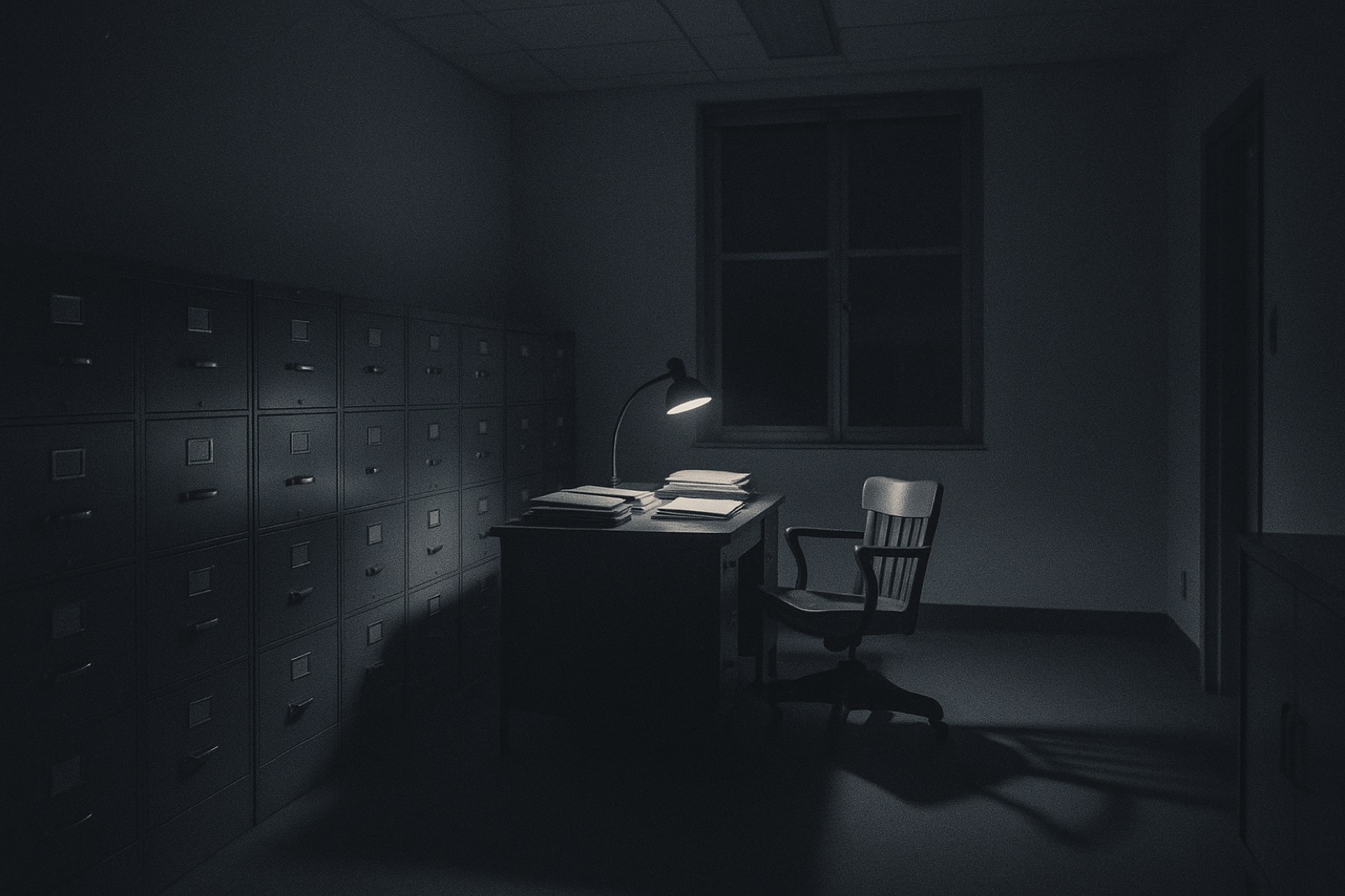
An imagined FBI field office of the period. The Citizens' Commission to Investigate the FBI broke into one such office on the night of March 8, 1971. Generated illustration; AI disclosure on About.
COINTELPRO
How the FBI fought its own citizens
- Category
- State & Intelligence Operations
- Published
- Length
- 4,100 words · 20 min read
- Author
- The editors
COINTELPRO
How the FBI fought its own citizens.
The director's signature
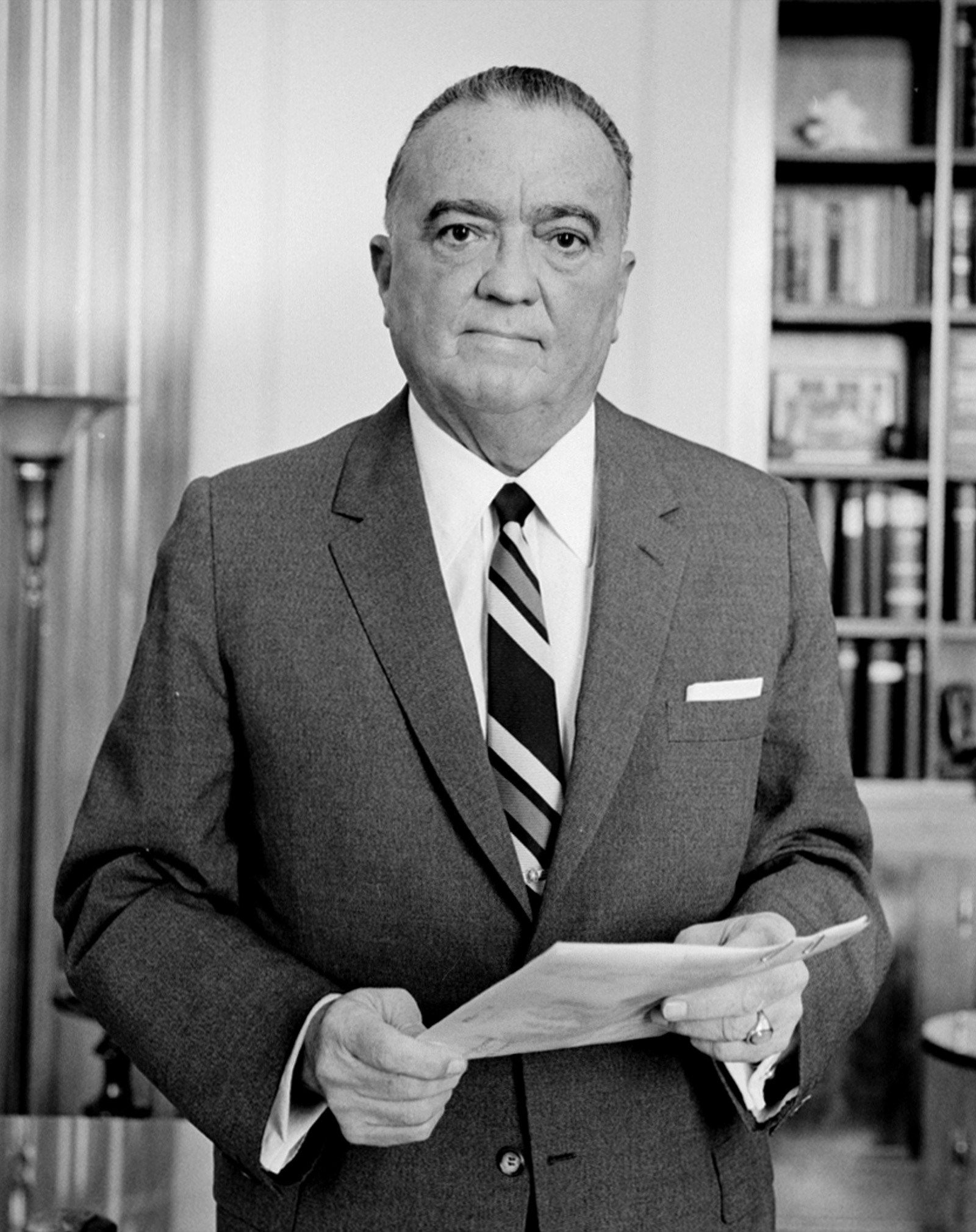
John Edgar Hoover had been running the Federal Bureau of Investigation since 1924. By the summer of 1956 he was sixty-one years old, had served under six presidents, and had built a national reputation as the country's chief enforcer against gangsters in the 1930s and communists in the 1950s. He had testified before Congress more times than any other federal official in the Bureau's history. He kept files on members of Congress. He kept files on presidents.
On August 28, 1956, Hoover signed a memorandum that authorized the FBI's Domestic Intelligence Division to begin a covert action program against the Communist Party of the United States. The document was classified COSMIC TOP SECRET. The program was given a single seven- letter codename: COINTELPRO, from counter-intelligence program.
The 1956 memorandum's stated rationale was that the Communist Party USA, having been driven underground by Smith Act prosecutions, was now beyond the reach of normal criminal procedure. Hoover argued that the Bureau therefore needed to disrupt the Party by methods short of prosecution — "exposure, disruption, misdirection, discreditation." The list of authorized techniques included:
- Anonymous mailings to Party members revealing private information about other members.
- Forged correspondence designed to create suspicion and infighting.
- Direct contact with employers to terminate Party members from their jobs.
- Use of informants to spread disinformation inside the Party.
There was no statutory authorization for any of this. There was no court order. There was no oversight outside the FBI itself. Hoover's signature was sufficient.
The program was supposed to last as long as needed against a specific opponent. It lasted fifteen years, against an expanding list of opponents that bore decreasing resemblance to anything the 1956 memorandum had described.
The expansion
By 1960 the Communist Party of the United States had been substantively destroyed. Its membership was a fraction of what it had been in 1947; its leadership was in prison or in exile. But COINTELPRO did not end. Hoover's Bureau, having developed a set of tools, looked for new applications.
The expansion happened in stages, each authorized by Hoover under similarly internal documentation:
- October 1961 — COINTELPRO–Socialist Workers Party
- September 1964 — COINTELPRO–White Hate Groups (KKK and similar)
- August 1967 — COINTELPRO–Black Nationalist–Hate Groups
- March 1968 — Expanded to cover the Southern Christian Leadership Conference, the Student Nonviolent Coordinating Committee, and the Nation of Islam.
- May 1968 — COINTELPRO–New Left, targeting the Students for a Democratic Society and university antiwar groups.
Each program operated under its own division within the FBI's Domestic Intelligence Division (Division Five), reporting through William C. Sullivan to Hoover personally. Each had its own operational templates. Each kept its own files.
What unified them was a single conceptual frame: any organized American political activity outside a narrow band of acceptable mainstream politics was a legitimate target for federal disruption, regardless of whether any crime was being committed.
That frame did not survive contact with the documents that would be stolen in 1971.
The suicide letter
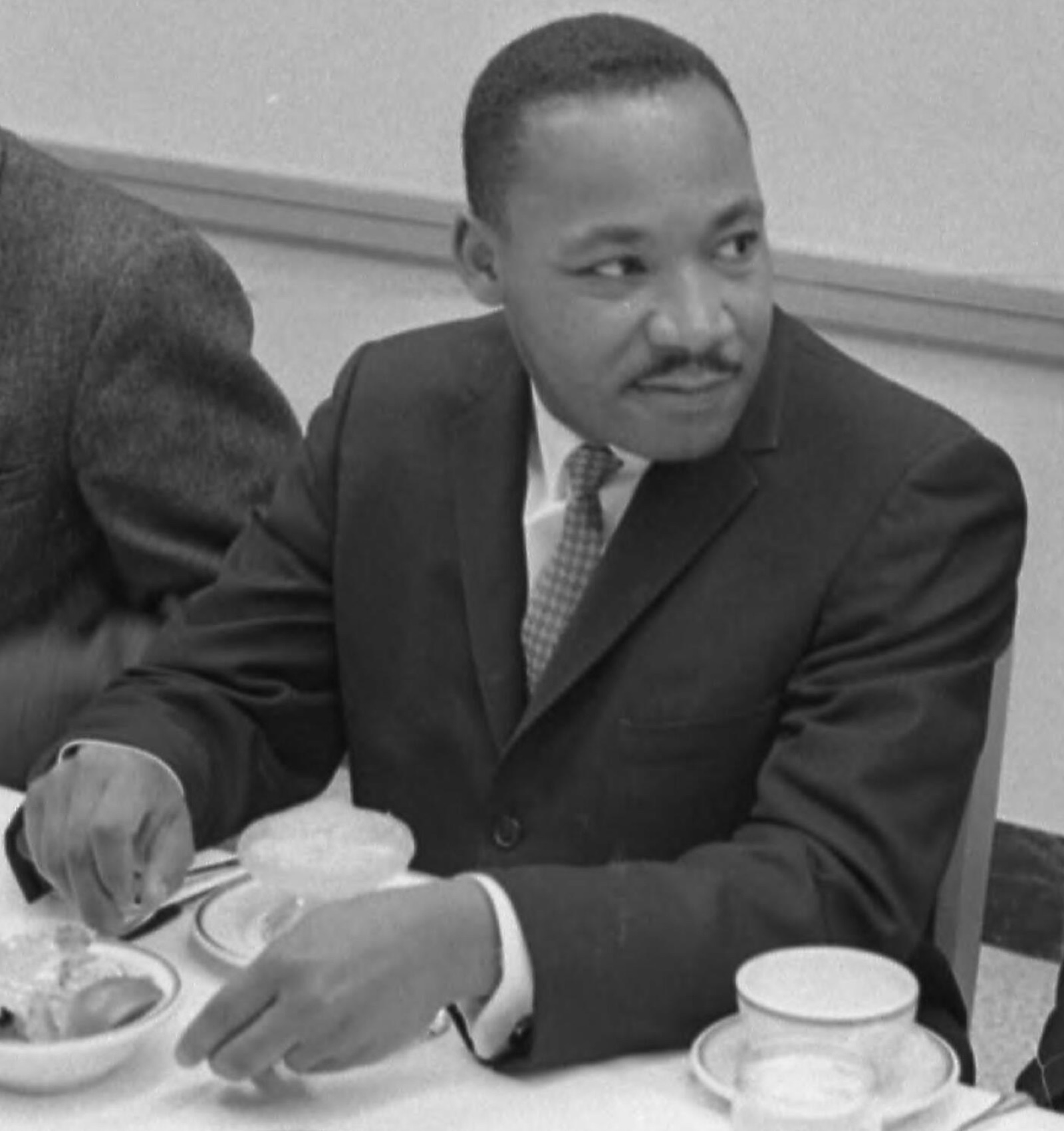
The FBI's surveillance of Martin Luther King Jr. began in 1962, shortly after Attorney General Robert Kennedy authorized wiretaps in connection with what the Bureau described as "communist influences" on King's circle. By 1963 the wiretap program had been extended to King's home phone, his office, and the hotel rooms in which he stayed on speaking tours. By 1964, COINTELPRO operations had been formally directed at the Southern Christian Leadership Conference itself.
What the wiretaps produced was almost no evidence of communist influence and considerable evidence of King's extramarital relationships. William Sullivan, the head of the Domestic Intelligence Division, decided to use what the tapes contained for a different purpose.
On November 21, 1964 — eleven days before King was to receive the Nobel Peace Prize — a package was delivered to King's home in Atlanta. Inside was a reel-to-reel tape compiled from FBI wiretap recordings of King's hotel rooms, and a typed anonymous letter that began:
"King, look into your heart. You know you are a complete fraud and a great liability to all of us Negroes. White people in this country have enough frauds of their own but I am sure they don't have one at this time anywhere near your equal."
The letter went on to threaten exposure of the tape's contents and concluded with what King and his wife Coretta both understood, when they listened to and read the package together, as a suggestion that he take his own life:
"There is only one thing left for you to do. You know what it is. You have just 34 days in which to do (this exact number has been selected for a specific reason, it has definite practical significance). You are done. There is but one way out for you. You better take it before your filthy, abnormal fraudulent self is bared to the nation."
The "34 days" was the period before the Nobel Peace Prize ceremony in Oslo.
A draft of the letter was discovered in Sullivan's office files during the Church Committee investigation of 1975. The full version, without redactions, was found in Hoover's own confidential files at the National Archives by historian Beverly Gage in 2014.1
December 4, 1969
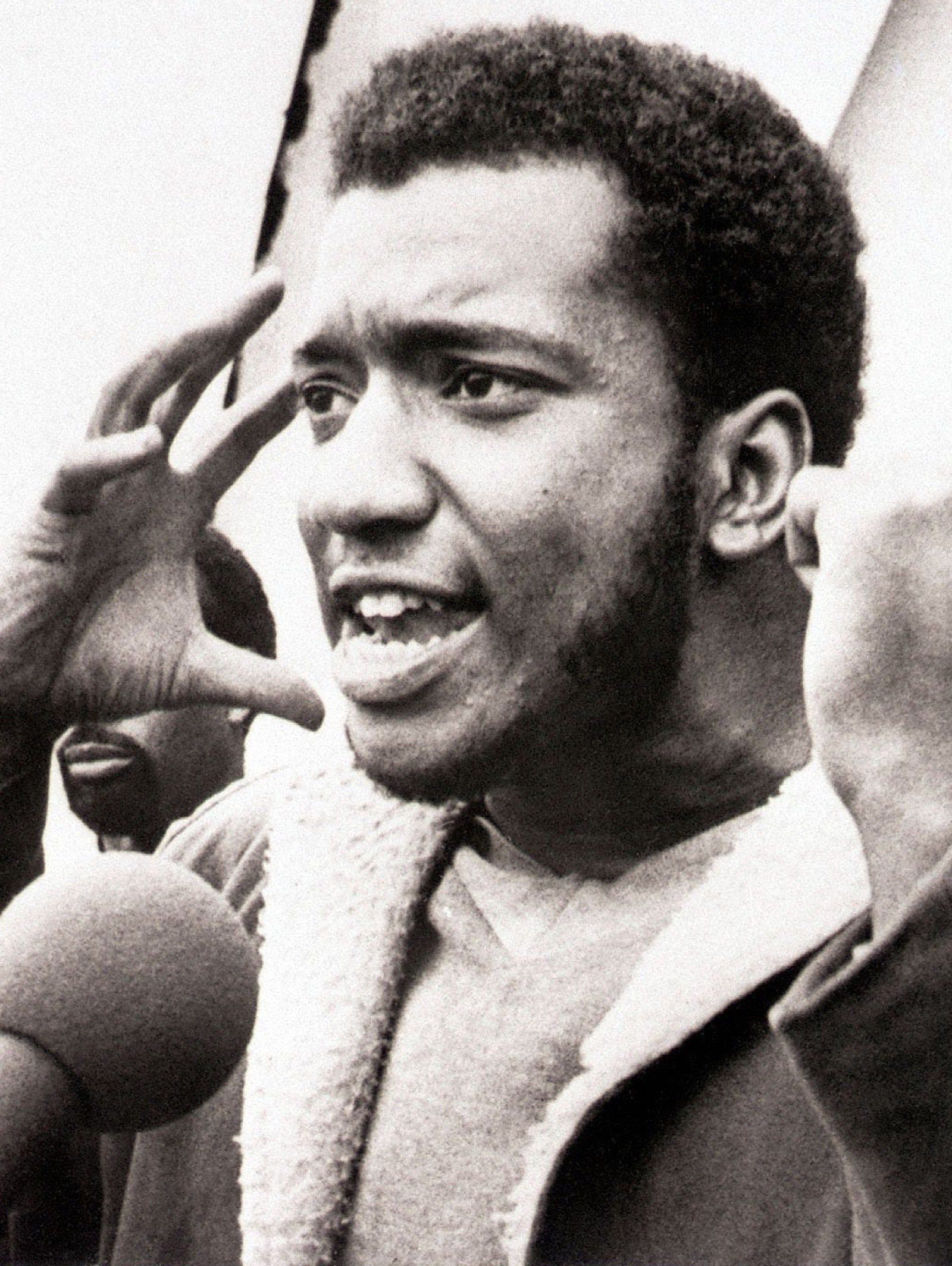
Fredrick Allen Hampton was twenty-one years old. He was Chairman of the Illinois chapter of the Black Panther Party. He had spent the previous two years organizing free-breakfast programs in Chicago's West Side, mediating between Chicago's street gangs to build a "Rainbow Coalition" of poor Blacks, Latinos, and Appalachian whites, and giving the kind of speeches — recorded in dozens of contemporary press accounts — that made FBI Director Hoover refer to him personally as a "Black Messiah" who had to be neutralized.
William O'Neal was a 20-year-old car thief from Chicago's South Side whose felony charges were dropped after the FBI offered him a deal: infiltrate the Black Panther Party as a paid informant, report on its internal organization, and receive a monthly stipend plus protection.
By the fall of 1969 O'Neal had become Hampton's bodyguard and chief of security for the Illinois chapter. He had access to Hampton's home at 2337 West Monroe Street. He had photographed and diagrammed the apartment's interior layout and forwarded the floor plans to his FBI handler, Roy Mitchell, on November 19, 1969.
On the evening of December 3, 1969, O'Neal joined Hampton, Hampton's pregnant girlfriend Deborah Johnson, and several other Panthers for dinner at the apartment. Hampton was tired; he had been giving speeches and political-education classes all day. After dinner, according to Johnson's later sworn testimony, Hampton complained of unusual drowsiness shortly after drinking from a Kool-Aid pitcher that O'Neal had prepared. Hampton fell asleep in the bedroom.
At 4:00 a.m. on December 4, a fourteen-officer detail from the Cook County State's Attorney's special police unit, organized at the request of and using intelligence supplied by the Chicago FBI field office, arrived outside the apartment. At 4:45 a.m. they breached the door.
The first person they encountered was Mark Clark, 22, sitting in the front room with a shotgun across his lap on security watch. The police killed him with a single shot to the chest; his shotgun discharged once into the ceiling as he died.
The police then proceeded to fire approximately one hundred rounds into the apartment. Ballistics analysis after the incident determined that exactly one of those rounds had come from the Panthers' side — the dying reflex from Clark's shotgun. The remaining ninety-nine rounds were police fire.
Hampton was found alive but unconscious in the rear bedroom, incapacitated by what the autopsy later confirmed as a dose of secobarbital. According to witnesses including Johnson, two officers stood over him in the bed. One asked: "Is he still alive?" The other fired two shots into Hampton's head, point-blank. "He's good and dead now."
The FBI subsequently paid William O'Neal a $300 cash bonus, explicitly recorded in FBI accounting records, for his work in providing the floor plan that enabled the raid.2
O'Neal entered the Federal Witness Protection Program after his role was confirmed in 1973. He died by suicide on January 15, 1990 — the night that an episode of Eyes on the Prize II publicly named him for the first time.
The break-in at Media
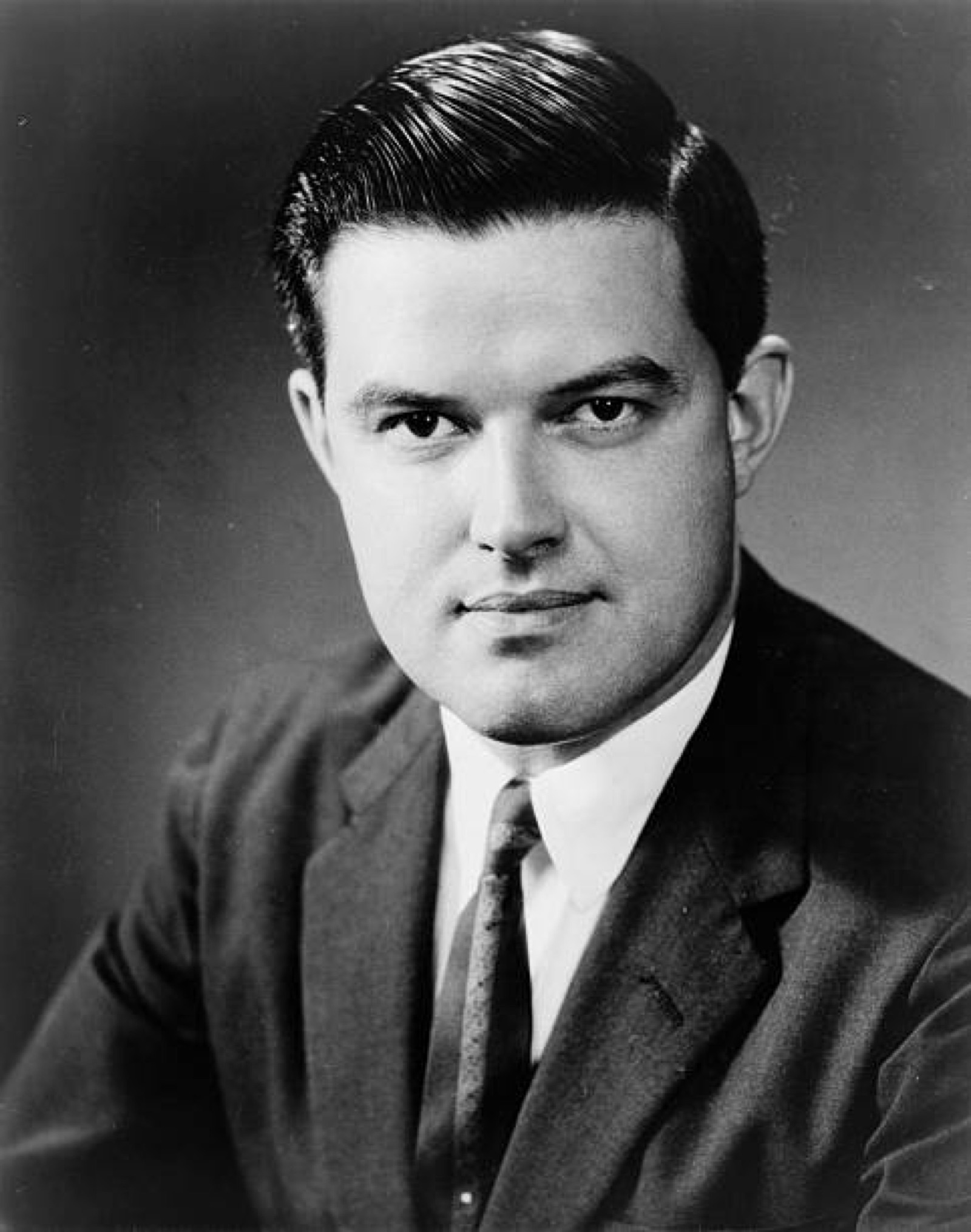
The eight people who broke into the Media, Pennsylvania, FBI office on the evening of March 8, 1971, were not professional burglars. They were peace activists who had grown convinced that the FBI was operating against the antiwar movement and that the only way to prove it was to take the documents out of an FBI building themselves.
They chose Media for the same reason serious burglars choose unlikely targets: small office, old building, predictable schedule. They chose the night of March 8 because they knew the entire United States — including any potential witness on the street outside — would be watching the Muhammad Ali–Joe Frazier title fight at Madison Square Garden, the most heavily promoted prizefight in American history to that point.
The burglary took less than half an hour. The burglars removed every file from the office's two cabinets — approximately one thousand documents — and drove to a Quaker farm where they began reading.
What the files showed was a pattern. Most were routine surveillance reports, the kind of thing the FBI's defenders had always insisted the Bureau confined itself to. A smaller but unmistakable subset was not.
The smaller subset was COINTELPRO.
What the Church Committee found
In January 1975, in the aftermath of Watergate and the further revelations of CIA assassination plots that Seymour Hersh had published in The New York Times in December 1974, the U.S. Senate voted 82-to-4 to create the Select Committee to Study Governmental Operations with Respect to Intelligence Activities. Senator Frank Church (D-Idaho) was named chair.
The committee spent fourteen months interviewing 800 witnesses, reviewing 110,000 documents, and holding 126 full-committee meetings. Its final report, published in April 1976 in six volumes, devoted Book III to COINTELPRO and Book II to the FBI's broader pattern of political surveillance and disruption.
The Church Committee documented, from the FBI's own files:
- 2,370 documented COINTELPRO operations from 1956–1971.
- Anonymous letters sent to spouses of activists alleging infidelity.
- Forged correspondence designed to provoke gang violence between Black Panthers and rival groups.
- Letters to landlords designed to terminate leases.
- Anonymous calls to employers designed to terminate employment.
- Letters to journalists planted to discredit activists.
- Provocation of imprisonment through false drug arrests.
- The Hampton raid (documented as a COINTELPRO action coordinated with Chicago Police).
- The MLK "suicide letter" of November 1964.
The committee's Final Report, Book III, concluded:
"Many of the techniques used would be intolerable in a democratic society even if all of the targets had been involved in violent activity, but COINTELPRO went far beyond that. The unexpressed major premise of the programs was that a law-enforcement agency has the duty to do whatever is necessary to combat perceived threats to the existing social and political order."3
What proponents and critics still argue
The factual record of COINTELPRO is, like Watergate, no longer seriously contested. The disagreements that remain are interpretive, and they fall into three broad categories.
The "necessary evil" argument. Some scholars and former FBI officials have argued that COINTELPRO, however illegal, neutralized genuinely violent organizations (factions of the Weather Underground, the Symbionese Liberation Army, certain Panther factions) that would otherwise have escalated. The factual basis for this is contested — the FBI's own internal assessments of the Panthers, for instance, showed it was primarily a community organization with armed self-defense as one component rather than the inverse. But the argument exists.
The "incomplete record" argument. Many COINTELPRO files were destroyed in the months after the Media break-in — some 81 of the Bureau's 56 active programs at that point had records actively destroyed before the Church Committee staff arrived. We do not know what was in the destroyed files. Critics on the left argue this underestimates the program's true reach. Defenders argue it overestimates.
The "post-1971 continuity" argument. A number of subsequent FBI domestic operations (CISPES in the 1980s, the surveillance of Muslim- American communities after 2001, the surveillance of Black Lives Matter activists in 2020) have been characterized by their critics as COINTELPRO-style actions under different names. The Bureau itself has rejected the characterization. The empirical question of how similar these later operations were to COINTELPRO is something historians will continue to argue about.
How we read the evidence
The Church Committee was the most thorough public accounting any American intelligence agency has ever received. Its findings on COINTELPRO are documented from the FBI's own paper. Six volumes, five years of follow-up legislation, and the creation of the Foreign Intelligence Surveillance Act, the permanent Senate Intelligence Committee, and the Attorney General Guidelines that still govern domestic FBI investigations today.
That edifice of oversight was built specifically because of what the Church Committee found in the FBI's own files. The program had operated for fifteen years. It had been authorized, by the FBI's director personally, against Americans for the offense of their political opinions. It had collaborated, on at least one documented occasion, in a killing.
That this happened is not in dispute. That it could happen — and that the institutional safeguards designed to prevent it from happening again are themselves dependent on a generation of memory of why they exist — is the part of the story that remains, fifty years later, the most uncomfortable to read.
Key figures
Further reading
Books:
- Betty Medsger, The Burglary: The Discovery of J. Edgar Hoover's Secret FBI (Knopf, 2014).
- Jeffrey Haas, The Assassination of Fred Hampton: How the FBI and the Chicago Police Murdered a Black Panther (Lawrence Hill Books, 2009).
- Ward Churchill & Jim Vander Wall, Agents of Repression: The FBI's Secret Wars Against the Black Panther Party and the American Indian Movement (South End Press, 1988).
- Athan Theoharis & John Stuart Cox, The Boss: J. Edgar Hoover and the Great American Inquisition (Temple University Press, 1988).
- Beverly Gage, G-Man: J. Edgar Hoover and the Making of the American Century (Viking, 2022). Pulitzer Prize winner.
Films and documentaries:
- Judas and the Black Messiah (2021, dir. Shaka King). Dramatization of the Hampton case.
- 1971 (2014, dir. Johanna Hamilton). Documentary about the Media burglary.
- MLK/FBI (2020, dir. Sam Pollard). Documentary on the King surveillance.
- The Murder of Fred Hampton (1971, dir. Howard Alk). Contemporary documentary.
Primary archives:
- Church Committee Reports
- The FBI's COINTELPRO files at the FBI Records Vault
- Media, PA documents at MuckRock
Sources
Primary sources
- U.S. Senate. Final Report of the Select Committee to Study Governmental Operations with Respect to Intelligence Activities, S. Rep. 94-755 (1976), Books I-VI.
- Hoover, J. E. Memorandum authorizing COINTELPRO–Communist Party USA, August 28, 1956. FBI Records Vault.
- Sullivan, W. C. Draft anonymous letter to Dr. Martin Luther King, Jr., November 1964. Reproduced in Church Committee Report, Book III.
- FBI Chicago Field Office. Internal memoranda concerning the Black Panther Party of Illinois, 1968–1969. Released during Hampton v. Hanrahan discovery.
- Citizens' Commission to Investigate the FBI. Released documents, March-April 1971. Originals reproduced in Medsger (2014) appendix.
Secondary sources
- Medsger, B. (2014). The Burglary: The Discovery of J. Edgar Hoover's Secret FBI. Knopf.
- Haas, J. (2009). The Assassination of Fred Hampton. Lawrence Hill Books.
- Churchill, W. & Vander Wall, J. (1988). Agents of Repression. South End Press.
- Gage, B. (2022). G-Man: J. Edgar Hoover and the Making of the American Century. Viking.
- Gage, B. (2014). "What an Uncensored Letter to M.L.K. Reveals." The New York Times Magazine, November 11, 2014.
- The Washington Post, March 24, 1971 onward — original Media-document reporting.
- Democracy Now!, 2009-12-04. "The Assassination of Fred Hampton."
- History Channel. "Why the FBI Saw Martin Luther King Jr. as a Communist Threat."
- Whyy.org, March 8, 2021. "How to break into the FBI: 50 years later, Media burglars get local honors."
Academic sources
- Cunningham, D. (2004). There's Something Happening Here: The New Left, the Klan, and FBI Counterintelligence. University of California Press.
- Theoharis, A. (2002). Chasing Spies: How the FBI Failed in Counterintelligence But Promoted the Politics of McCarthyism in the Cold War Years. Ivan R. Dee.
Corrections & updates
(None yet.)
Footnotes
-
Beverly Gage, "What an Uncensored Letter to M.L.K. Reveals," The New York Times Magazine, November 11, 2014. nytimes.com/2014/11/16/magazine/what-an-uncensored-letter-to-mlk-reveals.html. The Church Committee's reproduction of the redacted Sullivan draft is in Final Report of the Select Committee to Study Governmental Operations with Respect to Intelligence Activities, Book III, Section II, "Dr. Martin Luther King, Jr., Case Study" (1976). ↩
-
The bonus payment was documented in FBI files released to the plaintiffs during Hampton v. Hanrahan, the civil suit brought by Hampton's mother and the survivors of the raid. The case settled in 1982 for $1.85 million paid jointly by the City of Chicago, Cook County, and the federal government — the largest civil rights settlement in Chicago's history to that point. See Jeffrey Haas, The Assassination of Fred Hampton: How the FBI and the Chicago Police Murdered a Black Panther (Lawrence Hill Books, 2009). ↩
-
U.S. Senate, Final Report of the Select Committee to Study Governmental Operations with Respect to Intelligence Activities, S. Rep. No. 94-755, 94th Cong., 2d Sess. (1976), Book III, p. 4. Available at senate.gov/about/powers-procedures/investigations/church-committee.htm. ↩
Inspired this / based on it
Shaka King · ★ 7.4
The Fred Hampton case. Daniel Kaluuya won the Oscar.
Howard Alk
Contemporary documentary filmed during the case
Betty Medsger
Definitive history; named the burglars for the first time
Beverly Gage
Pulitzer Prize for Biography 2023
Jeffrey Haas
By the family's civil-rights attorney
Filed under
- #fbi
- #cointelpro
- #hoover
- #black-panthers
- #mlk
- #fred-hampton
- #church-committee
- #1956
- #1971
- #usa
- #domestic-surveillance
- #declassified
Click any tag for every article carrying it.
Continue reading
MK-Ultra
Between 1953 and 1973, the Central Intelligence Agency ran one of the most ambitious — and least restrained — human-experimentation programs in American history. The goal was mind control. The subjects rarely knew they were subjects. By the time the public found out, most of the records had been burned.
Watergate
In the early hours of June 17, 1972, five men were arrested inside the Democratic National Committee's offices on the sixth floor of the Watergate complex. Two years and 54 days later, on August 9, 1974, Richard Nixon became the only sitting U.S. president to resign. Between those dates lies the most thoroughly documented presidential cover-up in American history — and the deliberate destruction of careers, evidence, and finally the office itself.
Operation Northwoods
In March 1962, the Joint Chiefs of Staff put a document on Robert McNamara's desk. It proposed a series of false-flag attacks against the United States — sunk ships, civilian terror campaigns in Miami and Washington, a faked civilian airliner shoot-down — to manufacture public support for invading Cuba. Every member of the Joint Chiefs signed it. Kennedy rejected it within days. The document stayed buried for thirty-five years.