Tag
#2020s
4 articles

FTX and the Crypto King Who Gambled With Other People's Money
Sam Bankman-Fried looked nothing like a master of the financial universe, and that was part of the appeal. He slept on a beanbag, wore cargo shorts and a rumpled T-shirt to meetings with the most powerful investors in the world, played video games while pitching them, and let his hair grow into a famous unruly mop. He talked not about getting rich but about giving it all away — a devotee of 'effective altruism,' the philosophy of earning as much as possible in order to donate it to causes that do the most good. By 2022 his cryptocurrency exchange, FTX, was valued at around $32 billion, one of the largest in the world; his face was on a Miami sports arena and a Super Bowl commercial; he had become the acceptable, philanthropic face of a chaotic crypto industry, courted by celebrities, politicians, and regulators alike. And then, over about ten days in November 2022, the whole edifice collapsed with stunning speed. It emerged that roughly $8 billion of FTX customers' money was simply gone — that the exchange had secretly funnelled its customers' deposits to Bankman-Fried's affiliated hedge fund, Alameda Research, which had gambled and lost much of it. There was no sophisticated technology failure and no clever scheme that merely went wrong; a court would find it was straightforward fraud and theft on an enormous scale. Bankman-Fried was arrested, tried, convicted on all counts, and in 2024 sentenced to 25 years in prison. This article tells the story of how a young man in shorts became the king of crypto, how he stole billions while presenting himself as the industry's most ethical figure, and how it all came apart in less than two weeks.

Nikola and the Electric Truck That Rolled Downhill
In June 2020, an electric-and-hydrogen truck company called Nikola went public, and within days its stock-market value briefly soared past that of Ford — the hundred-and-seventeen-year-old maker of millions of actual vehicles. Nikola, by contrast, had never sold a single truck, never produced one for a paying customer, and had essentially no revenue. What it had was a vision — zero-emission semi-trucks powered by batteries and hydrogen fuel cells that would clean up the heavily polluting world of long-haul freight — and a charismatic founder, Trevor Milton, who sold that vision with relentless, theatrical confidence. He named the company after Nikola Tesla (the electric-car company Tesla having taken the inventor's surname), positioned himself as the next Elon Musk, and made a stream of bold claims about trucks that worked, technology that was ready, and orders worth billions. The most famous demonstration of Nikola's prototype showed one of its trucks gliding smoothly along a road, apparently under its own power — proof, it seemed, that the vehicle was real and functional. It was not. The truck had no working powertrain; it had simply been towed to the top of a gentle hill and allowed to roll down under gravity, filmed so as to look as if it were driving. When a short-seller's report revealed this and a litany of other deceptions in September 2020, Nikola's story began to collapse. Trevor Milton was charged with fraud, and in 2023 he was convicted. This article tells the story of the truck that rolled downhill — a case study in how far hype, a green mission, and a confident founder could inflate a company built on claims that were not true.

Wirecard and the €1.9 Billion That Never Existed
For years, Wirecard was a German success story almost too good to question. A digital-payments processor based outside Munich, it had risen from obscurity to become one of the most valuable companies in the country — admitted in 2018 to the DAX, the index of Germany's thirty biggest blue-chip firms, replacing a venerable bank. It was hailed as proof that Germany, too, could produce a world-beating technology champion, a fintech to rival Silicon Valley, and its share price soared to give it a value of around 24 billion euros. There was only one problem, and it was a fatal one: a large part of the company was fiction. In June 2020, Wirecard was forced to admit that 1.9 billion euros it claimed to be holding in trustee accounts in Asia — a sum representing the bulk of its supposed profits — could not be found, and, in the company's own startling words, probably did not exist. The admission detonated one of the largest accounting frauds in modern European history. The company collapsed into insolvency within days; its chief executive was arrested; and its chief operating officer, Jan Marsalek, vanished, fleeing the country and surfacing in the orbit of Russian intelligence. The most damning part was that the alarm had been sounding for years: the Financial Times, in a long and lonely investigation, had reported again and again that Wirecard's numbers did not add up — only to be attacked, sued, and investigated itself, while German regulators went after the journalists and short-sellers rather than the company. This article tells the story of the money that never existed, the reporters who refused to let it go, and how a country's pride blinded it to a fraud in plain sight.
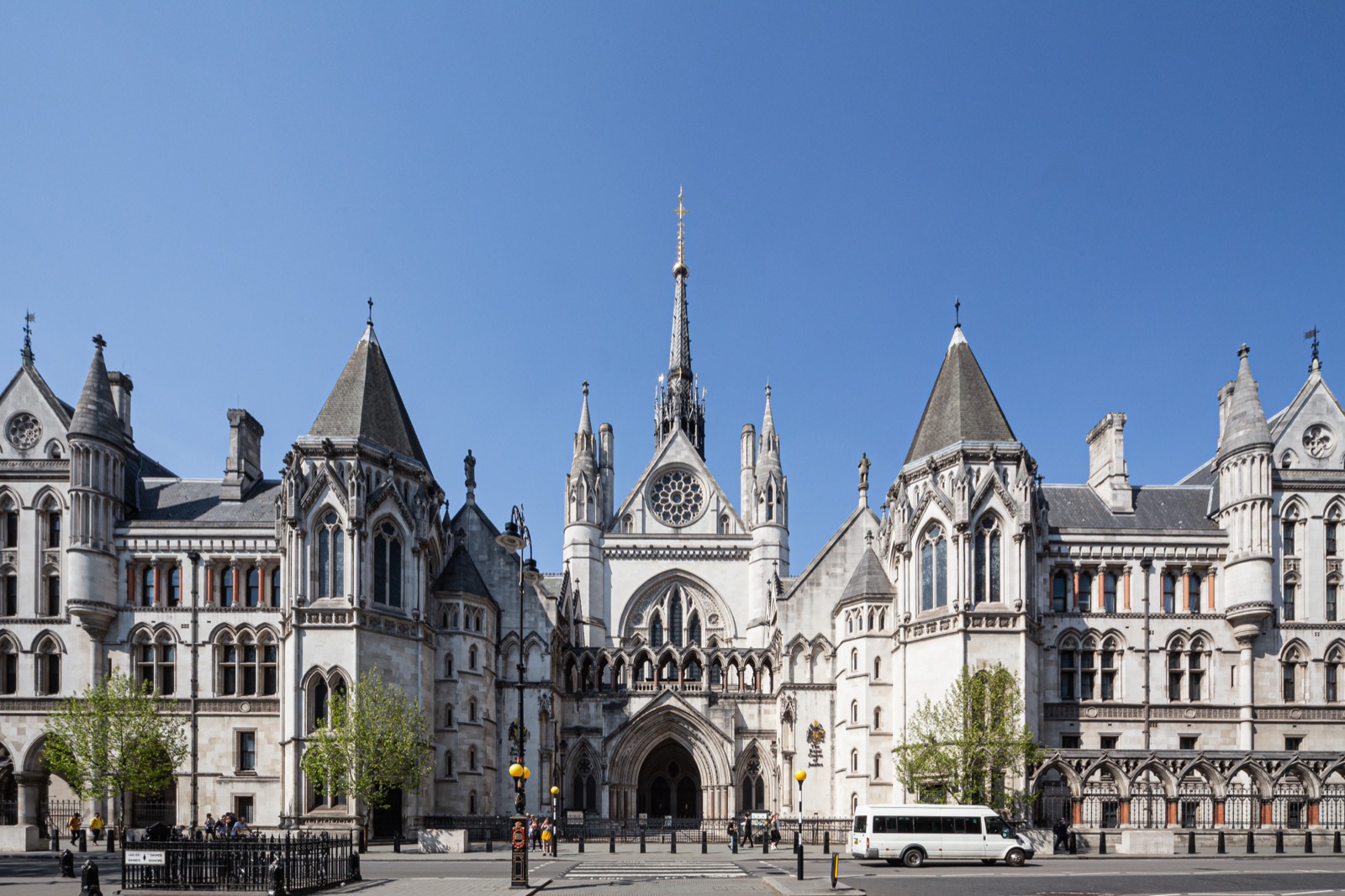
The Post Office Horizon Scandal
Between 1999 and 2015, the British Post Office prosecuted more than 900 of its own sub-postmasters — the men and women who ran the country's village shops and high-street branches — for theft, fraud, and false accounting, on the strength of figures produced by a single computer system. The system was called Horizon. It had been built by the Japanese technology company Fujitsu, rolled out from 1999 to some 14,000 branches across the United Kingdom, and it produced shortfalls — sums of money the accounts said were missing — that the sub-postmasters could not explain because they had not taken anything. Under the contract every sub-postmaster signed, those shortfalls became personal debts, and the Post Office, which held its own statutory power to prosecute, took hundreds of them to court. Seema Misra, the sub-postmistress of West Byfleet in Surrey, was sentenced to fifteen months in prison on November 11, 2010 — her son's tenth birthday — while eight weeks pregnant. Others were bankrupted, lost their homes, were shunned by the communities they had served, and at least four are believed to have taken their own lives. The Post Office knew, from at least 2010 and arguably earlier, that Horizon contained bugs capable of generating phantom shortfalls, and that Fujitsu's engineers could alter branch accounts remotely without the sub-postmaster's knowledge — and it continued to deny both in court for the better part of a decade. The cover-up unravelled not in a courtroom first but through the persistence of one campaigner, Alan Bates, a journalist's filing cabinet, a High Court judge who refused to be recused, and — finally, in January 2024 — a four-part ITV drama that did in a week what twenty years of litigation had not. In May 2024 Parliament passed an unprecedented law quashing every Horizon-related conviction at a stroke. This article examines what the system did, what the institution knew, and why the answer to the only question that matters — how an organisation can prosecute its own people for its own software's errors, for fifteen years — turns out to be less about a computer than about a contract, a culture, and a refusal to look.
4 files · end of the line