
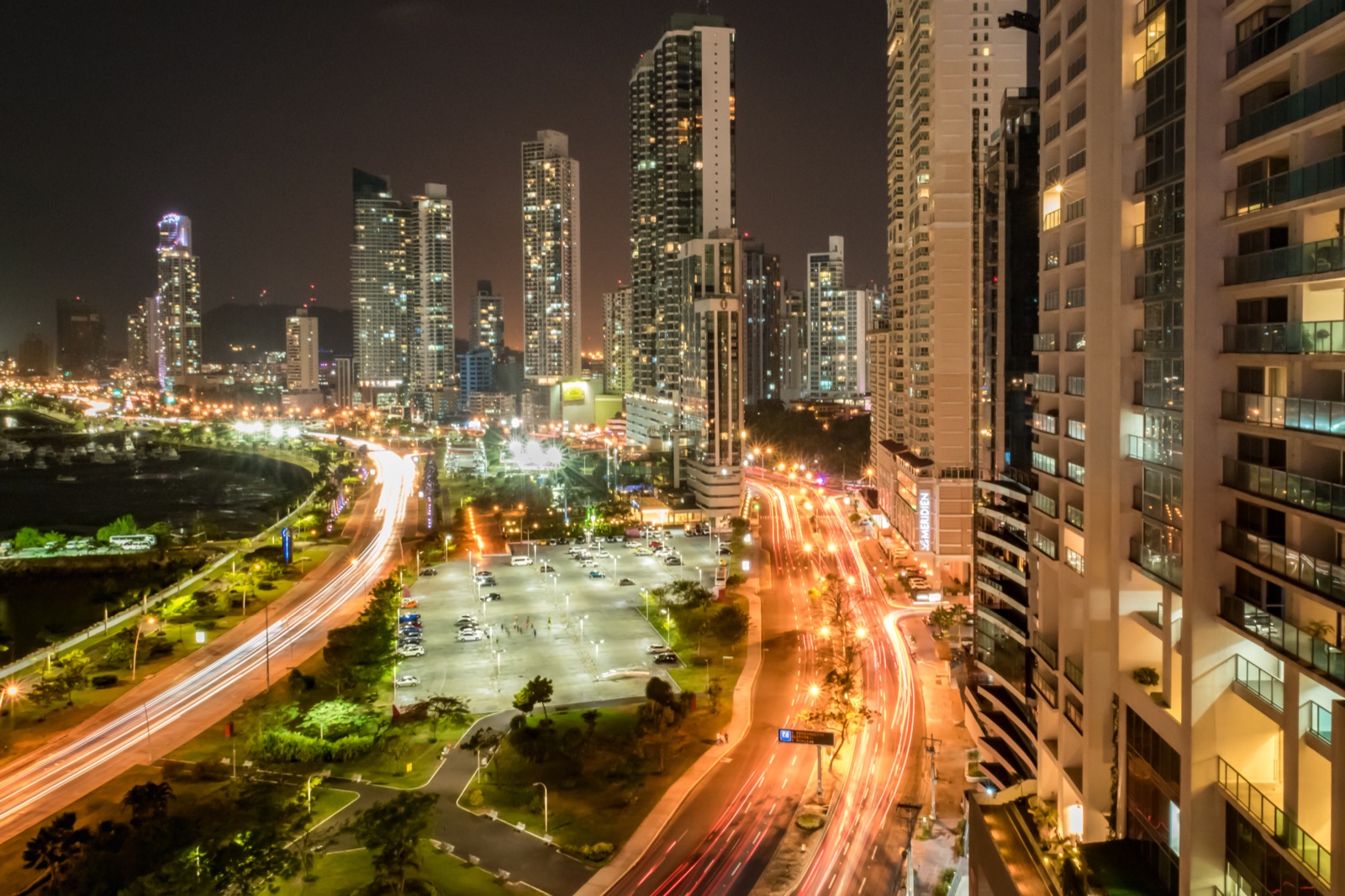
The FTX Arena in downtown Miami, photographed on 11 November 2022 — the very days the company collapsed. FTX had paid to put its name on the home of the Miami Heat, part of a marketing blitz that made the exchange, and its founder Sam Bankman-Fried, ubiquitous. Within weeks the name would be stripped from the building. Wikimedia Commons / Phillip Pessar, CC BY 2.0.
FTX and the Crypto King Who Gambled With Other People's Money
United States and the Bahamas, 2019–2022 — a dishevelled wunderkind who preached 'effective altruism' built the world's second-largest crypto exchange, valued at $32 billion. In ten days of November 2022 it collapsed, $8 billion of customer money gone — funnelled to his own hedge fund. He got 25 years
- Category
- Finance & Economy
- Published
- Length
- 4,140 words · 19 min read
- Author
- The editors
The FTX story is the dark twin of the WeWork story. Where WeWork was a legal delusion — hype inflating an ordinary business until it popped, with no crime at its centre — FTX was the opposite: an enterprise that wore the same costume of the visionary young founder and the world-changing mission, but that concealed, beneath it, simple theft. Both men were celebrated, both built empires on charisma and a story, both saw those empires evaporate. But one was found to have broken no law, and the other was found to have stolen billions. Holding the two side by side is the clearest way to see where the line falls between the audacity that markets reward and the fraud that prisons punish.
This is the story of the crypto king who gambled with other people's money — and lost.
The boy king of crypto
Sam Bankman-Fried's rise was extraordinarily fast. A graduate of MIT, he worked at the quantitative trading firm Jane Street before leaving to trade cryptocurrency, founding Alameda Research in 2017 to exploit price differences in crypto markets, and then, in 2019, launching FTX, an exchange where people could buy, sell, and trade crypto and related products. In just a few years he went from an unknown to one of the most famous and, on paper, wealthiest people in finance, his net worth at its peak estimated in the tens of billions of dollars.
What made him a phenomenon was not just the money but the persona. He cultivated an image of brilliant, eccentric indifference to wealth: the shorts and T-shirts, the beanbag, the messy hair, the video games, the old Toyota he claimed to drive. Above all, he wrapped himself in effective altruism, the philosophical movement holding that one should do the most good possible, including by "earning to give" — making vast sums specifically in order to donate them. Bankman-Fried said he was amassing his fortune precisely so he could give it away to causes like pandemic prevention, and this halo of high-minded purpose set him apart from the get-rich-quick hustlers crypto was known for. He seemed to be the rare crypto billionaire who was in it for humanity, and the world — investors, journalists, politicians — largely took him at his word.
Alameda and FTX
At the centre of what went wrong was a structural conflict that should never have existed. Bankman-Fried controlled two intertwined companies: FTX, the exchange, which held customers' money and was supposed to act as a neutral marketplace; and Alameda Research, a hedge fund that traded aggressively for profit. These two should have been rigorously separated — an exchange holding customer deposits is a kind of custodian, like a bank, and must not gamble with the money it holds. But under Bankman-Fried, the wall between them was not just porous; it was, in effect, a secret door.

Alameda was given an extraordinary, hidden privilege: it could borrow almost without limit from FTX — which meant, in practice, that it could take and use FTX customers' deposits. The exchange's software was quietly configured to exempt Alameda from the automatic rules that would have forced any other account to put up collateral or be liquidated when its bets went bad. So when Alameda made risky investments and lost money, or when its trading went wrong, it could plug the holes with customer funds from FTX, invisibly. Customers who deposited money on FTX believing it sat safely in their accounts were, unknowingly, funding a hedge fund's gambling. This was the fraud at the core of everything: not a clever financial product, but the simple, secret use of other people's money as if it were the company's own.
The empire and the halo
For a few years, none of this was visible, and Bankman-Fried became a dominant figure not just in crypto but in the wider culture. FTX spent enormously on marketing to establish itself as trustworthy and mainstream: it paid to rename the Miami Heat's basketball arena the FTX Arena, ran a Super Bowl advertisement, and signed celebrity endorsers. Bankman-Fried cultivated relationships with politicians, becoming one of the largest donors in American politics, and positioned himself as crypto's ambassador to Washington, testifying before Congress and discussing regulation as though he were the industry's responsible adult. When other crypto firms failed in 2022, he stepped in as a would-be rescuer, bailing some of them out, which only burnished his image as the steady, ethical hand in a reckless industry.
There was a bitter irony in those rescues, visible only later. As Bankman-Fried played the white knight bailing out failing crypto firms in mid-2022 — burnishing his reputation as the industry's responsible saviour — FTX itself was already, secretly, deeply in the hole, its customers' money already diverted and at risk. The man positioning himself as the steady hand steadying a chaotic industry was standing on the same collapsing ground he claimed to be shoring up, using the authority the rescues gave him to extend his credibility a little further. The generosity that looked like strength was, in hindsight, part of a confidence game running on borrowed time. It is a pattern worth noting: the fraud most convincingly disguised is often the one performing the role of the rescuer.
The effective-altruism halo was central to this. Because Bankman-Fried presented himself as someone accumulating wealth only to give it away for the good of humanity, scrutiny softened; surely a man so visibly indifferent to luxury, so committed to doing good, was not a common fraudster. The persona was, in retrospect, the perfect cover — and whether it was a sincere belief he betrayed or a deliberate disguise from the start became one of the questions at his trial. Either way, the image of the altruistic genius bought him years of trust that a flashier figure would never have received.
The run
The collapse, when it came, was astonishingly fast. In early November 2022, the crypto news outlet CoinDesk published a report based on a leaked document showing that a huge portion of Alameda Research's assets consisted of FTT — the token FTX itself had created — rather than independent, solid holdings. This revealed that the two companies were dangerously entangled and that Alameda's apparent wealth rested heavily on a coin conjured by its sister exchange. To anyone who understood it, this was alarming: it suggested the empire was built on a kind of circular, self-referential value.
The spark became a fire when Changpeng Zhao ("CZ"), the head of the rival exchange Binance, announced that Binance would sell its large holdings of FTT. That announcement, from the most powerful figure in crypto, triggered panic. The price of FTT began to fall, and FTX customers, suddenly frightened, rushed to withdraw their money from the exchange all at once — a classic bank run. And like a bank that has secretly lent out its depositors' money, FTX could not meet the demand, because the money was not there: billions of it had gone to Alameda and been lost or tied up. Withdrawals were halted. Within days the truth became undeniable. On 11 November 2022, FTX filed for bankruptcy, and Bankman-Fried resigned. An empire valued at $32 billion had evaporated in roughly ten days.

The human cost spread far beyond the headlines about a fallen billionaire. FTX's customers were not only speculators but ordinary people around the world — many in countries with unstable currencies or limited banking — who had put real savings onto the exchange, trusting the polished, congressionally-courted company with their money. When withdrawals froze, those savings were simply gone, locked in a bankrupt company with an $8 billion hole. The collateral damage rippled through the wider crypto economy as other firms exposed to FTX wobbled or fell, and the sense that the industry's most respectable player had been a fraud all along did lasting harm to public trust in crypto itself. The victims of FTX were counted in the millions, scattered across the globe, most of them ordinary.
Bankruptcy
The man brought in to manage FTX's bankruptcy was John J. Ray III, a veteran corporate restructuring expert who had overseen the cleanup of Enron, one of the most notorious frauds in history. Ray's assessment of FTX was withering. In a court filing, he wrote that in his decades of experience, including with Enron, he had "never seen such a complete failure of corporate controls and such a complete absence of trustworthy financial information." There were no proper records, no real accounting, no functioning oversight; corporate funds had been used to buy homes and personal items for employees; the company had been run, in effect, as the personal fiefdom of a small group with no checks at all. The professional who had cleaned up Enron was saying FTX was worse.
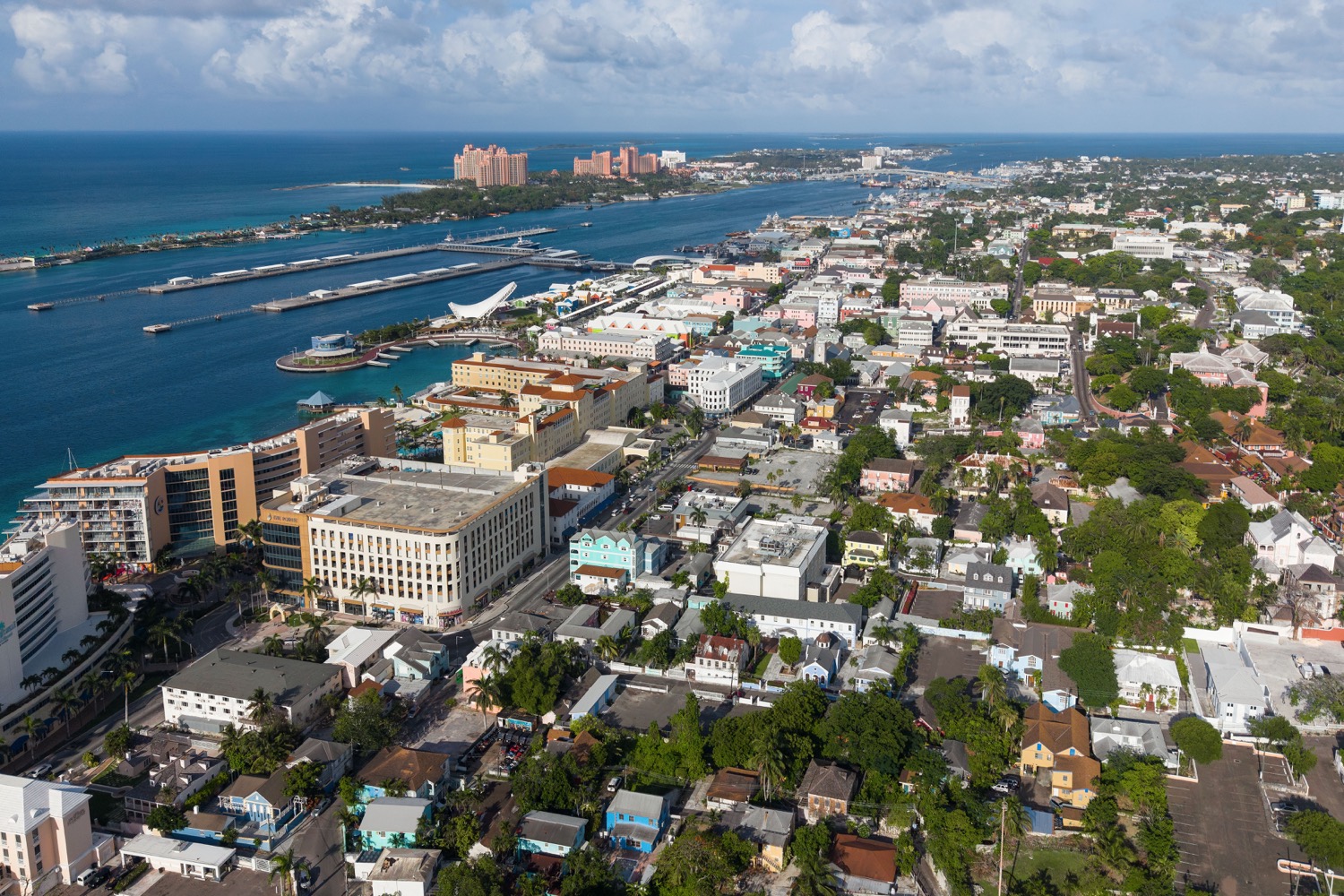
The bankruptcy revealed the scale of the missing money — roughly $8 billion owed to customers that the company could not produce — and the chaotic, almost absurd manner in which the empire had been run from a penthouse in the Bahamas by a handful of young people in their twenties, several of them romantically and personally entangled, making multi-billion-dollar decisions with no real risk management or record keeping. The contrast between the polished public image — the congressional testimony, the philanthropic mission, the $32 billion valuation — and the reality of the operation was total.
The trial
Sam Bankman-Fried was arrested in the Bahamas in December 2022 and extradited to the United States to face federal charges including wire fraud and conspiracy. Crucially, his closest collaborators turned on him: Caroline Ellison, the head of Alameda Research and at times his girlfriend, along with other senior figures from FTX and Alameda, pleaded guilty and agreed to testify against him, describing in detail how customer money had been knowingly taken and how the fraud had worked. Their testimony was devastating, because it came from the people who had been in the room.
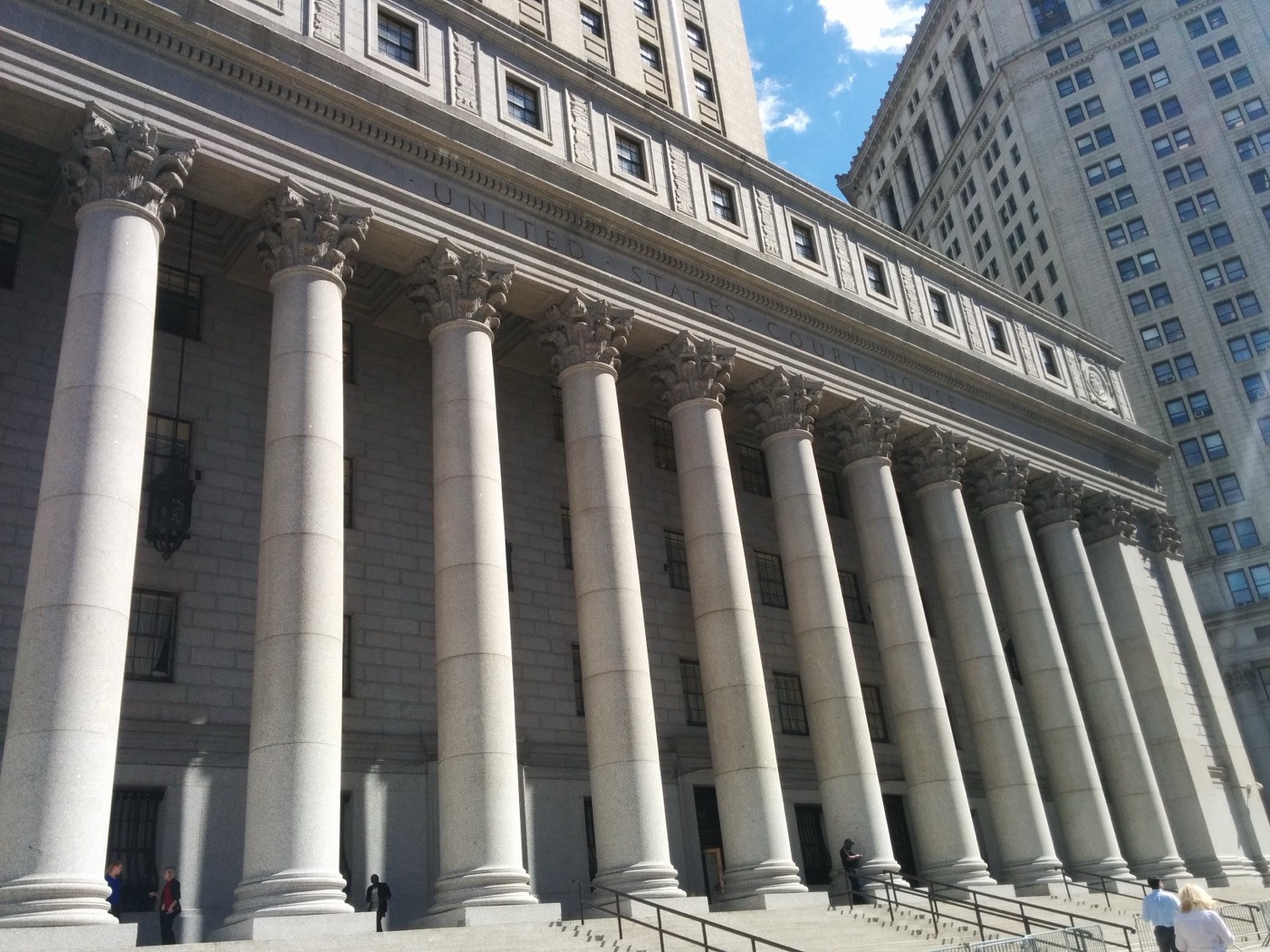
Bankman-Fried took the unusual step of testifying in his own defence, arguing in essence that he had made mistakes and failed to grasp the risks rather than committed deliberate fraud — that he had not knowingly stolen, only mismanaged. The jury did not believe him. In November 2023, after a trial of about a month, he was convicted on all seven counts he faced. In March 2024 he was sentenced to 25 years in prison. The boy king of crypto, who had been one of the most celebrated young figures in global finance barely a year earlier, was now a convicted fraudster facing a quarter-century behind bars.
There was a curious epilogue that complicated the simplest morality tale. As FTX's bankruptcy estate clawed back assets and the prices of some crypto holdings recovered, it emerged that many customers would eventually be repaid much of what they were owed in dollar terms — a fact Bankman-Fried's defenders seized on to argue that the harm had been overstated. But this missed the point that the courts and the law insisted on: that customers had been repaid, if they were, by the luck of a market rebound and the diligence of the bankruptcy process, not by anything Bankman-Fried had done; that for a long, agonising period their money was simply gone; and that the crime was the taking of the money in the first place, regardless of whether later events happened to fill the hole. Stealing from a vault is not undone by the vault's other contents later rising in value. The repayments softened the financial wound for some; they did not alter the verdict.
What is established, and what it means
There is no serious factual dispute about FTX; the fraud was proven in court, confirmed by the guilty pleas of insiders and the testimony of the founder's closest associates, and documented in the bankruptcy. What the case offers is a set of lessons, several of which echo and sharpen those of its fellow cautionary tales.
The first is about the danger of unregulated finance dressed in new clothes. Crypto presented itself as a revolutionary technology beyond the old rules, and that novelty — the jargon, the complexity, the promise of a new financial frontier — provided cover for what was, underneath, an ancient crime: taking money held in trust and gambling with it. FTX did not require any genuinely new kind of fraud; it required only that enough people believe crypto was too new and too clever to be subject to the old, boring rules about not stealing customers' deposits. The offshore base in the Bahamas, away from tough regulators, was part of the same logic. The lesson is that financial innovation often serves, in practice, as a fog in which very old wrongdoing can hide.
The second is about the seductiveness of the virtuous founder. Just as Theranos had its Jobsian visionary and WeWork its messianic prophet, FTX had its altruistic genius — and in each case the persona disarmed the scrutiny the substance demanded. Bankman-Fried's effective-altruism halo was perhaps the most effective disguise of all, because it pre-empted the very suspicion that protects against fraud: who would suspect of theft a man whose whole stated purpose was to give his money away? The case is a warning that the appearance of virtue is not evidence of it, and that the founders who most loudly proclaim a higher mission deserve not less scrutiny but more.
In the end, FTX is the genre's purest example of the crime that hype can hide. Sam Bankman-Fried wore every costume of the visionary founder — the eccentric brilliance, the world-changing mission, the indifference to wealth — and used them to become the trusted, philanthropic face of an entire industry, all while running, underneath, an old-fashioned theft of the money his customers had entrusted to him. The arena bore his company's name; the Super Bowl carried its advertisement; Congress sought his counsel; and the whole time, the $8 billion gap between what FTX owed and what it held was widening in the dark. When the truth finally broke, it broke in days, and the man who had promised to give his fortune to humanity went instead to prison for taking what was not his. The lesson he left is the one this whole archive keeps teaching in different forms: that the most convincing story is not evidence, that charisma and idealism are not character, and that the only real protection against the confident founder with the beautiful mission is the unglamorous, indispensable act of checking whether the money is actually there.
Sources
- United States Department of Justice, the indictment and prosecution of Samuel Bankman-Fried (2022–2024) — primary.
- The trial record of United States v. Bankman-Fried (2023), including the testimony of cooperating witnesses — primary.
- John J. Ray III's filings and testimony as FTX's bankruptcy CEO, including his assessment of the company's controls — primary.
- The CoinDesk report on Alameda Research's balance sheet (November 2022) — primary/secondary.
- US Securities and Exchange Commission and CFTC charges against FTX, Bankman-Fried, and associates — primary.
- Michael Lewis, Going Infinite: The Rise and Fall of a New Tycoon (2023) — secondary.
- Zeke Faux, Number Go Up: Inside Crypto's Wild Rise and Staggering Fall (2023) — secondary.
- Reporting by the New York Times, Wall Street Journal, Bloomberg, and others on the collapse, the trial, and the sentencing (2022–2024) — secondary.
Inspired this / based on it
Michael Lewis
W. W. Norton. A close, controversial portrait of Bankman-Fried written as the empire fell.
Zeke Faux
Currency. A journalist's account of the crypto bubble, including FTX.
Filed under
- #ftx-sbf
- #sam-bankman-fried
- #cryptocurrency
- #fraud
- #alameda-research
- #effective-altruism
- #bahamas
- #crypto-exchange
- #2020s
- #confirmed
Click any tag for every article carrying it.
Continue reading

WeWork and the $47 Billion Office Company That Wasn't a Tech Company
Adam Neumann walked barefoot through New York, flew on a private jet stocked with tequila and marijuana, and told people he intended to become the world's first trillionaire, to live forever, to solve the problem of homelessness, and to 'elevate the world's consciousness.' His company, WeWork, was — when you stripped away the mysticism — a business that signed long-term leases on office buildings, fitted them out with exposed brick, free beer, and communal sofas, and rented the space back to startups and freelancers on short-term, flexible terms. It was, in plain terms, a commercial real-estate company. But Neumann did not sell it as one. He sold WeWork as a technology company, a community, a movement, a 'physical social network' that would transform how people worked and lived; and Silicon Valley, awash in cheap money and hungry for the next world-changing platform, believed him. Backed above all by the Japanese conglomerate SoftBank, WeWork reached a private valuation of about $47 billion by early 2019, making it one of the most valuable startups in the world. Then, in the late summer of 2019, the company filed the paperwork to go public — and the spell broke. Investors and journalists read the prospectus and found enormous losses, an unsustainable business model, bizarre self-dealing by the founder, and governance so lopsided it bordered on absurd. In about six weeks, WeWork's valuation cratered from $47 billion toward single-digit billions, the public offering was abandoned, and Neumann was pushed out. Unlike some of its fellow cautionary tales, WeWork was not a criminal fraud — no one went to prison. It was something subtler and, in its way, more revealing: a legal, dazzling demonstration of how cheap money and a magnetic founder can inflate a fairly ordinary business into a fantasy, and how fast the fantasy can pop. This is the story of how that happened.
Theranos and the Drop of Blood That Wasn't There
Elizabeth Holmes dropped out of Stanford at nineteen to build a company around an idea that sounded like the future: a small machine that could run a comprehensive battery of medical tests — hundreds of them — from a single drop of blood drawn painlessly from a finger-prick, cheaply and instantly, in any pharmacy or home. She called the company Theranos, dressed in a black turtleneck in conscious imitation of Steve Jobs, and spoke in a deep voice about democratising health care and saving lives. Silicon Valley believed her. So did some of the most powerful men in America, who joined her board: former secretaries of state Henry Kissinger and George Shultz, former defense secretary James Mattis, and others. So did the pharmacy giant Walgreens, which put Theranos blood-testing centres in its stores. By 2014 the company was valued at around nine billion dollars and Holmes, on paper, was the youngest self-made female billionaire in the world, hailed on magazine covers as the next Jobs. There was only one problem, and it was the whole problem: the machine did not work. It could not do what she claimed, it never had, and inside the company the tests on real patients were secretly being run, badly, on ordinary commercial analysers — producing results so unreliable that people received dangerously wrong information about their own blood. Theranos was not a brilliant idea that failed; it was, a court would eventually find, a fraud. This article tells the story of how a company built on a drop of blood that wasn't there fooled so many for so long, who finally exposed it, and what it revealed about the culture that made it possible.
The Panama Papers
At approximately 6:00 p.m. Central European Time on Sunday, April 3, 2016, news organizations on six continents simultaneously published the first results of an 18-month coordinated investigation into 11.5 million leaked documents from a single Panama-based law firm. The firm was Mossack Fonseca. The documents — totaling 2.6 terabytes, the largest single data leak in journalism history at that time — exposed the operations of 214,488 offshore corporations and the identities of their ultimate owners. The owners included 12 sitting heads of state, 128 senior politicians and government officials, members of the inner circles of Vladimir Putin and the Saudi Royal Family, the families of Xi Jinping and David Cameron, the President of Iceland (who resigned within 48 hours), Lionel Messi, Pedro Almodóvar, and dozens of others. The leaking source — known only as 'John Doe' and never identified — had delivered the documents over a period of approximately 12 months to two reporters at the Munich newspaper *Süddeutsche Zeitung*. The investigation was coordinated by the International Consortium of Investigative Journalists (ICIJ), based in Washington, D.C. 376 reporters at more than 100 news organizations in 76 countries worked on the documents in shared secure infrastructure for the entire 18 months without any pre-publication leak. The story won the 2017 Pulitzer Prize for Explanatory Reporting and triggered approximately $1.36 billion in unpaid-tax recoveries by governments worldwide between 2016 and 2024.