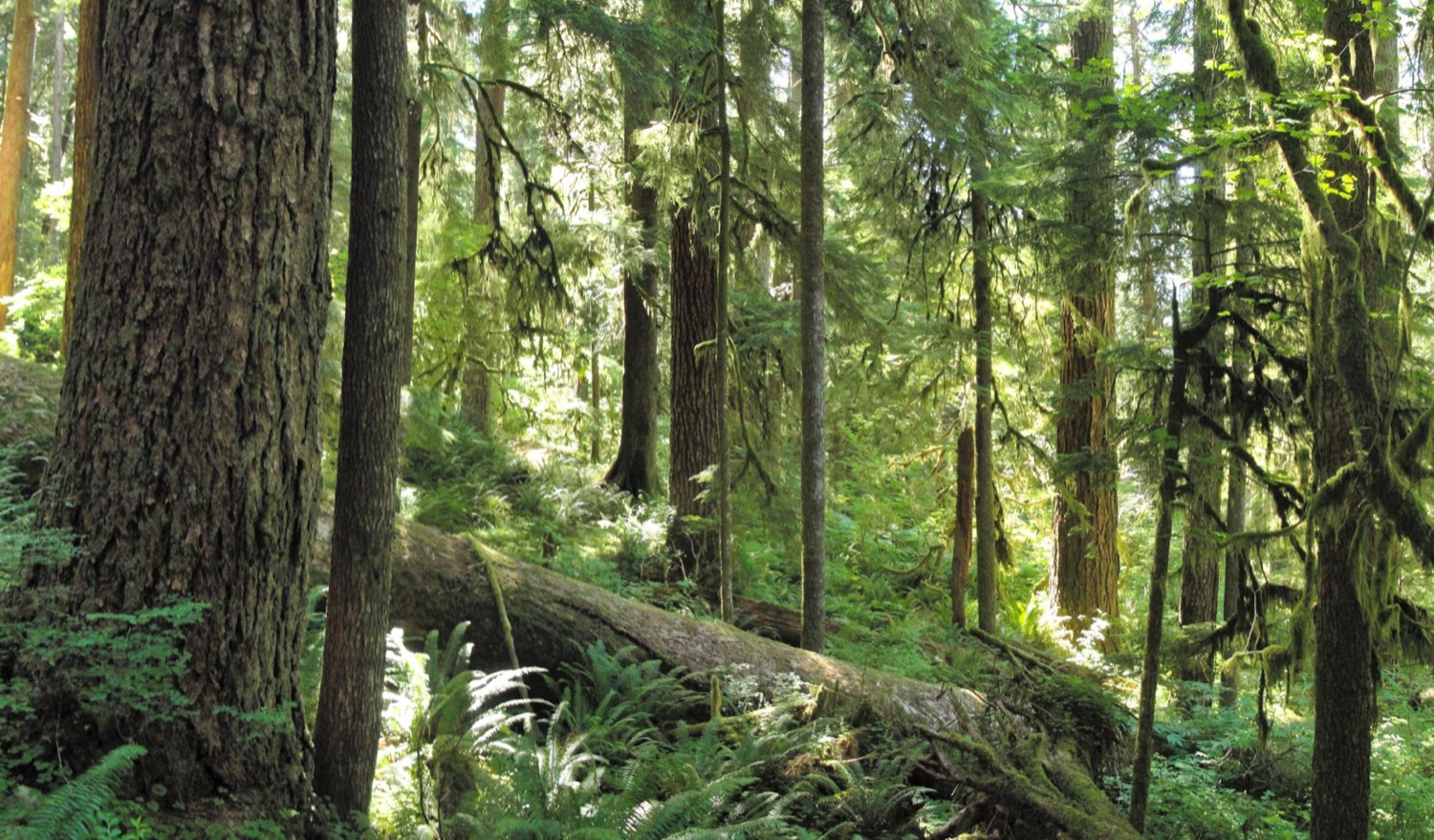
Old-growth forest in Olympic National Park, Washington — the kind of dense, vast, lightly travelled Pacific Northwest woodland that the Bigfoot legend calls home. The imagined refuge is real and enormous; it is the creature said to inhabit it that has never been found. Olympic National Park, Washington — public domain (Wikimedia Commons).
Bigfoot and the Ape That Biology Forbids
North America, 20th century to the present — a giant bipedal ape is said to roam the continent's forests, yet after decades of searching it has never left a body, a bone, or a strand of DNA that belonged to anything but a known animal
- Category
- Folk Mysteries & Cryptids
- Published
- Length
- 4,010 words · 16 min read
- Author
- The editors
Bigfoot and the Ape That Biology Forbids
North America, 20th century to the present — a giant bipedal ape is said to roam the continent's forests, yet after decades of searching it has never left a body, a bone, or a strand of DNA that belonged to anything but a known animal.
The wild man of the woods
The idea of a hairy giant in the forest is older than the United States, and older than the word 'Bigfoot' by centuries. Many Indigenous peoples of the Pacific Northwest carried traditions of a wild man of the woods — a large, hair-covered being that lived beyond the edge of human settlement, sometimes a danger, sometimes a guardian, woven into the moral geography of the forest. The word 'Sasquatch' is an anglicisation, popularised by a British Columbia schoolteacher in the early twentieth century, of a term from the Halkomelem language of the Coast Salish. The creature, in other words, did not begin as a monster to be hunted with cameras and DNA kits. It began as folklore, as the personification of the deep woods themselves — and that origin matters, because it is the soil the modern legend grew from.
The pattern is not even uniquely American. Some version of the hairy wild man recurs across the world's folklore — the Yeti of the Himalayas, the Yeren of China, the Yowie of Australia, the Almasty of the Caucasus, and a dozen regional North American cousins, from Florida's 'Skunk Ape' to the swamp creatures of the Gulf. That a large, hair-covered, half-human figure haunts the wild edges of so many cultures tells us something real — but the something is most likely about the human imagination and its uses for the unknown, not about a single globe-spanning species that science has contrived to miss everywhere at once. The wild man is a shape the mind reaches for when it contemplates the forest. The question is whether anything answers to it.
What turned an old story into a modern phenomenon was a particular American century: an era of shrinking wilderness, expanding media, and a public both nostalgic for untamed nature and primed to believe that science had not yet catalogued everything. Into that receptive culture, in the late 1950s, walked Bigfoot.
"Bigfoot" is born — and the hoax behind the name
The name was made in 1958, at a logging road being cut through the remote forest of Bluff Creek in northern California. Workers began finding enormous, humanlike footprints around the site; one of them, an equipment operator, made a plaster cast of a print, the local newspaper ran the story, and a reporter reached for the nickname that would go around the world. The track-maker was 'Bigfoot,' and the legend had its brand.
The timing was perfect for it to spread. The story went out on the wire services and was picked up across the country; within weeks a local curiosity at a remote logging camp had become national news, and the image of a giant unknown creature stalking the deep western forests lodged itself in the popular imagination. The 1950s and 1960s were a high season for monsters and for the sense that the modern world still had blank spaces on its map, and Bigfoot filled a space the culture was ready to have filled. From that single set of prints grew clubs, expeditions, books, and a steady traffic of new sightings — a whole edifice raised, as it turned out, on a prank.
For more than forty years the Bluff Creek prints stood as a cornerstone of the case. Then, in 2002, Ray Wallace — the man whose company had been building that road — died, and his children came forward with a confession and a prop: the large wooden feet their father had carved and used to stamp the famous tracks. Wallace had been a prankster, and his prank had named a monster. The revelation did not, on its own, dispose of every later sighting, but it struck at the root of the thing. The footprints that had given Bigfoot its name, and much of its early credibility, were a put-on.
The Patterson-Gimlin film
If the footprints made the name, a strip of 16mm film made the image. On October 20, 1967, back at Bluff Creek, two men — Roger Patterson, a rodeo rider and Bigfoot enthusiast, and Bob Gimlin — shot about a minute of colour film that has been argued over ever since.
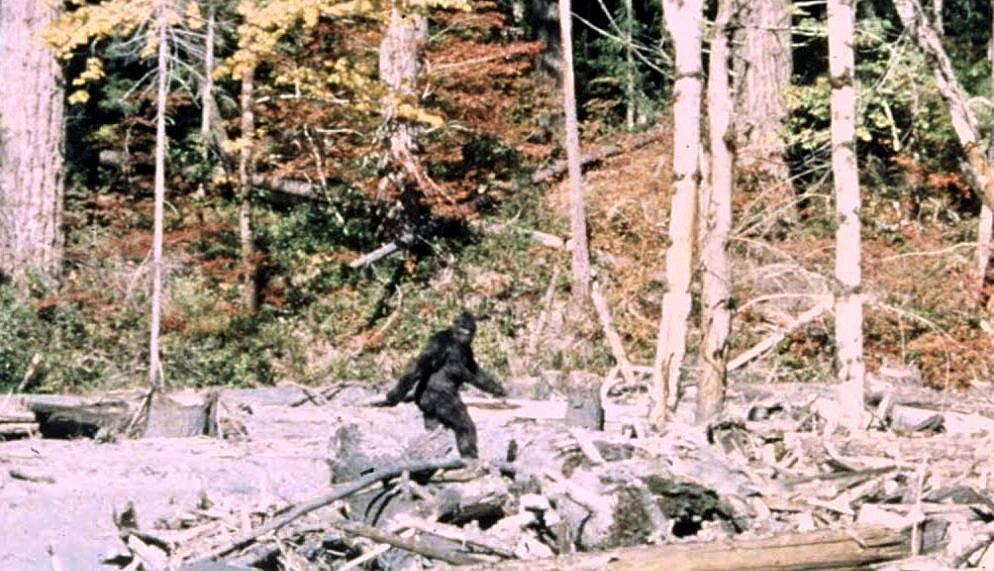
The film shows a large, dark, hair-covered figure — nicknamed 'Patty' — walking across a sandbar away from the camera and, in its most famous moment, turning its upper body to look back. For believers, it is the best evidence ever obtained: they point to the smooth, rolling, bent-knee gait, unlike a human's stiff-legged walk; to the play of muscle and the proportions of the limbs; to the apparent breasts; and to the sheer difficulty, they argue, of faking such a thing with the costume technology of 1967. For sceptics, it is exactly what it looks like at first glance: a person in a fur suit. A man named Bob Heironimus has claimed he wore the costume; a costume-maker, Philip Morris, has claimed he sold Patterson the suit. Patterson maintained to his death in 1972 that the film was genuine.
The honest position is that the Patterson-Gimlin film has never been conclusively proven to be either a real animal or a hoax, and that this irresolution is much of its power. But 'not conclusively disproven' is a low bar, and it is not the same as 'likely true.' The film is a single, brief, distant, shaky clip; the people who made it were Bigfoot enthusiasts hoping to find exactly what they filmed; the most economical explanation of a man-shaped figure walking on two legs across a clearing is a man; and the broader record around the film — sixty years of no body and no DNA — weighs heavily against the creature being real. Most who have studied it without a prior commitment conclude that Patty was a costume.
The evidence that keeps dissolving
Beyond the film, the case for Bigfoot rests on an accumulation of softer evidence, and the striking thing about it is how reliably it melts under examination.
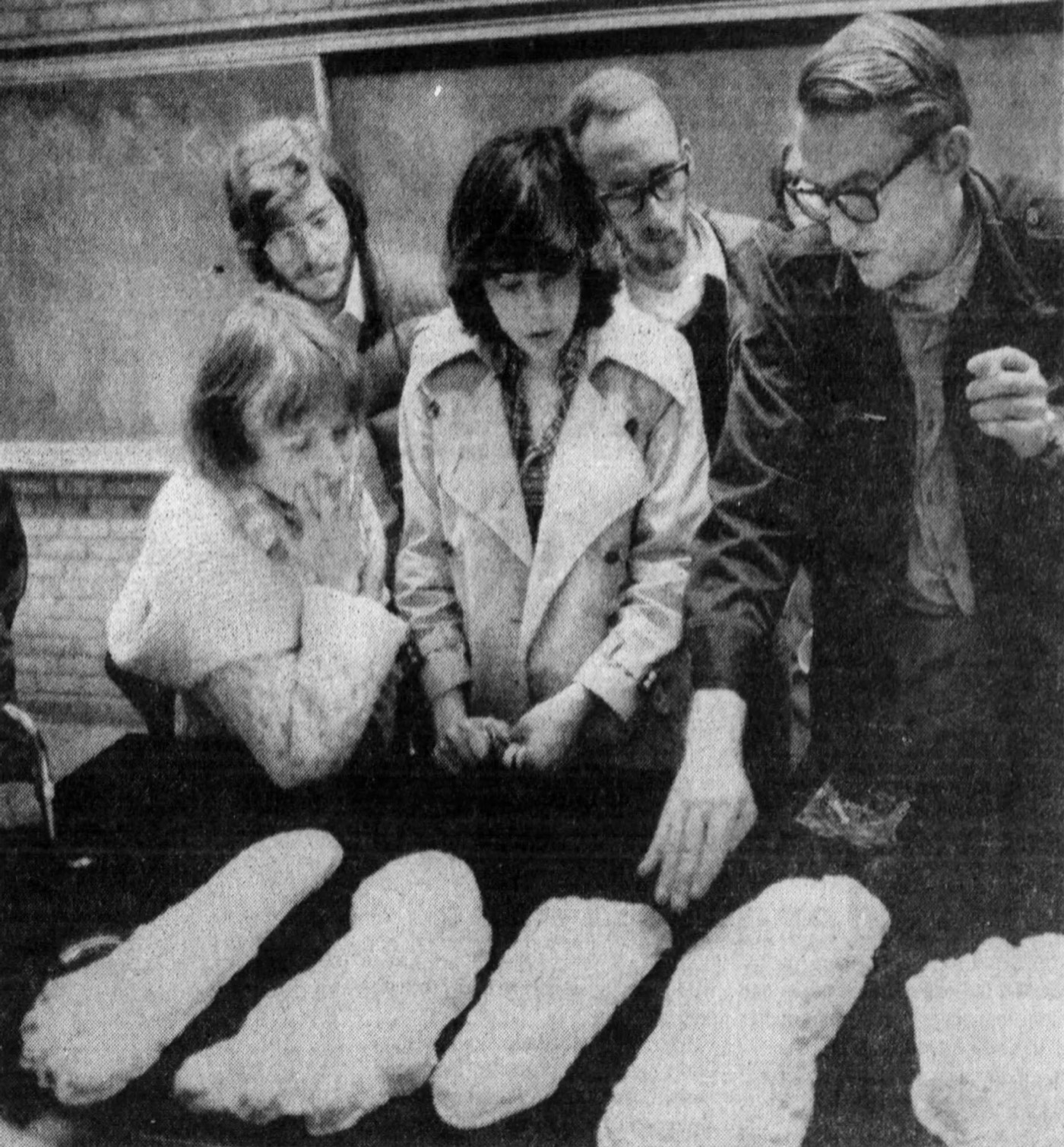
There are the footprints — thousands of casts, some studied seriously by the handful of scientists, like the anthropologist Grover Krantz, who gave the subject their attention. But many casts are demonstrably fakes, made with carved or moulded feet; the claimed fine details, such as skin 'dermal ridges,' are disputed; and crucially, no trackway has ever led to a body or a bone. There are hair and droppings samples, collected with great hope and submitted for analysis — and they come back, again and again, as bear, as deer, as elk, as cow, as human, never as an unknown primate. There is the 'Skookum cast' of 2000, a body imprint in mud some took for a resting Sasquatch and most experts attribute to an elk. There are recordings of strange calls and 'wood knocks,' and there is a database of thousands of eyewitness reports, sincere and often detailed. What there is not, anywhere in all of it, is a single piece of Bigfoot that can be put on a table and examined.
The eyewitness reports deserve a fair word, because they are the heart of the believing case and most are not lies. People do see things in the woods that frighten and puzzle them, and they report them sincerely; the Bigfoot Field Researchers Organization has catalogued thousands of such accounts. But sincerity is not evidence of a species. Human perception is fallible in exactly the conditions these sightings occur — brief, distant, low-light encounters with a startling shape, interpreted by a mind that already holds a vivid template for what Bigfoot looks like. Thousands of honest, mistaken reports are precisely what one would expect a popular legend to generate, with or without an animal behind it. A database of sightings, however large, is a record of human experience, not of biology; it cannot, by its nature, produce the one thing the case has always lacked, which is a creature.
The verdict of the genes
The clearest modern test of Bigfoot, as with Loch Ness, came from genetics — and it was unkind.
The hopeful peak came and went in 2013, when a veterinarian named Melba Ketchum announced that she had sequenced a 'Sasquatch genome' and identified a novel human-related hominin. The study was dismissed by mainstream scientists as the product of contamination and wishful interpretation, published in a journal that Ketchum's group appeared to control; it convinced no one outside the believing community. The serious work came the following year, when the Oxford geneticist Bryan Sykes collected some thirty hair samples from around the world that had been attributed to Bigfoot, the Yeti, and similar creatures, and ran them through rigorous genetic identification. Every sample matched a known animal — American black bear, raccoon, horse, cow, human, and others. Two Himalayan 'Yeti' samples matched a bear lineage. There was no unknown primate in any of them. Published in a Royal Society journal, it was the most systematic genetic search for these creatures ever undertaken, and it found exactly nothing that could not be explained by ordinary wildlife.
Why there cannot be a population
Even setting aside the failures of the evidence, the deepest problem for Bigfoot is not that we have not found one. It is that, biologically, there is almost no way for one to be there at all.
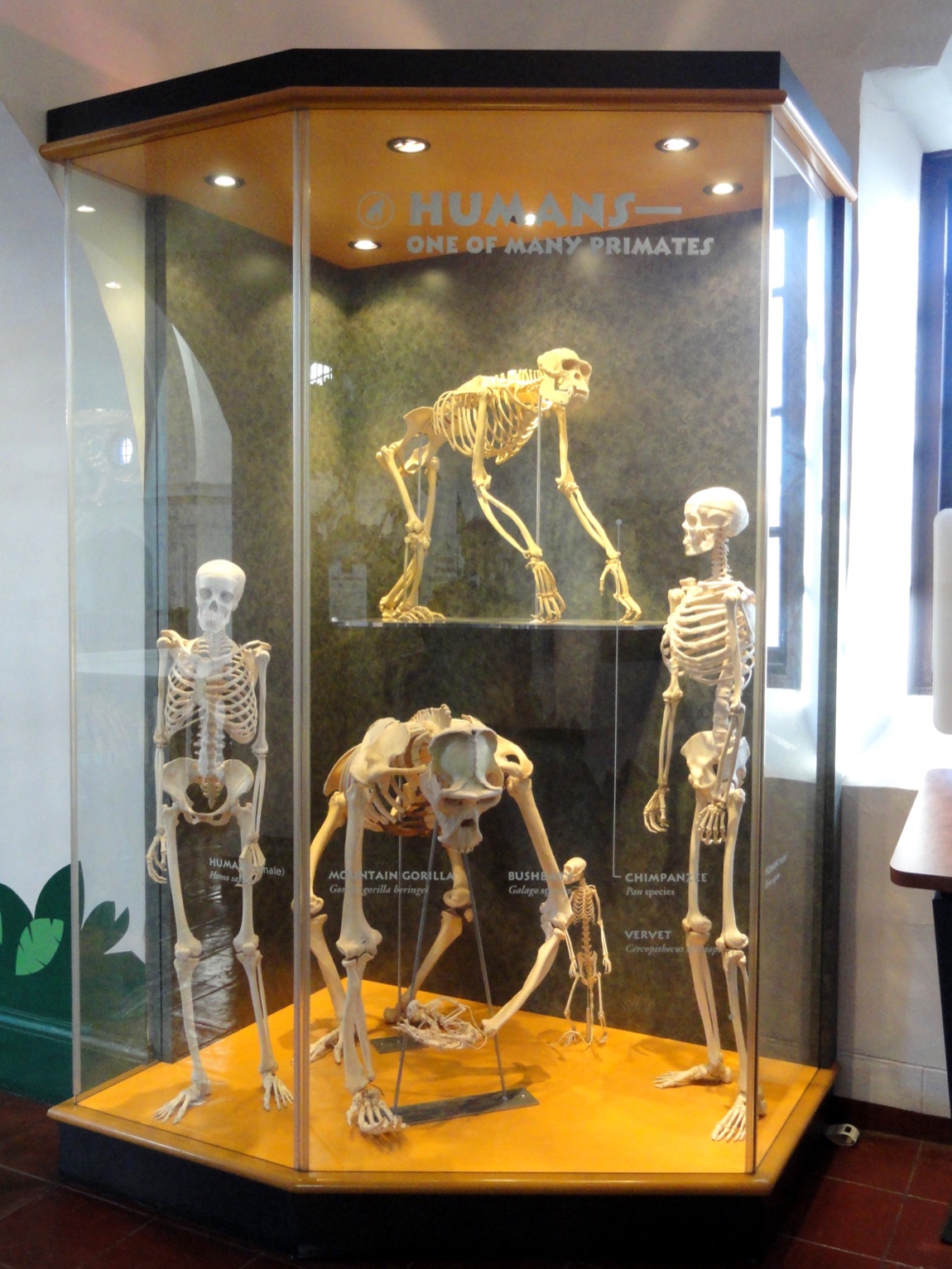
Start with the family tree. No great ape — no member of the ape lineage other than ourselves — has ever lived in the Americas. The only native primates of the New World are small monkeys; the apes evolved in the Old World and never reached the Western Hemisphere on their own. A breeding population of seven-to-nine-foot apes in North America would not be a new species so much as a whole new chapter of primate evolution, unrecorded in any fossil. Believers sometimes invoke Gigantopithecus, a genuinely enormous ape that lived in Asia during the Pleistocene — but it is known almost entirely from teeth and jawbones, it died out hundreds of thousands of years ago, and there is no evidence whatever that it crossed the land bridge into the Americas or survived to the present.
Then there is the arithmetic of survival. A population large enough to persist and breed across the decades and centuries of the legend could not be a handful of individuals; it would have to number in the thousands, spread across the continent. A population that size leaves traces — animals struck by cars, shot by hunters, dead of old age and disease, their bones scattered in the woods, their images captured by the millions of motion-triggered trail cameras now watching North American forests and the smartphone in every hiker's pocket. We have those traces in abundance for bears, cougars, elk, and every other large animal of the same forests. For Bigfoot we have none: not one carcass, not one skeleton, not one unambiguous photograph in all the years that everyone has been carrying a camera. The absence is not a gap waiting to be filled. For a large, widespread, breeding mammal, it is as close to a disproof as field biology offers.
The contrast with genuinely elusive animals is instructive. Science does discover large creatures, and recently: the okapi, the mountain gorilla, the giant squid, the saola. But each of those left exactly what Bigfoot has not — specimens, bones, carcasses, photographs, eventually living animals — and each was found in a specific, limited habitat, not spread across a continent in plain sight of a hundred million people. The lesson of those discoveries is the opposite of the one believers draw. Real hidden animals get found, and they get found because they are real and therefore leave the physical traces that real animals cannot help leaving. Sixty years of looking for Bigfoot have produced the traces of bears and the carvings of hoaxers, and nothing else — which is what looking for a creature that is not there produces.
What it probably is
If there is no ape, then the sightings — and many are sincere — need some other explanation, and the ordinary candidates are more than enough.
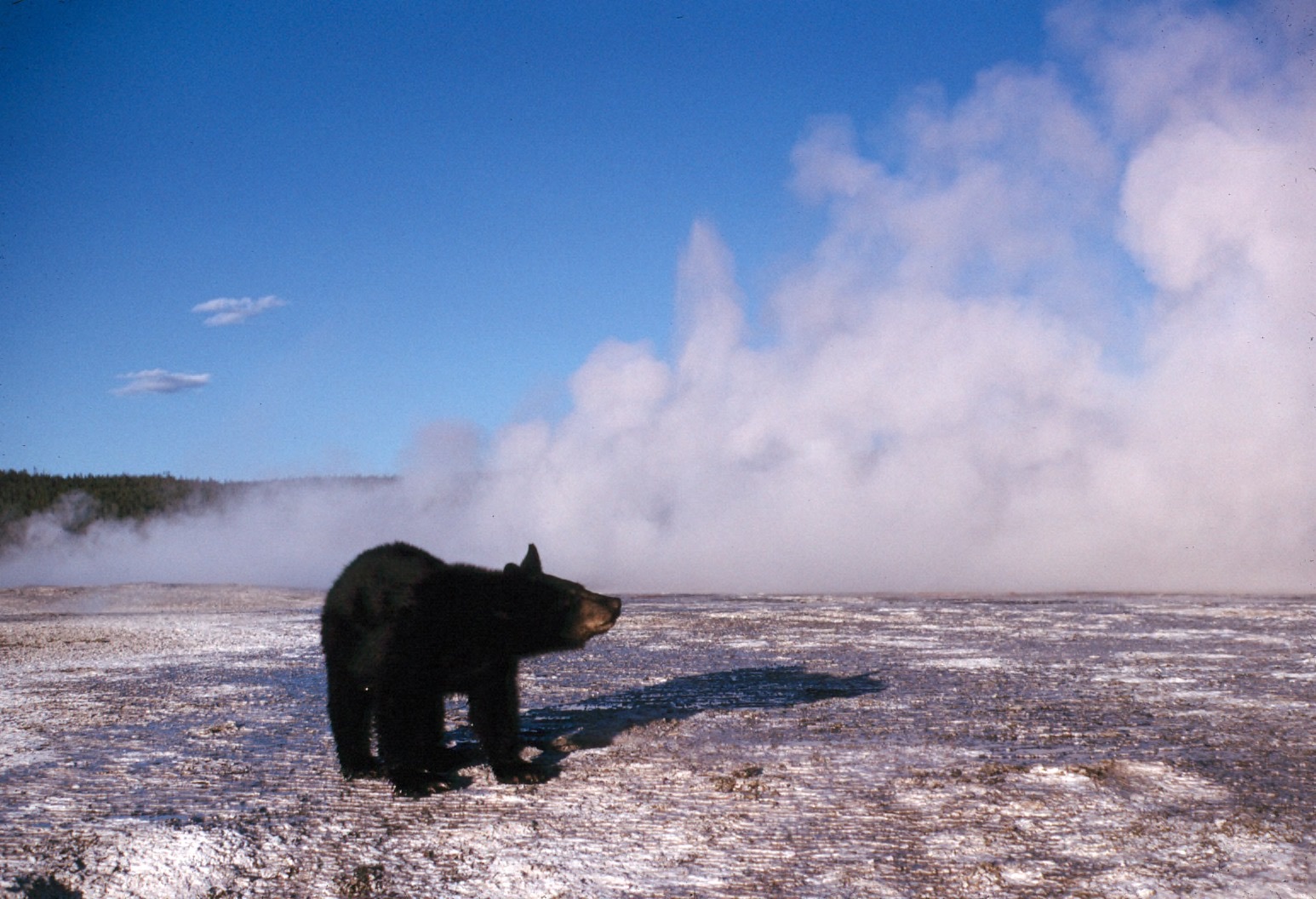
Chief among the explanations is the black bear. A bear rearing up or walking briefly on its hind legs, seen at a distance, in the low light of the forest, by a startled observer, presents a large, dark, roughly upright shape that can read instantly as something neither human nor animal — and a bear with mange, its fur patchy and strange, looks stranger still. Beyond bears there are the ordinary materials of misperception: a person in the woods, a stump or a shadow, a trick of scale and distance, the way the mind resolves a half-glimpsed ambiguity in the direction it expects. And there are the outright hoaxes, which have been a constant of the Bigfoot story from the carved feet of 1958 onward, including people who have literally dressed in costumes to be 'seen.' Add the powerful effect of expectation — a culture saturated with the image of Bigfoot, telling people what shape to assign to anything strange in the trees — and a steady stream of honest, baffled reports requires no undiscovered ape.
Why Bigfoot won't die
If the verdict is this clear, the real question is the human one: why a creature so thoroughly unfound is so very much alive.
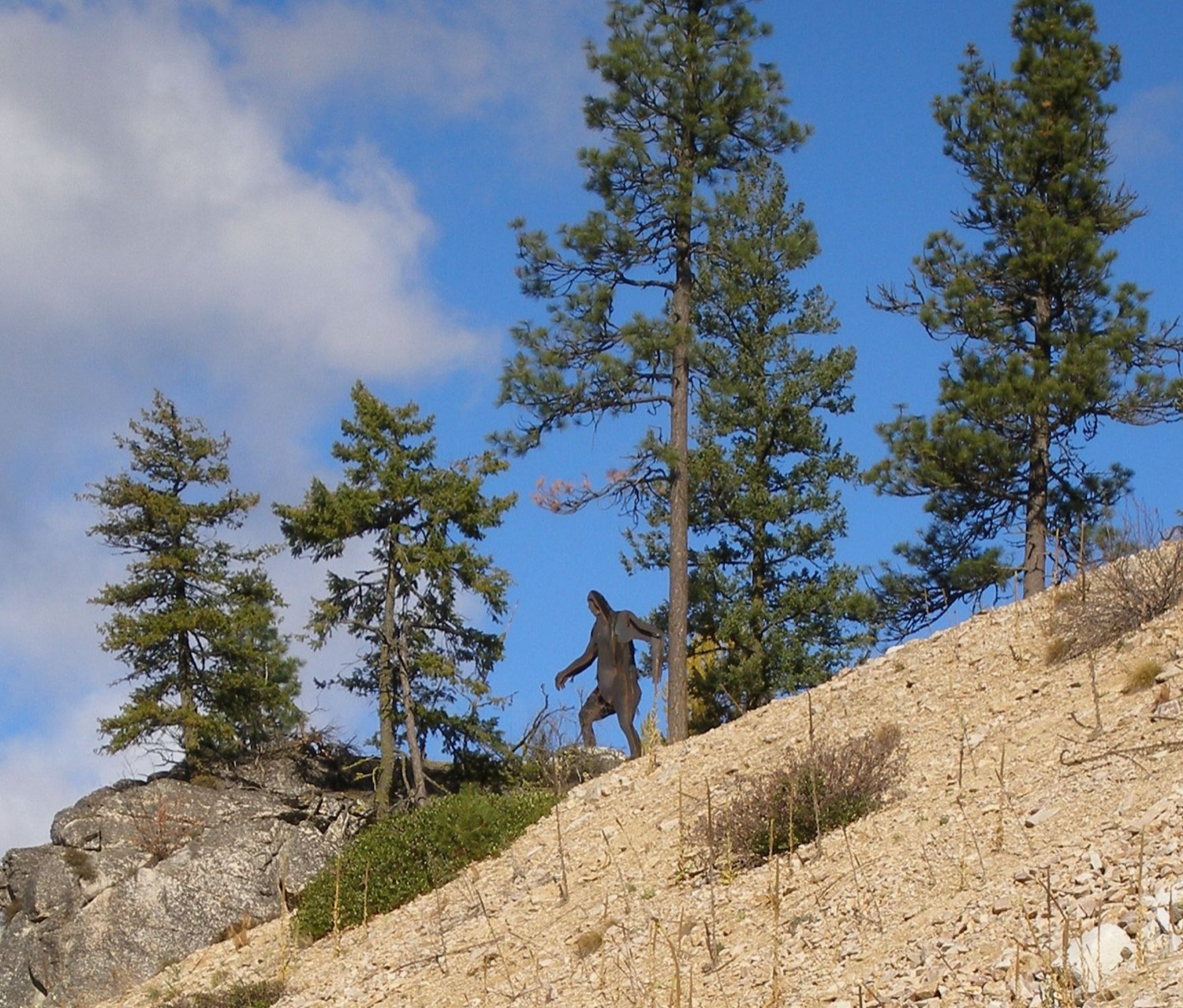
Part of the answer is that the forests are genuinely vast and genuinely under-travelled, and the human mind struggles to accept that something cannot be hiding in all that green. Part of it is that Bigfoot is now a large and self-sustaining business: festivals and museums, television series and souvenir shops, an entire seam of Pacific Northwest tourism that has every gentle incentive to keep the legend walking. And part of it, as with every cherished mystery, is simple human wanting. Bigfoot is a benign monster — it robs no one, it threatens nothing, it merely promises that the map is not yet finished, that the old wild still holds a secret big enough to be worth keeping. In a thoroughly surveyed, satellite- mapped, camera-saturated world, a creature that has eluded all of it is not a failure of evidence so much as a small act of faith: the hope that the woods are still deep enough to hide a god.
What the question still is
The verdict on Bigfoot is not, in honesty, in doubt. The founding footprints were carved from wood. The famous film is, on the best reading, a costume. The casts are faked or inconclusive; the hairs and droppings are bears and deer; the most rigorous DNA study found no unknown primate anywhere; and no body, bone, or fossil of any American ape has ever been found, because no American ape has ever existed. The biology forbids a hidden population, and the modern world of ubiquitous cameras forbids one staying hidden. There is no serious scientific case that Bigfoot is real, and there has not been for a long time.
What remains, and what is genuinely worth understanding, is the phenomenon rather than the animal. Bigfoot is a real thing in the world — just not a biological one. It is a piece of folklore that slipped its origins and dressed itself in the language of evidence; a legend launched by a prankster with wooden feet and crowned by a minute of disputed film; a creature that survives not in the forest but in the culture, kept alive by sincere witnesses, skilled hoaxers, hopeful businesses, and the deep human reluctance to admit that the wilderness has been fully read. The dense green woods of the Pacific Northwest really are large and dark and full of life. What they are not full of is an undiscovered giant ape — and the durability of the belief that they are is, in the end, a more interesting fact about us than any monster would have been.
Sources
Primary
- The 1958 Humboldt Times reporting that coined 'Bigfoot,' and the 2002 confession and wooden 'feet' presented by Ray Wallace's family.
- The Patterson-Gimlin film (October 20, 1967) and the contesting testimony of Bob Heironimus and Philip Morris.
- Bryan Sykes et al., genetic analysis of alleged anomalous primate hair samples, Proceedings of the Royal Society B (2014).
- The Melba Ketchum 'Sasquatch genome' paper (2013) and the scientific responses to it.
Secondary
- Retrospective coverage in the BBC, the Guardian, National Geographic, Smithsonian, and Live Science on the legend, the hoaxes, and the scientific assessments.
- Joshua Blu Buhs, Bigfoot: The Life and Times of a Legend (2009).
- Coverage of the Bigfoot Field Researchers Organization and the modern sightings culture.
Academic / reference
- Anthropological and biological assessments of the Bigfoot claim, including the absence of any New World ape lineage and the minimum-viable-population problem.
- Reference works on Gigantopithecus and on the limits of what its fossil record can support.
- Studies of misidentification (notably of bears) and of belief and expectation in cryptozoological sightings.
Inspired this / based on it
Animal Planet
Long-running series following a team of believers searching the continent — the defining modern Bigfoot show.
Joshua Blu Buhs
University of Chicago Press. A cultural history of how Bigfoot became an American obsession.
Jeff Meldrum
Forge. The leading scientific argument (a minority position) for taking the footprint evidence seriously.
William Dear
Universal. The gentle-giant comedy that fixed the friendly Bigfoot in American popular culture.
Filed under
- #bigfoot-sasquatch
- #bigfoot
- #sasquatch
- #cryptid
- #patterson-gimlin
- #pacific-northwest
- #gigantopithecus
- #dna
- #hoax
- #folklore
- #usa
- #1960s
- #mystery
Click any tag for every article carrying it.
Continue reading

The Loch Ness Monster and the Photograph That Was a Toy Submarine
Loch Ness is a long, deep, black ribbon of water in the Great Glen of the Scottish Highlands, holding more fresh water than every lake in England and Wales combined, its surface often mirror-still beneath brooding hills and its depths so stained with peat that a diver cannot see his own hand. In 1933, as a new road opened up its shore to motorists and reporters, it acquired a tenant: a large, unknown creature, glimpsed humping across the water and, in one celebrated case, lurching across the road itself, which a newspaper editor christened a 'monster.' Within a year the creature had its defining portrait — the 'Surgeon's Photograph,' a grainy image of a small head on a long, curving neck rising from the ripples, taken, it was said, by a respectable London doctor who wanted no part of the fuss. For sixty years that photograph was the single best piece of evidence that something extraordinary lived in Loch Ness. In 1994 it was revealed to be a hoax: a sculpted head mounted on a clockwork toy submarine, floated on the loch by a man bent on revenge against the very newspaper that printed it. That revelation is a fair emblem of the whole case. A sonar flotilla swept the loch in 1987 and found nothing it could call a monster; a 2018 survey that sequenced the DNA in the loch's water found eels in abundance and not a trace of any reptile or unknown giant. By the cold standards of evidence, the Loch Ness Monster has been looked for as hard as any creature on earth and has never been found. And yet it persists — in the sightings, in the searches, in the tens of millions of pounds it draws to the Highlands every year. This article sets out what is actually known: where the legend came from, how its greatest proof collapsed, what science has and has not ruled out, and why a monster that almost certainly does not exist refuses to die.
The Mary Celeste and the Ship That Sailed Itself
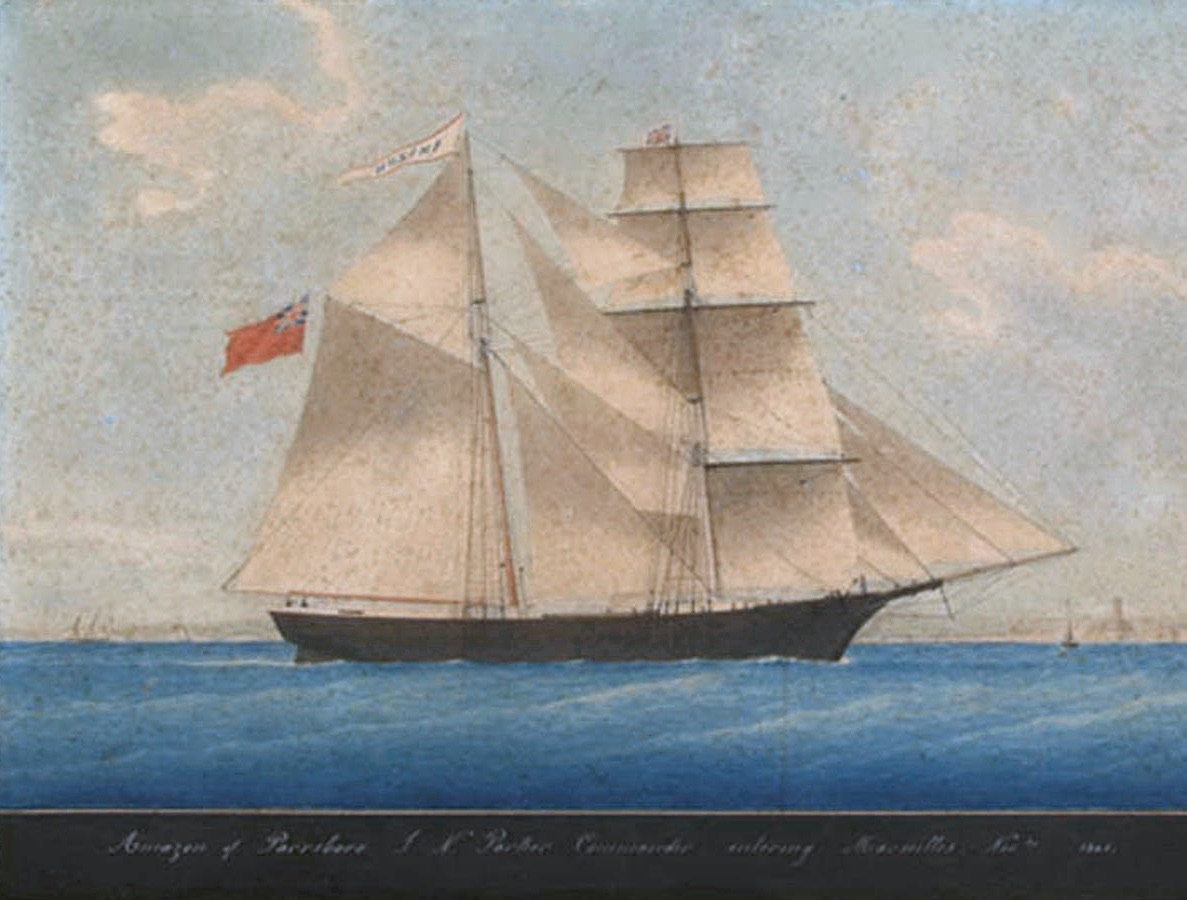
On December 5, 1872, the crew of the British brigantine Dei Gratia, several hundred miles west of Portugal, sighted another two-masted ship moving strangely across the swell — sails partly set, yawing as if no one had the helm. They closed on her, hailed her, got no answer, and sent a boarding party across. The ship was the Mary Celeste, an American merchant brigantine that had left New York a month earlier bound for Genoa with a cargo of industrial alcohol, and she was deserted. There was no one at the wheel and no one below; there was no sign of violence, no sign of robbery, no disorder beyond what a few days of unattended sailing would explain. The cargo sat almost untouched in the hold. There was ample food and fresh water. The crew's oilskins and boots and pipes were still where they had been left, and the captain's wife had left behind her harmonium and her child's toys. The ship was seaworthy and could have sailed on for months. But the ten people who had been aboard — Captain Benjamin Briggs, his wife Sarah, their two-year-old daughter Sophia, and seven crew — were gone, and so was the ship's single lifeboat, a small yawl that appeared to have been deliberately launched. No trace of any of them was ever found. The Mary Celeste became, and has remained, the most famous mystery in the history of the sea: not a wreck, not a massacre, but a sound ship abandoned in calm circumstances by people who had every reason to stay aboard. This article reconstructs what was actually found, what the Gibraltar inquiry made of it, and which of the many explanations — the credible and the lurid — best fits the strange, orderly emptiness of the ship that sailed itself.
Amelia Earhart and the Speck in the Pacific
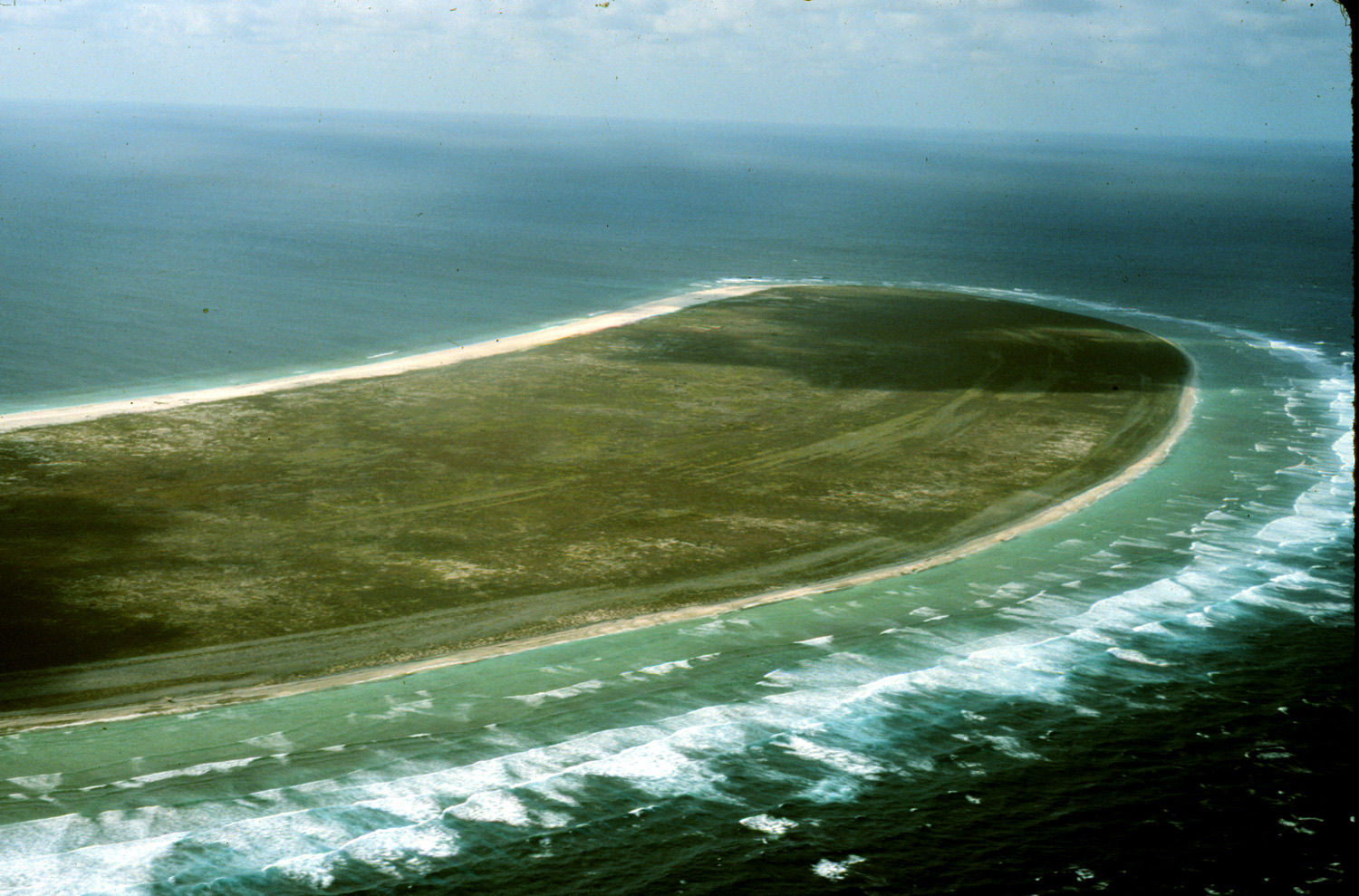
On July 2, 1937, Amelia Earhart — the first woman to fly the Atlantic solo, the most celebrated aviator on earth — took off from Lae, in New Guinea, with her navigator Fred Noonan, bound for a flat coral speck in the central Pacific called Howland Island. It was the most dangerous leg of an attempt to circle the globe near the equator: more than 2,500 miles of open ocean to a target a mile and a half long and twenty feet high, which they had to find by dead reckoning and the stars after a night and a morning over featureless water. A United States Coast Guard cutter, the Itasca, waited off Howland to guide them in by radio and to lay a column of smoke. It was never needed. Through the morning the Itasca's crew heard Earhart's voice growing tense as she searched for an island she could not see — 'We must be on you but cannot see you… gas is running low' — and then, in her last understood transmission, a line of position and the words that she was running north and south along it. After that there was silence. The largest air and sea search in American history to that date found nothing: no plane, no wreckage, no bodies. Earhart and Noonan were declared lost, and in the decades since, their disappearance has hardened into the most enduring mystery in the history of flight, fought over by three incompatible theories — that they ran out of fuel and sank near Howland; that they came down as castaways on a different island and died there; and that they fell into Japanese hands and never came home. This article sets out what is actually known about the flight and its final hours, and weighs the rival explanations — the plausible, the contested, and the long-debunked — against the evidence.