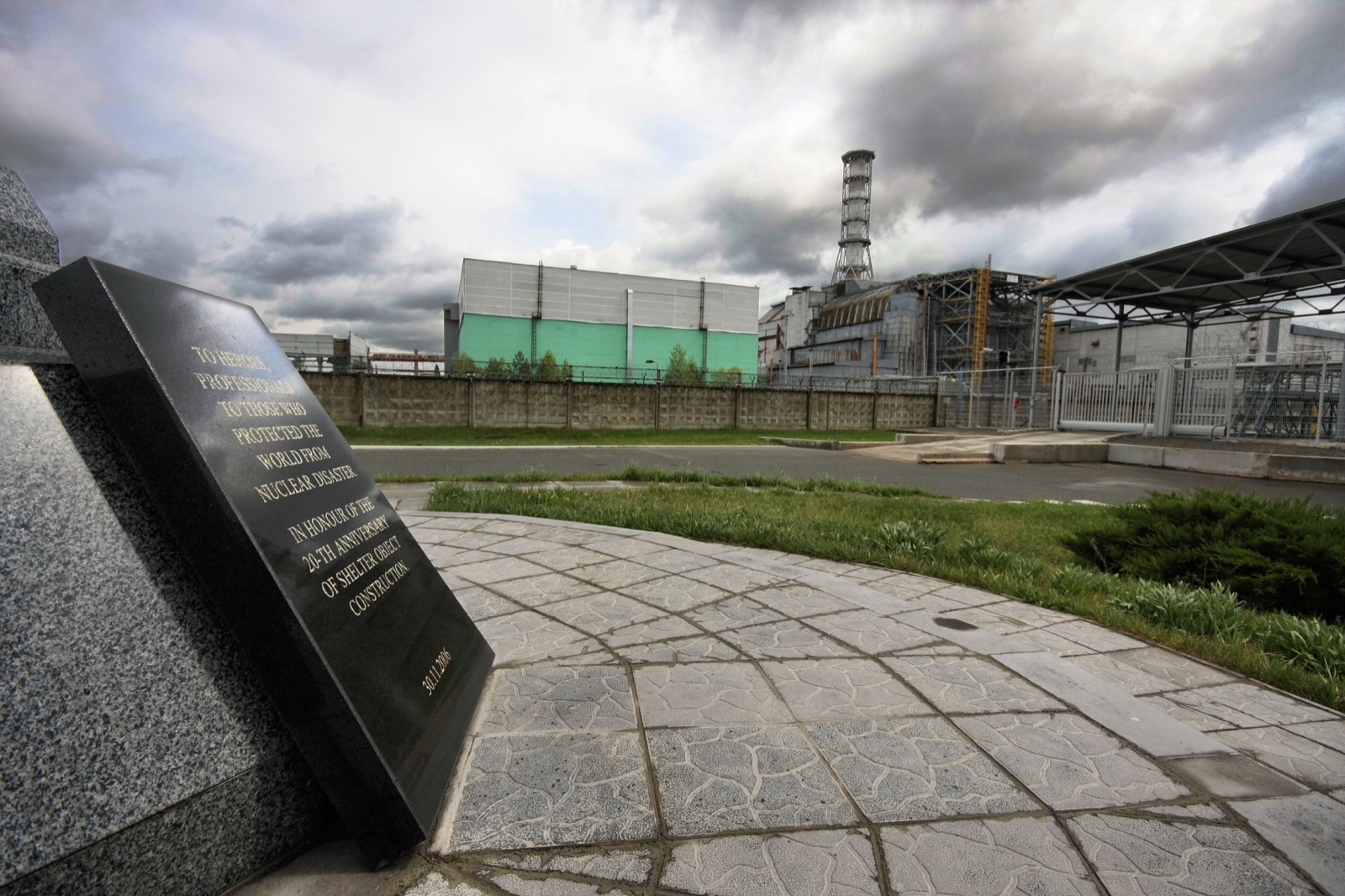
Chernobyl reactor 4, photographed in 2009 with the original 1986 'sarcophagus' visible. The structure was a hastily-built containment shell of 7,000 tonnes of steel and 400,000 cubic metres of concrete. The replacement New Safe Confinement was rolled into place in 2016. Wikimedia Commons, CC BY-SA 3.0.
Chernobyl
Pripyat, April 26, 1986
- Category
- State & Intelligence Operations
- Published
- Length
- 3,700 words · 17 min read
- Author
- The editors
Chernobyl
Pripyat, April 26, 1986.
The reactor
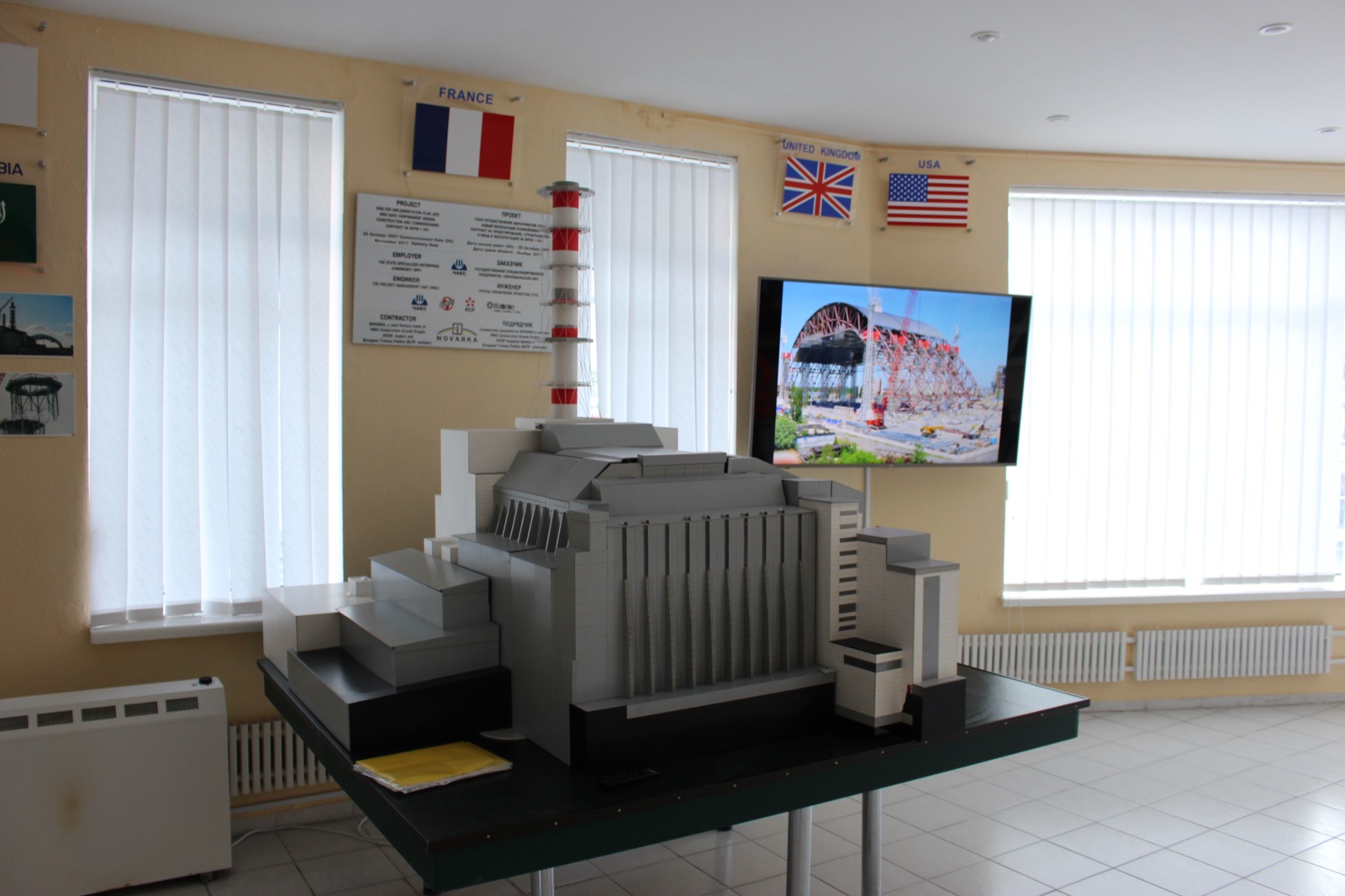
The RBMK-1000 (Reaktor Bolshoy Moshchnosti Kanalnyy) was a Soviet nuclear-reactor design that produced electrical power and tritium for nuclear-weapons programs from a single core. It was a graphite- moderated, water-cooled reactor with a thermal output of approximately 3,200 megawatts and an electrical output of approximately 1,000 megawatts. The Chernobyl plant operated four RBMK-1000 reactors; two more were under construction in 1986.
The RBMK design had several characteristics that the international nuclear-engineering community had, by 1986, already identified as problematic:
- Positive void coefficient. At low power, the formation of steam in the cooling water increased rather than decreased the reactor's reactivity. This is the opposite of the typical Western-design negative-void coefficient. The RBMK had this characteristic across most of its operating range.
- Graphite-tipped control rods. The control rods that absorbed neutrons (and could shut the reactor down) had graphite tips. When inserted into the core, the tips briefly added reactivity before the absorbing portion of the rod displaced water. This was a known design flaw.
- No containment building. Unlike Western reactors, RBMK-1000s had no full containment vessel — the reactor sat in a normal industrial building.
The Soviet nuclear-engineering establishment was aware of these characteristics. They were addressed in design documentation but the documentation was classified at higher levels of secrecy than the operating personnel had access to. Operating procedures prohibited operation below certain power levels precisely to avoid the conditions in which the positive void coefficient would dominate. The prohibition was sometimes violated for operational reasons. The Chernobyl staff in April 1986 did not have access to the design documentation that would have explained why the prohibition existed.
The test
A safety test of the rotating turbine — to determine whether the spinning inertia of the turbine could power emergency cooling for 60-90 seconds during a hypothetical loss-of-power scenario — was scheduled for April 25, 1986. The test required ramping reactor 4 down to approximately 700 megawatts thermal (~22% of rated power) to conduct the test conditions safely.
The test was repeatedly delayed throughout April 25. A regional grid demand prevented the planned afternoon ramp-down. By the time operations were able to proceed, it was 11:00 p.m. on April 25 and the original day shift — which had been briefed on the test — was ending. The night shift was less familiar with the test procedure.
The night-shift senior reactor control engineer was Leonid Toptunov, age 25, with three months' experience in the role. The shift foreman was Aleksandr Akimov, age 32. The deputy chief engineer of the plant — Anatoly Dyatlov, age 55 — was personally supervising the test from the control room.
In ramping the reactor down to test power, Toptunov inadvertently allowed the power to drop too far — to approximately 30 MW thermal, deep into the xenon-poisoning zone where the reactor was extremely difficult to control. Standard procedure would have been to shutdown the reactor and restart it in 24-48 hours after the xenon poisoning resolved. Dyatlov instead ordered the test to proceed, which required withdrawing the control rods further than the operating-procedures maximum allowed.
By 1:22 a.m. on April 26, the reactor was operating with approximately six control rods inserted — far below the operating minimum of 28. The flow of cooling water was high; the steam in the cooling channels was minimal. As the test began at 1:23:04, turbine power dropped (as designed), cooling water flow dropped, steam formation in the core began, and the positive void coefficient began to take effect. Power rose.
At 1:23:40, Akimov pressed the AZ-5 button — the emergency shutdown.
The graphite-tipped control rods began their insertion. The graphite displaced water at the bottom of the core, adding reactivity. The already-rising power spiked.
The reactor went critical-prompt at approximately 1:23:43 — the fastest possible nuclear runaway. Power output rose from approximately 200 MW to approximately 30,000 MW in approximately four seconds.
Two steam explosions, in immediate succession, destroyed the upper biological shield, the reactor hall roof, and the building's upper structures. Approximately 5,300 petabecquerels of radioactive material was released into the atmosphere over the next ten days.
The first hours
The two explosions sent shockwaves through the plant. Plant electrician Valery Khodemchuk, working at a circulation pump in the reactor building, was killed instantly — his body was never recovered, entombed in the reactor's debris. Plant engineer Vladimir Shashenok, on the steam-pressure measurement floor, was killed by trauma; he died approximately three hours later.
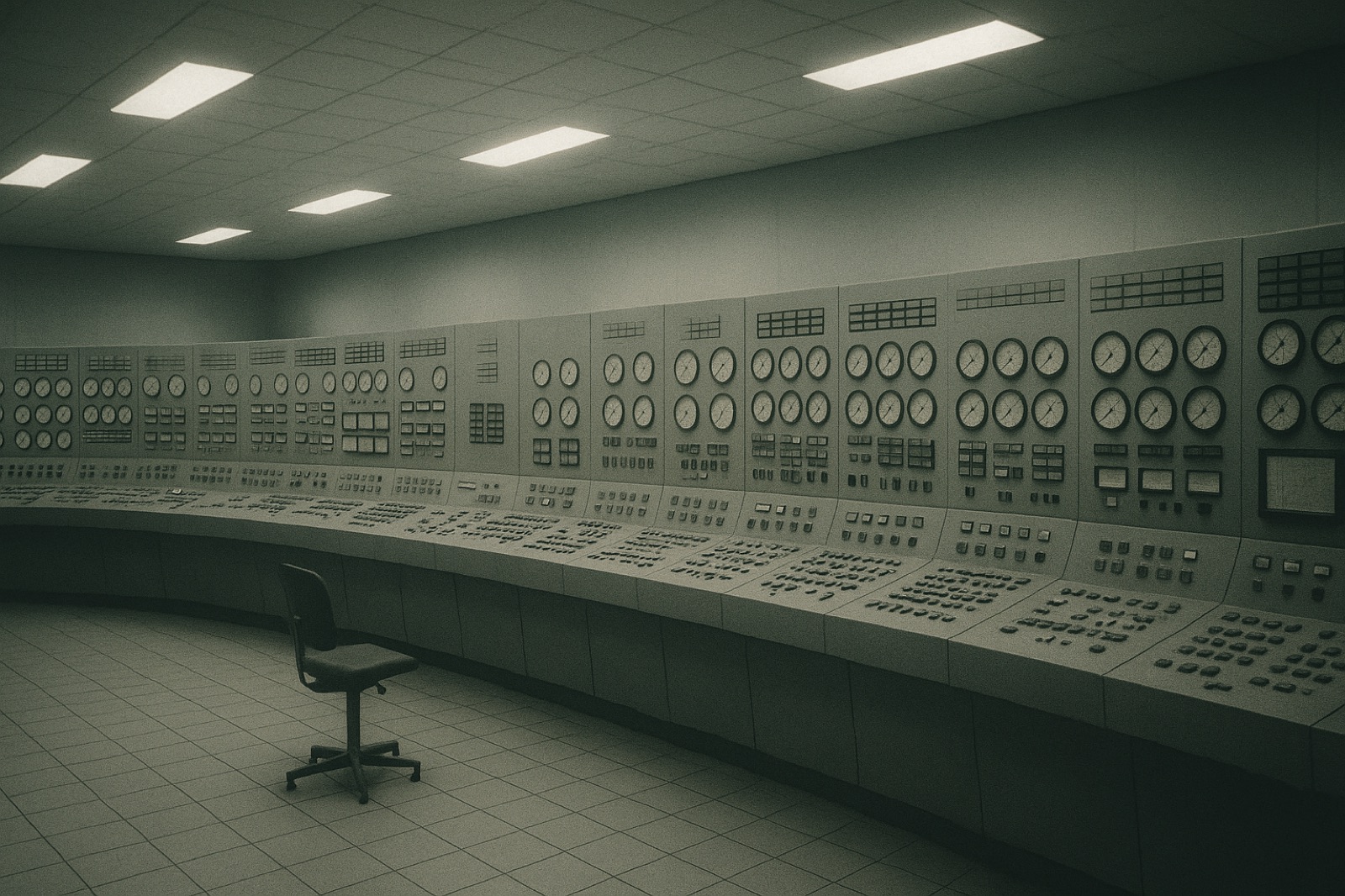
In the Unit 4 control room — Room 12104 — Akimov and Toptunov initially refused to believe the reactor had exploded. The instruments had registered an abnormal power spike followed by loss of signal, which they read as a sensor failure. Dyatlov, when informed of explosions in the reactor hall, ordered Akimov to continue cooling-water flow as if the core was intact. Akimov sent two operators — Aleksandr Kudryavtsev and Viktor Proskuryakov — to manually check the reactor hall.
Kudryavtsev and Proskuryakov reached the reactor hall at approximately 2:00 a.m. They saw the destroyed reactor — the exposed core, the burning graphite, the upended fuel assemblies. They returned to the control room with the report. Both received fatal radiation doses; both died in May.
The fire brigade — Pripyat Fire Station No. 6 under Lieutenant Vladimir Pravik, and the Chernobyl plant fire brigade under Lieutenant Pyotr Khmel — arrived within minutes. They fought fires on the reactor hall roof until approximately 5:00 a.m. They were not informed of the radiation levels. Many wore standard firefighter gear with no radiation protection.
Within 24 hours, 134 plant personnel and firefighters were hospitalized with acute radiation syndrome. Of these, 28 died within four months: 6 firefighters, 22 plant personnel including both Akimov and Toptunov.
The cover-up
The Soviet response in the first 36 hours was, in the technical documentary record, defined by escalating denial.
At 2:00 a.m. on April 26, the Chernobyl plant director Viktor Bryukhanov called Moscow to report "an accident at Unit 4." His description was vague. He did not characterize it as a reactor explosion.
By 6:00 a.m., a State Commission led by Boris Shcherbina — the deputy chairman of the USSR Council of Ministers — had been formed and was en route from Moscow. By the time the commission arrived in Pripyat at 8:00 p.m. on April 26, the radiation levels in the city had already reached dangerous levels. Pripyat residents were not informed.
The decision to evacuate Pripyat was made at approximately 10:00 a.m. on April 27. The evacuation buses began arriving at 1:00 p.m. on April 27. The evacuation order was announced to residents at 1:30 p.m. The buses left between 2:00 and 4:00 p.m. The total evacuation took approximately three hours. Residents were told the evacuation would last "three days." They were advised to take only essential personal items. Most never returned.
The plant's three other reactor units (1, 2, and 3) continued to operate until April 27.
The first Soviet public acknowledgment came at 9:00 p.m. on April 28 — three days after the explosion — in a brief 14-second TASS news bulletin: "An accident has occurred at the Chernobyl Nuclear Power Plant. One of the reactors has been damaged. Measures are being taken to eliminate the consequences."
By that point, the radioactive plume — which had drifted northwest across Belarus, the Baltic states, Finland, and Sweden — had been detected at Forsmark Nuclear Power Plant near Stockholm, where technicians noticed unusual radioactivity on incoming workers' clothing at 7:00 a.m. on April 28. Tracing back the plume's origin to the Soviet Union became, within hours, a global news story.
What burned
The reactor's exposed graphite core burned for approximately ten days. During this period, approximately 5,300 petabecquerels (PBq) of radioactive material was released into the atmosphere — comprising primarily:
- Cesium-137 (~85 PBq): the principal long-term contaminant; half-life 30 years.
- Iodine-131 (~1,760 PBq): the principal short-term contaminant; half-life 8 days; absorbed by thyroid.
- Strontium-90 (~10 PBq): bone-seeking; half-life 29 years.
- Plutonium isotopes (~0.07 PBq): the most radiotoxic; very long half-lives.
Soviet helicopters dropped approximately 5,000 tonnes of sand, boron, lead, and dolomite onto the burning core between April 27 and May 10 in an effort to extinguish the fire and absorb radiation. The Soviet Air Force flew approximately 1,800 sorties. Multiple helicopter crews received severe radiation doses; eight crewmembers died within months.
On May 10, with the immediate fire suppressed, Soviet engineering teams began constructing the "Object Shelter" (Объект Укрытие) — known internationally as the sarcophagus. The structure required 400,000 cubic meters of concrete and approximately 7,000 tonnes of steel. Approximately 600,000 liquidators (cleanup workers) cycled through the site between 1986 and 1989. Standard rotation was 90 seconds on the highest-radiation roof areas, before being relieved. The sarcophagus was structurally complete by November 1986.
The valery legasov tape
Valery Legasov — chief of the Soviet Academy of Sciences' Kurchatov Institute and the principal scientific advisor to Shcherbina's commission — became the primary public voice of the Soviet response. He led the Soviet delegation to the IAEA's August 1986 Vienna review conference, where he presented the most candid technical account of the accident that had been publicly given anywhere.
Legasov's Vienna testimony — running approximately 5 hours over multiple sessions — acknowledged most of the RBMK-1000 design flaws that the Soviet government had previously concealed. He did not fully acknowledge the design's most fundamental problems, but he came closer than the Soviet system had previously permitted.
After Vienna, Legasov found himself professionally marginalized. The Soviet nuclear establishment, which had committed to the RBMK-1000 program for two decades, was not prepared to accept public characterization of the design as fundamentally flawed. Legasov was passed over for promotion to the Academy presidium in 1986. In late 1987, he reportedly began recording audio tapes of his fuller account of the accident — to be released after his death.
On April 26, 1988 — exactly two years after the explosion — Legasov took his own life in his Moscow apartment. He was 51. The five audio tapes he had been recording were preserved by his family and released in segments through the 1990s. They form a substantial part of the documentary base of subsequent Chernobyl reconstructions including the HBO 2019 series.
What followed
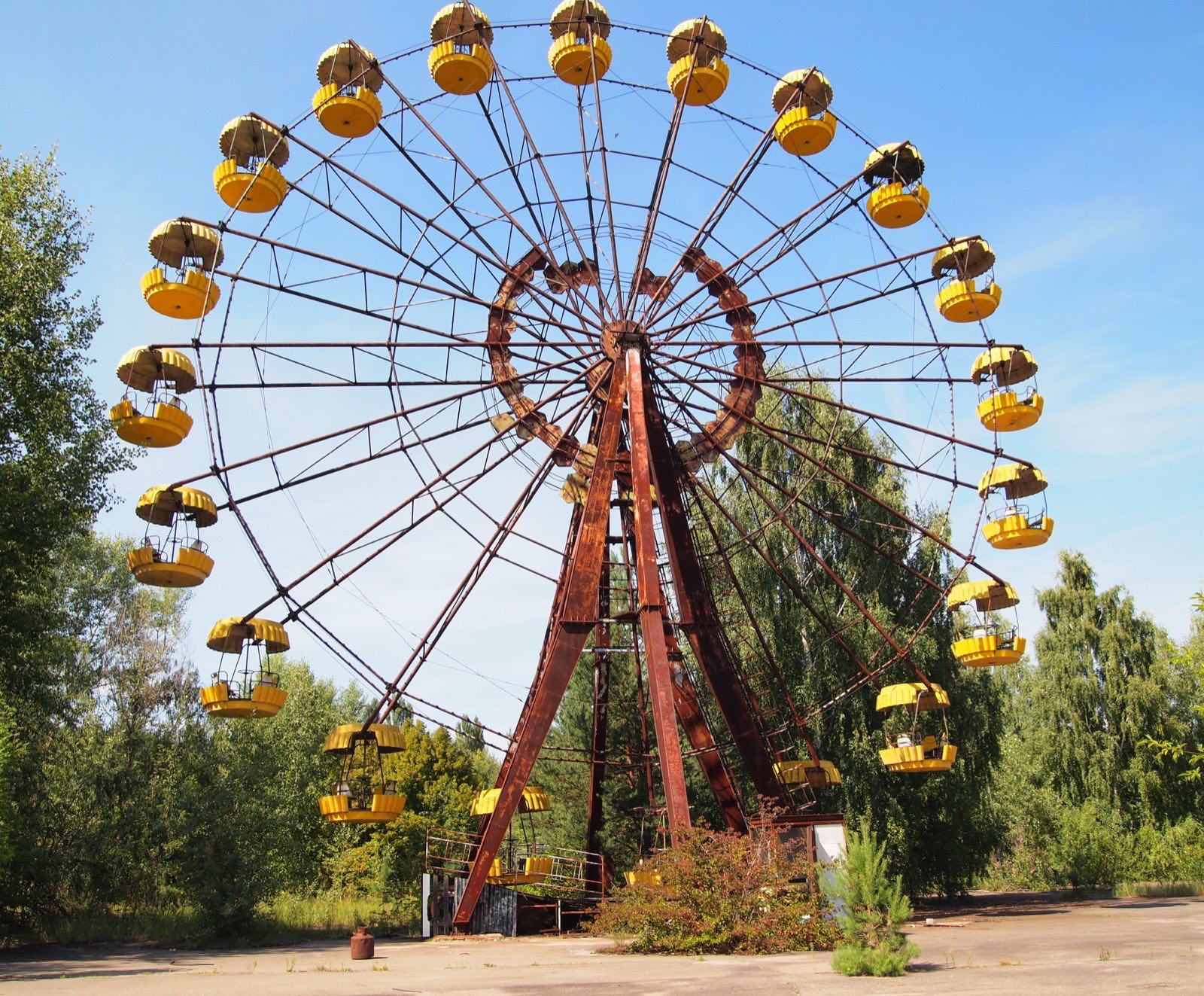
The Chernobyl exclusion zone — an initial 30 km radius around the plant, later refined — was established on May 4, 1986. Approximately 350,000 people were eventually evacuated from the most contaminated zones in Ukraine, Belarus, and western Russia. The population of Pripyat never returned.
The trial of the Chernobyl plant managers opened in Kyiv on July 7, 1987. The defendants were Bryukhanov (plant director), Nikolai Fomin (chief engineer), Anatoly Dyatlov (deputy chief engineer), Aleksandr Akimov (shift foreman; tried posthumously), and three other personnel. The trial was closed to press. Bryukhanov, Fomin, and Dyatlov received 10-year sentences. Akimov was tried posthumously and found guilty of negligence. The trial focused exclusively on operator error; the design flaws in the RBMK-1000 were not part of the prosecution case.
Mikhail Gorbachev, in his subsequent memoirs and in interviews after 1990, repeatedly identified Chernobyl as the moment at which his glasnost reforms became politically unavoidable. The Soviet system's denial of an accident with global radiological consequences had created a crisis of legitimacy that the partial openness of glasnost was, in his telling, the political response to. Whether Chernobyl actually caused glasnost or whether it catalyzed an already-underway reform is debated by Soviet historians; what is not debated is that the accident raised the political cost of secrecy to a point Gorbachev's predecessors had not faced.
The Soviet Union dissolved in December 1991. The Chernobyl plant continued to operate (units 1, 2, and 3) under independent Ukrainian sovereignty until December 15, 2000 — when, under European Union pressure, the last reactor was permanently shut down.
The 2016 New Safe Confinement (Novarka) arch — a 25,000-tonne steel structure designed to last 100 years — was rolled into place over the original 1986 sarcophagus on November 29, 2016. It has an internal crane system designed to dismantle the original sarcophagus without releasing trapped radioactive dust.
The cast
What we still don't know
The actual final death toll. Estimates vary by methodology and political alignment. WHO/IAEA's 2005 estimate (4,000 across exposed populations) has been widely cited; UNSCEAR's narrower scope reaches similar numbers; independent academic estimates reach 30,000-60,000 (adjusting for thyroid cancer attribution and excess cardiovascular disease in liquidators). The methodological disputes are real and unresolved.
The full Politburo first-response record. Some 1986 Politburo documents were classified at higher levels after the USSR's dissolution and have not been declassified in Russian state archives.
The liquidator cohort outcomes. Approximately 600,000 liquidators worked at Chernobyl 1986-1989. Their long-term health outcomes have been studied unevenly across Ukraine, Belarus, and Russia. The National Cancer Institute and others have continued cohort studies; the results are partially available but the cohort is largely elderly by 2025.
The 2022 Russian occupation impact. The Chernobyl exclusion zone was occupied by Russian forces between February and March 2022. Reports of soldiers' radiation exposure (from digging trenches in the contaminated soil) have been disputed; the operational records remain partially classified.
Sources
Primary documents:
- Information on the Accident at the Chernobyl Nuclear Power Plant and Its Consequences. USSR State Committee on the Utilization of Atomic Energy, IAEA Vienna conference report, August 25-29, 1986. The "Legasov report."
- INSAG-7: The Chernobyl Accident: Updating of INSAG-1. IAEA International Nuclear Safety Advisory Group, 1992.
- Chernobyl: Looking Back to Go Forward (IAEA Vienna conference proceedings, 2005). Twenty-year-review.
- Chernobyl Forum Report (WHO/IAEA/UNDP, 2005). The contested international consensus document.
- UNSCEAR 2008 Report Volume II Annex D: "Health effects due to radiation from the Chernobyl accident." UN Scientific Committee on the Effects of Atomic Radiation.
- Trial records, State vs. Bryukhanov, Fomin, Dyatlov et al., Kyiv District Court, July-August 1987. Released after 1991.
Secondary investigative reporting: 7. Grigori Medvedev, The Truth About Chernobyl (Basic Books, 1991). Russian engineer's contemporaneous account; first major Western publication. 8. Svetlana Alexievich, Voices from Chernobyl: Chronicle of the Future (Picador, 1997, English 2005). Oral history; Nobel-laureate work. 9. Adam Higginbotham, Midnight in Chernobyl: The Untold Story of the World's Greatest Nuclear Disaster (Simon & Schuster, 2019). Most-cited recent comprehensive history. 10. Serhii Plokhy, Chernobyl: The History of a Nuclear Catastrophe (Basic Books, 2018). Harvard historian's treatment. 11. Anatoly Dyatlov, Chernobyl: How It Was (1995, Russian). Dyatlov's defense of the operator-error vs. design-error question. 12. Mikhail Gorbachev, Memoirs (Doubleday, 1995), Chernobyl chapter. 13. The New York Times, multi-decade Chernobyl coverage 1986-present. 14. Chernobyl Forum, IAEA archive, Vienna — continuing reference documents.
Academic scholarship: 15. Kate Brown, Manual for Survival: A Chernobyl Guide to the Future (W. W. Norton, 2019). Excess-mortality analysis. 16. Jaakko Kuosmanen, "The Chernobyl Catastrophe and Risk Discourse in Soviet and Post-Soviet Belarus" — Slavic Review, 2017. 17. Annals of the New York Academy of Sciences, Volume 1181: "Chernobyl: Consequences of the Catastrophe for People and the Environment" (Yablokov, Nesterenko & Nesterenko, 2009). The high-end excess-mortality estimate.
Corrections & updates
2026-05-26: First publication.
Inspired this / based on it
Craig Mazin / HBO · ★ 9.3
Five-episode dramatized miniseries. 19 Primetime Emmy nominations, 10 wins. The definitive contemporary popular treatment.
Adam Higginbotham
The most-cited recent comprehensive history. Simon & Schuster.
Svetlana Alexievich
Oral history of survivors and liquidators. Picador. The author won the Nobel Prize in Literature 2015.
Serhii Plokhy
Harvard historian's scholarly treatment. Basic Books.
Kate Brown
Excess-mortality analysis and Belarusian/Ukrainian downwind populations. W. W. Norton.
Holly Morris & Anne Bogart · ★ 7.3
Documentary on the elderly women who returned to live in the exclusion zone after evacuation.
Filed under
- #chernobyl
- #pripyat
- #rbmk
- #soviet-union
- #ussr
- #ukraine
- #anatoly-dyatlov
- #viktor-bryukhanov
- #valery-legasov
- #mikhail-gorbachev
- #forsmark
- #ina-fimm
- #liquidators
- #exclusion-zone
- #1986
- #europe
- #fsu-russia
- #nuclear
Click any tag for every article carrying it.
Continue reading
Kodak and the Trinity Test
In January 1946, X-ray film from Eastman Kodak began coming back damaged with unexplained spots. When the company's chemists finally traced the source, they were forced to confront the U.S. government. What they were given went further than anyone expected — and stayed secret for fifty years.
The Holodomor
Between the winter of 1932 and the summer of 1933, between 3.5 million and 7.5 million people died of starvation and starvation-related illness in the Ukrainian Soviet Socialist Republic and the adjacent grain-producing regions of the North Caucasus and Kazakhstan. The deaths were not the result of crop failure. The 1932 Ukrainian harvest was below average but not catastrophically so; the deaths occurred because the Soviet state confiscated the harvest. Joseph Stalin's regime, working through Ukraine's Communist Party leadership under Lazar Kaganovich and Pavel Postyshev, imposed grain-procurement quotas that exceeded what the harvest could yield. When the quotas were not met, the state introduced 'blacklists' of villages — barred from receiving any goods, including food, until they delivered the quota. The state introduced an internal-passport system in late 1932 that prevented peasants from leaving their villages to find food elsewhere. Border guards turned back peasants attempting to cross into Russia or Belarus. The death toll, denied by the Soviet government for fifty-seven years, has since been documented through demographic analysis, opening of Soviet archives after 1991, and recovery of the photographic record — particularly the photographs of the Austrian engineer Alexander Wienerberger, who documented the famine in Kharkiv on a Leica camera he smuggled out of the USSR. The Ukrainian word *Holodomor* combines *holod* (hunger) and *moryty* (to kill, exterminate). The word was first used publicly by Ukrainian diaspora writers in the 1980s. The Ukrainian government formally recognized the events as genocide in 2006. As of 2024, the Holodomor has been recognized as genocide by approximately 34 countries and the European Parliament.
Operation Paperclip
Between 1945 and 1959, the U.S. Army Ordnance Corps and the Joint Intelligence Objectives Agency secretly transported more than 1,600 German scientists, engineers, and technicians from defeated Nazi Germany to the United States — together with files that had been quietly stripped of references to Nazi Party membership, SS rank, and slave-labour exploitation. The clip on the folder was where the program got its name. The most prominent of the imported men was Wernher von Braun, designer of the V-2 ballistic missile, who twenty-four years later watched the Saturn V — a rocket built by his Huntsville team — lift Apollo 11 toward the Moon.