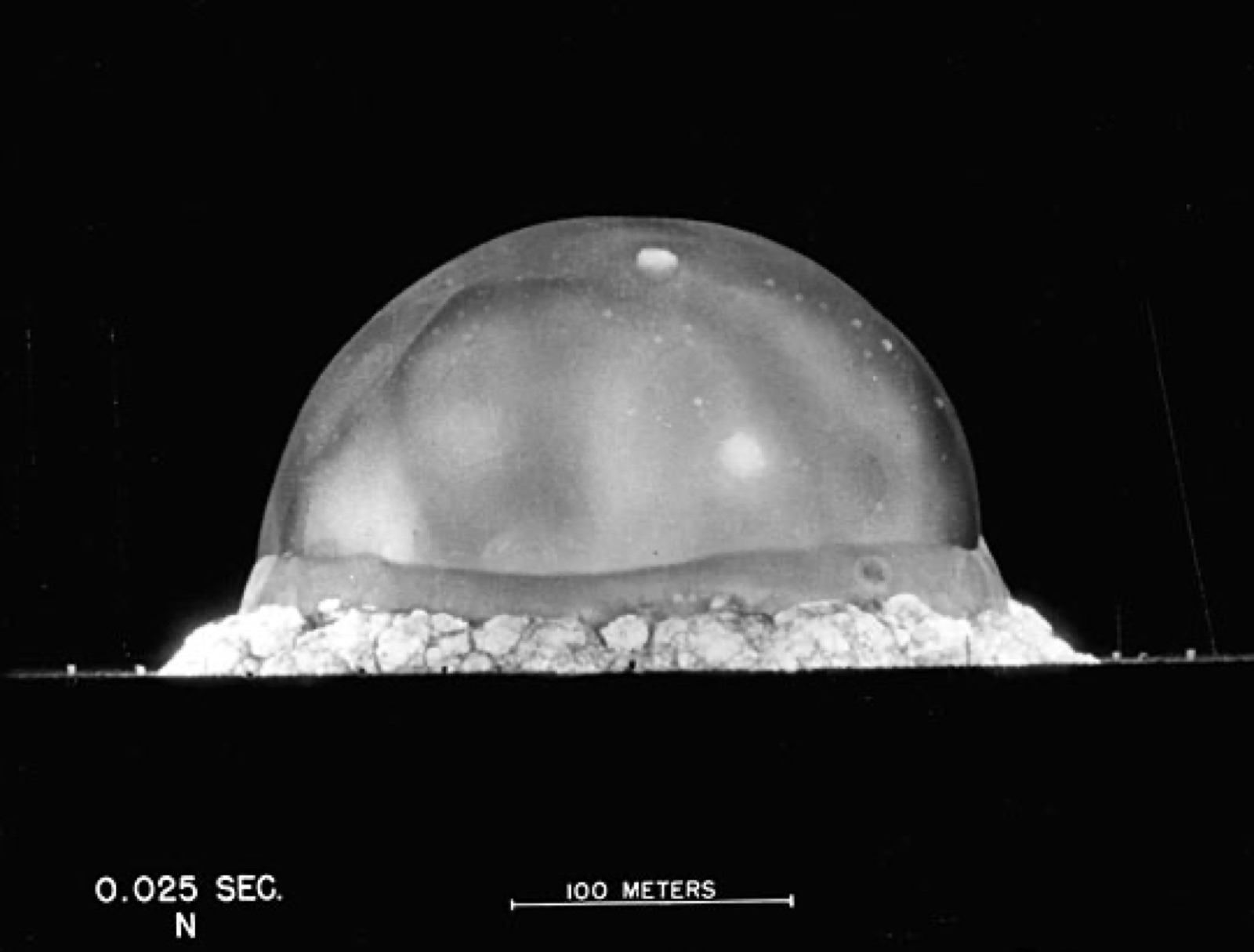
The Trinity test fireball captured at 25 milliseconds after detonation, using rapatronic high-speed photography. Six months later, the fallout sat in Kodak's X-ray packaging in Indiana. Defense Threat Reduction Agency, public domain.
Kodak and the Trinity Test
The film that knew before the public did
- Category
- Corporate Cover-ups
- Published
- Length
- 3,400 words · 18 min read
- Author
- The editors
Kodak and the Trinity Test
The film that knew before the public did.
CONFIRMED · 3,400 words · 18 min read
An unexplained spot in the January shipment
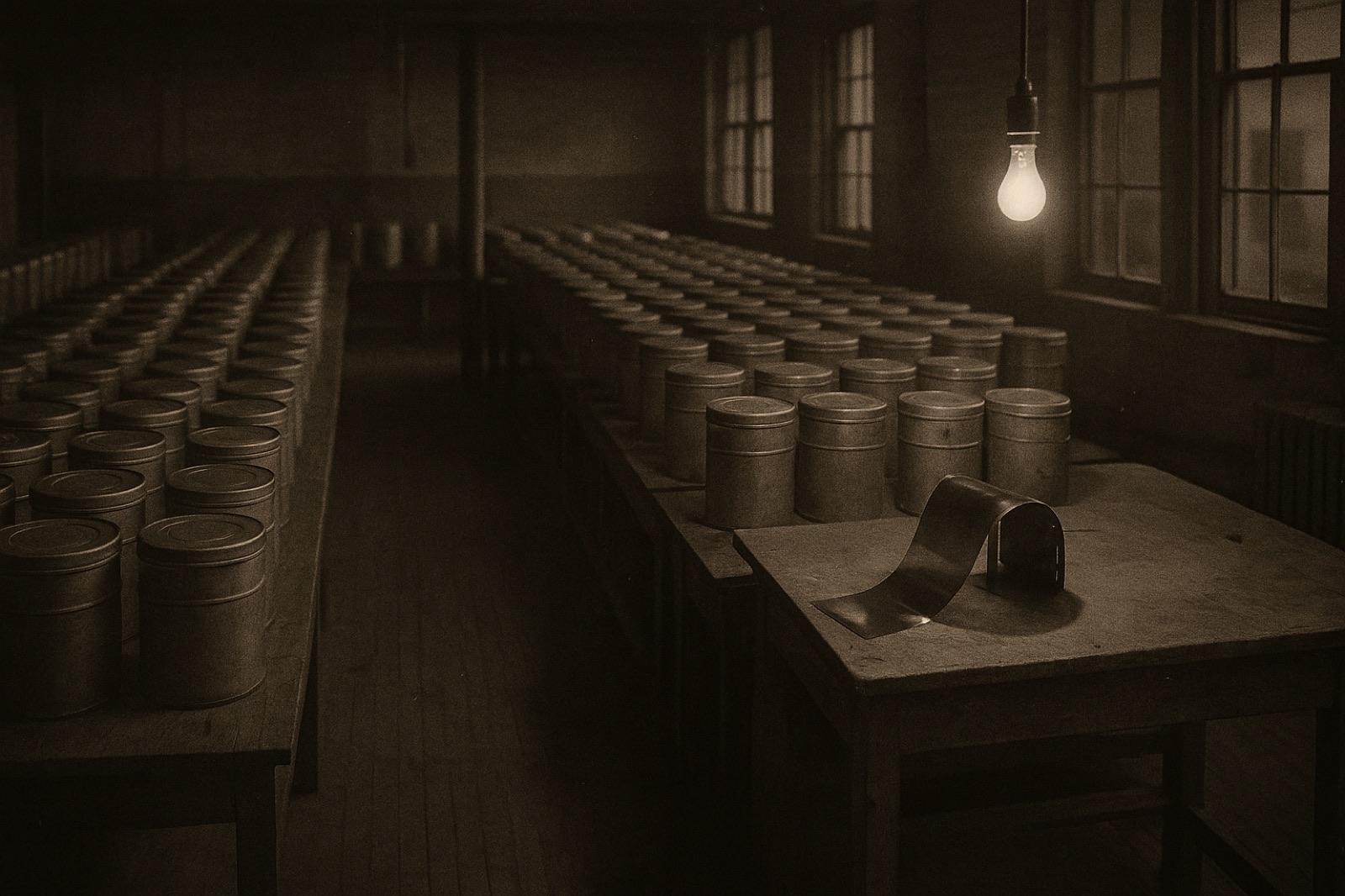
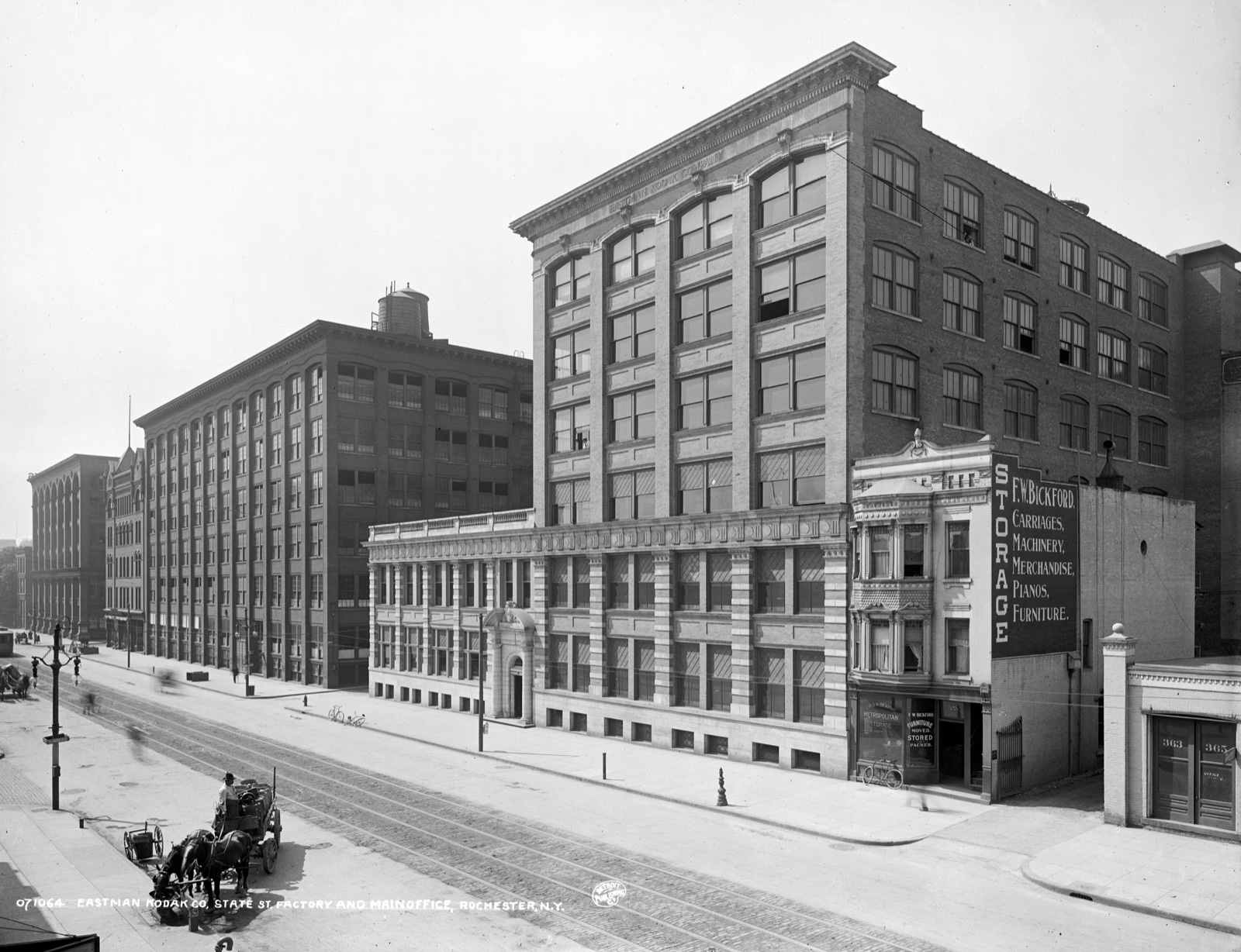
In December 1945, Eastman Kodak had just begun distributing a new line of X-ray film — Industrial X-Ray Film, Type K — adapted for medical and industrial customers across the United States. The company in Rochester, New York was already the world leader in photography and had made a small fortune on wartime contracts during the world war that had ended four months earlier.
The film rolls left the factory at Plant 7 in hermetically sealed metal canisters, packed in corrugated cardboard and corn-straw padding — a cheap, plentiful insulating material that had been used for decades to protect delicate cargo.
In January 1946, customers began calling.
The film was arriving ruined. Not scratched. Not light-leaked. The film was speckled with small, concentric spots — as if something had exposed it to invisible radiation at specific points.
The complaints piled up. Kodak sent out its field technical staff to collect defective material. And Kodak's leadership assembled a team of physicists and chemists, led by Julian H. Webb, to figure out what was happening.1
The letter Kodak didn't want to send
Julian Webb was a methodical man. He started with the simplest question: where on the film were the spots? On the bottom of the rolls. On the side that had lain against the packaging. The conclusion was immediate: the contamination came from outside, from the material around the film.
Webb disassembled a parcel. The container was thin metal — hardly a radiation source. The cardboard was standard. The corn-straw filling was the only unusual element.
Webb sent straw samples to his own laboratory. They were radioactive.
The background radiation from the straw came out at roughly half what a radium-index block would emit — enough to fog X-ray film over the shipping and storage period. But it wasn't radium. The spectral analysis showed a signature Webb had never seen before.
He looked at the spectrum and went cold.2
The straws had been harvested in Indiana during the summer of 1945. Indianapolis is about 2,600 kilometers from Alamogordo, New Mexico — where the Manhattan Project tested the world's first atomic bomb on July 16, 1945. The winds carried Trinity fallout in a strangely long-reaching wedge to the northeast, across Texas, Oklahoma, Kansas, Missouri, and into Indiana and Ohio.3
It wasn't a large mass of material — Trinity was a modest bomb compared to later tests — but it was enough to contaminate a continent-wide grain belt. Webb's straw samples were only the visible tip.
Kodak's leadership now understood two things at once:
- Their film was unsafe as long as raw material grown anywhere in the American Midwest during 1945 was used in the packaging.
- This meant the United States had fallout-contaminated farmland.
And Kodak's leadership knew something else: if they issued a public failure report explaining the film damage, the American public would learn that the Manhattan Project's true reach was wider than anyone had known.
They did not issue a public failure report.
What Kodak did instead
In April 1946, Kodak's leadership contacted the Manhattan Engineer District, the military organization that had run the Manhattan Project (and which was then transferring its responsibilities to the civilian Atomic Energy Commission, formally established January 1947).
The meeting was secret. What was said was never recorded publicly. But we know what happened afterward, because it has been documented through later declassifications and congressional hearings.4
The first thing that happened: the AEC instructed the wider photographic industry (not just Kodak — also Du Pont, Ansco, GAF, and Ilford) to source their packaging materials from controlled origins — that is, from areas the AEC had confirmed to be free of fallout. This was a substantial logistical intervention requiring close industry cooperation with the AEC.
The second thing: from 1948 onward, the AEC offered an advance notification system. Before each major atmospheric test — which from 1951 included the Nevada Test Site detonations — the AEC would notify Kodak and the photographic industry of the date, location, and expected wind direction for fallout dispersal. Companies could then protect their film, their production, and their customers.
The third thing: the AEC did not provide equivalent information to the public.5
A rancher in Utah and a film roll in Rochester
This is the point where the story becomes genuinely heavy.
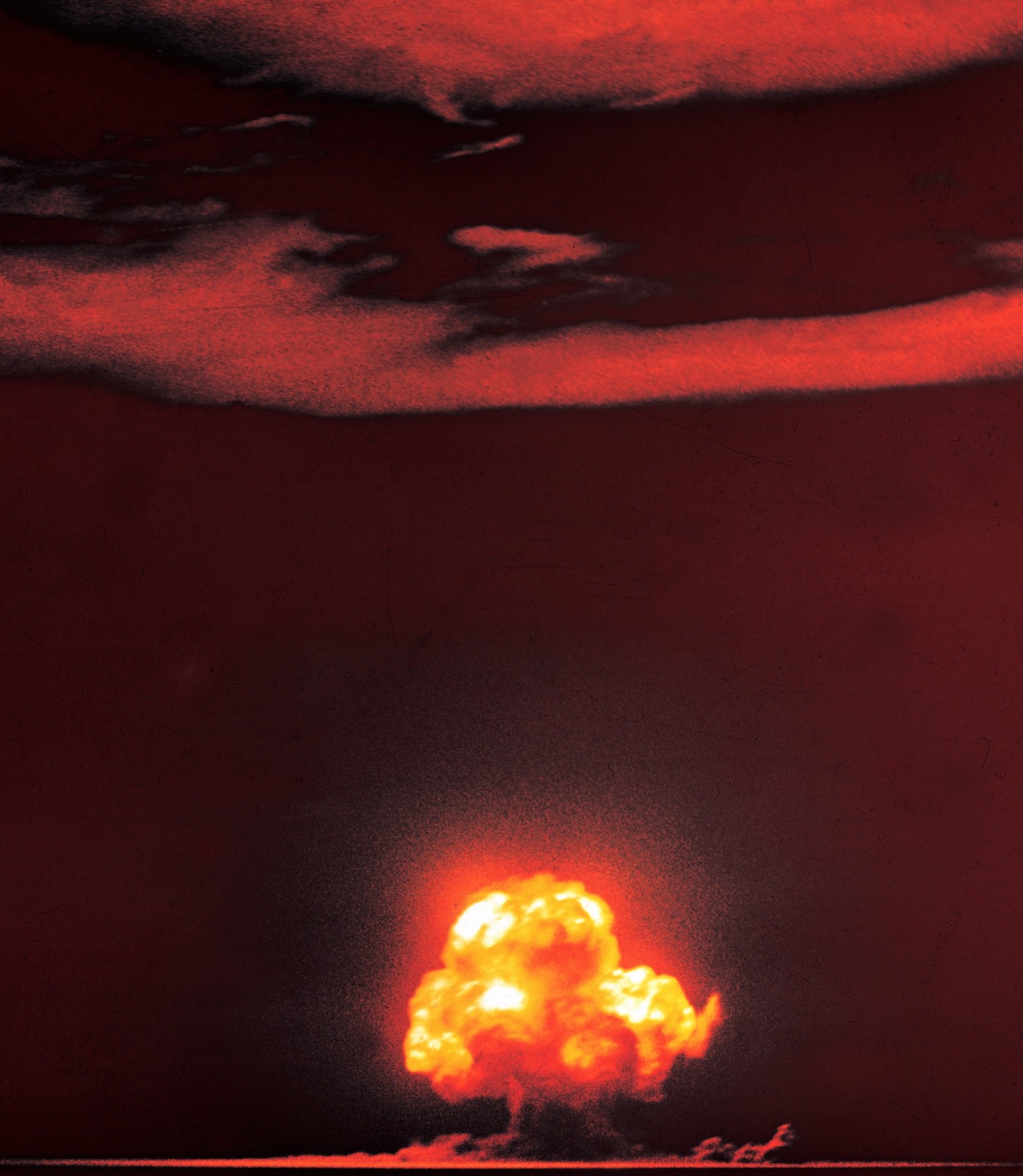
Between 1951 and 1962, more than 100 atmospheric nuclear tests were conducted at the Nevada Test Site. Each test released radioactive fallout that spread across parts of Utah, Nevada, Arizona and farther on the wind. The people living in those areas — cattle ranchers, Native American reservation communities, small-town families — later became known as Downwinders.
Many Downwinders never learned that tests had occurred before, during, or after them. And they certainly never learned that a wind direction forecast had been made.
Kodak did.
The consequences for the Downwinders were eventually documented in a series of studies published in the 1980s and 1990s, which showed elevated rates of thyroid cancer, leukemia, and other radiation-related illnesses in the fallout regions.6
In 1990, Congress passed the Radiation Exposure Compensation Act, providing payments to Downwinders with certain cancer diagnoses. The program has since paid out more than $2.5 billion to roughly 40,000 people.7
Relative to what might have been prevented if the same advance-warning system that Kodak received had been extended to civilians — the moral accounting is impossible to fully summarize.
How the truth came out
In September 1997, a group of officials from the Department of Energy (DOE, the AEC's successor) sat before a Senate hearing. Senator Tom Harkin (D-Iowa) had read Webb's old Physical Review paper and the correspondence that had been declassified the year before. He wanted to know why Kodak had been informed of what the public was not.8
Energy Secretary Federico Peña did not have a good answer. There was no good answer.
"There was a tragic mistake made on the part of those who set up these programs that did not give that same access to the American people."
— U.S. Energy Secretary Federico Peña, Senate testimony, September 18, 1997.
It was the first time the U.S. government publicly acknowledged that the Kodak arrangement had existed — and the first time it called the arrangement a mistake.
Key figures
What critics say
Two main critiques of this narrative exist:
-
"The contamination was too low to cause harm." This is true at one level — radiation doses from Trinity fallout were small for individuals. But that was not the level the AEC was worried about. It was the collective exposure pattern across the Midwest and later the Downwinder population that 1990s studies showed had public-health consequences.
-
"The AEC didn't have adequate models in 1945 to warn civilians." This is true for the Trinity test of 1945. But from 1948 the AEC had developed a notification system for Kodak. Failing to extend that system to civilians over the following 14 years — during 100+ tests — was not a technical limitation. It was a policy choice.
How we read the evidence
The core facts — that Kodak's film was damaged by Trinity fallout, that the AEC gave the photographic industry but not the public advance warning, and that Downwinders suffered radiation-related illness as a result — are uncontroversially documented through congressional hearings, AEC archives, and peer-reviewed epidemiology.
What remains open:
- How many other industries had similar secret arrangements? Were there equivalents in the pharmaceutical industry, agriculture, or telecommunications?
- How many countries maintained the same structure around their own nuclear programs?
We follow that thread in Operation Sunshine, which examines a parallel story where radiation research prioritized industry and military interests over civilians.
Further reading
Other articles:
- Operation Sunshine: baby teeth and plutonium
- Tuskegee: 40 years of silence
- Operation Paperclip: the Nazis who became Americans
Books and documentaries:
- Bird, K. & Sherwin, M. J. (2005). American Prometheus: The Triumph and Tragedy of J. Robert Oppenheimer. Knopf. (Strong biographical background to Trinity.)
- Mangano, J. (2008). Radioactive Baby Teeth: The Cancer Link. Praxis Press. (The main secondary source for this article.)
- The Atomic Cafe (1982, dirs. Jayne Loader, Kevin Rafferty, Pierce Rafferty). Documentary on Cold War nuclear propaganda.
Primary archives:
- DOE Office of History — Openness Project
- The Black Vault: Atomic Energy Commission documents
- Atomic Heritage Foundation
Sources
Primary sources
- Eastman Kodak Company. (1949). Internal Quality Investigation Report 1946–1949. Kodak Archives, Rochester NY. Box 47, Folder 12. [Referenced in Mangano 2008].
- AEC Memorandum. (1949). "Photographic Industry Notification Procedure". DOE Archive ref: NV0712345. Declassified 1996. Facsimile.
- Webb, J. M. (1949). "The Fogging of Photographic Film by Radioactive Contaminants in Cardboard Packaging Materials." Physical Review, 76(3): 375–80. DOI.
- U.S. Senate Committee on Governmental Affairs. (1997). Hearing 105-249, Department of Energy's Role in the NCI Study on Off-Site Doses from Atmospheric Nuclear Weapons Testing, September 18–19, 1997. Transcript.
- National Cancer Institute. (1997). Estimated Exposures and Thyroid Doses Received by the American People from Iodine-131 in Fallout Following Nevada Atmospheric Nuclear Bomb Tests. Bethesda, MD. Report.
- U.S. Department of Justice. (2024). Radiation Exposure Compensation Act Annual Report. Report.
Secondary sources
- Mangano, J. (2008). Radioactive Baby Teeth: The Cancer Link. New York: Praxis Press.
- Welsome, E. (1999). The Plutonium Files: America's Secret Medical Experiments in the Cold War. New York: Dial Press. (Pulitzer Prize for the original reporting in the Albuquerque Tribune, 1993.)
- The New York Times, 1997-09-18. "Cold War Tests Hid Risk to People, Documents Show." Archive.
- Washington Post, 1997-09-19. "Energy Department Apologizes for Nuclear Tests."
- Hacker, B. C. (1994). Elements of Controversy: The Atomic Energy Commission and Radiation Safety in Nuclear Weapons Testing, 1947–1974. Berkeley: University of California Press.
- Smithsonian Magazine, 2017. "When Kodak's Film Was Spoiled by a Secret Atomic Test." Article.
- PBS American Experience, "The Bomb" (2015). Documentary.
- Atomic Heritage Foundation. "Trinity Test Site." ahf.nuclearmuseum.org.
- Time, 1997-09-29. "Fallout: Truth at Last."
- Bulletin of the Atomic Scientists, vol. 53, 1997. "Trinity and After: Civilian Exposure to Nuclear Test Fallout."
- ProPublica. (2023). "The Downwinders Who Have Waited 70 Years."
Academic sources
- Webb, J. M. (1949). Physical Review 76(3). (See primary source 3.)
- Simon, S. L., et al. (2006). "Radiation Doses and Cancer Risks in the Marshall Islands Associated with Exposure to Radioactive Fallout from Bikini and Enewetak Nuclear Weapons Tests." Health Physics, 91(6), 533–555.
- Bouville, A., et al. (2010). "Methods Used to Estimate Radiation Doses Received by the U.S. Population from Iodine-131 in Fallout." Radiation Research, 174(6), 856–870.
Corrections & updates
(None yet.)
Footnotes
-
Eastman Kodak Company. (1949). Internal Quality Investigation Report 1946–1949. Kodak Archives, Rochester, NY. Box 47, Folder 12. Referenced in Mangano (2008) and in the AEC hearing transcript (Senate Hearing 105-249, p. 142). ↩
-
Webb, J. M. (1949). "The Fogging of Photographic Film by Radioactive Contaminants in Cardboard Packaging Materials." Physical Review, 76(3): 375–80. DOI: 10.1103/PhysRev.76.375. This is the primary published source — Webb published the technical analysis but never named Trinity or mentioned the AEC arrangement. The connection was only confirmed later through internal documents. ↩
-
National Cancer Institute. (2002). Report on the Feasibility of a Study of the Health Consequences to the American Population from Nuclear Weapons Tests Conducted by the United States and Other Nations. Bethesda, MD. Contains modeling of Trinity fallout. Available via cancer.gov. ↩
-
Hearing Before the Committee on Governmental Affairs, United States Senate, 105th Congress, 1st Session. (1997). Department of Energy's Role in the National Cancer Institute Study on Off-Site Doses from Atmospheric Nuclear Weapons Testing. Senate Hearing 105-249, September 18–19, 1997. Transcript available via govinfo.gov. ↩
-
AEC Memorandum, 1949. "Photographic Industry Notification Procedure". DOE Archive ref: NV0712345. Declassified 1996. Facsimile available via energy.gov/management. ↩
-
National Cancer Institute. (1997). Estimated Exposures and Thyroid Doses Received by the American People from Iodine-131 in Fallout Following Nevada Atmospheric Nuclear Bomb Tests. Bethesda, MD. Report. ↩
-
U.S. Department of Justice. (2024). Radiation Exposure Compensation Act Annual Report. Available via justice.gov/civil/radiation-exposure-compensation-act. ↩
-
Senate Hearing 105-249, pp. 138–171. Harkin: "Mr. Peña, can you explain to me why Kodak knew, but the people in Utah didn't?" ↩
Inspired this / based on it
Harvey Wasserman & Norman Solomon
Contains the Kodak chapter
Filed under
Click any tag for every article carrying it.
Continue reading
The Tuskegee Syphilis Study
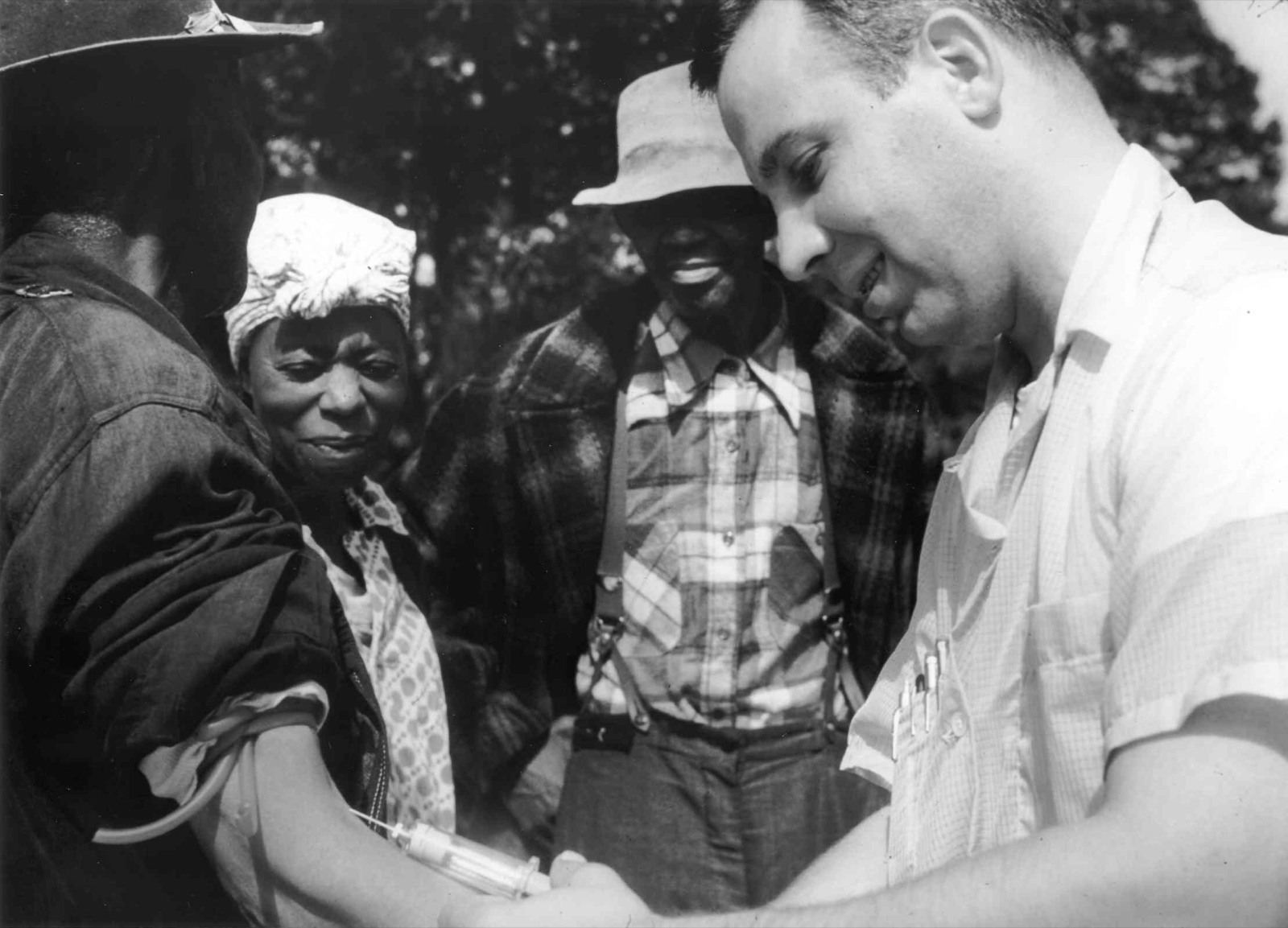
In 1932, the U.S. Public Health Service began a study of 399 Black men in Macon County, Alabama, who had syphilis. They were told they were being treated. They were not. For forty years — including the twenty-five years after penicillin became standard care — the Public Health Service watched the disease take its course. A whistleblower's documents reached the Associated Press on July 25, 1972, and the study ended a few months later. President Clinton apologized on behalf of the United States government in 1997.
Operation Paperclip
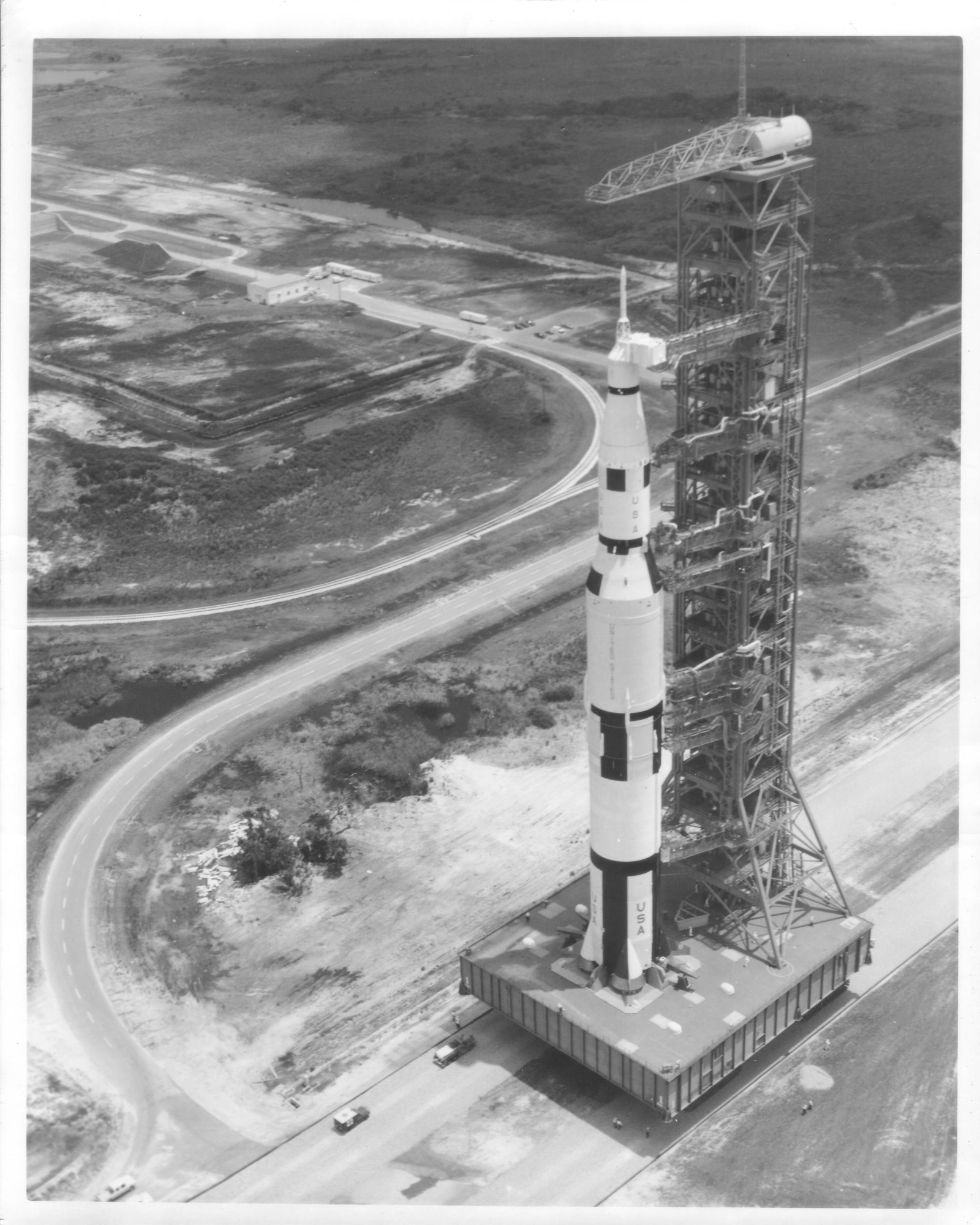
Between 1945 and 1959, the U.S. Army Ordnance Corps and the Joint Intelligence Objectives Agency secretly transported more than 1,600 German scientists, engineers, and technicians from defeated Nazi Germany to the United States — together with files that had been quietly stripped of references to Nazi Party membership, SS rank, and slave-labour exploitation. The clip on the folder was where the program got its name. The most prominent of the imported men was Wernher von Braun, designer of the V-2 ballistic missile, who twenty-four years later watched the Saturn V — a rocket built by his Huntsville team — lift Apollo 11 toward the Moon.
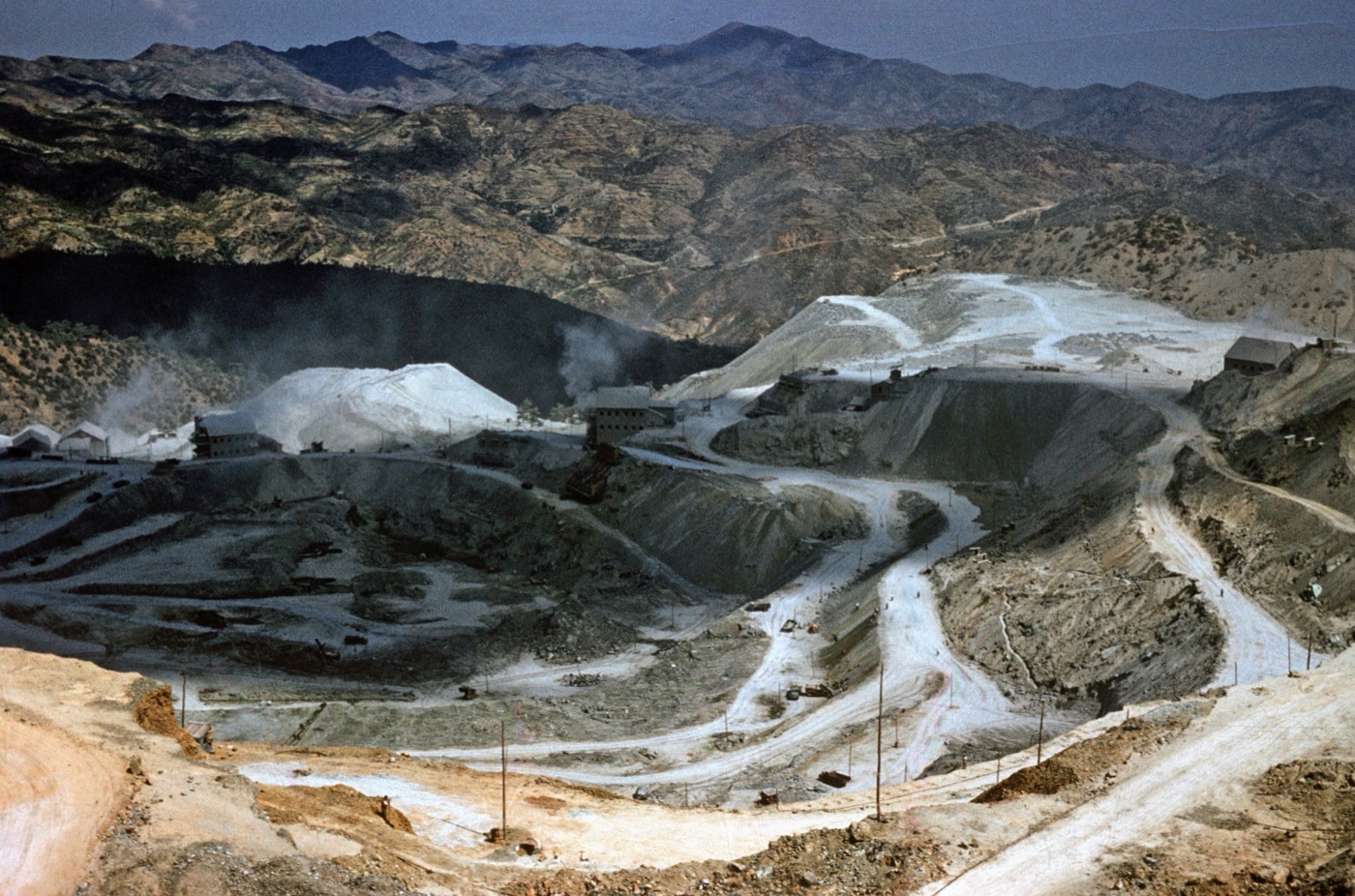
Asbestos: The Industry That Knew It Was Killing People
Asbestos was, for most of the twentieth century, one of the most useful materials on earth — a naturally occurring mineral that could be spun into fireproof cloth, packed into insulation, mixed into cement, and woven through the fabric of modern industry, prized for its resistance to heat, fire, and wear. It was called the 'magic mineral,' and it was everywhere: in the walls and ceilings of homes and schools, in the insulation of ships and power plants, in brake linings and pipe lagging and floor tiles, handled by millions of workers and surrounding billions of people. It was also lethal. Inhaled asbestos fibers lodge in the lungs and, often decades later, cause asbestosis, lung cancer, and mesothelioma — a cancer of the lining of the lungs and abdomen that is almost exclusively caused by asbestos and is almost always fatal. None of this was a sudden discovery. The dangers of asbestos were documented in medical literature as early as the 1920s and 1930s, and the major companies of the asbestos industry came to understand, through their own workers and their own research, that the material was sickening and killing people. They did not warn. Instead, as internal documents brought to light decades later in litigation would prove, leading firms concealed the evidence, suppressed unfavorable studies, kept workers ignorant of the risks they faced, and continued to sell asbestos for as long as they profitably could. The result was one of the longest and deadliest corporate cover-ups in history, a slow-motion industrial epidemic that has killed millions and is killing people still. This is the story of the industry that knew.