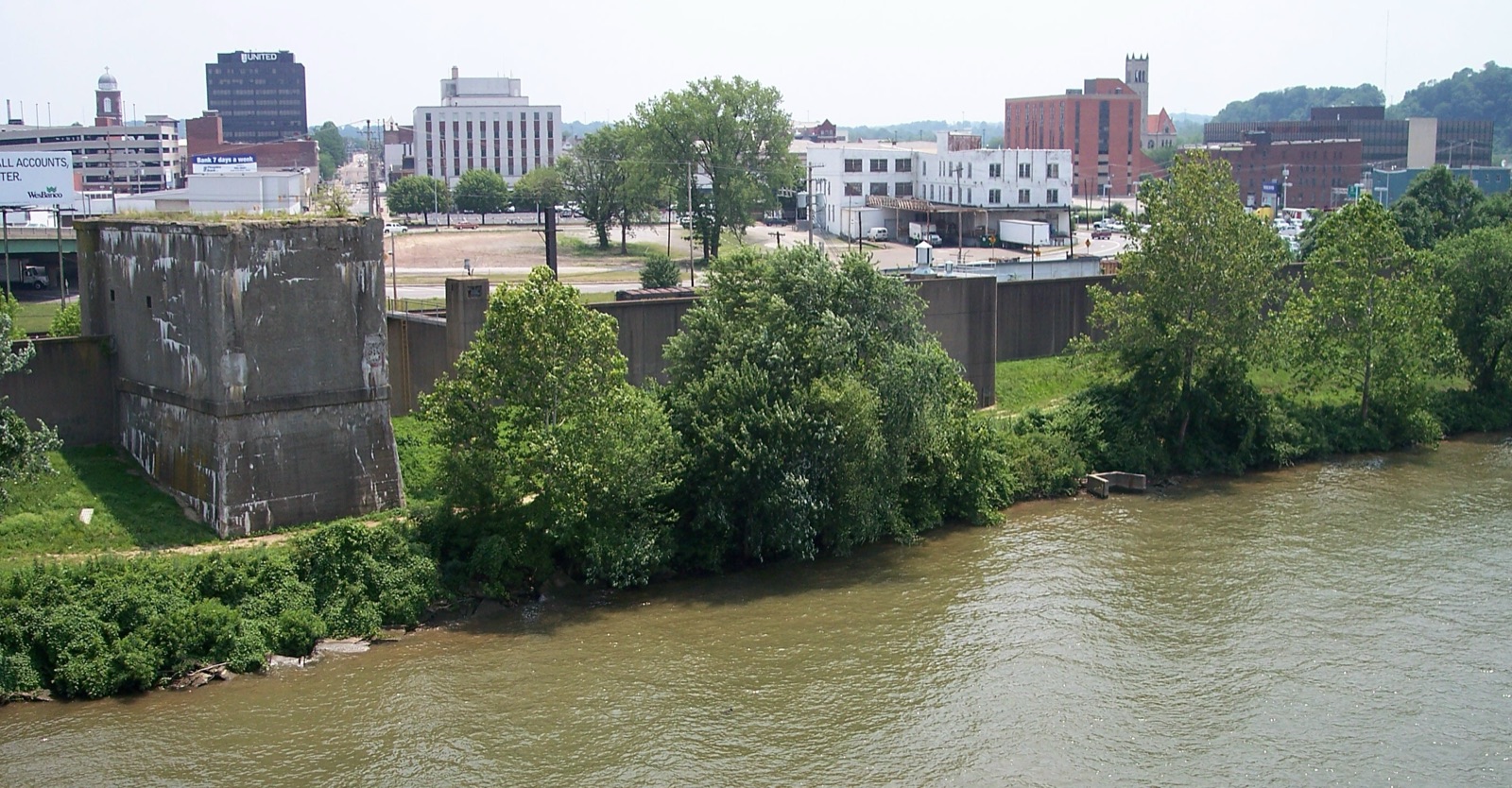
Parkersburg, West Virginia along the Ohio River. The DuPont Washington Works chemical plant — the principal North American producer of perfluorooctanoic acid (PFOA, 'C8') from 1951 until 2015 — operates on the river's edge approximately 4 km upstream of this view. Wikimedia Commons, CC BY-SA 2.5.
DuPont and PFOA
Parkersburg, West Virginia — the chemistry behind Teflon
- Category
- Corporate Cover-ups
- Published
- Length
- 3,700 words · 17 min read
- Author
- The editors
DuPont and PFOA
Parkersburg, West Virginia — the chemistry behind Teflon.
What Wilbur Tennant called about

Wilbur Tennant was a 59-year-old cattle farmer in Lubeck, West Virginia. His family had farmed the same Appalachian valley land since the 1850s. His 200-acre property bordered Dry Run Creek, a small tributary that flowed past his property and into the Ohio River. The DuPont Washington Works plant — known locally as just "the plant" — sat three miles upstream.
Beginning in the mid-1990s, Tennant's cattle began dying in unusual ways. The deaths were not from any of the standard agricultural causes — not parasites, not nutritional deficiency, not infectious disease. They were neurological: cattle would develop staggering gaits, foam at the mouth, and die over days rather than hours. Some had visible tumors. Some had teeth that fell out. Tennant lost 153 head of cattle between 1996 and 2000 — more than half his herd.
Tennant was, by temperament, a careful witness. He bought a consumer-grade VHS camcorder. He filmed the cattle as they died. He filmed the creek. He filmed what he saw at the plant boundary — foam on the water, dead deer, what he described as "soapy" discharge. He kept the tapes.
The state environmental authorities, when Tennant complained, characterized the deaths as routine agricultural mortality and declined to investigate. The federal EPA, similarly. The local veterinarians, similarly.
In October 1998, Tennant called the only lawyer he could think of. His wife's friend's grandmother — Alma White Bilott — lived in nearby Vienna, West Virginia. Her grandson Robert was a corporate-defense lawyer at a prestigious Cincinnati firm named Taft Stettinius & Hollister. Tennant called Robert Bilott in his Cincinnati office.
The lawyer
Bilott was 33 years old when Tennant called. He had been at Taft for seven years. His practice was for chemical companies, not against them. He had defended Chevron in environmental cases. He had defended DuPont in unrelated cases. He had defended Conoco. He understood the chemistry, the regulatory framework, the internal documents that mattered.
He took the Tennant case because his grandmother had asked him to look at it. He drove to Vienna, West Virginia in November 1998 and watched Wilbur Tennant's tapes.
The tapes were unambiguous. Whatever was killing the cattle was not routine. Bilott called the EPA's Office of Pollution Prevention and Toxics. He asked what they could tell him about DuPont's chemical releases at the Parkersburg plant. The EPA's records showed routine reporting on dozens of common chemicals — but, Bilott noticed, no listing for any chemical with the specific properties Tennant's cattle deaths suggested.
He filed a discovery motion. He asked for all internal documents DuPont had on chemical releases at the Washington Works plant.
The federal judge — Joseph R. Goodwin of the U.S. District Court for the Southern District of West Virginia — granted the motion in 2000. Over the next year, DuPont produced approximately 110,000 pages of internal documents.
It is in these documents that the story actually begins.
What was in the documents
PFOA is a synthetic fluorochemical. Its chemical formula is C₈HF₁₅O₂ — an eight-carbon chain (hence the industry name "C8") in which seven of the eight carbons are fully fluorinated and the eighth carries a carboxylic acid group. The carbon-fluorine bond is one of the strongest single covalent bonds in chemistry. PFOA does not naturally degrade. It is what later regulatory literature would call a forever chemical.
PFOA's industrial usefulness comes from this same chemical stability. As a processing aid in the manufacture of PTFE (polytetrafluoroethylene — the polymer DuPont sold as Teflon), PFOA serves as a surfactant that enables the polymerization reaction to proceed in water. Without PFOA, the Teflon production process at industrial scale was, at the time, not workable.
The internal documents established the following:
1961: DuPont's own toxicology lab in Delaware exposed rats to PFOA in drinking water. The rats developed enlarged livers — a sign of chemical stress on the organism.
1962: A follow-up study confirmed the liver effects and documented bioaccumulation: PFOA was not excreted but accumulated in the body over time.
Early 1970s: DuPont's own occupational-health program began testing workers' blood. The workers had measurable PFOA levels — hundreds of times higher than what was beginning to appear in the general population.
1981: DuPont's animal-toxicology lab exposed pregnant rats to PFOA. The offspring showed birth defects — primarily cleft palate and microphthalmia (small eyes). DuPont's response was to remove all women from PFOA-handling jobs at the Washington Works plant. The company did not disclose the underlying studies to the EPA.
1984: An internal DuPont memo by senior plant engineer Bill Wynkoop, distributed to senior corporate management, characterized PFOA's environmental persistence and bioaccumulation as "increasingly difficult to defend" and recommended exploring alternatives. The recommendation was not adopted.
1991: A confidential review by DuPont's medical staff concluded that workers at the Washington Works plant had detectable PFOA blood levels approximately 1,000 times higher than members of the general population. The medical staff recommended exposure reductions. They were partially implemented.
1997: DuPont's internal blood-testing program documented PFOA in the blood of every Washington Works worker tested. Some had levels exceeding 1,000 ng/mL — meaning approximately 1 part per million of their blood was PFOA.
1999: At the time Wilbur Tennant called Robert Bilott, DuPont had been releasing PFOA into the Ohio River, into landfills, and into the air around the Washington Works plant for 48 years. The release rate, by DuPont's own internal accounting, was approximately 500,000 pounds (227 metric tonnes) per year at peak operations.
The class action
In 2001, Bilott — having spent two years on the Tennant case and having absorbed the implications of the 110,000 internal documents — filed a class-action lawsuit in federal court in Charleston, West Virginia. The lead plaintiff was Joseph Kiger, a high-school teacher from Lubeck, West Virginia. The lawsuit, Leach v. DuPont, sought compensation for approximately 80,000 residents whose drinking water served by six area water utilities had been documented to contain PFOA above 0.05 ppb — the level DuPont's own internal Hazard Communication Group had identified as a working safety threshold in the 1980s.
DuPont contested the lawsuit on grounds that the EPA had not established a regulatory limit for PFOA, that the company's internal threshold was advisory only, and that the connection between specific health outcomes and PFOA exposure had not been established in human studies.
In September 2005, Leach v. DuPont was settled. The terms:
- DuPont agreed to install reverse-osmosis filtration on the six affected water systems.
- DuPont agreed to fund the C8 Health Project — a comprehensive epidemiological study of approximately 69,000 residents who had consumed PFOA-contaminated water for at least one year between 1950 and 2004.
- DuPont agreed to fund the C8 Science Panel — three independent epidemiologists (Tony Fletcher, Kyle Steenland, David Savitz) charged with reviewing the C8 Health Project data and rendering binding "probable link" determinations on specific diseases.
- DuPont's settlement payment was approximately $107 million plus the cost of the C8 work.
The settlement preserved each individual plaintiff's right to pursue personal-injury claims separately once a "probable link" determination was rendered.
The C8 Science Panel
The C8 Health Project ran from 2005 to 2006. It collected blood samples and detailed health histories from approximately 69,000 residents. It was, at the time, the largest single environmental- exposure epidemiological study ever conducted. The data set was made publicly available through an arrangement with the West Virginia University School of Medicine.
The C8 Science Panel — Fletcher, Steenland, and Savitz — analyzed the data set against approximately 50 possible health outcomes. They were specifically charged with rendering "probable link" determinations: did the exposure data support a causal connection between PFOA exposure and the specific disease, at the standard of evidence (more probable than not) used in civil litigation?
The Panel issued its final determinations in 2012. Six "probable link" determinations were rendered:
- Kidney cancer
- Testicular cancer
- Thyroid disease
- Ulcerative colitis
- Pregnancy-induced hypertension (including preeclampsia)
- High cholesterol (hypercholesterolemia)
The Panel found no probable link for approximately 30 other health conditions including cardiovascular disease, breast cancer, autoimmune disorders, and most birth defects in offspring of exposed women (the rat-study findings did not consistently replicate in humans at the doses involved).
The "probable link" determinations triggered approximately 3,550 individual personal-injury cases against DuPont under the Leach settlement framework. The cases were consolidated into a multi- district litigation (MDL) in the Southern District of Ohio.
The settlements
The first three MDL bellwether trials, held 2015-2016, resulted in plaintiff verdicts ranging from $1.6 million to $5.6 million per plaintiff. The cases were on appeal when DuPont — and its fluorochemicals spin-off Chemours — settled the entire MDL.
The February 2017 MDL settlement amount was $670.7 million across the approximately 3,550 plaintiffs. The settlement did not constitute an admission of liability. It did include:
- DuPont and Chemours's shared responsibility for ongoing C8- related claims, with each party covering 50% of future costs.
- The phase-out commitment for PFOA production (already substantially completed by 2015 under the EPA PFOA Stewardship Program).
- The continued operation of the reverse-osmosis filtration on affected water systems.
In 2005, separately, the EPA had fined DuPont $16.5 million for the underlying TSCA disclosure failures — the largest U.S. environmental enforcement fine to that date. The 2017 MDL settlement was the second-largest environmental personal-injury settlement in U.S. history.
The frying pan
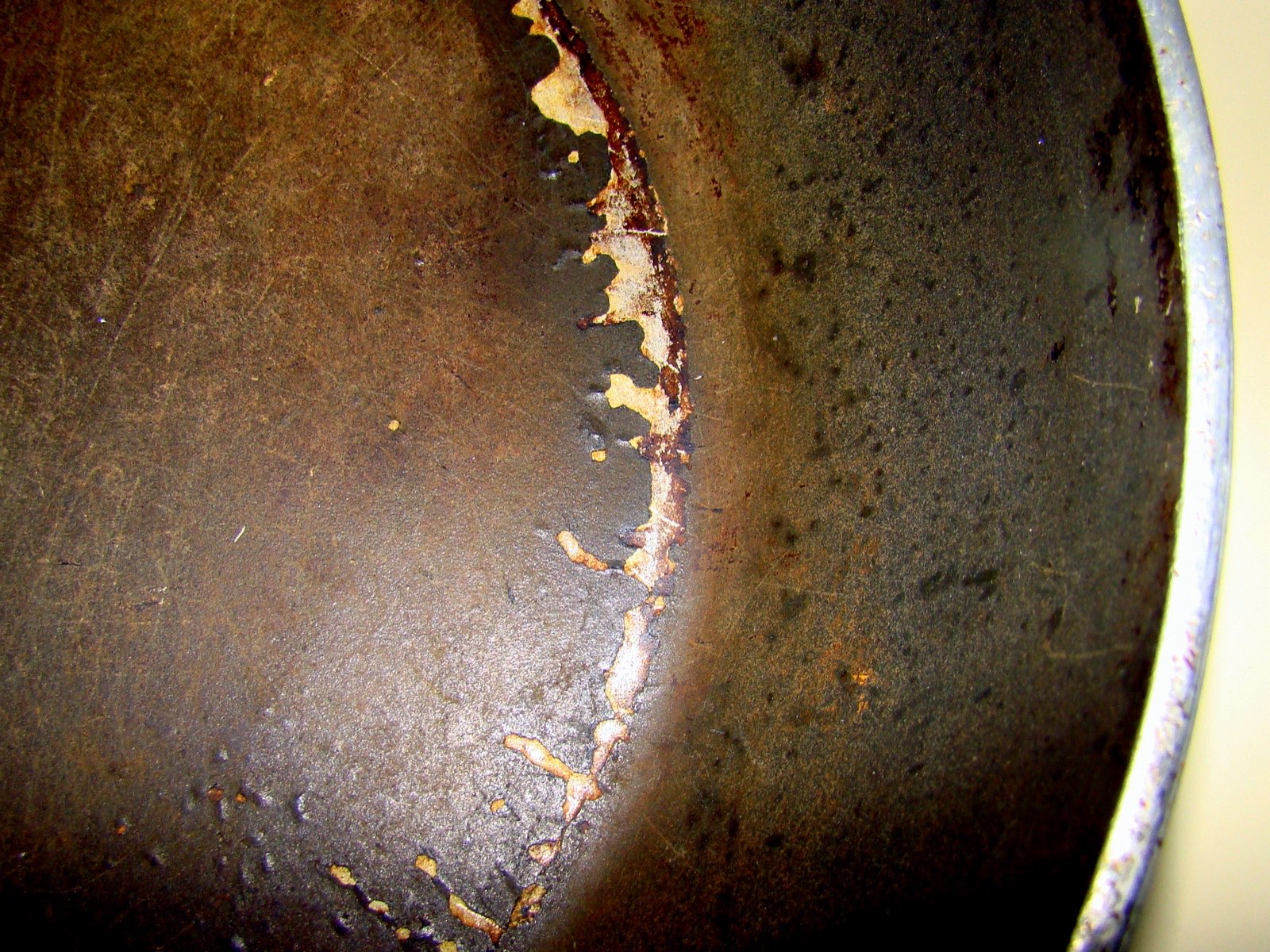
The Teflon frying pan in the home kitchen has, since the 1950s, been a useful object. PTFE is chemically inert; food does not react with it; it does not leach into food at normal cooking temperatures. The pan itself is, in the normal-use sense, safe.
What the DuPont case established was that the manufacture of the pan, not the pan itself, was the problem. PFOA — the processing aid used to make the PTFE — was the toxic substance. It accumulated in the bodies of the workers who manufactured the PTFE, in the environment around the plant, and (through plant emissions and improper disposal) in the water and food chain of the surrounding region.
The contemporary American kitchen — by 2025 — uses Teflon-style cookware manufactured with PFOA-free processes. The successor chemicals (GenX, ADONA, others) have different chemistries but overlap in some properties with PFOA. Whether they are safer at the long-term population scale is, as of 2025, still under investigation.
The "forever chemical" framing — applied broadly to PFAS (per- and poly-fluoroalkyl substances) — characterizes the underlying chemical challenge. The carbon-fluorine bond does not degrade in any biological or environmental process. PFOA, GenX, and approximately 14,000 other PFAS-class chemicals will persist in the environment and in the human body as long as they are produced and not actively removed.
The cast
What came after
The PFOA case did not end with the 2017 MDL settlement. Several ongoing dimensions:
The successor chemicals. Chemours (the DuPont fluorochemicals spin-off) replaced PFOA with GenX (HFPO-DA) beginning around 2009. The North Carolina state environmental agency identified GenX in the Cape Fear River drinking water in 2017. Litigation parallel to the original PFOA case has been ongoing since 2018.
The broader PFAS class. Approximately 14,000 individual PFAS compounds exist. Regulatory action since 2020 has begun addressing them as a class rather than chemical-by-chemical. The EPA's 2024 PFAS National Primary Drinking Water Regulation set the first federally enforceable limits.
The military bases. Aqueous Film Forming Foam (AFFF), used since the 1960s by U.S. military firefighters for petroleum-fire suppression, contains PFAS compounds. Groundwater contamination around approximately 700 U.S. military installations has been documented. The MDL for AFFF cases was consolidated in South Carolina federal court 2018; a $10.3 billion 3M settlement was announced June 2023.
The international dimension. PFAS contamination has been documented in drinking water in Europe (Vejen, Denmark; Hamburg, Germany), Australia (Williamtown, NSW), and elsewhere. The EU's 2023 restriction of approximately 10,000 PFAS substances is the most aggressive regulatory action to date.
Why this is a "confirmed" case
The DuPont/PFOA cover-up is one of the most extensively documented chemical-industry deception cases in American history. The internal documents are on public record through the 2001 discovery. The toxicology studies are catalogued. The C8 Science Panel's "probable link" determinations have the scientific status of peer-reviewed findings. The 2005 EPA fine and the 2017 MDL settlement are matters of public legal record.
What is sometimes still misunderstood — particularly by general audiences who learned of the case through Dark Waters — is the system the case represents. PFOA was one chemical in one corporation's portfolio. The pattern of internal knowledge, non- disclosure, environmental release, and delayed regulatory action has been the template for an entire class of chemicals across an entire era of American chemical manufacturing.
What we still don't know
The total environmental load. DuPont's own internal records account for partial production volumes; the comprehensive inventory of releases into the Ohio River, into landfills, and into the air around Parkersburg has not been independently audited.
Health effects beyond the six "probable link" diseases. The C8 Science Panel made determinations against a limited set of outcomes. Subsequent epidemiological work has begun to identify additional outcomes (renal disease, dyslipidemia in children, liver damage in adults) that may eventually be added.
Generational effects. PFOA crosses the placenta and is detectable in cord blood. The effects on the second generation — children born to exposed mothers — are still being characterized.
The successor chemicals. GenX and the other PFOA replacements were introduced with the explicit assumption that they were safer. The animal-toxicology evidence has, in some respects, contradicted that assumption. The long-term population studies are not yet available.
Sources
Primary documents:
- Leach v. E.I. du Pont de Nemours and Company, Southern District of West Virginia, settled September 2005. Case file and accompanying documents.
- In Re: E.I. du Pont de Nemours and Company C-8 Personal Injury Litigation (MDL 2433), Southern District of Ohio, settled February 2017.
- EPA Consent Order with DuPont, March 2005 (TSCA disclosure violations; $16.5 million fine).
- C8 Health Project Final Report, 2009. West Virginia University School of Medicine.
- C8 Science Panel "Probable Link" Determinations, 2011-2012. Multiple reports.
- EPA Health Advisory for PFOA, 2009 (revised 2016, 2022).
Secondary investigative reporting: 7. Nathaniel Rich, "The Lawyer Who Became DuPont's Worst Nightmare," New York Times Magazine, January 6, 2016. The single most-cited journalism on the case. 8. Robert Bilott, Exposure: Poisoned Water, Corporate Greed, and One Lawyer's Twenty-Year Battle Against DuPont (Atria, 2019). The participant's first-person account. 9. Mariah Blake, "Welcome to Beautiful Parkersburg, West Virginia: Home to one of the most brazen, deadly corporate gambits in U.S. history," The Huffington Post, 2015. 10. Dark Waters (Todd Haynes, Focus Features, November 2019). Theatrical-release dramatization. 11. The New York Times, multi-correspondent coverage 2015-2024. 12. The Intercept, Sharon Lerner — multi-year PFAS investigation 2015-2023. 13. Bloomberg Businessweek, Paul M. Barrett — DuPont/Chemours investigation.
Academic / scientific scholarship: 14. Steenland, Tony Fletcher, David Savitz, "Epidemiologic Evidence on the Health Effects of Perfluorooctanoic Acid (PFOA)" — Environmental Health Perspectives, 2010. 15. Sharon Lerner, "Bad Chemistry: A History of PFAS" — extensive ongoing technical reporting. 16. Erica Schwartz et al., "Per- and Polyfluoroalkyl Substances (PFAS) in Drinking Water: Health Effects and Regulatory Approaches" — Environmental Science & Technology, 2022. 17. Multiple meta-analyses of PFAS health effects, ongoing in Environmental Research and related journals.
Corrections & updates
2026-05-26: First publication.
Inspired this / based on it
Todd Haynes / Focus Features · ★ 7.6
Dramatization with Mark Ruffalo as Bilott, Anne Hathaway, Tim Robbins. Based on the Nathaniel Rich NYT Magazine article.
Stephanie Soechtig · ★ 7.6
Independent documentary released ahead of Dark Waters; focuses on the Parkersburg community.
Robert Bilott
The participant's first-person account. Atria Books.
Nathaniel Rich / NYT Magazine
The January 2016 long-form article that catalyzed mainstream press attention to the case.
Sharon Lerner
Investigative journalist's book-length treatment based on a decade of reporting for The Intercept.
DW Documentary
European documentary on PFAS contamination across multiple countries including ongoing Bilott-era US story.
Filed under
- #dupont
- #pfoa
- #c8
- #teflon
- #robert-bilott
- #wilbur-tennant
- #parkersburg
- #washington-works
- #west-virginia
- #ohio-river
- #dry-run-creek
- #c8-science-panel
- #epa
- #1951
- #2015
- #north-america
- #usa
- #forever-chemicals
Click any tag for every article carrying it.
Continue reading

Big Tobacco's Cancer Cover-Up
On the morning of January 4, 1954, a full-page advertisement appeared in 448 American newspapers under the headline *A Frank Statement to Cigarette Smokers*. It was signed by the chief executives of the United States' six largest tobacco companies. The advertisement assured the American public that 'there is no proof that cigarette smoking is one of the causes of cancer' and that the industry would underwrite scientific research to find the truth. The advertisement had been drafted by John W. Hill of the Hill & Knowlton public-relations firm, hired by the tobacco industry's chief executives at a meeting at the Plaza Hotel in New York on December 14-15, 1953. The strategy that the meeting produced — manufacture doubt about epidemiological evidence the industry already privately accepted, do this through industry-funded research that produced findings inconsistent with the public-health consensus, and continue to sell cigarettes to American smokers while doing so — would be sustained for forty-four years. It would be ended, in 1998, by the Master Settlement Agreement: the largest civil legal settlement in American history at $206 billion across 25 years, paid by the surviving tobacco companies to 46 states, the District of Columbia, and five U.S. territories. By that point, an estimated 8 million Americans had died from smoking-related cancers, cardiovascular disease, and respiratory illness during the cover-up period.
Purdue Pharma and OxyContin
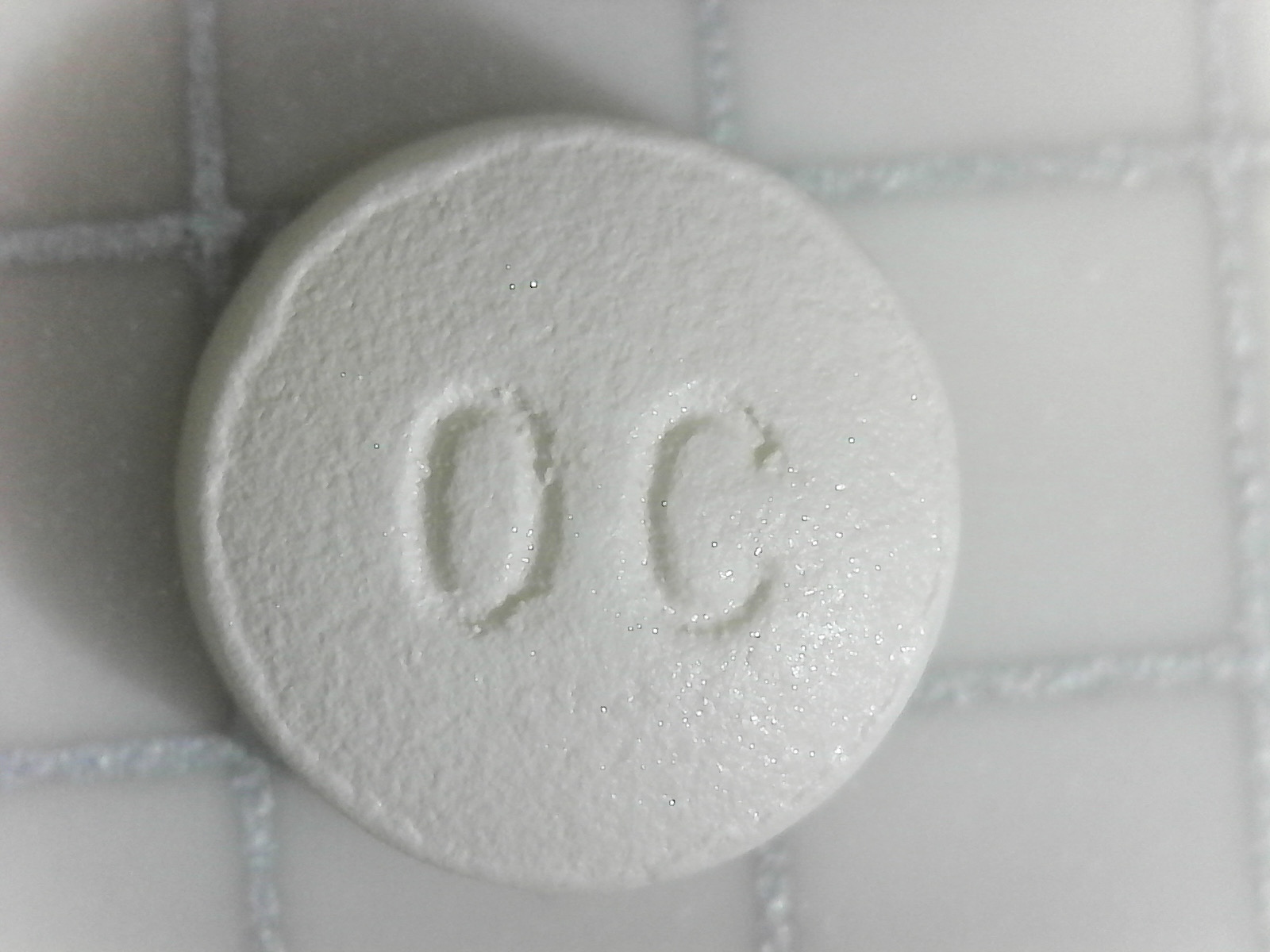
In December 1995, the U.S. Food and Drug Administration approved a new extended-release oxycodone formulation manufactured by the privately-held Stamford, Connecticut pharmaceutical company Purdue Pharma. The drug was called OxyContin. Its FDA-approved label stated that the controlled-release formulation 'is believed to reduce the abuse liability of the drug.' Within weeks of the January 1996 launch, Purdue's sales force was telling physicians that the risk of addiction was 'less than one percent' — a number drawn from a single 1980 letter to the editor in the *New England Journal of Medicine* that the company would, over the next twenty years, cite approximately 600 times in its promotional materials. The letter had observed 4 cases of addiction in 11,882 hospitalized patients given any opioid for any duration. It was not, by any reasonable standard, evidence for an outpatient sustained-release formulation. By 2010, OxyContin's annual revenue had reached approximately $3.1 billion. By 2017, drug overdose was the leading cause of death for Americans under 50. The cumulative U.S. opioid death toll from 1999 to 2023, by the CDC's count, exceeded 700,000. Purdue Pharma pleaded guilty to federal criminal misbranding charges in 2007 (paying $634.5 million) and again in 2020 (agreeing to $8.3 billion in penalties as part of a bankruptcy reorganization). The Sackler family — owners of Purdue throughout the period — were the subject of a separate $6 billion settlement that was struck down by the U.S. Supreme Court in 2024 (*Harrington v. Purdue Pharma*) and is, as of mid-2026, being renegotiated. Patrick Radden Keefe's 2021 book *Empire of Pain* is the most comprehensive single-volume treatment of the case.
Dieselgate
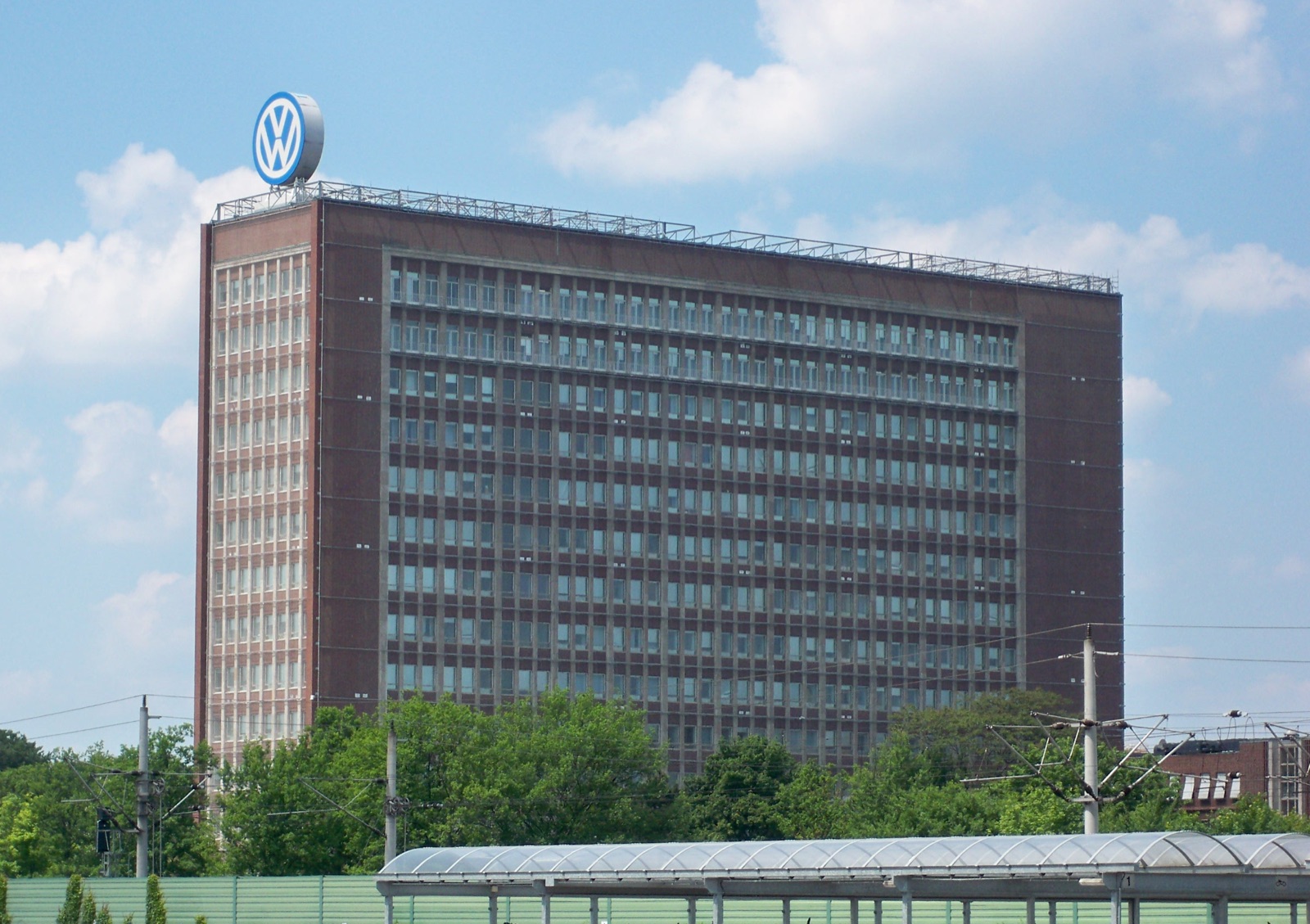
In late 2013, the International Council on Clean Transportation paid a small team at West Virginia University to put two diesel Volkswagens on the road from Los Angeles to Seattle, hooked up to portable emissions sensors. The team expected to find data confirming what Volkswagen's American marketing campaign had been claiming for years: that 'clean diesel' was real. Instead they found nitrogen-oxide emissions up to forty times the legal limit. Eighteen months later, on September 18, 2015, the U.S. EPA formally accused Volkswagen of installing software in eleven million cars that detected emissions tests and lied to them. By the end of the week, the CEO had resigned and Volkswagen had begun a six-year journey through $34 billion of fines and settlements.