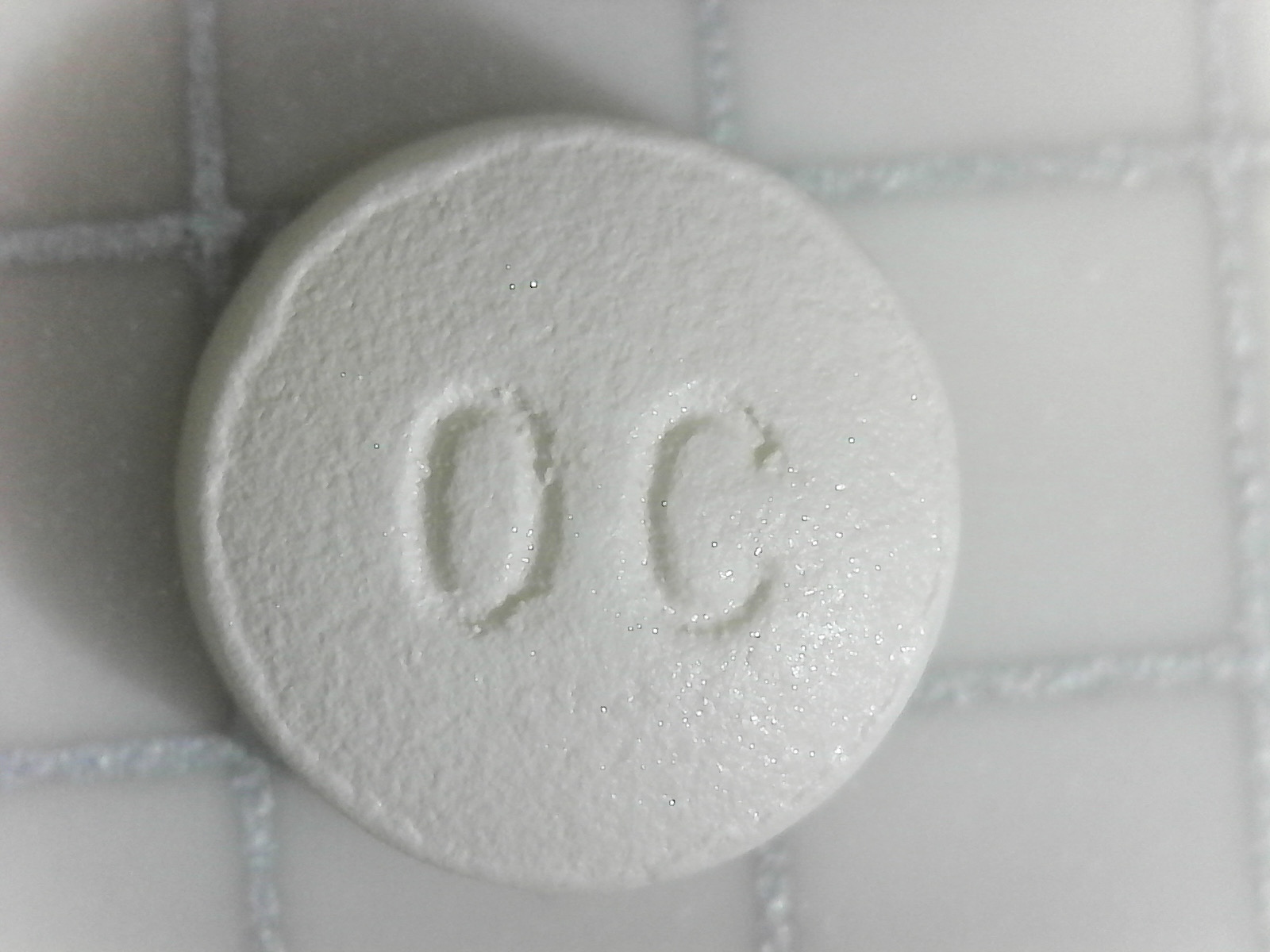
An OxyContin 10mg pill — Purdue Pharma's controlled-release oxycodone formulation, on the U.S. market from January 1996 until reformulation in 2010 (and continuing in modified form thereafter). The 'OC' debossing is the original 1996 formulation. Wikimedia Commons, CC0.
Purdue Pharma and OxyContin
How the Sackler family launched the opioid epidemic
- Category
- Corporate Cover-ups
- Published
- Length
- 3,700 words · 17 min read
- Author
- The editors
Purdue Pharma and OxyContin
How the Sackler family launched the opioid epidemic.
The drug
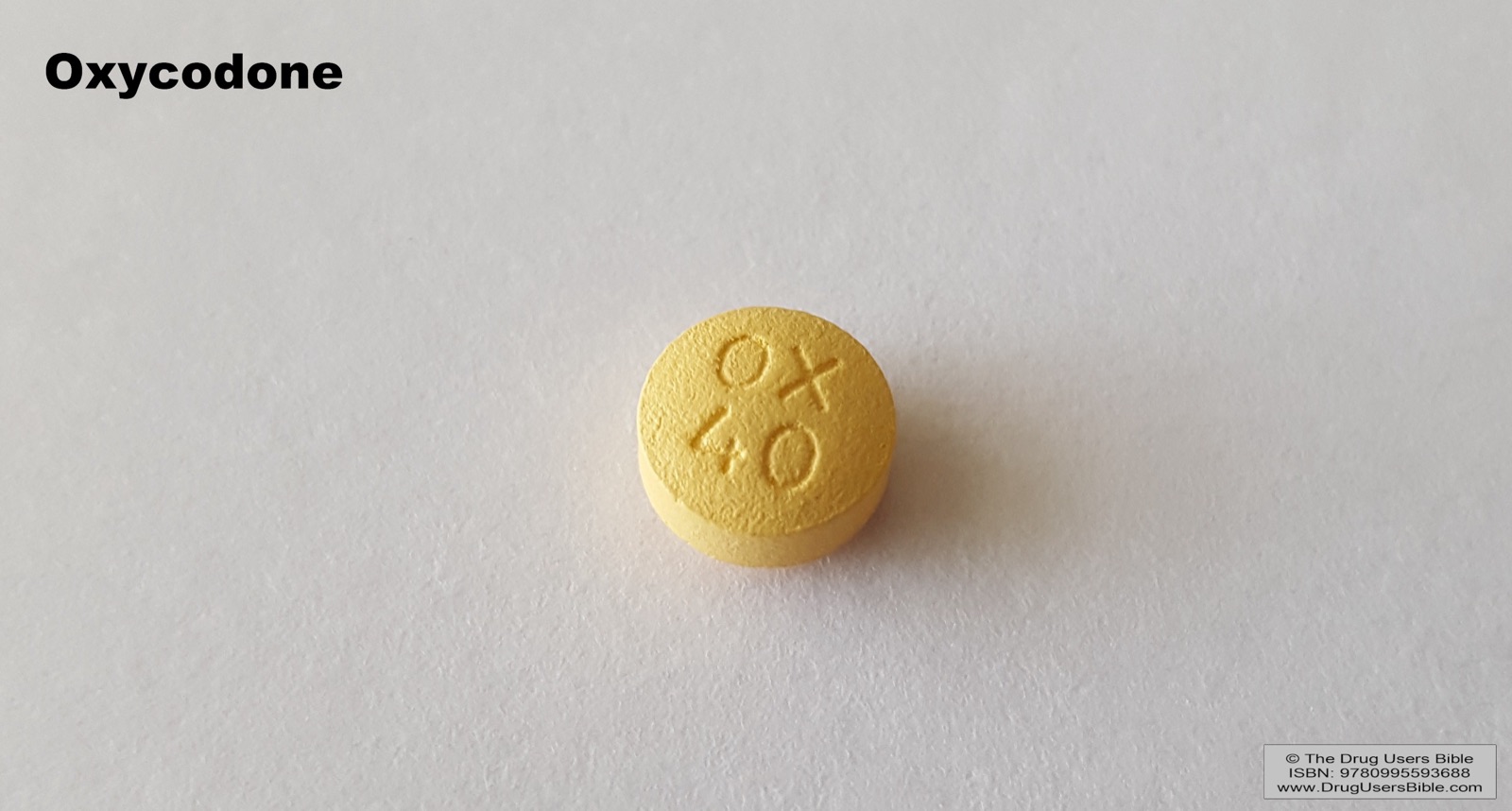
Oxycodone is a semi-synthetic opioid first synthesized in Germany in 1916. It is approximately 1.5 to 2 times more potent per milligram than morphine. Purdue Pharma's pre-OxyContin product MS Contin — controlled-release morphine, sold from 1984 — had established the company's expertise in extended-release opioid formulations.
OxyContin's distinguishing feature was the Contin time-release matrix combined with oxycodone's higher potency. A single 80mg OxyContin tablet contained approximately 80mg of oxycodone — at a time when typical oral oxycodone (in Percocet, etc.) was dosed at 5mg per tablet. The 12-hour controlled-release was designed for chronic pain management.
The FDA-approved label included the statement that the controlled- release "is believed to reduce the abuse liability of the drug." The basis for this claim was pharmacological: a slow-release formulation would, in theory, deliver oxycodone gradually rather than producing the rapid blood-concentration peak associated with the euphoric effect (and, by inference, with the abuse potential). The label language was inserted by the FDA reviewer Curtis Wright on the basis of this inference. There was no clinical trial of abuse liability prior to approval.
The pharmacological inference was wrong. OxyContin tablets could be crushed and snorted, dissolved and injected, or chewed — each of which delivered the entire 12-hour dose at once. By 2000, abuse of crushed OxyContin had emerged as a significant clinical pattern in Appalachia, the Pacific Northwest, and pockets of New England.
The marketing

The OxyContin marketing campaign, beginning January 1996, was the most aggressive new-drug launch in U.S. pharmaceutical history to that point. The components:
Sales force expansion. Purdue grew its sales force from 318 in 1996 to 671 by 2000. Each representative carried a portfolio that included OxyContin alongside Purdue's other products.
Physician identification. Purdue used the IMS Health prescriber database — which sells aggregated physician-prescribing information to pharmaceutical companies — to identify "high- prescribing" physicians for opioids. The sales force concentrated on these physicians, particularly primary-care doctors who were not pain specialists.
Continuing-medical-education funding. Purdue funded continuing- medical-education courses on pain management, often through third- party consortia. The courses emphasized the under-treatment of chronic pain and downplayed addiction risk.
Direct-to-physician promotion. Purdue sales representatives made approximately 700,000 in-person physician visits between 1996 and 2010. Each visit involved promotional materials, samples (initially), and "patient starter coupons" that allowed patients to receive an initial prescription at no charge.
Performance bonuses. Sales representatives were compensated heavily on a commission-and-bonus structure tied to OxyContin prescription growth. Purdue's internal records (released in discovery) showed total sales-force performance compensation of approximately $700 million between 1996 and 2001.
The "less than 1%" claim. This was the centerpiece. The 1980 NEJM letter by Jane Porter and Hershel Jick — five sentences in the journal's Correspondence section — had reported that, in a review of 11,882 hospitalized inpatients who had received any opioid medication for any duration, only 4 had subsequently developed addiction. The letter was, in retrospect, neither a study nor a finding suitable for the generalization Purdue made of it. It was a single observational note about an in-patient population.
Purdue's promotional materials cited the letter approximately 600 times across the next 20 years, characterizing it as scientific support for the claim that the addiction risk of properly prescribed opioid medication was less than 1 percent. The characterization was repeated by Purdue's funded continuing-medical- education materials, by physicians who attended those courses, and by patients who were prescribed OxyContin on the strength of those materials.
Where the epidemic landed

The geographic distribution of the OxyContin-era opioid crisis was not uniform. It concentrated in specific regions:
- Central Appalachia: West Virginia, eastern Kentucky, southwestern Virginia, southern Ohio. The region had high rates of disability-related chronic pain (mining injuries, manufacturing workforce), elevated Medicaid coverage, and dense networks of family-practice physicians.
- Pacific Northwest: parts of Oregon and Washington, particularly rural counties.
- New England: Maine, New Hampshire, Vermont, Massachusetts.
- Florida: which by the mid-2000s had become the U.S. center of "pill mill" operations — pain-management clinics that dispensed large quantities of OxyContin to out-of-state patients.
By 2010, the U.S. was consuming approximately 80% of the world's prescription opioid supply despite having approximately 5% of the world's population. The cause was not exclusively OxyContin — the broader opioid prescribing pattern across U.S. medicine had shifted in the late 1990s — but OxyContin was the leading-brand product that anchored the market.
The crisis evolved through three identifiable waves:
-
Prescription opioids (1996-2010). OxyContin and similar sustained-release products were the dominant agents. CDC prescription-opioid deaths peaked at approximately 16,917 in 2017.
-
Heroin (2010-2014). When Purdue reformulated OxyContin in August 2010 to be abuse-deterrent (the "OP" tablet that was harder to crush), many opioid-dependent users shifted to heroin — cheaper and equally available. CDC heroin deaths rose from approximately 3,036 in 2010 to 15,482 by 2017.
-
Synthetic opioids — fentanyl (2013-present). Illicitly- manufactured fentanyl entered the U.S. drug supply primarily from Chinese precursor chemicals processed in Mexican laboratories. CDC fentanyl-involved deaths rose from approximately 2,628 in 2013 to over 73,000 in 2022.
The wave analysis, originally articulated by CDC epidemiologists in 2017, characterizes the contemporary opioid crisis as having originated in the OxyContin-era prescription environment even though by 2022 the immediate cause of death was overwhelmingly fentanyl.
The 2007 plea
The first major U.S. legal action against Purdue Pharma came in May 2007. The U.S. Attorney for the Western District of Virginia, John Brownlee, filed a criminal information against Purdue Pharma and three of its top executives — Michael Friedman (CEO), Paul Goldenheim (Chief Medical Officer), and Howard Udell (General Counsel) — alleging misbranding under the Federal Food, Drug, and Cosmetic Act.
The case was based on Purdue's pre-2001 marketing of OxyContin's abuse liability — specifically, on the representation that OxyContin had less abuse potential than other immediate-release opioids. The Brownlee investigation had assembled documentary evidence from Purdue's internal communications showing executives had been aware, by no later than 2000, that crushed OxyContin was being abused at significant rates.
The plea agreement was entered on May 10, 2007. Purdue pleaded guilty to felony misbranding (one count, $470 million in fines) and the three executives pleaded guilty to misdemeanor misbranding (personal fines and probation, no incarceration). The total amount Purdue paid was $634.5 million.
The Brownlee prosecution had developed evidence supporting more serious felony charges including fraud and obstruction. The Bush Justice Department directed Brownlee to accept the misdemeanor plea on the personal charges. The pressure on Brownlee was subsequently documented in 2018 Congressional testimony.
The bankruptcy and the Harrington decision
By 2018, Purdue Pharma faced lawsuits from approximately 2,600 plaintiffs — 49 U.S. states, more than 1,500 cities, counties, and tribes, and a growing private personal-injury MDL.
In September 2019, Purdue filed for Chapter 11 bankruptcy protection in the Southern District of New York. The bankruptcy process became the central forum for resolving the multi-plaintiff litigation.
The 2020 federal plea agreement (negotiated separately) committed Purdue to:
- A guilty plea to three felony charges (fraud and kickback violations).
- $8.3 billion in penalties and forfeitures.
- A conversion of Purdue Pharma into a public benefit company.
The 2022 state attorneys general settlement separately committed the Sackler family to:
- A personal payment of $6 billion across multiple years.
- Surrender of ownership of Purdue.
- Personal-injury releases preventing any future individual claims against the family by claimants who had received bankruptcy-distribution funds.
It was the personal-injury releases that became the legal flash point. On June 27, 2024, the U.S. Supreme Court ruled in Harrington v. Purdue Pharma L.P. (5-4, Justice Gorsuch writing for the majority) that the U.S. Bankruptcy Code did not authorize non-debtor third-party releases — meaning that the Sackler family, which had not personally filed for bankruptcy, could not be released from individual claims through the Purdue bankruptcy.
The 2022 settlement was struck down. As of mid-2026, the renegotiated settlement structure is still being worked out. The Sackler family's wealth, by independent estimates, exceeds $11 billion.
The cast
What we still don't know
The full Sackler financial accounting. The family's withdrawals from Purdue Pharma between 1995 and 2018 have been estimated at $10.7 billion (bankruptcy-filing declarations) to higher figures. The forensic-accounting questions remain partially open in the post-Harrington renegotiation.
The full McKinsey-Purdue relationship. McKinsey's settlement ($573 million in 2021) addressed its role as a sales-strategy consultant 2004-2018. The internal documents released in that settlement include the partially-redacted "Toppling Dominos" 2017 memo. The full content of McKinsey's strategic recommendations to Purdue across the relationship has not been comprehensively disclosed.
The opioid-attribution apportionment. The fraction of the overall opioid-crisis death toll attributable to OxyContin specifically (versus other prescription opioids, heroin, fentanyl) has been the subject of multiple expert-witness analyses with divergent conclusions. The methodologically careful work places OxyContin's contribution at 15-25% of overall crisis-attributable mortality. The methodologically optimistic figures (often offered by Purdue) place it lower; the methodologically pessimistic figures place it higher.
The post-Harrington settlement. As of mid-2026, the Sackler family's exposure to individual claims is being renegotiated following the June 2024 Supreme Court ruling.
Why this is a "confirmed" case
The Purdue/Sackler/OxyContin case is one of the most comprehensively documented corporate-misconduct cases in modern U.S. history. The 2007 plea agreement, the 2020 federal plea, the 2019 bankruptcy filings, the McKinsey 2021 settlement, and the 2024 Supreme Court ruling collectively constitute an extensive formal record. The internal documents are largely on public record through the 2019-2024 discovery process.
What is sometimes still misunderstood — by general audiences whose exposure came through Dopesick (Hulu, 2021) or Empire of Pain (Keefe, 2021) — is the scale of the consequences. 700,000 American deaths is not a metaphor. The cumulative U.S. opioid death toll from 1999 to 2023 is comparable to all American military deaths in all U.S. wars combined (approximately 1.4 million).
Sources
Primary documents:
- United States v. Purdue Frederick Company, Inc., et al. — Federal plea agreement, U.S. District Court for the Western District of Virginia, May 10, 2007. $634.5 million.
- United States v. Purdue Pharma L.P. (and related entities) — Federal plea agreement, October 2020. $8.3 billion in penalties.
- In re: Purdue Pharma L.P., et al., U.S. Bankruptcy Court Southern District of New York, filed September 2019. Reorganization plan documents.
- Harrington, U.S. Trustee v. Purdue Pharma L.P., U.S. Supreme Court ruling, June 27, 2024 (603 U.S. ___).
- McKinsey & Company multi-state settlement, February 2021. $573 million.
- Porter & Jick, "Addiction Rare in Patients Treated with Narcotics," NEJM, January 10, 1980. The five-sentence letter that became Purdue's foundational marketing citation.
Secondary investigative reporting: 7. Patrick Radden Keefe, Empire of Pain: The Secret History of the Sackler Dynasty (Doubleday, 2021). The definitive single-volume Sackler family history. 8. Beth Macy, Dopesick: Dealers, Doctors, and the Drug Company That Addicted America (Little, Brown, 2018). 9. Sam Quinones, Dreamland: The True Tale of America's Opiate Epidemic (Bloomsbury, 2015). 10. Barry Meier, Pain Killer: An Empire of Deceit and the Origin of America's Opioid Epidemic (Random House, 2003, revised 2018). 11. Patrick Radden Keefe, "The Family That Built an Empire of Pain," The New Yorker, October 30, 2017. 12. Walt Bogdanich & Michael Forsythe, "How McKinsey Helped Purdue Pharma Sell More OxyContin," The New York Times, November 27, 2020. 13. ProPublica, multi-year Purdue investigation, particularly Susan Glasser. 14. 60 Minutes, "Tracking the Opioid Crisis," CBS, January 22, 2017.
Academic / scientific scholarship: 15. Andrew Kolodny et al., "The Prescription Opioid and Heroin Crisis: A Public Health Approach to an Epidemic of Addiction," Annual Review of Public Health, 2015. 16. CDC, Annual Surveillance Report of Drug-Related Risks and Outcomes — United States, multiple years 2017-2024. 17. Nora Volkow & A. Thomas McLellan, "Opioid Abuse in Chronic Pain — Misconceptions and Mitigation Strategies," NEJM, 2016.
Corrections & updates
2026-05-26: First publication.
Inspired this / based on it
Danny Strong / Hulu · ★ 8.5
Eight-episode dramatization based on Beth Macy book. Michael Keaton (Best Actor Golden Globe), Peter Sarsgaard as Brownlee. Multiple Emmys.
Eric Newman / Netflix · ★ 7.7
Six-episode dramatization. Matthew Broderick as Richard Sackler.
Patrick Radden Keefe
The definitive single-volume Sackler family history. Doubleday. 2022 Baillie Gifford Prize.
Beth Macy
The Appalachian-perspective treatment. Little, Brown.
Sam Quinones
Bloomsbury. National Book Critics Circle Award 2015.
Alex Gibney / HBO · ★ 7.3
Two-part documentary on the opioid crisis with substantial Purdue/Sackler focus.
Filed under
- #purdue-pharma
- #oxycontin
- #sackler-family
- #richard-sackler
- #arthur-sackler
- #mortimer-sackler
- #raymond-sackler
- #opioid-epidemic
- #mckinsey
- #patrick-radden-keefe
- #harrington-purdue
- #dopesick
- #stamford
- #1996
- #2024
- #north-america
- #usa
Click any tag for every article carrying it.
Continue reading
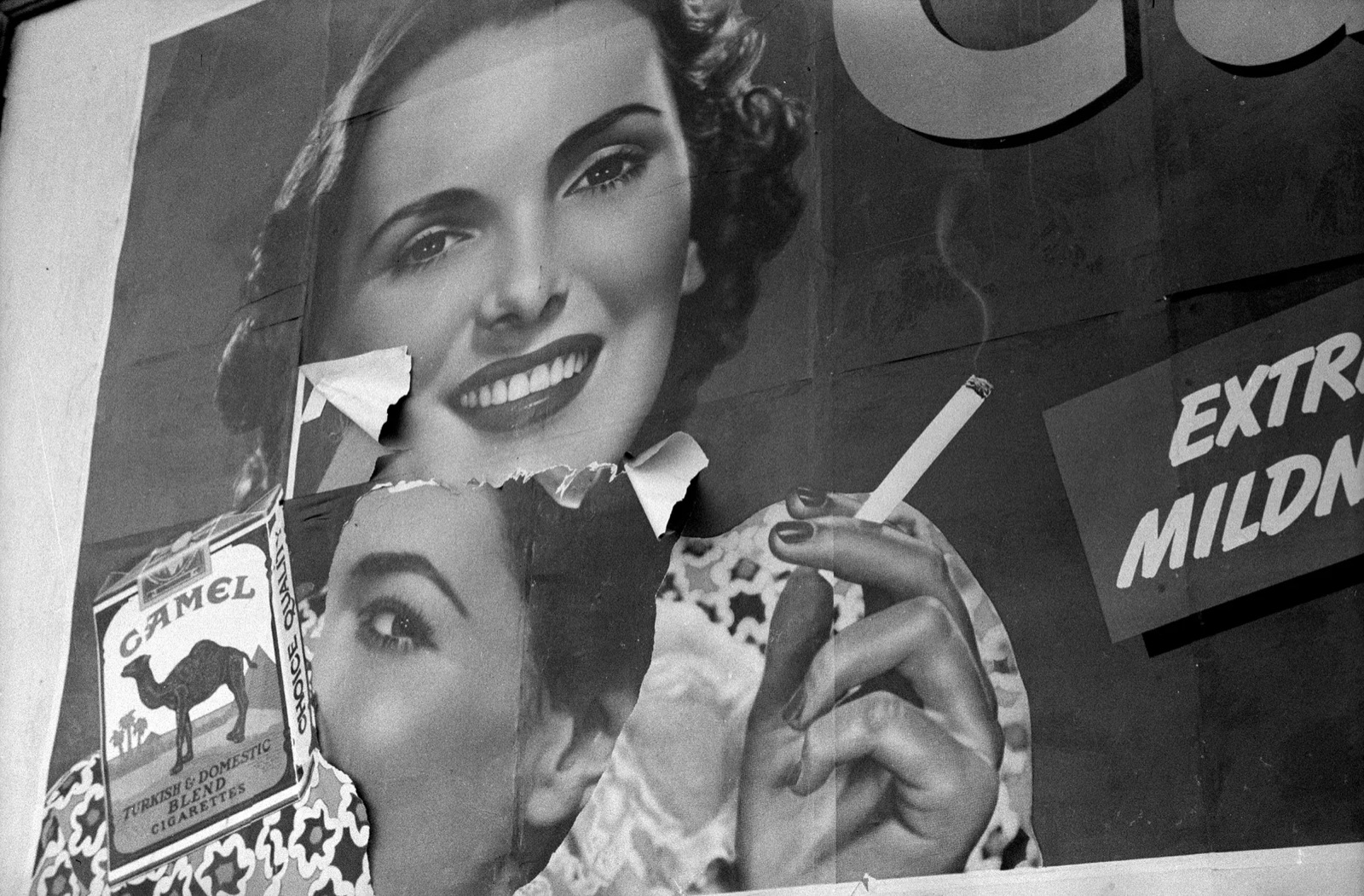
Big Tobacco's Cancer Cover-Up
On the morning of January 4, 1954, a full-page advertisement appeared in 448 American newspapers under the headline *A Frank Statement to Cigarette Smokers*. It was signed by the chief executives of the United States' six largest tobacco companies. The advertisement assured the American public that 'there is no proof that cigarette smoking is one of the causes of cancer' and that the industry would underwrite scientific research to find the truth. The advertisement had been drafted by John W. Hill of the Hill & Knowlton public-relations firm, hired by the tobacco industry's chief executives at a meeting at the Plaza Hotel in New York on December 14-15, 1953. The strategy that the meeting produced — manufacture doubt about epidemiological evidence the industry already privately accepted, do this through industry-funded research that produced findings inconsistent with the public-health consensus, and continue to sell cigarettes to American smokers while doing so — would be sustained for forty-four years. It would be ended, in 1998, by the Master Settlement Agreement: the largest civil legal settlement in American history at $206 billion across 25 years, paid by the surviving tobacco companies to 46 states, the District of Columbia, and five U.S. territories. By that point, an estimated 8 million Americans had died from smoking-related cancers, cardiovascular disease, and respiratory illness during the cover-up period.

DuPont and PFOA
In October 1998, a West Virginia cattle farmer named Wilbur Tennant called a Cincinnati lawyer named Robert Bilott about 153 dead cows. The cows had been drinking from Dry Run Creek, three miles downstream from the DuPont Washington Works chemical plant. Tennant's home video showed cattle with bloody mouths, gum cancer, and stumbling gaits before they died. Bilott — a corporate-defense attorney at Taft Stettinius & Hollister who had spent his career representing chemical companies — agreed to look at the file as a personal favor to his grandmother, who knew the Tennant family. The look became a twenty-year case. By the time Bilott was finished, he had uncovered: that DuPont had been releasing perfluorooctanoic acid (PFOA, code-named 'C8') into the Ohio River and into landfills for over forty years; that DuPont had known PFOA was toxic since at least 1961; that the company's own animal studies in 1981 had shown birth defects in offspring of exposed female workers; and that approximately 99% of the U.S. population, by 2007, had detectable levels of PFOA in their blood. The 2005 EPA fine ($16.5 million) was the largest in U.S. environmental enforcement history at the time. The 2017 multi-district settlement was $670.7 million. The C8 Science Panel — established as part of an earlier 2005 class-action settlement — confirmed by 2012 that PFOA is causally linked to six diseases including kidney and testicular cancer. PFOA was phased out of U.S. production by 2015. Its environmental persistence — half-life in human blood is approximately 3.8 years — means that, by 2025, every American adult has some PFOA exposure dating from the production era. The chemical that made non-stick cookware possible is, in this sense, still with us.
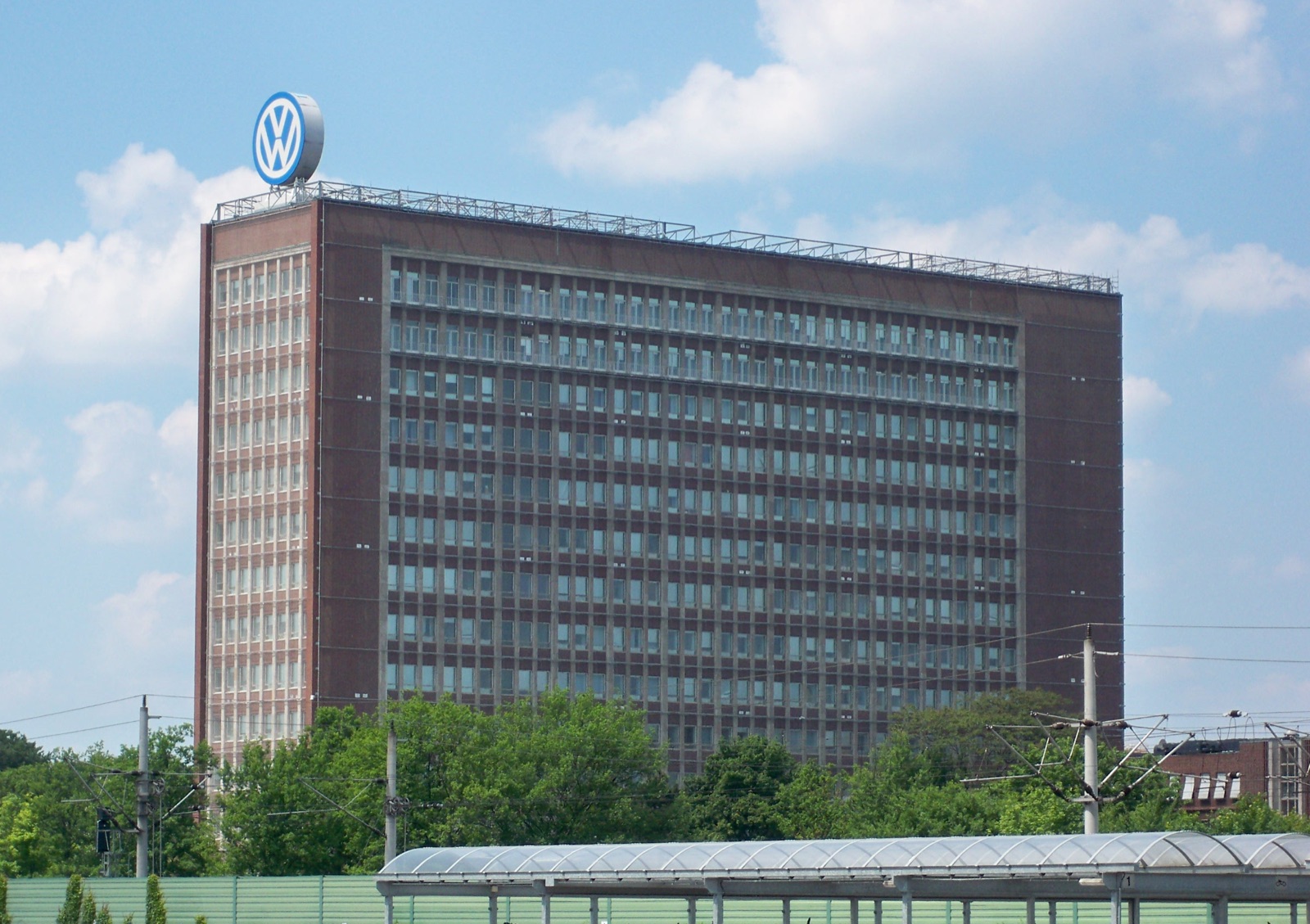
Dieselgate
In late 2013, the International Council on Clean Transportation paid a small team at West Virginia University to put two diesel Volkswagens on the road from Los Angeles to Seattle, hooked up to portable emissions sensors. The team expected to find data confirming what Volkswagen's American marketing campaign had been claiming for years: that 'clean diesel' was real. Instead they found nitrogen-oxide emissions up to forty times the legal limit. Eighteen months later, on September 18, 2015, the U.S. EPA formally accused Volkswagen of installing software in eleven million cars that detected emissions tests and lied to them. By the end of the week, the CEO had resigned and Volkswagen had begun a six-year journey through $34 billion of fines and settlements.