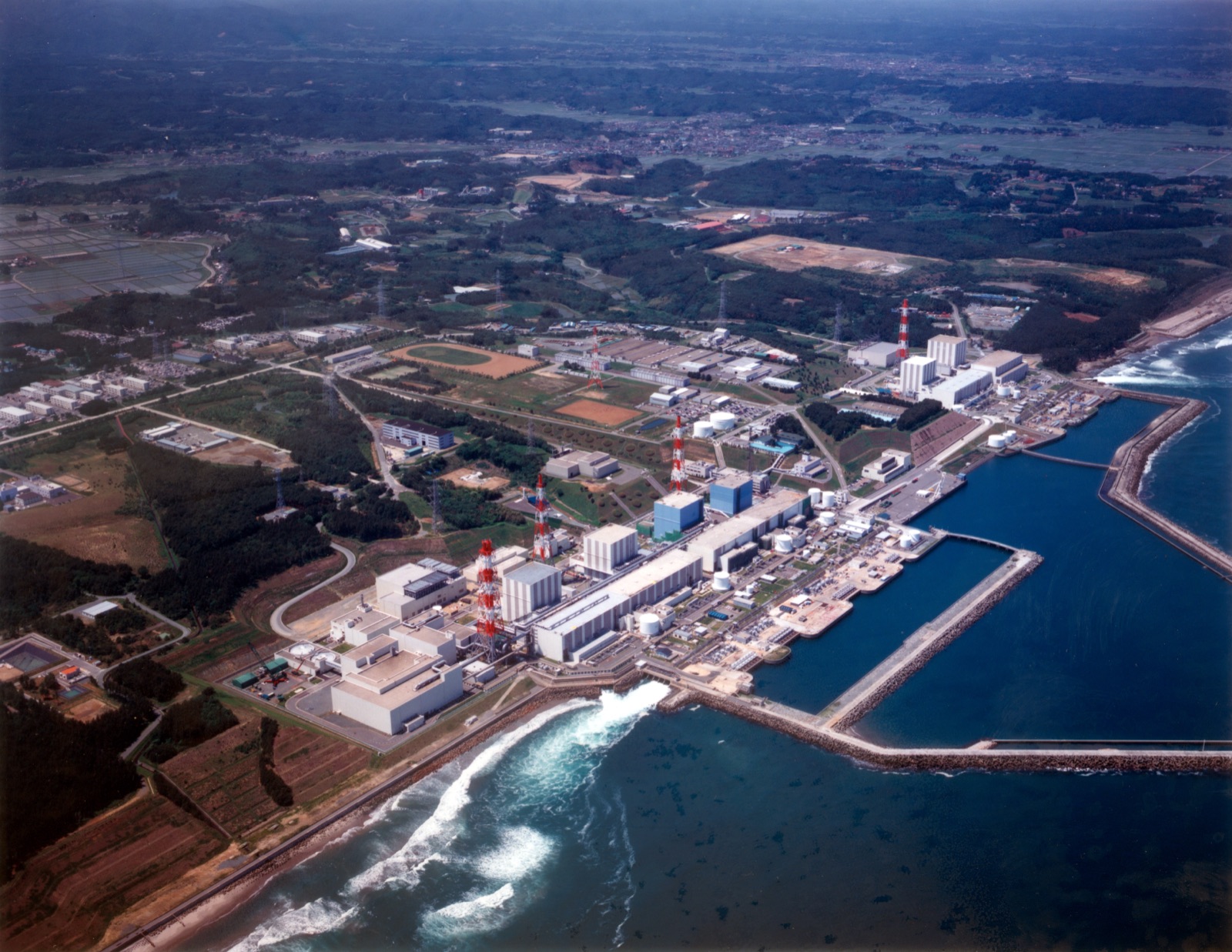
Fukushima Daiichi Nuclear Power Plant, on the Pacific coast of Fukushima Prefecture, in an aerial view. Its six boiling-water reactors sat on a shelf cut down to about ten metres above sea level, behind a sea wall designed for a tsunami of 5.7 metres. On March 11, 2011, waves of fourteen metres and more came over it. Wikimedia Commons / IAEA Imagebank, CC BY-SA 2.0.
Fukushima and the Disaster That Was Foreseen
Japan, 2011 to the present — how a tsunami that engineers had warned about, at a plant whose operator had calculated the risk and filed it away, became what Japan's own parliamentary commission called 'a profoundly man-made disaster'
- Category
- Corporate Cover-ups
- Published
- Length
- 4,800 words · 20 min read
- Author
- The editors
Fukushima and the Disaster That Was Foreseen
Japan, 2011 to the present — how a tsunami that engineers had warned about, at a plant whose operator had calculated the risk and filed it away, became what Japan's own parliamentary commission called 'a profoundly man-made disaster.'
14:46, March 11, 2011
The earthquake came first, and it was enormous. At 14:46 local time, about 130 kilometres off the coast of the Tōhoku region, a fault some 500 kilometres long slipped in the most powerful earthquake ever recorded in Japan — magnitude 9.0, later revised upward — shifting the main island of Honshu several metres east and dropping parts of the coastline. At Fukushima Daiichi, the three reactors that were running — units 1, 2, and 3 — did what they were designed to do when the ground shook: their control rods drove home automatically and the nuclear chain reaction stopped within seconds. Units 4, 5, and 6 were already shut for maintenance, with unit 4's entire fuel load sitting in its spent fuel pool.
But a reactor that has 'scrammed' is not a reactor that is safe. The fuel in the cores continued to generate intense decay heat — several per cent of full power at first, falling only slowly over hours and days — and that heat has to be carried away continuously, or the fuel will overheat, melt, and breach its containment. Carrying it away takes pumps, and pumps take electricity. The earthquake had knocked out the external grid that normally powers the plant, but this was anticipated: the emergency diesel generators started automatically, and for about fifty minutes the cooling systems ran on diesel power as intended. The plant had survived the largest earthquake in Japanese history more or less intact.
Then the sea drew back.
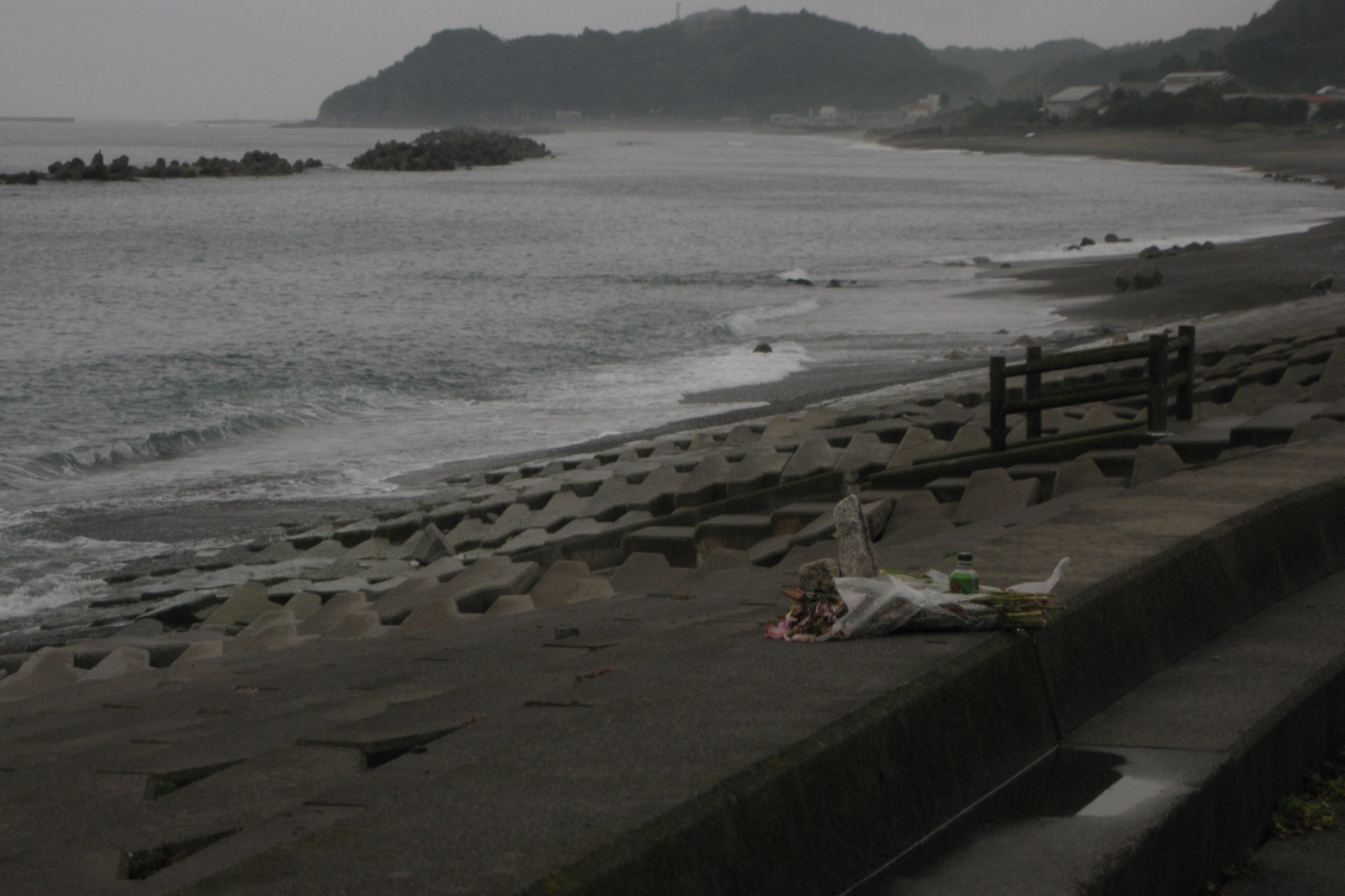
The tsunami reached Fukushima Daiichi at around 15:35. The plant sat on a shelf that had been cut down, during construction in the 1960s, to about ten metres above sea level — the lower the better, the engineers of the day reasoned, for pumping cooling water from the sea. Its sea defences were built for a tsunami of 5.7 metres. The waves that arrived were of the order of fourteen or fifteen metres. They swept over the wall, across the shelf, and into the turbine buildings, where they flooded the basements — and the basements were where the emergency diesel generators, their fuel tanks, and the electrical switchgear stood. Within minutes the generators drowned and the switchboards shorted out. At units 1 through 4, the plant lost not only its off-site power but its on-site backup power too: a condition the industry calls a station blackout, and one the plant's designers had treated as something that need only be survived for a few hours, not days.
Station blackout
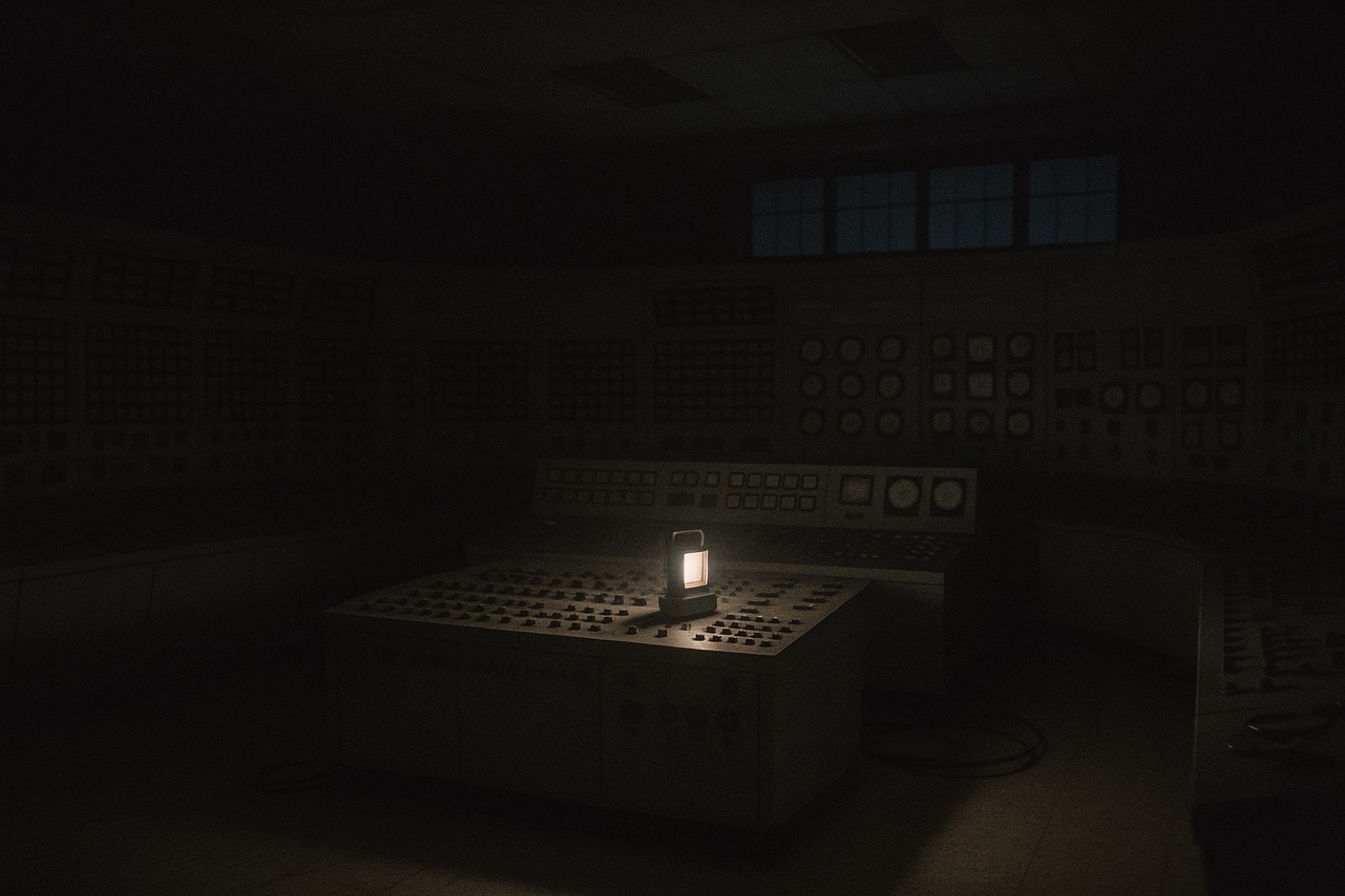
A nuclear plant in station blackout is a strange and dangerous thing. The reactors are shut down, but they cannot be cooled by their normal systems, because those systems need power the plant no longer has. The instruments that tell operators what is happening inside the cores — water levels, pressures, temperatures — flicker and die. Crews worked in the dark with flashlights, scavenging car batteries to power gauges, trying to understand the state of fuel they could not see, in buildings where the radiation was beginning to climb.
Without active cooling, the water covering the fuel boiled away. As the fuel rods were exposed, two things happened. They began to melt — slumping into a mass of molten and broken material at the bottom of the reactor vessels — and their zirconium cladding, heated white-hot in steam, stripped oxygen from the water molecules and released hydrogen gas. The melting came first in unit 1, the smallest and oldest reactor, probably within hours of the blackout on the evening of March 11; units 3 and 2 followed over the next two and three days as their own cooling lifelines failed in turn. Operators fell back on the last resort available to them: injecting seawater directly into the reactors to cool the fuel, a step that would corrode and destroy the reactors for good, and which the urgency of the situation nonetheless demanded.
The hydrogen was the visible catastrophe. Lighter than air, it collected at the tops of the reactor buildings, and there it found ignition. On the afternoon of March 12 the upper structure of unit 1 blew apart in a hydrogen explosion broadcast around the world. On March 14 unit 3 exploded more violently still. On March 15 unit 4 — which had no fuel in its reactor at all — was wrecked by hydrogen that had flowed into it through ductwork shared with unit 3, and unit 2 suffered what is believed to have been a breach of its containment, releasing the single largest pulse of radioactivity of the accident. By the morning of March 15, three reactor cores had melted and three reactor buildings had been torn open.
The warning that was filed away
A meltdown caused by a tsunami at a seaside reactor sounds, in the retelling, like an act of nature — the kind of thousand-year event no one could reasonably have planned for. That is the version TEPCO reached for first, and it is the version the evidence does not support.
The danger had been identified, in writing, inside the company. In 2002 a Japanese government body had published an assessment warning that a large tsunami-generating earthquake could occur anywhere along the Japan Trench, including off Fukushima. Acting on that, TEPCO's own engineers ran the calculation, and in 2008 they arrived at a figure: a tsunami at Fukushima Daiichi could reach as high as 15.7 metres — nearly three times the height the plant's defences were built for. There was, in addition, a deeper historical warning: the Jōgan earthquake and tsunami of the year 869, whose deposits geologists had traced far inland across the Sendai plain, evidence that waves of exactly this scale had struck this coast before.
None of it produced action. The 15.7-metre figure was treated within TEPCO as provisional, academic, the product of a methodology the company chose to regard as unproven; studying it further was preferred to building against it, and the matter was effectively deferred. The regulators — the Nuclear and Industrial Safety Agency (NISA), an arm of the very ministry that promoted nuclear power — did not compel TEPCO to act either. The countermeasure that would have mattered most was unglamorous and entirely feasible: move the emergency generators and their switchgear to high ground, or seal them watertight, so that a wave over the wall would not also take the backup power. It was not done.
The investigations
Fukushima was examined more thoroughly, by more independent bodies, than almost any industrial accident in history — and the investigations converged on the same uncomfortable territory.
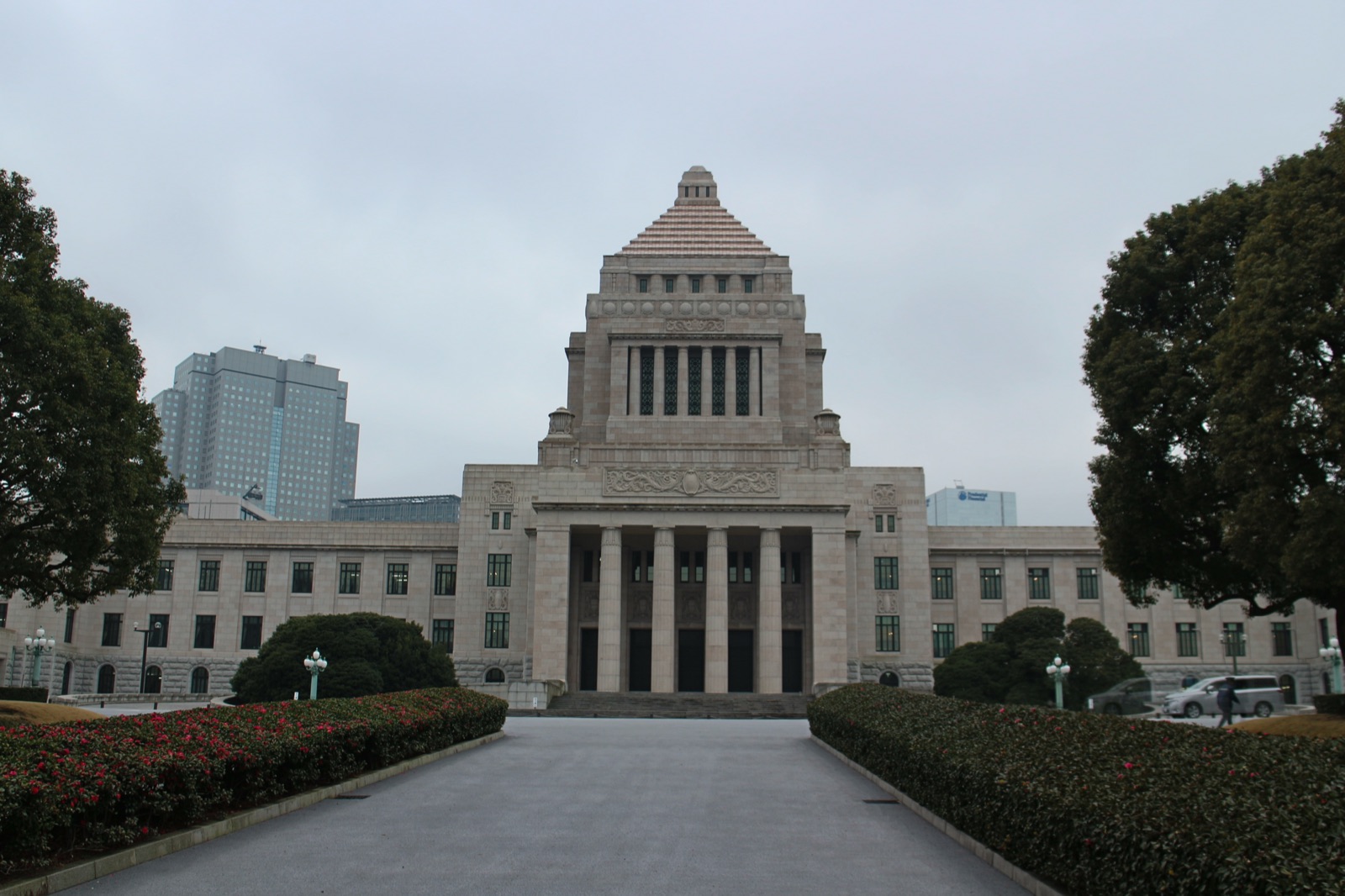
There were four major inquiries. The NAIIC, reporting to the Diet, was the most pointed, naming 'regulatory capture' — the condition in which a regulator comes to serve the industry it is meant to police — as a root cause. A separate government Investigation Committee, chaired by the engineering-failure scholar Yotaro Hatamura, examined the technical and organisational response and catalogued a cascade of errors in the management of the emergency. A private commission funded by an independent foundation and led by the journalist Yoichi Funabashi reconstructed the chaos inside the prime minister's office and the gulf between what TEPCO told the government and what was actually happening at the site. And TEPCO's own internal report, predictably the most defensive of the four, leaned hard on the unprecedented scale of the natural event.
The disagreements among them were real but narrow, mostly about emphasis: how much weight to place on the specific failures of the night versus the systemic failures of the preceding decade, and how far to fold in cultural explanation. Kurokawa, in a preface written for the English edition of the NAIIC report, went furthest on the latter, attributing the catastrophe in part to ingrained conventions of Japanese institutional life — 'reflexive obedience; our reluctance to question authority; our devotion to "sticking with the programme"' — and calling the disaster 'Made in Japan.' The framing was criticised, then and since, as letting specific decision-makers hide behind a national character. But the documentary findings beneath it did not depend on culture at all. They depended on a calculation that had been done and ignored.
The word they would not say
While the cores were still melting, a second failure was under way — not of engineering but of candour.
For roughly the first two months after March 11, TEPCO did not describe what had happened inside reactors 1, 2, and 3 as a 'meltdown.' It spoke instead of 'core damage' and of fuel that had been harmed, language that conveyed a serious problem while withholding the word that would have told the public the worst had already occurred. The distinction mattered enormously to a frightened country trying to gauge its own danger, and the euphemism bought the company time and cover at the exact moment the public's need for plain information was greatest.
What turned this from spin into scandal emerged five years later. In 2016 a panel of lawyers commissioned by TEPCO itself investigated the company's early communications and found that TEPCO had possessed, all along, an internal manual defining the criteria for a meltdown — criteria that the conditions in units 1, 2, and 3 had met within days. By its own written standard, in other words, TEPCO should have declared meltdowns in mid-March 2011. It did not. The panel found that the company's then president had instructed staff not to use the word 'meltdown,' under pressure conveyed from the prime minister's office, and that TEPCO had effectively concealed a determination it was equipped to make. The company admitted that it could, and by its own rules should, have announced the meltdowns far sooner than it did.
The reckoning
If Fukushima was foreseeable and foreseen, the question that followed was inevitable: would anyone be held responsible? The answer Japan's institutions returned was, on its face, contradictory.
The criminal route ran into the high wall of the criminal standard. Public prosecutors twice declined to charge anyone, judging the evidence insufficient. They were overruled — under a distinctive Japanese mechanism by which a panel of randomly selected citizens can force a prosecution the professionals have refused — and three former TEPCO executives, including the former chairman Tsunehisa Katsumata, were put on trial for professional negligence resulting in death and injury, the deaths being those of hospital patients who died during the forced evacuation. In September 2019 the Tokyo District Court acquitted all three. The court accepted that the 15.7-metre estimate existed but held that it had not been firm or specific enough to make the disaster foreseeable to the exacting standard a criminal conviction requires, and that requiring the executives to have halted the plant on the strength of it would have been unreasonable. A higher court upheld the acquittals in January 2023.
The civil route reached the opposite conclusion. In a shareholder lawsuit brought on behalf of the company against its own former leaders, the Tokyo District Court ruled in July 2022 that four former executives had indeed been able to foresee the tsunami risk and to prevent the accident, and had failed in their duty to do so. It ordered them to pay TEPCO some ¥13 trillion — on the order of ninety-five billion dollars — the largest damages award in Japanese civil history, and a sum no individuals could conceivably pay. The two judgments are not as flatly inconsistent as they appear — they were decided by different courts, on different evidence, under the very different standards of criminal and civil liability — but together they capture the strange shape of the accountability that Fukushima produced: a disaster everyone agreed was preventable, for which the criminal law punished no one and the civil law punished four people beyond any possibility of payment.
The water
The accident did not end; it changed phase. Keeping the melted fuel cool meant continuing to pour water over it, and that water — together with groundwater seeping into the damaged buildings — came out contaminated and had to go somewhere. Where it went was tanks: row upon row of them, built across the site until, by 2023, there were around a thousand holding some 1.3 million tonnes of water, and the site was running out of room.
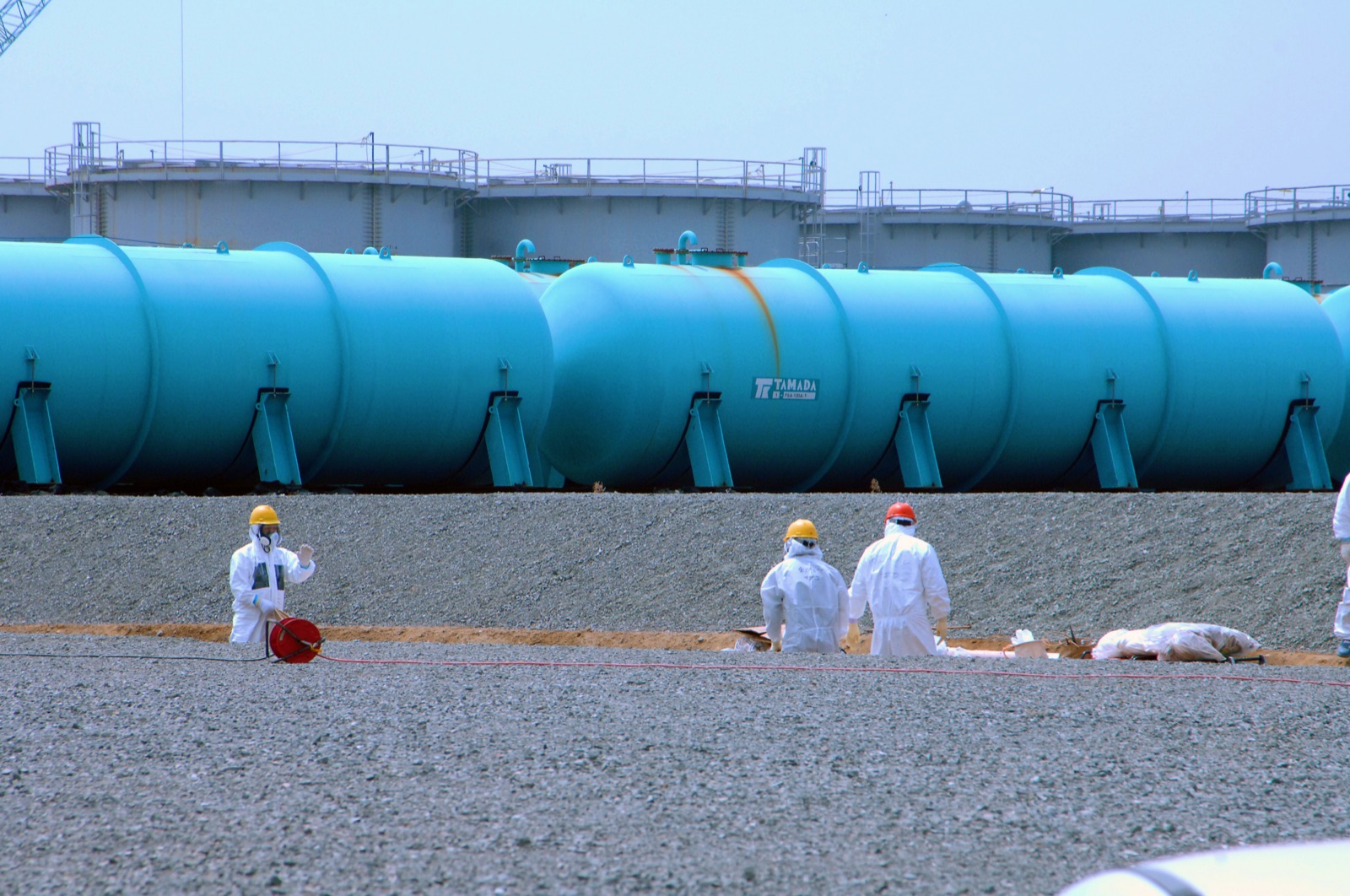
The water was run through a filtration system called ALPS, the Advanced Liquid Processing System, which removes the great majority of radioactive isotopes — though not tritium, a form of hydrogen that is chemically part of the water itself and extremely difficult to separate. In April 2021 the Japanese government decided that the treated water would be diluted and released into the Pacific Ocean over a period of decades. The International Atomic Energy Agency reviewed the plan and concluded in 2023 that it was consistent with international safety standards and would have a negligible radiological effect on people and the environment. On August 24, 2023, the discharge began.
It was, scientifically, among the least dangerous chapters of the whole affair, and politically among the most contentious. Japan's own fishing communities, who had spent a decade rebuilding the reputation of their catch, opposed a release that they feared would undo that work regardless of the physics. China imposed a blanket ban on imports of Japanese seafood, and the discharge became a running diplomatic dispute in the region. The gap between the radiological reality and the public reaction was, in its way, a late echo of the original failure: an institution that had concealed a meltdown for two months in 2011 now asking the world to take its reassurances about the water on trust.
The cleanup that has barely begun
The hardest part remains almost entirely ahead. Somewhere in the ruined lower structures of reactors 1, 2, and 3 sits an estimated 880 tonnes of 'fuel debris' — corium, the solidified mass of melted nuclear fuel fused with the metal and concrete it melted through — intensely radioactive, its exact location and form still only partly mapped. Removing it is the central task of decommissioning Fukushima Daiichi, and it is a task for which the tools largely have to be invented as the work proceeds.
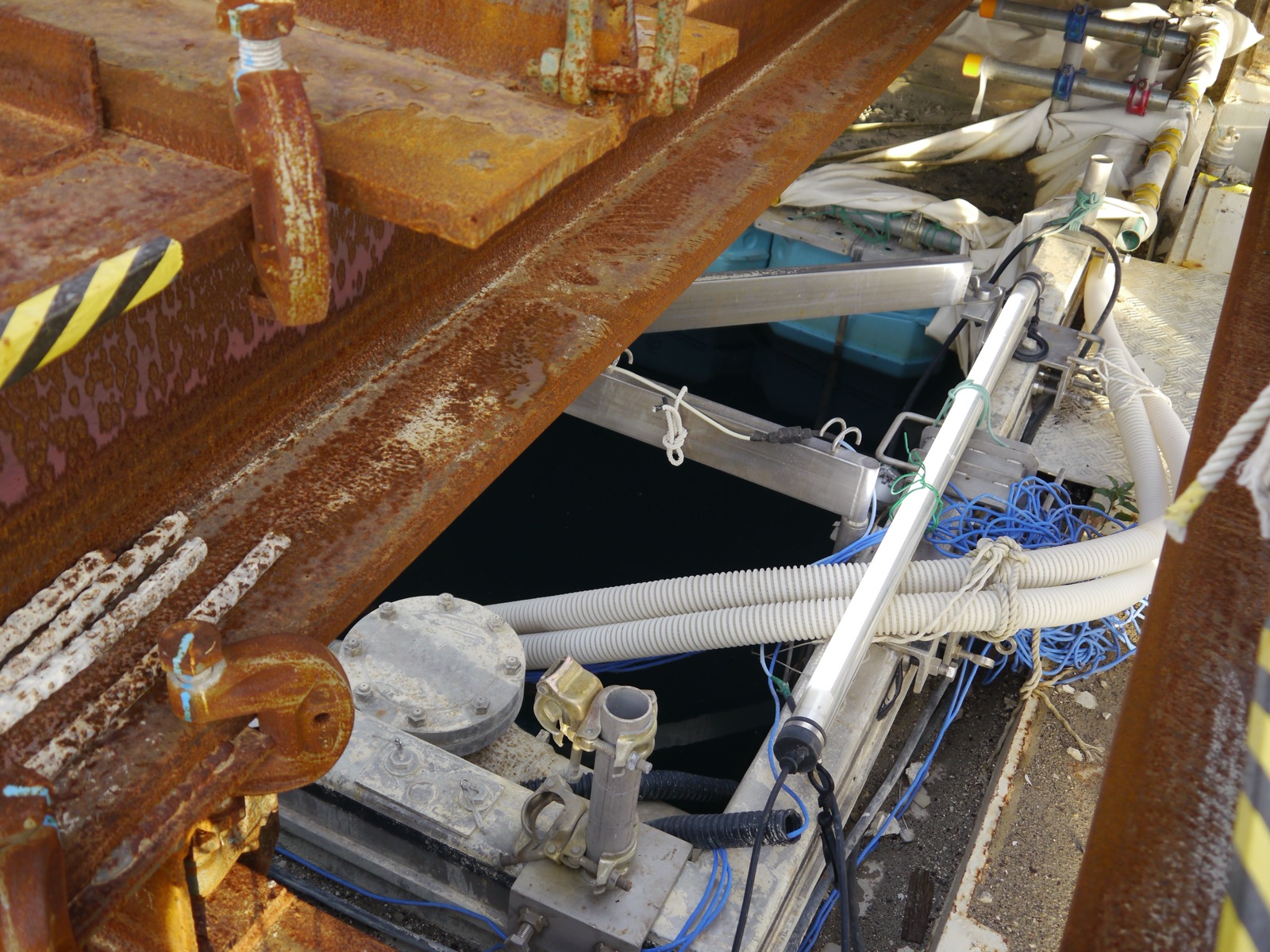
The scale of the gap between ambition and progress was captured in late 2024, when TEPCO, using a telescopic device pushed into the containment of unit 2, retrieved the very first sample of melted fuel debris ever recovered from any of the reactors — a fragment weighing a few grams. It was a genuine technical milestone, the result of repeated delays and failed earlier attempts, and it was also a measure of how far there is to go: a few grams, against 880 tonnes. The official estimates put the full decommissioning at thirty to forty years and its total cost, together with compensation and decontamination, in the tens of trillions of yen — figures that have only risen with time, and that the company, effectively taken into public hands after the accident, cannot bear alone.
What the question still is
The most haunting document of the Fukushima disaster is not a photograph of an exploding reactor building. It is a spreadsheet from 2008 with the number 15.7 in it.
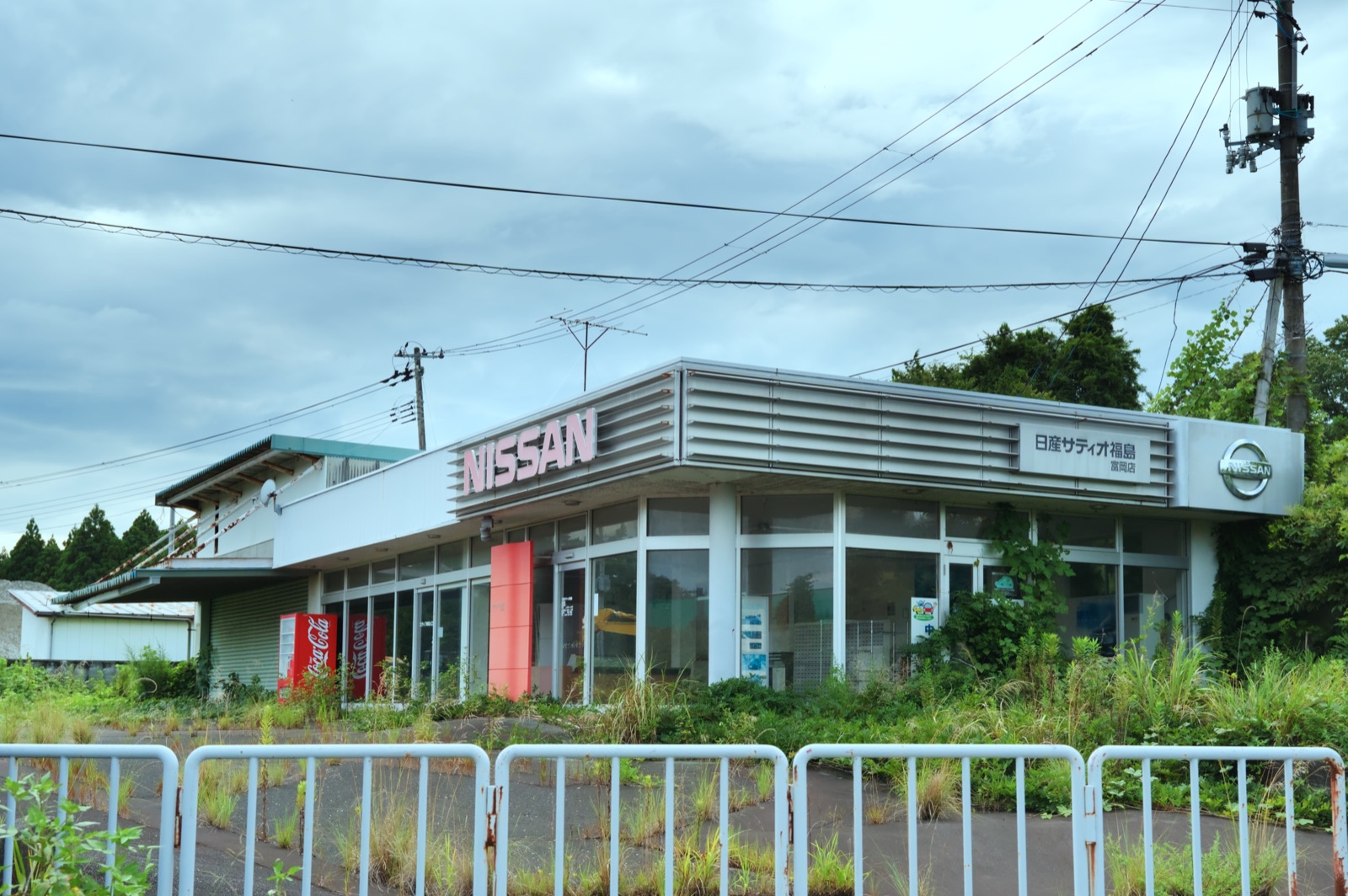
Everything that followed — the drowned generators, the melted cores, the explosions, the 150,000 people who left their homes, the abandoned towns where the clocks stopped and the shops stood open to the weather, the thousand tanks, the 880 tonnes of corium that no one yet knows quite how to remove — flowed from a choice that was made years before the wave, in a quiet room, by people weighing a calculated risk against the cost of acting on it. They judged that the risk could be studied rather than guarded against. The earthquake and the tsunami were beyond anyone's control. That judgement was not.
The reactors that scrammed on March 11 worked exactly as designed. The sea wall failed because it had been built, decades earlier, to a standard the operator's own engineers had since shown to be too low — and the warning had been received, and shelved. That is why Japan's own parliament called the result man-made, and why the question Fukushima leaves is not really about nuclear power at all. It is about what an institution does with a number it does not want to be true — and how a culture of deference, collusion, and face-saving can turn a known, quantified, avoidable danger into a catastrophe that it then insists no one could have seen coming.
Sources
Primary
- National Diet of Japan Fukushima Nuclear Accident Independent Investigation Commission (NAIIC), The Official Report, July 5, 2012 (and Chairman Kurokawa's English-edition message).
- Investigation Committee on the Accident at the Fukushima Nuclear Power Stations (Hatamura Committee), interim and final reports, 2011-2012.
- International Atomic Energy Agency, The Fukushima Daiichi Accident (Director General's report and technical volumes, 2015).
- IAEA, Comprehensive Report on the Safety Review of ALPS Treated Water (2023).
- TEPCO, in-house investigation report (June 2012) and the third-party panel findings on the 'meltdown' terminology (2016).
- Tokyo District Court judgment acquitting three former TEPCO executives (September 19, 2019); Tokyo High Court judgment upholding the acquittals (January 18, 2023).
- Tokyo District Court judgment in the TEPCO shareholder derivative suit (July 13, 2022).
- Japanese government decision on discharge of ALPS treated water (April 13, 2021).
Secondary
- Yoichi Funabashi and the Rebuild Japan Initiative Foundation, Fukushima: The Independent Investigation (2012; English edition Fukushima and the Future of Nuclear Power).
- Contemporaneous and retrospective reporting in NHK, the Asahi Shimbun, The New York Times, Reuters, the BBC, and the Financial Times on the accident, the trials, the water release, and the decommissioning.
- Reporting on the November 2024 retrieval of the first sample of melted fuel debris from unit 2.
Academic / reference
- World Nuclear Association and OECD Nuclear Energy Agency technical summaries of the Fukushima Daiichi accident sequence.
- Scholarship on regulatory capture in nuclear governance and on the disaster-related (as distinct from radiological) mortality among evacuees.
- United Nations Scientific Committee on the Effects of Atomic Radiation (UNSCEAR) assessments of radiation exposure from the accident.
Inspired this / based on it
Netflix / Masaki Nishiura
Eight-part Japanese drama reconstructing the days inside the plant, from the operators' and government's perspectives.
Setsurō Wakamatsu
Japanese feature film on the plant workers who stayed during the crisis, based on Ryusho Kadota's account.
David Lochbaum, Edwin Lyman, Susan Q. Stranahan / Union of Concerned Scientists
The New Press. Detailed technical-and-institutional reconstruction of the accident and its causes.
PBS Frontline
Contemporary documentary reconstructing the first days of the accident from inside the plant and the government.
Filed under
- #fukushima-tepco
- #fukushima-daiichi
- #tepco
- #nuclear-disaster
- #tohoku-earthquake
- #tsunami
- #naiic
- #kiyoshi-kurokawa
- #meltdown
- #alps-treated-water
- #regulatory-capture
- #japan
- #2010s
- #confirmed
Click any tag for every article carrying it.
Continue reading
Chernobyl
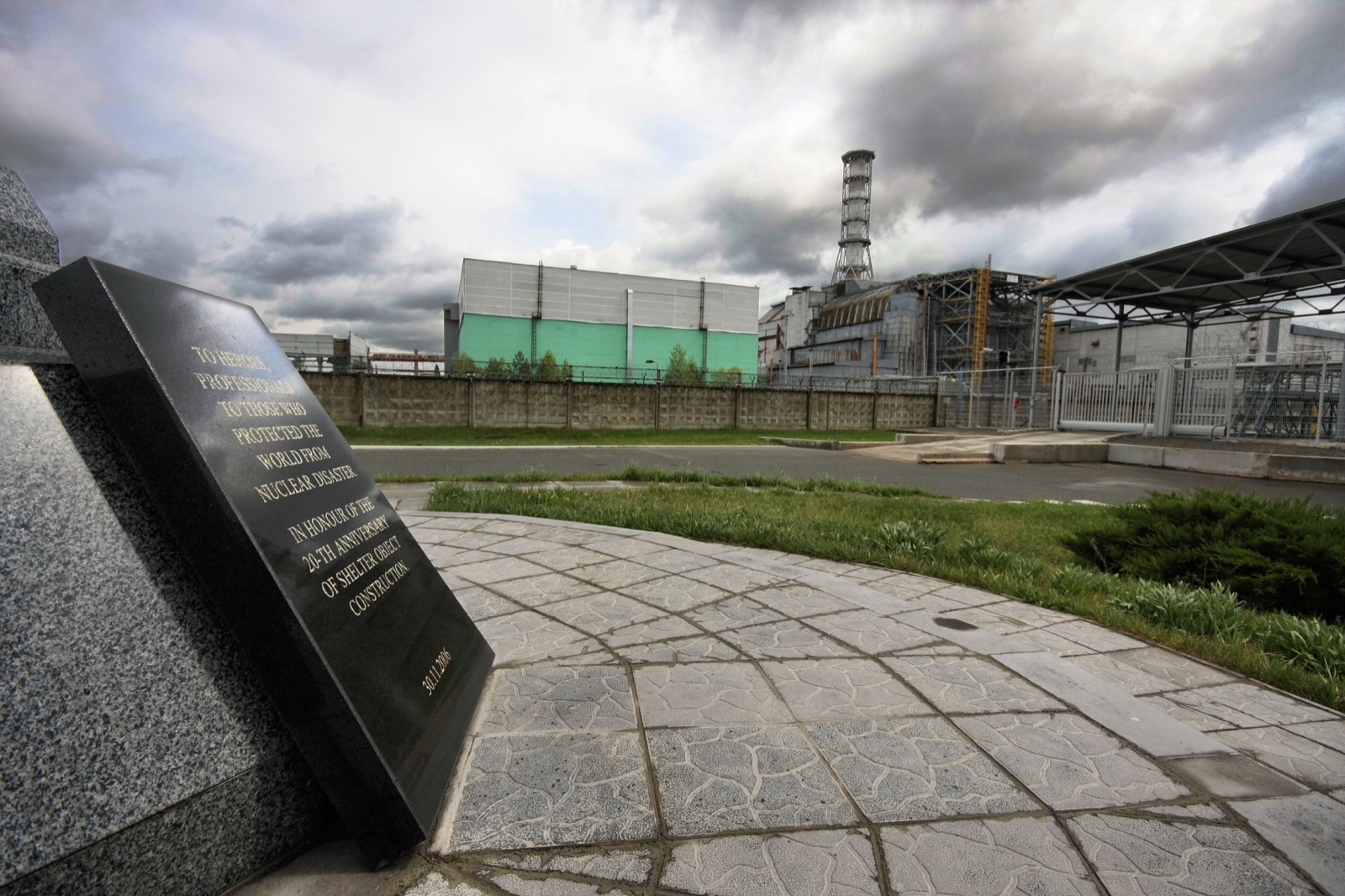
At 1:23:40 a.m. local time on Saturday, April 26, 1986, reactor 4 at the V. I. Lenin Nuclear Power Plant near Pripyat, Ukrainian Soviet Socialist Republic, exploded. A planned low-power safety test, run by night-shift personnel who had been ordered to proceed despite warnings, drove the RBMK-1000 reactor into a state its designers had specifically marked as forbidden. The graphite-tipped control rods, lowered to scram the reactor, briefly added reactivity before shutting it down. The core's thermal output spiked to approximately 30,000 megawatts — ten times rated capacity — in four seconds. Two steam explosions ripped the 1,000-tonne upper biological shield off the reactor and exposed the burning graphite core to the atmosphere. Two workers died at the moment of explosion. Twenty-nine more — firefighters, control-room operators, plant electricians — died from acute radiation syndrome within four months. Forty-eight hours passed before the city of Pripyat (population 49,360) was evacuated. The Soviet government did not publicly acknowledge the accident until April 28, after Swedish nuclear technicians at Forsmark detected the airborne plume 1,200 kilometres to the northwest. The cover-up was, by Mikhail Gorbachev's own subsequent assessment, the moment Soviet glasnost became unavoidable.
Bhopal
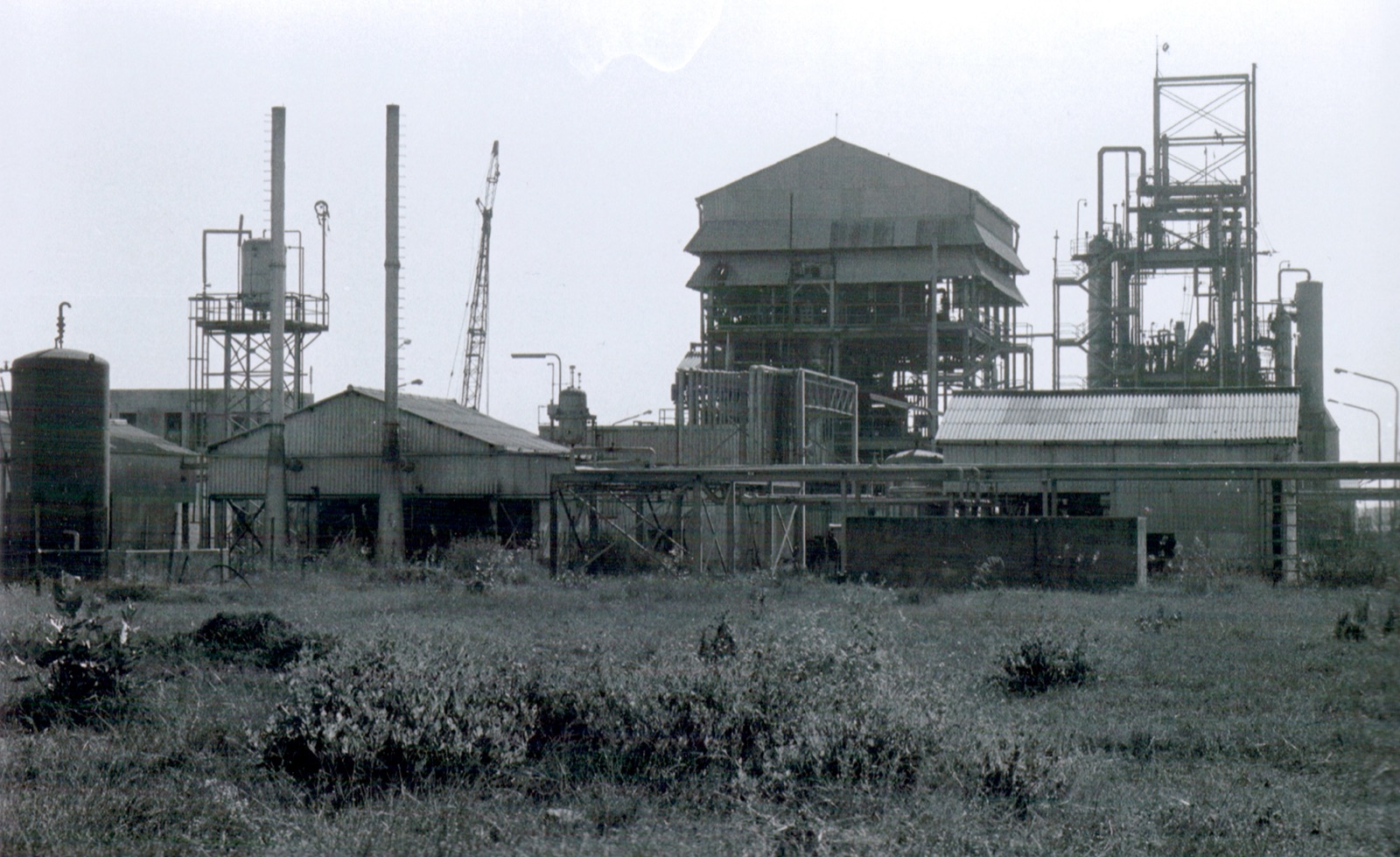
At approximately 11:30 p.m. on Sunday, December 2, 1984, water entered Tank 610 at the Union Carbide India Limited (UCIL) pesticide plant in Bhopal, Madhya Pradesh. The tank contained 42 tonnes of liquefied methyl isocyanate, an intermediate chemical used in the production of the pesticide Sevin. The water-MIC reaction was exothermic. The tank's pressure rose, then its temperature, then both ran away. The refrigeration system that should have kept the tank below 5°C had been disabled to save electricity. The vent gas scrubber that should have neutralized any escaping MIC was offline for maintenance. The flare tower that should have burned residual gas was disconnected. At approximately 12:30 a.m. on December 3, the tank's emergency relief valve opened and approximately 30 tonnes of methyl isocyanate vapor was released into the air above central Bhopal. The wind carried it south-east, across the slum districts of Jaiprakash Nagar, Kazi Camp, and Chola. By dawn, between 3,800 and 8,000 people were dead. The Indian government's final official count was eventually placed at 3,787 directly killed in the first 72 hours and a further ~15,000-25,000 over the following decades from exposure-attributable illness. Approximately 558,125 people received compensation as gas-exposure victims under the 1989 settlement. It remains the worst industrial disaster in history.
Dieselgate
In late 2013, the International Council on Clean Transportation paid a small team at West Virginia University to put two diesel Volkswagens on the road from Los Angeles to Seattle, hooked up to portable emissions sensors. The team expected to find data confirming what Volkswagen's American marketing campaign had been claiming for years: that 'clean diesel' was real. Instead they found nitrogen-oxide emissions up to forty times the legal limit. Eighteen months later, on September 18, 2015, the U.S. EPA formally accused Volkswagen of installing software in eleven million cars that detected emissions tests and lied to them. By the end of the week, the CEO had resigned and Volkswagen had begun a six-year journey through $34 billion of fines and settlements.