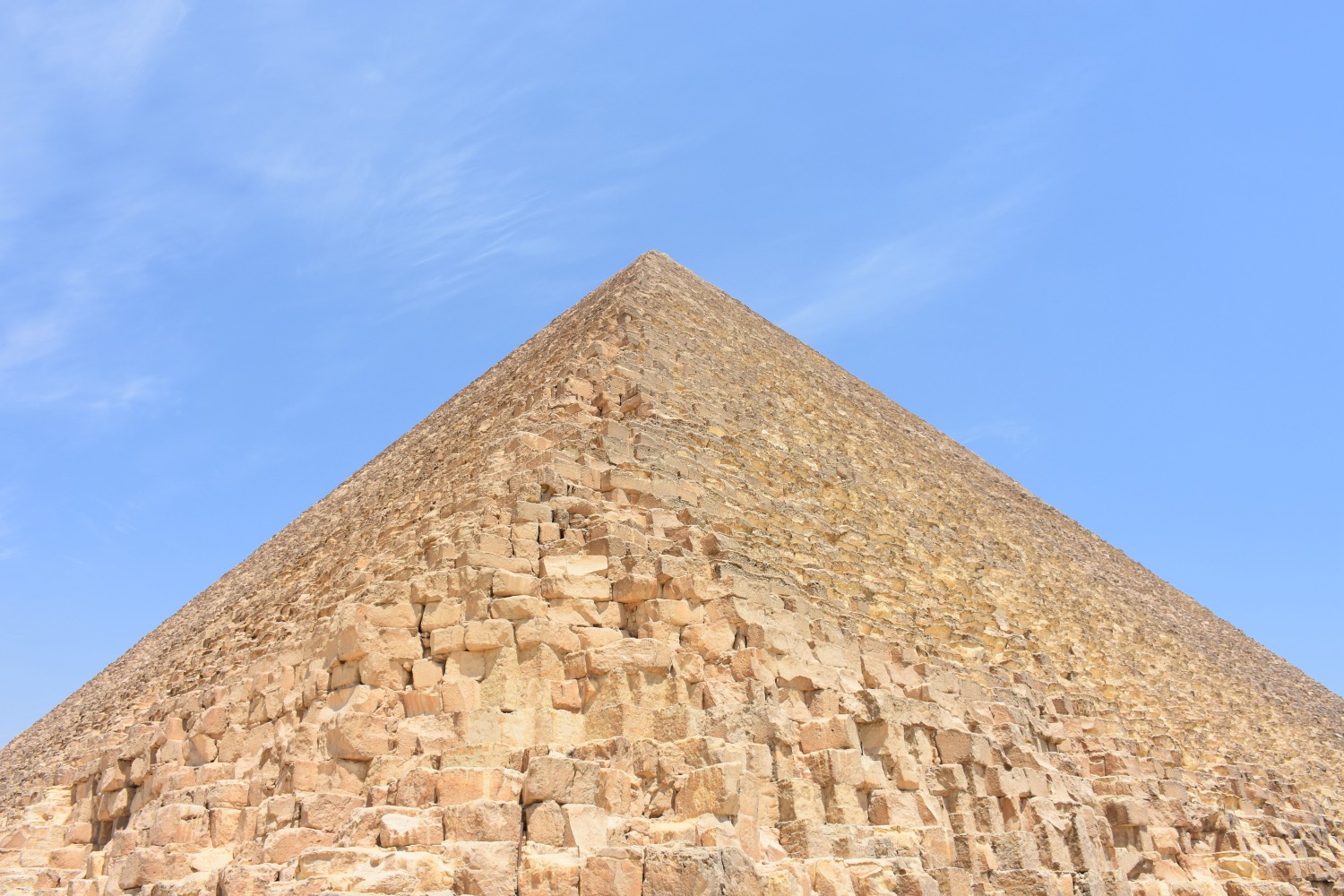
The Great Pyramid of Giza, tomb of the pharaoh Khufu, built around 2560 BCE. Its 2.3 million stone blocks made it the tallest structure on Earth for nearly four thousand years. Wikimedia Commons / CC BY-SA 4.0.
The Great Pyramid of Giza: How It Was Really Built
Egypt, c. 2560 BCE — For nearly four thousand years it was the tallest structure on Earth: a mountain of 2.3 million stone blocks raised as a tomb for a pharaoh. It has drawn more fantastical theories than any monument in history — and the documented truth of how it was built is more impressive than any of them
- Category
- Ancient & Historical Mysteries
- Published
- Length
- 3,550 words · 18 min read
- Author
- The editors
No monument on Earth has attracted more nonsense than the Great Pyramid of Giza, and none has less need of it. The plain facts of the pyramid are staggering enough: a structure of more than two million stone blocks, aligned to the cardinal points with an accuracy that would satisfy a modern surveyor, raised by a Bronze Age society without iron tools, wheels of any practical use, or pulleys, and standing four and a half thousand years later as the last survivor of the ancient world's Seven Wonders. Faced with this, a certain kind of imagination cannot accept that ordinary human beings were responsible, and so it reaches for the extraordinary — for lost civilisations, secret wisdom, and alien engineers. The irony is that the true story, painstakingly recovered by archaeologists over the past century, is both entirely human and far more impressive than the fantasies. We now know, in remarkable detail, who built the Great Pyramid, how they lived, how they were fed and organised, where they got their stone, and how they moved it — and we even possess the diary of a man who helped supply the project. The Great Pyramid is not a mystery imported from elsewhere. It is the supreme achievement of ancient Egyptian civilisation.
This is the story of how it was really built.
The last wonder
The Great Pyramid was built for Khufu, a pharaoh of Egypt's Fourth Dynasty who reigned in the twenty-sixth century BCE, at the height of the age of pyramid-building known as the Old Kingdom. It was the culmination of a tradition that had advanced rapidly over the preceding century — from the stepped pyramid of Djoser, through the experiments of Khufu's father Sneferu, who built several pyramids including the first true smooth-sided ones, to the perfected form at Giza. Khufu's monument was the largest ever attempted, and it was never surpassed; his successors built the two other great Giza pyramids, those of Khafre and Menkaure, but neither matched it. Together with the Great Sphinx, the mortuary temples, the causeways, and the fields of smaller tombs, the three pyramids formed one of the greatest funerary landscapes ever created.
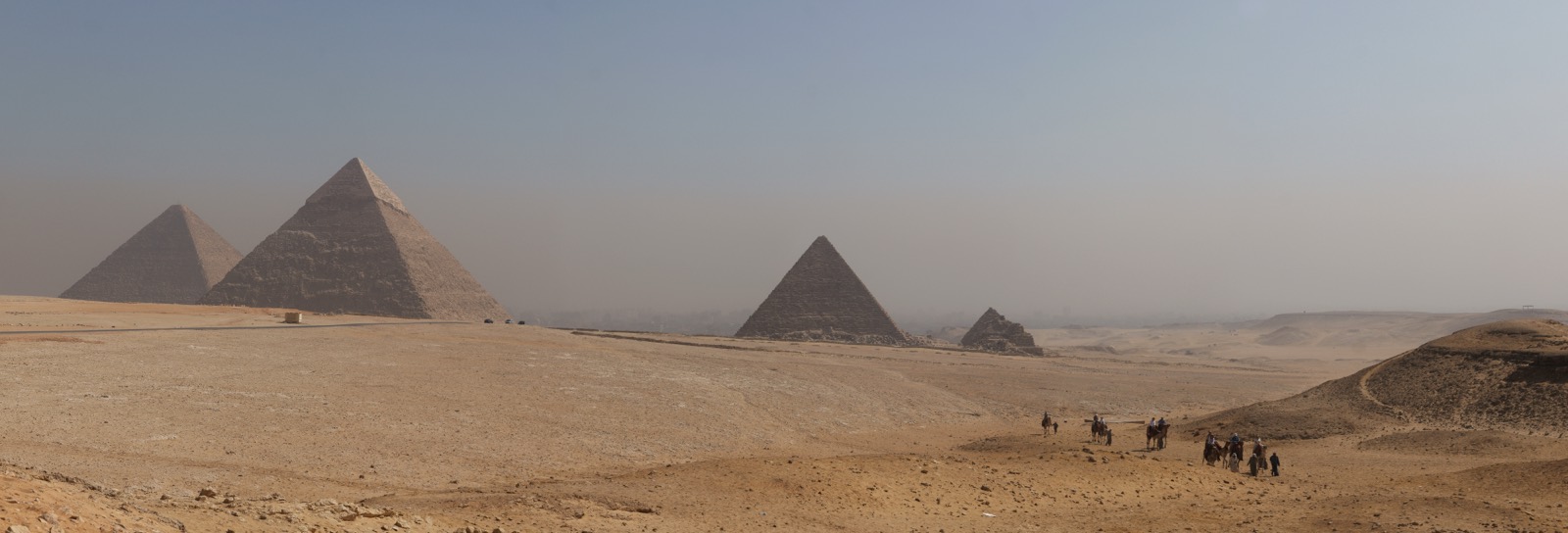
That the Great Pyramid is the sole survivor of the Seven Wonders of the Ancient World is no accident. Where the Hanging Gardens, the Colossus of Rhodes, the Lighthouse of Alexandria, and the rest have vanished utterly, the pyramid remains because it is, quite simply, almost indestructible: a solid mountain of stone that time, earthquakes, and thirty centuries of stone-robbing have barely diminished. Even stripped of its gleaming outer casing, which once made it a blaze of polished white limestone visible for miles, it dominates the plateau as it has since the Bronze Age. It is the oldest of the Wonders and the only one an ancient Greek tourist and a modern one could both have seen — a continuity of witness across the whole of recorded history.
A mountain of stone
The physical facts of the Great Pyramid remain astonishing however often they are repeated. It is built of roughly 2.3 million blocks of stone — mostly local limestone for the core, finer Tura limestone for the smooth outer casing, and massive granite blocks, brought some 800 kilometres from Aswan, for the internal chambers. The average block weighs over two tonnes; the granite beams roofing the King's Chamber weigh as much as eighty. The whole structure masses around six million tonnes. Originally its four triangular faces were sheathed in polished white limestone, cut and fitted so precisely that the joints were, in places, less than a millimetre wide, and capped, perhaps, with a gilded capstone; most of this casing was stripped away in the Middle Ages to build medieval Cairo, exposing the stepped core we see today.
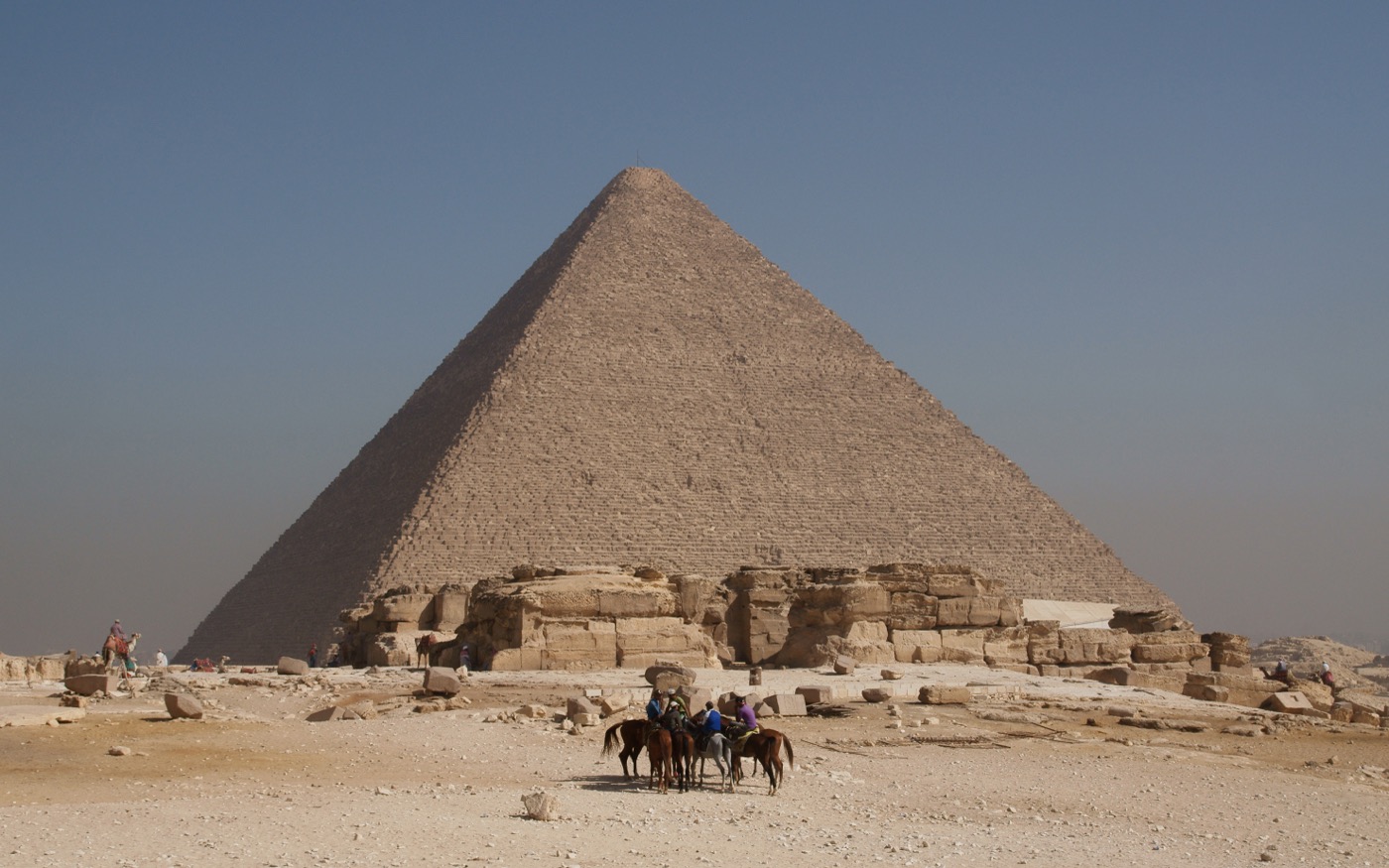
The precision is as impressive as the mass. The pyramid's base is level to within a couple of centimetres across its entire footprint of more than five hectares, and its sides are aligned to true north, south, east, and west to within about a fifteenth of a degree — an accuracy the Egyptians achieved, almost certainly, by careful astronomical observation of the stars or the sun. This combination of the colossal and the exact is exactly what has fuelled disbelief that ordinary people could have done it. But precision and scale are not evidence of magic; they are evidence of skill, planning, and above all organisation — the marshalling of a vast, disciplined effort toward a single end. And that organisation is precisely what the archaeology of the last hundred years has brought to light.
Who built it — not slaves
The most durable myth about the pyramids is that they were built by slaves — a picture drawn partly from the Greek historian Herodotus, writing two thousand years after the fact, and cemented by Hollywood and by a mistaken association with the biblical Exodus. Archaeology has comprehensively overturned it. Beginning in the 1990s, the Egyptologists Mark Lehner and Zahi Hawass excavated, just south of the pyramids, the lost town where the builders actually lived: a substantial settlement with bakeries capable of feeding thousands, breweries, galleries that served as barracks, and evidence of huge quantities of bread, beer, and — crucially — beef, the food of people who were valued, not starved. Nearby lay the workers' cemeteries, where the labourers were buried in tombs of their own, close to the sacred site, with grave goods and inscriptions of pride.
The bones themselves tell the story. The skeletons from the workers' cemeteries show the marks of hard physical labour — worn joints, healed injuries — but also of care: fractures that had been set and had mended, and even signs of surgery, evidence that these workers were looked after when hurt. This was a workforce whose health mattered to those who directed it, sustained by an organised state that fed, housed, and tended it. The image of whip-driven slaves collapses entirely; in its place stands something more extraordinary — a society capable of mobilising, provisioning, and managing tens of thousands of people in a coordinated effort over decades.
Merer's diary: the logbook of the Great Pyramid
The single most remarkable confirmation of how the pyramid was built came in 2013, when the French archaeologist Pierre Tallet excavated a set of ancient harbours on the Red Sea coast at a site called Wadi al-Jarf. There he found, stored in the galleries of the port, the oldest inscribed papyri ever discovered — documents dating to the very end of Khufu's reign, around 2560 BCE, and thus contemporary with the building of the Great Pyramid itself. Among them was a logbook kept by a middle-ranking official named Merer, who commanded a team of some forty men. The "Diary of Merer" records, day by day, the work of his crew — and that work was hauling fine limestone from the quarries at Tura, by boat, along the Nile and a network of canals, to Giza, for the casing of the Great Pyramid.
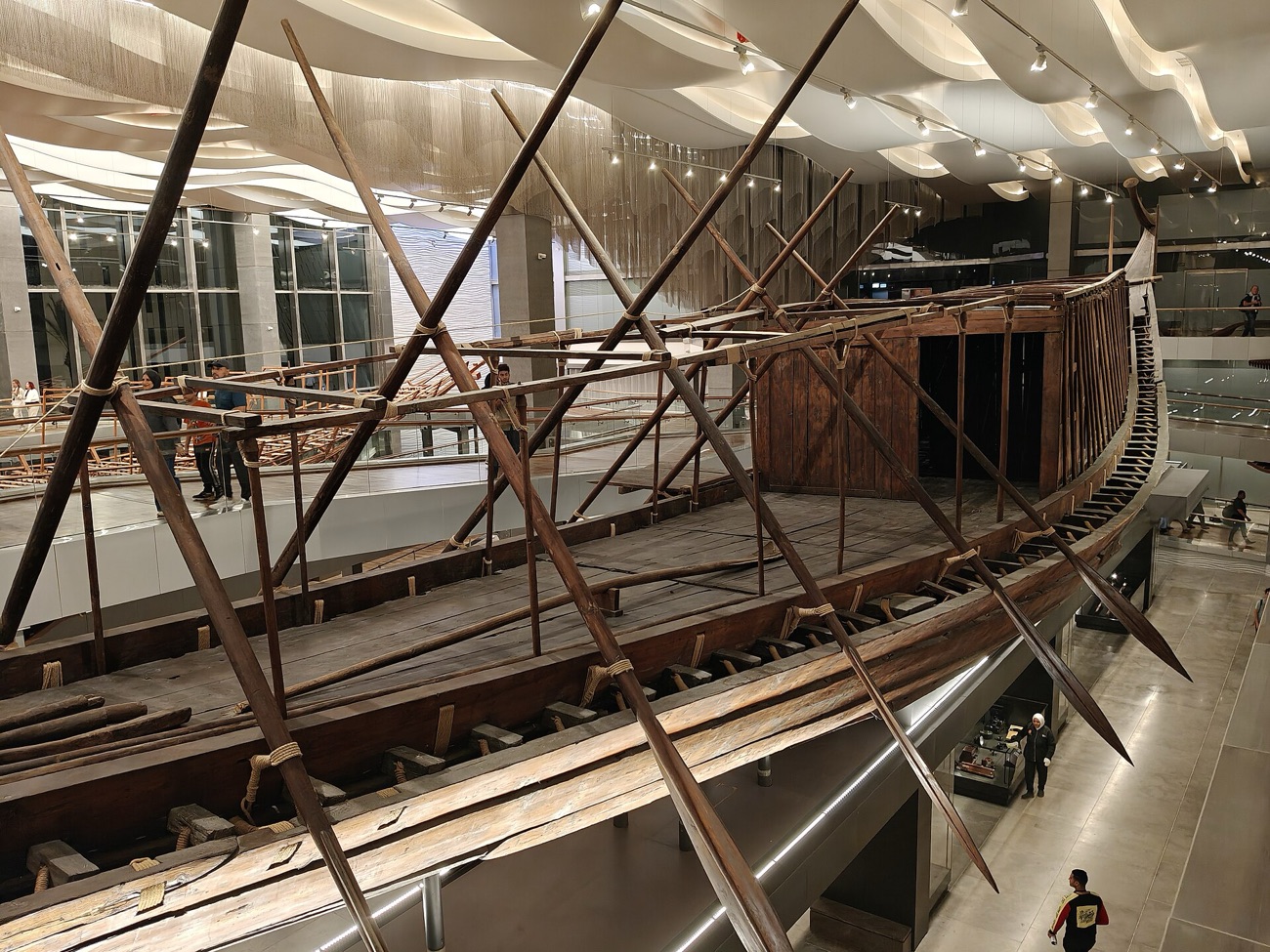
The significance of Merer's diary is hard to overstate. It is direct, first-hand, contemporary documentation of the pyramid's construction, written by one of the people involved. It shows the logistics of the project in concrete detail: the transport of stone by water, the organisation of labour into teams, the administrative machinery of an operation that reached from the quarries and the distant Red Sea ports to the building site. It places the construction of the Great Pyramid firmly and finally where it belongs — in the hands of the Egyptian state and its people, working with boats, ropes, and careful accounting. No document could more completely demolish the notion that the pyramid's origins are mysterious or beyond the capacity of its builders. We have, quite literally, a foreman's record of the job.
How they moved the stones
With the workforce and its organisation established, the mechanics of construction become a question of ordinary — if formidable — engineering. The core blocks were quarried on site or nearby, cut from the bedrock with copper chisels, stone hammers, and hard dolerite pounders, and split with wooden wedges. The finer casing limestone came from Tura across the river, and the granite from Aswan far to the south, floated down the Nile on barges as Merer's diary describes. To move the blocks overland, the Egyptians dragged them on wooden sledges — and here a charming piece of evidence solves an old puzzle: a wall painting in the tomb of a nobleman, Djehutihotep, shows a colossal statue being hauled on a sledge while a man pours water onto the sand in front of it. Wetting the sand, experiments have confirmed, dramatically reduces friction and roughly halves the force needed to pull a heavy load — a simple, brilliant technique.
Inside the pyramid
The interior of the Great Pyramid is as impressive as its exterior, and quite unlike the solid-fill design of most pyramids. From the entrance, a descending passage leads down toward an unfinished subterranean chamber, while an ascending passage climbs to the pyramid's heart. The ascending passage opens into the Grand Gallery, one of the marvels of ancient architecture: a soaring corridor nearly fifty metres long and almost nine metres high, roofed with a corbelled vault of overlapping stone courses that step inward to span the gap — a bold and beautiful solution to the problem of covering a tall, narrow space in stone. Beyond it lies the King's Chamber, built entirely of granite, containing a lidless granite sarcophagus, and roofed by enormous granite beams with a series of "relieving chambers" above to distribute the immense weight of the pyramid overhead.
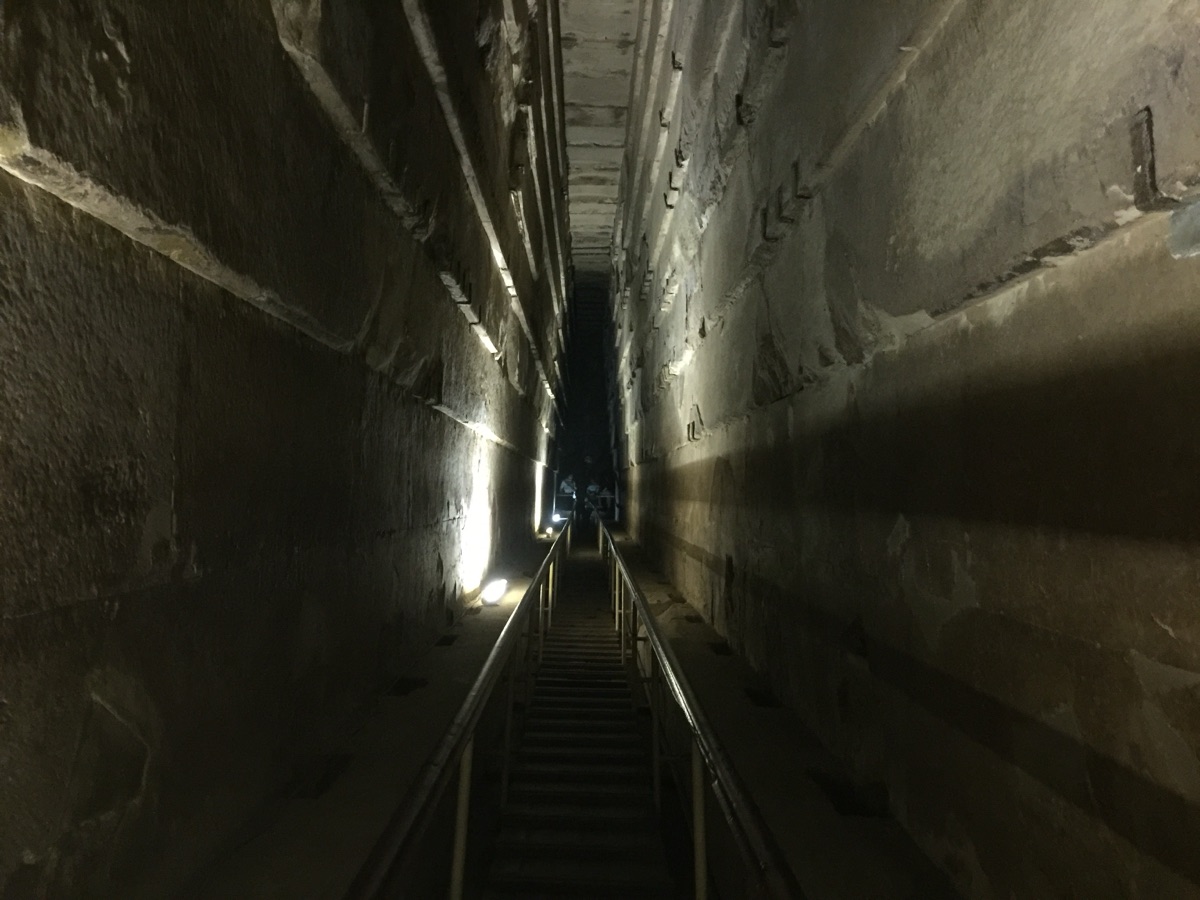
The pyramid still holds discoveries. In 2017 the ScanPyramids project, using muon tomography — a technique that detects cosmic-ray particles passing through the structure — identified a large previously unknown void above the Grand Gallery, at least thirty metres long, and in 2023 a smaller corridor was confirmed behind the north face. What these spaces were for — whether structural, functional, or something else — is not yet known, and their investigation continues. Far from being fully explored, the Great Pyramid remains an active site of research, yielding its secrets slowly to non-destructive science. But these are the ordinary open questions of archaeology, not evidence of the paranormal: hidden rooms in a four-and-a- half-thousand-year-old building are precisely what one might expect.
Pyramids, pi, and aliens
Against this mountain of evidence stands an equally vast industry of pseudoscience, and it is worth confronting directly. The tradition of "pyramidology" — reading secret mathematics and prophecy into the pyramid's measurements — goes back to the nineteenth century and the astronomer Charles Piazzi Smyth, and it persists in claims that the pyramid encodes the value of pi, the golden ratio, the dimensions and mass of the Earth, and coded dates of future events. Most of these "discoveries" dissolve on inspection: with enough measurements and enough freedom to combine them, almost any number can be produced, and apparent constants like pi emerge naturally from the Egyptian method of measuring slopes (the seked) without anyone intending them. Other claims — that the pyramid was a power plant, a water pump, or a beacon; that the three Giza pyramids were deliberately laid out to mirror the stars of Orion's Belt; that the precision could only have been achieved with lasers or extraterrestrial help — range from the unsupported to the absurd, and all share the same insulting premise: that the Egyptians could not have built their own greatest monument.
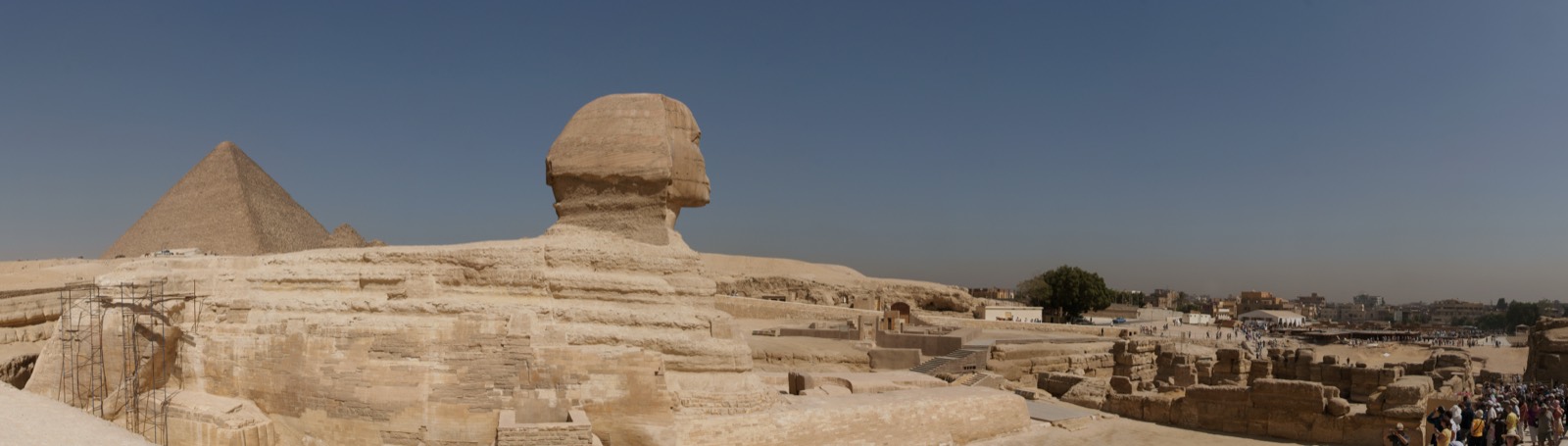
The Egyptian evidence answers every one of these claims. The pyramid is a tomb, part of a mortuary complex whose every element — the burial chamber, the sarcophagus, the mortuary temple, the causeway, the boat pits — fits the well-understood religion of Old Kingdom Egypt, in which the pharaoh's monument secured his journey into the afterlife and his eternal role among the gods. Its builders, its quarries, its tools, its transport, and its administration are documented. The mathematical "mysteries" are artefacts of cherry-picking. And the notion that a civilisation which left us its records, its art, its tools, its workers' bones, and a foreman's diary needed outside help to build its tombs is not a theory but a refusal to look at the evidence. The Great Pyramid does not need aliens. It needs, and richly rewards, attention to what the Egyptians actually left us.
What it means
The Great Pyramid of Giza endures, after all the theories, as the greatest monument of one of humanity's greatest civilisations, and as a lesson in where wonder should properly be directed. For centuries it was easier to imagine that such a thing came from beyond the ordinary world than to credit the Egyptians with it; and yet, decade by decade, the ordinary world has supplied the answers — the workers' town, the cemeteries and their eloquent bones, the quarries and the sledges and the wetted sand, the ramps, and finally the diary of Merer, a working man of the twenty-sixth century BCE whose logbook reaches across the millennia to tell us, in his own hand, how the stone was moved. There is no more complete refutation of the fantasy, and no more moving affirmation of the truth: the Great Pyramid was built by people, and we can very nearly watch them do it.
In the end, the pyramid stands as a monument not to mystery but to human capacity — to what a people can accomplish when a whole society bends itself to a shared purpose across generations. It was raised by Egyptians who quarried and hauled and fitted its millions of stones, who were fed on bread and beer and beef, who were healed when they were hurt and honoured when they died, and who left, in their village and their graves and their papyri, the record of their labour for us to read. The Great Pyramid is not the work of gods or of aliens, and it is diminished by every attempt to make it so. It is the work of human beings — and that, standing in its shadow and grasping at last how it was done, is the most astonishing fact of all. The last wonder of the ancient world is a wonder precisely because it is ours.
In the end, the Great Pyramid of Giza remains what it has always truly been: the crowning achievement of ancient Egypt, and one of the supreme achievements of the human species. It has outlasted the other six Wonders of the ancient world, outlasted the civilisation that built it, and outlasted every empire since; and it will outlast, too, the endless theories that try to take it from its makers. We know who built it, and when, and how, and even — through the diary of one honest official who counted his boatloads of stone — something of the daily texture of the work. The pyramid needs no aliens, no lost Atlantis, no secret wisdom to explain it. It needs only the recognition of what human beings, organised and determined and skilled, achieved on the edge of the desert forty-six centuries ago. That is the real marvel of the Great Pyramid, and it is greater than any fable: not that it is beyond us, but that it is entirely, magnificently, human.
Inspired this / based on it
Pierre Tallet & Mark Lehner
On the Wadi al-Jarf papyri, including Merer's diary, and what they reveal about building the pyramid.
BBC / PBS
A documentary on Merer's diary and the archaeology of the pyramid's construction.
Filed under
- #great-pyramid-giza
- #ancient-egypt
- #khufu
- #archaeology
- #pyramids
- #old-kingdom
- #wadi-al-jarf
- #ancient-history
Click any tag for every article carrying it.
Continue reading
Stonehenge: The Great Stone Circle of Salisbury Plain
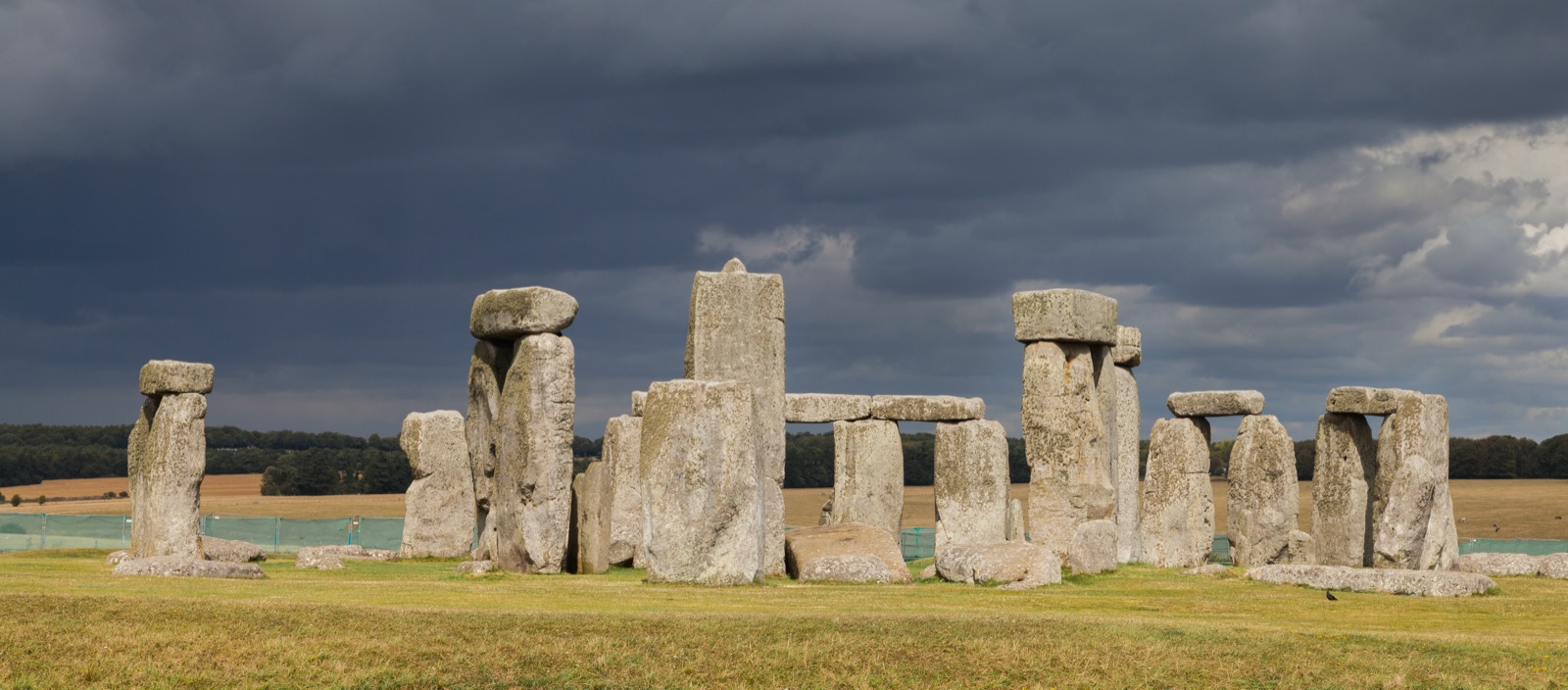
On the open chalk downland of Salisbury Plain in southern England stands the most famous prehistoric monument in the world: a ring of enormous standing stones, some capped by level lintels, arranged with a precision that has drawn wonder and speculation for more than a thousand years. Stonehenge was not built in a day, or in a single lifetime, or by a single people. It grew over roughly fifteen hundred years, from about 3000 BCE, beginning as a simple circular earthwork and cremation cemetery and culminating, centuries later, in the great stone architecture we know — the towering sarsens quarried from the hills to the north, and the smaller 'bluestones' brought, astonishingly, some 150 miles overland from the mountains of west Wales. Its builders, working with antler picks, timber, rope, and muscle, dressed the stones with woodworking joints translated into rock, raised lintels weighing tonnes onto uprights, and aligned the whole monument to the rising and setting of the sun at the solstices. For centuries, outsiders credited the achievement to anyone but the people who actually managed it — to Merlin and giants, to Druids, and in our own age to visitors from the stars. The truth is that Stonehenge is the work of prehistoric Britons of extraordinary skill and organisation. How they built it, we largely understand. Why they built it is a question we are still, carefully, trying to answer. This is the story of the great stone circle.
Göbekli Tepe: The Temple That Rewrote Prehistory
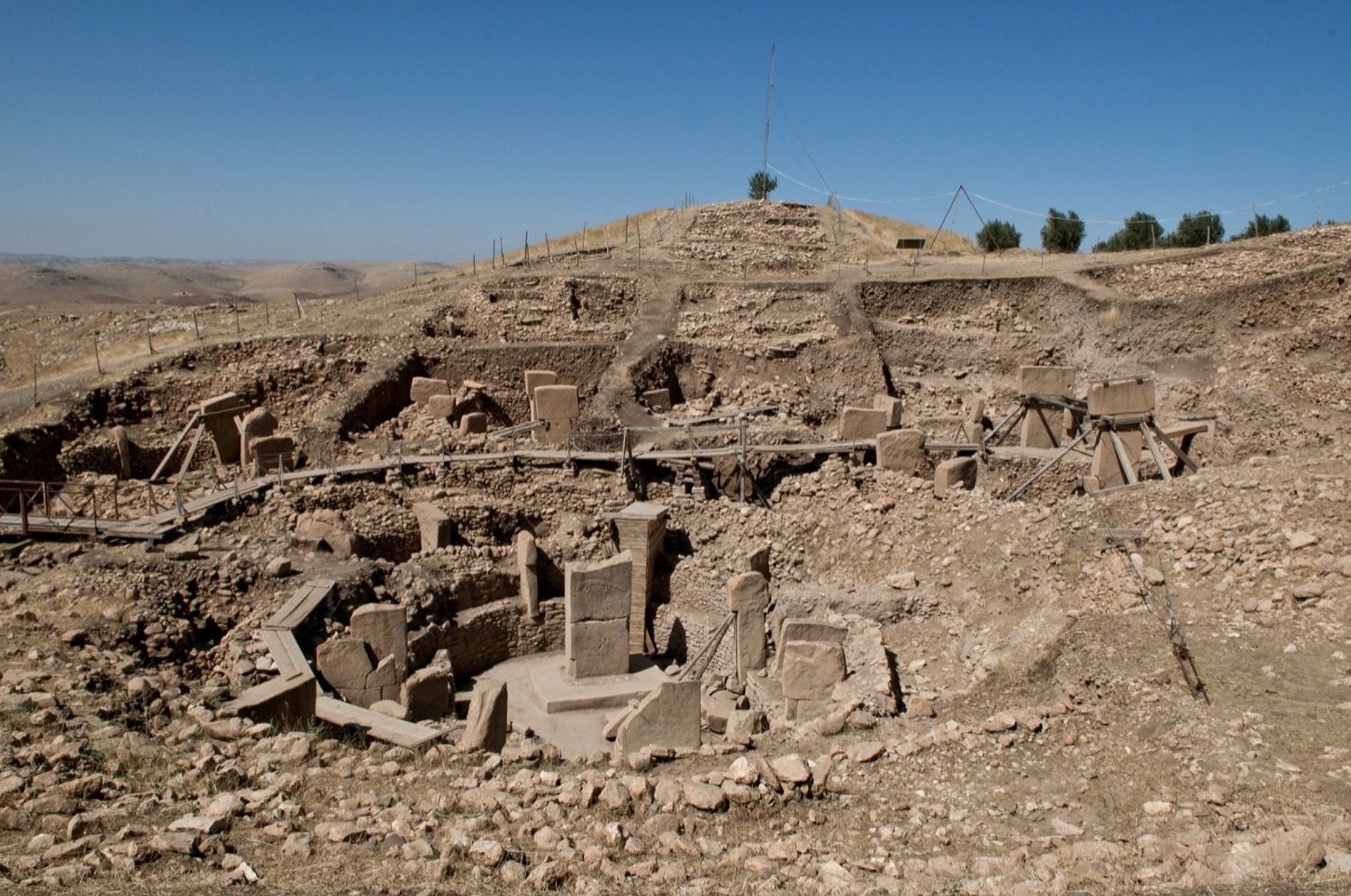
On a limestone ridge overlooking the plains of southeastern Turkey, near the ancient city of Urfa, stands a place that forced archaeologists to rewrite the earliest chapter of the human story. Göbekli Tepe — the name means 'Potbelly Hill' in Turkish — is a complex of great circular enclosures built from massive T-shaped stone pillars, some more than five metres tall and weighing many tons, many of them carved in relief with foxes, boars, snakes, scorpions, vultures, and other animals. It is staggeringly old. Radiocarbon dating places its construction to around 9500 BCE and earlier, making it roughly eleven and a half thousand years old — some six thousand years older than Stonehenge and seven thousand older than the Great Pyramid. What made the discovery revolutionary was not merely its age but who built it: not a settled society of farmers with cities and kings, but hunter-gatherers, people without pottery, without metal, without the wheel, and without — at least at first — agriculture itself. The prevailing wisdom had long held that monumental architecture was a product of civilisation, something only settled, food-producing societies could afford. Göbekli Tepe stood that assumption on its head, and suggested that the impulse to gather and build something great may have come first. It is a genuine mystery — but a mystery of human achievement, not of lost super-civilisations or visitors from the stars. This is the story of the temple that rewrote prehistory.
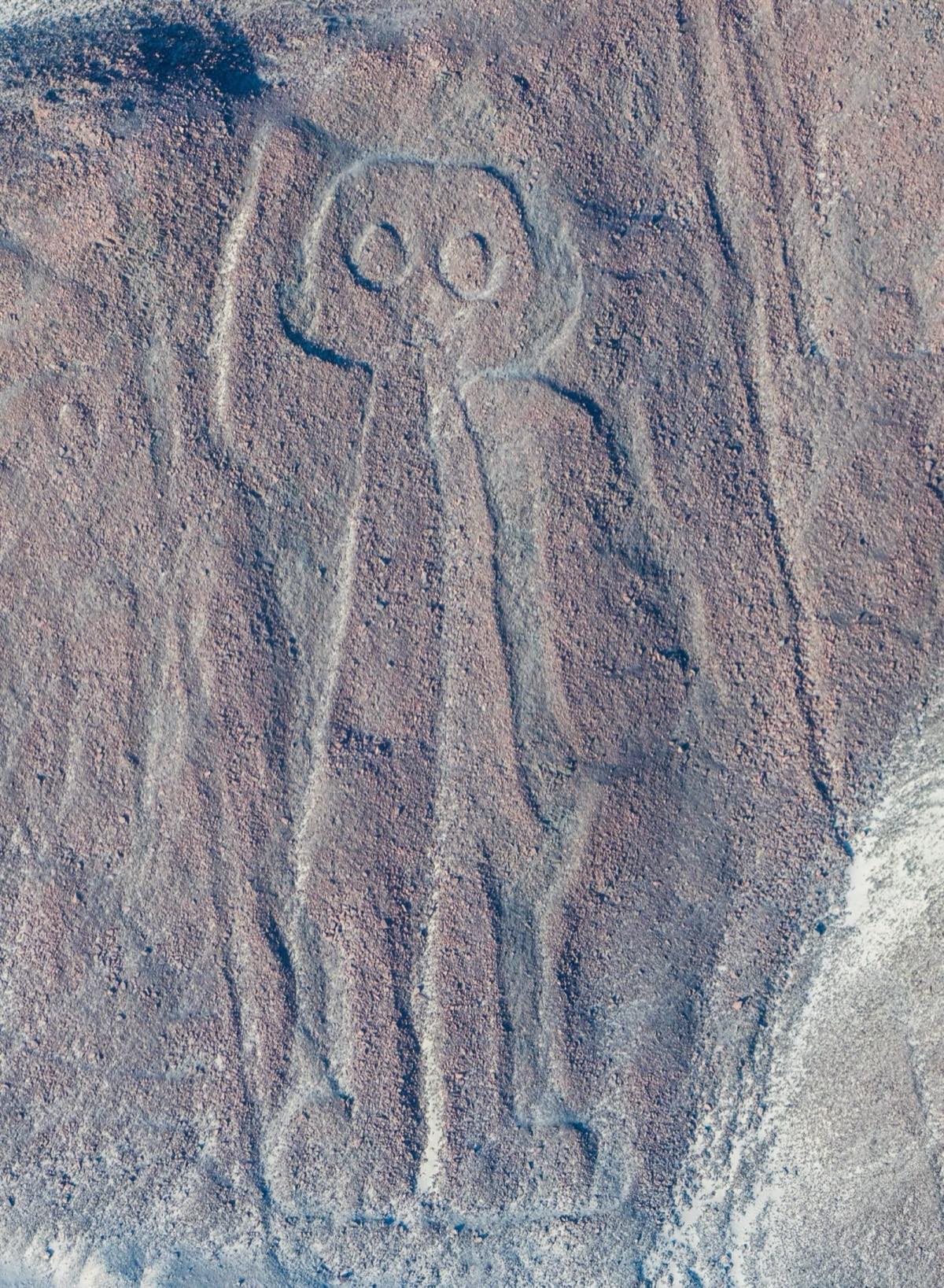
The Nazca Lines: Giant Drawings in the Peruvian Desert
On the arid, wind-still plateau between the towns of Nazca and Palpa in southern Peru lies one of the most extraordinary bodies of ancient art on Earth: hundreds of vast figures and lines etched into the desert floor, so large that many are only fully legible from the air. There are straight lines running ruler-true for kilometres across the pampa; there are trapezoids, triangles, and spirals; and there are some seventy or more great biomorphic figures — a hummingbird, a monkey with a curling tail, a spider, a condor, a heron, a dog, a pair of hands, a flowering tree, and a humanoid figure on a hillside so often nicknamed 'the Astronaut.' They were made by the Nazca people, and by their Paracas predecessors, across roughly a thousand years around the start of the common era, by the simple and ingenious method of clearing away the dark, iron-stained stones of the desert surface to expose the paler ground beneath. Because it almost never rains here, and the wind barely stirs, the drawings have survived for two millennia. How they were made is, in fact, no mystery at all; the techniques are well within the reach of the people who made them, and required no view from the sky and certainly no help from beyond it. The genuine and unsolved question is why — what these enormous figures and lines were for. This is the story of the giant drawings in the desert.