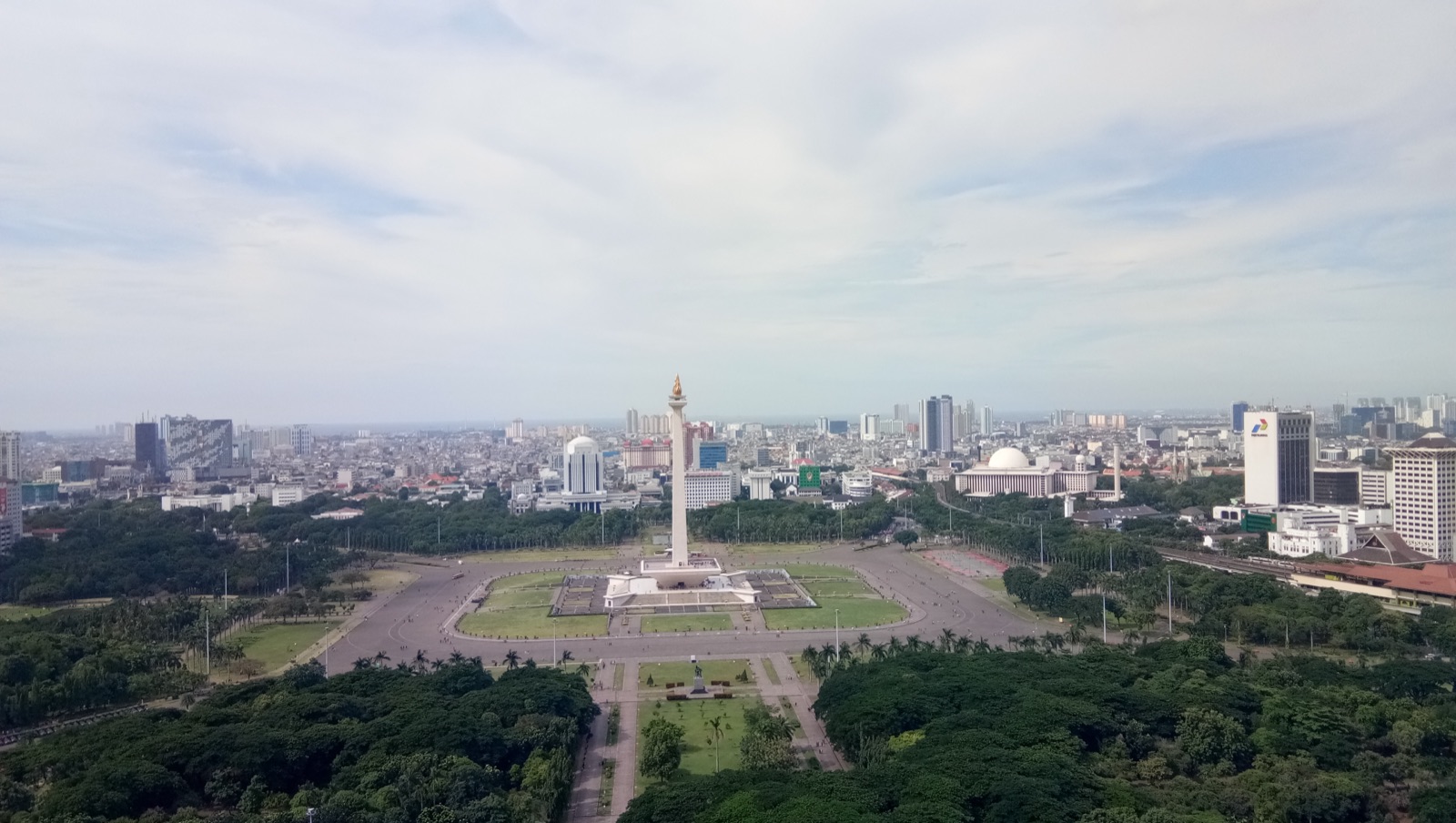
The Monumen Nasional (Monas) in central Jakarta. Construction began under Sukarno in 1961; the monument was completed and opened to the public in 1975 under Suharto. The transition between presidents — and between the killings of 1965-66 and the New Order regime that institutionalized them — is the subject of this article. Wikimedia Commons, CC BY-SA 4.0.
Indonesia 1965
The killings of 1965-66 and the U.S. role
- Category
- State & Intelligence Operations
- Published
- Length
- 3,700 words · 17 min read
- Author
- The editors
Indonesia 1965
The killings of 1965-66 and the U.S. role.
The coup
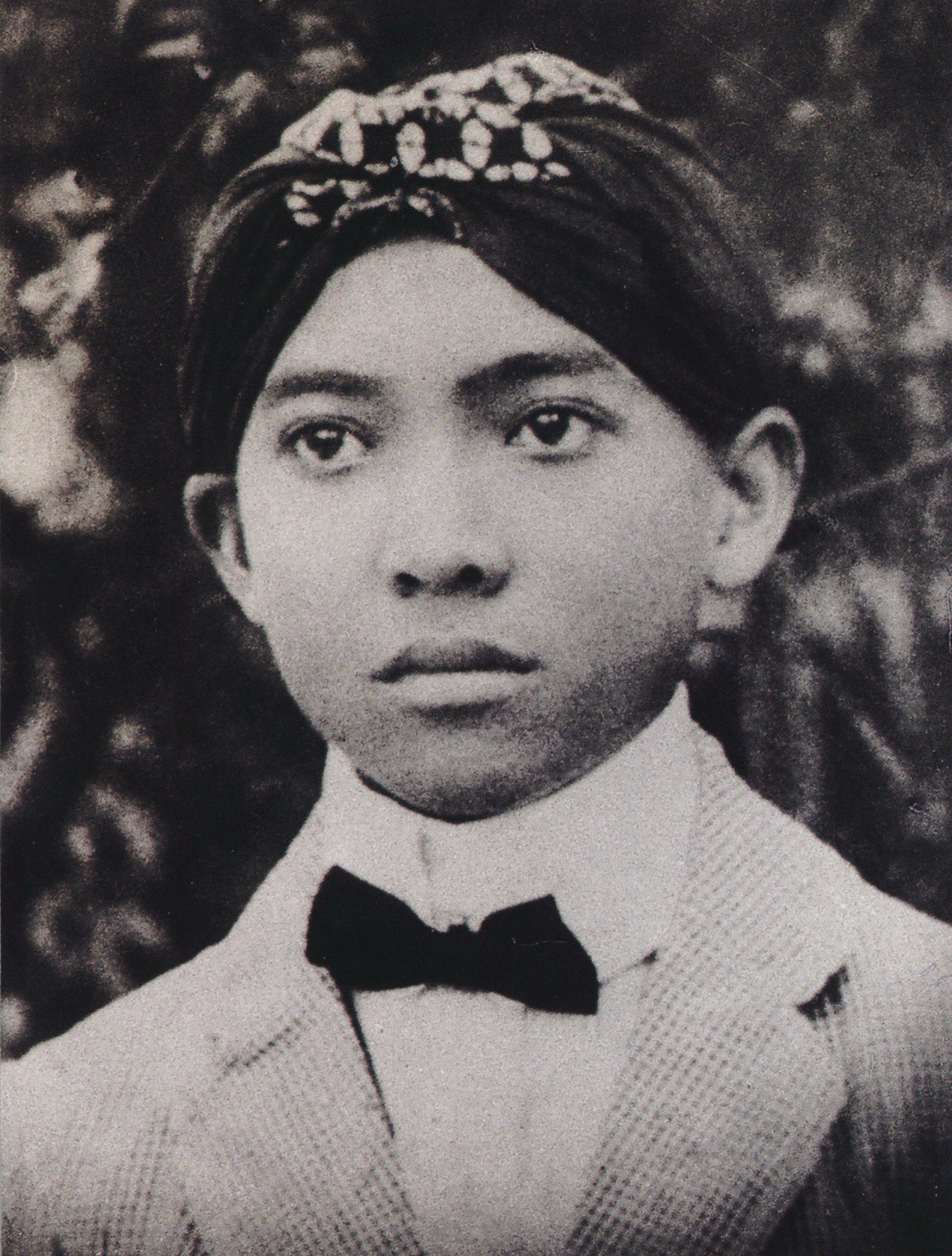
By 1965, Indonesia was the world's fifth-largest country by population (105 million) and the third-largest non-aligned state after India and Egypt. President Sukarno had been Indonesia's founding president since 1945. His political philosophy — Nasakom (Nationalism, Religion, Communism) — held the country's three principal forces in a delicate alignment under his personal authority.
The three forces in question:
The PKI (Partai Komunis Indonesia). The Indonesian Communist Party had been founded in 1920 and had survived two earlier attempts at suppression (1926, 1948). By 1965 it claimed approximately 3 million card-carrying members, a youth organization (Pemuda Rakyat) with 3 million more, and the women's organization Gerwani with approximately 1.5 million. The PKI operated openly, held seats in parliament, and exerted significant influence on land-reform policy. Its general secretary was D.N. Aidit.
The military. The Indonesian Armed Forces — particularly the Army (TNI-AD) — had been the principal organizational force in the post-independence state. By 1965 it was internally divided between left-leaning officers (typically Sukarnoist loyalists) and right- leaning officers (typically anti-communist Islamic-nationalists). The Army Chief of Staff was Lieutenant General Ahmad Yani.
The Islamic mass organizations. The two largest — Nahdlatul Ulama (traditionalist) and Muhammadiyah (modernist) — represented approximately 50 million Indonesians. Both were strongly anti- communist. Nahdlatul Ulama's youth wing, Ansor, would play a major operational role in the subsequent killings.
The Sukarno coalition was, by 1965, under increasing strain. The land-reform program had radicalized rural Java. Inflation was running at approximately 600 percent. Sukarno's own health was declining; he was 64 years old and had suffered a kidney attack in August 1965. Multiple succession scenarios were under discussion.
On the night of September 30, 1965, a group of officers — most of them mid-ranking, several with PKI sympathies, organized under the banner of the "30 September Movement" (Gerakan 30 September / G30S) — carried out coordinated kidnappings of seven senior Army generals at their Jakarta homes. The intent, by the subsequent account of the movement's leader Lieutenant Colonel Untung, was to deliver the generals to President Sukarno to face accusations of plotting against him.
The operation went wrong. Six of the seven generals were killed, either at their homes during arrest or at Lubang Buaya, the remote village south of Jakarta where the bodies were dumped. The seventh, Defense Minister A.H. Nasution, escaped over his garden wall; his five-year-old daughter Ade Irma Suryani Nasution was shot during the assault and died of her wounds.
By the evening of October 1, Major General Suharto — commander of the Army's Strategic Reserve (Kostrad), and not on the G30S target list despite his seniority — had assumed Army command. By the morning of October 2, Suharto had secured Jakarta and the G30S leadership was in flight or detention.
Within 48 hours, the Army's official narrative was established: the G30S had been a PKI-orchestrated communist coup; the murdered generals had been victims of a communist conspiracy; the country faced an existential threat from the PKI that required immediate elimination.
The PKI denied involvement. The PKI's general secretary D.N. Aidit had been in Jakarta on the night of September 30 and was arrested in central Java in November 1965; he was killed in custody before trial. The PKI's actual organizational role in the G30S — beyond some operational coordination by individual PKI members with the junior-officer plotters — has been disputed by historians since the 1970s.
What happened at Lubang Buaya
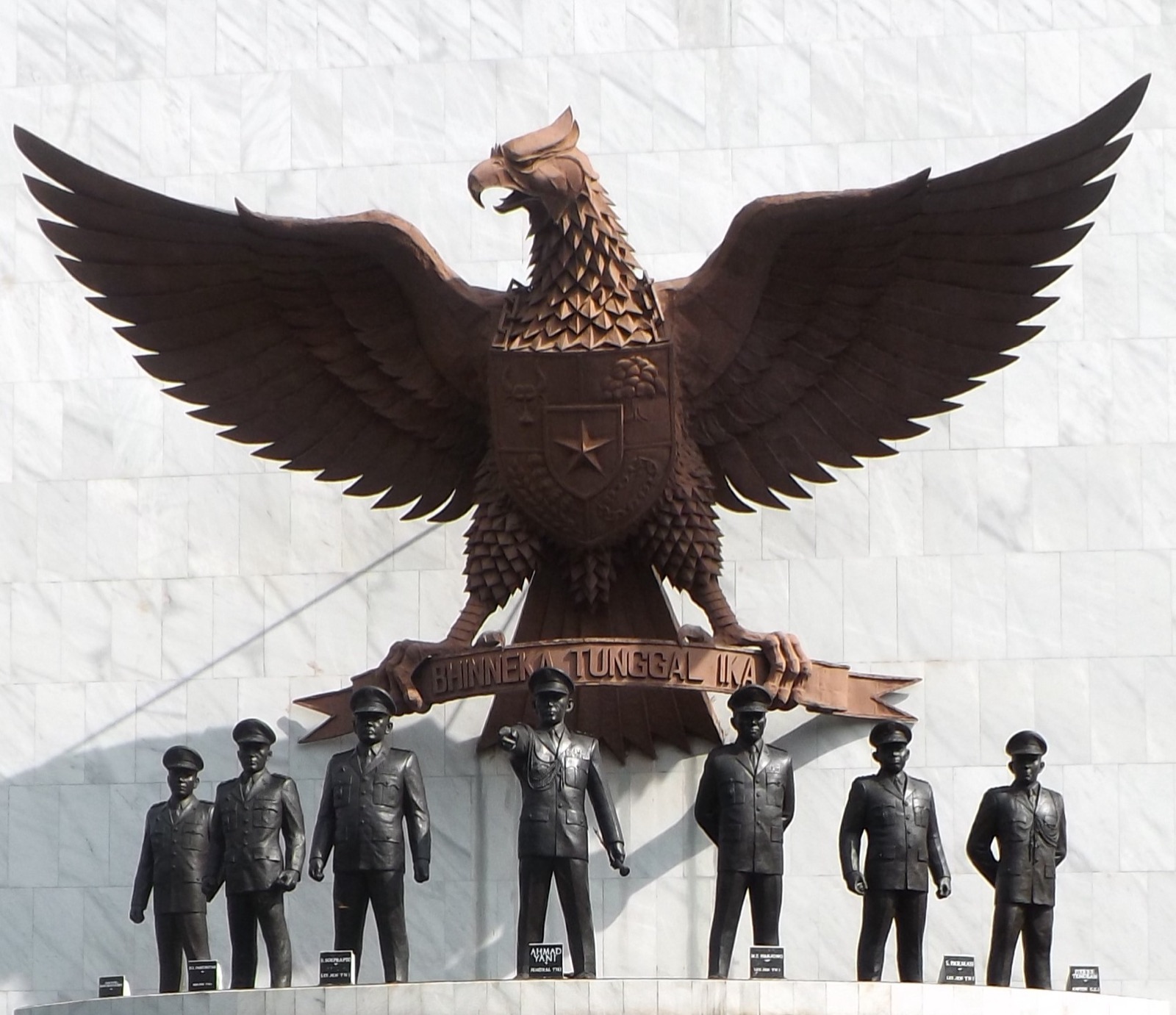
The Lubang Buaya killings on October 1, 1965 — and specifically the bodies of the murdered generals, recovered from a well at the village on October 4 — became the foundational mythology of Suharto's New Order regime.
The Army's public characterization of the murders, beginning in early October 1965, included specific allegations that:
- The generals had been tortured before death.
- Women of the PKI's Gerwani organization had participated in the torture, including sexual mutilation of the bodies.
- The killings were the operational opening of a planned PKI takeover.
The forensic record, when it was finally assessed by historians working with autopsy reports from the period, did not support these specific allegations. The generals had been shot at close range; there was no evidence of torture or sexual mutilation. The Gerwani-participation claim — central to the regime's subsequent mobilization of anti-PKI sentiment — was an invention. The bodies of the generals had been recovered from the well in conditions of significant decomposition (four days in tropical heat), which the Army medical service had characterized as evidence of mutilation in its first-day reporting.
The Pancasila Sakti Monument at Lubang Buaya — completed under the New Order in 1973 — became the principal physical site of the regime's foundational narrative. School visits, anniversary ceremonies on October 1 (Pancasila Sanctity Day), and the annual state-television broadcast of the 1984 film The Treachery of G30S/PKI (Pengkhianatan G30S/PKI) reinforced the version through the 32 years of Suharto rule.
The Army's account remains the official Indonesian state position today. Public criticism of it was prosecutable under New Order defamation laws until 1998 and remains politically sensitive under the post-1998 Indonesian republic.
How the killings happened
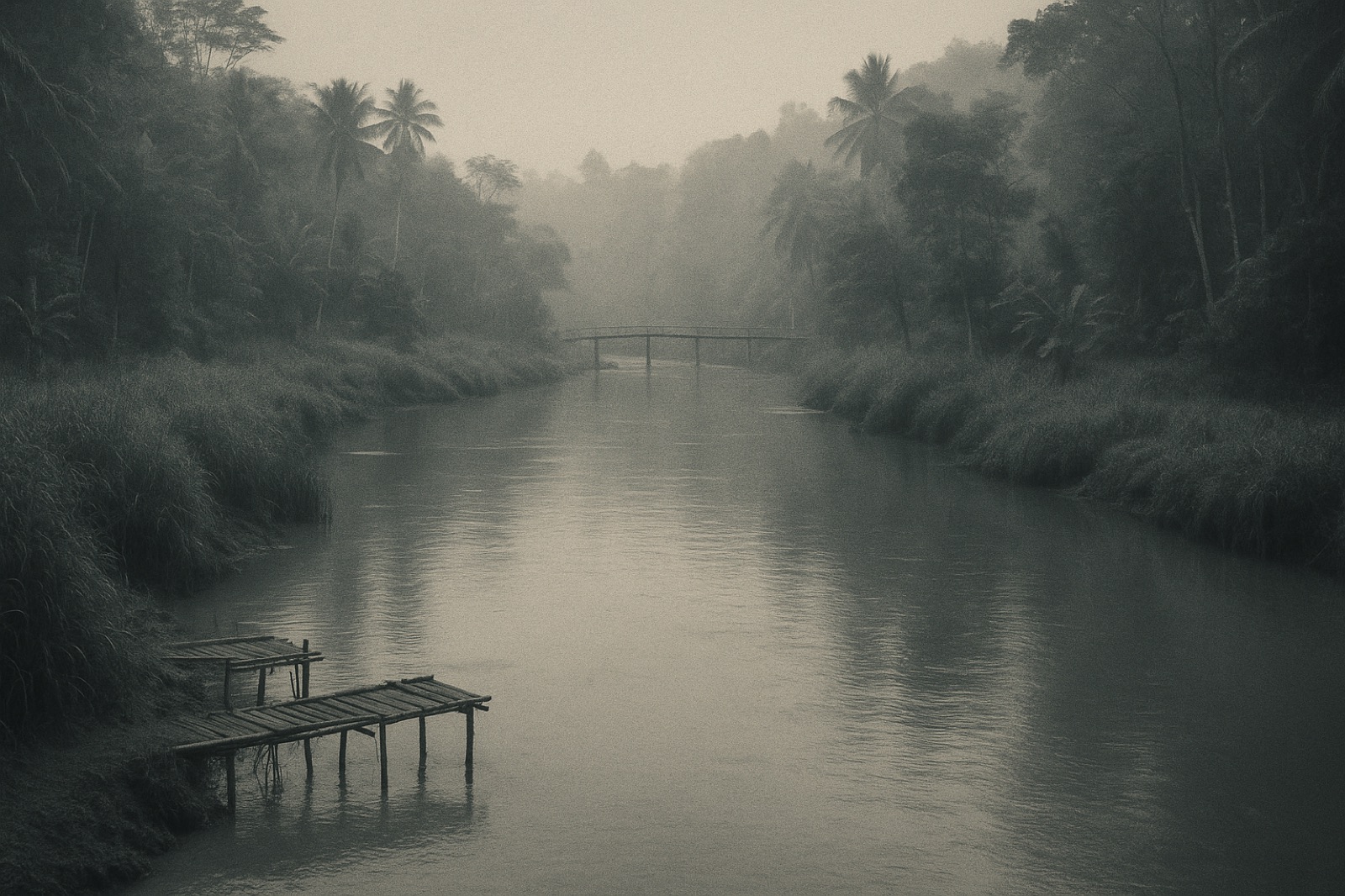
The killings began in central Java in mid-October 1965. The operational pattern, documented across more than 200 local studies since 1998, was substantially uniform:
1. List compilation. Local Army commands compiled lists of known and suspected PKI members. The lists drew on three sources: PKI membership records seized from local PKI offices in early October; local police records of past PKI affiliation; and denunciations from local non-PKI residents.
2. Detention. Listed individuals were arrested by Army units or, more commonly, by civilian militias deputized by the Army. The civilian militias varied by region — Ansor (Nahdlatul Ulama youth) in much of east and central Java; Muhammadiyah youth in parts; Christian militias in north Sumatra; PNI (Indonesian Nationalist Party) youth in parts of Bali.
3. Killing. The killings were not centralized. Local commanders and militia leaders had operational discretion over how to dispose of the detained. The most common method was slaughter at a distance from the village — at a river bank, in a forest, at a remote field. Bodies were left in rivers, in mass graves, or returned to families with instructions not to mourn publicly.
4. Continued detention. Detainees who were not killed in the initial round were transferred to longer-term detention centers. The largest of these was Buru Island, in the Maluku archipelago, where approximately 12,000 detainees were held in forced-labor conditions until the camp was closed in 1979.
The pattern produced extreme regional variation. Bali — where the PKI had been particularly strong in the lead-up to 1965 — saw proportionally the highest death toll, with estimates ranging from 80,000 to 100,000 dead out of a population of approximately 2 million. Central and east Java had absolute totals of approximately 200,000-300,000 each. North Sumatra had approximately 60,000. Sulawesi, Kalimantan, and the smaller islands had local totals typically in the thousands.
The killings ended in spring 1966 not because of policy reversal but because, as Robert Cribb's authoritative 2002 demographic analysis put it: "the supply of available victims had been substantially exhausted." Local Army commanders reported in April and May 1966 that further sweeps were producing diminishing results.
What Washington knew
The U.S. role in the 1965-66 killings has been the subject of academic and journalistic investigation since the early 1990s. The October 2017 declassification of approximately 30,000 pages of U.S. embassy cables — released under the Obama administration's Indonesia Declassification Project — provided the most extensive documentary basis available.
The cable record establishes the following:
1. The U.S. supplied PKI leadership lists to the Indonesian Army. A list of approximately 5,000 PKI leaders, compiled by the U.S. Embassy's political section and CIA station, was passed to Indonesian Army intelligence in November 1965. The list was used as a baseline for the targeting that followed. The pass- over has been documented in both the 2017 declassification and in the 1990 oral history of Robert Martens, the embassy political officer who compiled the list.
2. Washington knew the killings were occurring in real time. Embassy cables from October 1965 onward describe specific killings, mass-grave discoveries, and population-displacement patterns. The cables were routinely distributed to the State Department, the CIA, and the National Security Council. There is no evidence of Washington-level objection at any senior level.
3. Washington provided diplomatic and political support for Suharto. The State Department's public position throughout October 1965 - March 1966 was that the Indonesian situation was "an internal matter." Internally, the embassy's recommendations — to maintain quiet support for the Army's operations and to avoid public criticism that would expose the U.S. role — were adopted.
4. The CIA's operational involvement was significant but not direct. The CIA's Indonesia station, under chief of station Hugh Tovar, provided intelligence on PKI movements and organizational structures. There is no documentary evidence that the CIA directly participated in the killings. There is substantial documentary evidence that the CIA's intelligence products informed the Army's targeting.
5. The British government was substantially aligned. Britain had its own intelligence relationship with the Indonesian Army through the "Konfrontasi" period (the 1963-66 Indonesia-Malaysia conflict). British Foreign Office documents declassified since 2000 confirm the UK's substantive support for the anti-PKI operations.
The U.S. policy framework of the period was articulated most explicitly by Robert Komer, the National Security Council specialist on counterinsurgency. In a December 1965 memo to President Lyndon Johnson, Komer characterized the Indonesian events as "the second-most-important event in Asia after the turning of Vietnam." Komer's recommendation was to "let nature take its course" — a policy that meant, in operational practice, provide quiet support for the Army's operations and accept the resulting human cost.
President Johnson's own role was, by the cable record, hands-off but informed. He received briefings on the Indonesian situation throughout October 1965 - March 1966. He did not raise objections.
The cast
Why this case is filed as "confirmed"
The Indonesia 1965 case is one of the most extensively documented state-supported mass killings of the Cold War period. The U.S. embassy cable record (2017 declassification), the Indonesian Army's own internal review (1968), the local-history research since 1998 (more than 200 published studies), and the perpetrator testimony recorded by Joshua Oppenheimer (2008-2014) collectively constitute a documentary base that meets any reasonable standard of historical confirmation.
What remains contested is the classification — was this a genocide, a politicide, or a mass-killing operation against a political movement? — and the moral framing of the U.S. role. Both questions are politically sensitive in Indonesia today. The factual base, in our editorial judgment, is settled.
What we still don't know
The precise death toll. Estimates range from approximately 500,000 (Cribb 2002) to approximately 1.5 million (some Indonesian and Dutch academic estimates). The geographic distribution is better understood than the absolute total.
The PKI's actual involvement in the G30S coup. The Army's characterization (PKI as organizational driver) has been contested by historians since the 1970s. Recent scholarship (particularly John Roosa's Pretext for Mass Murder, 2006) argues that the operational responsibility was primarily within a group of disaffected junior Army officers, with PKI involvement limited to individual members coordinating informally.
The full geographic pattern. Local-history research since 1998 has documented significant regional variation. The nationally-aggregated death-toll estimates obscure operational patterns that varied substantially by province.
The full U.S. and UK archival record. The 2017 U.S. declassification was substantial but not complete. Some CIA operational material remains classified. The British Foreign Office record remains partially restricted.
The Indonesian state's full archive. The Indonesian National Archives' holdings on 1965-66 remain incompletely catalogued and have not been opened for systematic scholarly access. The 2012 National Human Rights Commission report identified the killings as "gross violations of human rights" but did not have access to the full state archive.
Sources
Primary documents:
- U.S. Department of State, Foreign Relations of the United States, Indonesia 1964-1968. Office of the Historian declassification October 17, 2017. Approximately 30,000 pages.
- Indonesian Army Internal Review, "Document 2.21" — the 1968 internal report on the G30S and the aftermath. Translated portions in Roosa 2006.
- Komnas HAM (National Human Rights Commission of Indonesia), Final Report on the 1965-66 Events, 2012.
- Robert Martens oral history interviews, 1990, 1998. Foreign Affairs Oral History Collection.
- Lubang Buaya autopsy reports, October 1965, Indonesian Army Medical Service. Selectively declassified by Indonesian state.
- The Indonesian Memorandum to the Hague Tribunal, 1968. Sukarno's protest against U.S. policy; included in Roosa 2006.
Secondary investigative reporting / scholarship: 7. Bradley R. Simpson, Economists with Guns: Authoritarian Development and U.S.-Indonesian Relations 1960-1968 (Stanford UP, 2008). The most-cited English-language treatment. 8. John Roosa, Pretext for Mass Murder: The September 30th Movement and Suharto's Coup d'État in Indonesia (University of Wisconsin Press, 2006). 9. Geoffrey Robinson, The Killing Season: A History of the Indonesian Massacres, 1965-66 (Princeton UP, 2018). The most comprehensive recent historical treatment. 10. Robert Cribb, ed., The Indonesian Killings 1965-66: Studies from Java and Bali (Monash University, 1990). Collected scholarly essays. 11. Vincent Bevins, The Jakarta Method: Washington's Anticommunist Crusade and the Mass Murder Program That Shaped Our World (PublicAffairs, 2020). 12. Kathy Kadane, "U.S. Officials' Lists Aided Indonesian Bloodbath in '60s," States News Service / Washington Post, May 21, 1990. The first major U.S. press exposure of the U.S. role. 13. Margaret Scott, "Indonesia: The Massacres That Suharto Built," The New York Review of Books, multiple essays 2014-2024. 14. The Act of Killing (Joshua Oppenheimer, 2012); The Look of Silence (2014).
Academic / specialist scholarship: 15. Douglas Kammen and Katharine McGregor, eds., The Contours of Mass Violence in Indonesia, 1965-1968 (NUS Press, 2012). 16. Annie Pohlman, Women, Sexual Violence and the Indonesian Killings of 1965-66 (Routledge, 2015). 17. Asvi Warman Adam, Membongkar Manipulasi Sejarah (Kompas, 2007). Indonesian-language scholarly account.
Corrections & updates
2026-05-27: First publication.
Inspired this / based on it
Joshua Oppenheimer · ★ 8.2
Perpetrator-perspective documentary; Anwar Congo and other Medan killers re-enact their killings. Academy Award nomination. The single most consequential film on the case.
Joshua Oppenheimer · ★ 8.2
Companion to *The Act of Killing*. A victim's brother (Adi Rukun) confronts the men who killed his brother. Academy Award nomination.
Peter Weir · ★ 7
Fictionalized treatment of the 1965 coup period in Jakarta. Mel Gibson, Sigourney Weaver, Linda Hunt (won Academy Award).
Vincent Bevins
PublicAffairs. The most-cited recent popular-history treatment.
Geoffrey Robinson
The comprehensive recent academic treatment. Princeton UP.
Bradley R. Simpson
The most-cited English-language scholarly treatment of U.S. involvement. Stanford UP.
Filed under
- #indonesia
- #indonesia-1965
- #g30s
- #pki
- #suharto
- #sukarno
- #marshall-green
- #robert-komer
- #cia
- #joshua-oppenheimer
- #act-of-killing
- #bradley-simpson
- #lubang-buaya
- #1965
- #1966
- #asia
- #declassified
Click any tag for every article carrying it.
Continue reading
The Pinochet Coup
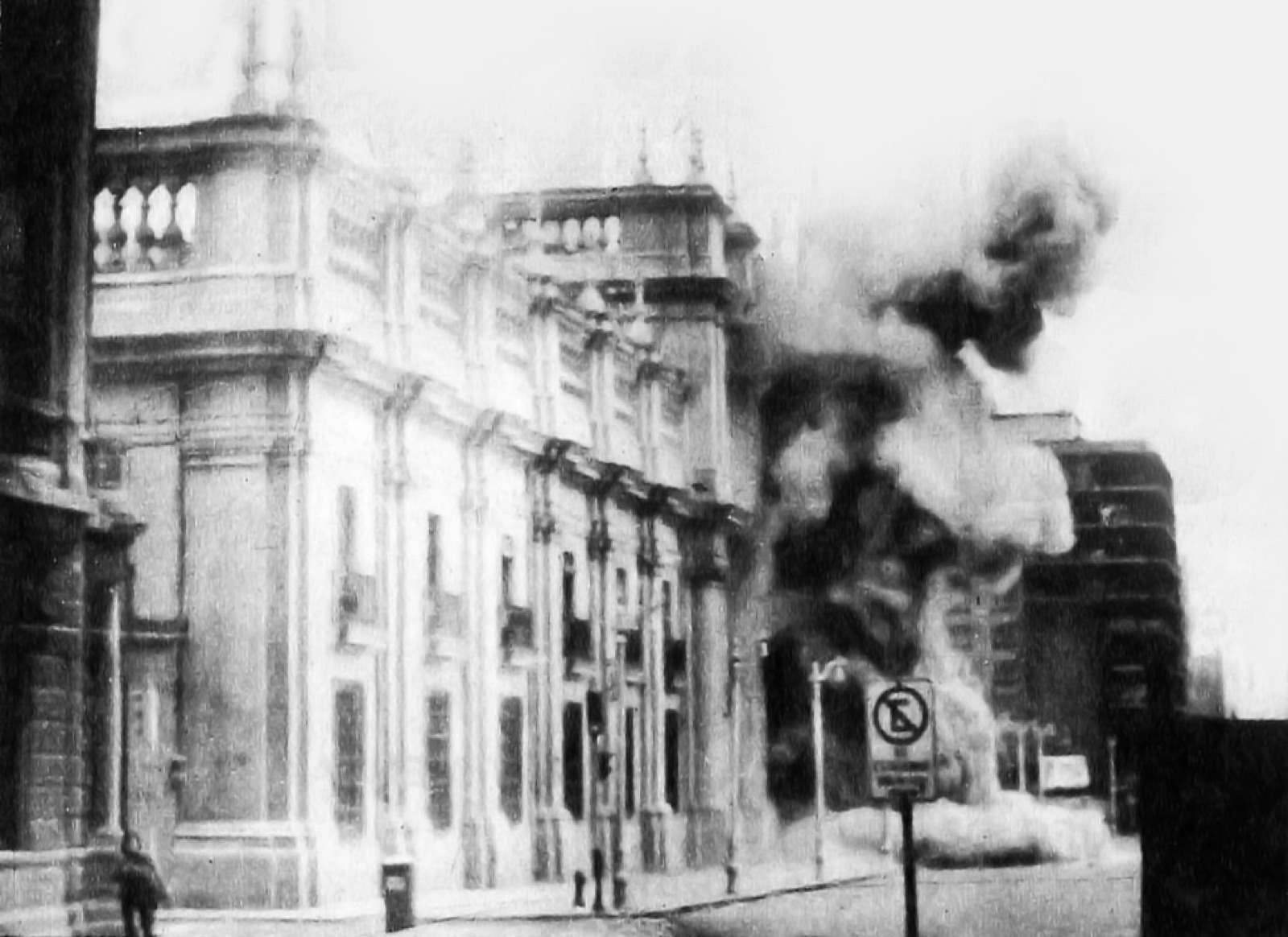
At 6:00 a.m. on September 11, 1973, the Chilean Navy seized the port city of Valparaíso. By 7:00, the army had blocked the streets of Santiago. By 8:00, all radio stations except two had been silenced. At 11:52, Hawker Hunter jets bombed La Moneda, the presidential palace, while the democratically elected socialist president, Salvador Allende, was inside. Allende was dead by approximately 2:00 p.m. — by his own pistol, a 2011 forensic re-examination confirmed, in the second-floor Salón Independencia under bombardment. The man who replaced him, General Augusto Pinochet, ruled Chile for seventeen years. Between 1973 and 1990, the Chilean state's own subsequent commissions documented 3,200 killed or disappeared and 38,254 imprisoned-and-tortured. The United States, through documents declassified in waves from 1999 through 2023, had been working to remove Allende since before he took office.
Operation Mockingbird
Between 1948 and the mid-1970s, the Central Intelligence Agency cultivated paid and unpaid working relationships with American journalists, editors, and publishers across every major U.S. news organization. The architect was an OSS veteran named Frank Wisner. He called the network the 'Mighty Wurlitzer' — a theatre-organ metaphor for a machine that could play many instruments from a single console. The full scope was confirmed by the 1975 Church Committee, expanded upon in Carl Bernstein's 25,000-word 1977 Rolling Stone investigation, and partly declassified since. What the records have not yet given up is the operational name everyone agrees was attached to it.
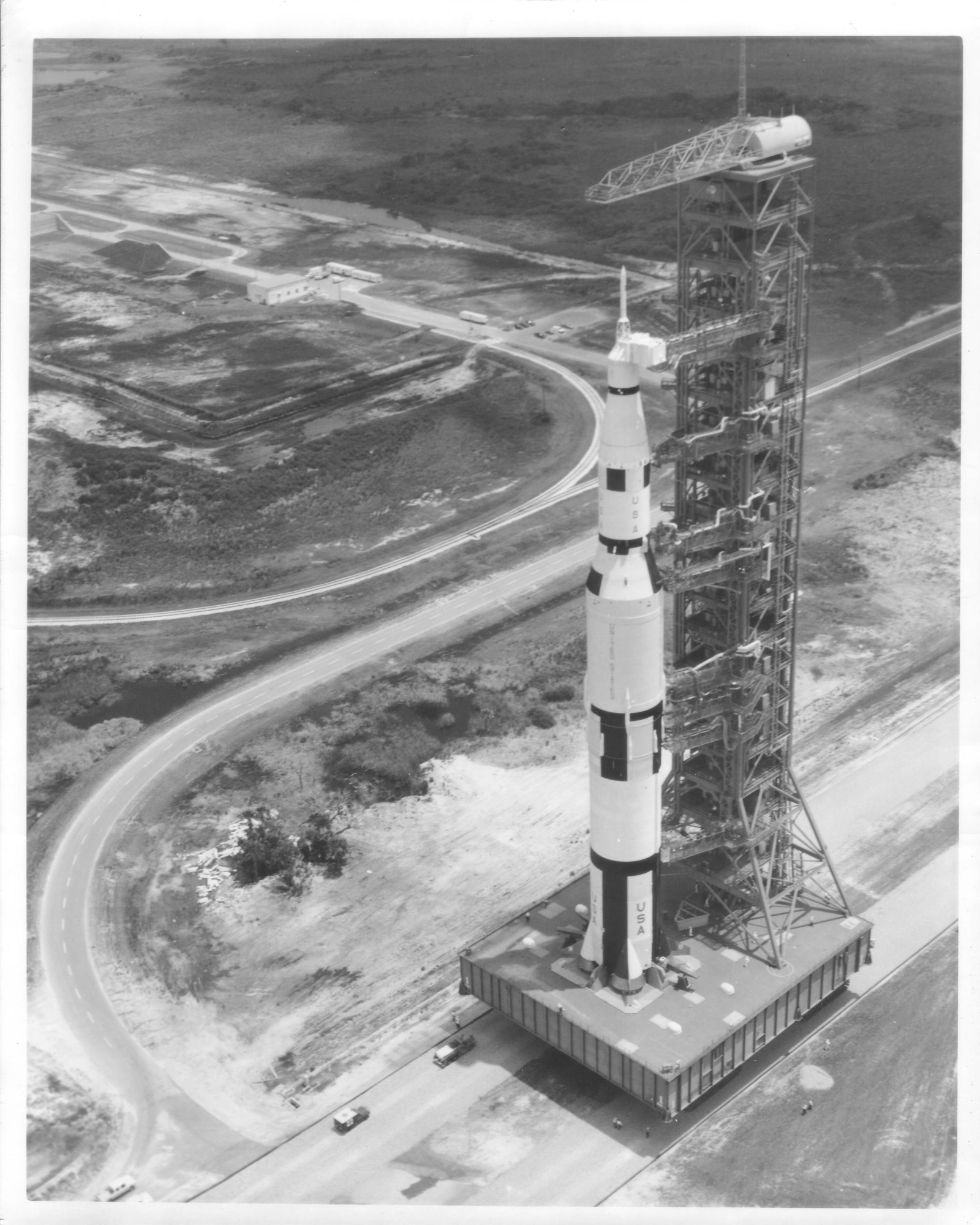
Operation Paperclip
Between 1945 and 1959, the U.S. Army Ordnance Corps and the Joint Intelligence Objectives Agency secretly transported more than 1,600 German scientists, engineers, and technicians from defeated Nazi Germany to the United States — together with files that had been quietly stripped of references to Nazi Party membership, SS rank, and slave-labour exploitation. The clip on the folder was where the program got its name. The most prominent of the imported men was Wernher von Braun, designer of the V-2 ballistic missile, who twenty-four years later watched the Saturn V — a rocket built by his Huntsville team — lift Apollo 11 toward the Moon.