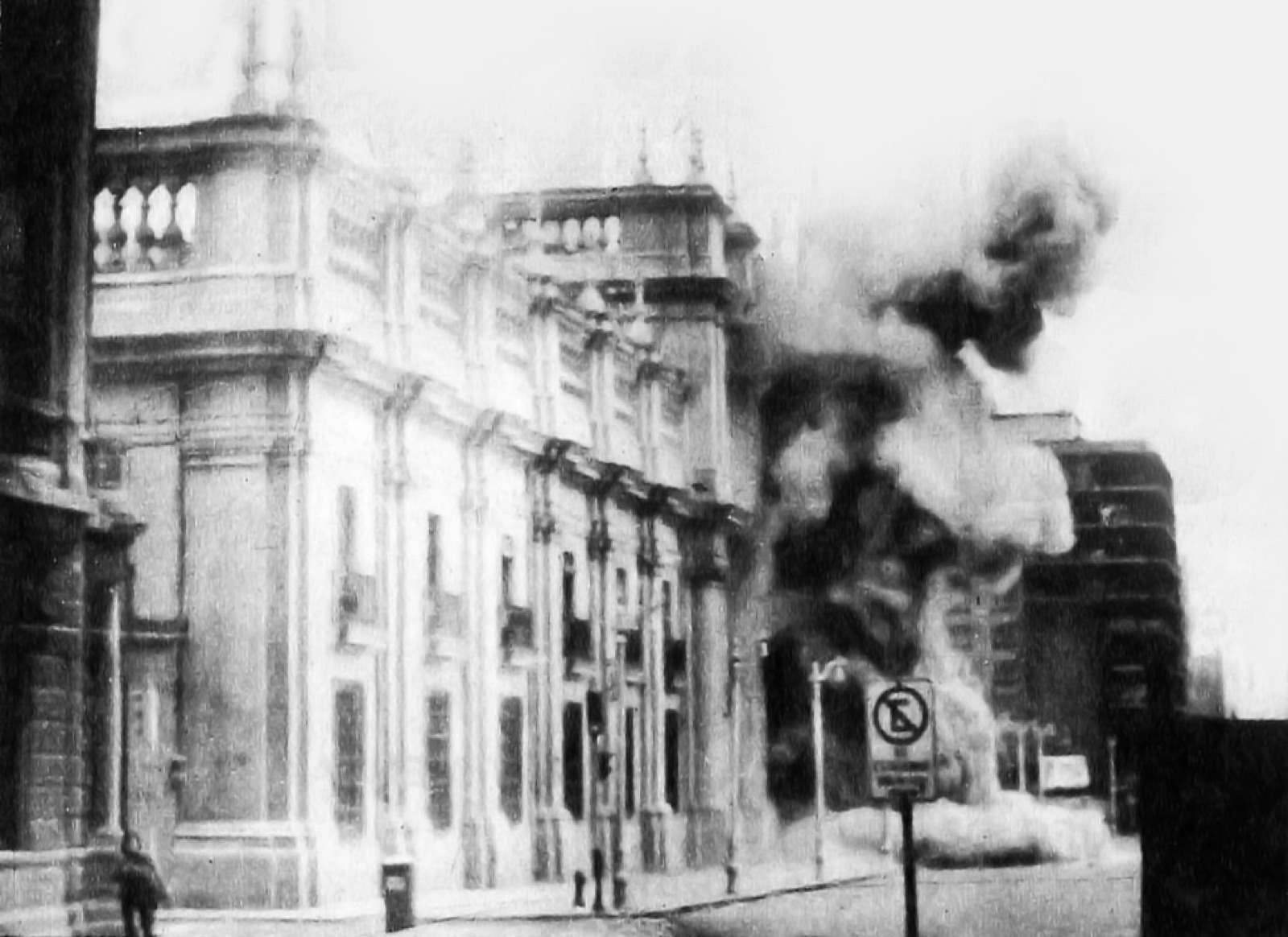
La Moneda under bombardment, September 11, 1973. Two Chilean Air Force Hawker Hunter jets fired eighteen Sura rockets into the palace beginning at 11:52 a.m. Photograph via Biblioteca del Congreso Nacional de Chile. Wikimedia Commons, CC BY 3.0 cl.
The Pinochet Coup
Chile, September 11, 1973
- Category
- State & Intelligence Operations
- Published
- Length
- 3,650 words · 17 min read
- Author
- The editors
The Pinochet Coup
Chile, September 11, 1973.
The election that wasn't supposed to happen
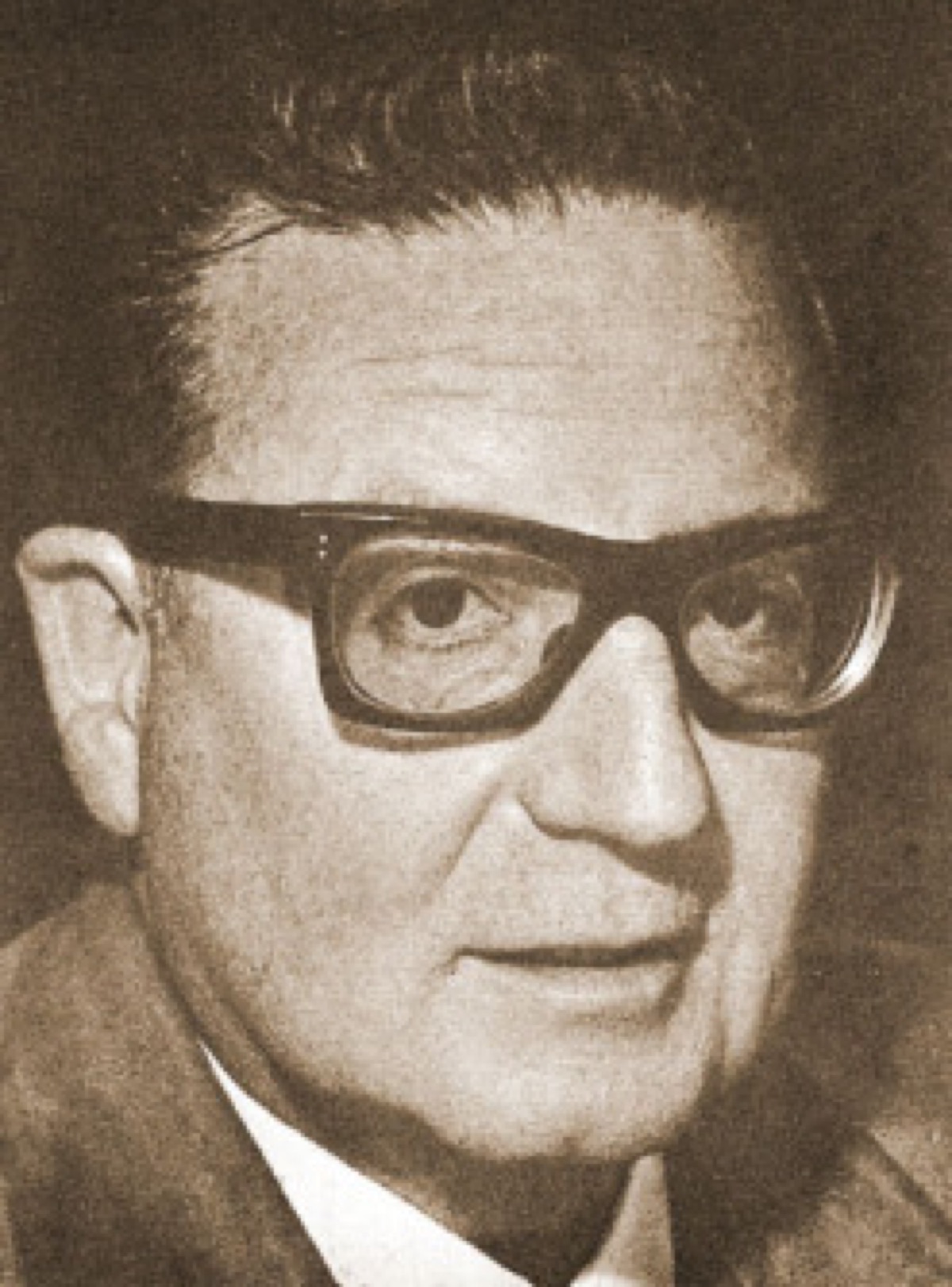
Salvador Allende Gossens was 62 years old when he was elected President of Chile on September 4, 1970. He had been a senator since 1945. He had run for president three previous times — in 1952, 1958 and 1964 — and lost each time. The 1970 election was his fourth attempt and his last.
The result was narrow. Allende, leading the Popular Unity (Unidad Popular) coalition of Socialists, Communists, and minor left parties, won 36.6% of the vote. The conservative National Party candidate Jorge Alessandri won 35.3%. The center-Christian Democrat Radomiro Tomic won 28.1%. Because no candidate had won an absolute majority, the Chilean constitution required a runoff vote in the National Congress, where the two highest finishers — Allende and Alessandri — would face each other.
Chilean constitutional tradition had been clear for decades: the Congress confirmed whichever candidate had won the popular vote. The runoff was procedural.
The fact that the runoff was constitutionally required — and that Allende's plurality was narrow — was what gave Washington a window.
Track I
The U.S. response to Allende's plurality victory ran on two parallel covert programs, internally referred to as Track I and Track II.
Track I was a State Department-led program to influence the Chilean Congress to vote against Allende in the October 24, 1970 runoff. The 40 Committee — the high-level National Security Council sub-committee that approved CIA covert action — directed the CIA to spend up to $250,000 in covert payments to Christian Democrat congressmen, with the goal of persuading them to support Alessandri instead of Allende. The 40 Committee also approved propaganda operations, anti-Allende press placements through CIA-funded media in Chile and Latin America, and covert payments to Chilean opposition groups.
Track I failed. Christian Democrat congressmen, despite Washington's pressure, voted with Chilean constitutional tradition. On October 24, 1970, the Chilean Congress confirmed Allende as President-elect by 153 votes to 35.
Track II
Track II was different. Track II was authorized by President Nixon, verbally, in a meeting with CIA Director Richard Helms on September 15, 1970 — eleven days after Allende's plurality and six weeks before his congressional confirmation.
Helms's handwritten notes from that meeting — declassified in the 1990s and now publicly archived at the National Security Archive at George Washington University — record Nixon's instructions in truncated fragments. The notes are short. The words are direct. Some of what Helms wrote down:
Track II was excluded from the 40 Committee. It was excluded from the State Department. It was excluded from the U.S. Ambassador to Chile. It was run directly between Nixon, Kissinger, Helms, and Thomas Karamessines, the CIA's Director of Plans (the agency's senior covert- operations officer). The objective: encourage and support a Chilean military coup before Allende's November 3 inauguration.
The operation produced one immediate result. On October 22, 1970 — two days before the congressional confirmation vote — General René Schneider, the Commander-in-Chief of the Chilean Army, was attacked by Chilean military officers who had been receiving CIA contact and, in some cases, weapons. Schneider, a constitutionalist who had publicly opposed military intervention in the political process, refused to support a coup. The attackers had intended to kidnap him; in the struggle, they shot him. He died three days later.
Schneider's assassination did not produce the intended effect. It shocked the Chilean military and the public into closing ranks around constitutional process. Allende was confirmed. He was inaugurated on November 3, 1970.
Track II, in its initial form, had failed.
The long campaign
What followed between November 1970 and September 1973 was not so much a single covert operation as a sustained, multi-front campaign — what the CIA's own subsequent internal review (in 2000) called "the policy of using all available tools, short of direct U.S. military intervention, to prevent the consolidation of an Allende government."
The tools included:
Economic pressure. The U.S. cut bilateral aid from $35 million in 1969 to $1.5 million in 1971. The Inter-American Development Bank, operating under U.S. influence, suspended new loans to Chile from 1971 onward. The World Bank made no new loans to Chile during the Allende years. Multinational copper companies, particularly Kennecott and Anaconda — whose Chilean copper holdings had been nationalized by Allende in July 1971 without immediate compensation — pursued legal action that froze Chilean copper exports in European ports for months at a time.
Political funding. The CIA continued covert payments to Chilean opposition political parties (primarily the Christian Democrats), to opposition media (primarily El Mercurio, Chile's largest newspaper), and to opposition trade associations. The Church Committee's 1975 estimate was that CIA funded approximately $1.5 million to El Mercurio alone between 1971 and 1973.
Military cultivation. The CIA maintained ongoing relationships with officers in the Chilean Army, Navy and Air Force throughout the Allende period. These were not, by 1971-72, single-event coup- planning relationships. They were ongoing, multi-channel relationships designed to keep coup-willing officers identified, paid, and in position. The Schneider assassins of October 1970 had been the amateur-hour version. The relationships that mattered in 1973 were quieter.
By late 1972, the Chilean economy was in serious crisis. Inflation was approaching 600%. Strikes — most consequentially the October 1972 truckers' strike, which the Church Committee subsequently established had received CIA funding — paralyzed distribution. Food shortages were severe. Allende's government continued to lose middle-class support.
In the March 1973 mid-term elections, Popular Unity nonetheless gained seats. Allende's coalition went from 38 to 44 deputies. The constitutional impeachment route had failed. The opposition concluded that Allende could not be removed electorally.
Six months later, the coup happened.
September 11, 1973
The coup of September 11, 1973 was meticulously planned across the preceding weeks. The planning details remained substantially classified until the August 2023 declassification of the President's Daily Brief for that morning, which confirmed that the CIA was tracking the operation in real-time.
The operational sequence:
6:00 a.m. — Chilean Navy ships in Valparaíso bay declared the city under military control. Vice Admiral José Toribio Merino assumed command of Valparaíso and the Chilean Navy. Allende was notified by phone at his presidential residence in Tomás Moro by 6:30.
7:00 a.m. — Army units under General Augusto Pinochet (whom Allende had appointed Commander-in-Chief just eighteen days earlier, on August 23, on the recommendation of Allende's outgoing Commander-in-Chief General Carlos Prats) blocked the central streets of Santiago.
8:00 a.m. — Chilean Air Force and Carabineros joined the operation. All radio stations except two had been seized. The remaining two — Magallanes and Portales, both loyal to Allende — continued broadcasting Allende's voice for the next several hours before being shelled into silence.
9:10 a.m. — Allende arrived at La Moneda. He brought with him an AK-47 that Fidel Castro had given him as a gift in 1971. He had approximately forty supporters with him — bodyguards, advisors, his personal physician. The military had given him an ultimatum: surrender and leave the country. He had refused.
9:55 a.m. — Allende made his final radio broadcast on Magallanes. The transcript is preserved. It included the line: "These are my last words, and I am certain that my sacrifice will not be in vain. I am certain that, at the very least, it will be a moral lesson that will punish felony, cowardice and treason."
11:52 a.m. — Two Chilean Air Force Hawker Hunter jets fired eighteen Sura rockets into La Moneda. The presidential palace, a neoclassical building from the late 18th century, was substantially destroyed by fire over the next two hours.
2:00 p.m. — Approximate time of Allende's death by his own pistol/AK-47 in the Salón Independencia on the second floor. The 2011 international forensic re-examination, conducted at the request of the Chilean government, confirmed suicide. He was 65 years old.
By 3:00 p.m., the surviving palace defenders had surrendered. Pinochet and three other military commanders — Merino (Navy), Gustavo Leigh (Air Force), and César Mendoza (Carabineros) — constituted themselves as a four-man military junta and declared themselves the new government of Chile.
Seventeen years
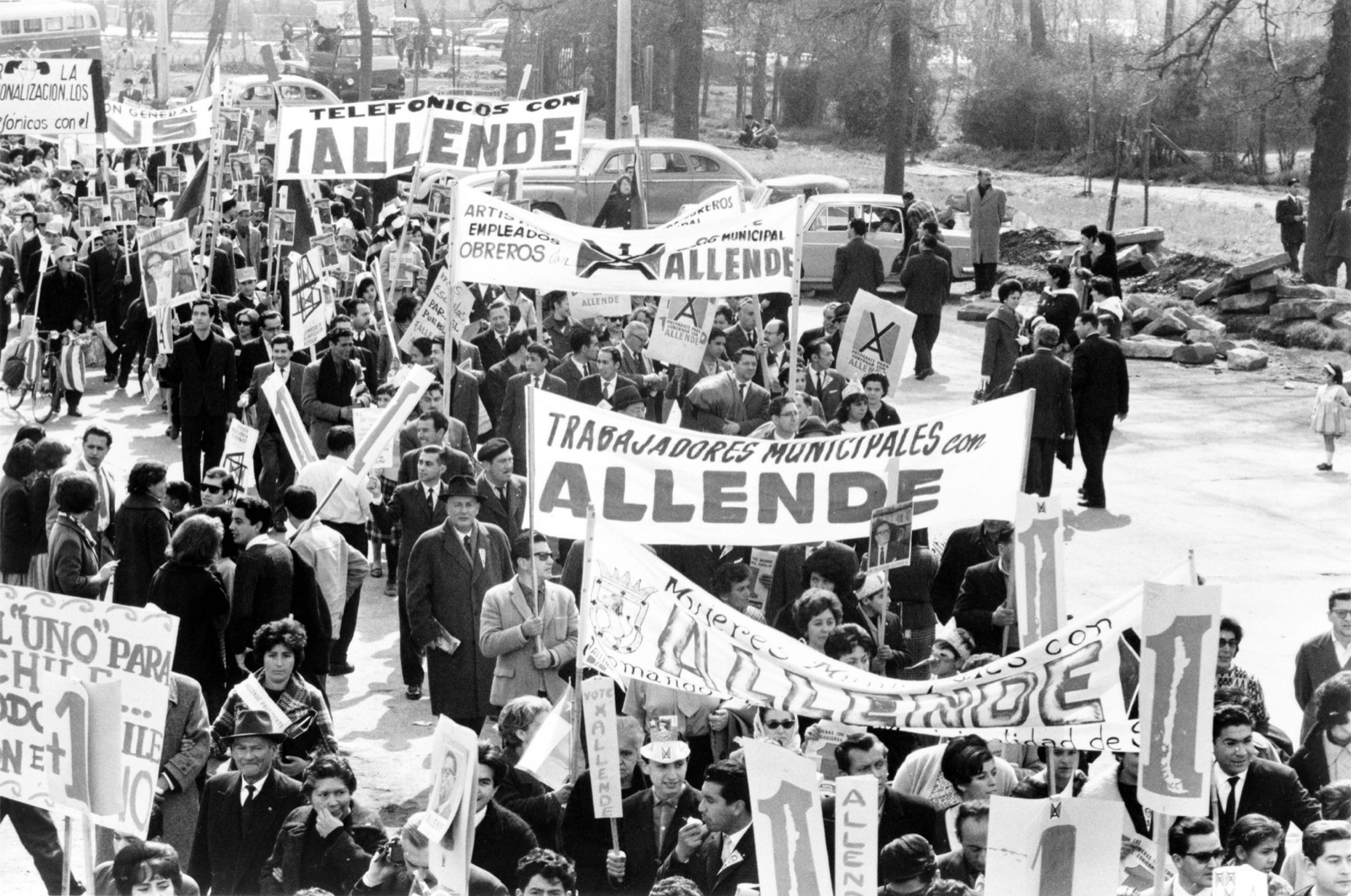
The Pinochet regime ruled Chile from September 11, 1973 to March 11, 1990 — seventeen years, six months. In the first weeks alone, the junta detained, by its own subsequent admission, more than 40,000 people. The detention facilities included the Estadio Nacional in Santiago — the country's national football stadium, which became a mass detention and torture center between September and November 1973 — and the Estadio Chile, where the singer-songwriter Víctor Jara was tortured and shot on September 16, 1973.
In October 1973, Pinochet authorized the "Caravan of Death" (Caravana de la Muerte), a military death squad commanded by Brigadier General Sergio Arellano Stark. The Caravan traveled by helicopter to military bases throughout Chile and summarily executed political detainees who had already been arrested and held in conventional military custody. The Rettig Report subsequently confirmed 75 such executions, though later investigations have raised the figure to approximately 97.
In June 1974, Pinochet established the Dirección de Inteligencia Nacional (DINA), a secret police force whose director, Manuel Contreras, reported directly to Pinochet. DINA was responsible for the majority of the disappearances during the Pinochet period — the Rettig Report attributed 957 disappearances to DINA between 1974 and 1977. DINA's detention and torture facilities included Villa Grimaldi, on the eastern outskirts of Santiago, through which approximately 4,500 detainees passed and from which 226 were disappeared.
In 1975, Pinochet's Chile, together with the military regimes of Argentina, Brazil, Bolivia, Paraguay, and Uruguay, formalized Operation Condor — a regional intelligence-sharing program that coordinated the detention, transfer, and killing of political opponents across South American borders. Operation Condor was responsible for, among other operations, the September 1976 car-bomb assassination of former Chilean foreign minister Orlando Letelier and his American colleague Ronni Moffitt in Washington, D.C. — the only known act of foreign-state-sponsored terrorism on U.S. soil during the Cold War.
The end
The Pinochet regime ended through a constitutional mechanism that the regime itself had created. The 1980 constitution — which Pinochet had imposed through a controlled plebiscite — included a provision for a 1988 plebiscite on whether Pinochet should continue as president for another eight years. Pinochet expected to win.
He lost. The "No" campaign — running on a deliberately apolitical positive-messaging strategy designed by Chilean ad executive Eugenio García — won 55.99% to 44.01% on October 5, 1988. The result was honored. Free presidential elections were held in December 1989. Patricio Aylwin, a Christian Democrat, took office on March 11, 1990.
Pinochet remained Commander-in-Chief of the Army until 1998, and Senator-for-Life thereafter under the immunity provisions of the 1980 constitution. He was arrested in London on October 16, 1998, on a warrant from Spanish magistrate Baltasar Garzón seeking extradition for crimes against humanity. The Law Lords ultimately ruled that Pinochet could be extradited, but the Home Secretary released him on health grounds in March 2000.
He returned to Chile, where he was repeatedly indicted but never convicted. He died in Santiago on December 10, 2006, at the age of 91, while awaiting trial in multiple human rights cases.
What the documents say
The declassification of the U.S. role has come in waves:
1975: The Church Committee report to the Senate Select Committee on Intelligence documented Track I and Track II, the Schneider assassination connection, the $8 million in covert spending, and the ongoing destabilization campaign.
1999-2000: The Clinton administration's Chile Declassification Project released approximately 24,000 documents from CIA, State, DoD, NSC, FBI and military archives. The 2000 CIA review acknowledged agency contact with Pinochet-regime officials including Manuel Contreras (DINA director and later convicted murderer).
2014: A further declassification under the Obama administration released approximately 240 documents, including detailed CIA cables on the run-up to the coup.
August 2023: On the 50th anniversary of the coup, the Biden administration released the President's Daily Brief for September 11, 1973 — confirming that CIA was providing the White House with substantive intelligence on the planned coup as it was happening.
The picture that emerges across these waves is consistent. The U.S. did not, in the narrow operational sense, execute the September 11 coup. The Chilean military did. But the U.S. — through a sustained multi-instrument campaign spanning three years and three U.S. presidential administrations (Nixon, Ford, Carter for the post-coup support phase) — built and maintained the conditions in which the Chilean military could and did act.
The cast
What we still don't know
Even after 23,000 pages of U.S. declassifications and two Chilean truth commissions, several questions remain materially open:
The full Pinochet financial record. In 2004, the U.S. Senate Permanent Subcommittee on Investigations documented that Pinochet had maintained approximately 125 secret bank accounts at Riggs Bank in Washington and elsewhere, totaling between $13 million and $27 million — sums far exceeding any legitimate source. The full scope of his financial network has not been comprehensively documented.
The full Caravan of Death record. Investigations into the October 1973 helicopter death-squad operation have continued through 2024. The figure of 75 executions established by Rettig has been revised upward to approximately 97 by more recent work. The complete list may still be incomplete.
Operation Condor operational records. Substantial portions of the 1975-1985 regional intelligence-sharing operation remain classified in multiple national archives. Argentina, Brazil, and Paraguay have all released material; Chile, Uruguay, and Bolivia have released less.
The 1976 Letelier assassination authorization chain. The September 21, 1976 car-bomb assassination of Orlando Letelier in Washington, D.C. was, by 2018, definitively attributed to DINA operatives acting under Manuel Contreras's direction. The question of whether the order originated with Pinochet personally — long suspected, partially documented — was not finally resolved until a 2015 declassification of a Pinochet-to-Contreras communication.
Why this is a "confirmed" case
The 1973 Chilean coup is not a conspiracy theory. It is one of the most extensively documented covert-action operations of the Cold War. The U.S. role has been confirmed by Senate investigation, three rounds of presidential declassification, the CIA's own internal review, and the contemporaneous handwritten notes of the CIA Director who took the authorization order.
What makes the case worth re-telling is that, despite this documentation, the operational scale of the U.S. campaign — three years, multiple instruments, multiple administrations — is often absent from popular accounts that treat the coup as a single-day event in Chilean military history. The September 11 attack on La Moneda was the climax of a multi-year political-economic-military campaign that had been actively under way since November 1970, and a covert authorization that traced to October 1970.
The seventeen-year regime that followed killed 3,200 people, tortured 38,254, and exported its security state across six South American countries via Operation Condor. The U.S. relationship with that regime — supportive through Nixon and Ford, ambivalent under Carter, restored under Reagan — is documented in the same archive that documents the coup itself.
Sources
Primary documents:
- Covert Action in Chile, 1963-1973 — Staff report of the U.S. Senate Select Committee to Study Governmental Operations with Respect to Intelligence Activities ("Church Committee"), December 18, 1975. Published as Senate Committee Print, 94th Congress, 1st Session.
- CIA Activities in Chile — Internal CIA review, September 19, 2000. Released under the Hinchey Amendment.
- Rettig Report (Informe de la Comisión Nacional de Verdad y Reconciliación), February 1991. Government of Chile, Patricio Aylwin administration.
- Valech Report (Informe de la Comisión Nacional sobre Prisión Política y Tortura), November 29, 2004. Government of Chile.
- The September 11, 1973 President's Daily Brief. Declassified August 2023; available at CIA FOIA Reading Room.
- Richard Helms's handwritten notes from the September 15, 1970 meeting with Nixon. National Security Archive at George Washington University.
Secondary investigative reporting and history: 7. Peter Kornbluh, The Pinochet File: A Declassified Dossier on Atrocity and Accountability (The New Press, expanded edition 2013). The definitive U.S.-side documentary history. 8. Tanya Harmer, Allende's Chile and the Inter-American Cold War (University of North Carolina Press, 2011). Best academic treatment of the international context. 9. National Security Archive (George Washington University), Chile Documentation Project — continuously updated since 1999. 10. Patricia Verdugo, Allende: ¿Cómo la Casa Blanca Provocó Su Muerte? (Catalonia, 2003). 11. Patricia Politzer, Fear in Chile: Lives Under Pinochet (Pantheon, 1989). Oral histories of the Pinochet years. 12. La Caravana de la Muerte: Pruebas a la Vista — Patricia Verdugo (Sudamericana, 2001). 13. Heraldo Muñoz, The Dictator's Shadow: Life Under Augusto Pinochet (Basic Books, 2008). 14. Joyce Horman, Missing: The Execution of Charles Horman (Doubleday, 1978; basis for the 1982 film Missing). 15. The New York Times, Seymour Hersh series on Chile, September 1974.
Academic scholarship: 16. Mark Falcoff, Modern Chile, 1970-1989: A Critical History (Transaction, 1989). 17. Paul E. Sigmund, The United States and Democracy in Chile (Johns Hopkins, 1993). 18. Pamela Constable and Arturo Valenzuela, A Nation of Enemies: Chile Under Pinochet (W. W. Norton, 1991).
Corrections & updates
2026-05-25: First publication.
Inspired this / based on it
Costa-Gavras · ★ 7.7
Based on the disappearance of American journalist Charles Horman in Santiago, September 1973. Jack Lemmon, Sissy Spacek.
Patricio Guzmán · ★ 8.4
Three-part documentary filmed contemporaneously 1971-73; smuggled out after the coup.
Patricio Guzmán · ★ 7.6
Atacama Desert, astronomy, and the women searching for the disappeared.
Peter Kornbluh
The definitive U.S.-side documentary history. The New Press, expanded edition.
Tanya Harmer
Academic treatment of the international context. UNC Press.
Pablo Larraín · ★ 7.4
The 1988 plebiscite campaign that ended Pinochet. Gael García Bernal. Best Foreign Language nomination.
Filed under
- #allende
- #pinochet
- #chile
- #santiago
- #la-moneda
- #cia
- #kissinger
- #nixon
- #track-i
- #track-ii
- #40-committee
- #dina
- #estadio-nacional
- #caravan-of-death
- #rettig-report
- #valech-report
- #1973
- #latin-america
- #operation-condor
- #declassified
Click any tag for every article carrying it.
Continue reading
Iran 1953 — Operation Ajax
In the summer of 1953, the CIA was six years old. It had never overthrown a government. By August 19 of that year, working with British MI6, it had — and the country it had overthrown was Iran, the prime minister was Mohammad Mosaddegh, and the cause was, almost entirely, oil. The operation was codenamed Ajax. It was authorized by President Eisenhower against the recommendation of his Secretary of State, executed on the ground by a 36-year-old grandson of Theodore Roosevelt, and very nearly failed. The CIA officially acknowledged its role only in August 2013.
Iran-Contra
Between August 1985 and October 1986, the Reagan administration secretly sold anti-tank and anti-aircraft missiles to the Islamic Republic of Iran — an officially designated state sponsor of terrorism, in the middle of a war with Iraq. The cash went into Swiss bank accounts. From there a portion was diverted, in defiance of two congressional bans, to the Contra rebels fighting the Sandinista government in Nicaragua. The scheme was exposed by a Lebanese magazine, dismantled by a special commission, and partly prosecuted before President George H. W. Bush issued the pardons that ended the cases.
COINTELPRO
Between 1956 and 1971, the Federal Bureau of Investigation ran a counter-intelligence program against Americans. Not foreign agents — Americans. The targets were Martin Luther King Jr., Malcolm X, the Black Panther Party, the American Indian Movement, the Students for a Democratic Society, the Communist Party, the Ku Klux Klan, and dozens of others. The methods included blackmail, forged letters, planted informants, and — in at least one documented case — collaboration in a killing. The program stayed secret until eight people walked into an FBI office in Pennsylvania on the night of a heavyweight title fight.