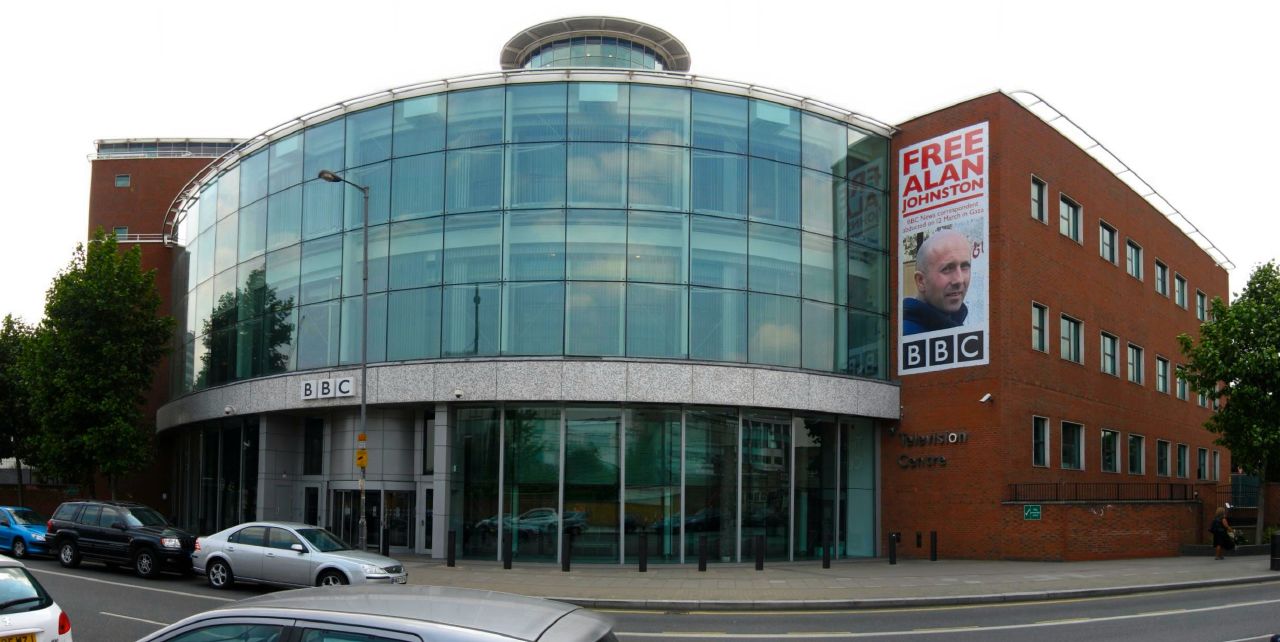
BBC Television Centre, Wood Lane, White City, London W12. The studios — opened in 1960 and home to *Top of the Pops* (1966-91) and *Jim'll Fix It* (1975-94) — were the principal site of Jimmy Savile's broadcast career. The Dame Janet Smith Review (February 25, 2016) found that Savile committed offences against at least 72 identified victims on BBC premises between 1965 and 2006. Wikimedia Commons, CC BY 2.0.
Jimmy Savile and the Institutions That Looked Away
United Kingdom, 1960s-2011 — how a man with the keys to children's wards, the royal staircase, and Vatican audience halls was openly suspected by colleagues for four decades and investigated only after his death
- Category
- Media & Propaganda
- Published
- Length
- 4,900 words · 22 min read
- Author
- The editors
Jimmy Savile and the Institutions That Looked Away
United Kingdom, 1960s-2011 — how a man with the keys to children's wards, the royal staircase, and Vatican audience halls was openly suspected by colleagues for four decades and investigated only after his death.
A national favourite
Jimmy Savile was born above his parents' tobacco shop in the Burley district of Leeds on October 31, 1926, the youngest of seven children in a Roman Catholic working-class family. He left school at 14, worked briefly as a Bevin Boy in a Yorkshire colliery during the Second World War, and entered the dance- hall trade in the late 1940s as a disc jockey at Mecca Ballrooms — first in Leeds, then nationally. He claimed in later memoirs to have invented the twin-turntable continuous- record format that became the basis of modern club DJing, though the claim is contested.
His broadcast career began on Radio Luxembourg in 1958. He joined BBC Radio in 1968 as one of the inaugural presenters of Radio 1 Club. By that point he had already presented the first edition of Top of the Pops — broadcast from a converted Methodist chapel on Dickenson Road in Rusholme, Manchester, on the evening of Wednesday, January 1, 1964 — making him a fixture of mainstream BBC entertainment from the moment the corporation began its formal weekly pop-music programme.
The Saturday-teatime BBC One programme that defined his public reputation, Jim'll Fix It, ran for 296 episodes across 19 series from May 31, 1975 to June 17, 1994. Each week, a child viewer wrote in asking to be allowed to do something specific — fly with the Red Arrows, conduct an orchestra, eat lunch on a fairground ride — and Savile, addressed on-screen as 'Jim', arranged it. The programme's peak audience reached 20 million in the late 1970s. Each child appeared on the programme wearing a 'Jim Fixed It For Me' medal, a heavy gold- coloured pendant on a red-and-blue ribbon. The medal was designed by the BBC and produced in collaboration with the Jim'll Fix It production office.
In parallel, Savile cultivated a charitable public persona on a scale that became central to his protection. The Jimmy Savile Charitable Trust, established in 1979, raised an estimated £40 million during his lifetime, with the largest single beneficiary being the National Spinal Injuries Centre at Stoke Mandeville Hospital in Aylesbury, Buckinghamshire — a facility for which he had begun voluntary porter work and fundraising in 1969, and which he was credited (in BBC broadcasts and in his own published statements) with having saved from closure and rebuilt during the 1980s.
He was appointed Officer of the Order of the British Empire (OBE) in 1972, and on June 16, 1990 was created a Knight Bachelor by Queen Elizabeth II 'for charitable services.' In the same calendar year, he was made a Knight Commander of the Pontifical Order of Saint Gregory the Great by Pope John Paul II — a papal honour traditionally reserved for Catholic laypeople who have rendered distinguished service to the Church or society. He had been formally received in private audience by John Paul II at the Vatican in advance of the appointment.
The access
The defining feature of Savile's institutional access was that it was voluntary, informal, and largely unsupervised. He held no clinical qualification, no formal NHS appointment, and no BBC staff contract for most of the relevant period; he worked on programme-by-programme freelance arrangements. The access was granted by individual institutions in recognition of his fundraising, his celebrity, and — at certain sites — his personal relationships with senior administrators.
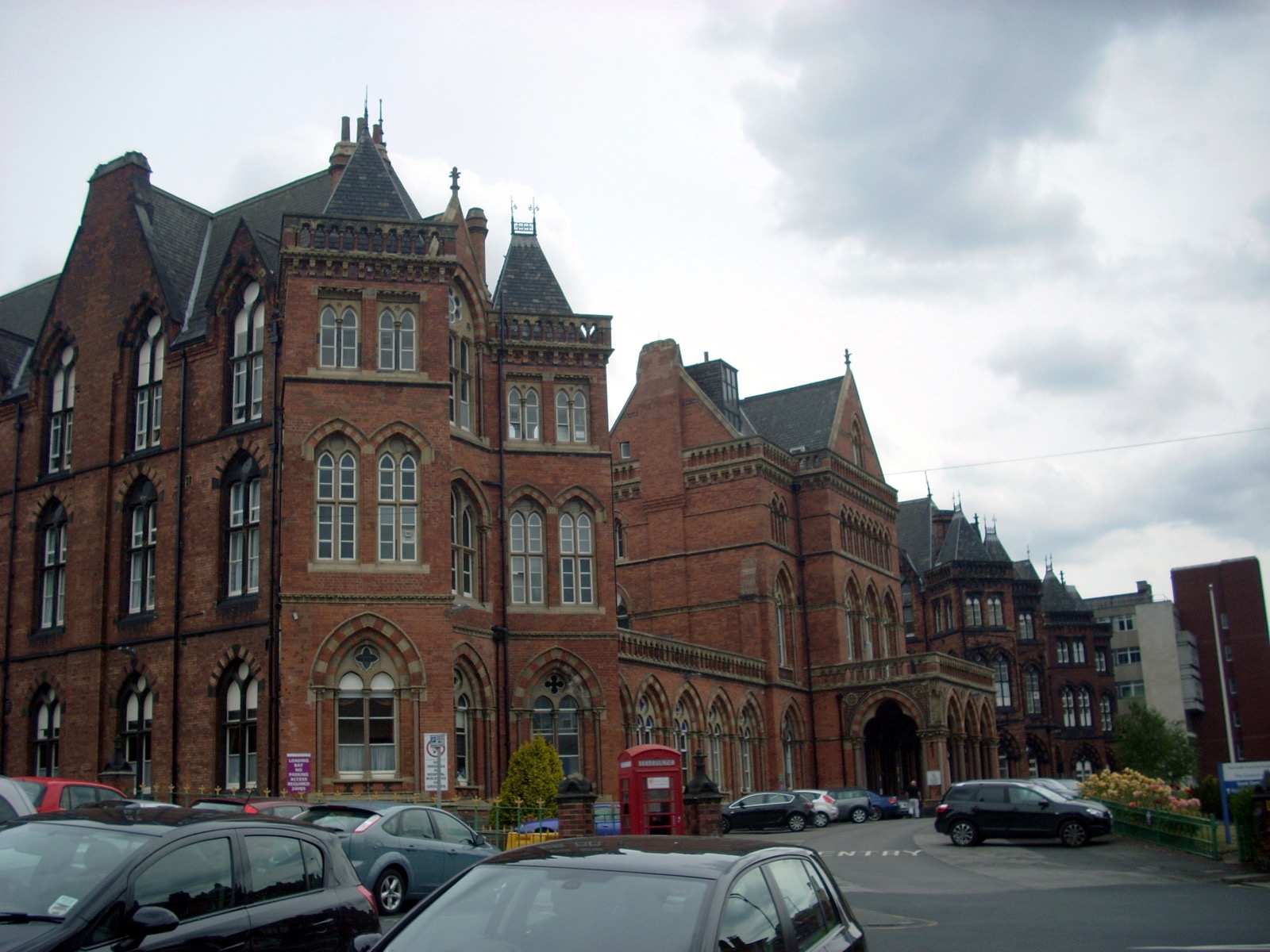
Leeds General Infirmary. Savile began voluntary porter shifts at Leeds General Infirmary in 1968. By the early 1970s, he had been issued his own staff identification, his own keys to internal areas, and informal permission to enter wards overnight. He maintained on-site accommodation in a porters' flat for parts of the 1970s and 1980s. The Lampard report on Leeds General Infirmary (published February 26, 2015) found 60 separate incidents of abuse at the hospital between 1962 and 2009, occurring on wards including paediatric, maternity, and the mortuary; the youngest identified victim was 5.
Stoke Mandeville Hospital. Savile began fundraising for the National Spinal Injuries Centre at Stoke Mandeville in 1969. By the early 1980s, he held an honorary position with on-site accommodation in a caravan and then a flat. The Lampard report on Stoke Mandeville (also February 26, 2015) found 60 separate incidents of abuse on hospital premises between 1968 and 1992; the youngest identified victim was 8. Investigators concluded that staff at the hospital were aware of inappropriate behaviour during the late 1970s and 1980s but did not raise formal concerns.
Broadmoor Hospital. In 1988, following an industrial dispute among Broadmoor staff that resulted in the suspension of the hospital's general manager, Edwina Currie — then Junior Health Minister in the Thatcher government — appointed Savile as the unpaid head of an interim 'task force' to manage the hospital. He was issued his own set of keys to Broadmoor's secure wards, granted on-site accommodation, and held the position until 1989. The Lampard report on Broadmoor (February 2015) found at least 11 incidents of abuse at the hospital between 1968 and 2004, involving patients and visitors, including children visiting relatives.
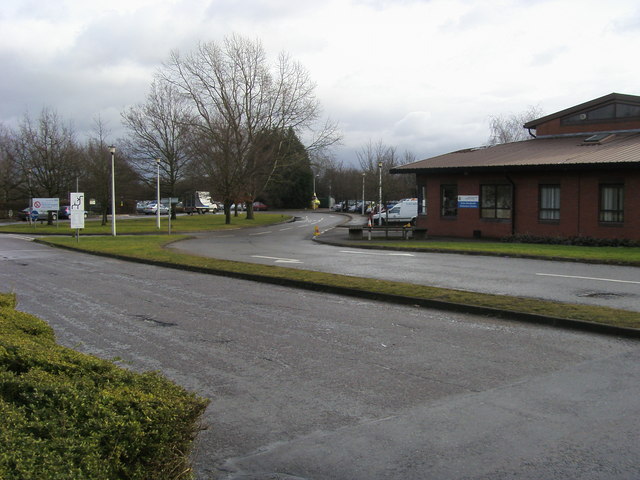
The pattern was consistent across all three sites: a fundraiser or honorary role that gave Savile a reason to be present; a set of keys or accommodation that gave him unsupervised access; and a celebrity profile that made him difficult, in the eyes of those who might have spoken up, to challenge. The institutions that granted the access were the institutions that then chose not to investigate the conduct.
The royal favour
In parallel with the institutional access at NHS sites, Savile cultivated political and royal relationships that further insulated him from scrutiny.
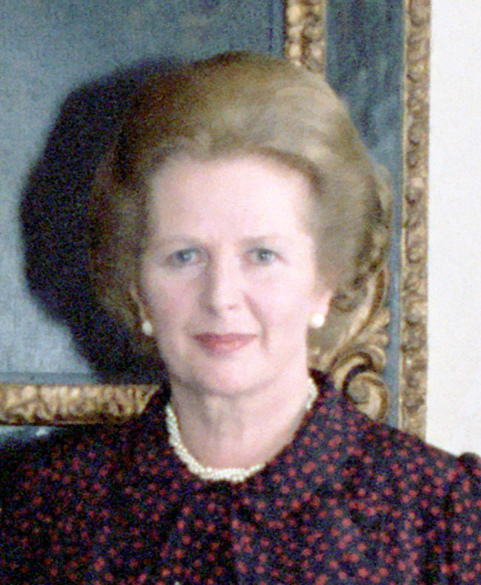
His relationship with Margaret Thatcher began in the late 1970s and intensified after her 1979 election. Released Cabinet Office papers — Prime Minister's Office: Records, files held at the National Archives in Kew, classes PREM 19 — confirm that Savile was a guest at Chequers, the prime minister's official country residence in Buckinghamshire, on eleven Christmas Eves between 1980 and 1990. He was also a regular guest at 10 Downing Street for receptions and lunches. Thatcher had recommended him for the Knight Bachelor honour on multiple occasions; Cabinet Office records show that the Honours Committee declined the recommendation in 1981, 1983, 1985, and 1987 — on the explicit ground, recorded in internal correspondence at the time, that 'concerns' about his personal behaviour had been raised. The knighthood was finally conferred in June 1990.
His relationship with the Royal Household was also direct. He acted in an unofficial advisory capacity to Charles, Prince of Wales, including (per correspondence later disclosed by the Royal Archives) advising on the prince's relationship with Diana, Princess of Wales, in the years preceding their formal separation in 1992. He was a guest at the wedding of Prince Andrew and Sarah Ferguson in 1986. He visited the royal estate at Highgrove on multiple occasions.
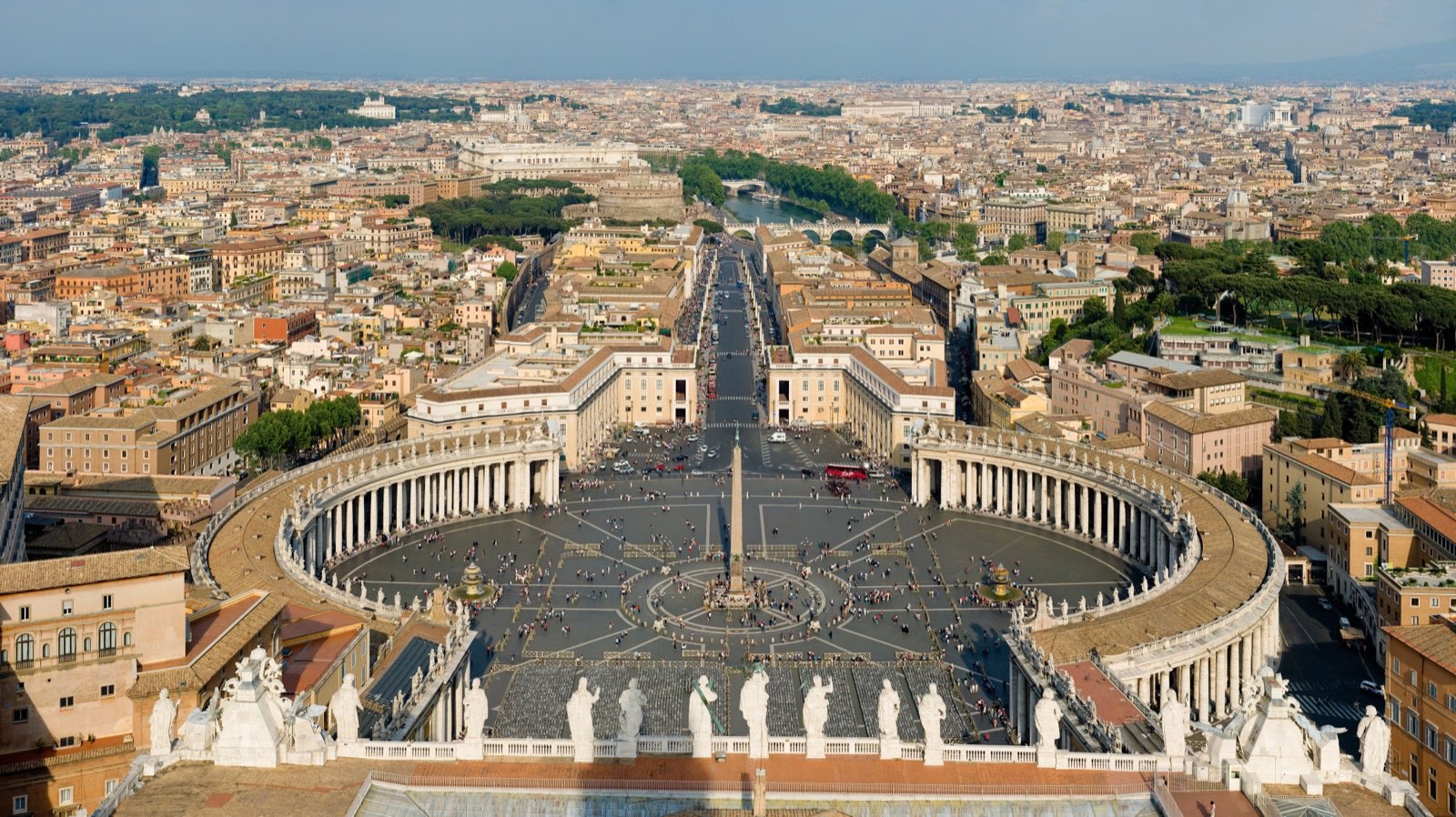
The Vatican relationship — the Knight Commander of the Pontifical Order of Saint Gregory the Great, conferred in 1990 — added a third institutional sponsor. Savile was a practising Catholic; he had been received in private audience by Pope John Paul II in advance of the appointment. After his death and the emergence of the Operation Yewtree findings, the Vatican was formally asked by a number of Catholic commentators whether the KCSG could be posthumously rescinded. The response from the Holy See, communicated through the Apostolic Nunciature in London, was that personal honours lapse automatically on the death of the holder and cannot be revoked retrospectively.
The rumours
The rumours about Jimmy Savile circulated, at varying levels of intensity and specificity, within the British broadcasting industry, within the journalistic profession, within parts of the police, and within parts of the medical establishment, from the early 1970s onwards. They did not produce action.
The first documented complaint to an institution dates to 1971. The BBC presenter Esther Rantzen — at the time a researcher on the BBC current-affairs programme Nationwide — heard from a colleague that a young woman had complained about Savile's behaviour at the BBC. Rantzen stated publicly in 2012, after the ITV documentary aired, that she had been aware of rumours throughout the 1970s and that the institutional response had been to dismiss them as gossip. She went on to found the children's helpline ChildLine in 1986; she has subsequently said that her own failure to act on the 1971 rumour is something she has had to confront.
A more substantial early newspaper report appeared in the Sunday Mirror on June 19, 1994, under the byline of Lynn Barber, describing an extended interview at Savile's flat in Roundhay, Leeds. Barber did not allege any specific offence but described his evasive responses to direct questions about his preferences. The piece did not produce any institutional follow-up.
A further newspaper investigation, by the journalist Paul Connew for the Sunday Mirror, was prepared in 1994 with two named complainants. Connew has stated publicly (2014, in his testimony to the Pollard Review) that the complainants withdrew before publication after Savile's lawyers contacted them. The piece was killed.
The BBC Newsnight investigation of late 2011 — prepared in the weeks immediately after Savile's death by reporter Liz MacKean and producer Meirion Jones, with Karin Ward and other Duncroft complainants on the record — was killed by Newsnight editor Peter Rippon on December 1, 2011. The Pollard Review (December 19, 2012), commissioned by the BBC and conducted by former Sky News head Nick Pollard, found no evidence of a deliberate cover-up but described Rippon's decision-making as 'flawed' and 'unsound.' Rippon was redeployed within the BBC; MacKean and Jones both left the corporation. Their report formed the evidential basis for the ITV documentary the following year.
The exposure
On October 3, 2012, at 23:00, ITV broadcast Exposure: The Other Side of Jimmy Savile, a sixty-minute documentary produced by ITV Studios and presented by the journalist Mark Williams-Thomas, a former Surrey Police detective. The programme featured five women — including Karin Ward, who waived her right to anonymity — describing abuse by Savile between 1971 and 1974 at Duncroft School, at the BBC, and at Stoke Mandeville.
The documentary's audience was 1.7 million. The institutional response was immediate. The BBC director-general George Entwistle commissioned an inquiry the following morning. The Crown Prosecution Service announced a review of the 2009 decision. The Metropolitan Police Service announced on October 9, 2012 — six days after broadcast — that it was launching Operation Yewtree, a formal investigation initially structured in four strands:
- Strand 1: Savile alone. Allegations against Savile only.
- Strand 2: Savile and others. Allegations in which Savile is alleged to have acted with other named individuals.
- Strand 3: Others. Allegations against other individuals, not Savile, that emerged during the investigation.
- Strand 4: Public figures. A subset of Strand 3 relating to public figures.
The strand structure was significant: it meant that investigations of other public figures alleged to have offended during the same period — Stuart Hall, Rolf Harris, Max Clifford, Gary Glitter, Dave Lee Travis, and others — were formally distinct from the Savile-specific investigation but shared its evidential infrastructure.
Giving Victims a Voice
The joint Metropolitan Police–NSPCC report Giving Victims a Voice was published on January 11, 2013, three months after the launch of Operation Yewtree. Its findings — drawn from the Strand 1 (Savile alone) phase of the investigation — constituted the first comprehensive picture of the scale of the offending.
The report recorded 450 separate complaints. Of these, 214 were treated as recorded offences (the remainder did not meet the evidential threshold or had been duplicated across multiple reports). The 214 offences included 34 of rape. Locations included 14 NHS hospital sites, 28 schools, BBC premises in London and Manchester, the Jimmy Savile Charitable Trust office in Leeds, the Hôtel de l'Univers in Paris, public houses, and a number of named private addresses. The time span — 1955 to 2009 — covered fifty-four years; the longest unbroken access period was Leeds General Infirmary (1968-2009, forty-one years).
The age profile of the complainants was striking. Of the 450 total complaints, 82% related to offences when the complainant was under 18; 17% related to offences when the complainant was under 13; the youngest identified victim, at Leeds General Infirmary in 1962, was 5. The gender breakdown was 73% female to 27% male.
The BBC: the Dame Janet Smith Review
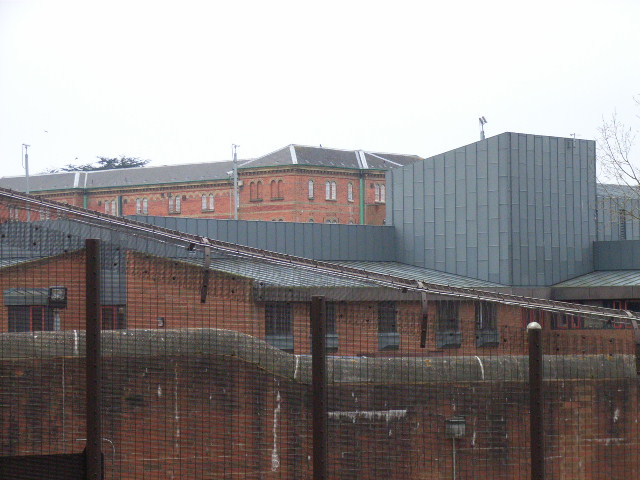
On October 12, 2012, three days after Operation Yewtree was launched, the BBC commissioned an independent review of its own institutional culture during the years Savile worked there. The review was led by Dame Janet Smith DBE, a retired Court of Appeal judge who had previously chaired the Shipman Inquiry into the murders of Dr Harold Shipman. The review took three years and four months and was published on February 25, 2016, in three volumes totalling 789 pages.
The review's central findings:
- The number of victims. The review identified 72 named victims of Savile on BBC premises between 1965 and 2006. The youngest was 8. The oldest was 47.
- The locations. Offences occurred at BBC Television Centre, Broadcasting House, BBC Manchester (Dickenson Road and Oxford Road), BBC Lime Grove, BBC Egton House, and at Radio Luxembourg studios. Offences also occurred in dressing rooms during Top of the Pops, in editing suites, in Savile's Rolls-Royce while parked on BBC premises, and in Savile's caravan parked at BBC sites.
- The institutional culture. The review identified what it termed 'a culture of fear' in parts of the BBC where Savile worked. Junior staff who became aware of incidents 'did not feel able to raise the matter with anyone' because of Savile's celebrity status and his demonstrated ability to shape the careers of those who worked with him.
- The knowledge of senior management. The review concluded — significantly — that no member of the BBC's senior management, defined as Director-General level and one rung below, had been made formally aware of any specific allegation against Savile during his BBC career. Knowledge had circulated at producer and floor-manager level. It had not been transmitted upwards.
The review's last finding was the most controversial. The journalist Meirion Jones, who had been on the spiked Newsnight investigation, gave evidence that knowledge at producer level should have been treated as institutional knowledge. The Smith Review did not adopt this framing; it treated the failure of upward transmission as a feature of organisational structure rather than as evidence of senior-management complicity. The finding has been challenged in subsequent academic writing on the case.
The NHS: the Kate Lampard reports
In parallel with the Dame Janet Smith Review, the Department of Health commissioned a separate set of inquiries into the hospital and hospice access. The lead investigator was Kate Lampard CBE, a barrister and former NHS Solicitor. The Lampard inquiry produced 28 separate hospital-by-hospital reports plus a lessons-learned synthesis report, all published on February 26, 2015.
The combined Lampard findings establish offences at:
- Leeds General Infirmary — 60 recorded acts, 1962-2009.
- Stoke Mandeville Hospital — 60 recorded acts, 1968-92.
- Broadmoor Hospital — 11 recorded acts, 1968-2004.
- Wheatfields Hospice — 6 recorded acts, 1981-2008.
- Saxondale Hospital, Nottinghamshire — 3 recorded acts.
- A further 23 NHS sites — between 1 and 7 recorded acts each.
The Lampard synthesis report identified seven institutional patterns: (1) celebrity access was granted without formal safeguarding review; (2) honorary roles created supervisory ambiguity; (3) charitable donations created reluctance to challenge; (4) on-site accommodation created opportunity; (5) complaints from patients with mental-health diagnoses were discounted; (6) complaints from young people in care were discounted; (7) institutional reputational concerns produced risk-aversion in supervisors.
The report's recommendations — relating to volunteer safeguarding, celebrity-access protocols, complaint-handling processes, and the treatment of complaints from vulnerable witnesses — were largely accepted by the Department of Health and incorporated into NHS England safeguarding guidance during 2015 and 2016.
The funeral and after
Savile died at his home in Roundhay, Leeds, on the morning of October 29, 2011, two days before his 85th birthday. The cause of death was pneumonia. His funeral, on November 9, 2011, was conducted with full ceremonial honours. He lay in state at the Queens Hotel, Leeds, in a gold-coloured coffin. The funeral mass was held at Leeds Cathedral. The coffin was then transported to Scarborough, North Yorkshire, where he was buried at Woodlands Cemetery in a grave dug at a 45-degree angle so that he could face the sea. The original headstone, unveiled in September 2012, read 'It was good while it lasted.' Eleven days after the ITV documentary aired in October 2012, the family requested that the headstone be removed; it was broken up and the fragments sent to landfill.
After the documentary, the Jimmy Savile Charitable Trust was wound up. Its remaining assets — approximately £3.7 million — were paid into a victims compensation fund administered by the trust's residual trustees, NHS England, and BBC Worldwide. By 2018, payments had been made to 124 recognised claimants. The scheme was administered without admission of personal liability by any of the contributing institutions.
The honours conferred by Elizabeth II and John Paul II were not formally revoked because, under both English and Vatican practice, personal honours lapse automatically on the death of the holder and cannot be retrospectively rescinded. Cabinet Office records confirm that this was reviewed in October 2012 at the request of a number of MPs; the formal advice returned was that there was no mechanism to revoke a knighthood from a deceased person.
A statue of Savile that had stood at Stoke Mandeville Hospital since 1988 was removed in October 2012. A plaque marking his attendance at the opening of the Glencoe Mountain Resort cable car was removed in October 2012. A footpath named for him in Scarborough was renamed. A street in Leeds named for him was renamed. The Leeds-based Jim'll Fix It set was put into storage.
What the question still is
The Jimmy Savile case is not a case in which the facts were hidden until they were uncovered. It is a case in which the facts circulated, at varying levels of specificity, for forty years before they were treated as facts. The 1971 BBC Nationwide complaint; the 1994 Sunday Mirror interview; the spiked Connew investigation of the same year; the 2007-09 Surrey Police investigation; the 2009 CPS decision; the spiked BBC Newsnight investigation of December 2011; the eventual ITV broadcast of October 2012 — these form a single chronological sequence in which knowledge was repeatedly acquired by institutions and repeatedly not transmitted into action.
The Dame Janet Smith Review's finding that BBC senior management did not know — that knowledge stopped at producer and floor-manager level and did not travel upwards — has been the most contested element of the institutional accounting. It is contested because it preserves the possibility that the institution as such was not knowing, while accepting that individuals within the institution were knowing. Critics of this framing — notably Jones, MacKean, and the academic literature that followed the review's publication — have argued that the distinction misdescribes how institutional knowledge actually works.
The Lampard reports avoided this difficulty by treating the question structurally rather than personally. They identified seven institutional patterns and recommended changes to volunteer access, charity-donor relationships, and the handling of complaints from vulnerable witnesses. The seven patterns are not specific to Savile. They are the patterns by which any institution can grant access to a sufficiently useful donor and then choose not to investigate the conduct that the access enables. This was the conclusion the inquiries did reach. It was also, in the absence of any surviving prosecutable defendant, the only conclusion the inquiries could deliver.
The question that remains — the question the inquiries did not, and could not, reach — is whether the institutional patterns that produced the Savile case have, in the decade since the documentary aired, been changed.
Sources
- Giving Victims a Voice: Joint report into sexual allegations made against Jimmy Savile, Metropolitan Police Service and National Society for the Prevention of Cruelty to Children, London, 11 January 2013.
- The Dame Janet Smith Review: An Independent Review into the BBC's Culture and Practices During the Jimmy Savile and Stuart Hall Years, Dame Janet Smith DBE, BBC, 25 February 2016 (three volumes, 789 pages).
- Themes and lessons learnt from NHS investigations into matters relating to Jimmy Savile: Independent report for the Secretary of State for Health, Kate Lampard CBE and Ed Marsden, Department of Health, February 2015.
- 28 separate hospital reports under the Lampard inquiry, published 26 February 2015, covering Leeds General Infirmary, Stoke Mandeville Hospital, Broadmoor Hospital, Wheatfields Hospice, Saxondale Hospital, and twenty-three further sites.
- In the matter of the late Jimmy Savile: Report to the Director of Public Prosecutions, Alison Levitt QC, Crown Prosecution Service, January 2013.
- Report by Nick Pollard of the inquiry into the BBC's handling of allegations against Jimmy Savile, Nick Pollard, BBC, 19 December 2012.
- Exposure: The Other Side of Jimmy Savile, ITV Studios, produced and presented by Mark Williams-Thomas, broadcast ITV1, 23:00 BST, Wednesday 3 October 2012.
- Cabinet Office Honours Committee correspondence, 1981-1990, The National Archives, Kew, classes CAB 21 and PREM 19 (partly redacted).
- Surrey Police, Operation Ornament case file, 2007-09 (closed case; summary disclosed in Levitt review January 2013).
- Williams-Thomas, Mark, The Cyril Smith Scandal and the Rules that Let Them Get Away with It, in British Journal of Criminology, vol. 54, 2014.
- Greer, Chris, and McLaughlin, Eugene, 'Trial by Media: From Feeding Frenzy to a News Frame Analysis of the Jimmy Savile Case', Journalism, vol. 14, no. 8, 2013.
- Furedi, Frank, Power of Reading: From Socrates to Twitter, Bloomsbury, 2015 (chapter on cultural deference).
- Henley, Jon, 'How Operation Yewtree changed Britain', The Guardian, 9 October 2017.
- Times of London archive: Savile coverage 1972-2012 (paid archive).
- BBC News archive: Savile coverage from October 2012 onwards (open access).
Last updated: 7 June 2026.
Inspired this / based on it
Mark Williams-Thomas / ITV Studios
The original ITV documentary broadcast Oct 3, 2012 at 23:00. Six days later Operation Yewtree was launched.
Rowan Deacon / Netflix · ★ 7
Two-part Netflix documentary drawing on archival BBC interviews and inquiry findings.
BBC One / Jeff Pope
BBC drama series with Steve Coogan as Savile; controversial broadcast decision by the corporation under formal review.
Dan Davies
Quercus. The leading book-length biographical investigation, based on the author's own interviews with Savile over years.
BBC Two
The original 2000 documentary in retrospect — Theroux returned to the material in his 2016 follow-up Savile.
BBC Two
Theroux's 2016 follow-up examining what he missed in 2000 and what others knew during Savile's lifetime.
Filed under
- #jimmy-savile
- #bbc
- #nhs
- #operation-yewtree
- #dame-janet-smith-review
- #lampard-reports
- #stoke-mandeville
- #leeds-general-infirmary
- #broadmoor
- #duncroft
- #esther-rantzen
- #child-protection
- #institutional-failure
- #uk
- #1980s
- #confirmed
Click any tag for every article carrying it.
Continue reading
The Catholic Church Abuse Cover-Up
On Sunday, January 6, 2002, the Boston Globe's Spotlight team published a 3,500-word article titled 'Church allowed abuse by priest for years.' The priest was John J. Geoghan. The diocese was Boston. The cardinal who had transferred him among parishes despite knowing of allegations since 1984 was Bernard Law. What began as a Boston story became, over the next two decades, a global accounting: Pennsylvania, Pennsylvania again, Ireland, Australia, Germany, France. The French Sauvé Commission in 2021 estimated that 330,000 children had been abused by clergy and lay members of the Catholic Church in France alone since 1950.
The Post Office Horizon Scandal
Between 1999 and 2015, the British Post Office prosecuted more than 900 of its own sub-postmasters — the men and women who ran the country's village shops and high-street branches — for theft, fraud, and false accounting, on the strength of figures produced by a single computer system. The system was called Horizon. It had been built by the Japanese technology company Fujitsu, rolled out from 1999 to some 14,000 branches across the United Kingdom, and it produced shortfalls — sums of money the accounts said were missing — that the sub-postmasters could not explain because they had not taken anything. Under the contract every sub-postmaster signed, those shortfalls became personal debts, and the Post Office, which held its own statutory power to prosecute, took hundreds of them to court. Seema Misra, the sub-postmistress of West Byfleet in Surrey, was sentenced to fifteen months in prison on November 11, 2010 — her son's tenth birthday — while eight weeks pregnant. Others were bankrupted, lost their homes, were shunned by the communities they had served, and at least four are believed to have taken their own lives. The Post Office knew, from at least 2010 and arguably earlier, that Horizon contained bugs capable of generating phantom shortfalls, and that Fujitsu's engineers could alter branch accounts remotely without the sub-postmaster's knowledge — and it continued to deny both in court for the better part of a decade. The cover-up unravelled not in a courtroom first but through the persistence of one campaigner, Alan Bates, a journalist's filing cabinet, a High Court judge who refused to be recused, and — finally, in January 2024 — a four-part ITV drama that did in a week what twenty years of litigation had not. In May 2024 Parliament passed an unprecedented law quashing every Horizon-related conviction at a stroke. This article examines what the system did, what the institution knew, and why the answer to the only question that matters — how an organisation can prosecute its own people for its own software's errors, for fifteen years — turns out to be less about a computer than about a contract, a culture, and a refusal to look.
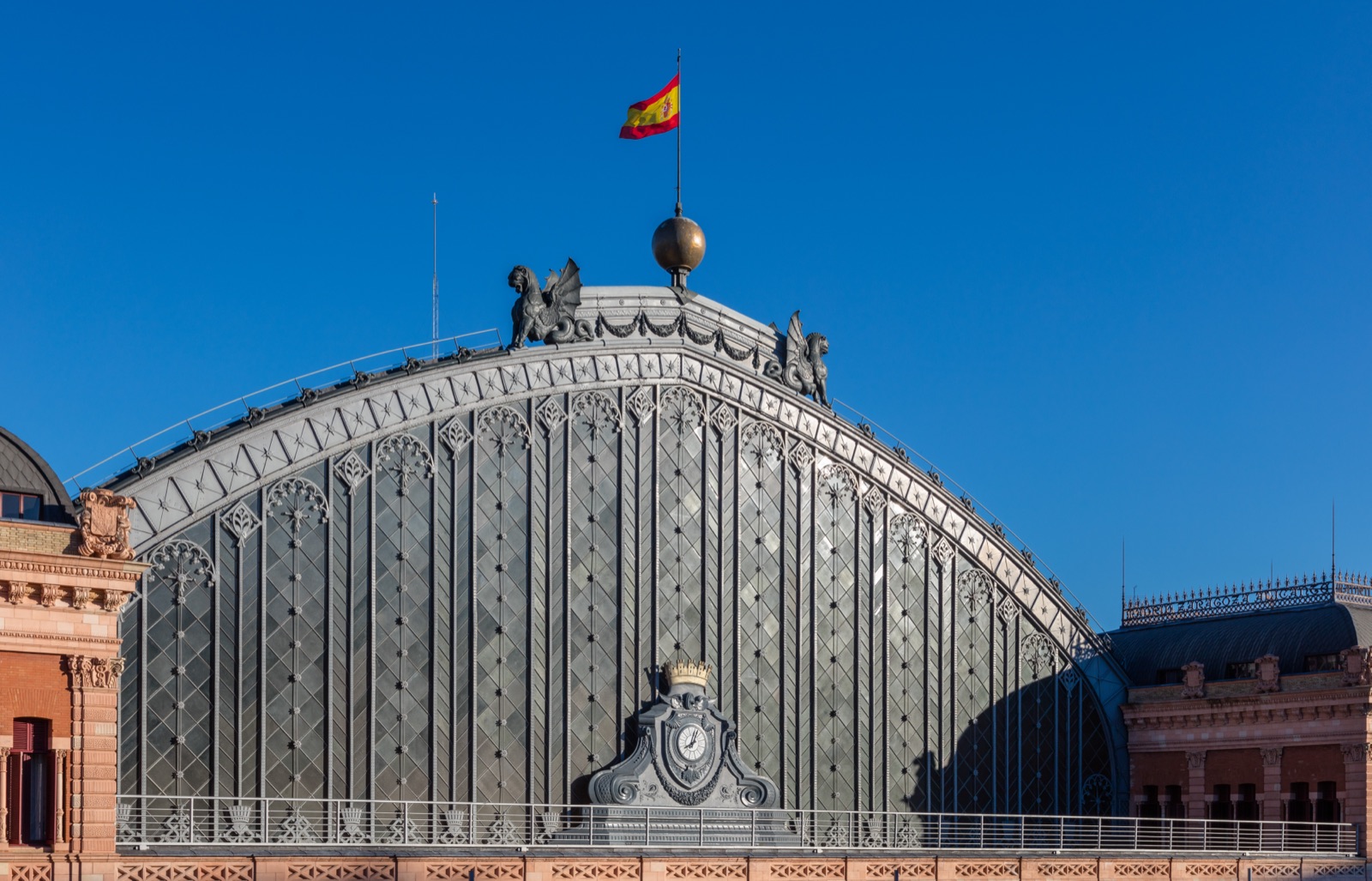
The Madrid Train Bombings and the Battle Over Who Did It
At the height of the morning rush on Thursday, March 11, 2004, ten bombs hidden in sports bags exploded within a few minutes of each other on four packed commuter trains converging on Madrid's Atocha station. One hundred and ninety-three people were killed and around two thousand injured — the deadliest terrorist attack in Spanish history and, at the time, in the history of post-war Europe. The bombs were crude and devastating: military plastic explosive packed with nails and screws, triggered by the alarms of cheap mobile phones. The attack fell three days before a general election that the governing conservative Partido Popular had expected to win, and from the first hours its government insisted, repeatedly and emphatically, that the perpetrator was ETA, the Basque separatist group it had spent years promising to defeat. The evidence pointed elsewhere almost at once — to an unexploded bag with a phone detonator, to a van near the departure station holding detonators and a cassette of Quranic verses, to a local cell of Islamist radicals enraged by Spain's participation in the war in Iraq. Over a frantic weekend the public came to believe it was being misled, gathered in spontaneous protests outside the ruling party's headquarters, and on March 14 voted the government out. Three years later, after the longest trial in modern Spanish history, the courts established the truth in detail: a jihadist cell, inspired by al-Qaeda, had carried out the massacre, and ETA had had nothing to do with it. And yet the case never closed in the public mind. A determined campaign — by newspapers, broadcasters, and politicians of the defeated right — kept alive the claim that the official account was a cover-up and that the real authors of 11-M had been hidden, for years after the verdict and, in corners of Spanish life, to this day. This article sets out what happened, what the courts proved, what genuinely remains murky, and how a fully solved crime became one of the most contested events in modern European politics.