Tag
#1980s
7 articles
The Death of Natalie Wood: Drowning Off Catalina
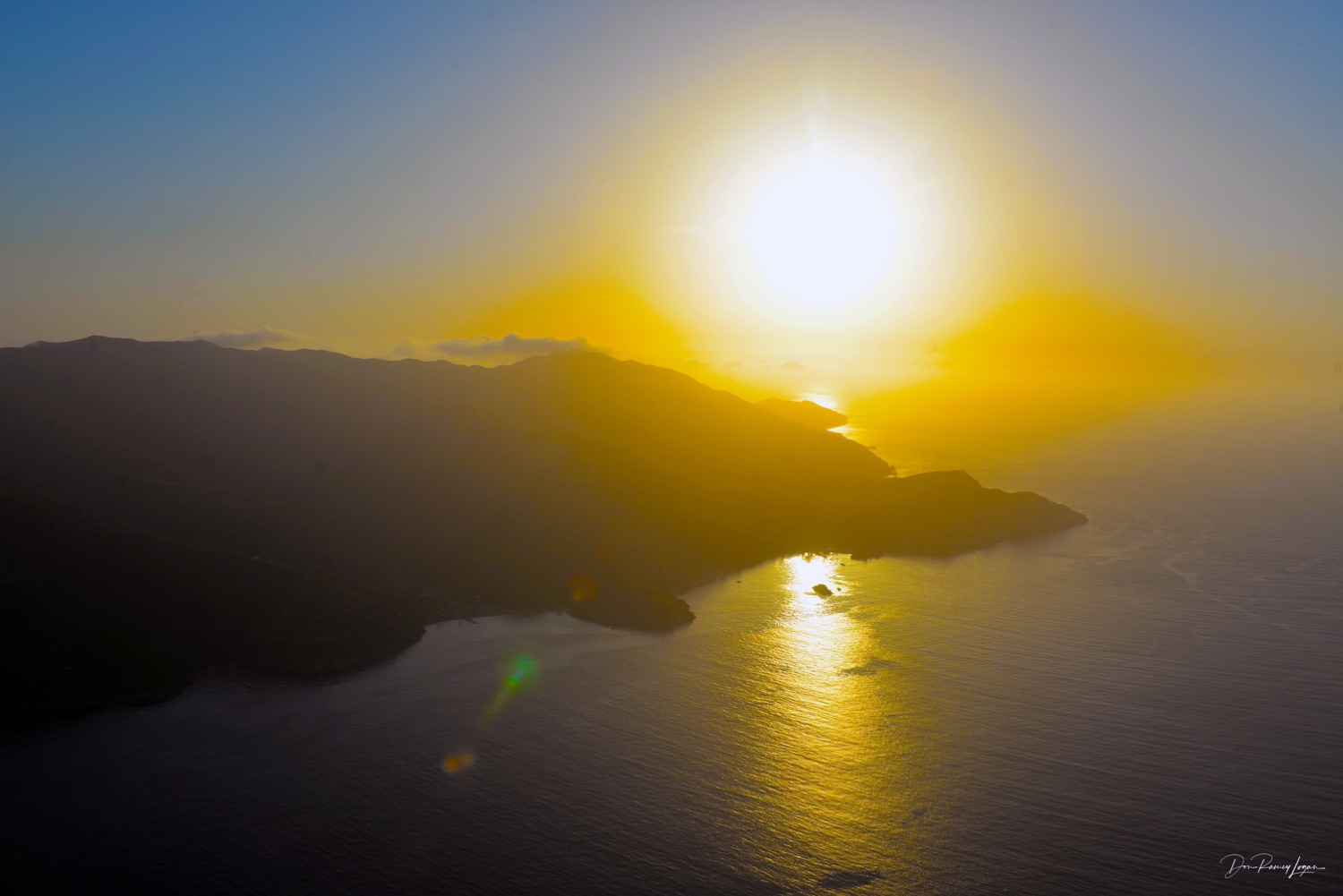
On the morning of 29 November 1981, the body of Natalie Wood — one of the most cherished actresses of her generation, a star since childhood — was found floating in the Pacific Ocean about a mile from her yacht, the Splendour, off the coast of Santa Catalina Island in California. She was forty-three, and she had drowned. The night before, she had been aboard the yacht with three other people: her husband, the actor Robert Wagner; her Brainstorm co-star, Christopher Walken; and the boat's captain, Dennis Davern. The Los Angeles coroner initially ruled the death an accidental drowning, theorising that she had slipped while trying to secure or board the yacht's dinghy and had been unable to climb back out of the cold water. But the account of that night was troubled from the start — there had reportedly been drinking and an argument aboard, the stories of those present shifted over the years, and Wood, it was widely known, had a lifelong fear of water. Three decades later, in 2011, the case was reopened; the cause of death was formally amended to 'drowning and other undetermined factors'; and in 2018 her husband was named a 'person of interest' — though he has always denied any wrongdoing, was never arrested or charged, and no evidence of foul play has ever been established. This is the story of the death of Natalie Wood — a genuine mystery in which the official record itself declines to say for certain what happened.
The Rendlesham Forest Incident: Britain's Most Famous UFO Case
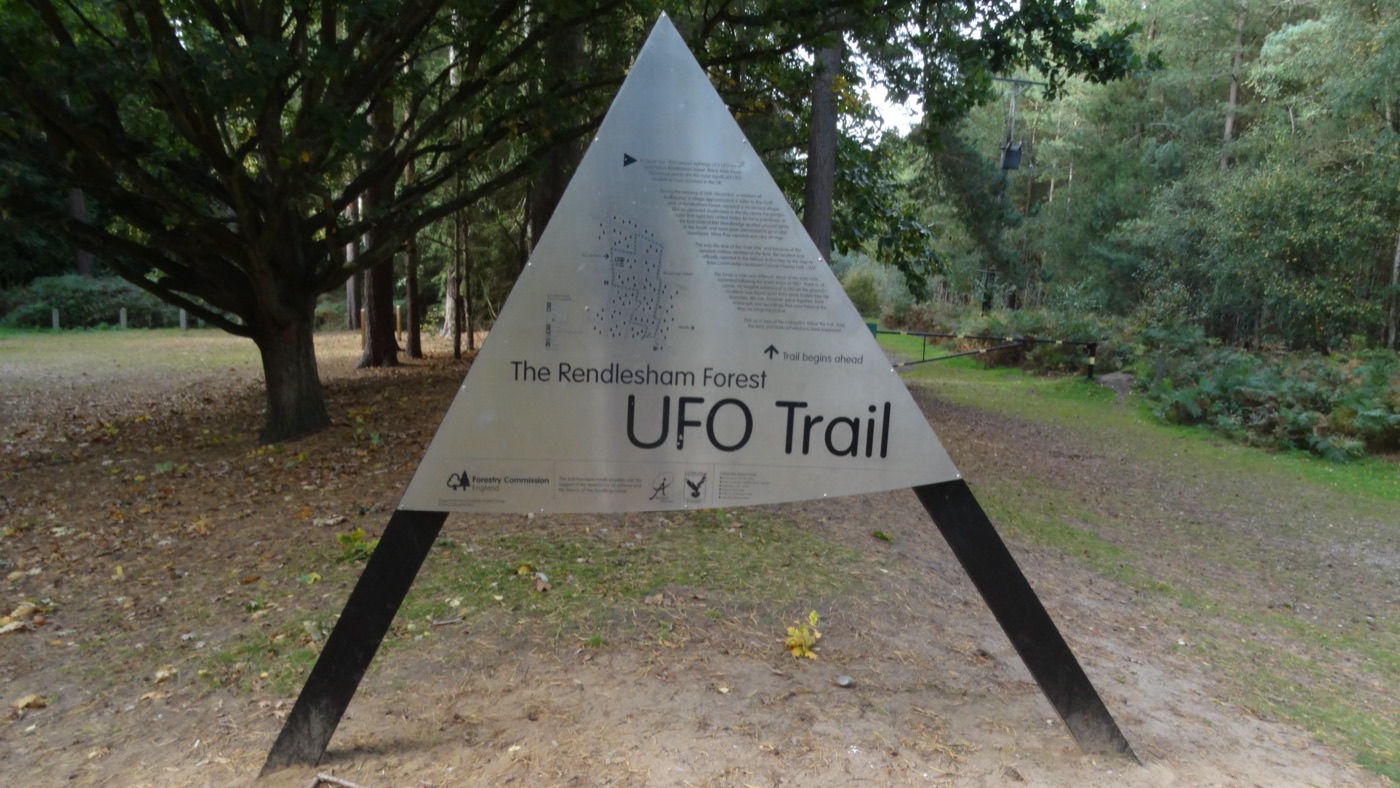
In the last week of December 1980, in Rendlesham Forest on the coast of Suffolk in eastern England, something happened that has been argued over ever since. The forest lay between two adjacent airbases, RAF Woodbridge and RAF Bentwaters, then used by the United States Air Force at the height of the Cold War, and it was American servicemen stationed there who became the witnesses to what is now often called 'Britain's Roswell.' In the small hours of 26 December, security personnel at the base saw strange lights descending into the forest, and, thinking an aircraft might have crashed, went in to investigate. What they reported finding — a metallic, structured craft with lights and strange markings, hovering or resting among the trees — became one of the most famous UFO accounts in the world. Two nights later the base's deputy commander, Lieutenant Colonel Charles Halt, led his own investigation into the forest and recorded it on tape as it unfolded, describing pulsing lights and objects in the sky. His subsequent official memorandum, released years later under freedom-of-information laws, gave the case a documentary weight that few UFO stories possess. And yet the incident has a strong and well-argued mundane explanation, centered on a nearby lighthouse, a bright meteor, and misperceived stars — an explanation the witnesses have always rejected. This is the story of what happened in Rendlesham Forest, and of why, more than four decades later, it remains unresolved.
The Bofors Scandal and the Bribes That Felled a Government
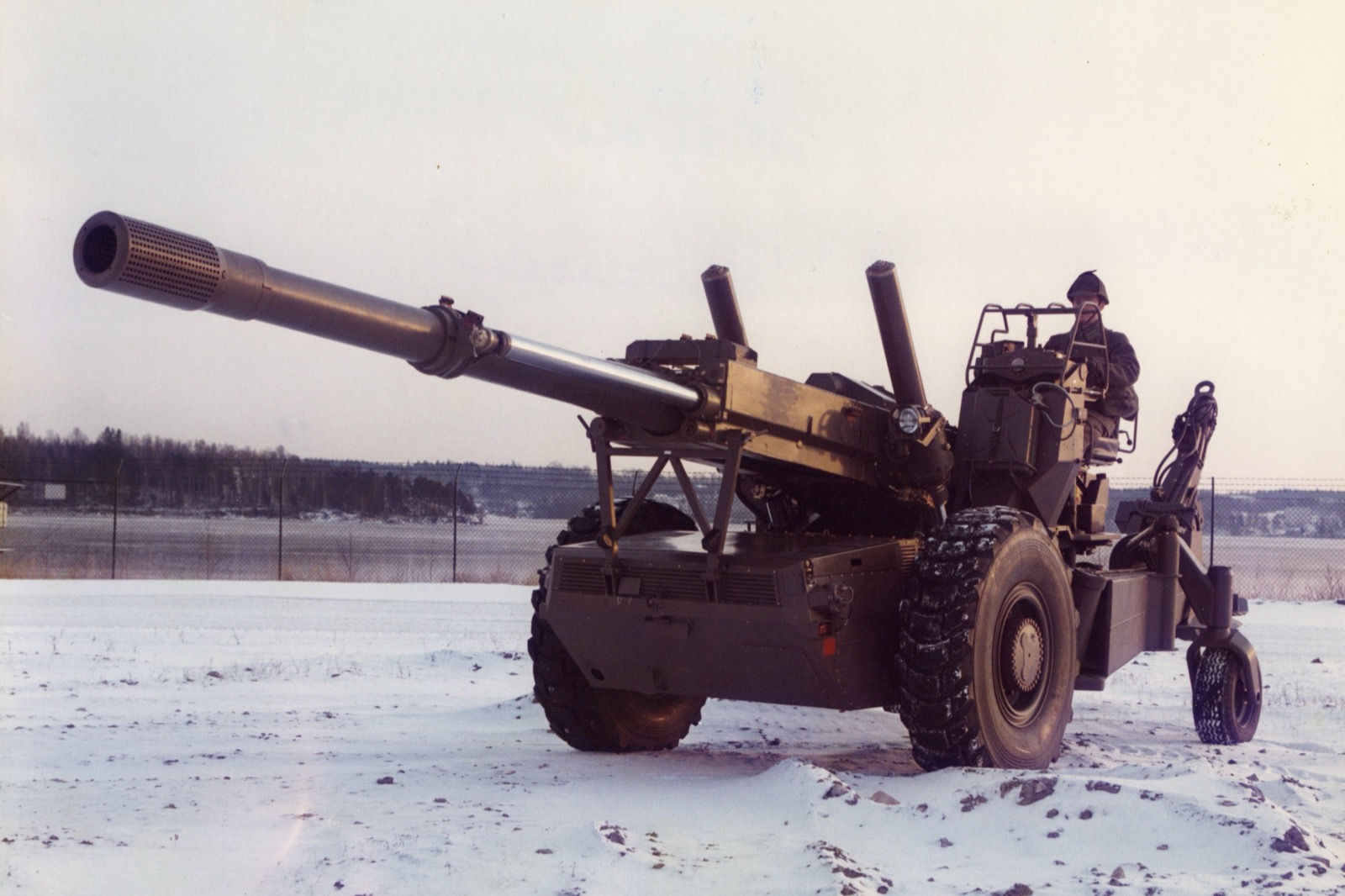
In March 1986, the Swedish arms manufacturer Bofors signed the contract of its life: a deal worth around 1.3 billion US dollars to supply 410 field howitzers to the army of India, beating its rivals for one of the largest defence orders of the decade. A little over a year later, in April 1987, Swedish public radio broadcast a revelation that would turn the triumph into one of the most consequential corruption scandals in the history of either country: to win the contract, Bofors had paid roughly 64 million dollars in secret commissions — bribes, in plain terms — funnelled through a web of front companies and secret Swiss bank accounts, in direct violation of India's rules forbidding middlemen and payoffs in defence deals. The question that consumed India for the next two decades was simple and explosive: who received the money? The investigation led through coded Swiss accounts to a circle of intermediaries, and above all to an Italian businessman, Ottavio Quattrocchi, who was personally close to the family of India's prime minister, Rajiv Gandhi. The scandal became a weapon in Indian politics, a symbol of corruption at the highest level, and a central reason Gandhi's government was swept from power in the 1989 election. Yet for all the decades of investigation that followed — across India, Sweden, and Switzerland — almost no one was ever convicted, the key suspect was never extradited, and the precise truth of who pocketed the bribes was never fully established in a court of law. This article sets out what is firmly known about the Bofors affair, what remains contested, and why a Swedish weapons deal became the scandal that would not die.
The Swedish Submarine Incidents and the Phantoms in the Archipelago
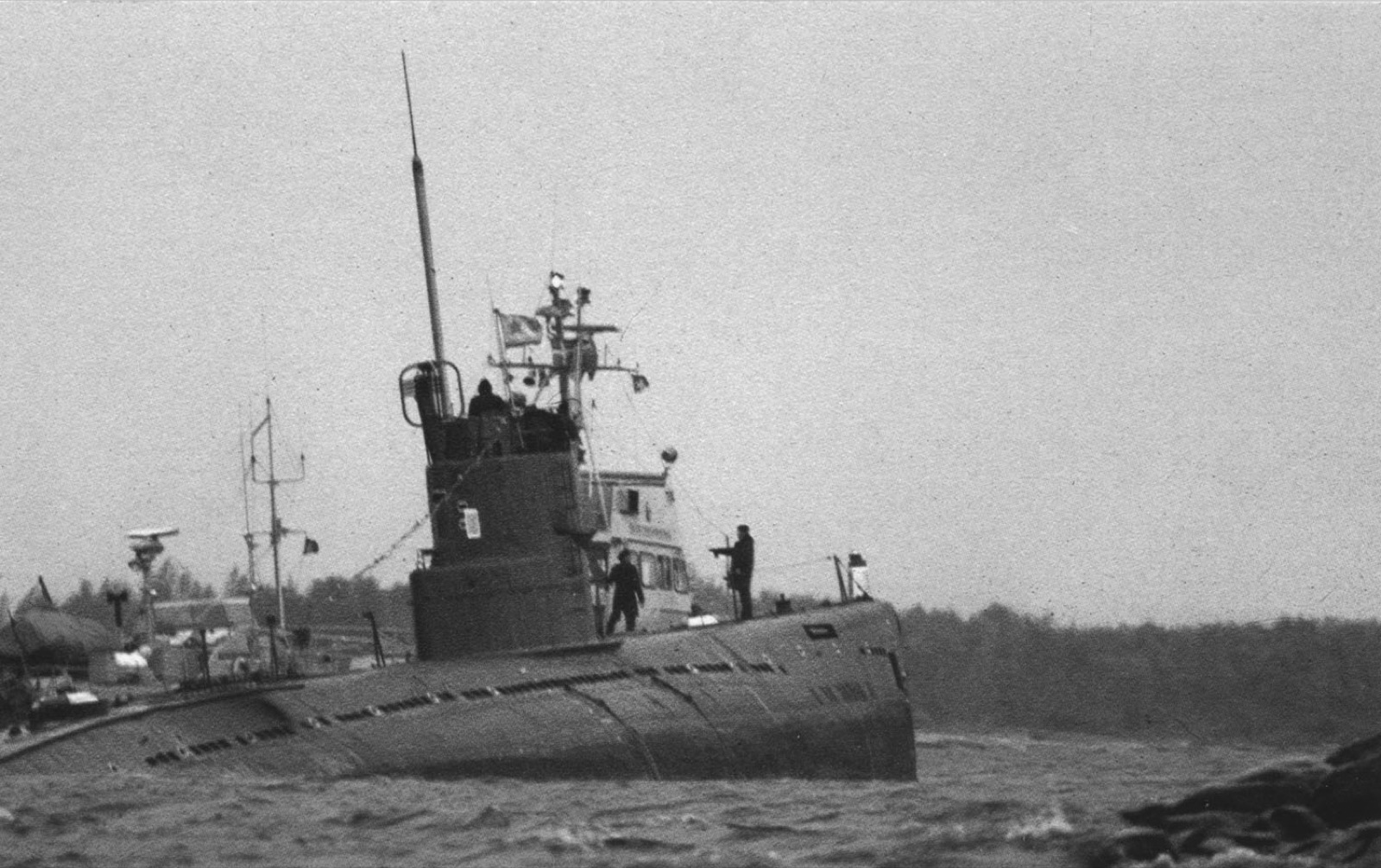
On the evening of 27 October 1981, fishermen near the Karlskrona naval base in southern Sweden saw something that should have been impossible: a Soviet submarine, hard aground on the rocks of Gåsefjärden, deep inside a restricted military zone barely ten kilometres from one of Sweden's most secret naval installations. The vessel was U 137, a Whiskey-class boat of the Soviet Baltic Fleet, and it had blundered far into Swedish territorial waters and stranded itself on a skerry. The Swedish press, with grim delight, called it 'Whiskey on the Rocks.' The incident was a genuine Cold War sensation — a foreign warship caught red-handed in neutral Sweden's most sensitive waters, suspected of carrying nuclear weapons — and it was, crucially, completely real and undeniable: the submarine was there, on the rocks, for the world to photograph. But U 137 was only the prologue. In the years that followed, the Swedish navy became convinced that foreign submarines were repeatedly violating Swedish waters, slipping into the archipelagos around Stockholm and elsewhere, and it launched hunt after hunt — dropping depth charges, sealing off bays, mobilising the fleet — to catch them. The government accused the Soviet Union; a national near-obsession took hold. And yet, across all those years and all those hunts, not a single intruding submarine was ever caught, surfaced, or conclusively identified. The evidence was fiercely disputed, some of the 'submarine sounds' were later attributed to such mundane sources as minks and herring, and decades later the unsettling possibility emerged that some of the intrusions Sweden blamed on Moscow may have been Western — NATO probes of Swedish resolve. This article separates what is certain — the very real U 137 — from what remains, forty years on, one of the strangest unresolved episodes of the Cold War.
Project Coast and the Apartheid State's Secret Chemistry of Death
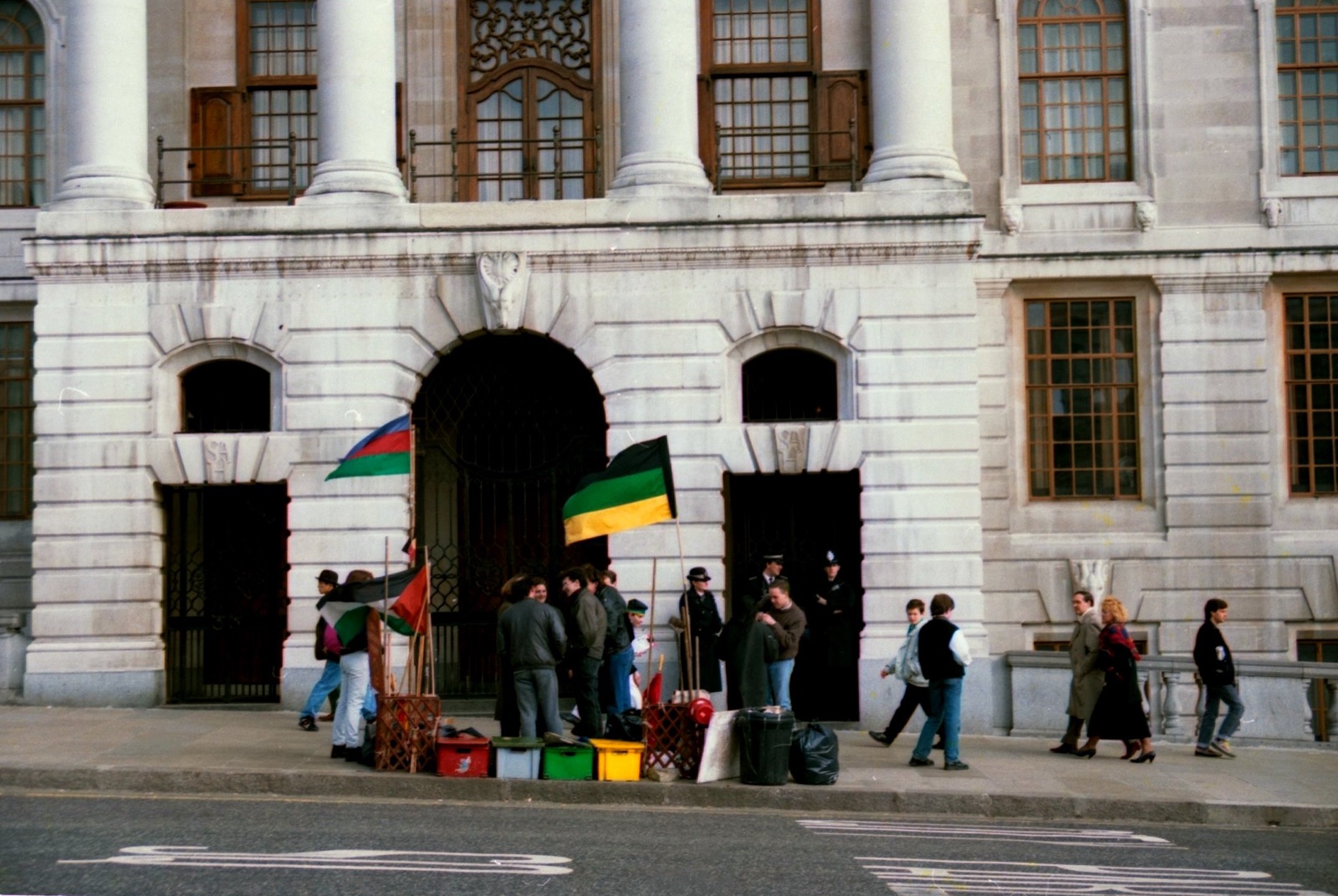
In the last decade of apartheid, behind a screen of front companies and military secrecy, the South African state ran a programme to turn medicine and chemistry into instruments of murder. It was called Project Coast, it was established in 1981, and it was directed by a brilliant young cardiologist named Wouter Basson, whom the press would later christen 'Dr Death.' Under his direction, government scientists in laboratories outside Pretoria cultured anthrax, cholera, and botulinum; manufactured poisons designed to kill quietly and untraceably; produced tons of Ecstasy and Mandrax; and pursued a research goal that sounds like the plot of a horror film but appears in the sworn record of South Africa's own Truth and Reconciliation Commission: a vaccine that would make Black South Africans infertile without their knowledge, to be administered covertly to suppress the Black birth rate. Apartheid opponents were poisoned, their clothing impregnated with toxins; according to testimony, captured guerrillas were sedated and dropped from aircraft into the sea. Much of this came to light only after apartheid ended, when Basson was arrested, his steel trunks of documents were opened, and the TRC convened special hearings on chemical and biological warfare. And then, in one of the most contested verdicts in South African legal history, Basson was tried on dozens of charges and acquitted of every one. This article sets out what Project Coast was, what it did, what it aspired to and never achieved, and why so much of it ended not in a reckoning but in an acquittal.
Jimmy Savile and the Institutions That Looked Away
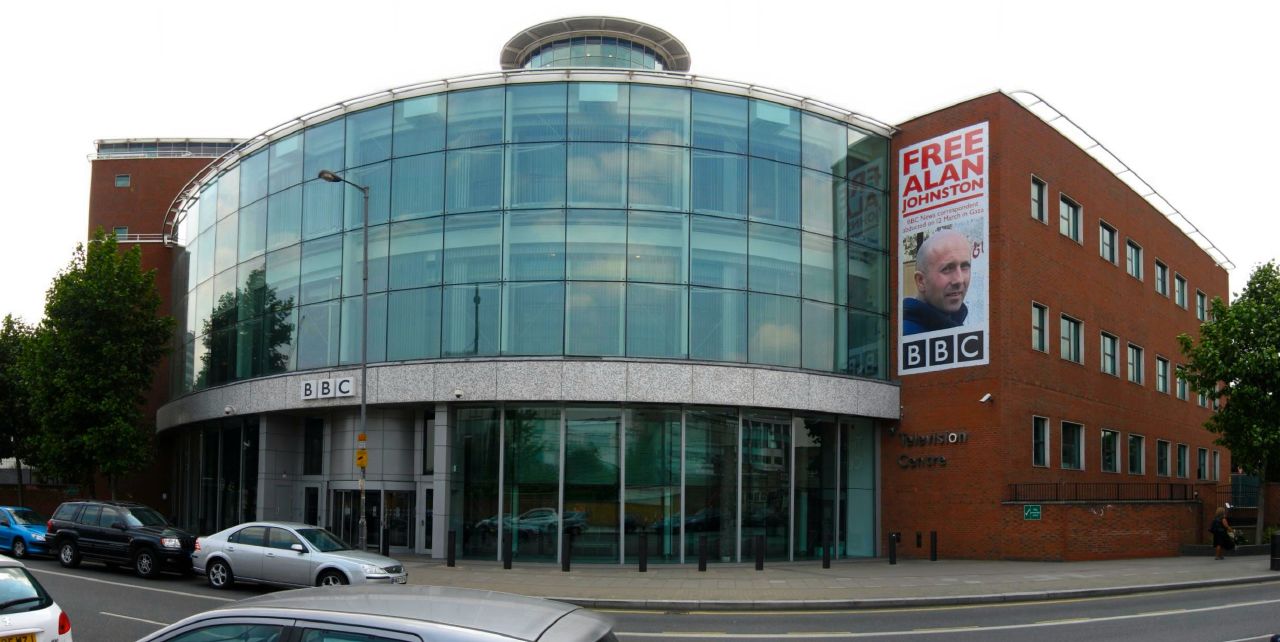
Sir James Wilson Vincent Savile — born in Leeds on October 31, 1926, knighted by Elizabeth II on June 16, 1990, and knighted by Pope John Paul II as a Knight Commander of the Pontifical Order of Saint Gregory the Great in the same year — was, at the time of his death on October 29, 2011 at the age of 84, one of the most decorated, photographed, and televised figures in postwar British public life. He had presented the first edition of the BBC's *Top of the Pops* from a converted Manchester church on January 1, 1964, hosted *Jim'll Fix It* on BBC One every Saturday teatime from May 31, 1975 to June 17, 1994, raised an estimated £40 million for the National Spinal Injuries Centre at Stoke Mandeville Hospital, run twenty-one consecutive London Marathons, dined with Margaret Thatcher at Chequers on eleven separate Christmas Eves between 1980 and 1990, and held — at the time of his death — formal voluntary positions or unsupervised access at Leeds General Infirmary, Stoke Mandeville Hospital, and Broadmoor Hospital, the last as a member of an oversight task force appointed in 1988 by Edwina Currie. Eleven months after his funeral, on the evening of October 3, 2012, ITV broadcast *Exposure: The Other Side of Jimmy Savile*, a sixty-minute documentary in which five women — including Karin Ward, a former pupil at Duncroft Approved School in Surrey — described abuse by Savile between 1971 and 1974. Six days later, on October 9, 2012, the Metropolitan Police Service formally launched Operation Yewtree. By the time the joint Metropolitan Police and NSPCC report *Giving Victims a Voice* was published on January 11, 2013, investigators had recorded 450 separate complaints, with offences spanning the years 1955 to 2009, victim ages ranging from 8 to 47, and identified locations including 14 NHS hospitals, 28 schools, and BBC premises across London and Manchester. The Dame Janet Smith Review — commissioned by the BBC in October 2012, published on February 25, 2016, and running to 789 pages — concluded that on BBC premises between 1965 and 2006, Savile committed offences against at least 72 identified victims and that a 'culture of fear' and deference to celebrity at the corporation had prevented complaints from being acted on. The Kate Lampard reports — commissioned by the Department of Health, published in February 2015 across 28 separate hospital-by-hospital reviews — established 60 acts of abuse at Stoke Mandeville and 60 acts of abuse at Leeds General Infirmary, with additional findings at Broadmoor and twenty-one other NHS sites. No personal prosecutions were possible after Savile's death. No surviving colleague has been charged in connection with the offences. This article examines what fourteen separate institutional inquiries have established about the access, the rumours, the 2009 prosecutorial decision that did not proceed, and the question that remains: how an institution that knows can choose not to act for forty years.
Iran-Contra
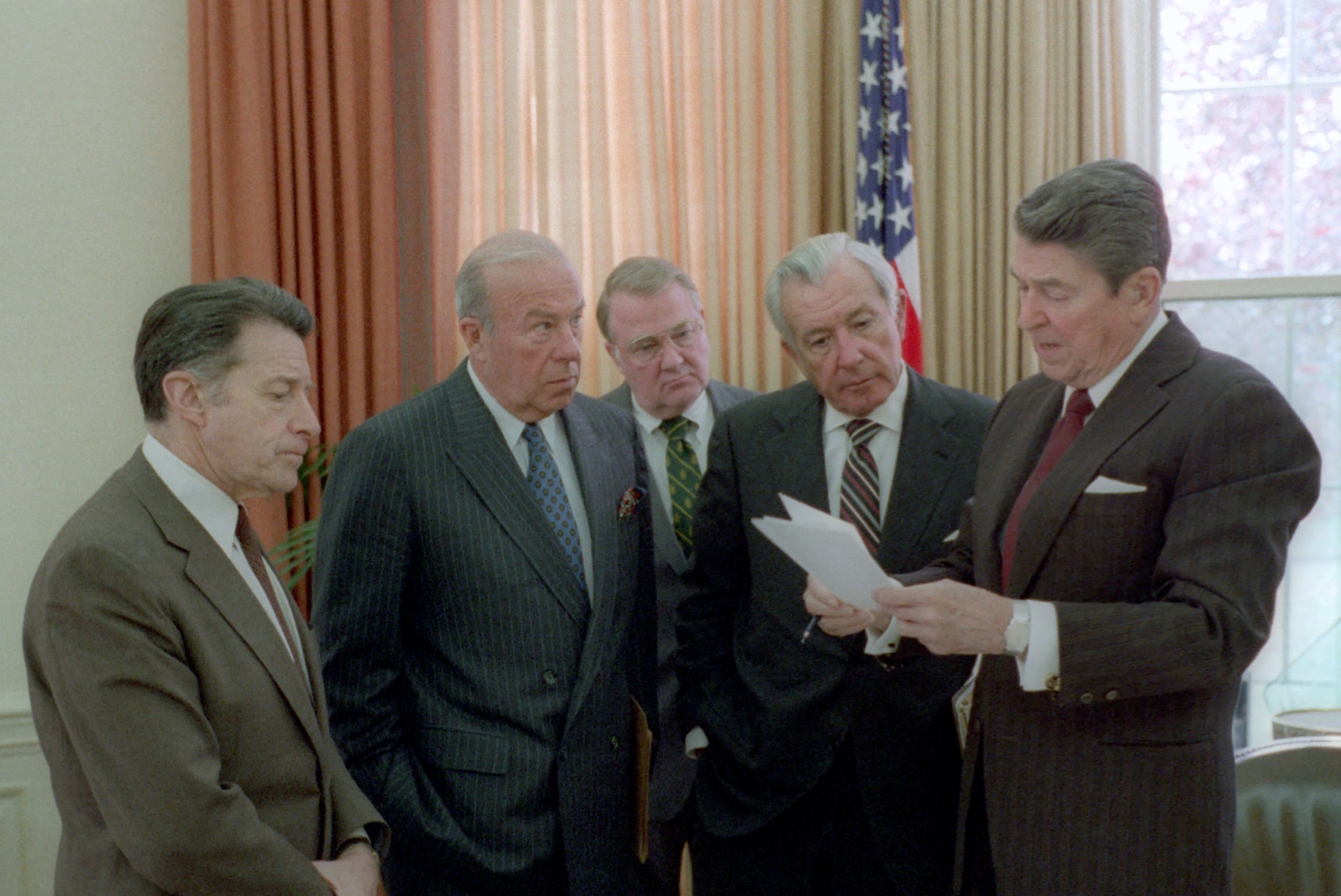
Between August 1985 and October 1986, the Reagan administration secretly sold anti-tank and anti-aircraft missiles to the Islamic Republic of Iran — an officially designated state sponsor of terrorism, in the middle of a war with Iraq. The cash went into Swiss bank accounts. From there a portion was diverted, in defiance of two congressional bans, to the Contra rebels fighting the Sandinista government in Nicaragua. The scheme was exposed by a Lebanese magazine, dismantled by a special commission, and partly prosecuted before President George H. W. Bush issued the pardons that ended the cases.
7 files · end of the line