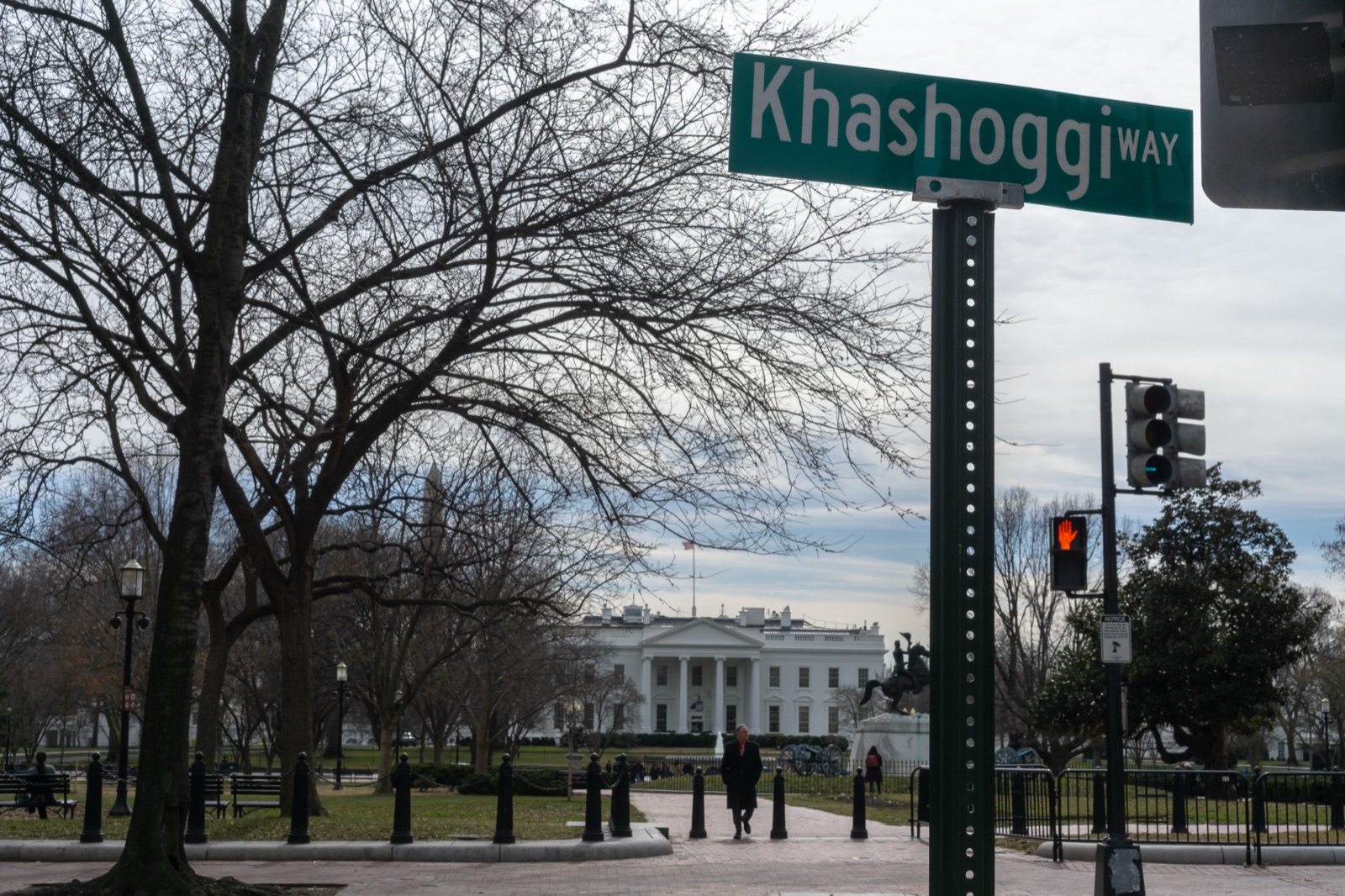
Jamal Khashoggi Way, Washington DC. The District of Columbia Council renamed the section of New Hampshire Avenue NW directly in front of the Saudi Arabian Embassy in June 2022. The renaming was opposed by the Saudi government. Wikimedia Commons, CC BY-SA 4.0.
The Khashoggi Murder
Istanbul, October 2, 2018
- Category
- Assassinations & Disappearances
- Published
- Length
- 3,700 words · 17 min read
- Author
- The editors
The Khashoggi Murder
Istanbul, October 2, 2018.
The journalist
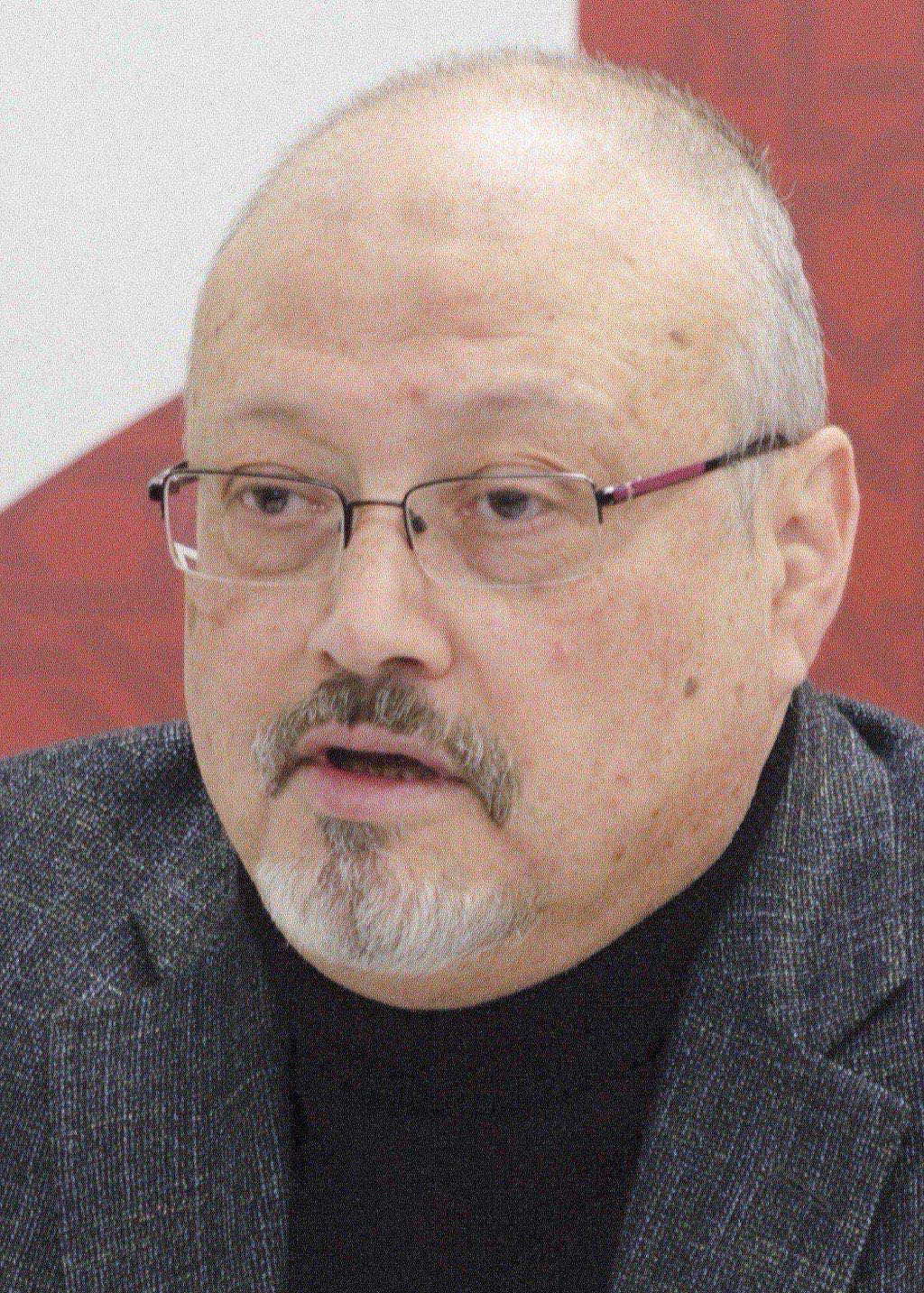
Jamal Ahmad Khashoggi was born October 13, 1958 in Medina to a prominent Saudi family. His uncle was Adnan Khashoggi, the 1970s-1980s international arms dealer who had been a substantial intermediary in the Iran-Contra arms-for-hostages operation. His cousin was Dodi Fayed, who died with Princess Diana in the 1997 Paris crash. The family was wealthy and politically connected to the Saudi royal family.
Khashoggi was educated at Indiana State University (business administration, 1982). He returned to Saudi Arabia in 1985 and began his journalistic career at the Saudi Gazette and then Al-Madina. His professional reputation was built during the 1980s and early 1990s through Afghan-jihad coverage — he was the principal Saudi journalist embedded with the mujahideen, knew Osama bin Laden personally during the 1980s, and conducted the last major Western-press interview with bin Laden in 1995.
Through the 2000s Khashoggi held increasingly senior editorial positions in Saudi-controlled media: editor-in-chief of Al- Watan (Saudi Arabia's leading daily) on two separate occasions (1999-2003 and 2007-2010); editor-in-chief of Al-Arab News Channel (a Bahrain-based satellite news channel funded by Saudi royal family member Prince Alwaleed bin Talal, 2015).
Khashoggi's politics were, throughout this period, broadly aligned with the Saudi establishment's reformist wing. He was a Muslim Brotherhood sympathizer (which was politically tolerated in Saudi Arabia until 2014), a moderate critic of specific royal family practices, and a substantial defender of the Saudi strategic project in the wider Middle East.
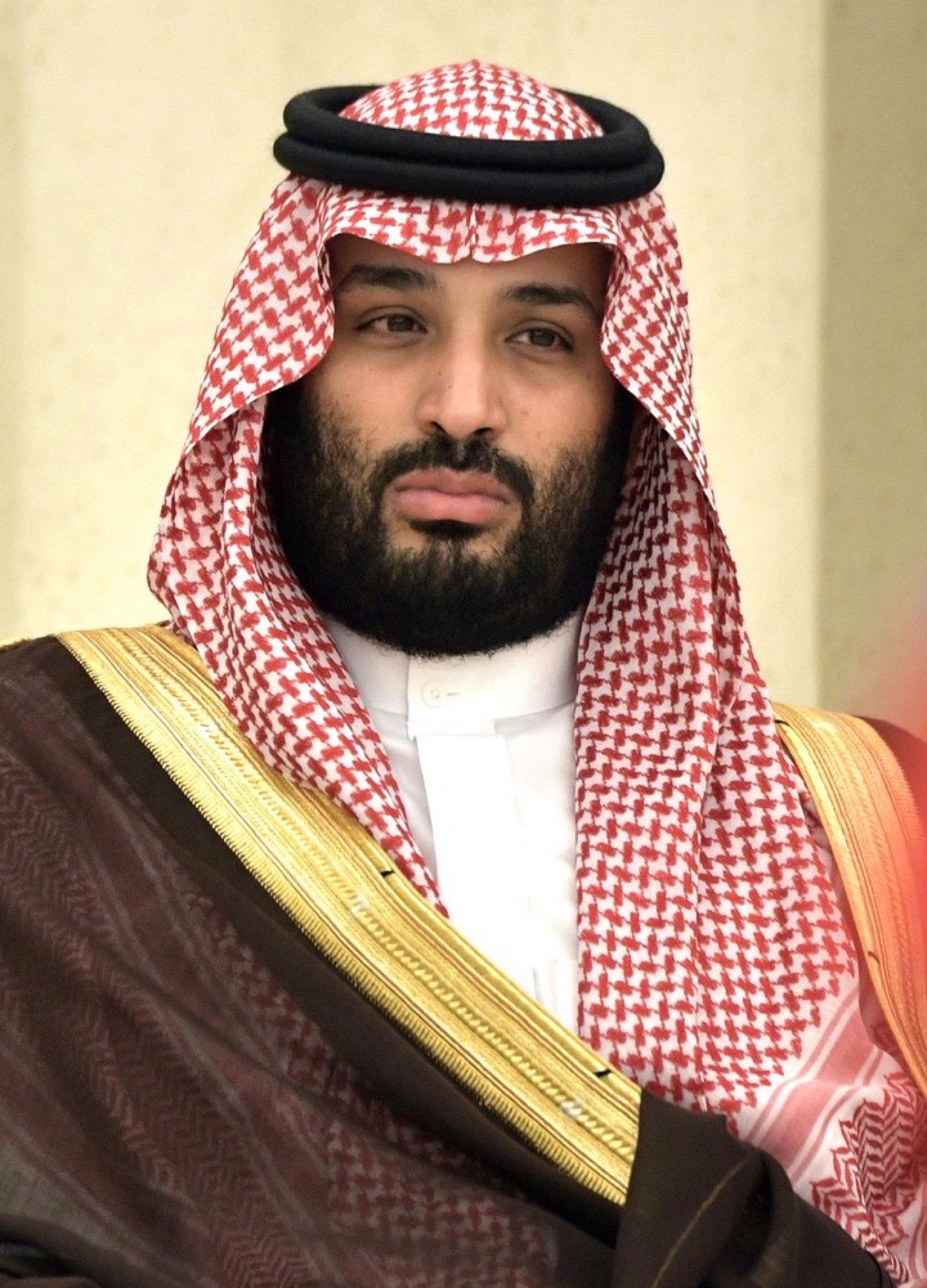
The relationship deteriorated after 2015. Mohammed bin Salman — King Salman's son, appointed Deputy Crown Prince in 2015 and Crown Prince in June 2017 — consolidated power through a series of moves that included the November 2017 mass-detention of approximately 200 senior Saudi figures (the so-called "Ritz Carlton round-up"), the diplomatic blockade of Qatar (which Khashoggi had broadly supported), and an aggressive campaign against Saudi Islamists.
In June 2017, Khashoggi was banned from Twitter under Saudi-aligned pressure. In September 2017, he left Saudi Arabia for the United States, where he had previously been a Wilson Center fellow. The Washington Post offered him a monthly opinion column the same month. His first column, published September 18, 2017, was titled "Saudi Arabia wasn't always this repressive. Now it's unbearable."
The column ran for one year and one month — September 2017 through October 2018, approximately 38 columns total. The columns were sustained, increasingly critical of MBS, and specifically focused on the MBS regime's treatment of dissent, foreign-policy adventurism (particularly the Yemen war), and the Khashoggi family's own positioning in Saudi society.
The fiancée
Hatice Cengiz, a Turkish PhD candidate studying Middle Eastern politics, met Khashoggi in May 2018 at a conference in Istanbul. They became engaged in August 2018. The engagement required, for Saudi citizenship purposes, that Khashoggi obtain a divorce attestation from his previous Saudi marriage and a "single status" certificate from Saudi authorities.
Khashoggi first attempted to obtain the documents at the Saudi Embassy in Washington DC, where he resided. The embassy declined to provide them, advising him to apply at a Saudi consulate abroad. He chose Istanbul because Cengiz was a Turkish citizen and the marriage would be registered in Turkey.
He visited the Saudi consulate in Istanbul on September 28, 2018. He completed the initial application. The consulate told him to return on October 2, 2018 to collect the completed attestation. He flew back to Washington briefly between visits, returning to Istanbul September 30.
By the standard of subsequent investigation, the September 28 visit was the operational trigger. Turkish intelligence has established that the Saudi operational team began coordinating its Istanbul deployment approximately 72 hours after the September 28 visit — i.e., immediately after Saudi authorities learned Khashoggi would be returning to the consulate on a specific date.
The team
The 15-man Saudi operational team flew into Istanbul on two private aircraft on October 1 and the morning of October 2, 2018. The aircraft were tracked by Turkish flight authorities:
- Gulfstream IV HZ-SK1 (Saudi government VIP aircraft) — Riyadh to Istanbul, October 1.
- Gulfstream IV HZ-SK2 — Riyadh to Istanbul, October 2 morning.
The team members, subsequently identified by Turkish authorities and reported by The New York Times and The Washington Post, included:
- Maher Mutreb — Saudi intelligence officer; member of MBS's personal protective detail. Photographed entering and exiting the consulate multiple times on October 2.
- Salah Mohammed al-Tubaigy — Saudi forensic pathologist; professor at Naif Arab University for Security Sciences in Riyadh. Specialty: autopsy and human-remains forensic analysis. Brought to Istanbul with portable bone saw.
- Thaar Ghaleb al-Harbi — Saudi Royal Guard member; member of MBS protective detail.
- Abdulaziz Mohammed al-Hawsawi — Saudi Royal Guard.
- Mansour Othman Abahussain — Saudi Royal Guard.
- Naif Hassan Alarifi — Saudi Royal Guard.
- Saif Saad al-Qahtani — Saudi Royal Guard.
- Waleed Abdullah al-Shehri — Saudi Royal Guard.
- Khaled Aedh al-Otaibi — Royal Guard, separately tracked by Turkish intelligence.
Several other team members have been partially identified. Saudi Arabia has not publicly produced the full team roster.
The team's composition — seven members of MBS's personal protective detail, a forensic pathologist with bone-saw training, and intelligence officers — was operationally consistent with a planned extraordinary rendition or killing. It was not consistent with the Saudi explanation that the operation had been intended as a peaceful "discussion" that went unexpectedly fatal.
The team's behavior in Istanbul before the operation:
October 1, 2018, evening — Several team members stayed at the Movenpick Hotel in Levent, approximately 1.5 km from the consulate. Some team members visited the Belgrad Forest north of Istanbul on a "scouting" trip. Turkish intelligence has characterized this visit as identifying disposal sites.
October 2, 2018, morning — The remaining team members arrived. The full 15-man complement was at the consulate by approximately 11:00 a.m.
What happened in the consulate
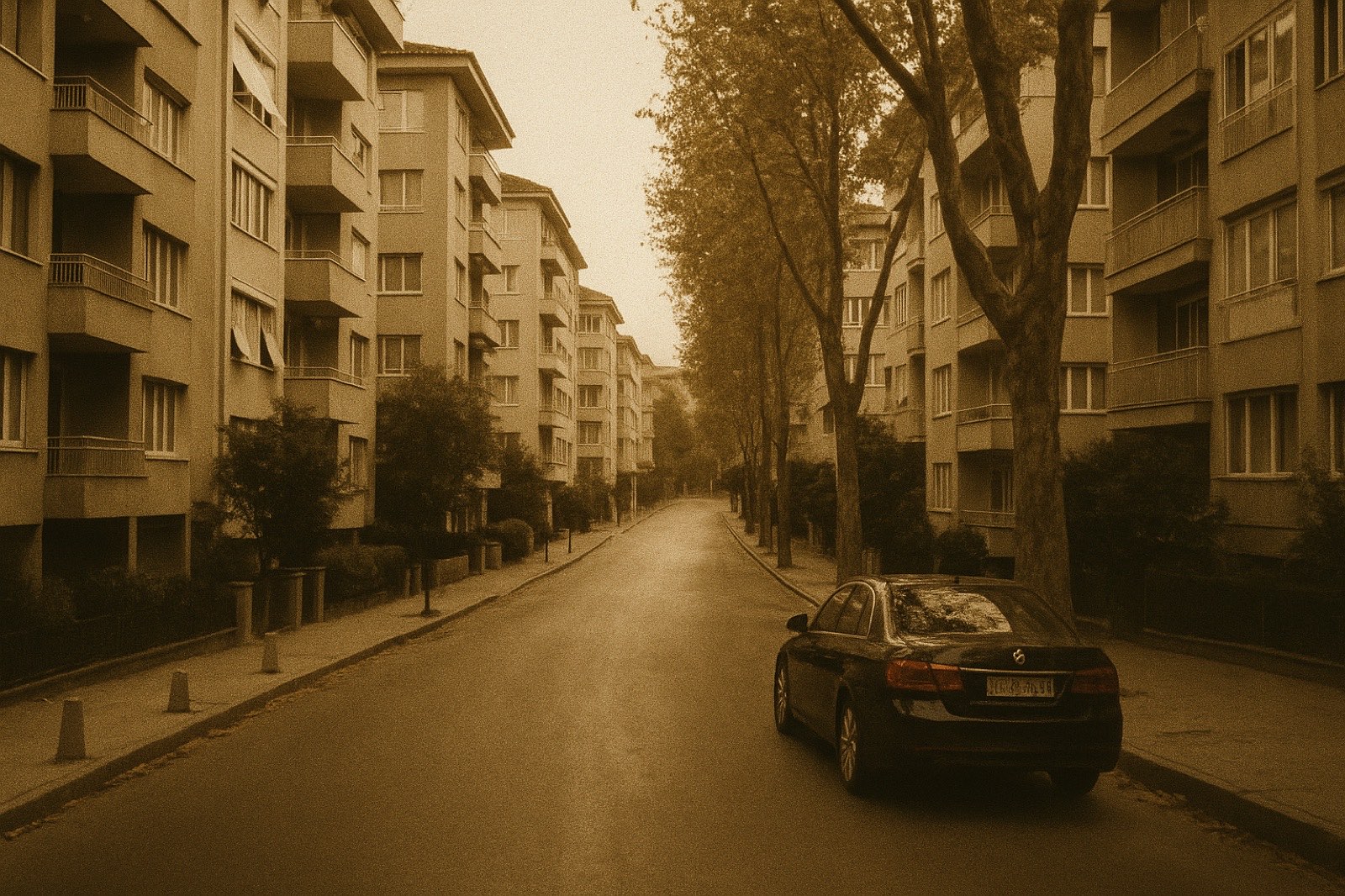
What is known about the seven minutes between Khashoggi's arrival and his death comes substantially from the Turkish audio surveillance recordings. Turkish intelligence had installed audio devices in the consulate — the legal basis for this surveillance, by Turkish authorities' own subsequent characterization, was the long-running Turkish-Saudi diplomatic tension and the consulate's status as a foreign-intelligence priority.
The recordings, by accounts of intelligence officers in multiple countries who have heard them, captured:
1:14 p.m. — Khashoggi enters the consulate's third-floor reception. He is greeted by consul-general Mohammad al-Otaibi.
~1:15 p.m. — Khashoggi is moved to the consul-general's office on the second floor.
~1:16 p.m. — Maher Mutreb enters the office. Mutreb informs Khashoggi that he is being detained and will be returned to Saudi Arabia. Khashoggi resists; argues; possibly attempts to leave the office.
~1:18-1:21 p.m. — Physical struggle. Khashoggi is restrained, then either suffocated with a plastic bag over his head or injected with a sedative. The audio recording is ambiguous about the precise cause of death; the Turkish forensic assessment was that the cause was likely asphyxiation.
~1:21-1:39 p.m. — Khashoggi's body is moved to an adjacent room (the consul-general's office bathroom or adjoining preparation room). Salah al-Tubaigy performs the dismemberment using the portable bone saw. The dismemberment is documented in the audio recordings as taking approximately 18-20 minutes.
~1:40-3:30 p.m. — The dismembered remains are wrapped (in plastic bags or in a rolled carpet, accounts vary) and prepared for transport. Several team members make multiple trips out of the consulate carrying suitcases.
~3:30 p.m. — A Mercedes Vito van leaves the consulate heading for the Saudi consul-general's residence in nearby Levent district, approximately 200 meters from the consulate. Turkish CCTV tracks the van's movements.
~4:30 p.m. — A subsequent vehicle convoy leaves the consul-general's residence heading for an unknown destination. Turkish CCTV loses the vehicles in the Belgrad Forest area.
The remains have never been located. Saudi sources have variously suggested they were buried in the consul-general's garden (later excavated by Turkish authorities; nothing recovered), incinerated in the consul-general's residence (the residence's boiler was the subject of intensive Turkish forensic attention; ash samples produced inconclusive results), or given to a local cooperator for disposal (the cooperator has never been identified).
The CIA assessment
The U.S. Central Intelligence Agency's investigation into the Khashoggi murder began within days. The investigation drew on:
- Turkish intelligence sharing (the audio recordings and associated material).
- U.S. signals-intelligence collection (NSA-collected Saudi diplomatic and military communications around the operation period).
- Open-source intelligence on the team's identity and movements.
- Saudi-internal intelligence shared by Saudi sources during internal Saudi-government factional disputes following the killing.
The CIA's classified November 2018 assessment, completed by the Office of Saudi Arabia Analysis under the Directorate of Intelligence, concluded with "medium-to-high confidence" that MBS had personally ordered the operation. The assessment's specific reasoning included:
- The presence of seven members of MBS's personal protective detail in the operational team. The detail's members do not typically operate without MBS's personal authorization.
- The intelligence-collected Saudi internal communications surrounding the operation included MBS-authorized references to Khashoggi as a problem requiring resolution.
- The political-cost calculation that an operation of this visibility and risk would not have been authorized at lower levels.
The CIA's "medium-to-high confidence" formulation is significant. The intelligence community confidence scale runs low / moderate / high; "medium-to-high" is the second-highest level. The assessment was that the conclusion was substantively supported but not at the level of evidence that would survive criminal-trial standards.
The Trump administration declined to release the assessment. Trump publicly disputed the CIA conclusion in a November 20, 2018 statement ("Maybe he did and maybe he didn't") and characterized Saudi Arabia as a strategically important partner whose relationship should not be jeopardized by the Khashoggi case.
The Biden administration released a four-page unclassified version of the assessment on February 26, 2021, approximately five weeks after Biden's inauguration. The unclassified version confirmed the medium-to-high-confidence conclusion. It did not release the underlying intelligence-product detail.
The protest
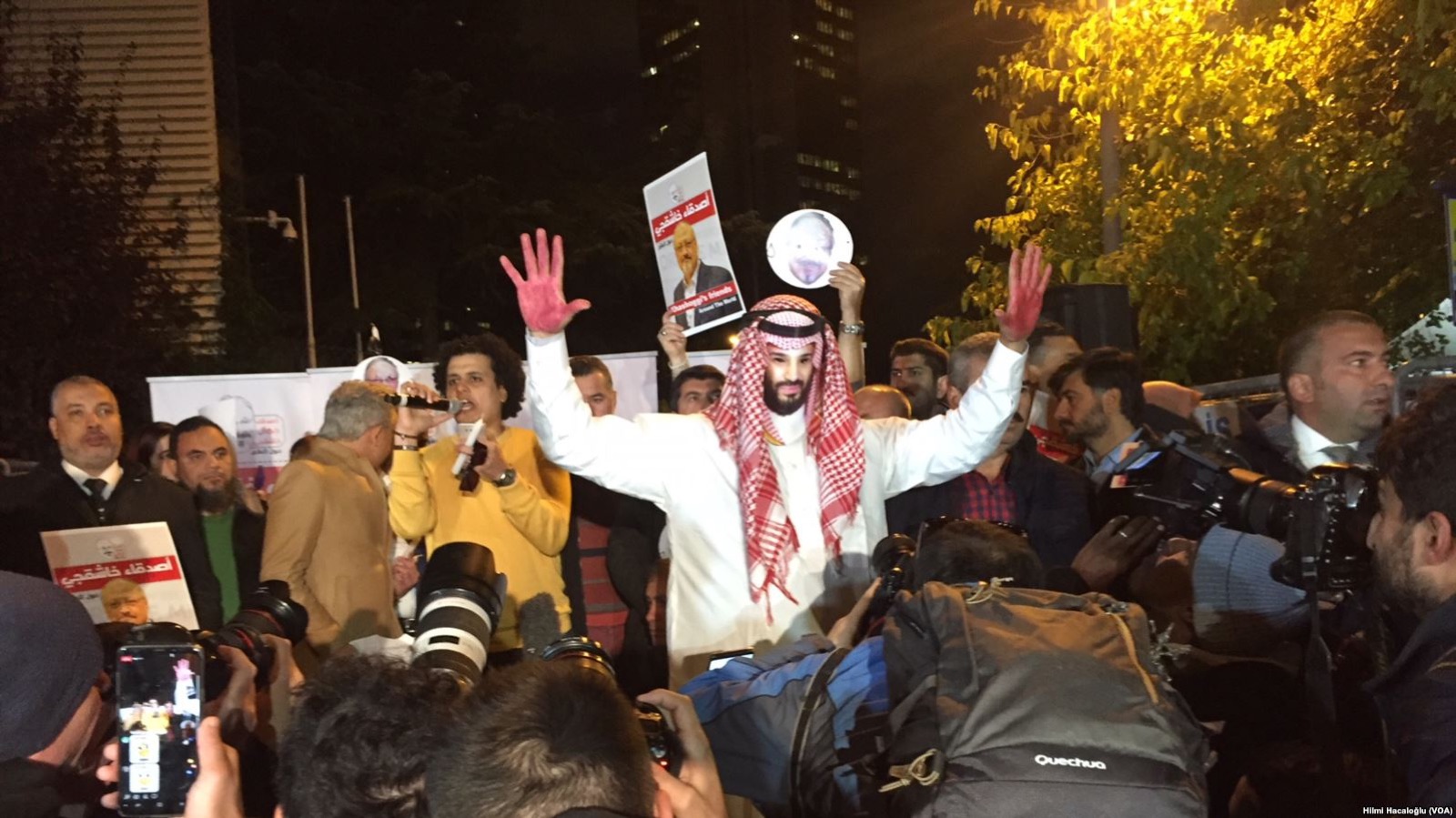
The international response to the Khashoggi killing, in the period from October 2018 through approximately mid-2019, was substantial:
Press-freedom mobilization. The Committee to Protect Journalists, Reporters Without Borders, and PEN America organized sustained advocacy. Time magazine named Khashoggi among its 2018 "Persons of the Year" (along with other "Guardians" — journalists killed or imprisoned worldwide).
Diplomatic friction. Germany suspended arms exports to Saudi Arabia in November 2018 — the most consequential formal sanction by any country. Other European states reduced weapons sales. The U.K., France, and other major arms-exporting nations declined to impose sanctions and continued exports.
U.S. Congressional response. The 116th Congress (2019-2020) passed multiple Khashoggi-related resolutions. The Senate unanimously voted in December 2018 to assign responsibility to MBS for the killing. The Magnitsky Act sanctions were applied to 17 named Saudi individuals in November 2018. MBS himself was not sanctioned.
Turkish prosecution. Turkish authorities opened investigations in November 2018 and tried 26 Saudi nationals in absentia in 2020. The trial concluded April 2022 with convictions but no extraditions. The Turkish proceedings were substantially symbolic.
Saudi prosecution. Saudi Arabia conducted its own closed- court trial in 2019. Eight Saudi nationals were convicted: five received death sentences (commuted to 20-year prison terms after pardons from Khashoggi's two sons in May 2020); three received prison sentences ranging from 7 to 10 years. The identity of the convicted defendants has not been publicly disclosed; their current incarceration status is not publicly verifiable.
Saud al-Qahtani — MBS's senior media advisor, identified by U.S. intelligence as the operation's principal Saudi political coordinator — was not prosecuted in either Saudi Arabia, Turkey, or the United States. He remained in operational positions in the Saudi government through 2020; his current status is unclear.
What MBS became
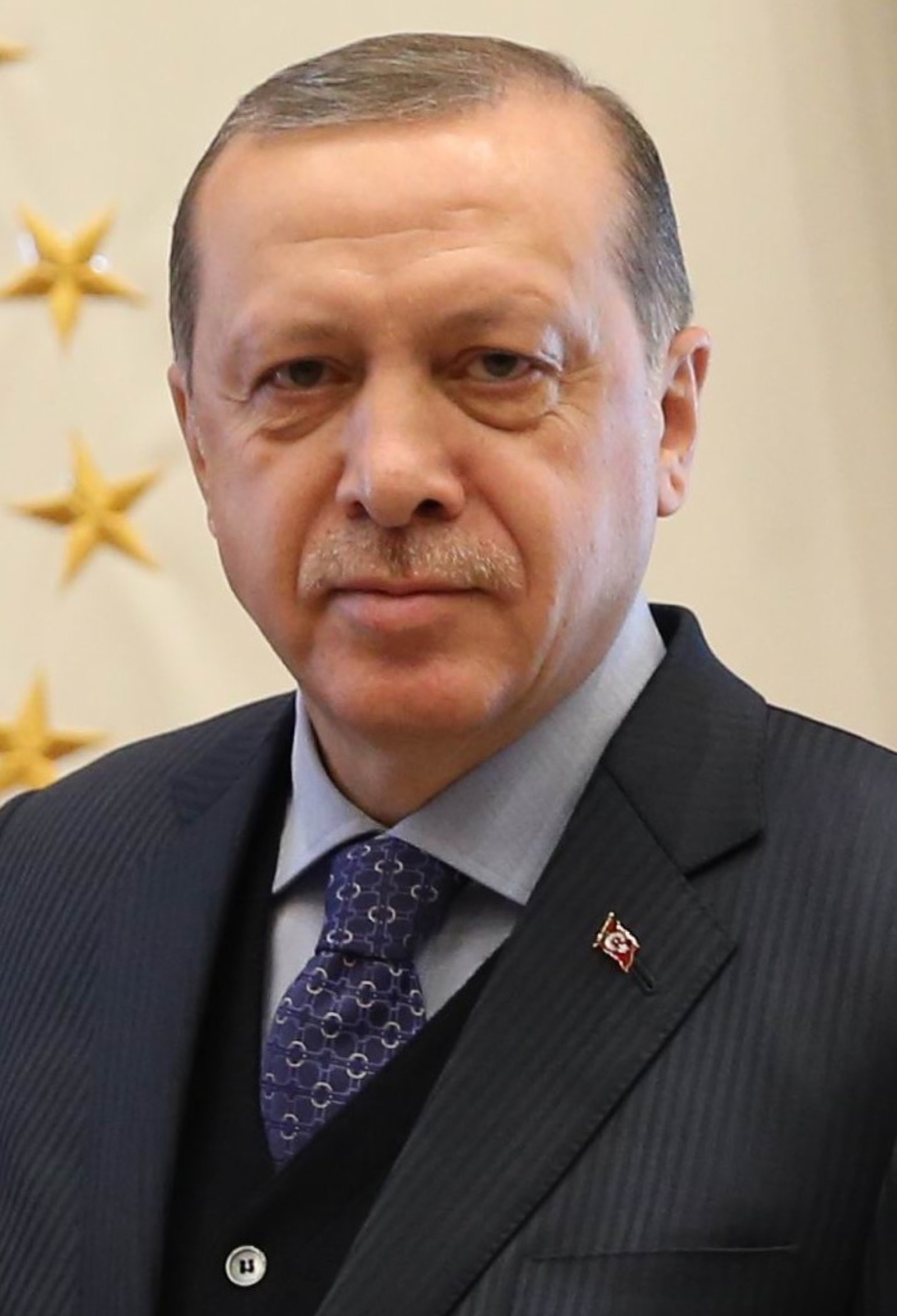
In the eight years between October 2018 and mid-2026, Mohammed bin Salman has continued his consolidation of power within Saudi Arabia and his rehabilitation in the international diplomatic system:
Domestic consolidation. King Salman, MBS's father, has been in declining health since 2019; effective government has been in MBS's hands. MBS was named Prime Minister of Saudi Arabia in September 2022. He continues as Crown Prince and de facto ruler.
International rehabilitation. Biden — who had pledged during the 2020 campaign to treat Saudi Arabia as a "pariah" — visited Riyadh in July 2022 and fist-bumped MBS. The visit was widely characterized as the formal end of MBS's brief international- diplomatic isolation. The Vision 2030 economic reform agenda has continued. Saudi Arabia hosted the 2034 FIFA World Cup bidding process; the bid was successful.
Saudi-U.S. relationship. The relationship in 2024-2025 was substantially closer than at any point in the Khashoggi aftermath. Trump's return to the presidency in 2025 has reset the relationship on terms substantially favorable to the Saudi regime; the Saudi delegation visited the second Trump White House in May 2025, less than 100 days into the new administration.
The Khashoggi case file. The classified U.S. intelligence remains classified. The Turkish recordings have not been publicly released. The Saudi closed-court convictions have not been publicly identified. The body has not been recovered. The case file, in the formal sense, remains open.
The cast
Why this case is filed as "confirmed"
The Khashoggi killing is one of the most extensively documented contemporary political murders. The CIA assessment (ODNI unclassified version February 2021), the Turkish forensic findings (selectively published 2018-2022), the UN Special Rapporteur's June 2019 report, and the Saudi government's own acknowledgment that the killing occurred in its consulate together constitute a documentary base that is substantially complete.
What is sometimes still misunderstood — particularly by audiences who recall the case primarily as a 2018-2019 news cycle — is the continuing nature. The intelligence assessment that MBS ordered the operation remains the U.S. official position. The U.S. re-engagement with the Saudi regime since 2022 has not been based on a revised assessment of responsibility; it has been based on policy decisions to subordinate the human-rights question to strategic considerations. The case file remains open.
What we still don't know
The body. Khashoggi's remains have not been recovered.
The full Turkish recording. Selective portions have been shared with allied intelligence; the complete recording has not been publicly released.
The exact chain of MBS-authorization. The CIA assessment is "medium-to-high confidence." The specific documentary chain — a written order, a meeting record, a specific verbal authorization — has not been publicly identified.
The convicted defendants. The Saudi closed-court trial convicted eight nationals; their identities have not been publicly disclosed.
Saud al-Qahtani's current status. The U.S.-assessed political coordinator has not been publicly prosecuted or formally sanctioned in any jurisdiction.
Sources
Primary documents:
- ODNI, Assessment of the Saudi Government's Role in the Killing of Jamal Khashoggi, February 26, 2021 (unclassified).
- UN Office of the High Commissioner for Human Rights, Annex to the report of the Special Rapporteur on extrajudicial, summary or arbitrary executions: Investigation into the unlawful death of Mr. Jamal Khashoggi. Agnes Callamard, June 19, 2019.
- Turkish Ministry of Justice, Statement on the Khashoggi Investigation, multiple iterations October 2018-April 2022.
- Saudi Arabia closed-court trial verdicts (not publicly released; partial details via Saudi state media).
- U.S. Senate Foreign Relations Committee, hearings on Saudi Arabia and Khashoggi 2018-2019.
- The Washington Post, Khashoggi's complete column archive September 2017-October 2018.
Secondary investigative reporting: 7. David Ignatius, Phantom Killer: The Khashoggi Murder, MBS, and the Future of Saudi Arabia, ongoing Washington Post series 2018-2023. 8. Ben Hubbard, MBS: The Rise to Power of Mohammed bin Salman (Tim Duggan Books, 2020). New York Times Beirut bureau chief. 9. Bradley Hope and Justin Scheck, Blood and Oil: Mohammed bin Salman's Ruthless Quest for Global Power (Hachette, 2020). 10. 60 Minutes, "MBS and the Murder of Jamal Khashoggi" (CBS, March 31, 2019). 11. PBS Frontline, "The Crown Prince of Saudi Arabia" (October 2019). 12. The Dissident (Bryan Fogel, 2020) — documentary investigation centered on the Khashoggi case. 13. Kingdom of Silence (Rick Rowley, 2020) — documentary biography of Khashoggi. 14. Hatice Cengiz, Jamal Khashoggi: His Life, Murder, and the Saudi Plot (Pegasus Books, 2022).
Academic / scholarship: 15. F. Gregory Gause III, "Saudi Arabia: Iconoclastic Crown Prince's New Mission" — Foreign Affairs, 2019. 16. Karen Elliott House, "Saudi Arabia in Transition: Will MBS's New Saudi Arabia Hold Together?" — Wilson Quarterly, 2019.
Corrections & updates
2026-05-28: First publication.
Inspired this / based on it
Bryan Fogel · ★ 7.2
Sundance debut. The most-cited Khashoggi documentary. Briarcliff Entertainment.
Ben Hubbard
NYT Beirut bureau chief. Tim Duggan Books.
Bradley Hope & Justin Scheck
Hachette. Wall Street Journal reporters.
Hatice Cengiz
Pegasus Books. The fiancée's account.
CBS / Norah O'Donnell
March 31, 2019 segment.
Filed under
- #khashoggi
- #mohammed-bin-salman
- #mbs
- #saudi-arabia
- #istanbul
- #consulate
- #washington-post
- #hatice-cengiz
- #erdogan
- #trump
- #cia
- #odni
- #biden
- #2018
- #middle-east
- #press-freedom
Click any tag for every article carrying it.
Continue reading
The Olof Palme Assassination
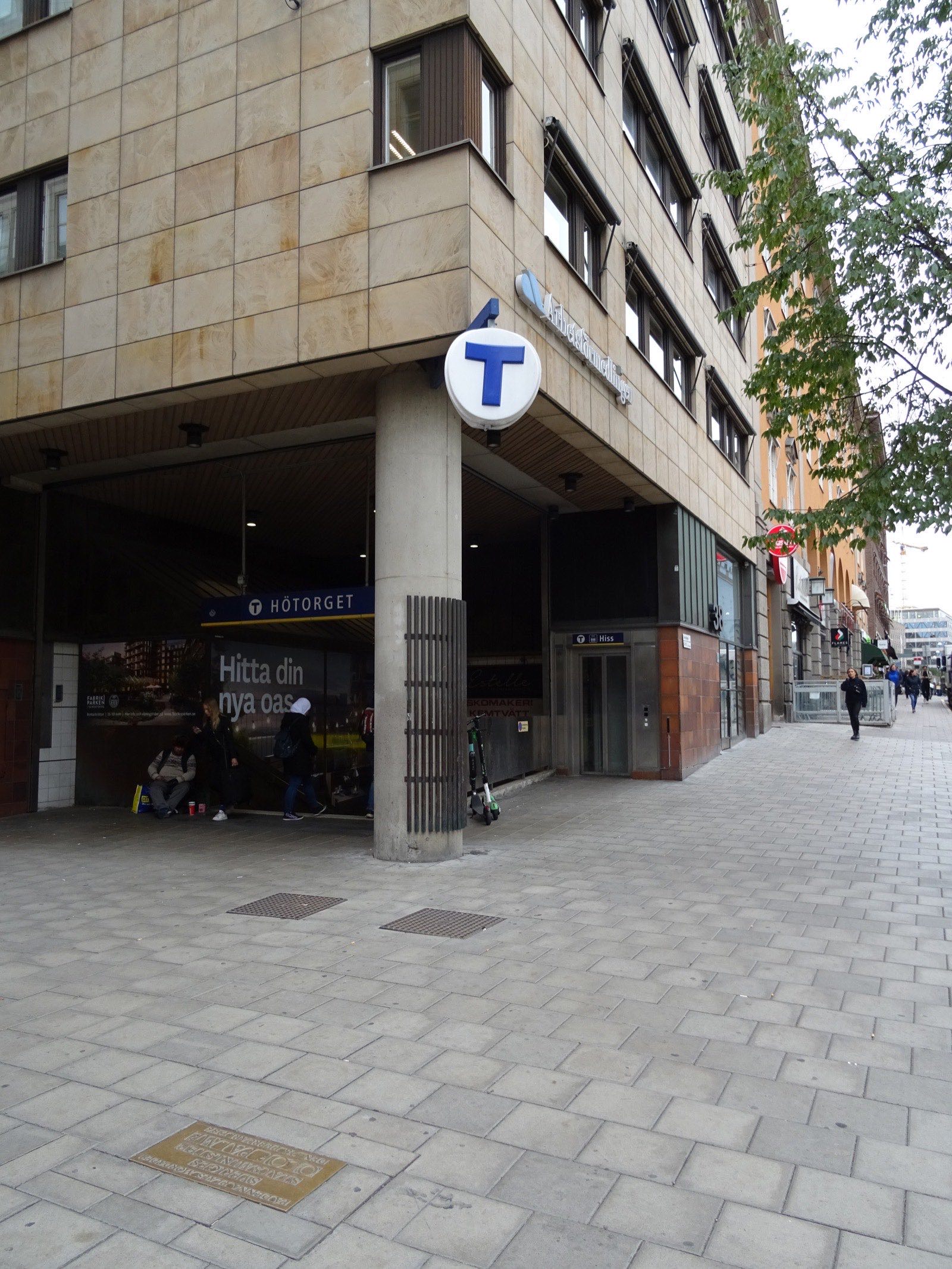
At 11:21 p.m. on Friday, February 28, 1986, the Prime Minister of Sweden, Olof Palme, was shot in the back at point-blank range on Sveavägen, Stockholm, while walking home from a cinema with his wife Lisbet. Lisbet Palme was grazed by a second shot. Olof Palme was 59 years old. He had been the Prime Minister of Sweden from 1969 to 1976 and again from 1982. He had no bodyguards that night. The killer ran east up Tunnelgatan and disappeared. He has never been positively identified. Sweden's Palme Commission and its successor police investigation ran for 34 years. On June 10, 2020, Chief Prosecutor Krister Petersson publicly named the most likely perpetrator — a Swedish graphic designer named Stig Engström, the so-called "Skandiamannen" — and simultaneously closed the case because Engström had died in 2000 and could not be tried. The 40-year-old investigation produced 22 binders of investigative material, dozens of failed theories, one wrongful conviction, and no court ruling. It is the largest unsolved political assassination in modern European history.
Princess Diana
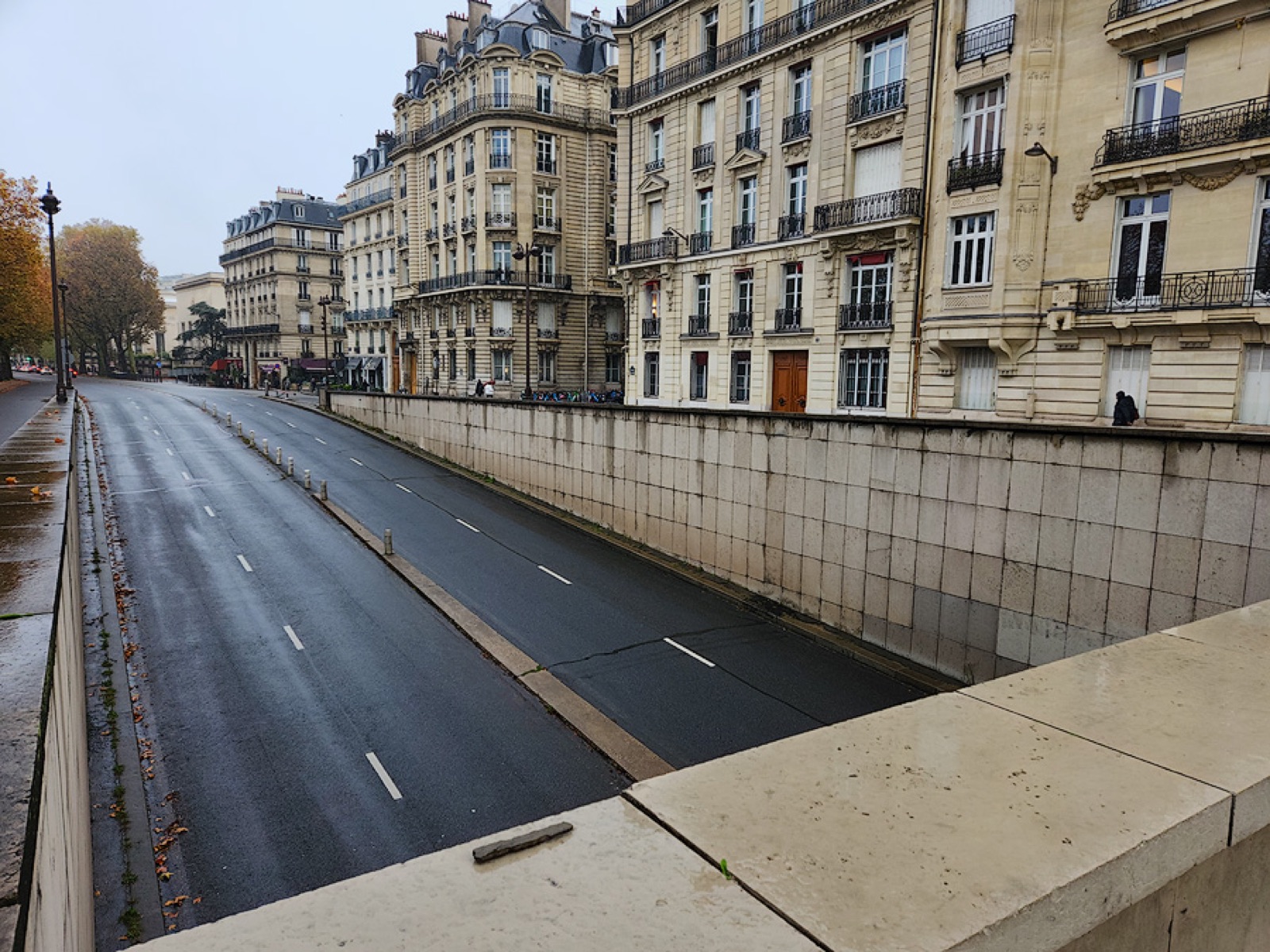
At 12:23 a.m. on Sunday, August 31, 1997, a black Mercedes-Benz S280 traveling at approximately 105 km/h entered the Pont de l'Alma underpass in central Paris. Six seconds later it hit the thirteenth concrete pillar dividing the eastbound and westbound lanes. Diana, Princess of Wales, 36, was in the back seat. So were her companion Dodi Fayed, 42, and bodyguard Trevor Rees-Jones, 29. Henri Paul, 41, the acting Ritz security manager driving without a chauffeur licence, was at the wheel. Fayed and Paul died at the scene. Diana was pronounced dead at 4:00 a.m. at the Pitié-Salpêtrière hospital. Only Rees-Jones — the only passenger wearing a seat belt — survived, with severe facial injuries he would never fully remember. The French judicial investigation closed in 1999 with the conclusion that the cause was reckless driving by Henri Paul under the influence of alcohol and prescription drugs. The 2004-2006 British inquiry Operation Paget, led by Metropolitan Police Commissioner Lord Stevens, reached the same conclusion across 832 pages. The 2007-2008 British inquest, before a jury of eleven, returned a verdict of *unlawful killing* by gross negligence of Henri Paul and the following paparazzi. No criminal trial has ever been held. The conspiracy theory that Diana was murdered — by MI6, by the Royal Family, by Mohamed Al-Fayed's enemies, by any of half a dozen other proposed perpetrators — has nonetheless persisted for nearly thirty years.
Operation Mockingbird
Between 1948 and the mid-1970s, the Central Intelligence Agency cultivated paid and unpaid working relationships with American journalists, editors, and publishers across every major U.S. news organization. The architect was an OSS veteran named Frank Wisner. He called the network the 'Mighty Wurlitzer' — a theatre-organ metaphor for a machine that could play many instruments from a single console. The full scope was confirmed by the 1975 Church Committee, expanded upon in Carl Bernstein's 25,000-word 1977 Rolling Stone investigation, and partly declassified since. What the records have not yet given up is the operational name everyone agrees was attached to it.