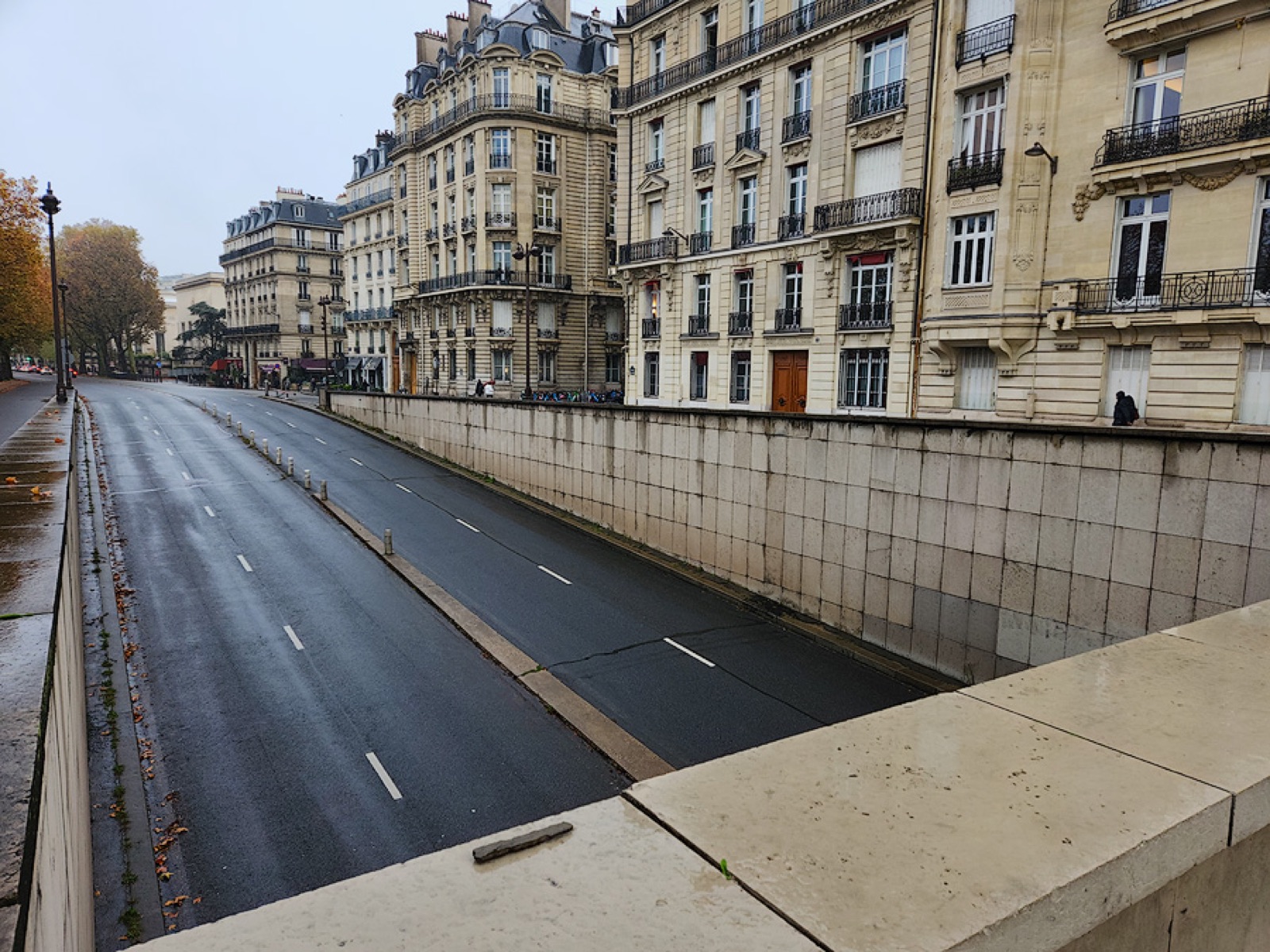
The west entrance of the Pont de l'Alma underpass, where the Mercedes carrying Princess Diana entered at approximately 105 km/h on August 31, 1997. The thirteenth concrete pillar — the impact point — is approximately 60 metres beyond this entrance. Wikimedia Commons, CC BY-SA 4.0.
Princess Diana
Paris, August 31, 1997
- Category
- Assassinations & Disappearances
- Published
- Length
- 3,650 words · 17 min read
- Author
- The editors
Princess Diana
Paris, August 31, 1997.
The Mercedes
The Mercedes-Benz S280 (Vehicle Identification Number WDB220026A170415) was not the Ritz's regular VIP transport. The hotel's primary armored car had been used earlier in the evening for a decoy run from the front entrance. Two backup Mercedes cars were available; the S280 — a four-door sedan, not armored, with approximately 14,500 km on the odometer — was the second-choice vehicle, assigned by Ritz logistics manager Claude Roulet because Paul was the available driver of the available car at the available moment.
The car had been involved in a minor accident earlier in 1997 and had been stolen from a Ritz parking facility briefly in April 1997 before being recovered. The Paget inquiry would subsequently examine both incidents in detail. Neither showed any indication of sabotage.
Henri Paul, 41, was the Ritz's deputy head of security and acting head of security on August 30 because his nominal superior was on vacation. He held a standard French driving licence (Catégorie B) but not the licence required for paid chauffeur work (Carte Professionnelle). His name was on the Ritz's payroll as security, not transport. He had ended his shift at approximately 7:00 p.m. on August 30.
He was called back to the Ritz at approximately 10:08 p.m. — by the assistant manager who had been informed that Diana and Dodi would be leaving the hotel from a side entrance to evade waiting photographers. The Ritz logged the security adjustment but not the decision to put Paul behind the wheel.
Between 7:00 p.m. and 10:08, Paul had been photographed at two bars in central Paris — Le Bourgogne and the Harry's Bar — visible on Ritz security CCTV when he returned at approximately 10:08. What he had been drinking during those three hours is the subject of a still-unresolved dispute. Paul's family disputed the post- mortem blood-alcohol level; some independent forensic analysts have argued that the level recorded was inconsistent with his observed bar tabs.
The autopsy and toxicology, conducted by French pathologist Dr. Dominique Lecomte on August 31, established his blood alcohol at 1.75 grams per litre — three and a half times the French legal limit of 0.5 g/L. Therapeutic doses of fluoxetine (Prozac) and tiapride were also detected.
The exit
At 12:06 a.m. on August 31, the decoy Mercedes (the Ritz's regular armored vehicle, used as a feint) pulled away from the front of the Ritz on the Place Vendôme. The paparazzi photographers followed it.
At 12:20 a.m., the second Mercedes — the S280 — pulled out of the Ritz's rear service entrance on the rue Cambon. Diana sat behind the front-right passenger seat. Dodi sat behind the driver. Trevor Rees-Jones, alone among the four, was in the front and wearing a seat belt. (Diana, Dodi, and Henri Paul were not. The Mercedes had rear seat belts; their use was not standard practice for public figures of Diana's profile in 1997.)
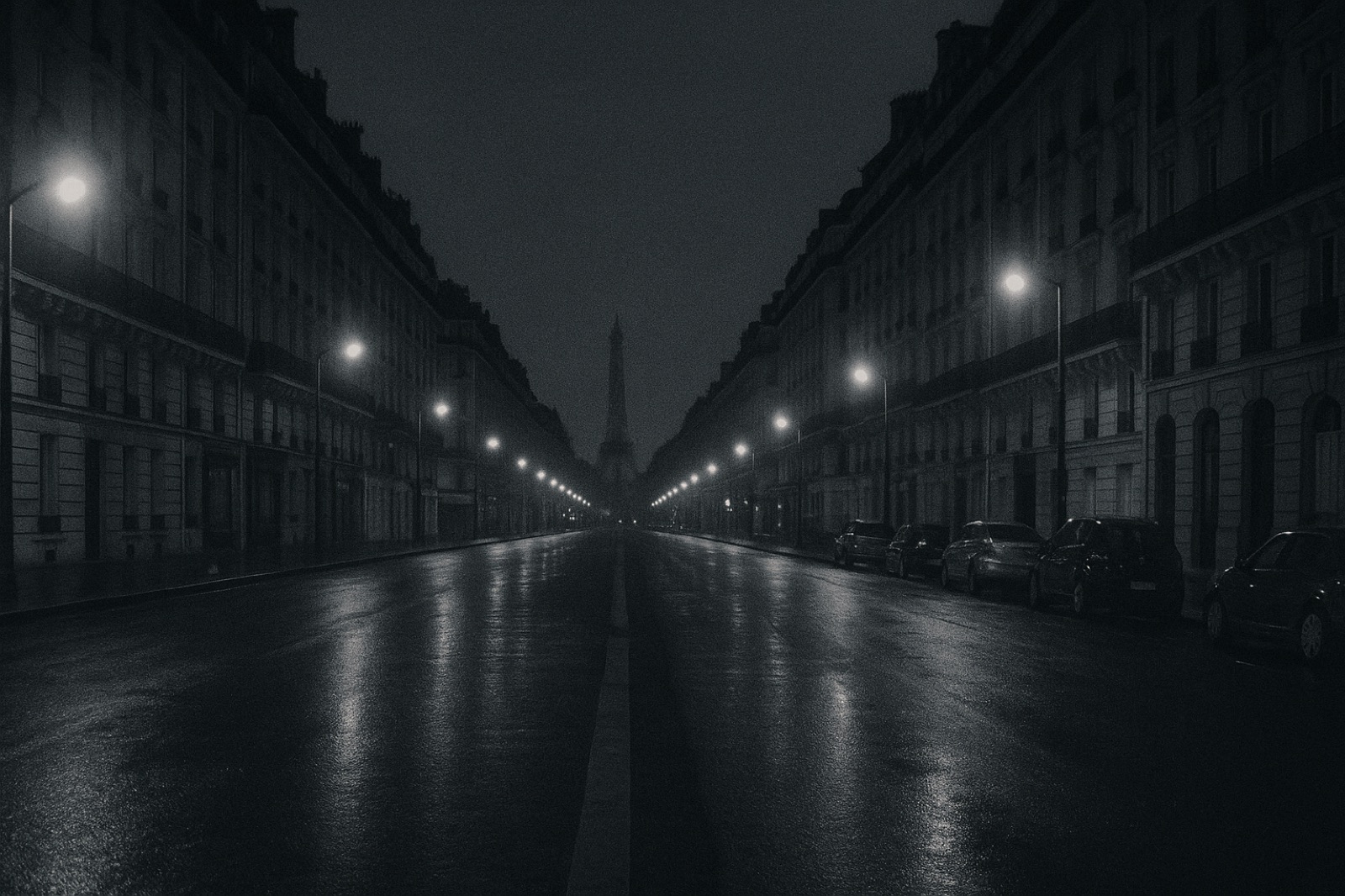
The car proceeded north on rue Cambon, then west along the rue Saint-Honoré, then south down the Champs-Élysées, and eventually joined the Cours Albert 1er — the riverside avenue along the right bank of the Seine. Speed limit on Cours Albert 1er: 50 km/h.
The paparazzi who had been deceived by the decoy were now in pursuit. Anywhere between five and ten photographers were following the Mercedes on motorcycles, scooters, and cars. The Mercedes accelerated. Witnesses on the Cours Albert 1er — pedestrians, taxi drivers — subsequently reported speeds estimated at 80 to 120 km/h.
At the entrance to the Pont de l'Alma underpass — a short concrete tunnel that carries the riverside roadway beneath the Place de l'Alma traffic circle — the Mercedes was traveling at approximately 105 km/h according to subsequent reconstruction.
The pillar
The underpass is 110 metres long. It descends at a 6-7% grade into a slight rightward curve, then ascends slightly. Down the center, between the eastbound and westbound lanes, runs a series of unfaced concrete pillars approximately 75 centimetres wide.
Approximately 60 metres into the tunnel, at the thirteenth pillar, the Mercedes crossed the centre line and struck the pillar head-on. The car's roof was deformed inward and the front end essentially disintegrated. Dodi Fayed, sitting behind the driver, was killed instantly. Henri Paul was killed instantly. Diana, behind the front passenger seat, was thrown forward and suffered an aortic laceration. Trevor Rees-Jones, restrained by his seat belt, was the only passenger to survive. He sustained severe facial fractures.
The contact with the white Fiat Uno that left paint-match evidence on the Mercedes occurred approximately 0.5-1.0 seconds before the pillar impact, based on the trajectory and speed reconstruction. Whether the contact caused the loss of control, or whether the Mercedes was already out of control at that point, is the central remaining technical question in the case.
The first hours
The first emergency call was logged at 12:25 a.m. The first SAMU ambulance arrived at 12:32. Diana was conscious when extricated; she said "My God, what's happened?" — the only words she was recorded as having spoken after the impact.
The French emergency-medicine protocol is medicalisation sur place — treatment at the scene before transport. American emergency-medicine training emphasises rapid transport to a trauma centre. The decision to stabilize Diana for an extended period before transport — approximately 90 minutes between extraction and arrival at the hospital — became one of the contested elements of the case. Operation Paget reviewed the treatment and concluded that the protocol was consistent with French practice and that earlier transport would not, in the absence of immediate cardiothoracic surgical intervention, have changed the outcome.
Diana was transported to the Pitié-Salpêtrière hospital, approximately 6 kilometres east. She arrived at 2:06 a.m. She went into cardiac arrest in the ambulance. Surgeons opened her chest in the operating theatre at approximately 2:30 a.m. and identified a tear in the upper-left pulmonary vein where it joined the heart. They could not stop the bleeding. Resuscitation was abandoned at 4:00 a.m.
The investigation
The French judicial investigation, led by examining magistrate Hervé Stéphan, began on August 31 and ran for two years. Its conclusion, published September 3, 1999, was:
- The cause of the crash was Henri Paul's reckless driving while under the influence of alcohol and prescription drugs.
- The presence of the pursuing paparazzi contributed to the conditions but were not, individually, criminally culpable.
- Nine paparazzi who had been arrested at the scene were exonerated of involuntary manslaughter charges.
The French investigation also examined and dismissed the conspiracy theories that Mohamed Al-Fayed had begun publicly advancing within days of the crash:
- That the crash was an MI6 operation. No evidence found.
- That Diana was pregnant and was killed to prevent her marriage to Dodi. No autopsy evidence of pregnancy.
- That the Mercedes was sabotaged. No mechanical evidence found.
- That a flash blinded Henri Paul as the Mercedes entered the tunnel. No corroborating evidence.
Al-Fayed continued to advance the theories in British civil litigation and through media campaigns for the next decade. In response, the British Crown ordered a formal investigation in 2004.
Operation Paget
Operation Paget was a Metropolitan Police inquiry led by Commissioner Lord John Stevens — by far the most senior British police official ever assigned to investigate the crash. It ran for three years. It interviewed approximately 300 witnesses. It examined the French case files, the Mercedes wreckage (still in French police custody), the medical records, and the toxicology in detail. It addressed each of Al-Fayed's specific claims.
The Paget report was published December 14, 2006 — 832 pages plus extensive appendices. Its central conclusions:
- The cause of the crash was as the French inquiry had concluded: Henri Paul's driving under the influence.
- There was no evidence that MI6 had been involved.
- There was no evidence that Diana was pregnant.
- The Fiat Uno paint match was real but the Fiat's role — whether contact caused the loss of control, or merely occurred during it — could not be definitively determined.
- The medical treatment of Diana after extraction was consistent with French emergency-medicine practice and would not, on the available evidence, have produced a different outcome with different intervention.
The report explicitly addressed Mohamed Al-Fayed's allegations point by point. It found none supported.
The inquest
Under English law, deaths overseas that involve British citizens require an inquest if the body is repatriated. The inquest into Diana's death (and, separately, Dodi Fayed's, conducted under the same court) was opened by the Royal Coroner in 2004 but delayed multiple times until the Paget report was complete.
The inquest at the Royal Courts of Justice in London ran from October 2, 2007 to April 7, 2008 — six months. The jury heard approximately 270 witnesses. They reviewed Operation Paget's findings, Al-Fayed's specific allegations, additional witness testimony not previously available, and expert evidence on the crash mechanics.
On April 7, 2008, the jury returned a verdict of unlawful killing. The two parties found to have caused the death through gross negligence were Henri Paul and the pursuing paparazzi. No individual person was named in the verdict.
The inquest verdict — unlawful killing through gross negligence — is the highest possible coroner-court verdict short of finding a specific individual culpable. It is the formal British legal position on the case.
The cast
Why this case is filed as "mystery"
The Paget inquiry and the 2007-2008 inquest both found the cause to be reckless driving. Their findings are formal, lengthy, and exhaustive. By a strict standard of investigation closure, the case is closed.
We file it under "mystery" because the popular question — whether the official conclusion is the actual explanation — remains unresolved in public discourse. Polling has consistently shown a substantial minority of British and American respondents continue to believe the crash was orchestrated. The conspiracy theory has generated its own literature, documentaries, and cultural products across nearly thirty years.
The mystery, in this case, is the disproportion between the documentary clarity of the cause and the cultural persistence of the disbelief.
What we still don't know
The Fiat Uno driver. The strongest unresolved technical question remains the identity of the driver of the white Fiat Uno that contacted the Mercedes seconds before impact. Le Van Thanh has been the most plausible candidate since 1998 but has denied involvement. No criminal proceeding has tested the question.
Whether the Fiat contact caused the loss of control. The Paget inquiry concluded that the contact occurred but could not establish whether it caused the loss of control or merely happened during it. The mechanical evidence is incomplete on this point.
The Henri Paul toxicology dispute. The post-mortem blood alcohol of 1.75 g/L has been disputed by Paul's family and some independent forensic analysts who argue it is inconsistent with his observed drinking. The Paget inquiry examined and rejected this contention; some have continued to maintain it.
The MI6 file question. The 2007 inquest established under oath that MI6 had no operational file on Diana at the time of the crash. Several former intelligence officers (including David Shayler in 1997-2000) have made unsubstantiated claims to the contrary. None have produced specific documentary evidence.
Sources
Primary documents:
- Operation Paget Inquiry Report into the Allegation of Conspiracy to Murder Diana, Princess of Wales and Emad El-Din Mohamed Abdel Moneim Fayed — Lord Stevens, December 14, 2006. 832 pages plus appendices.
- Hearing transcripts, Royal Courts of Justice, London — Inquest into the deaths of Diana, Princess of Wales and Dodi Al Fayed — October 2, 2007 to April 7, 2008.
- French Judicial Investigation, Le Juge d'Instruction Hervé Stéphan, Tribunal de Grande Instance, Paris — final ruling September 3, 1999.
- Pathology and toxicology report (Dr. Dominique Lecomte), Institut Médico-Légal, Paris, August 31, 1997.
- Mercedes-Benz S280 accident reconstruction report — French expert team appointed 1997; revised by Paget team 2005.
Secondary investigative reporting: 6. Martyn Gregory, Diana: The Last Days (Virgin Books, 1999, revised 2007). The most detailed independent reconstruction. 7. Andrew Morton, Diana: Her True Story — In Her Own Words (Simon & Schuster, expanded 2017 edition). 8. Tina Brown, The Diana Chronicles (Doubleday, 2007). 9. Ken Wharfe, Diana: Closely Guarded Secret (Michael O'Mara, 2002). 10. Mohamed Al-Fayed and Trevor Rees-Jones, BBC Panorama interview transcripts, 1997-2004. 11. The Guardian, multi-correspondent inquest coverage 2007-2008. 12. The Daily Mail, multi-decade Diana coverage 1997-present. 13. Le Monde and Le Figaro, French coverage of the judicial investigation 1997-1999. 14. ITV, The Diana Investigations (2022 documentary series). 15. Channel 4 / Netflix, The Crown — Season 6 (2023) dramatization of the final days; subject of substantial fact-checking commentary.
Academic scholarship: 16. James Thomas, Diana's Mourning: A People's History (University of Wales Press, 2002). Sociological treatment of the public response. 17. Beatrix Campbell, Diana, Princess of Wales: How Sexual Politics Shook the Monarchy (Women's Press, 1998).
Corrections & updates
2026-05-26: First publication.
Inspired this / based on it
ITV
Four-part documentary series covering the French investigation, Operation Paget, and the inquest.
Peter Morgan / Netflix · ★ 8.6
Dramatized treatment of Diana's final months. Subject of substantial fact-checking commentary at release.
Oliver Hirschbiegel · ★ 5.7
Dramatized account of Diana's last two years with Hasnat Khan. Naomi Watts as Diana.
Pablo Larraín · ★ 6.7
Fictionalized Christmas 1991 at Sandringham. Kristen Stewart as Diana. Best Actress Oscar nomination.
Martyn Gregory
Most detailed independent reconstruction. Virgin Books; revised 2007.
Tina Brown
Definitive biographical treatment by the former Vanity Fair / New Yorker editor. Doubleday.
Filed under
- #princess-diana
- #diana-spencer
- #dodi-fayed
- #henri-paul
- #trevor-rees-jones
- #pont-de-lalma
- #paris
- #operation-paget
- #lord-stevens
- #ritz
- #mohamed-al-fayed
- #royal-family
- #mi6
- #paparazzi
- #1997
- #europe
- #uk
- #france
Click any tag for every article carrying it.
Continue reading
The Olof Palme Assassination
At 11:21 p.m. on Friday, February 28, 1986, the Prime Minister of Sweden, Olof Palme, was shot in the back at point-blank range on Sveavägen, Stockholm, while walking home from a cinema with his wife Lisbet. Lisbet Palme was grazed by a second shot. Olof Palme was 59 years old. He had been the Prime Minister of Sweden from 1969 to 1976 and again from 1982. He had no bodyguards that night. The killer ran east up Tunnelgatan and disappeared. He has never been positively identified. Sweden's Palme Commission and its successor police investigation ran for 34 years. On June 10, 2020, Chief Prosecutor Krister Petersson publicly named the most likely perpetrator — a Swedish graphic designer named Stig Engström, the so-called "Skandiamannen" — and simultaneously closed the case because Engström had died in 2000 and could not be tried. The 40-year-old investigation produced 22 binders of investigative material, dozens of failed theories, one wrongful conviction, and no court ruling. It is the largest unsolved political assassination in modern European history.
Operation Mockingbird
Between 1948 and the mid-1970s, the Central Intelligence Agency cultivated paid and unpaid working relationships with American journalists, editors, and publishers across every major U.S. news organization. The architect was an OSS veteran named Frank Wisner. He called the network the 'Mighty Wurlitzer' — a theatre-organ metaphor for a machine that could play many instruments from a single console. The full scope was confirmed by the 1975 Church Committee, expanded upon in Carl Bernstein's 25,000-word 1977 Rolling Stone investigation, and partly declassified since. What the records have not yet given up is the operational name everyone agrees was attached to it.
The Snowden Disclosures
In May 2013, a 29-year-old NSA contractor named Edward Snowden boarded a flight from Honolulu to Hong Kong carrying four laptops loaded with classified documents from the world's largest signals-intelligence agency. Over the following months, *The Guardian*, *The Washington Post* and *Der Spiegel* published material from those drives that revealed the architecture of post-9/11 surveillance — PRISM, XKeyscore, Boundless Informant, MUSCULAR. Within ninety days, the global conversation about surveillance, sovereignty, and the limits of state power had shifted. Snowden has lived in Russia since August 2013.