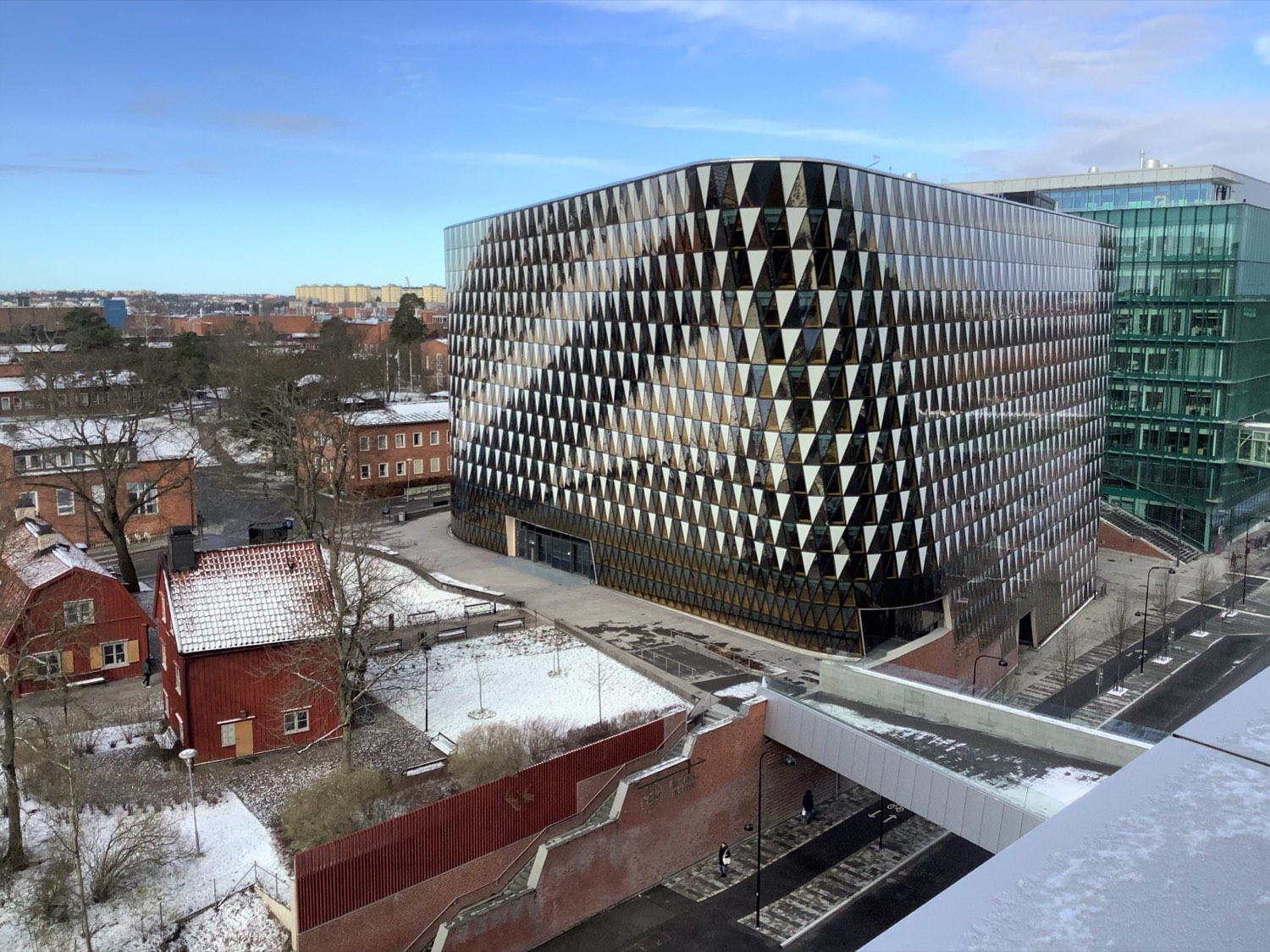
Aula Medica at the Karolinska Institute in Solna, Stockholm. Karolinska — the institution whose committee awards the Nobel Prize in Medicine — recruited Paolo Macchiarini as a star of regenerative medicine, and then defended him for years as evidence mounted that his synthetic-windpipe operations were killing patients. Wikimedia Commons / Sinikka Halme, CC BY-SA 4.0.
The Macchiarini Scandal and the Surgeon Who Sold a Miracle
Stockholm, 2010–2023 — a celebrated surgeon implanted plastic windpipes seeded with stem cells into patients at the Karolinska Institute, hailed as a medical miracle. Almost all of them died. When four doctors raised the alarm, the institution investigated the whistleblowers instead
- Category
- Health & Medicine
- Published
- Length
- 4,560 words · 20 min read
- Author
- The editors
The Macchiarini affair is, on its surface, the story of one extraordinary fraudster — a surgeon who lied about his results, his patients' outcomes, and even, bizarrely, his own life. But the deeper and more disturbing story is not about him at all. It is about the institution around him: how one of the most prestigious medical establishments in the world came to embrace a dangerous man, ignore the evidence of harm, and punish the people who tried to stop him. A single bad actor is a problem any system can suffer. What makes Karolinska's failure a genuine scandal is that the system did not catch him — it shielded him, and broke the whistleblowers instead.
This is the story of that failure, and of those who refused to be silent.
The miracle surgeon
By the time he reached Stockholm, Macchiarini had built an international reputation on the promise of regenerative medicine — the dream of growing or rebuilding human organs rather than relying on scarce donors. His signature procedure addressed patients with damaged or cancerous tracheas, the windpipe being notoriously difficult to replace. The early idea was elegant in principle: take a donor trachea, strip it of its cells to leave a bare collagen scaffold, then seed that scaffold with the recipient's own stem cells, so that — in theory — it would be repopulated by the patient's tissue and accepted by their body without the lifelong immunosuppression a normal transplant requires.
Karolinska recruited him in 2010, and he became a celebrated figure there and internationally. Then he went further than the decellularised donor scaffold. In 2011 he performed what was billed as a world first: implanting a wholly synthetic trachea — a tube made of a plastic polymer, shaped to fit and soaked in a stem-cell solution — into a patient, dispensing with the need for any donor organ at all. The first such patient was Andemariam Beyene, an Eritrean man treated in Stockholm. The operation was reported in The Lancet, one of the world's leading medical journals, and presented to the world as a stunning success: a man given a new windpipe grown, in effect, from a plastic scaffold and his own cells. The promise was intoxicating. If it worked, organs could be manufactured on demand.
The synthetic trachea
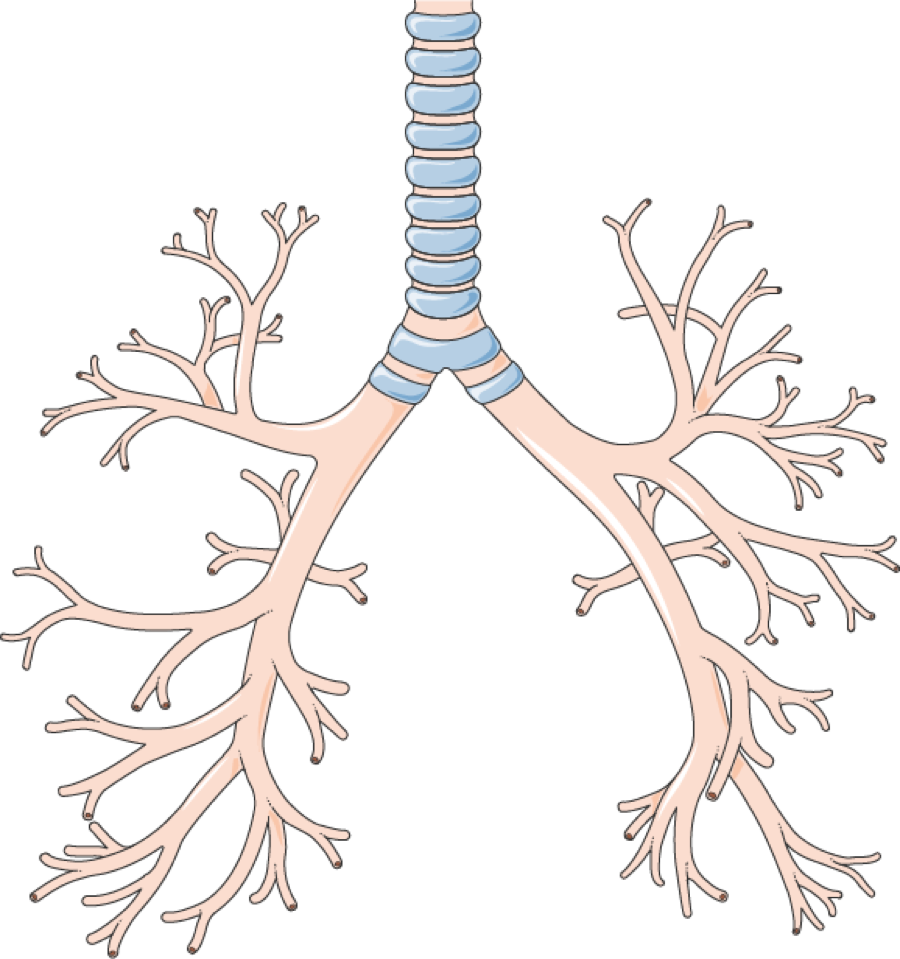
The trouble was that it did not work, and at some level the claim that it had was a fiction from the start. A synthetic polymer tube does not become a living, functioning trachea. The human windpipe is a sophisticated structure lined with specialised cells, kept clear and moist, held open by cartilage; a plastic scaffold soaked in stem cells does not spontaneously turn into that. Inside the patients, the synthetic tracheas behaved like what they were — foreign objects. They did not integrate; they degraded and collapsed; they became sites of chronic infection; tissue around them broke down. Far from being liberated from their illness, the patients were subjected to a slow, agonising deterioration as the implants failed inside them.
What made this a fraud and not merely a failed experiment was the gap between the reality and what Macchiarini reported. In his publications and presentations, the outcomes were painted as successes, the patients as recovering, the technique as proven — even as, in the hospital, those same patients were suffering and dying. The published record and the clinical reality diverged, and the divergence was not an accident of optimism but a sustained misrepresentation. The celebratory papers that built his reputation described a procedure working as intended; the wards told a different story, which the papers did not.
There was, too, a question of why the science had not stopped him earlier — and the answer lies partly in how Macchiarini wrapped a reckless practice in the language of a legitimate and exciting field. Regenerative medicine and tissue engineering are real, serious areas of research; laboratories around the world are genuinely working toward growing replacement tissues and organs, and the field carries enormous, well-founded hope. Macchiarini did not invent a crankish fringe idea that experts could dismiss out of hand; he took the vocabulary and the promise of a respectable discipline and ran far ahead of what its evidence could support, straight into human patients. That camouflage was part of what made him so hard to stop. To challenge him was, on the surface, to seem to challenge a hopeful frontier of medicine — and few wanted to be the sceptic standing in the way of a miracle. The legitimacy of the field lent an unearned legitimacy to the man abusing it.
The patients
It is essential, in a case so easily told as a drama of fraud and institutions, to keep the patients at the centre, because they paid the real price. Only a small number of people received Macchiarini's synthetic tracheas, in Stockholm and elsewhere, and their fates were overwhelmingly grim. Andemariam Beyene, the celebrated first recipient, died in 2014, his implant having failed. Other synthetic- trachea patients died as well, some after prolonged suffering, repeated operations, and desperate attempts to manage the failing implants. One young patient, a toddler, also died. Of the patients who received the synthetic tracheas, almost none survived in the long term, and those who lived longest did so through extensive further surgery to manage the catastrophe in their airways.
The case of the youngest victims is the hardest to read. Macchiarini's reach extended beyond Stockholm — versions of the procedure were performed in other countries, including on a young child in the United States — and the involvement of children turned the abstraction of "experimental surgery" into something unbearable: a small patient subjected to an unvalidated plastic implant on the promise of a cure that did not exist. For the families, the betrayal was total. They had entrusted their gravely ill relatives to a celebrated surgeon at a world-famous institution, believing they were receiving a proven, cutting-edge treatment, and instead their loved ones became, in effect, unwitting subjects in a lethal experiment — without the honest disclosure that might have let them choose otherwise.
These were not terminal patients with nothing to lose in every case; the procedures were sometimes performed on people who were seriously ill but not necessarily beyond other options, on the strength of a promise that the technique was proven and safe. The informed consent that should have made clear how experimental and unvalidated the synthetic trachea was — how little evidence supported it — was, the later reckoning found, gravely inadequate. People agreed to a miracle and received an experiment that was, in truth, closer to a death sentence.
The whistleblowers
The people who finally forced the truth into the open were not regulators or journalists but four of Macchiarini's own colleagues at Karolinska — senior doctors who had been involved with or had reviewed the trachea patients and who became convinced that something was deeply wrong. Examining the actual case records, they found that the rosy published outcomes did not match what had happened to the patients, and that Macchiarini had, in their assessment, misled both the scientific community and the patients, and exposed people to a dangerous, unproven procedure.

In 2014 the four doctors — among them Karl-Henrik Grinnemo, Oscar Simonson, Matthias Corbascio, and Thomas Fux — filed formal complaints, laying out their concerns in detail. What happened next is the heart of the scandal. Rather than treating their warnings as the serious patient-safety alarm they were, the Karolinska Institute's leadership commissioned an external review, then largely set its findings aside. An independent investigator the institute itself had appointed concluded that Macchiarini had committed scientific misconduct — and the vice-chancellor overruled that conclusion and effectively cleared him. The whistleblowers, meanwhile, found themselves treated as the problem: subjected to retaliation, accused of misconduct themselves, threatened, and in some cases reported to the police at Macchiarini's instigation over their access to records. The institution had inverted the moral logic of the situation, protecting the accused and prosecuting the accusers.
Institutional capture
Why would a great institution behave this way? The Macchiarini case has become a textbook study of what can happen when prestige, ambition, and reputation align to blind an organisation. Karolinska had recruited Macchiarini as a star, invested its name in his supposed breakthroughs, and basked in the global attention his "first in the world" operations brought. His success had become the institution's success. To admit that he was a fraud who had killed patients was to admit that Karolinska — the home of the Nobel Prize in Medicine — had been catastrophically wrong, had failed its own patients, and had published and promoted a deadly fiction. The institutional incentive to not see, to explain away, to close ranks, was immense.
So the leadership saw what it wished to see. Warning signs were reinterpreted; the whistleblowers' motives were questioned; the external misconduct finding was overridden; and the man at the centre was kept on and defended. This is the phenomenon often called institutional capture or institutional self-protection: the organisation behaves so as to protect its reputation and its leaders rather than to protect the people it exists to serve. The patients, who should have been the first priority, became an inconvenience to be managed. It is the same dynamic that recurs across this archive wherever powerful institutions confront evidence of their own grievous error — and it is why outside exposure, rather than internal correction, so often proves necessary.
The exposure
In the end it was not the Swedish medical establishment that broke the story but the press. In January 2016, Vanity Fair published a remarkable investigation that approached Macchiarini from an unexpected angle: his private life. The magazine revealed that he had been conducting an affair with an American television producer, Benita Alexander, who had been making a documentary about him, and that he had spun her a web of grandiose lies — claiming, among other things, that he was the personal doctor to world leaders and that the Pope himself would officiate at their wedding. The fantasy was so extravagant that it cast his professional claims in a new and lurid light: here, plainly, was a man who lied on a spectacular scale.
Days and weeks later, the decisive blow landed at home. Swedish public television, SVT, broadcast a three-part documentary series, Experimenten ("The Experiments"), by the filmmaker Bosse Lindquist. Drawing on footage, records, and testimony, it laid out in devastating detail what had happened to the patients, how the outcomes had been misrepresented, and how the institution had failed. The documentary showed the human reality behind the published triumphs — the suffering of the patients, the hollowness of the claims — and it made the scandal impossible to contain. What four doctors filing formal complaints through proper channels had been unable to achieve, a magazine and a television series achieved in weeks: the story was finally believed.
There is a bitter irony in how the exposure came about. Experimenten was made possible in part because Macchiarini and Karolinska had welcomed cameras in the first place, confident that the documentary would celebrate a breakthrough — Bosse Lindquist had been given access precisely because everyone expected a triumphant story. Instead, the footage and records he gathered became the instrument of the scandal's exposure, the celebratory access turning into the evidence of disaster. And the Vanity Fair revelations, for their part, succeeded where the formal complaints had failed largely because they were so vivid and so human: a tale of a lying lover and a fake papal wedding cut through in a way that case records and misconduct findings, however damning, never had. It is a comment on how scandals actually break that it took a story about a romance and a wedding, rather than a story about dead patients, to make the world pay attention — and that the institution's own confidence, its certainty that it had nothing to hide, helped hand its critics the proof that it did.
The unravelling
Once the dam broke, the consequences came fast. Macchiarini's employment at Karolinska was terminated. The leadership that had protected him fell: the vice-chancellor of the Karolinska Institute resigned, as did other senior figures, and members of the body involved in the Nobel Prize in Medicine were caught up in the fallout, with resignations touching the institutions around the prize itself. Formal investigations, now conducted seriously, reversed the earlier whitewash: Macchiarini was found to have committed scientific misconduct, and several of his published papers — including in The Lancet — were retracted or marked with concern, the scientific record corrected to reflect that the celebrated results had been false.
The reckoning
The legal reckoning was slower and more tangled. Swedish prosecutors investigated Macchiarini over the operations, and the case moved through the courts over several years. An initial prosecution produced a mixed result: a district court in 2022 acquitted him on some counts while finding the conduct serious, in a judgment widely seen as unsatisfying. But on appeal the picture hardened. In 2023 a Swedish appeals court convicted Paolo Macchiarini of bodily harm — gross assault — in connection with the trachea operations, concluding that he had inflicted harm on patients through procedures that were not justified and to which they had not given adequately informed consent, and handed down a custodial sentence. It was a remarkable outcome: a surgeon held criminally responsible not for an honest surgical misfortune but for the harm done by an experimental procedure he had no business performing as he did.
The conviction did not undo the deaths, restore the patients, or fully repair the harm done to the whistleblowers' years or the institution's credibility. But it drew a line that mattered: that a doctor who subjects patients to a dangerous, unproven procedure on false pretences can be held criminally accountable for the harm, and that the prestige of the surgeon and his institution is no shield. After years in which Macchiarini had been celebrated, defended, and only slowly disgraced, a court finally named what he had done as a crime against the people he operated on.
What is established, and what it means
The facts of the Macchiarini case are, after years of investigation, trials, and retractions, firmly established and not seriously disputed. He performed synthetic-trachea operations that were not validated and that failed catastrophically; almost all the patients died; he misrepresented the outcomes in the scientific literature; the Karolinska Institute defended him and retaliated against the whistleblowers; the scandal was exposed by the press in 2016; the leadership fell, the papers were retracted, and Macchiarini was ultimately convicted of bodily harm. This is the record.
What the case means is the harder and more lasting question, and it points in two directions at once. One is about the individual: how a charismatic, persuasive figure — a man capable of inventing a papal wedding — could deceive sophisticated institutions and vulnerable patients alike, a reminder that confidence and prestige are not evidence, and that the most dangerous fraud often wears the costume of the visionary. The other, and more important, is about the institution: how Karolinska, one of the world's great centres of medicine, could see warning signs and look away, could receive a documented patient-safety alarm and treat the messengers as the threat. The first failure is the story of a bad man. The second is the story of how good institutions fail — and it is the one with lessons that reach far beyond a single surgeon.
In the end, the Macchiarini scandal is remembered less for the surgeon than for the institution — for the lesson that the most prestigious name in medicine could be turned, by ambition and the fear of disgrace, into a shield for a man harming the patients it was meant to protect. The synthetic tracheas were a fiction; the science never supported them; and the people who saw it first were inside the building all along, filing their complaints through the proper channels, being investigated for their trouble. It took a magazine and a television crew to make the truth count. That four doctors had to risk their careers, and an outside press had to force the issue, before a great hospital would stop defending a man whose patients were dying is the real indictment — and the reason the case is taught, and should be remembered, as a warning about what institutions will do to avoid admitting they were wrong.
Sources
- Karolinska Institute external investigations into Paolo Macchiarini, including the misconduct findings (2015–2018) — primary.
- The Svea Court of Appeal judgment convicting Macchiarini of bodily harm (2023), and the prior district court judgment (2022) — primary.
- Retraction and expression-of-concern notices for Macchiarini's papers, including in The Lancet — primary.
- Adam Ciralsky, "The Celebrity Surgeon Who Used Love, Money, and the Pope to Scam an NBC News Producer," Vanity Fair (2016) — secondary.
- Experimenten ("The Experiments"), dir. Bosse Lindquist, SVT (2016) — secondary.
- The Swedish government and Karolinska reviews following the scandal, and reforms to research-misconduct oversight — primary.
- Bosse Lindquist and SVT reporting, and the Sten Heckscher external inquiry into Karolinska's handling of the case (2016) — primary.
- Reporting by Science, Nature, the BBC, and Swedish media on the scandal and its aftermath (2016–2023) — secondary.
- The book and podcast accounts of the Macchiarini case, including Dr. Death: Miracle Man — secondary.
Inspired this / based on it
Bosse Lindquist / SVT
The three-part Swedish documentary that broke the scandal open.
Wondery / Peacock
Podcast and series dramatizing the Macchiarini case.
Netflix
Documentary series on Macchiarini's frauds, medical and personal.
Filed under
- #macchiarini-scandal
- #sweden
- #karolinska
- #paolo-macchiarini
- #research-fraud
- #medical-ethics
- #whistleblowers
- #regenerative-medicine
- #2010s
- #confirmed
Click any tag for every article carrying it.
Continue reading
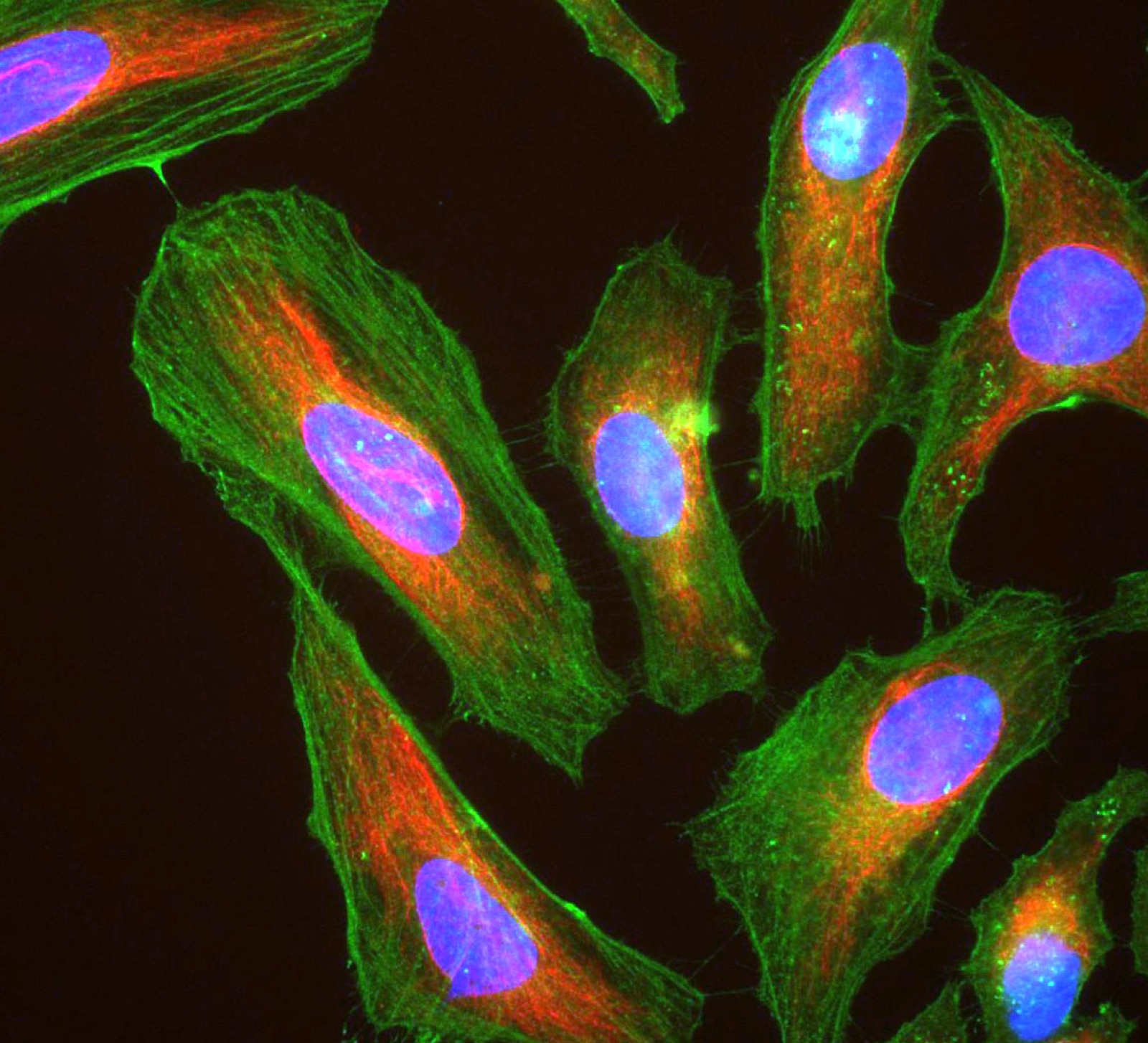
Henrietta Lacks and the Cells That Would Not Die
In the early months of 1951, a thirty-one-year-old Black woman named Henrietta Lacks went to the Johns Hopkins Hospital in Baltimore — one of the few hospitals in the segregated United States that would treat Black patients — with a cervical cancer that was killing her with frightening speed. During her treatment, a surgeon shaved two small samples from her cervix, one healthy and one cancerous, and sent them to a laboratory down the hall. No one asked Henrietta's permission, and no one told her; this was simply how things were done, especially to a poor Black patient in a charity ward. She died that October and was buried in an unmarked grave. But the cancer cells from that sample did something no human cells had ever reliably done before: they survived, and divided, and kept dividing, doubling every day, apparently without limit. They were the first immortal human cell line, and the scientist who grew them named them HeLa, after the first letters of her first and last names. Over the following decades those cells — descended from a woman almost no one knew anything about — would become one of the foundational tools of modern biology: used to develop the polio vaccine, to map the human genome, to test drugs and radiation and cosmetics, to study cancer and AIDS and the viruses that cause them, sent into space, and grown by the ton and sold around the world in a multi-billion-dollar industry. Henrietta's own family knew none of it for more than twenty years, received nothing, and in many cases could not afford the medicine her cells helped create. This is the story of the woman behind HeLa, of what was taken and what was built from it, and of a debt that the science of an era was structured never to pay.
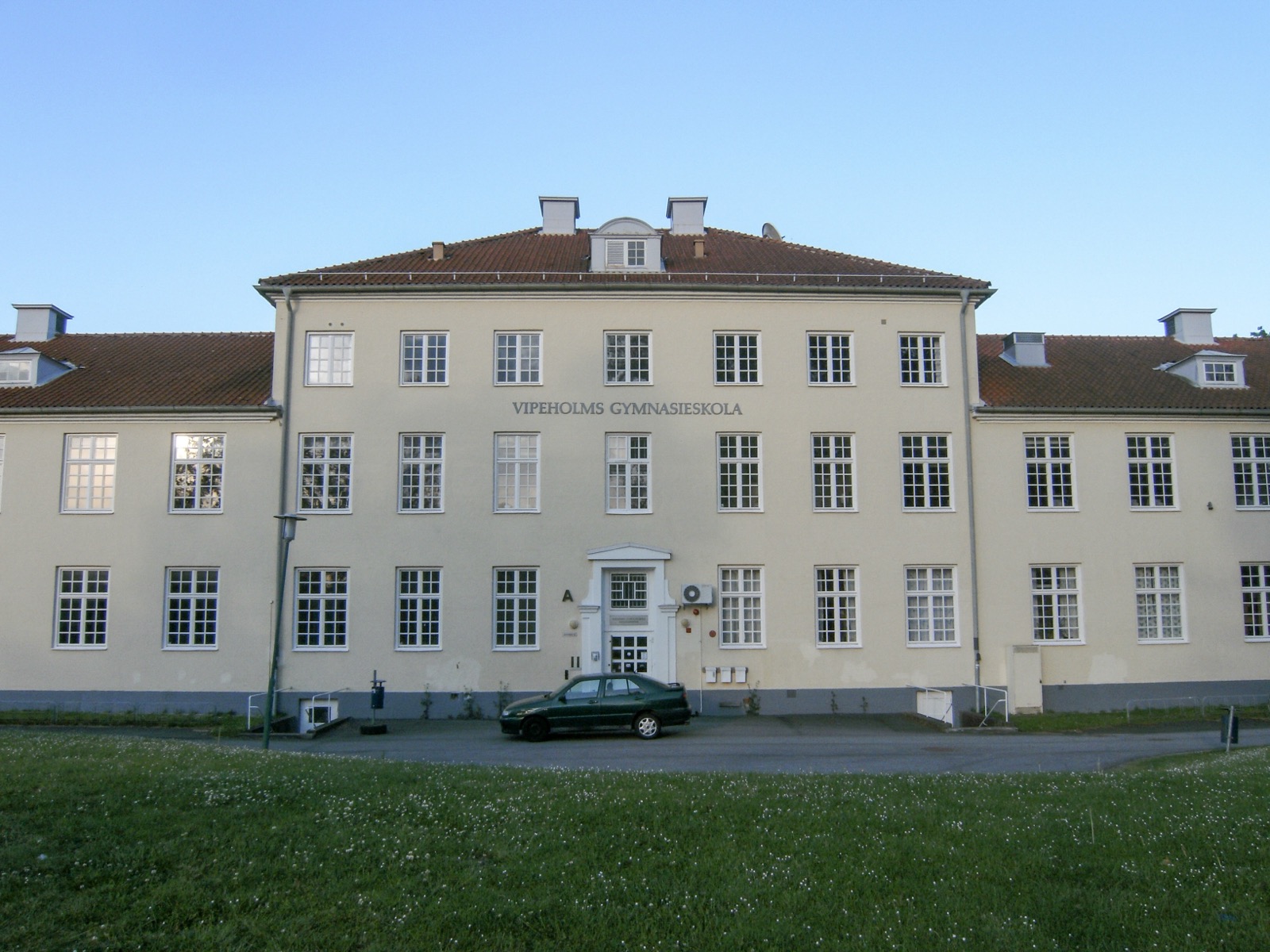
The Vipeholm Experiments and the Toffee Made to Rot Teeth
At the Vipeholm hospital outside Lund, in southern Sweden, the patients could not leave and could not consent. They were adults with severe intellectual disabilities, classified in the language of the time as 'uneducable,' housed for life in a state institution that controlled every meal they ate. And in the years after the Second World War, that total control made them, in the eyes of Sweden's medical authorities, the perfect material for an experiment. The country had one of the worst rates of tooth decay in the world, and the National Board of Health wanted to understand, definitively, what caused it. So between 1945 and the mid-1950s, researchers used the people of Vipeholm to find out — feeding different groups different diets, and, in the most notorious phase, giving some of them large quantities of a specially formulated sticky toffee, eaten between meals, that was engineered to cling to the teeth and bathe them in sugar for as long as possible. The patients' mouths were the laboratory. Many of them developed severe, irreversible cavities. The studies that resulted were a genuine scientific landmark: they established, more clearly than any work before, that it is sugar — and above all sugar eaten frequently and in sticky form — that drives tooth decay. That finding reshaped dentistry and gave Sweden its enduring tradition of lördagsgodis, sweets saved for Saturdays. But it was bought with the teeth of people who were never asked, and could not have answered. This is the story of what was done at Vipeholm, what it taught the world, and the question it leaves about the price of knowledge.
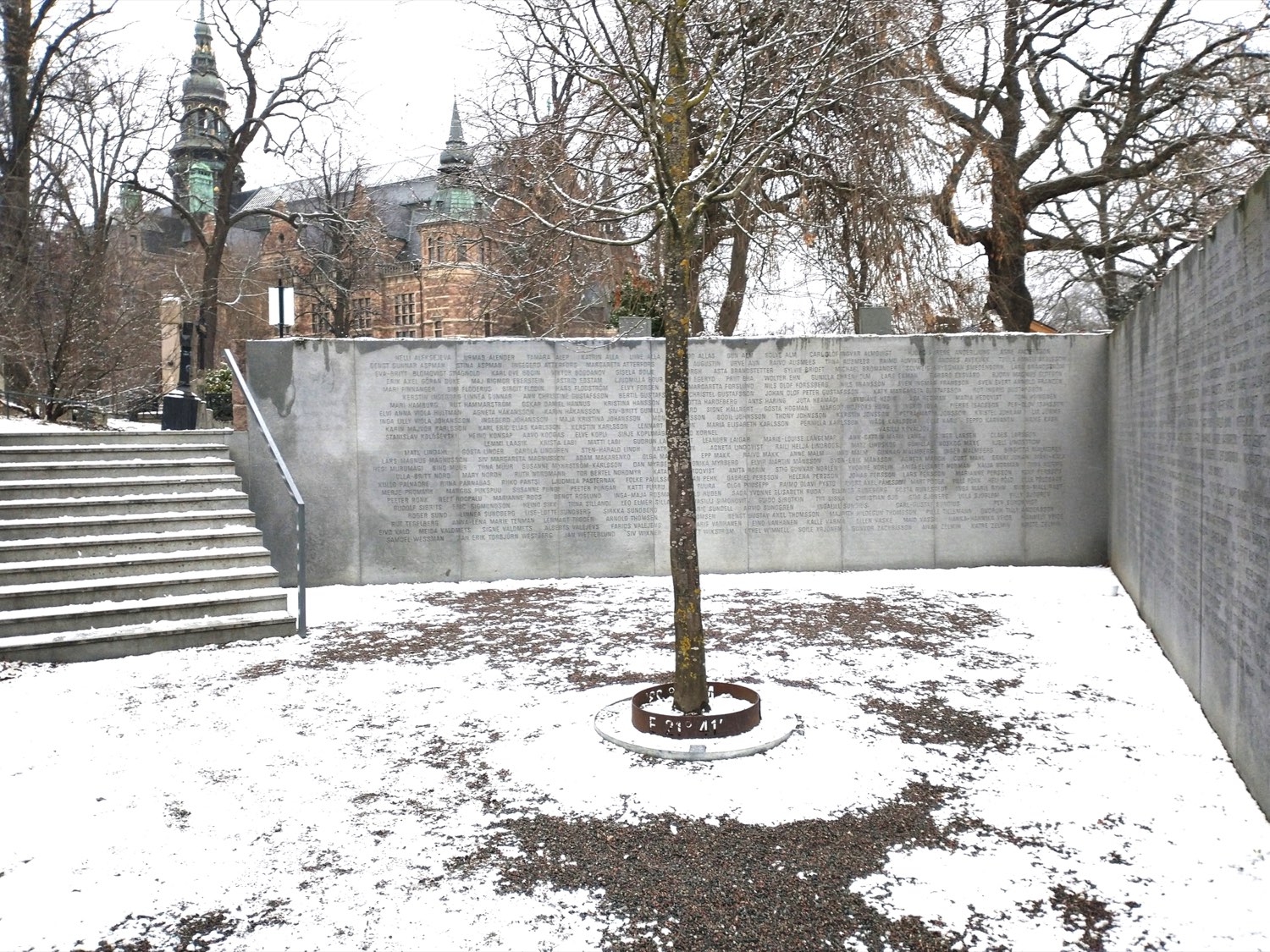
The Sinking of MS Estonia and the Wreck Sweden Would Not Raise
Shortly after one o'clock in the morning on 28 September 1994, the passenger ferry MS Estonia was midway across the Baltic Sea, sailing from Tallinn to Stockholm through a strong autumn gale, when the great clamshell visor at her bow — the hinged structure that lifted to let cars drive on and off — wrenched free of its locks under the pounding of the waves. As it fell away it dragged open the ramp behind it, and the sea poured onto the car deck. A ship like the Estonia could not survive water loose on that long, open deck: it sloshed to one side, the ferry took on a heavy list, and within minutes she was rolling over. From the first violent heel to the moment she vanished beneath the surface, perhaps fifty minutes passed — barely time for those near the upper decks to scramble out into the freezing water, and no time at all for the hundreds asleep in cabins below. Of the 989 people aboard, 852 died. It was the deadliest peacetime shipwreck in European waters of the twentieth century, and a wound that has never fully closed in Sweden, Estonia, and Finland, the three nations that lost the most. An official investigation concluded in 1997 that the visor's failure had doomed the ship. But what turned a catastrophe into an enduring controversy was what came after: Sweden's decision not to raise the bodies or the wreck, to leave the dead in the hull and seal it as a grave; the persistent theories of explosions and secret military cargo; and, in 2020, documentary footage of a large hole in the hull that forced the case to be reopened. This article sets out what happened that night, what is firmly established, and what remains genuinely contested.